


Uneven turf, stepped grass lines, and ragged patches often trace back to cutting components sitting out of alignment. Learning how to level lawn mower blades allows property owners to eliminate stepped cuts and achieve a uniform, professional finish across the entire yard. When cutting edges sit askew, one side scalps the turf while the opposite side leaves stragglers behind. Routine deck vibration, seasonal ground shifts, and accidental contact with roots or landscaping borders frequently nudge mower hardware out of true alignment. Checking your blade tips directly gives you the most reliable indicator of actual cutting height.
Achieving a crisp cut requires inspecting both the cutting tips and the deck suspension assembly. Preparing your machine with proper tire inflation and a dedicated measurement tool makes this routine maintenance task straightforward for any homeowner. If you frequently cut rolling property, our guide on mower adjustments for rough terrain explores how ground contours interact with deck settings. Understanding the mechanical relationship between blade level, deck rake, and spindle balance ensures your cutting system delivers smooth performance all season long.

Pros
- Simple to use, no complex setup or training required.
- Scale markings are clear and easy to read on the job.
- Lightweight and portable, easy to carry between mowers or job sites.
- Affordable price point for a dedicated leveling tool.
Cons
- Plastic construction may not be as durable as metal alternatives over many years of heavy use.
- Scale range limited to 1 1/2 to 5 inches, which may not suit every mower deck or aftermarket blade setup.
- Manual measurement still relies on your eye for true level; best used as a quick reference, not a precision instrument.
The Xhziy Mower Deck Leveling Gauge is a straightforward measuring tool designed to help you set blade height accurately on lawn mowers. It's a pocket-sized plastic gauge that reads from 1 1/2 to 5 inches, giving you a quick visual reference for leveling your deck. No batteries, no electronics, just a simple mechanical tool that gets the job done.
This gauge is best suited for DIY homeowners and lawn maintenance techs who want a faster way to check blade height without dragging out a tape measure or level. If you zero-turn mows every week or you're a contractor who maintains a fleet of mowers, this tool saves time and reduces guesswork. The ergonomic handle makes it easy to use even with greasy fingers or work gloves.
In real-world use, the gauge works as advertised. Place it on the mower deck, line up the scale with the blade tip, and read the height. The markings are clear and easy to interpret. It's robust enough for occasional drops on the lawn or shop floor, though the plastic body won't survive a direct hit from a truck or heavy equipment.
Build quality is decent for the price. The plastic feels solid, and the blue color helps prevent losing it in the grass. At just 2.24 ounces and measuring 12x5x2 inches, it's truly portable. You can stash it in a tool pouch or leave it in the mower's storage compartment. The main drawback is the limited range and the fact it requires manual reading, so you still need some basic understanding of deck leveling. Also, if you have non-standard blades or a deck with unusual geometry, the gauge might not fit perfectly.
Overall, for under ten bucks, the Xhziy Mower Deck Leveling Gauge is a handy addition to any lawn care setup. It won't replace a professional dial indicator or laser level, but for everyday tuning and quick checks, it's a practical, no-fuss tool. I'd recommend it to any homeowner who wants a level cut without the hassle, or to lawn service crews who need a quick reference gauge for multiple mowers.

Pros
- Sturdy metal build that won't crack or warp like plastic balancers.
- Accurately detects even small imbalances for improved cut quality.
- Works with a wide variety of blade center hole sizes thanks to the stepped cone design.
- Easy to use: place blade, watch gravity, and remove material from the heavy side.
Cons
- Some users report that the cone steps may not fit every blade perfectly, though most find a suitable step.
- Requires a bit of trial and error to center the blade precisely on the cone.
- The balancer itself has a narrow base that can tip if bumped during use.
The Oregon Precision Mower Blade Balancer (model 42-100) is a simple, no-fuss tool that belongs in every mower maintenance kit. After you sharpen your blade, tossing it back on the mower without checking balance is a gamble. Even a tiny imbalance can cause excessive vibration, rough cutting, and accelerated wear on your mower's engine and spindle bearings. This compact metal balancer solves that problem with a straightforward gravity-based design.
Best suited for homeowners who sharpen their own blades as well as professional landscapers, the balancer works with virtually any rotary mower blade. The stepped metal cone accommodates different center hole sizes, so it fits push mowers, riding mowers, and zero-turn machines from brands like Stihl, Husqvarna, Troy-Bilt, and more. The zinc die-cast body feels solid and substantial easily outlasting cheap plastic alternatives that can crack or warp over time.
Using the Oregon balancer is refreshingly simple. Place the blade flat on the cone, let it settle, and gravity will tell you if one side is heavier. If the blade dips, grind a bit more material off that side and recheck. The process takes only a minute or two but makes a real difference in how your mower runs. Users consistently report noticeably less vibration and a cleaner, more even cut after balancing.
One realistic limitation is that the cone steps might not align perfectly with every blade's center hole, though most users find a step that works. Also, the balancer has a narrow base, so you'll want to set it on a stable surface to avoid tipping. But these are minor tradeoffs for a tool that costs under ten dollars and can extend the life of your mower's engine and deck.
If you maintain your own mower blades, the Oregon Precision Blade Balancer is a smart, low-cost investment. It helps you get professional-level results at home, reduces vibration that leads to premature wear, and keeps your lawn looking its best. For the price and performance, there's little reason not to add one to your workshop gear.
Brand: Oregon
Model: 42-100
Material: Zinc die-cast metal
Weight: 0.2 pounds
Dimensions: 10 x 6 x 1 inches
Power Source: Manual
Color: Original Version
Compatibility: Fits most push mower and riding mower blades

Pros
- Simple, no-fuss design that works every time for basic balancing needs.
- Metal build feels solid and should hold up to years of garage use.
- Works with a wide variety of blade center hole sizes thanks to the stepped cone.
- Costs less than a coffee and delivers real performance improvement.
Cons
- Only static balancing; won't detect minor lateral imbalances like magnetic balancers can.
- May not fit blades with non-circular or odd-shaped center holes (e.g., some mulching or gator blades).
- Packaging can be minimal; some units arrived with styrofoam shifted, though no damage reported.
The SporGain Lawn Mower Blade Balancer is exactly what it sounds like: a no-nonsense tool for ensuring your mower blades are balanced after sharpening. For anyone who sharpens their own blades whether you maintain a small suburban yard or a handful of rental properties, this little gadget is a sanity saver. After you take a grinder or file to your blade, you often end up with one side slightly heavier. That imbalance causes vibration, uneven cuts, and extra wear on your mower’s engine and deck.
This balancer solves that problem simply. You set the blade on the tapered metal cone, and the heavy side drops down. Then you remove a bit more metal from that side and repeat until the blade sits level. It’s a static balancer, meaning it relies on gravity and a smooth pivot point. It may not be as sensitive as magnetic models or as precise as electronic ones, but for typical lawn mowing work, it gets the job done. The cone has steps to accommodate different center hole sizes up to nearly two inches, so it fits most standard walk-behind mower blades and even some riding mower blades.
Build quality is impressive for the price. The base and cone are made of metal, not plastic, so they won’t crack or warp. It’s small enough to toss in a tool bag or leave in a drawer. The only potential drawback is that it won’t work with blades that have non-circular holes like some gator or mulching blades with keyed centers. Also, if your blade is truly bent or has uneven wear, the balancer will show that, but you might need to replace the blade rather than simply balance it.
In real-world use, this balancer makes a noticeable difference. Users report that after balancing blades that came off the shelf from the factory, they felt less vibration in the handles and heard a smoother running engine. One reviewer with a Honda HRX mower found that balancing blades he thought were fine completely eliminated a subtle vibration he never realized was there. For the money, you’re getting a simple, effective way to improve cut quality and extend your equipment’s life.
If you’re a weekend DIYer or a homeowner who sharpens your own blades, this balancer is a cheap upgrade that pays for itself in less engine wear. Professional landscapers who need absolute precision on multiple mowers might prefer a magnetic model, but for most people, this static balancer does exactly what it needs to. A solid buy.
Product Dimensions: 2.4 x 2.4 x 2.1 inches
Item Weight: 3.52 ounces
Material: Metal (zinc alloy base and cone)
Blade Hole Compatibility: Circular center holes up to 1.97 inches (largest step)
Base Diameter: 2.36 inches
Color: Silver
Includes: One blade balancer only

Pros
- Affordable and easy to use with clear instructions
- Precise leveling leads to a healthier, more attractive lawn
- Durable plastic design holds up to regular workshop use
- Compatible with a wide range of lawn mower brands and models
Cons
- Requires user to ensure tires are properly inflated before use for accurate leveling
- Plastic construction may not withstand heavy impact if dropped repeatedly
- Only measures blade height; does not include a leveling bubble or digital readout
The Oregon Small Engine Deck Leveling Gauge is a straightforward maintenance tool designed to ensure your lawn mower deck sits perfectly level. An unlevel deck causes uneven cutting, scalping, and accelerated wear on blades and spindles. This gauge solves that problem by giving you a quick, accurate way to measure blade tip height from the ground.
This tool is best suited for homeowners and DIY enthusiasts who want a professional-looking lawn without the hassle of trial-and-error adjustments. It's equally useful for small engine mechanics or anyone maintaining a riding mower or push mower. The gauge works on almost any deck style, making it a versatile addition to your workshop.
In real-world use, the gauge is refreshingly simple. Park on level ground, set your mower to the desired cutting height, and place the gauge under each blade tip. The clear markings let you see instantly if both sides are equal and if the front is slightly lower than the back. Adjust the deck hangers until both sides match, and you're done. The pro tip about checking tire pressure before leveling is a practical reminder that saves time.
Build quality is solid for a plastic tool. It's lightweight and won't rust, so you can toss it in a toolbox or hang it in the garage without worry. The only real limitation is that you must have the mower on level ground and tires properly inflated for the reading to be accurate. Also, if you're used to a digital level or bubble gauge, this might feel a bit basic. But for the price, it does exactly what it promises.
Overall, the Oregon Deck Leveling Gauge is a no-nonsense purchase for anyone serious about lawn care. It pays for itself in fewer blade replacements and a noticeably better cut. If you're tired of uneven stripes or patches in your yard, grab this gauge and spend ten minutes leveling your deck. You'll see the difference on the first mow.

Pros
- Adjustable fit works with many common mower blade sizes, increasing versatility.
- Rust-resistant metal build feels solid and durable for long-term use.
- Easy-turn knob makes adjustments quick and tool-free.
- Compact and lightweight, easy to store or carry to the jobsite.
Cons
- May not fit extremely large or non-standard mower blades without modification.
- Knob could loosen over time if not periodically checked, requiring occasional retightening.
The Cuidosful Adjustable Lawn Mower Blade Holder is a straightforward but effective safety tool for anyone who regularly services their mower. Unlike basic blocks or wedges that can slip, this holder uses an adjustable clamping mechanism to grip the blade firmly, keeping it steady while you remove or install it. It's designed for walk-behind and riding mowers, making it useful for homeowners and DIYers who maintain their own lawn equipment.
In real-world use, the adjustable width is the standout feature. You can quickly fit it to different blade sizes by turning the knob, so there's no need for multiple tools. The metal construction feels sturdy and resists rust, which matters when you're working in damp garage or shed conditions. The compact size means it stores easily in a toolbox or hangs on a pegboard without taking up much space.
One area where this tool shines is safety. Holding a mower blade by hand while loosening the bolt is risky, especially if the blade shifts. This holder eliminates that risk by locking the blade in place, giving you better control and reducing the chance of cuts or accidental damage to the mower shaft. It's a simple upgrade that makes routine maintenance less stressful.
Build quality is decent for the price. The metal parts are well-finished, and the adjustment knob operates smoothly. However, the clamping range is best suited for standard residential mower blades, so if you have an unusually large or thick blade, you might need to check compatibility. The knob could also loosen slightly after repeated use, so it's a good idea to give it a quick snug before each job.
Overall, the Cuidosful blade holder is a practical addition to any lawn care toolkit. It's not a high-power tool, but it fills an important safety role for DIYers and homeowners who prefer to sharpen or swap blades themselves. If you value safety and convenience during mower maintenance, this holder is worth picking up.

Pros
- Measures actual blade height rather than guessing based on outer deck rim position.
- Fits underneath low-clearance decks on popular John Deere, Cub Cadet, and MTD lawn tractors.
- Easy-to-read numbered scale speeds up both side-to-side and front-to-back rake leveling.
- Requires no batteries, electrical connections, or complicated assembly before use.
Cons
- Requires reaching under the cutting deck with protective gloves to position the gauge at the blade tip.
- Molded plastic construction requires careful garage storage to avoid bending or cracking under heavy tools.
- Does not include deck adjustment wrenches or replacement linkage hardware.
The Chamixx Mower Deck Leveling Gauge is a dedicated lawn tractor and riding mower maintenance tool designed to replace OEM parts like John Deere AM130907 and TY15272, as well as Stens 750-442. For suburban homeowners with quarter-acre lawns and rural property owners managing sprawling acreage, keeping a multi-blade cutting deck parallel to the ground is critical. This specialized gauge eliminates the guesswork involved in seasonal deck setup by measuring true blade height from the parking surface rather than relying on uneven deck shell edges.
Maintaining proper deck alignment directly affects grass handling and overall lawn health. When a mower deck hangs unevenly, the blades leave unsightly ridge lines across the turf and can scalp high spots during routine weekend mowing. A leveled deck also ensures the mower maintains the proper front-to-back pitch (typically an eighth to a half-inch lower in the front), which generates the airflow needed for clean mulching, strong side discharge, and efficient bagging without clumping.
The build quality centers around a durable, lightweight molded housing featuring a clear vertical measurement scale. The sliding indicator allows users to slide the tool under the deck lip, place the tip of the blade on the gauge arm, and read the exact height off the scale. Because of its slim profile, the tool slips into place around front anti-scalp wheels and side discharge chutes without forcing the operator to drop the deck assembly off the tractor frame.
Using this gauge is straightforward during routine spring prep or after striking an exposed tree root or rock during yard cleanup. Homeowners simply park the tractor on a flat concrete surface like a garage floor, disconnect the spark plug for safety, and take quick readings at the outer blade tips on both the discharge and trim sides. A few turns on the deck lift links balance the deck, restoring clean cutting performance before the next lawn mowing session.
While the gauge is simple and practical, users should keep realistic expectations regarding its build and function. Because it is molded from lightweight plastic, it should be kept away from excessive heat and stored neatly in a toolbox drawer rather than tossed loose under heavy power equipment. Overall, this gauge represents a cost-effective, practical solution for any DIY lawn care enthusiast or homeowner wanting a golf-course finish without paying dealership service rates.
Before using the leveling gauge, park your lawn tractor or zero-turn mower on a hard, completely flat surface such as a concrete driveway or level garage floor. Check tire pressure across all four tires first, as uneven air pressure will throw off deck alignment measurements before you even begin adjusting mechanical linkages.
Always turn off the engine, set the parking brake, remove the ignition key, and disconnect the spark plug wire to ensure total safety before reaching near the mower deck. Wear heavy work gloves to manually rotate the cutting blades so they point side-to-side across the width of the deck.
Slide the Chamixx gauge under the left side of the mower deck, position the blade tip against the measurement foot, and record the height. Repeat the exact same measurement on the right-hand blade tip. Adjust your tractor deck lift links until both sides match within an eighth of an inch, then rotate the blades front-to-back to verify proper pitch according to your mower operator manual.
This leveling tool serves as a direct functional replacement for John Deere part numbers AM130907 and TY15272, as well as aftermarket equivalents including Stens 750-442, MTD 490-900-0041, and Chamixx MOK30-0015. It is broadly compatible with riding mowers, lawn tractors, and residential zero-turn mowers from John Deere, Cub Cadet, Troy-Bilt, Craftsman, and Yard-Man.
The mechanical gauge design works independently of deck size, making it suitable for 38-inch, 42-inch, 48-inch, and 54-inch decks alike. As long as your mower features standard under-deck blade clearance and adjustable hanger links, this gauge provides the universal reference point needed to restore factory-level cutting geometry.

Pros
- 100% thicker arm than competitors for less flex and greater accuracy
- Stabilizer extension holds the gauge steady during adjustments with no extra hands needed
- Flat, stable base gives consistent readings on different deck surfaces
- Two-pack provides backup or dual measurement capability
Cons
- Requires a weight (like a hammer) to hold the gauge in place on the stabilizer extension
- May not fit all mower deck designs without slight modification
- Plastic construction might not withstand heavy abuse in commercial mowing environments
The HD Switch Deck Leveling Gauge is a simple but well-engineered tool for anyone who mows their own lawn. Instead of wrestling with a wobbly ruler or trying to eyeball blade heights, this gauge lets you set your deck accurately in minutes. It's not a power tool, but it's a workshop essential for lawn care enthusiasts who want a professional-quality cut.
This gauge is best suited for homeowners, DIYers, and even small landscaping businesses that use residential mowers from John Deere, Cub Cadet, Troy-Bilt, Husqvarna, Craftsman, and similar brands. If you care about even grass height and preventing scalping, this tool makes the job noticeably easier. The thicker measurement arm is a real upgrade over cheaper plastic versions it won't bend or flex, so you get the same reading every time you use it.
In practice, the stabilizer extension is the standout feature. You set the gauge on the deck blade, place a weight (like a hammer) on the extension, and the gauge stays put while you make adjustments. This hands-free approach speeds up the process and reduces mistakes. The fully flat base also helps the gauge sit flush against the deck, which is something many competitors overlook. The result is a repeatable measurement that you can trust.
Build quality is good for the price. The plastic feels sturdy enough for regular residential use, but it's not indestructible. If you're a heavy-duty commercial contractor who levels decks daily, you might want a metal alternative. But for the average homeowner or weekend warrior, this two-pack offers excellent value. It's lightweight, easy to store, and simple to use without any instructions needed.
The main drawback is that you need to supply a weight to hold the gauge in place. Also, while the gauge fits many popular mower decks, it may not work perfectly on every model. For most users, though, these are minor tradeoffs. If you want a faster, more accurate way to level your mower deck and are tired of shims and tape measures, the HD Switch kit is a practical upgrade that pays for itself in saved time and better looking grass.
Package Dimensions: 12.95 x 5.39 x 2.56 inches
Item Weight: 4.6 ounces (per gauge)
Material: Durable plastic with reinforced measurement arm
Compatibility: Fits most residential mower decks including John Deere, Cub Cadet, Troy-Bilt, Husqvarna, Craftsman, Snapper, MTD, Ariens, Gravely, and more
Included: 2 deck leveling gauges with stabilizer extensions
Homeowner lawn care: Quickly level your mower deck at the start of the season or after hitting a rock.
DIY mower maintenance: Use during blade sharpening or replacement to ensure even cutting height.
Small landscaping businesses: Keep a set in your truck for on-site adjustments between properties.
Garage workshop: A handy addition for anyone who services their own equipment.
A Practical Guide on How to Level Lawn Mower Blades for a Clean Cut
Leveling mower blades requires measuring the actual cutting tips against a hard, flat surface rather than simply eyeballing the outer deck shell. A mower deck can appear perfectly horizontal while the cutting edges inside sit crooked due to bent metal, worn spindle bearings, or uneven tire pressure. Correcting this alignment involves stabilizing the machine, equalizing tire inflation, and adjusting suspension linkages until the blade tips match specified side-to-side and front-to-back clearances. By using dedicated gauge tools and verifying tip tracking, you eliminate stepped mowing lines and reduce unnecessary strain on your cutting deck.
Distinguishing Blade Edge Height from Outer Deck Level
Many homeowners make the mistake of placing a standard carpenter level across the top of the mower deck stamped housing. Mower decks are engineered with complex contours, aerodynamic baffles, and stamped curves that rarely run parallel to the cutting plane of the internal blades. Even on brand-new equipment, minor manufacturing variances or deck hanger tolerances can cause the deck shell to sit slightly off-kilter while the spindles spin true. Measuring directly from the sharpened cutting edge to the ground remains the only dependable way to verify your real cutting height.
Dedicated leveling tools make this process straightforward by slipping underneath the deck rim to touch the lower edge of the blade steel. Tools such as the Oregon small engine deck leveling gauge or compatible aftermarket gauges feature calibrated vertical scales that read cutting height directly in inches or millimeters. These instruments rest flat on the concrete while an adjustable measuring arm contacts the blade cutting tip. Relying on blade-tip measurements ensures that your turf reflects the true geometry of the spinning steel rather than the outer sheet metal shell.
When you measure at the blade tips, you also account for minor variations across multiple spindles in multi-blade decks. Two-blade and three-blade decks depend on synchronized heights across the full width of the cut to prevent distinct ridges between passes. A variance of even a quarter-inch between neighboring blade tips creates visible striping and uneven clipping distribution across the lawn. Checking the actual steel edges eliminates guesswork and provides repeatable alignment data before you turn a single adjustment nut.
Pre-Adjustment Checks and Tire Pressure Equalization
Before adjusting any threaded rods or suspension brackets, the mower must sit on a completely flat and solid surface like a concrete garage floor or level driveway. Performing this procedure on turf, dirt, or gravel introduces surface inconsistencies that will throw off every measurement you record. Park the machine, engage the parking brake, and shut off the engine completely before beginning your inspection. For safety during blade handling, disconnect the spark plug boot on gas units or pull the main safety disconnect key on battery-powered mowers.
Equalizing tire pressure is an essential step that many operators overlook before attempting deck adjustments. A tire that is underinflated by just two or three pounds will tilt the entire mower frame and drop that side of the cutting deck noticeably. Use an accurate low-pressure tire gauge to verify that both front tires match manufacturer specifications and that both rear tires are identically pressurized. Inspecting tire inflation first prevents you from making unnecessary mechanical adjustments to correct a simple pneumatic imbalance.
Inspect the mower deck hangers and mounting pins for excessive play, debris buildup, or physical damage. Grass clippings and dried mud packed on top of the deck shell can add lopsided weight that compromises suspension balance. Clean away packed residue around the pulley guards and inspect the lift linkages to ensure all cotter pins and adjustment locknuts are secure. Starting with clean equipment and verified tire pressures establishes a reliable baseline for every measurement that follows.
Measuring and Adjusting Side-to-Side Blade Alignment
Side-to-side leveling ensures that the left and right sides of your mower cut at the exact same height above the soil. Position the cutting deck to your standard mid-height mowing setting, usually between two and a half to three inches on the height selector. Reach under the deck with heavy work gloves and rotate the outermost blades so their tips point directly out toward the left and right sides of the mower. The cutting tips should sit perpendicular to the mower direction of travel to give an accurate side-to-side reading.
Place your deck leveling gauge on the concrete directly beneath the outermost cutting edge on the discharge side. Slide the gauge arm upward until it gently touches the sharpened cutting tip and record the measurement from the scale. Repeat this exact measurement on the opposite side of the cutting deck using the outer tip of the opposite blade. Models like the HD Switch deck leveling gauge feature a wide stabilizer base and thicker measurement arms that keep the tool steady while you record readings.
If the measurements differ by more than one-eighth of an inch, the suspension linkage on the low side must be adjusted. Most lawn tractors and zero-turn mowers feature threaded lift links or adjustable eccentric bolts on both sides of the rear deck draft arms. Loosen the jam nut and rotate the adjustment nut clockwise to raise the deck side or counter-clockwise to lower it. Recheck both blade tips with your leveling instrument after tightening the locknut to confirm that both sides match within one-eighth of an inch.
When working on multi-blade systems, also take time to verify matching proper lawn mower blade dimensions to ensure that uneven tip heights are not caused by mismatched replacement blades. Blades of slightly different widths or sail heights can sit unevenly on their spindle mounts. Sticking with blades that share identical geometry guarantees that your side-to-side adjustments produce uniform cutting heights across the entire deck footprint. Consistent measurements between the left and right blade tips eliminate stepped ridges across each mowing path.
Establishing Correct Front-to-Back Deck Pitch and Rake
Once the side-to-side measurements are equal, you must set the front-to-back rake, which refers to the pitch angle of the deck from front to rear. A properly adjusted mower deck should not sit completely level from front to back. Instead, the front cutting edge should sit between one-eighth inch and one-half inch lower than the rear cutting edge, depending on manufacturer specifications. This forward rake ensures that the blade cuts grass cleanly once at the front of the housing without dragging across the clippings a second time at the rear.
To measure pitch, rotate one of the center or outer blades until its tips point straight forward and straight backward along the mower centerline. Place your leveling gauge beneath the front tip of the blade and record the exact height measurement from the floor. Next, rotate the blade 180 degrees so the opposite cutting edge moves to the rear and measure the height at that rear tip. Using the same blade tip for both front and rear readings eliminates any minor blade warp from your rake calculation.
If the front blade tip is not lower than the rear tip by the required fraction, locate the front draft rod adjustment nuts near the front bumper or axle. Tightening the front draft rod nuts lifts the front of the deck, while loosening them allows the front to drop. Adjust the hardware incrementally, re-measuring the front and rear tips until the desired forward pitch is established. Correct forward rake preserves engine horsepower, promotes smooth discharge airflow, and prevents the grass blades from being shredded by dragging rear edges.
Diagnosing Bent Blades and Spindle Tracking Issues
Sometimes a mower continues to cut unevenly even after the lift linkages and deck suspension rods have been adjusted carefully. When this occurs, the issue often stems from a physically bent blade, a damaged spindle shaft, or an unseated blade adapter. You can diagnose a bent blade using a simple 180-degree tip-tracking inspection on your flat surface. With the machine safely disabled, select a reference point on the deck or tape a small wood block to the floor beneath one blade tip.
Rotate the blade by hand until the first cutting tip aligns with your fixed reference mark and record its clearance. Then rotate the blade a half-turn so the opposite cutting tip sweeps over the exact same spot on the floor. If the two tips of a single blade pass at different heights by more than one-eighth of an inch, that blade is bent and must be replaced. A bent blade cannot be corrected through deck leveling linkages because the defect rotates continuously along with the spindle.
If installing a known straight blade still results in tracking errors, inspect the spindle housing and mounting flange for damage. Striking an immovable object like a tree root or pipe can warp the stamped deck metal directly beneath the spindle assembly. Grab the blade tip while wearing heavy gloves and check for vertical wobble or play in the spindle bearings. Replacing damaged spindle components or straightening warped mounting pads restores the mechanical plane needed for accurate blade leveling.
Blade Balancing and Its Impact on Cutting Uniformity
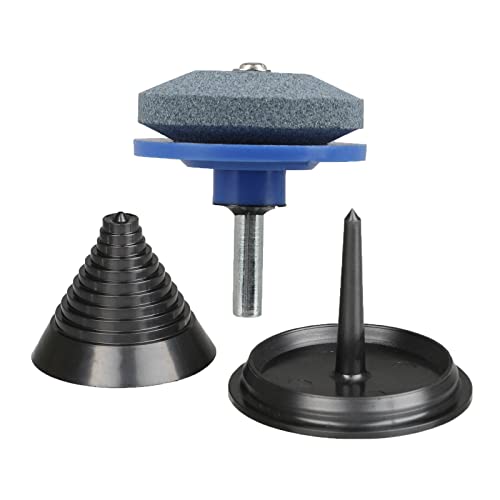
Proper blade maintenance goes beyond edge sharpness, because an unbalanced blade creates severe rotational vibrations that loosen deck hardware over time. When sharpening dull cutting edges with a grinder or drill-mounted corundum wheel, metal removal can easily become uneven between the two cutting wings. A blade that is heavier on one side spins out of equilibrium at typical operating speeds of three thousand revolutions per minute. Over time, these dynamic vibrations back off adjustment locknuts, distort deck hangers, and degrade your leveling settings.
Using a static cone balancer verifies that both ends of the blade carry equal weight before you reinstall the cutting assembly. Quality metal tools like the Oregon precision mower blade balancer or SporGain metal balancers feature stepped cones that fit standard round center holes. Rest the clean center hole of the blade on the balancing cone and observe whether the blade remains horizontal or dips toward one end. If one wing dips, carefully grind small amounts of material from the back edge of the heavy side until the blade rests completely level.
Reviewing broader replacement blade setup considerations can help you choose the right balance of lift profile and blade thickness for your mower. High-lift and heavy-duty mulching blades generate substantial aerodynamic resistance and require precise static balance to maintain smooth spindle rotation. Running properly balanced blades protects your spindle bearings from premature wear and ensures that your deck leveling adjustments remain locked in place throughout the season. Balanced cutting edges maintain consistent tip tracking and produce a visibly cleaner cut across every lawn pass.
Safe Blade Service and Mounting Hardware Practices
Performing blade maintenance or replacement requires proper mechanical procedures to prevent injury and avoid damaging the spindle threads. Working under a mower deck can be hazardous if the blade is allowed to rotate freely while you apply torque to the mounting bolt. Dedicated tools like the Cuidosful adjustable lawn mower blade holder clamp securely onto the deck rim and hold the blade firmly in place. Using a mechanical blade lock provides positive restraint and keeps your hands safe while breaking loose stubborn, factory-torqued bolts.
Whenever you remove a blade, inspect the mounting bolt, Belleville washer, and spindle star or round adapter for signs of wear. A cupped washer that has lost its spring tension will not maintain clamping force, allowing the blade to slip or wobble during heavy cutting. Clean all debris from the mating surfaces between the spindle face and the blade center hole before reassembly. Even a thin layer of packed grass between the spindle and the blade can tilt the cutting plane and throw off your leveling measurements.
Always tighten blade mounting hardware to the specific torque values recommended in your mower operator manual using an accurate torque wrench. Under-tightening can cause the blade to work loose during operation, while over-tightening can stretch bolts and warp mounting flanges. Verify that the blade is oriented correctly with the curved lift wings pointing upward toward the underside of the deck housing. Installing blades upside down severely impairs cutting performance and makes proper deck leveling impossible to achieve.
Post-Adjustment Verification and Ongoing Maintenance Schedule
After completing side-to-side and front-to-back adjustments, double-check all locking nuts on the suspension links to ensure they are securely cinched down. Reconnect the spark plug wire or battery disconnect key and perform a quick test cut on a flat section of lawn. Observe the cut quality across multiple overlapping passes to confirm that no stepped ridges or ragged stragglers remain in the mowing path. A properly leveled deck with correct forward rake produces a smooth, carpet-like appearance with efficient clipping dispersion.
Lawn mower deck alignment should be checked at the start of every mowing season and whenever you notice uneven cutting patterns on your turf. Accidental contact with hidden rocks, curbs, or solid tree roots can bend mounting brackets and knock deck linkages out of calibration in an instant. Maintaining proper tire pressure should become part of your monthly equipment routine, as minor pressure drops are the most frequent cause of sudden cutting tilt. Keeping dedicated leveling gauges in your tool kit allows you to diagnose and correct alignment issues within minutes.
Taking the time to measure your cutting edges accurately transforms routine yard maintenance into dependable, high-quality turf care. By focusing on blade-tip measurements, stabilizing tire pressure, and ensuring proper forward rake, you protect your machine from unnecessary vibration and uneven wear. Routine leveling keeps your mower running efficiently and delivers the clean, balanced cut your lawn deserves throughout the entire growing season.





Write Your Review
No reviews yet. Be the first to share your experience!