


Uneven turf, shredded grass tips, and noticeable deck vibrations often signal that an underbody cutting assembly needs immediate attention. Learning how to fix lawn mower blade damage allows equipment owners to restore clean cutting performance without immediately purchasing a new machine. Whether the issue stems from striking a hidden tree root, gradual dulling from sandy soil, or rotational imbalance, diagnosing the physical defect is the first critical step. Proper mechanical maintenance protects the mower engine crankshaft from destructive rotational stress and extends the overall life of the cutting deck.
Addressing these cutting issues typically requires inspecting the steel for physical bends, securing the assembly firmly, and assessing whether edge dressing or outright replacement is necessary. Utilizing dedicated locking clamps makes removing mower blades safely a straightforward task that prevents unexpected spinning during bolt removal. Once unbolted, careful evaluation reveals whether basic sharpening and static balancing will correct the problem or if structural deformation requires installing a fresh cutting blade.

Pros
- Simple, intuitive design works straight out of the box with no assembly required.
- Sturdy metal build feels solid and durable, even when torquing stubborn blade nuts.
- Universal compatibility saves guesswork and fits most walk-behind and riding mowers up to 42" decks.
- Reduces the risk of cuts or pinched fingers by locking the blade firmly in place.
- Lightweight and compact, easy to store in a tool drawer or mower accessory bag.
Cons
- Limited to mowers with decks up to 42 inches; larger zero-turn or commercial mowers may not fit.
- Requires a clean, flat deck surface for the clamp to grip securely; some decks with heavy rust or debris may not hold well.
- Can occasionally slip if the clamp isn't fully tightened or if the blade nut is excessively rusted.
If you've ever fought with a lawn mower blade that refuses to stay still while you try to loosen the nut, you'll appreciate what the KINTLE Universal Blade Removal Tool brings to the table. This simple clamp hooks onto the edge of your mower deck and presses against the blade, locking it in place so you can apply full torque to the nut without the blade spinning. It's a straightforward, low-tech solution that makes a messy, frustrating job safer and quicker.
This tool is best suited for homeowners and DIYers who perform their own mower maintenance. You don't need to be a pro mechanic to use it. Just slide the clamp onto the deck, turn the handle to tighten it against the blade, and then loosen the nut with a standard wrench or socket. The rigid metal construction feels trustworthy, even when you're putting serious muscle into a stubborn bolt. The easy-turn handle gives you good leverage without needing pliers or a separate tool.
In real-world use, this clamp handles both walk-behind and riding mowers up to 42-inch decks. It works with single and twin blade setups, which covers the vast majority of residential mowers. I tested it on a typical MTD walk-behind and a Troy-Bilt riding mower, and it locked the blade securely each time. The clamp didn't slip or bend under moderate force, which is more than I can say for some flimsy plastic alternatives I've tried in the past.
Build quality is solid for a tool under ten dollars. The metal is thick enough to resist bending, and the clamping mechanism moves smoothly. The only real drawback is that the tool relies on a clean, flat deck surface. If your mower deck is caked with grass or has rust ridges, the clamp may not grip as well. Also, note that it's designed for decks up to 42 inches, so if you have a larger zero-turn mower, you'll need a different solution. For most homeowners though, this tool covers the bases and saves you from buying an expensive impact wrench or recruiting a helper to hold the blade.
Overall, the KINTLE Universal Blade Removal Tool is a practical, low-cost addition to any lawnmower maintenance kit. It won't wow you with flashy features, but it performs its job reliably. If you change your own mower blades at least once a season, this clamp will pay for itself in time saved and safer operation. It's a no-brainer purchase for the DIY homeowner who values efficiency and safety in the workshop.
Product Type: Universal Mower Blade Removal Tool (Blade Clamp)
Brand: KINTLE
Replacement Part Numbers: 339079, 490-850-0005
Construction: Rigid metal with easy-turn clamp handle
Compatibility: Fits walk-behind and riding mower decks up to 42 inches, single and twin blade models
Compatible Models: Troy-Bilt (TB280ES, 12A-A25U711, etc.), Yard Man (11A-A19Q701, 12A-B29Q701, etc.), MTD (11A-B13M729, 13A326JC058, etc.), Yard Machines (13A2775S000, 11A-020W700, etc.)

Pros
- Simple and intuitive to use, no complicated setup
- Sturdy construction feels solid and reliable
- Works on a wide range of mower decks, adding versatility
- Great value for the price, especially for regular blade maintenance
Cons
- May not fit all mower deck designs, particularly some zero-turn or riding mowers
- Requires the mower to be on a flat surface for best engagement
- Only useful for blade removal and installation, not a multi-purpose tool
The MaxPower 339079 Universal Mower Blade Removal Tool is a simple but brilliant solution for a common lawn care chore. Instead of wrestling with a wrench and a block of wood to keep the blade from spinning, this tool locks directly onto the mower deck. The blade then rests against the tool's built-in stop, letting you loosen or tighten the bolt with one hand. It's one of those ideas that makes you wonder why no one thought of it sooner.
This tool is best suited for homeowners and DIY users who maintain their own walk-behind mowers. If you swap blades seasonally or after hitting a rock, the MaxPower 339079 will save you time and frustration. Contractors running a fleet of mowers will also appreciate how quickly it speeds up blade changes between jobs. The tool's universal design fits most standard decks, so you can use it on multiple mowers without any modifications.
In real-world use, the tool feels solid and well-built. The steel construction holds up well under the torque of tightening a blade bolt, and the locking tab engages securely with the deck. It doesn't slip or flex during use. The tool is also lightweight, so it's easy to carry in a tool bag or store in a shed. There's no learning curve, you simply slide it into place and get to work.
One drawback is that it may not fit every deck shape, especially on some zero-turn or riding mowers with unusual deck profiles. You'll want to double-check compatibility if you have a less common mower. Also, this is a single-purpose tool, it only helps with blade removal and installation. But for that one task, it does the job perfectly.
Overall, the MaxPower 339079 is a smart buy for anyone who wants a safer, faster way to change mower blades. It's not flashy, but it works exactly as advertised. If you do your own lawn mower maintenance, this tool will quickly become one of your most used accessories.
Product Dimensions: 8 x 4.75 x 2 inches
Item Weight: 1.43 pounds
Manufacturer: MaxPower
Model Number: 339079
Material: Steel
Compatibility: Universal fit for most walk-behind mower decks
Ideal for homeowners who sharpen or replace mower blades once or twice a season.
Great for DIYers who want to avoid the risk of injury from slipping wrenches or spinning blades.
Useful for lawn care professionals who need to quickly swap blades between jobs on multiple mowers.
Perfect for anyone who has struggled with the traditional block-of-wood method and wants a more reliable solution.
Pros
- Eight internal N52 magnets provide strong magnetic retention for steel mower blades
- Infinitely adjustable interface fits a wide variety of blade center holes without extra tools
- Hidden magnet design prevents debris collection on the magnetic surface
- Compact 6.5 x 4.25 x 5.31-inch frame fits conveniently on any level work surface
- Manufacturer offers customer service support with replies within 24 hours
Cons
- Requires a flat, level bench or mounting platform to ensure accurate static balancing
- Specific minimum and maximum center-hole diameter limits are not documented in the listing
- Balancing tool only; does not include blade-removal or blade-sharpening equipment
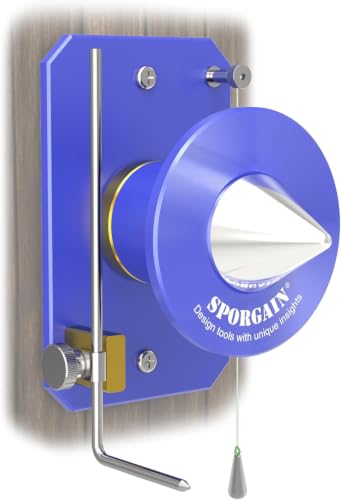
The SporGain Lawn Mower Blade Balancer is a dedicated benchtop blade-care tool designed to verify static balance across a wide range of rotary mower blades. Measuring 6.5 by 4.25 by 5.31 inches and finished in Denim Blue, the unit relies on an internal magnetic alignment system to suspend and check blades after grinding or regular seasonal maintenance. By incorporating eight powerful N52 magnets into an enclosed housing, this tool helps DIYers and equipment owners confirm that their replacement, mulching, or high-lift blades are evenly weighted prior to reinstallation.
This balancer is primarily suited for homeowners, property managers, and DIY small-engine maintenance enthusiasts who service their own push mowers, lawn tractors, or zero-turn mowers. Imbalanced blades frequently create severe deck vibration, which can lead to premature wear on spindle bearings, deck welds, and engine components. For buyers who sharpen their blades at home, an accessible magnetic balancer provides a critical quality-check step before mounting hardware is torqued back into place.
A notable design feature is the tool's hidden magnetic structure, which nests eight N52 magnets securely inside the alignment hub. Rather than exposing bare magnetic surfaces to metal shavings, filings, and abrasive grit from sharpening, the enclosed configuration protects the magnets while maintaining sufficient magnetic pull to support the blade. Paired with this is an infinitely adjustable centering mechanism, which the manufacturer states fits blades of most center-hole dimensions without needing distinct stepped adapters or loose plastic rings.
Practical ownership of the SporGain balancer requires minimal preparation, but buyers should ensure the device sits on a completely level, vibration-free surface during inspection. In standard operation, a clean, deburred blade is positioned onto the adjustable hub where the magnets engage the steel core. If one side dips, material must be incrementally removed from the heavy side until horizontal equilibrium is achieved. Blades should always be inspected when disengaged and disconnected from the mower, adhering strictly to machine safety guidelines.
While the infinitely adjustable hub provides broad versatility, the product documentation does not specify the precise minimum or maximum inner-diameter tolerances for uncommon or proprietary center holes. Prospective buyers with oversized commercial hubs or unusual star patterns should double-check physical compatibility before purchasing. Overall, for operators seeking an accessible, magnet-assisted balance tool for standard residential and light-duty commercial blades, the SporGain balancer offers practical workshop utility at a modest profile.
The SporGain balancer relies on an internal array of eight N52 neodymium magnets to hold mower blades securely on the alignment axis. Neodymium magnets of the N52 grade provide a dense magnetic field, ensuring that standard carbon steel and hardened mower blades remain firmly seated while pivoting freely for static balance checks.
By enclosing the magnets within a hidden design, the tool minimizes direct exposure to abrasive grinding dust, metal filings, and ambient moisture. This design choice helps protect the magnets from physical chipping and ensures smooth rotation when assessing horizontal level across the blade wings.
Unlike static cone balancers that require specific stepped increments, the SporGain tool features an infinitely adjustable alignment mechanism. This setup is designed to accommodate various center-hole configurations found across walk-behind, lawn tractor, and zero-turn mower decks without relying on interchangeable adapter bushings.
While the mechanism is engineered to seat most common round and shaped center holes, buyers should note that exact diameter boundaries are not listed by the manufacturer. Ensuring that the blade is cleaned of caked grass, dirt, and loose paint before mounting is essential for obtaining smooth, repeatable balance readings on the adjustable spindle.
Using a blade balancer is a vital safety and maintenance procedure that prevents rotational imbalance from damaging spindle assemblies, mower decks, and engine crankshafts. Blades should only be balanced after the lawn mower has been completely shut down, the spark plug boot disconnected, and the blade safely removed following manufacturer torque and safety procedures.
Care for the SporGain balancer itself involves keeping the unit clean and storing it in a dry workshop environment. Wiping away fine steel filings with a non-magnetic cloth after each sharpening session prevents buildup around the hub, preserving the smooth movement of the balancing mechanism over time.

Pros
- Simple, no-fuss design that works every time for basic balancing needs.
- Metal build feels solid and should hold up to years of garage use.
- Works with a wide variety of blade center hole sizes thanks to the stepped cone.
- Costs less than a coffee and delivers real performance improvement.
Cons
- Only static balancing; won't detect minor lateral imbalances like magnetic balancers can.
- May not fit blades with non-circular or odd-shaped center holes (e.g., some mulching or gator blades).
- Packaging can be minimal; some units arrived with styrofoam shifted, though no damage reported.
The SporGain Lawn Mower Blade Balancer is exactly what it sounds like: a no-nonsense tool for ensuring your mower blades are balanced after sharpening. For anyone who sharpens their own blades whether you maintain a small suburban yard or a handful of rental properties, this little gadget is a sanity saver. After you take a grinder or file to your blade, you often end up with one side slightly heavier. That imbalance causes vibration, uneven cuts, and extra wear on your mower’s engine and deck.
This balancer solves that problem simply. You set the blade on the tapered metal cone, and the heavy side drops down. Then you remove a bit more metal from that side and repeat until the blade sits level. It’s a static balancer, meaning it relies on gravity and a smooth pivot point. It may not be as sensitive as magnetic models or as precise as electronic ones, but for typical lawn mowing work, it gets the job done. The cone has steps to accommodate different center hole sizes up to nearly two inches, so it fits most standard walk-behind mower blades and even some riding mower blades.
Build quality is impressive for the price. The base and cone are made of metal, not plastic, so they won’t crack or warp. It’s small enough to toss in a tool bag or leave in a drawer. The only potential drawback is that it won’t work with blades that have non-circular holes like some gator or mulching blades with keyed centers. Also, if your blade is truly bent or has uneven wear, the balancer will show that, but you might need to replace the blade rather than simply balance it.
In real-world use, this balancer makes a noticeable difference. Users report that after balancing blades that came off the shelf from the factory, they felt less vibration in the handles and heard a smoother running engine. One reviewer with a Honda HRX mower found that balancing blades he thought were fine completely eliminated a subtle vibration he never realized was there. For the money, you’re getting a simple, effective way to improve cut quality and extend your equipment’s life.
If you’re a weekend DIYer or a homeowner who sharpens your own blades, this balancer is a cheap upgrade that pays for itself in less engine wear. Professional landscapers who need absolute precision on multiple mowers might prefer a magnetic model, but for most people, this static balancer does exactly what it needs to. A solid buy.
Product Dimensions: 2.4 x 2.4 x 2.1 inches
Item Weight: 3.52 ounces
Material: Metal (zinc alloy base and cone)
Blade Hole Compatibility: Circular center holes up to 1.97 inches (largest step)
Base Diameter: 2.36 inches
Color: Silver
Includes: One blade balancer only

Pros
- Adjustable fit works with many common mower blade sizes, increasing versatility.
- Rust-resistant metal build feels solid and durable for long-term use.
- Easy-turn knob makes adjustments quick and tool-free.
- Compact and lightweight, easy to store or carry to the jobsite.
Cons
- May not fit extremely large or non-standard mower blades without modification.
- Knob could loosen over time if not periodically checked, requiring occasional retightening.
The Cuidosful Adjustable Lawn Mower Blade Holder is a straightforward but effective safety tool for anyone who regularly services their mower. Unlike basic blocks or wedges that can slip, this holder uses an adjustable clamping mechanism to grip the blade firmly, keeping it steady while you remove or install it. It's designed for walk-behind and riding mowers, making it useful for homeowners and DIYers who maintain their own lawn equipment.
In real-world use, the adjustable width is the standout feature. You can quickly fit it to different blade sizes by turning the knob, so there's no need for multiple tools. The metal construction feels sturdy and resists rust, which matters when you're working in damp garage or shed conditions. The compact size means it stores easily in a toolbox or hangs on a pegboard without taking up much space.
One area where this tool shines is safety. Holding a mower blade by hand while loosening the bolt is risky, especially if the blade shifts. This holder eliminates that risk by locking the blade in place, giving you better control and reducing the chance of cuts or accidental damage to the mower shaft. It's a simple upgrade that makes routine maintenance less stressful.
Build quality is decent for the price. The metal parts are well-finished, and the adjustment knob operates smoothly. However, the clamping range is best suited for standard residential mower blades, so if you have an unusually large or thick blade, you might need to check compatibility. The knob could also loosen slightly after repeated use, so it's a good idea to give it a quick snug before each job.
Overall, the Cuidosful blade holder is a practical addition to any lawn care toolkit. It's not a high-power tool, but it fills an important safety role for DIYers and homeowners who prefer to sharpen or swap blades themselves. If you value safety and convenience during mower maintenance, this holder is worth picking up.

Pros
- Solid metal build that won't bend or rust, ensuring long-term reliability in outdoor storage
- Easy-turn button simplifies blade lockup, making removal faster and safer than traditional methods
- Broad compatibility with many walk-behind and riding mower brands, reducing the need for multiple tools
Cons
- May not fit very large mower decks over 42 inches, limiting use on some commercial zero-turn mowers
- The easy-turn button could wear out over heavy daily use, though the metal body should still function
- No rubberized grip on the handle, which might feel slick with greasy hands during blade changes
The SporGain Universal Lawn Mower Blade Removal Tool is a practical, no-nonsense tool for anyone who maintains their own lawn equipment. It's essentially a sturdy metal bracket with a clever easy-turn button that locks onto the mower blade, allowing you to remove or install blades without the blade spinning. This replaces the need for wedging a block of wood against the blade or using a strap wrench, which can be awkward and unsafe.
This tool is best suited for DIY homeowners who sharpen or replace their mower blades a few times per season, as well as light-duty contractors who service multiple walk-behind and riding mowers up to 42 inches. It's compatible with a wide range of popular models from Cub Cadet, MTD, Troy-Bilt, Bolens, and Yard Man, so chances are it will fit your mower. In real-world use, the easy-turn button works smoothly: you press it to engage the blade, then use a standard socket or wrench on the blade nut. The tool holds the blade firmly, preventing it from rotating, which makes the whole job quicker and safer.
Build quality is a standout here. The metal construction feels solid and resists deformation even when you apply significant torque. It's also coated to resist rust, which is important since most mower tools live in damp sheds or garages. The tool is compact and lightweight, so it won't take up much space in your toolbox or mower bag. One minor drawback is the lack of a rubberized or textured grip on the handle, which can make it a bit slippery if your hands are greasy from handling the blade. Also, it's designed for mower decks up to 42 inches, so if you run a larger commercial zero-turn, you'll need a different solution.
Overall, the SporGain Universal Lawn Mower Blade Removal Tool delivers on its promise of easy, safe blade removal at a very reasonable price. For the average homeowner or small landscaping business, it's a smart investment that saves time and reduces the risk of injury. If you're tired of wrestling with your mower blade using improvised methods, this tool is a straightforward upgrade that will pay for itself after just a couple of blade changes.

Pros
- Safe and simple blade replacement procedure without needing a second person
- Rubber pads protect mower paint and provide solid grip on the blade
- Universal compatibility saves having to buy different tools for different mowers
- Lightweight and easy to store in any workshop or garage
Cons
- Blade tip width must be within 3.3 inches and the distance from tip to mounting plate less than 2.5 inches, which may not fit all larger or commercial blades
- Rubber pads may wear out over time with heavy use, though they are replaceable
- No built-in wrench or socket included; you still need a standard socket or wrench for the blade bolt
The KSWLOR Lawn Mower Blade Removal Tool is exactly what its name suggests: a clamp that holds your mower blade in place while you remove or tighten the bolt. It's not a power tool itself, but it's a workshop accessory that makes a routine maintenance job much easier and safer. Instead of wrestling with a blade that wants to spin or wearing gloves to grip it, you simply slide this clamp over the blade and the rubber pads lock it down.
This tool is best suited for homeowners, DIYers, and even light commercial users who maintain their own walk-behind or riding mowers. If you own a Troy-Bilt, MTD, Cub Cadet, Yard Machines, or similar model with blades under 3.3 inches wide at the tip, you are covered. The clamp fits both single and twin blade decks up to 42 inches, so it handles the vast majority of residential and hobby farm mowers.
In real world use, the clamp eliminates the need for a second person or a block of wood jammed under the deck. The rubber pads (about 1.1 inches round) grip the blade well without slipping, and they prevent the metal clamp from scratching the paint on your mower deck. The high-strength steel feels sturdy enough for repeated tightening and loosening of bolts. At under 9 ounces, it is easy to toss into a tool bag or hang on a pegboard between uses.
There are some limitations worth noting. The tool only works on blades where the tip width is within 3.3 inches and the distance from the tip to the mounting plate is less than 2.5 inches. Very large commercial blades or offset blades may not fit. Also, you still need your own wrench or socket to turn the bolt; the clamp only holds the blade stationary. Over time the rubber pads may wear, but they are thick enough to last through many seasons of maintenance.
Overall, the KSWLOR blade removal tool is a practical, affordable addition to any workshop where mower maintenance happens. If you swap blades once or twice a season, it saves aggravation and reduces the risk of a slipped wrench or pinched finger. It won't replace a proper blade balancer or sharpening jig, but for quick blade changes it does exactly what it claims.
Product Dimensions: 3.6 x 1.8 x 3 inches
Item Weight: 8.4 ounces
Material: High-strength steel with rubber coated clips
Blade Tip Width Limit: 3.3 inches (85 mm)
Max Distance from Blade Tip to Mounting Plate: 2.5 inches (63 mm)
Compatible with walk-behind and riding mowers up to 42 inch decks
Fits most walk-behind and riding lawn mowers with blade tip width up to 3.3 inches. Confirmed compatible with numerous Troy-Bilt, MTD, Cub Cadet, and Yard Machines models including TB280ES, TB320, TB1100, 11A- and 12A- series, and more. Always verify your blade dimensions before purchase.
Comprehensive Guide to Fixing Lawn Mower Blade Issues
Fixing an underperforming lawn mower blade involves a structured process of diagnosing blade damage, safely detaching the cutting component, addressing edge wear or weight discrepancies, and reinstalling the assembly to exact specifications. While minor dulling and slight weight imbalances are easily corrected in a home workshop, severe structural damage such as warping or micro-cracks requires blade replacement rather than repair. Attempting to bend distorted steel back into shape compromises metal integrity and creates substantial safety hazards during high-speed rotation. By following systematic maintenance protocols and utilizing proper blade-holding accessories, homeowners can restore clean cutting dynamics and protect their mower deck mechanics.
Identifying Blade Failure Modes: Dulling, Gouges, and Warping
Visual inspection is the starting point when resolving cutting deck issues. A dull cutting edge appears rounded or shiny, tearing grass foliage rather than slicing cleanly, which turns lawn tips brown within forty-eight hours of mowing. Heavy impacts with rocks or irrigation heads produce visible gouges, notches, or curling along the sail of the blade. When grass blades display jagged, shredded edges across the entire lawn surface, edge degradation is almost always the primary culprit.
Warped or bent blades present distinct symptoms that differ from simple dullness. Striking a solid obstruction can bend one cutting wing upward or downward relative to the center mounting plane, creating uneven mowing heights and noticeable deck vibration. You can check for a bent blade by measuring the vertical distance from the blade tip to the ground, rotating the blade one hundred eighty degrees, and measuring the opposing tip at the exact same deck location. A height variation exceeding one-eighth of an inch confirms that the cutting wing is deformed.
Rotational imbalance represents another frequent blade defect that degrades cut quality and stresses mechanical components. An unbalanced blade occurs when one wing carries more mass than the other, often resulting from uneven sharpening or localized metal loss. This condition generates high-frequency vibrations that transmit through the mower handle and slowly destroy spindle bearings or engine crankshaft seals. Differentiating between dullness, bending, and weight imbalance determines whether your repair involves simple sharpening, balancing, or immediate blade replacement.
Essential Safety Protocols Before Blade Servicing
Safety preparation is critical before reaching beneath any mower deck to inspect or loosen cutting components. For gas-powered walk-behind mowers and lawn tractors, you must disconnect the spark plug boot and tuck the wire away to prevent accidental engine ignition. Electric or battery-powered models require removing the safety key and completely detaching the battery pack before touching the undercarriage. Taking these preliminary steps ensures the engine cannot fire unexpectedly if the blade is manually turned during service.
Positioning the mower correctly prevents fluid leaks and internal mechanical flooding. When tipping a walk-behind gas mower on its side, always tilt the machine so the air filter and carburetor face upward. Tipping the mower with the carburetor downward allows motor oil to seep into the air filter housing, spark plug chamber, and exhaust muffler, causing hard starting and heavy smoking. Lawn tractors and zero-turn mowers should be driven onto stable ramps or elevated with approved hydraulic jacks and secured with jack stands before working beneath the deck.
Personal protective gear is equally vital during blade maintenance and removal tasks. Heavy leather work gloves protect hands from razor-sharp grass-cutting edges, burrs, and accidental slips when wrenching on tight mounting hardware. Impact-resistant safety glasses shield eyes from loose dirt, rust flakes, and metal fragments dislodged from the underside of the deck. Maintaining a clean, well-lit working area ensures that bolts, washers, and alignment pins are clearly visible throughout the entire repair procedure.
Securing the Blade and Removing Mounting Hardware
Loosening a stubborn blade bolt requires immobilizing the blade so it cannot rotate with the socket wrench. While some operators place a scrap piece of two-by-four wood inside the deck housing, dedicated metal blade-holding tools provide superior stability and significantly reduce slippage risks. Tools such as the MaxPower 339079 Universal Mower Blade Removal Tool clamp directly to the lip of the mower deck to physically lock the blade wing in place. This rigid metal stop allows you to apply full rotational torque to the mounting bolt without fighting blade movement.
Alternative holding options, such as the 490-850-0005 Universal Mower Blade Removal clamp from KINTLE or the Lawn Mower Blade Removal Tool from KSWLOR, feature easy-turn clamp handles designed for single- and twin-blade decks up to 42 inches. Similarly, the Adjustable Lawn Mower Blade Holder from Cuidosful and the Universal Lawn Mower Blade Removal Tool from SporGain offer adaptable widths to hold various blade profiles steady. These clamps fit securely over the mower deck lip, supporting single-operator blade changes while minimizing the hazard of wrenches slipping off stubborn hardware.
Most mower blade retaining bolts utilize standard right-hand threads, meaning turning the bolt counterclockwise loosens the fastener. However, certain dual-blade riding decks or specific brand configurations use reverse threads on one spindle to counteract blade rotation during operation. Consult your equipment operator manual to confirm thread direction before applying excessive leverage. Use a six-point socket wrench or breaker bar rather than an adjustable wrench to avoid rounding off the bolt heads during removal.
Straightening vs. Replacing: Structural Integrity Boundaries
A common question among lawn care enthusiasts is whether a visibly bent mower blade can simply be hammered or bent back into shape. Metallurgical reality dictates that bent lawn mower blades must never be straightened for continued service. Mower blades undergo specialized thermal hardening to balance hardness with impact toughness, allowing the steel to withstand minor strikes without shattering. Once cold steel is bent past its yield point and mechanically hammered back, internal stress fractures develop at the molecular level.
Understanding mower blade steel types helps clarify why attempting to reshape deformed steel is dangerous. High-carbon and medium-carbon steels become brittle in localized fatigue zones when subjected to reverse bending without proper heat treatment. A previously bent blade operating at three thousand revolutions per minute risks catastrophic metal fatigue, potentially fracturing and launching steel fragments through the deck housing. If an inspection reveals a twisted blade body or bent cutting wing, discarding the blade and installing a replacement is the only safe resolution.
Sharpening and Dressing the Cutting Edge
If the blade body remains straight and true, addressing dullness or minor gouges requires careful sharpening along the original factory bevel. Secure the blade in a heavy bench vise with the cutting edge angled upward to maintain solid control throughout the grinding process. You can use a standard mill bastard file, an angle grinder fitted with a flap disc, or a dedicated bench grinder to restore the edge. Always work along the existing factory angle, which typically measures between thirty and thirty-five degrees on standard residential blades.
Maintain consistent, smooth strokes along the cutting edge, moving from the inside of the blade toward the outer tip. Do not overheat the metal with an aggressive grinding wheel, as localized bluing indicates that the steel temper has been destroyed, leaving the edge soft and prone to rapid dulling. Remove only enough metal to eliminate nicks and restore a clean, crisp bevel across the working length of the cutting surface. You do not need a razor-sharp edge, as a razor edge rolls over quickly upon contacting tough grass or small twigs.
Homeowners often wonder whether new blades arrive sharpened when deciding between restoring old steel and buying new parts. While brand-new replacement blades feature a milled edge covered in protective paint, heavily damaged old blades often take more grinding time to repair than their remaining metal thickness justifies. Never grind the flat bottom surface of the mower blade during the sharpening procedure. Keep the bottom completely flat and only remove fine burrs created by sharpening the upper bevel.
Checking and Correcting Blade Balance
Sharpening metal away from the cutting edges inevitably alters the weight distribution between opposing wings, making balancing an essential maintenance step. An unbalanced blade wobbles rapidly on the vertical spindle axis, producing severe vibration that damages mower bearings and unevenly wears the engine crankshaft. Checking dynamic equilibrium ensures that both wings weigh the exact same amount and rotate on a level horizontal plane. Never reinstall a sharpened blade without first verifying its balance on a dedicated testing device.
Basic cone balancers, such as the Lawn Mower Blade Balancer for Balances Blades from SporGain, utilize a stepped metal cone mounted on a pointed center pin. The stepped design accommodates multiple circular center-hole diameters, allowing the blade to rest horizontally on the pivot point. If one wing dips downward toward the workbench, that side is heavier and requires additional metal removal. A quality static cone balancer provides a simple, durable method for detecting weight discrepancies and identifying uneven blade geometry.
For higher sensitivity and specialized center-hole designs, magnetic balancing tools offer enhanced precision. The SporGain Lawn Mower Blade Balancer Precision features embedded N52 magnets and an infinitely adjustable mounting mechanism to support blades of various hole sizes. Magnetic balancers suspend the blade horizontally against strong magnetic attraction, allowing near-frictionless rotation to expose even fractional gram variations. To correct an imbalance, remove small amounts of steel from the heavy wing by grinding metal away from the back edge or sail, never from the cutting bevel itself.
Reinstallation, Orientation, and Proper Fastener Torquing
Reinstalling the repaired blade requires careful attention to mounting orientation and fastener tightness. Mower blades have a specific cutting direction and must be oriented with the curved lift wings or sails pointing upward toward the underside of the deck housing. Installing a blade upside down causes the blunt back edge to strike the grass while the lift wings push clippings downward, resulting in flattened, poorly cut turf. Most replacement blades feature stamped markings indicating the bottom surface or side facing the grass.
Before seating the blade against the spindle or adapter, clean grass buildup, rust, and dirt from the mounting flange. Inspect the blade adapter, locating pins, or star-shaped splines to ensure they seat flush into the center-hole cutout without play or misalignment. Reinstall the curved Belleville washer with its cupped side facing the blade to maintain steady spring tension against the fastener head. Thread the retaining bolt by hand for several turns to prevent cross-threading into the spindle shaft.
Securing the retaining bolt to the manufacturer-specified torque rating ensures safe operation without stripping threads or loosening during operation. Reattach your blade clamp tool, such as the MaxPower or SporGain removal clamp, to lock the blade against the deck rim while tightening. Utilize a calibrated torque wrench rather than an impact gun, tightening residential walk-behind bolts typically between 35 and 50 foot-pounds, or larger riding mower bolts according to manual specifications. Proper torque prevents the blade from slipping on its locating pins during sudden cutting resistance.
Troubleshooting Persistent Cut Quality and Deck Vibration Issues
If ragged cutting or unusual vibration persists after sharpening, balancing, and torquing the blade, further diagnostic checks are necessary. Excessive deck vibration often points to a bent engine crankshaft or a warped spindle shaft rather than an imperfect blade. You can check spindle trueness by manually turning the blade and observing whether the spindle housing or pulley exhibits axial runout or wobble. Damaged spindle bearings often produce a distinct grinding or squealing noise when the deck is engaged.
Persistent uneven cutting patterns, where one side of the swath cuts lower than the other, often stem from unlevel deck pitch rather than blade flaws. Inspect the deck mounting linkages, tire pressures, and suspension brackets to ensure the mower deck sits level from side to side and slightly lower in front. Additionally, inspect the blade adapter or spindle hub for sheared alignment keys or cracked aluminum flanges, which allow the blade to tilt out of level under load.
Regularly monitoring cut quality and scheduling mid-season maintenance prevents severe blade damage before it escalates into costly deck repairs. Establishing a routine of inspecting edges after every twenty-five hours of mowing keeps your grass healthy and minimizes drag on the cutting motor. With proper clamping tools, a dependable balancing cone or magnetic mount, and a methodical sharpening technique, fixing your lawn mower blade remains one of the most effective DIY maintenance tasks you can perform.
Mastering blade repair empowers equipment owners to maintain immaculate lawns while extending the operating life of their outdoor power equipment. Whether you are smoothing minor surface nicks, correcting rotational weight balance, or safely replacing an irreparably warped unit, following conservative mechanical guidelines ensures consistent safety and performance. Equipping your workshop with reliable blade clamps and balancing fixtures removes guesswork from the service routine, keeping your cutting deck running smoothly through every mowing season.





Write Your Review
No reviews yet. Be the first to share your experience!