


Excessive deck vibration and ragged grass tips often trace back to an uneven rotary cutting edge after routine seasonal sharpening. Learning how to balance lawn mower blade restores smooth rotation, reduces premature wear on spindle bearings, and prevents severe engine or motor fatigue. Even a minor weight variance between cutting wings creates substantial centrifugal force at full operating speeds, turning a simple maintenance task into a critical safeguarding step for your equipment. Reviewing established mower blade sizing and fitment guidelines helps confirm that your cutting deck hardware remains matched before addressing physical balance. Taking time to verify weight distribution ensures cleaner clipping discharge and extends the working lifespan of the entire cutting assembly.
Balancing equipment ranges from affordable static cone devices made from zinc alloy or stamped metal to precision magnetic wall-mounted units with free-floating spindles. Kits often pair balancing stands with drill-driven corundum sharpening stones, while specialized multi-point adapters accommodate complex star and bowtie center-hole patterns found across modern walk-behind and riding mowers. Understanding how to support the blade center, observe horizontal tilt, and safely remove tiny amounts of steel from the trailing wing yields consistent cutting results. The curated equipment options highlighted below present dependable tools designed to help homeowners and property managers achieve accurate rotary balance across standard and specialty lawn equipment.

Pros
- Extremely affordable and widely compatible with most residential mower blades.
- Simple to use: just chuck it in a drill and run along the blade edge.
- Including both sharpener and balancer means you get a complete blade maintenance solution.
- Lightweight and portable, perfect for small workshops and home garages.
Cons
- Requires a drill to operate, so you need one on hand.
- Manual balancing takes a bit of patience to get right compared to electronic balancers.
- Not ideal for heavy commercial use or high-volume shops where speed is critical.
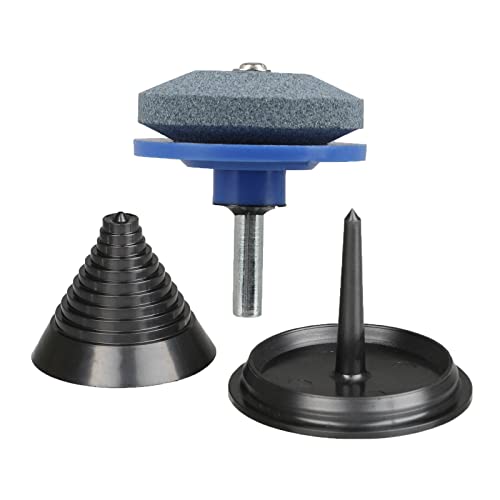
The Arnold BSK-1 is a straightforward sharpening and balancing kit designed for lawn mower blades. It turns your regular electric drill into a reliable sharpening tool, making it easy to maintain a clean cutting edge without investing in a dedicated grinder. The kit includes a cone-shaped sharpening stone and a simple static balancer, both built to handle blades from walk-behind mowers, lawn tractors, and zero-turn machines.
This kit is best suited for homeowners and DIYers who prefer to handle their own mower maintenance rather than taking blades to a shop. It's also useful for small engine mechanics who need an affordable backup method. But if you're a professional landscaper sharpening dozens of blades a week, you'll likely want a faster, more automated system.
In real-world use, the sharpener works quickly. Chuck it into a drill, run the stone along the blade's edge at a shallow angle, and you'll see burrs form within seconds. The vibration-free claim holds up -- the stone spins smoothly, which helps avoid gouging the blade. The balancer is straightforward: hang the blade on the cone and see which side drops. Rotate a few times to confirm. It's not fancy, but it effectively reveals if the blade is heavy on one side.
Build quality is typical for a budget tool. The sharpening stone is abrasive and should last through several sharpenings. The balancer is made of plastic and a metal cone. It's lightweight (just over two ounces) and stores easily in a drawer. For the price, durability is acceptable for occasional weekend usage. You won't hesitate to toss it in a toolbox or tool bag.
The main drawback is that you need a drill, and the process is manual. Balancing requires patience -- you'll have to grind off material from the heavy side and recheck. It's not as precise as a professional blade balancer, but it's more than enough to get a decently balanced blade. Overall, the Arnold BSK-1 is a smart buy for anyone who wants to keep their mower cutting cleanly on a budget. It's a practical addition to any workshop, especially if you already own a drill.
Color: Black
Dimensions: 3 x 7 x 10 inches
Weight: 0.24 pounds
Product Group: Outdoors
Binding: Lawn & Patio

Pros
- Sturdy metal build that won't crack or warp like plastic balancers.
- Accurately detects even small imbalances for improved cut quality.
- Works with a wide variety of blade center hole sizes thanks to the stepped cone design.
- Easy to use: place blade, watch gravity, and remove material from the heavy side.
Cons
- Some users report that the cone steps may not fit every blade perfectly, though most find a suitable step.
- Requires a bit of trial and error to center the blade precisely on the cone.
- The balancer itself has a narrow base that can tip if bumped during use.
The Oregon Precision Mower Blade Balancer (model 42-100) is a simple, no-fuss tool that belongs in every mower maintenance kit. After you sharpen your blade, tossing it back on the mower without checking balance is a gamble. Even a tiny imbalance can cause excessive vibration, rough cutting, and accelerated wear on your mower's engine and spindle bearings. This compact metal balancer solves that problem with a straightforward gravity-based design.
Best suited for homeowners who sharpen their own blades as well as professional landscapers, the balancer works with virtually any rotary mower blade. The stepped metal cone accommodates different center hole sizes, so it fits push mowers, riding mowers, and zero-turn machines from brands like Stihl, Husqvarna, Troy-Bilt, and more. The zinc die-cast body feels solid and substantial easily outlasting cheap plastic alternatives that can crack or warp over time.
Using the Oregon balancer is refreshingly simple. Place the blade flat on the cone, let it settle, and gravity will tell you if one side is heavier. If the blade dips, grind a bit more material off that side and recheck. The process takes only a minute or two but makes a real difference in how your mower runs. Users consistently report noticeably less vibration and a cleaner, more even cut after balancing.
One realistic limitation is that the cone steps might not align perfectly with every blade's center hole, though most users find a step that works. Also, the balancer has a narrow base, so you'll want to set it on a stable surface to avoid tipping. But these are minor tradeoffs for a tool that costs under ten dollars and can extend the life of your mower's engine and deck.
If you maintain your own mower blades, the Oregon Precision Blade Balancer is a smart, low-cost investment. It helps you get professional-level results at home, reduces vibration that leads to premature wear, and keeps your lawn looking its best. For the price and performance, there's little reason not to add one to your workshop gear.
Brand: Oregon
Model: 42-100
Material: Zinc die-cast metal
Weight: 0.2 pounds
Dimensions: 10 x 6 x 1 inches
Power Source: Manual
Color: Original Version
Compatibility: Fits most push mower and riding mower blades

Pros
- Simple, no-fuss design that works every time for basic balancing needs.
- Metal build feels solid and should hold up to years of garage use.
- Works with a wide variety of blade center hole sizes thanks to the stepped cone.
- Costs less than a coffee and delivers real performance improvement.
Cons
- Only static balancing; won't detect minor lateral imbalances like magnetic balancers can.
- May not fit blades with non-circular or odd-shaped center holes (e.g., some mulching or gator blades).
- Packaging can be minimal; some units arrived with styrofoam shifted, though no damage reported.
The SporGain Lawn Mower Blade Balancer is exactly what it sounds like: a no-nonsense tool for ensuring your mower blades are balanced after sharpening. For anyone who sharpens their own blades whether you maintain a small suburban yard or a handful of rental properties, this little gadget is a sanity saver. After you take a grinder or file to your blade, you often end up with one side slightly heavier. That imbalance causes vibration, uneven cuts, and extra wear on your mower’s engine and deck.
This balancer solves that problem simply. You set the blade on the tapered metal cone, and the heavy side drops down. Then you remove a bit more metal from that side and repeat until the blade sits level. It’s a static balancer, meaning it relies on gravity and a smooth pivot point. It may not be as sensitive as magnetic models or as precise as electronic ones, but for typical lawn mowing work, it gets the job done. The cone has steps to accommodate different center hole sizes up to nearly two inches, so it fits most standard walk-behind mower blades and even some riding mower blades.
Build quality is impressive for the price. The base and cone are made of metal, not plastic, so they won’t crack or warp. It’s small enough to toss in a tool bag or leave in a drawer. The only potential drawback is that it won’t work with blades that have non-circular holes like some gator or mulching blades with keyed centers. Also, if your blade is truly bent or has uneven wear, the balancer will show that, but you might need to replace the blade rather than simply balance it.
In real-world use, this balancer makes a noticeable difference. Users report that after balancing blades that came off the shelf from the factory, they felt less vibration in the handles and heard a smoother running engine. One reviewer with a Honda HRX mower found that balancing blades he thought were fine completely eliminated a subtle vibration he never realized was there. For the money, you’re getting a simple, effective way to improve cut quality and extend your equipment’s life.
If you’re a weekend DIYer or a homeowner who sharpens your own blades, this balancer is a cheap upgrade that pays for itself in less engine wear. Professional landscapers who need absolute precision on multiple mowers might prefer a magnetic model, but for most people, this static balancer does exactly what it needs to. A solid buy.
Product Dimensions: 2.4 x 2.4 x 2.1 inches
Item Weight: 3.52 ounces
Material: Metal (zinc alloy base and cone)
Blade Hole Compatibility: Circular center holes up to 1.97 inches (largest step)
Base Diameter: 2.36 inches
Color: Silver
Includes: One blade balancer only

Pros
- Durable zinc alloy build won't crack or warp like cheap plastic cones
- Universal stepped design centers easily on most residential mower blades
- Zero assembly required: ready for immediate use out of the box
- Two-pack provides solid value for workshop and mobile maintenance setups
Cons
- Requires a completely flat, level workbench surface to give an accurate balance check
- Does not offer the micro-precision of premium wall-mounted magnetic bearing balancers
- Static friction can occasionally mask minor weight differences on very light blades
The Silcpall 2-Pack Blade Balancer is a static balancing accessory designed for anyone who sharpens their own lawn mower blades. After grinding out nicks or restoring a bevel with an angle grinder or bench grinder, one side of the blade frequently ends up heavier than the other. Bolting an unbalanced blade back onto your mower creates violent vibrations that chew through spindle bearings, loosen deck hardware, and put unnecessary strain on the engine crankshaft. This tool offers a simple check to make sure both cutting wings carry equal weight.
Unlike the fragile plastic balancers that warp or break when dropped on a concrete garage floor, this model is cast from solid zinc alloy. The metal construction gives it sufficient heft to stay put and naturally resists rust in humid shop environments. Its stepped concentric design fits snugly into standard round and irregular blade center holes. You simply set the balancer on a flat surface, place the center hole over the appropriate step, and observe whether the blade rests level or dips to one side. If a wing drops, you simply grind a bit more metal from that side until it sits flat.
In terms of practical workshop use, this tool is ideal for seasonal maintenance on push mowers, zero-turn units, and lawn tractors. However, because it relies strictly on gravity, your working surface must be truly level. Testing on an unlevel workbench can easily lead to false readings. It also lacks the low-friction sealed bearings found on professional shop-grade wall-mounted balancers, meaning minute balance differences might not always register on very light blades.
For homeowners and DIY groundskeepers who want a quick, dependable way to verify their blade sharpening jobs without spending commercial shop money, the Silcpall balancer gets the job done cleanly. The metal construction ensures it will last for seasons of regular use, and having two in the pack means you can keep one by your grinder and stash the other in your field toolbox.
This tool is ideal for post-sharpening checks on standard residential push mower blades, commercial walk-behind decks, and riding mower high-lift blades. It works equally well after using an angle grinder, bench grinder, or hand file.
It also serves well in mobile landscaping trailers and small engine repair carts where space is limited and wall mounting a large magnetic balancer is not practical.

Pros
- Adjustable sharpening angle (15°-45°) covers most common mower blades.
- Magnetic balancer is quick to use and provides accurate results.
- Solid build quality with metal components and ball bearings for durability.
- Easy to set up and use, even for beginners with no prior sharpening experience.
Cons
- May not accommodate very large or unusually shaped mower blades due to fixed mounting design.
- Magnetic balancer works best on flat, clean blades; debris or heavy rust can affect accuracy.
- Price is higher than simple sharpening guides, but the combo adds balancing capability.
The SporGain Lawn Mower Blade Sharpener & Balancer Combo Kit is a dual-purpose tool set designed for homeowners and DIYers who want to keep their mower blades in top shape without relying on a shop. This kit includes an adjustable blade sharpener and a high-precision magnetic balancer, both made with solid materials that feel substantial in hand.
For real-world performance, the sharpener’s 15° to 45° adjustment range lets you match the factory bevel on most push mower and riding mower blades. The ball-bearing mechanism allows smooth, controlled strokes, and the enlarged handle gives good leverage. After sharpening, the magnetic balancer quickly shows if the blade is off-center, which helps prevent vibration and uneven cutting. Users typically see a cleaner lawn and less strain on the mower engine after using this combo.
Build quality is a highlight here. The sharpener is made from thick aluminum alloy with sealed ball bearings, and the balancer uses strong N52 magnets to hold the blade securely. Both tools feel rugged enough for regular use in a garage or shed. The magnetic balancer has a hidden magnet design that avoids interference, and the sharpener’s clamping mechanism holds blades firmly without slipping.
One realistic drawback is that the sharpener’s clamping range may not accommodate very wide or oddly shaped aftermarket blades. Also, the magnetic balancer requires a clean, flat blade surface for accurate results; heavy rust or debris should be cleaned off first. These are minor trade-offs for a tool set that otherwise performs very well for its intended audience.
Overall, the SporGain Lawn Mower Blade Sharpener & Balancer Combo Kit is a smart buy for anyone who mows regularly and wants to extend blade life while improving cut quality. It’s especially useful for homeowners with a few acres, or DIYers who maintain multiple mowers. The combination of adjustable sharpening and magnetic balancing saves time and delivers professional-level results without a steep learning curve.

Pros
- Wide compatibility with multiple blade hole types and brands
- Helps achieve smoother cutting and less vibration after sharpening
- Lightweight and easy to store in any workshop or garage
- Affordable price point for hobbyists and homeowners
Cons
- Plastic adapters may fit loosely on some balancer spindles, affecting precision
- Requires a level surface and careful visual inspection for accurate results
- Not as robust as metal balancing tools for heavy-duty commercial use
The LIZEWEI Lawn Mower Blade Balance Adapter Set is a practical accessory for anyone who sharpens their own mower blades. It includes a universal precision blade balancer plus five plastic adapters designed to fit different blade hole patterns: 5-point star, 6-point star, 7-point star, T-shirt holes, and bowtie holes (which also fit rectangular openings). This solves the common frustration of blades that won't center properly on the balancer's rounded steps, allowing for accurate balancing after sharpening.
This set is best suited for DIY homeowners, weekend lawn care enthusiasts, and small-scale property maintainers. If you regularly sharpen your reel or rotary mower blades and want to reduce vibration and engine wear, this kit provides a straightforward solution. It is not designed for high-frequency commercial use but handles typical residential lawn maintenance tasks with ease.
In real-world use, the system works as intended on a level surface. Place the appropriate adapter on the balancer spindle, set the blade on top, and observe if one end drops lower than the other. That indicates the heavier side needs more material removed. Several verified buyers report success balancing blades for brands like John Deere, Troy-Bilt, and Cub Cadet. The adapters effectively center the blade, making the process faster than balancing on a nail or screw.
Build quality is adequate for the price. The balancer is a simple tapered cone, and the plastic adapters feel reasonably sturdy. However, some users note that the adapters can have a slight slop on the balancer spindle, which may introduce minor inaccuracies. For the average homeowner, these tolerances are acceptable, but perfectionists might want to check fitment before purchase. The compact size (3.4 x 3.4 x 2.5 inches) makes it easy to store in a tool bag or drawer.
Overall, the LIZEWEI set offers good value for money. It addresses a specific pain point in blade maintenance and delivers on its promise of easier, more consistent balancing. If you are tired of guessing the center or using improvised methods, this inexpensive kit is a worthwhile addition to your workshop. Just be sure to use it on a stable, level workbench for best results.
Package Dimensions: 3.43 x 3.43 x 2.52 inches
Item Weight: 5 ounces
Manufacturer: LIZEWEI
ASIN: B0CHDH1QPL
Compatible Brands: Stihl, Oregon, Troy-Bilt, Cub Cadet, Honda, Lawn-Boy, Lawnmaster, Scotts, Snapper, Toro, and more
1 x 5-point star adapter
1 x 6-point star adapter
1 x 7-point star adapter
1 x T-shirt hole adapter
1 x Bowtie hole adapter (also fits rectangular holes)
1 x Universal precision mower blade balancer

Pros
- Strong magnet holds standard and commercial-grade blades securely
- Wall-mounted footprint keeps workbenches completely clear
- Universal cone profile centers various center hole shapes and sizes
- Straightforward design with no complicated electronic parts to fail
Cons
- Requires a strictly plumb wall or stud mount to give accurate readings
- Mounting fasteners may need adjusting based on your shop wall construction
- Not intended for non-standard hub geometries or heavy brush-clearing discs
The LAMBIS Magnetic Wall Mount Blade Balancer is a dedicated workshop maintenance fixture designed to verify the balance of rotary mower blades after grinding or filing. Whether you maintain commercial zero-turn fleets or keep your home lawn tractor in top shape, unbalance after sharpening is the primary cause of deck vibration and premature spindle failure. This unit acts as a direct replacement for familiar commercial balancer models 42-047 and 339075B, giving service technicians and DIY sharpeners a dependable check station.
Using the balancer is straightforward and quick. After sharpening your blade with an angle grinder or bench wheel, you place the center hole over the conical adapter. The internal magnet holds the blade firmly against the cone while allowing the blade ends to pivot freely on the center axis. If one wing dips, you know exactly which side needs another light grinding pass. The sensitive pivot mechanism reveals subtle weight differences that simple plastic cone balancers often miss due to friction.
From a workshop usability standpoint, the wall-mount format is a major plus. Bench space is always at a premium around grinder stations, so hanging this balancer on a nearby stud or tool board keeps your workflow clean and consistent. Its red powder-coated body holds up well against metal grit and general shop dirt. As long as you take the time to mount it completely plumb and level on a solid wall, the readings remain reliable cut after cut.
Keep in mind that the tool relies on gravity and a true vertical alignment. If your mounting post is tilted or exposed to heavy drafts, your readings can drift slightly. You also need to supply suitable fasteners for your specific wall material, whether that means lag screws into studs or anchors into concrete block.
For anyone sharpening multiple blades a season, the LAMBIS balancer pays for itself by sparing your mower deck from destructive vibration. It provides solid shop utility, commercial-style operation, and clear feedback without taking up any bench surface.
For the most reliable balance readings, mount the unit at eye level on a sturdy, plumb wooden wall stud or rigid masonry pillar. Use a torpedo level against the mounting plate to ensure it sits completely straight in both horizontal and vertical axes before driving your screws home.
Position the balancer within arm's reach of your bench grinder or flap disc station. Always wipe the blade's center bore and the balancer's conical adapter clean of metal filings and grass residue before mounting the blade, as foreign debris can tilt the blade and produce a false reading.
Practical Guide on How To Balance Lawn Mower Blade: Steps, Tools, and Precision Techniques
Balancing a lawn mower blade requires isolating the rotational center, identifying the heavier end, and removing tiny increments of steel from the trailing side until both wings rest horizontally. An accurate balance prevents damaging vibrations that loosen deck fasteners and ruin spindle bearings. Implementing a structured process ensures the mower operates smoothly while delivering clean, even cuts across the turf.
Why Rotary Blade Balance Protects Spindles and Engine Bearings
A lawn mower blade spins at speeds frequently exceeding 3,000 revolutions per minute under normal mowing throttle. At that rotational velocity, an imbalance of merely a fraction of an ounce generates aggressive centrifugal force that travels directly into the spindle assembly. Over time, that continuous shaking fractures aluminum spindle housings, breaks deck welds, and accelerates bearing race failure. On walk-behind mowers where the blade mounts directly to the engine crankshaft, severe imbalance can even damage internal engine bearings and oil seals.
Uneven weight distribution also degrades the appearance of the lawn. When an unbalanced blade wobbles vertically as it rotates, one cutting edge strikes the turf slightly lower than the opposite side. This uneven rotation produces a stepped, wavy cut pattern across the lawn that scalps sections of turf. Keeping both wings at identical weight ensures a uniform cutting plane and preserves clean grass leaf tips that resist browning.
Essential Safety Preparation and Safe Blade Disconnection
Servicing any cutting component begins with completely preventing accidental engine starting or electrical engagement. For gas-powered mowers, disconnect the spark plug wire and secure the boot far away from the terminal. Cordless electric mowers require removing the battery pack and pulling any removable safety keys before inspecting the underside. Riding mowers and lawn tractors should have the parking brake set, cutting deck lowered, and ignition key removed.
Removing the blade bolt safely requires blocking blade rotation rather than holding the sharp metal with bare hands. Wedge a heavy scrap block of wood between the blade wing and the inner deck baffle to secure the assembly in place. Wear thick leather work gloves to protect hands from burrs, nicked edges, and sudden slipping wrenches. Loosen the center mounting bolt counterclockwise using a properly fitting socket wrench, taking note of the orientation of any cupped Belleville washers or blade adapters.
Thorough Surface Cleaning and Initial Straightness Checks
Accurate balancing is impossible if the blade carries dried grass clippings, compacted soil, or sticky weed sap. Caked debris concentrated on one wing can weigh several grams, creating a false reading that misleads your sharpening adjustments. Scrape both sides of the blade thoroughly using a putty knife, followed by a stiff wire brush to expose clean bare metal. Wipe down the center mounting area to remove grease and grit that might prevent the blade from seating squarely on a balancing cone.
Once the steel is clean, inspect the blade structure for physical damage before reaching for balancing equipment. Lay the blade flat on an open workbench to verify that both wings remain parallel and unbent along their main horizontal axis. Look closely for hairline fractures around the center mounting hole and inspect the lift sails for severe thinning. A cracked or severely twisted blade represents a serious safety hazard and must be replaced immediately rather than ground or balanced.
Using Static Cone Balancers for Round Center Holes
Static cone balancers represent the most popular, cost-effective choice for residential blade maintenance. Devices such as the Oregon 42-100 precision mower blade balancer utilize a stepped zinc die-cast cone that rests on a sharp central pivot pin. Models from Arnold and SporGain follow a similar mechanical principle, using concentric step tiers to center various round hole diameters. The stepped design allows the cone to self-center inside standard round blade openings ranging from half an inch upward.
Operating a static balancer requires setting the base on a completely flat, level workbench free from shop drafts. Place the cleaned blade horizontally onto the stepped cone, allowing the center hole to nest snugly on the matching diameter tier. Release the blade gently without applying downward or spinning force, then watch how the cutting wings react. If the blade remains completely horizontal, the weight distribution between both cutting wings is well balanced.
If one end immediately dips toward the table surface while the other rises, the downward wing carries excess mass. The heavy side requires controlled metal removal to match the lighter opposite wing. Avoid attempting to hold the blade level manually while inspecting the cone; always allow gravity to stabilize the tilt naturally. Mark the heavy wing with a permanent marker so you do not accidentally grind the lighter side during corrective filing.
Operating Magnetic Wall-Mounted Balancers for Precision Checks
Magnetic wall-mounted balancing tools, such as the LAMBIS magnetic balancer, offer superior precision by eliminating mechanical pivot friction. These units mount securely to a sturdy wall stud or vertical post, keeping the tool at eye level for effortless inspection. Strong permanent magnets hold the center hole of the blade against a freely pivoting horizontal spindle supported by sealed ball bearings. Because the blade hangs vertically with zero table drag, even tiny fractions of a gram cause a noticeable tilt.
Checking rotary balance on a magnetic rig involves aligning the blade horizontally across the magnetic faceplate and letting it swing freely. High-precision combo setups like the SporGain adjustable sharpener and magnetic balancer package help users quickly transition between grinding and verification. If you perform routine brushless electric mower blade maintenance, high magnetic sensitivity is especially valuable because lightweight cordless blades are particularly prone to high-frequency motor vibration. When the blade settles in a perfectly level horizontal position, balance is achieved.
Centering Non-Standard Star, Bowtie, and Irregular Center Holes
Many modern lawn tractors and riding mowers use specialized mounting hubs featuring 5-point star, 6-point star, 7-point star, or bowtie patterns. These non-circular cutouts often fail to seat evenly on traditional round cone balancers, causing the blade to wobble off-center. When a blade is tested off-center by even a single millimeter, the mechanical leverage changes and gives an inaccurate reading. Attempting to balance a star-pattern blade on a round cone without an alignment aid often leads to over-grinding the wrong wing.
Specialized adapter sets, such as the LIZEWEI 5-piece blade balance adapter kit, solve this centering dilemma effectively. These adapters snap into the specific star, bowtie, or t-shirt cutout to create a true circular interface for the balancer cone. Once the matching adapter is positioned inside the blade cutout, the entire assembly nests evenly onto the balancing stand. Homeowners should verify their blade center-hole geometry before balancing to confirm whether a specialty alignment insert is needed.
Correct Material Removal: Where and How Much Metal to Grind
When the balancer reveals a heavy wing, corrective metal removal must be executed methodically to avoid ruining the blade geometry. The most common mistake during balancing is grinding metal off the cutting edge to reduce weight. Sharpening the cutting bevel changes the factory edge angle and shortens the cutting surface unevenly. All balancing metal should instead be ground from the blunt trailing edge, the back flat heel, or the backside of the lift wing.
Remove steel in light, conservative increments using a hand file, angle grinder, or a drill-mounted corundum stone like the Arnold BSK-1 or jtfrkope sharpener. Keep the grinder moving along the rear heel of the heavy side to prevent overheating the steel and ruining its temper. Blue or purple discoloration indicates excessive heat buildup that softens the metal, reducing its edge retention. Following proper mower blade setup procedures ensures that the original blade profile and cutting angle remain intact throughout this process.
After making a few light grinding passes, wipe away metal filings and return the blade to your balancing tool. Never attempt to remove all excess weight in a single aggressive grinding session. Compare the horizontal position after each pass until both wings hang level on the cone or magnetic spindle. Once balance is restored, brush away all remaining burrs along the edge using a medium hand file.
Differentiating Static Weight Imbalance from Aerodynamic Blade Bends
A mower blade may balance perfectly on a static cone yet continue to vibrate aggressively once bolted underneath the mower deck. This puzzling situation often stems from an aerodynamic or vertical bend rather than a weight disparity. Striking a hidden tree root, rock, or metal surveyor pipe can bend one wing upward or downward without detaching any metal. Although both wings weigh the exact same amount, the bent wing travels along a different horizontal plane, producing severe dynamic vibration during rotation.
You can easily detect a bent blade by performing a simple blade tracking check directly on the mower. Measure the vertical distance from the cutting edge tip of one wing to a fixed reference point on the bottom of the mower deck skirt. Rotate the blade 180 degrees by hand and measure the distance from the opposite cutting tip to the exact same reference point. If the two measurements differ by more than one-eighth of an inch, the blade is bent out of true and must be discarded.
Diagnosing Residual Deck Vibration After Sharpening and Balancing
If your mower deck shakes after reinstalling a freshly balanced blade, check the mounting hardware and interface surfaces thoroughly. A worn blade adapter with sheared alignment pins allows the blade to slip off center as the mounting bolt is tightened. Similarly, dirt trapped between the blade and the spindle flange creates an uneven seating angle that causes the blade to wobble. Inspect the spindle shaft for rotational runout by spinning it slowly without the blade attached.
Worn spindle bearings on multi-blade riding mower decks also simulate the symptoms of an unbalanced blade. Grasp the spindle pulley or shaft firmly and check for any perceptible vertical or lateral play. If the spindle shaft moves or produces a rough grinding noise when turned, the bearings require immediate replacement. Always torque the blade bolt to the manufacturer’s specified tightening value using a calibrated torque wrench to ensure proper clamping force.
Replacement Thresholds: When a Mower Blade Can No Longer Be Balanced
Lawn mower blades have a finite service life and cannot be sharpened and balanced indefinitely. Repeated grinding gradually narrows the cutting wing, pushing the cutting edge too close to the curved lift sail. If you have ground away more than one-third of the blade width, the structural strength is compromised and the blade should be retired. Furthermore, operating in sandy soil conditions sandblasts the curved lift wings, creating thin spots that can snap off under centrifugal stress.
Examine the center mounting hole carefully for oblong elongation, cracks, or deformation caused by loose mounting hardware. Any visible cracking radiating outward from the center hole warrants immediate disposal of the blade. Deep gouges from stones that cannot be smoothed out without removing excessive structural steel also indicate the need for replacement. Investing in a fresh replacement blade is far safer and more economical than risking catastrophic deck failure from an over-thinned blade.
Balancing your lawn mower blade after every sharpening session takes only a few minutes and protects your mower from costly mechanical damage. Whether you select an inexpensive zinc cone balancer, a magnetic wall-mounted spindle, or a multi-pattern adapter kit, steady patience yields superior cutting results. Regular maintenance guarantees smoother engine operation, longer deck bearing longevity, and a beautifully manicured lawn all season long. Always consult your mower operator manual for approved bolt torque specifications and safety guidelines before returning the machine to service.





Write Your Review
No reviews yet. Be the first to share your experience!