


Grass health depends heavily on the cutting action underneath the mower deck. When grass tips turn brown and frayed after mowing, many property owners immediately wonder how sharp should a rotary mower blade be. While a kitchen knife demands a razor edge, rotary mower blades operate under high rotational velocity where extreme sharpness actually causes premature dulling and metal chipping. Ensuring your equipment maintains the right balance between cutting effectiveness and impact strength keeps turf clean without destroying the blade edge.
Selecting suitable maintenance gear or replacement steel requires understanding how cutting edges interact with deck airflow and spindle rotation. Homeowners exploring mower setup details often evaluate sizing Craftsman mower blades or examining Ryobi mower blade setup options to confirm deck clearance before sharpening. Whether you maintain existing steel with drill-attached rotary sharpeners or install a factory replacement blade, striking the proper bevel profile prevents severe deck vibration and preserves cutting performance throughout the growing season.

Pros
- Fast 10-second chuck installation works with standard drill chucks
- Double-layer corundum grinds steel evenly with minimal pressure
- Four-pack setup delivers excellent spare backup value for the shop
- Lightweight and compact enough to store inside any field tool tote
Cons
- Guide disc can get scored if pressed too aggressively against sharp metal
- Not intended for heavily gouged, warped, or cracked commercial blades
- Requires high drill RPM to achieve smooth, chatter-free grinding
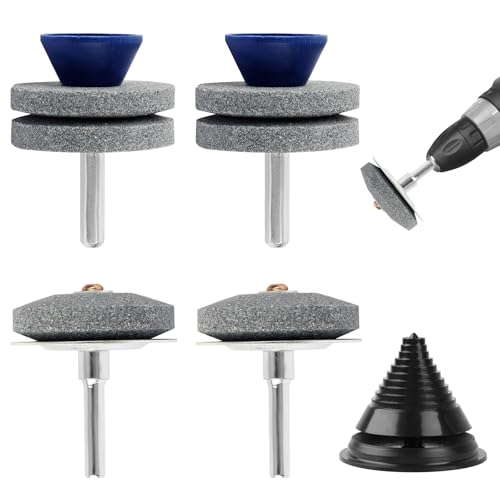
The Bneykrir 4-Piece Lawn Mower Blade Sharpener is a specialized drill attachment designed to take the headache out of seasonal lawn equipment maintenance. Instead of wrestling blades on a heavy stationary bench grinder or risking uneven hand-filing, this tool uses a double-layer corundum wheel that mounts right into your drill chuck. It is aimed squarely at homeowners, DIYers, and small-property groundskeepers who want clean, healthy grass cuts without spending shop fees on blade balancing and sharpening.
In practical workshop use, setting up the sharpener takes only a few seconds. Chuck the metal shaft into an 18V or 20V cordless drill, clamp your lawn mower blade securely into a bench vise, and bring the drill up to speed. The abrasive corundum stone cuts through mild surface oxidation, dull bevels, and small turf nicks smoothly. The plastic guide disc rests along the flat underside of the blade, keeping the abrasive angled against the factory bevel without demanding pinpoint freehand steadying.
Build quality is suited well for light to medium maintenance runs. The corundum material holds up to standard lawn tractor and push mower steel, though users should avoid leaning too heavily into the work. Applying steady, moderate passes keeps heat buildup low and avoids burning the temper on thin steel. The four-pack arrangement is practical, giving you plenty of abrasive material to work through multiple seasonal tune-ups, tiller blades, and utility yard tools.
There are a few trade-offs to keep in mind. The plastic collar can wear down if it drags forcefully against jagged metal edges, and deep gouges from rocks will still require an angle grinder with a flap disc first. That said, for routine seasonal maintenance and quick edge touch-ups, this four-piece kit provides straightforward functionality and solid value for any home garage.
Routine edge touch-ups on standard residential walk-behind and riding lawn mower blades.
Cleaning and sharpening curved garden tools, rototiller tines, sickle cutters, and axes.
Pre-season garage tune-ups where removing the blade for quick bench vise work is preferred.
Home toolkits where space or budget does not justify a dedicated stationary grinder.

Pros
- Durable all-metal build with diamond grit for long-lasting performance
- Simple attachment to any drill makes sharpening quick and convenient
- Extends the life of your mower blades, saving money over time
- Versatile tool that can sharpen various blades and garden tools
- Compact size for easy storage
Cons
- Requires a hand drill for operation, not a standalone tool
- May not be suitable for very dull or damaged blades that need professional grinding
- Limited to 100 grit, which may not provide the finest edge for all users
The UF-SHARP Diamond Lawn Mower Blade Sharpener is a handy accessory designed to help homeowners and lawn care enthusiasts keep their mower blades sharp without the hassle or expense of replacing them. This compact tool is particularly well-suited for budget-conscious shoppers, DIYers, and anyone who prefers to maintain their own lawn equipment. It also works well for suburban homeowners with medium-sized yards who want to extend the life of their blades between professional sharpenings.
In terms of performance, this sharpener attaches directly to any standard hand drill via its 5mm handle, making the sharpening process fast and straightforward. The 100-grit diamond grinding wheel provides consistent material removal, helping restore a sharp edge to dull blades. This directly improves cutting performance, resulting in cleaner grass cuts and reducing the risk of torn or ragged edges that can lead to lawn disease. Many users find that regular sharpening with this tool helps maintain a healthier lawn and better overall mowing results.
The build quality of the UF-SHARP sharpener is notable for its all-metal construction, which offers durability and reliability over plastic alternatives. The diamond grinding wheel is designed for long use and can be flipped to utilize both sides, effectively doubling its lifespan. This rugged design makes it a practical addition to any garage or shed, able to withstand repeated use without wearing down quickly.
Ease of use is a key advantage here. Simply insert the sharpener into your drill chuck, secure it, and run it along the edge of your mower blade. The process takes just a few minutes per blade, and the compact size of the tool allows for easy storage in a toolbox or drawer. Maintenance is minimal, as the grinding wheel requires no special care beyond occasional cleaning. This makes it an excellent option for first-time mower buyers or elderly users who want a simple, low-effort way to keep their blades sharp.
However, there are some realistic limitations to consider. The sharpener works best on blades that are moderately dull; severely damaged or excessively worn blades may still require professional grinding or replacement. Additionally, because it relies on a hand drill, you need to have a drill available and be comfortable using it. The 100-grit wheel provides a good balance of speed and finish, but some users may prefer a finer grit for a razor-sharp edge.
Overall, the UF-SHARP Diamond Lawn Mower Blade Sharpener offers excellent value for homeowners who want to maintain their lawn equipment without frequent blade replacements. It is a practical, cost-effective solution for suburban lawn owners, apartment dwellers with small mowers, and anyone who takes pride in keeping their yard tools in top shape. If you already own a hand drill and want to save money on blade changes, this sharpener is a smart investment for your lawn care routine.

Pros
- Bundled sharpening kit lets you maintain razor-sharp reel blades at home without paying for shop service
- Scissor-cut design promotes healthier grass growth and eliminates ragged, brown tips
- Quiet, push-powered operation produces zero exhaust fumes and lets you work anytime without disturbing neighbors
- Compact footprint hangs easily on garage wall hooks for hassle-free seasonal storage
Cons
- Struggles to cut tall stalks and thick weeds over four inches tall
- Twigs, pinecones, and small yard debris can abruptly jam the reel blades during use
- Requires consistent physical pushing effort, making it tiring on steep hills or expansive acreage
The American Lawn Mower 1815-18 bundle is a purely mechanical yard tool designed for homeowners who prefer quiet, fuel-free lawn maintenance. Instead of ripping grass blades with a high-speed rotating blade like conventional gas or cordless mowers, this tool uses an 18-inch, five-blade cylinder that shears grass against a stationary cutter bar. This scissor action leaves clean tips on the grass blades, reducing moisture loss and preventing the brown edges common with dull rotary mowers.
In practical use, the 18-inch cutting width hits the sweet spot between yard coverage and easy handling. The mower rolls smoothly on 10-inch polymer wheels, which provide enough traction to spin the reel without digging ruts into damp sod. Height adjustments range from 0.5 inches up to 2.5 inches, giving you plenty of flexibility whether you are keeping a low-cut warm-season lawn or maintaining slightly taller cool-season grass. Maneuvering around garden beds, patio borders, and tight corners is straightforward because the entire unit is lightweight and well-balanced.
The standout advantage of this specific package is the bundled SK-01 sharpening kit. Reel mowers inevitably lose their keen edge over time, and finding a local shop to sharpen a push reel can be costly or inconvenient. The included kit provides grinding compound, an applicator brush, and a back-lapping crank that lets you spin the blades in reverse. Applying the compound and turning the crank restores the razor edge against the bed knife in roughly fifteen minutes, keeping cutting performance high season after season.
As with any manual reel mower, realistic operating limits apply. This tool is built for regularly maintained grass, not tall brush or overgrown fields. If weeds or turf shoot past four inches, the blades will push them over rather than cut them. Fallen tree branches, dense pinecones, and firm mulch will also stop the reel instantly, requiring you to clear the obstacle before pushing forward. It demands a weekly mowing routine during peak growing months.
For homeowners with flat to gently sloping suburban lots under a quarter-acre, this setup is an economical and dependable choice. You skip the ongoing costs of spark plugs, engine oil, fuel stabilizer, and deteriorating battery packs. Keep the yard clear of sticks, walk at a steady pace, and you will get manicured, golf-course-style results with virtually zero operational overhead.
The included SK-01 reel mower sharpening kit solves one of the biggest ownership headaches associated with manual reel mowers: blade maintenance. Over several seasons of cutting, the contact edge between the five rotating blades and the stationary bed knife will wear down, leading to skipped grass blades and increased pushing resistance.
The kit includes a specialized abrasive grinding compound, a spreading brush, and a dedicated back-lapping hand crank. To service the tool, you hook the crank to the drive assembly, brush the compound along the cutting edges, and turn the blades backward. This process laps the blades against the bed knife, trueing the entire cutting assembly and renewing crisp metal-to-metal contact without grinding away excess blade material.
This mechanical push mower bundle shines on small to medium residential lawns where quiet operation, zero emissions, and lawn health are top priorities. It is especially well suited for dense turf varieties like Kentucky bluegrass, fescue, and bermudagrass that respond exceptionally well to precision scissor trimming.
It is an ideal pick for urban homeowners, townhome courtyards, and suburban properties where garage storage is tight and noise restrictions are strict. If you mow consistently every five to seven days and maintain a stick-free yard, this setup provides a pristine cut with zero fuel or battery charging required.

Pros
- Direct factory replacement design guarantees a secure, wobble-free fit on compatible SENIX gas mowers
- High-lift contour generates excellent airflow for cleaner bagging and reduced grass clipping buildup
- Tough heat-treated carbon steel construction stands up well against rough lawn debris and weekly mowing
- Simple DIY installation allows fast restoration of clean cutting performance without professional service
Cons
- Engineered specifically for select SENIX 21-inch mower models rather than universal deck configurations
- Installation hardware such as the blade bolt and washer must be reused from your existing mower setup
- Requires standard safety precautions like spark plug disconnection and thick work gloves during blade swapping
The SENIX 21-inch replacement mower blade is an essential yard care accessory tailored for homeowners, suburban lawn owners, and property caretakers who rely on compatible SENIX gas walk-behind mowers. Specifically engineered for models such as the LSPG-L6 and LSPG-M14, this durable cutting blade offers a convenient DIY solution for replacing dull, worn, or nicked factory blades. Keeping a sharp blade installed is one of the most effective ways to preserve lawn health, preventing ragged grass tears that invite disease and discoloration across your yard.
Performance under the mower deck relies heavily on proper aerodynamic circulation, and this blade features a high-lift contour designed to optimize airflow. As the blade rotates, it creates a vacuum effect that pulls flattened grass blades upright just before the cutting edge makes contact. This airflow dynamic results in an even, manicured finish on front lawns and backyards, while simultaneously propelling grass clippings into the collection bag or out through the discharge chute without clumping on damp morning turf.
In terms of construction, the blade is formed from heat-treated carbon steel designed to withstand regular contact with small branches, pine cones, and turf debris. Its durable structure resists bending and edge deformation under typical residential mowing workloads. A protective black coating helps shield the raw steel from moisture and acidic plant juices, reducing the risk of rust formation when your mower is parked in a garage, outdoor shed, or basement between weekend lawn maintenance sessions.
Swapping the blade is simple enough for budget-conscious DIYers and first-time equipment owners. The mounting center and positioning holes match original factory specifications, ensuring a tight, balanced alignment against the mower crankshaft adaptor. Homeowners only need basic hand tools like a socket wrench and a block of wood to secure the blade while loosening the retaining bolt. For personal safety, always disconnect the spark plug boot and wear thick work gloves before reaching underneath the mowing deck.
While this replacement part offers great value for compatible SENIX machines, its specific design means it will not fit other mower brands or alternative deck sizes. Users will also need to retain their existing mounting hardware, as extra bolts and washers are not included in the box. For suburban homeowners and lawn care enthusiasts seeking to restore factory-level cutting precision and tidy clipping dispersal to their SENIX LSPG mower, this 21-inch blade serves as a dependable, budget-friendly seasonal upgrade.
Constructed from thick carbon steel that undergoes heat treatment, this replacement blade provides the structural integrity needed to tackle thick grass and seasonal yard debris. The hardened steel core helps the cutting edge maintain its sharpness longer than softer aftermarket alternatives, minimizing the frequency of edge touch-ups throughout the growing season.
The outer surface features a durable dark coating that guards against environmental rust and moisture exposure. Because the blade is precisely weighted and balanced at the factory, it spins smoothly beneath the deck without generating the excess vibration that can wear down engine bearings and mower hardware over time.
Routine blade inspection is a critical part of seasonal outdoor power equipment upkeep. Homeowners should inspect the blade edge periodically, especially after mowing over exposed tree roots, gravel borders, or hidden garden rocks. Always ensure the mower engine is completely cool and the spark plug wire is disconnected before inspecting the underside of the deck.
Scraping away caked-on grass and mud after mowing wet lawns helps preserve the protective coating and maintains optimal deck airflow. If the cutting edge shows minor dulling from regular use, it can be touched up with a standard metal file or bench grinder, provided equal material is removed from both ends to preserve balance.

Pros
- Very affordable and easy to install on a standard power drill
- Includes a balancer to help maintain even blade wear
- Versatile for multiple garden cutting tools beyond just mower blades
Cons
- Lower customer rating suggests inconsistent performance or durability issues
- Manual sharpening with a drill still requires careful angle control and may not match factory edge quality
- Best suited for light to moderate sharpening tasks; heavy use may wear the abrasive quickly
The Calsoling 3-Piece Lawn Mower Blade Sharpener is a straightforward, no-frills accessory designed to help homeowners and DIYers keep their mower blades and other garden cutting tools sharp without investing in expensive sharpening equipment. This set includes three corundum abrasive stones mounted on stainless steel bases, plus a blade balancer, all for a price that makes it easy to try. The concept is simple: chuck one into any standard power drill, touch it to the blade edge, and grind away the dullness. For those who mow a standard suburban lawn once a week, this can be a practical way to extend blade life between professional sharpenings or replacements.
In real-world use, the sharpener works best on blades that are merely dull rather than heavily nicked or damaged. The corundum material handles moderate wear and resists heat buildup, which is important when using a drill at higher RPMs. The included balancer is a nice bonus, letting you check if the blade is still balanced after sharpening, which helps reduce vibration and uneven cuts. However, the sharpening process requires a steady hand and a consistent angle to avoid creating an uneven edge. It's not as precise as a dedicated sharpening jig or a professional grinder, but for quick touch-ups, it gets the job done.
Build quality is adequate for the price point. The steel backing provides some rigidity, but the abrasive stones are relatively small, measuring about 1.97 inches in diameter. This means you'll need to make multiple passes along longer blades. The three-pack is a practical advantage, allowing you to keep one in the garage, one in the shed, and maybe a spare. The 12-month warranty is a nice touch for such an inexpensive item, indicating the manufacturer stands behind it.
On the downside, the overall customer rating is modest, and some users have reported inconsistent performance or the abrasive wearing down faster than expected. This is not a tool for professional landscapers or anyone who sharpens blades daily. It also requires a power drill, which most homeowners already have, but it's an added step if you don't. The lack of a guide or depth stop means you could accidentally remove too much material if you're not careful.
Overall, the Calsoling 3-Piece Lawn Mower Blade Sharpener is a solid budget option for the DIY homeowner who wants a quick, easy way to maintain mower blades and similar tools. It's not a replacement for professional sharpening or high-end sharpening systems, but for the occasional touch-up, it offers good value. If you're a weekend warrior with a modest lawn and a cordless drill, this set is worth considering. Just go in with realistic expectations about its durability and precision.
Product Dimensions: 1.9 x 1.5 x 0.8 inches per stone
Item Weight: 3.53 ounces (total set)
Material: Corundum abrasive with stainless steel backing
Stone Diameter: 50 x 47 mm (1.97 x 1.85 inches)
Package Includes: 3 sharpening stones + 1 blade balancer
Compatibility: Works with power drills and hand drills; fits 99% of mower blade center holes
Warranty: 12 months
This sharpener set is best suited for homeowners and DIYers who need to touch up standard lawn mower blades, sickle bars, rotary tillers, hoes, and drill knives on a regular basis. It's ideal for quick maintenance between professional sharpenings or for those who prefer to keep their blades sharp without the expense of a dedicated sharpening station. Not recommended for heavy-duty or commercial use where blades are heavily damaged or need precise edge geometry.
Rotary Mower Blade Sharpness, Edge Geometry, and Maintenance Standards
A rotary lawn mower blade should never be sharpened to a razor edge. Instead, the optimal cutting edge should resemble the blunt sharpness of a common butter knife, leaving a flat landing approximately one sixty-fourth to one thirty-second of an inch thick along the leading bevel. This intentional bevel profile provides sufficient cutting authority while retaining structural steel thickness to survive high-speed collisions with dirt, thatch, and stray yard debris.
The Ideal Rotary Blade Edge: Why Razor Sharpness Causes Failure
Rotary mower blades do not cut grass through gentle shearing pressure. Modern walk-behind and riding mowers rotate their cutting tips at speeds reaching between fifteen thousand and nineteen thousand feet per minute, which equals roughly one hundred seventy to over two hundred miles per hour. At those extreme rotational velocities, the blade cleaves grass blades through sheer impact inertia rather than microscopic surgical slicing. A finely honed razor edge lacks the structural mass required to withstand those aerodynamic forces and physical impacts.
When a DIY enthusiast sharpens a rotary blade until it can slice paper, the microscopic edge becomes exceptionally thin and brittle. During the first few minutes of mowing, impacts against coarse grass stems, airborne sand, or small twigs immediately bend this delicate fin of metal over. This folding process, known in metalworking as wire edge rollover, turns an overly sharpened edge into a ragged, blunt mess far faster than an edge ground with a durable flat landing. Preserving a small blunt flat edge ensures the blade retains its cutting form across dozens of mowing hours.
The Standard Bevel Angle: Preserving the Factory Profile
Maintaining the correct angle during sharpening is just as critical as avoiding a razor edge. Most original equipment manufacturers grind rotary mower blades at a bevel angle between thirty and forty-five degrees, with thirty degrees serving as the traditional balance between sharpness and longevity. Grinding a bevel that is too shallow, such as twenty degrees, produces an excessively thin cutting wedge that chips easily upon contact with soil or stones. Conversely, a bevel exceeding forty-five degrees acts like a blunt sledgehammer that batters the grass rather than severing it cleanly.
Sharpening should always follow the established factory slope on the top side of the blade wing. Grinding the flat underside of the blade should be avoided entirely, aside from lightly dragging a stone or hand file across the surface to remove residual metal burrs. Removing metal from the flat bottom alters the critical aerodynamic airflow designed into the cutting deck. Keeping the bottom perfectly flat ensures air travels smoothly beneath the blade while the top bevel deflects clippings upward.
Rotary Cutting Physics vs. Reel Mower Scissor Action
Understanding the distinction between mower types clarifies why sharpness requirements differ so dramatically across turf equipment. Reel mowers, such as the manual push bundles offered by American Lawn Mower Company, function on a scissor-cut principle. In those systems, multiple helical reel blades rotate against a stationary horizontal bedknife with tight mechanical tolerances. Because the grass is sheared between two machined edges, reel mowers require precise back-lapping using abrasive grinding compound and back-lapping cranks rather than high-speed rotary grinding wheels.
Rotary mowers operate without a stationary mating blade, relying exclusively on rotational velocity and aerodynamic lift inside an open cutting chamber. A rotary blade that is ground like a reel cylinder edge will chip instantly because there is no supporting bedknife to stabilize the impact. Homeowners transitioning between reel mowers and rotary decks must recognize that rotary steel is engineered for impact resilience. Applying fine cutlery sharpening standards to high-velocity rotary components compromises both the equipment and the resulting cut quality.
Identifying When a Rotary Blade Is Too Dull to Cut Cleanly
Turfgrass provides the clearest immediate feedback regarding the physical condition of your mower blade edge. When a blade is adequately sharp, it leaves a clean, straight horizontal cut across the top of every grass stalk. Dull blades, on the other hand, tear and shred the grass fibers, leaving ragged white or tan threads exposed at the tips. Within twenty-four to forty-eight hours after mowing, a lawn cut with a dull blade develops a dull, whitish cast across the entire yard as the damaged tissue dries out.
Torn grass tips do not merely look unattractive; they also leave the lawn vulnerable to fungal infections and rapid moisture loss. Inspecting the metal underneath the deck often reveals rounded leading edges, gouges from gravel, or a rolled lip that catches your gloved thumb. On modern equipment with electric powerplants, understanding brushless electric mower blade requirements helps operators recognize that dull edges dramatically increase motor load and drain batteries faster. Maintaining a crisp butter-knife edge restores efficient energy consumption and protects turf health.
Sharpening Tools and Drill Attachment Performance
Homeowners have several practical options for restoring a dull rotary mower blade edge, ranging from traditional hand files to power tools. Dedicated drill-mounted rotary sharpeners, such as corundum and diamond grinding wheels from brands like UF-SHARP, Bneykrir, and EINDER, attach directly to standard hand drills via universal shafts. These sharpeners feature built-in guide collars that help maintain a consistent bevel angle against the cutting wing. Their portable format allows DIY owners to refresh dull steel quickly without investing in stationary grinding equipment.
The abrasive material used on these rotary tools influences grinding efficiency and thermal management during edge reshaping. Double-layer corundum stones with stainless steel backing plates provide aggressive material removal for heavily pitted or nicked steel edges. Meanwhile, diamond-coated grinding discs, such as one hundred grit wheels, maintain their dimensional profile over repeated use and resist wheel grooving. Regardless of which abrasive you select, operating the drill at moderate speeds prevents excessive friction and heat buildup along the steel edge.
Controlling temperature during grinding is essential for preserving the metallurgy of high-carbon steel mower blades. If you apply excessive pressure with a grinding wheel, the metal can quickly overheat and turn a deep blue or purple color. This discoloration indicates that the steel temper has been drawn out, leaving that portion of the cutting wing soft and incapable of holding an edge. Light, steady passes along the bevel preserve metal hardness while establishing the desired flat landing safely.
Blade Balancing: The Critical Step After Edge Resurfacing
Restoring the proper bevel angle is only half of the maintenance equation when servicing a rotary blade. Whenever you grind metal off a dull or damaged cutting wing, you inevitably alter the weight distribution between both sides of the blade. Operating an unbalanced blade at three thousand engine revolutions per minute creates severe centrifugal oscillation. This imbalance introduces destructive vibrations into the mower spindle bearings, deck welds, and engine mounting hardware, accelerating mechanical wear throughout the machine.
A precision blade balancer, such as the stepped cone balancer included in tool kits from Calsoling and EINDER, provides a simple method to verify equilibrium before reinstallation. You place the center mounting hole over the corresponding step on the cone and observe whether the blade rests horizontally. If one wing dips lower than the other, you must remove additional steel from the heavy side to achieve balance. Always grind excess metal from the trailing sail or non-cutting back edge of the heavy side rather than reshaping the cutting bevel you just established.
Factory Replacement Blades vs. Resharpening Worn Steel
While routine sharpening extends the operational life of mower blades, every piece of steel eventually reaches the end of its useful lifespan. Blades that exhibit deep stress cracks near the center mounting hole, severe bends along the horizontal plane, or excessive erosion on the curved air lift must be replaced immediately. Attempting to sharpen a blade that has lost more than one-third of its original width creates a serious safety hazard, as weakened steel can shatter under load. In these situations, installing a new replacement blade is far safer than continuing to grind compromised metal.
Replacement options such as the SENIX twenty-one inch heavy-duty replacement blade illustrate how factory steel is configured straight out of the box. Engineered from heat-treated carbon steel, this blade arrives with a factory bevel designed for gas mowers like the LSPG-L6 and LSPG-M14. New replacement blades typically feature an electro-coated paint layer over the cutting edge to prevent corrosion during shipping and retail storage. Homeowners should not grind away this protective coating prior to installation, as the spinning action against grass quickly scours the paint away to expose the factory edge.
Lift Profiles, Airflow Dynamics, and Aerodynamic Edge Wear
The sharpness of the leading edge functions in close coordination with the aerodynamic sail located at the rear of the blade wing. As the blade rotates inside the deck housing, the raised curve at the back generates strong upward suction that pulls grass stalks vertical right before the cutting edge strikes them. High-lift designs create maximum vacuum for clean bagging and discharge, whereas mulching blades feature curved, segmented profiles to circulate clippings repeatedly. When evaluating specialty options like black mower blade configurations, matching blade geometry to your preferred discharge mode is essential.
Airflow also carries abrasive grit, soil particles, and dry thatch that constantly scour the surface of the steel during operation. In sandy environments, this continuous abrasive circulation often thins out the metal at the base of the lift sail long before the cutting edge wears away. Inspecting the lift area for hollowed grooves, scalloping, or thinning metal is just as vital as checking edge sharpness. If the curved sail becomes paper-thin, the blade must be retired because the high air pressures can tear the wing apart during mowing.
Safe Removal, Inspection, and Reinstallation Protocols
Servicing a rotary mower blade demands strict adherence to safety protocols before working beneath the deck. On gasoline equipment, always disconnect the spark plug wire and secure the boot away from the terminal to eliminate any risk of accidental engine ignition. For battery-powered mowers, remove the primary battery packs and disconnect the safety key before tipping the machine. Always tip walk-behind mowers with the air filter and carburetor pointing upward to prevent crankcase oil from contaminating the intake and exhaust systems.
Loosening the retaining bolt requires securing the blade against deck rotation using a heavy wooden block wedged against the deck skirt or a dedicated metal blade clamp. Heavy leather work gloves protect hands from sharp metal edges, burrs, and sudden wrench slips. During reassembly, inspect the spindle shaft, blade adapter, and mounting washers for cracks, dirt buildup, or stripping. Tighten the central blade bolt securely according to manufacturer specifications, ensuring any curved spring washers are oriented with the concave side facing the blade.
Seasonal Maintenance Cadence and Practical Cutting Takeaways
Establishing a dependable maintenance schedule ensures that rotary blades never degrade to the point of tearing grass or damaging mower hardware. For average residential lawns, checking and touching up blade edges every twenty to twenty-five mowing hours provides consistent cut quality. Properties with sandy soil, exposed tree roots, or hidden rocks may require sharpening more frequently, often twice per growing season. Keeping a spare replacement blade ready in your workshop allows you to swap steel immediately without interrupting your weekend yard routine.
Ultimately, answering how sharp your rotary blade needs to be comes down to prioritizing impact resilience over razor fineness. A clean, thirty-degree bevel with a sturdy one-thirty-second-inch blunt landing delivers the ideal combination of clean grass clipping and long-term durability. By coupling proper edge geometry with precise dynamic balancing, homeowners protect their turf from disease while safeguarding mower spindles from unnecessary vibration. Thoughtful blade maintenance ensures every mowing session leaves behind healthy turf and uniform results.


Write Your Review
No reviews yet. Be the first to share your experience!