


Most John Deere walk-behind and riding mowers are not engineered to tow heavy loads, as their primary function is cutting grass rather than hauling weight. The how much weight can a john deere lawn mower pull question usually arises from users considering a mower as a temporary utility vehicle for small tasks. While some models have a hitch point, the manufacturer typically specifies a very low maximum towing capacity, often limited to a few hundred pounds at most, and many consumer models do not have a hitch at all.
Using a mower to pull a wagon or trailer beyond its rated capacity can strain the engine, damage the drive system, and create a significant safety hazard. The structural integrity of the mower frame and the stability of the wheels are not designed for the dynamic loads associated with towing. For most homeowners, the practical answer is that a lawn mower should not be used for towing unless the owner’s manual explicitly states a towing capacity and provides instructions for safe attachment.
If you need to move materials, a dedicated utility vehicle or a small tractor is a safer and more effective choice. Understanding these limitations helps prevent costly repairs and ensures the longevity of your equipment. For more on maintaining your mower’s integrity, see our guide on removing blades from riding mowers safely.

Pros
- Authentic John Deere original equipment component provides exact fit and dependable reliability.
- Rugged protective sheath protects the internal wire from lawn debris, grease, and weather exposure.
- Smooth internal travel delivers responsive control without stiff or sticking lever operation.
- Direct bolt-on replacement helps reduce equipment downtime during peak mowing season.
Cons
- Commands a higher price point compared to universal aftermarket replacement cables.
- Requires cross-referencing specific John Deere model numbers to confirm deck or chassis compatibility.
The John Deere Original Equipment Push-Pull Cable GC90194 is a vital mechanical replacement component designed to restore crisp control response to compatible John Deere lawn mowers, commercial walk-behinds, and outdoor power equipment. When a mower clutch or drive engagement cable stretches, frays, or binds after years of yard maintenance, installing a genuine factory-specified cable helps bring back smooth, predictable lever action. This ensures reliable engagement whether you are trimming grass along a sidewalk or tackling heavy spring growth across a large suburban property.
This replacement cable is well suited for suburban homeowners, rural property owners, landscaping professionals, and DIY lawn care enthusiasts who want to maintain their own machinery. If you rely on your John Deere mower for routine weekly cuts before weekend family gatherings, a sticking or non-responsive cable can quickly disrupt your schedule. Having an authentic OEM part on hand allows homeowners and small estate caretakers to service their equipment with confidence.
In practical yard care operations, cable tension directly influences drive smoothness and blade or clutch control. Based on product specifications, this push-pull cable is engineered to handle repeated cycling without binding or developing excess slack. A responsive cable prevents jerky starts and slipping when maneuvering around tight garden beds, ornamental trees, or fence lines. It also ensures consistent performance when navigating gentle slopes or mowing thick, damp grass where dependable drive power is critical.
Build quality is central to the design of this 0.85-pound assembly. The cable features a tough exterior housing designed to shield the internal core wire against flying gravel, damp grass clippings, dirt, and engine heat. Durable molded end fittings help resist tension fatigue and cracking under regular physical stress. Because outdoor equipment frequently encounters changing weather, the weather-resistant sheath and corrosion-resistant hardware work together to maintain low friction throughout the mowing season.
While installation is generally straightforward for anyone familiar with basic hand tools, users should take care to route the cable along the original factory pathway without creating tight kinks that could increase friction. As a realistic limitation, this genuine John Deere cable commands a premium price compared to generic aftermarket alternatives. Additionally, equipment owners must verify their specific machine serial and model numbers to ensure compatibility prior to purchasing.
For property owners and commercial operators who value long-term reliability and exact factory tolerances, the John Deere GC90194 push-pull cable represents a dependable investment. Choosing genuine original equipment parts helps preserve equipment resale value and minimizes the risk of mid-mow breakdowns during peak grass-cutting season.
Routine inspection of control cables is an easy way to prevent unexpected downtime before a busy weekend of yard work. During seasonal tune-ups, inspect the entire length of the cable sheath for cracks, splits, or melted spots caused by proximity to engine mufflers or spinning pulleys. Checking the end linkages for secure connection ensures your drive lever engages fully without hesitation.
Keeping the cable free of accumulated grass clipping buildup, mud, and moisture helps preserve internal lubricity over multiple seasons. When storing your mower in a shed or garage for the winter, ensure the cable is resting along its intended pathway without sharp bends or heavy objects resting on top of it. This simple care routine extends the lifespan of your controls and keeps your John Deere equipment operating smoothly year after year.
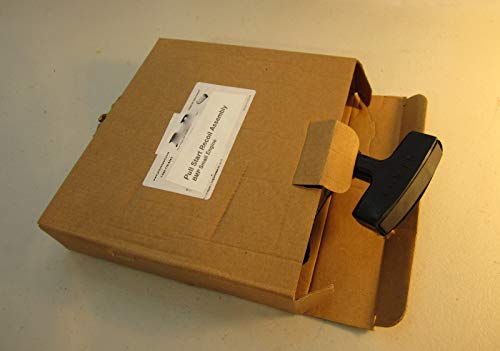
Pros
- Affordable alternative to OEM parts, keeping repair costs low for budget-minded homeowners.
- Sturdy plastic and metal construction holds up well under normal lawn mowing use.
- Easy to install with common hand tools, even for DIYers with limited experience.
Cons
- May not match the exact feel or smoothness of the original John Deere starter, but still works reliably.
- Limited compatibility only for JS20 models with 190cc engines; not a universal fit for other mowers.
The BMotorParts recoil pull start starter is a direct replacement unit designed for John Deere JS20 push mowers equipped with a 190cc engine. While it might sound like a niche part, this type of assembly is essential for any homeowner who relies on their mower to keep the lawn tidy. If the original starter breaks or becomes hard to pull, swapping in this aftermarket part can save you both time and money compared to dealer service.
This starter is best suited for DIY-oriented homeowners and weekend mechanics who have basic tool skills. You don't need to be a professional small engine technician to install it; just remove the old starter, bolt on this one, and connect the pull rope. The materials feel reasonably durable, with a combination of plastic housing and metal components that should hold up to regular seasonal use. In real-world terms, expect it to last through several mowing seasons, though heavy commercial use might accelerate wear.
One of the standout strengths is its price point. At roughly half the cost of an OEM John Deere part, this is a practical choice for those who prefer to handle their own repairs. The starter engages firmly, and the spring recoil is smooth enough for easy starting. However, it does have a couple of limitations. First, it only fits the specific JS20 190cc models, so double-check your engine code before buying. Second, the pull handle and rope are serviceable but not premium; they work fine but lack the polished feel of genuine equipment.
Overall, if you own a John Deere JS20 with a 190cc engine and need a reliable, cost-effective replacement recoil starter, the BMotorParts unit is a solid buy. It won't win any awards for refinement, but it gets the job done without breaking the bank. For homeowners who prefer to avoid dealer visits and want to keep their mower running strong, this is a practical, no-nonsense solution.
This recoil starter is designed specifically for John Deere JS20 push mowers with 190cc engines. Always verify your mower's engine model and year before purchasing. The starter mounts directly to the engine shroud using the same bolt pattern as the original. It includes the pull rope and handle pre-assembled, so installation is simply a matter of removing the old starter and bolting on the new one. No additional parts or modifications are required for a proper fit.
Understanding Towing Limits and Safety for John Deere Mowers
The core issue with towing from a lawn mower is that these machines are designed for propulsion and cutting, not for handling external loads.
- The engine torque is calibrated for moving the mower across turf, not for overcoming the rolling resistance of a trailer.
- When you attach a load, you change the mechanical dynamics of the machine, subjecting the transmission to stresses it was not designed to handle.
- This can lead to premature wear, belt slippage, or even catastrophic failure of the drive components on belt-driven or hydrostatic systems.
- Always consult the specific owner’s manual for your model, as capacities vary significantly between residential and commercial lines.
| Mower Type | Typical Towing Capability | Key Limitation |
|---|---|---|
| Walk-Behind Push | Not Recommended | No hitch, weak drive system |
| Walk-Behind Self-Propelled | Not Recommended | Drive system not rated for load |
| Riding Mower (Residential) | Check Manual (Often 0-200 lbs) | Frame strength, wheel stability |
| Commercial Zero-Turn | Check Manual (Varies) | High center of gravity, stability |
Before even considering a towing task, you must verify if your specific model has a factory-approved hitch point. Many mowers have a rear deck or frame that looks sturdy but lacks the reinforced mounting points required for safe towing. Improvised attachments, such as welding a hitch to the frame or using a bungee cord, are dangerous and void any warranty. The following checklist helps you determine if your mower is even a candidate for light utility use:
- Check the owner’s manual for a stated towing capacity.
- Verify the presence of a factory-installed hitch or tow bar.
- Ensure the mower has a stable, low center of gravity.
- Confirm the tires are in good condition and properly inflated.
- Make sure the deck is lifted or secured to prevent ground contact.
- Verify that the brake system can handle the added weight.
- Ensure the steering mechanism is not overloaded by the load.
Why Mowers Are Not Designed for Towing
Lawn mowers are optimized for speed and agility on grass, not for hauling. The wheelbase is often short, which makes the machine prone to tipping when a load is added behind it. The steering is designed for quick turns in a yard, not for the slower, more controlled movements needed when towing. On slopes, the risk of tipping increases dramatically.
A load behind the mower shifts the center of gravity backward, which can cause the front wheels to lift off the ground on an incline. This is a major safety hazard that can lead to serious injury. The engine also operates at a different RPM range when towing, which can cause overheating and reduced fuel efficiency. The cooling system may not be adequate for the sustained load, leading to engine damage.
Additionally, the braking system on a lawn mower is not designed to stop a heavy load. The brakes are sized to stop the weight of the mower itself, not the combined weight of the mower and a trailer. This means stopping distances will be significantly longer, and the brakes may overheat and fail. The suspension, if present, is also not designed to handle the dynamic loads of towing.
This can lead to poor handling and increased wear on the chassis. For a deeper look at mower components and their functions, consider our article on lawn mower blade bolt thread direction, which highlights the precision engineering involved in mower design.
Safe Practices If You Must Use a Mower for Light Tasks
If your owner’s manual explicitly allows for light towing, you must follow strict safety guidelines. The load must be well within the stated capacity, and the center of gravity of the load should be as low and as close to the hitch as possible. The trailer or wagon should have its own brakes if the load is heavy enough to require them.
The connection must be secure, using a proper hitch pin or latch, not a bungee cord or rope. The load should be balanced to prevent swaying or tipping. Always test the setup in a safe, open area before using it on a slope or in traffic. Never exceed the speed limits recommended for towing, as this can cause the load to become unstable. The driver must be aware of the increased turning radius and stopping distance.
Regular inspection of the hitch point and the mower’s frame is essential. Look for cracks, weld failures, or deformation in the area where the hitch is attached. The tires must be checked for wear and proper inflation, as under-inflated tires can fail under the extra load. The engine and transmission should be serviced according to the manufacturer’s schedule, as towing puts extra stress on these components.
If you notice any unusual noises, vibrations, or handling issues, stop immediately and have the mower inspected by a qualified technician. Do not attempt to repair a damaged hitch or frame yourself, as this can compromise the structural integrity of the mower. For more on maintaining your mower’s performance, see our guide on the cost of lawn mower blades and other maintenance parts.
Alternative Solutions for Moving Materials
Instead of risking damage to your mower, consider using a dedicated utility vehicle for towing tasks. A small tractor, a garden cart, or a utility trailer pulled by a car or truck are safer and more efficient options. These vehicles are designed to handle the loads and stresses associated with towing. They have stronger frames, better brakes, and more powerful engines.
The cost of a small utility vehicle is often less than the cost of repairing a damaged mower. It also provides a safer and more convenient way to move materials around your property. For larger properties, a zero-turn mower with a dedicated attachment might be an option, but again, check the manual for towing capabilities and restrictions.
For small, occasional tasks, a hand cart or a wheelbarrow may be sufficient. These tools are designed for manual transport and do not put any strain on your mower. They are also cheaper and easier to store. If you find yourself needing to tow frequently, it may be time to invest in a proper utility vehicle. This will save you time, money, and potential injury in the long run.
The key is to match the tool to the task. A lawn mower is a great tool for cutting grass, but it is not a great tool for towing. By understanding the limitations of your equipment, you can make informed decisions that protect your investment and ensure your safety. Always prioritize safety and follow the manufacturer’s guidelines to get the most out of your mower.


Write Your Review
No reviews yet. Be the first to share your experience!