


Riding mowers typically range from 400 to 600 pounds, depending on the engine size, deck width, and specific model design. This weight class makes them significantly heavier than walk-behind units, which usually stay under 100 pounds. The mass of the machine provides stability on uneven terrain but introduces challenges for storage, transport, and maneuvering through tight spaces. Understanding the exact how much does riding mower weigh is critical for homeowners preparing to move the equipment or assess if their driveway can support it.
Weight impacts more than just lifting; it influences tire pressure, ground clearance, and the stress placed on lawn surfaces during frequent use. A heavier mower may leave deeper tracks in wet soil, while a lighter model might struggle with traction on slopes. Buyers should verify the manufacturer’s listed curb weight and operating weight, as these figures differ based on fuel, oil, and grass catcher contents. For those considering a switch from a push mower, the jump in mass is substantial and requires careful planning for seasonal storage and maintenance access.
Pros
- Quiet and emission-free, great for early morning or late evening mowing without disturbing neighbors
- Very easy to assemble and requires almost no ongoing maintenance
- Cuts grass cleanly without shredding, leading to a healthier lawn appearance
- Lightweight and easy to store, takes up minimal garage or shed space
Cons
- Not suitable for tall or wet grass; requires frequent mowing when grass is dry and under 4 inches
- Limited cutting width of 14 inches means more passes on larger lawns, best for small to medium yards
- No power assist, so uneven or hilly terrain can make pushing more difficult
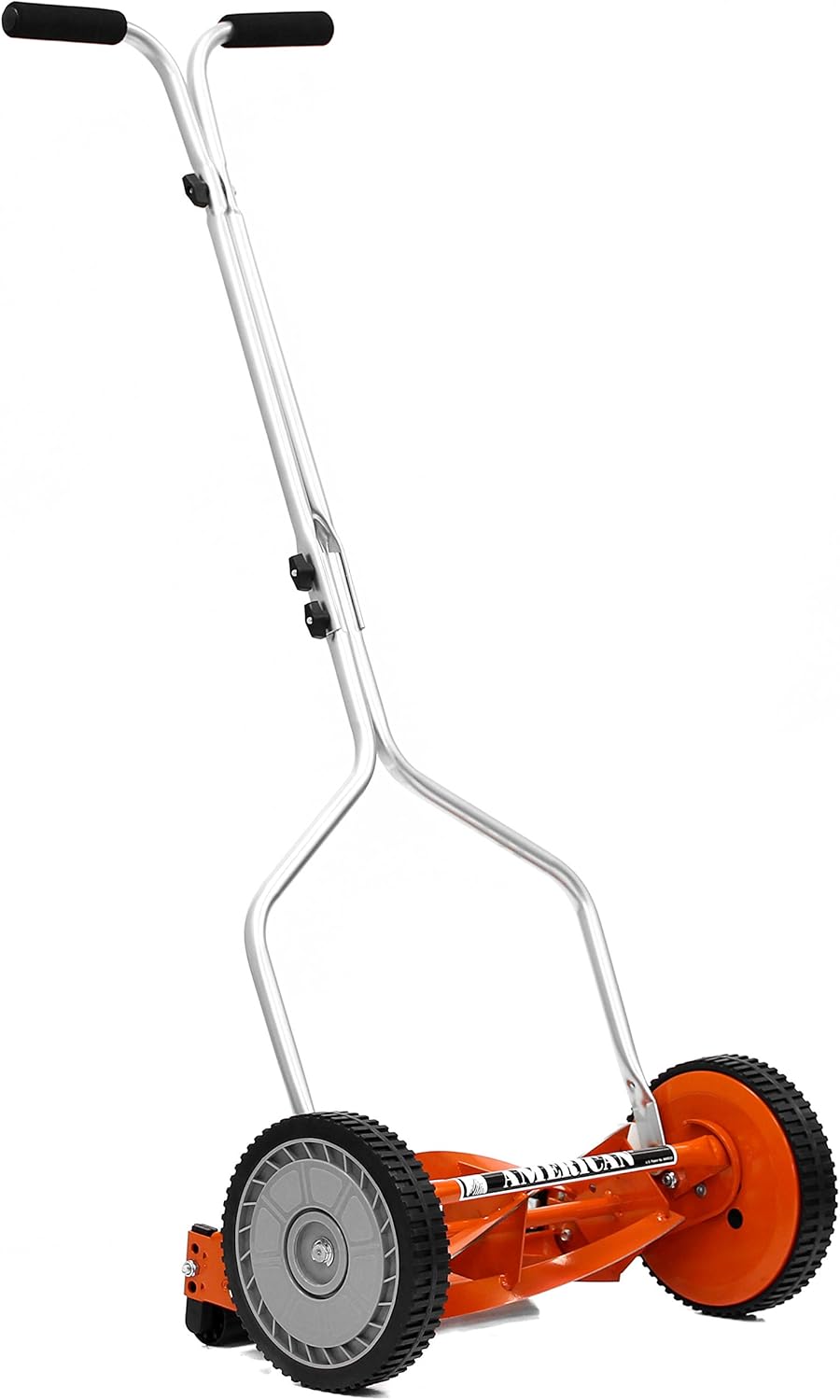
The American Lawn Mower Company 1204-14 is a classic push reel mower that brings back the simplicity of manual lawn care. Unlike gas or electric mowers, this tool relies entirely on your own muscle power to spin the reel and cut grass. It's a straightforward, no-nonsense machine designed for homeowners who prioritize quiet operation, zero emissions, and low maintenance over speed and brute force.
This mower is best suited for small, flat lawns with cool-season grasses like bluegrass, fescue, and rye. It's ideal for DIY homeowners who enjoy a bit of exercise while taking care of their yard. If you have a quarter acre or less and don't mind mowing more frequently during the growing season, this reel mower can deliver a clean, precise cut that actually promotes a healthier lawn by slicing rather than shredding the grass blades.
In real-world use, the 1204-14 performs best when you stay on top of your mowing schedule. It handles grass up to 4 inches tall, but for the best results, you should mow when the grass is dry and no more than about 3 inches high. The adjustable cutting height ranges from 0.5 to 1.75 inches, giving you good control over lawn appearance. The 8.5-inch polymer wheels roll smoothly on flat ground, but the mower can struggle on uneven or bumpy terrain. You'll need to make multiple passes if the grass is on the taller side, and wet grass will clog the reel and leave an uneven cut.
Build quality is decent for the price point. The frame is made of steel, and the reel blades are heat-treated alloy steel that stay sharp for years with minimal care. Assembly is straightforward and can be done in about 15 minutes with basic tools. The cushioned T-handle is comfortable for most users, though taller individuals might find it a bit low. At just 19 pounds, the mower is easy to lift and store, and it takes up very little space in a garage or shed.
One realistic drawback is that this mower won't replace a gas or electric model for larger or more demanding lawns. If you have a half-acre or more, or if your yard has hills, you'll likely find the manual effort tiring and time-consuming. Also, the 14-inch cutting width means more passes compared to a 21-inch power mower. But for its intended use - small, flat lawns - the American Lawn Mower 1204-14 is a reliable, eco-friendly, and cost-effective choice that gets the job done without noise, fumes, or ongoing fuel costs.
Understanding Riding Mower Weight Variations
The weight of a riding mower is not a single static number but a variable influenced by several mechanical and structural components. The engine displacement is the primary driver, with larger engines adding significant mass to the front of the chassis. Deck construction also plays a major role, as wider decks require thicker steel or aluminum to maintain rigidity and prevent vibration at higher RPMs. These structural elements combine to create a baseline weight that varies across different categories of riding equipment.
| Mower Type | Typical Weight Range | Primary Weight Contributors |
|---|---|---|
| Standard Riding Mower | 400-550 lbs | Engine, steel deck, rear axle |
| Lawn Tractor | 500-700 lbs | Heavy-duty frame, larger engine |
| Zero-Turn Mower | 450-600 lbs | Dual rear motors, independent wheels |
| Compact Utility Tractor | 1,000+ lbs | Transmission, heavy counterweights |
Standard riding mowers often sit in the middle of this spectrum, balancing power with maneuverability. Lawn tractors tend to be heavier due to their robust frames designed for towing and heavy-duty mowing. Zero-turn mowers distribute weight differently, with more mass concentrated in the rear to power the independent drive wheels. This distribution affects how the machine handles turns and climbs slopes, making weight distribution as important as total mass.
Operating weight is often higher than dry weight because it includes fuel, engine oil, transmission fluid, and sometimes a full grass catcher. A mower listed at 450 pounds dry might reach 500 pounds when fully fueled and loaded. Buyers should account for this additional mass when planning storage or transport. The difference matters for garage floor loading and for ensuring that ramps or lifts can safely support the machine during maintenance.
Material choices also influence the final weight. Steel decks are durable and affordable but add significant mass compared to aluminum or composite alternatives. Aluminum decks can reduce overall weight by 50 to 100 pounds, which may benefit owners with smaller driveways or those who need to move the mower frequently. However, aluminum decks may require more careful handling to avoid denting, so the tradeoff between weight and durability is a key consideration for long-term ownership.
Factors That Increase Mower Mass
Several specific components contribute to the final weight of a riding mower, and understanding these helps explain why similar-looking models can differ by hundreds of pounds. The engine is the heaviest single component, with larger displacement engines adding 100 to 200 pounds compared to smaller units. The transmission and drivetrain also add substantial mass, particularly in models with hydrostatic drives that use fluid power for smooth speed control.
- Engine displacement and block material add significant front-end weight
- Steel deck construction is heavier than aluminum or composite options
- Hydrostatic transmissions are heavier than gear-driven systems
- Full fuel and oil tanks add 20 to 30 pounds to operating weight
- Grass catchers and mulch kits add variable mass depending on usage
- Counterweights on utility tractors can add several hundred pounds
These factors interact in complex ways, meaning that a mower with a smaller engine but a larger deck might weigh more than a model with a bigger engine and a narrower deck. The chassis design also plays a role, with some manufacturers using heavier frames to improve stability and reduce vibration. This added weight can enhance the mowing experience by providing a smoother ride, but it also increases the difficulty of moving the machine.
Impact on Storage and Transport
Storing a riding mower requires planning for both weight and dimensions. A 500-pound machine cannot be lifted by one person, so storage solutions must account for safe handling. Garage floors are generally designed to support this weight, but older homes or structures with wooden floors may require reinforcement. The mower’s width and height also matter, as it may not fit through standard doorways or into tight garage corners without careful maneuvering.
Transporting a riding mower to a repair shop or for seasonal storage often requires a trailer or truck bed. The weight limits of the vehicle must be checked to ensure it can handle the load. Ramps or lifts may be needed to move the mower onto a trailer, and the weight of the machine affects the stability of the ramp. Owners should ensure that the mower is secured properly to prevent shifting during transport, which could cause damage or safety hazards.
Seasonal storage also involves protecting the mower from the elements while managing its weight. A heavy mower is difficult to move onto a storage rack or lift, so ground-level storage is often the most practical option. Covering the mower with a breathable cover helps prevent rust and moisture damage, but the cover must be secured to prevent wind from blowing it off. The weight of the mower also affects how it is positioned in the storage space, as it should be placed on a level surface to prevent fluid leaks or tire deformation.
Weight and Lawn Surface Stress
The weight of a riding mower exerts pressure on the lawn surface, which can affect grass health and soil compaction. Heavier mowers create deeper tire tracks, especially in wet or soft soil, which can lead to soil compaction and reduced water infiltration. This compaction can stress the grass roots and make it harder for the lawn to recover between mowing sessions. Owners should be mindful of mowing frequency and soil conditions to minimize this impact.
Lighter mowers may be better suited for delicate lawns or areas with poor drainage, as they exert less pressure on the soil. However, lighter mowers may also have less traction, which can lead to wheel spin on slopes or in wet conditions. The balance between weight and traction is a key consideration for owners with challenging terrain. Adjusting tire pressure can help optimize traction without adding excessive weight to the machine.
Soil compaction can be mitigated by mowing when the soil is dry and avoiding repeated passes over the same area. Aeration can help relieve compaction and improve soil health, but it is an additional maintenance task that owners should consider. The weight of the mower is a factor in this equation, but mowing habits and soil management practices also play a significant role in maintaining lawn health.
Safety Considerations for Heavy Equipment
Handling a heavy riding mower requires safety precautions to prevent injury or damage. The machine’s weight makes it difficult to stop quickly, so operators should maintain a safe distance from obstacles and people. The mower’s center of gravity affects stability, and leaning too far to one side can cause the machine to tip, especially on slopes. Operators should always follow the manufacturer’s safety guidelines and avoid mowing on steep inclines if the mower is not designed for such terrain.
- Always check tire pressure before mowing to ensure proper traction
- Avoid mowing on slopes steeper than the manufacturer’s recommendation
- Use a spotter when backing up or maneuvering in tight spaces
- Ensure the mower is on a level surface before dismounting
- Wear appropriate footwear and hearing protection during operation
- Secure the mower with a wheel chock when parked on a slope
Maintenance tasks also require safety precautions, as the mower’s weight can make it difficult to lift or move for under-deck access. A lift or jack stand is recommended for servicing the blade or underside of the deck, and the mower should be secured to prevent rolling. Fuel and oil should be drained or contained before lifting the mower to prevent spills and environmental damage. Following these safety practices helps prevent accidents and ensures the mower remains in good working condition.
Comparing Weight to Walk-Behind Mowers
The weight difference between riding mowers and walk-behind mowers is substantial, with riding mowers typically weighing five to ten times more. This difference affects how the mower is handled, stored, and maintained. Walk-behind mowers are easier to move and store, but they require more physical effort to operate. Riding mowers offer greater comfort and efficiency for larger lawns, but their weight introduces challenges for storage and transport.
For homeowners with smaller lawns, a walk-behind mower may be a more practical choice due to its lighter weight and easier handling. However, for larger properties, the efficiency of a riding mower outweighs the challenges of its weight. The decision often comes down to the size of the lawn, the terrain, and the owner’s physical capabilities. A lighter riding mower may be a good compromise for those who want the efficiency of a riding mower but are concerned about weight.
Transitioning from a walk-behind to a riding mower requires an adjustment period, as the handling and maintenance are quite different. The weight of the riding mower affects how it turns, stops, and climbs slopes, so operators should take time to familiarize themselves with the machine’s behavior. Understanding the weight and its implications helps owners make informed decisions about which mower is best suited for their needs.
Practical Tips for Managing Mower Weight
Managing the weight of a riding mower involves practical strategies for storage, transport, and maintenance. Using a garage floor mat can protect the floor from tire marks and provide a non-slip surface for maneuvering. A hydraulic lift or jack stand can make under-deck maintenance safer and easier, reducing the need to lift the heavy mower by hand. These tools help owners manage the weight of the mower without risking injury or damage.
When transporting the mower, use a trailer with a ramp that can support the weight and provide a gentle incline. Secure the mower with ratchet straps to prevent shifting during transport, and ensure the trailer’s weight limit is not exceeded. For seasonal storage, consider using a ground-level storage rack or a reinforced garage floor to support the mower’s weight. These practical tips help owners manage the weight of their riding mower safely and efficiently.
Ultimately, the weight of a riding mower is a key factor in its usability and long-term ownership. Understanding how weight affects storage, transport, lawn health, and safety helps owners make informed decisions and maintain their equipment effectively. By considering these factors, homeowners can enjoy the benefits of a riding mower while minimizing the challenges associated with its weight.
If you are considering a different type of mower for your specific terrain, our lawn mower for slopes guide offers insights into handling steep yards. For those interested in lighter alternatives, our small yard mower options may provide a better fit for compact spaces.





Write Your Review
No reviews yet. Be the first to share your experience!