


Most replacement mower blades arrive from the manufacturer with a factory-sharpened edge, meaning you typically do not need to sharpen them immediately upon installation. The primary reason to check a new blade is to verify that the edge is intact, free of transport damage, and properly balanced before the first mow. If the blade is a direct OEM replacement or a high-quality aftermarket part, the cutting angle is already set to the manufacturer’s specifications for optimal grass discharge and mulching performance.
However, “new” does not always mean “perfectly sharp” for every user’s needs. Some budget blades may have a duller factory edge to save on manufacturing costs, while others might be designed for specific deck configurations that prioritize airflow over a razor-like cut.
Understanding the difference between a factory edge and a maintenance edge helps you decide whether to sharpen your new mower blades right away or wait until you notice a decline in cutting quality. This guide covers the practical aspects of new blade readiness, balancing, and the tools used for sharpening if the factory edge is insufficient.

Pros
- Extremely affordable for a 5-pack, making it a low-risk investment for casual users
- Simple to use: just chuck into a drill and run along the blade edge at the correct angle
- Includes a balancer to check blade balance after sharpening, reducing vibration
- Works well on straight or slightly curved blades when used with patience and proper technique
Cons
- Not suited for heavy-duty commercial blades with steep factory bevels; may wear out quickly
- Some units may have defects (stone spinning on shaft or cracking) affecting durability
- Best results require a corded drill for consistent speed; battery drills lose power over time
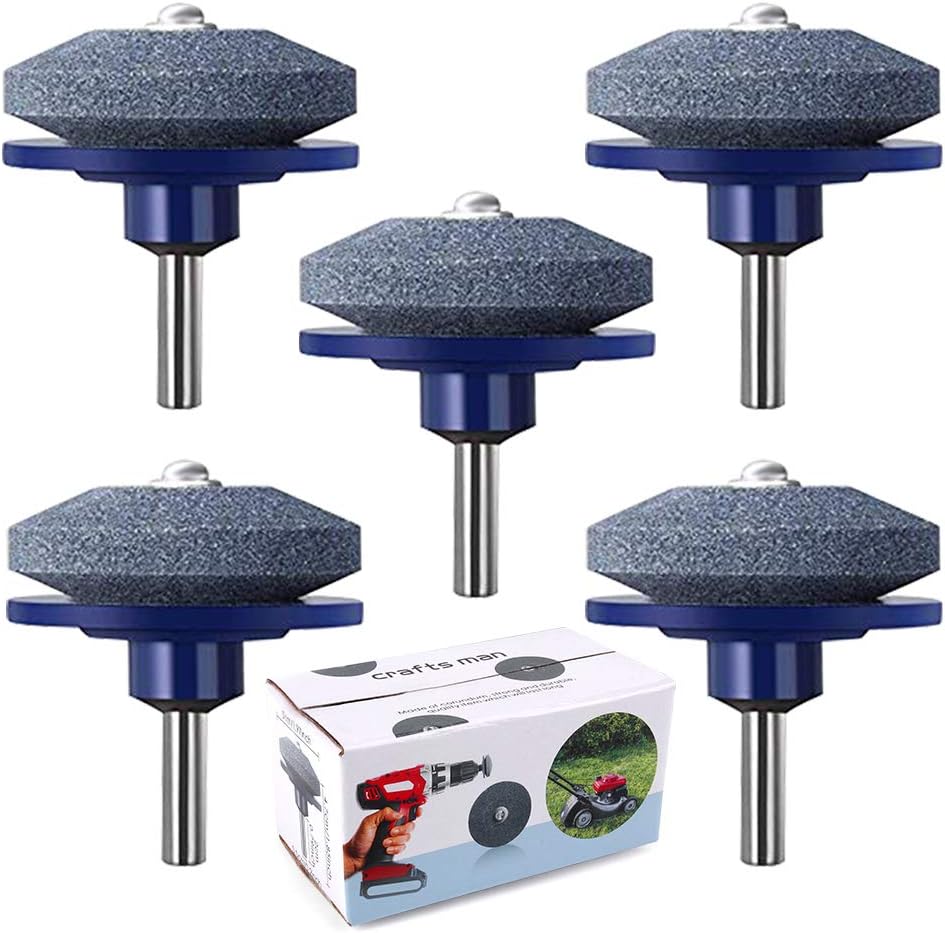
The cenoz 5 Pack Lawn Mower Blade Sharpener is a simple but effective attachment designed to help homeowners and DIY enthusiasts keep their mower blades sharp without investing in a bench grinder or expensive sharpening equipment. It fits any standard power drill (corded models work best) and uses a double-layer corundum grinding stone to restore a sharp edge on dull blades. This is a budget-friendly solution for anyone who wants smoother cuts and healthier grass without frequent blade replacements.
This sharpener is best suited for homeowners with push mowers, riding tractors under 54 inches, and other light to medium-duty cutting equipment. It's not intended for professional landscapers running high-end commercial mowers with thick, hardened blades. For those users, a dedicated bench grinder or abrasive wheel setup would be more reliable. However, for the average yard care routine, the cenoz sharpener gets the job done with a little patience.
Real-world performance depends heavily on technique. Users who clamp the blade securely and move the spinning stone back and forth along the existing bevel at a consistent angle report excellent results. The built-in balancer is a nice touch for checking that the blade spins evenly after sharpening. That said, some reviewers noted the grinding wheel can spin on the shaft if not tightened fully, and a few experienced cracking or disintegration after a minute of use. These issues seem to affect a minority of units, and the low price per stone (around $2 each) makes it easy to accept occasional failures.
Build quality is adequate for the price point. The double-layer corundum material is more durable than the standard single-layer stones found in many budget sharpeners. It doesn't melt or glaze over at high drill speeds, which is a common problem with cheaper alternatives. The 5-pack means you have spares to share or keep in the garage. Just be realistic: these are consumable items that will wear down over time, especially if you sharpen multiple sets of blades each season.
Overall, the cenoz 5 Pack Lawn Mower Blade Sharpener is a solid choice for DIY homeowners who want to extend the life of their mower blades on a tight budget. It's easy to use, installs quickly, and includes extras like a balancer. The main drawbacks are the limited suitability for heavy-duty blades and the occasional quality control issue. If you have a standard push mower or a small riding mower and don't mind spending a few minutes per blade, this set offers great value. For professionals or those with high-end equipment, look elsewhere.
Pros
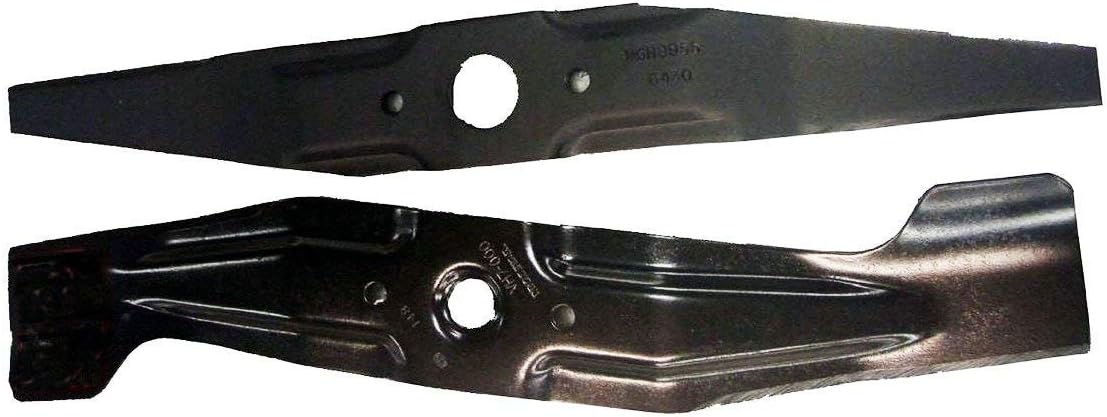
- Direct OEM fit for listed Honda HRR216 models, no guesswork needed
- Excellent cut quality that leaves a professional-looking lawn
- Saves money compared to dealer replacement costs
Cons
- Edges are not extremely sharp from the factory; a light sharpening might be desired for peak performance
- Compatibility is limited to specific frame serial numbers, so you must verify before buying
The Honda HRR216 Blade Kit is a genuine OEM replacement set designed for Honda's HRR216 series push mowers. It includes both the upper blade (72531-VH7-000) and the lower rotary blade (72511-VL0-S00), which work together to lift, cut, and mulch grass efficiently. This is not a universal or aftermarket blade, so it's built to match the original equipment exactly.
This kit is best suited for homeowners, DIY lawn care enthusiasts, and anyone who wants to keep their Honda mower running like new without paying dealer prices. If you own an HRR216K9, K10, or K11 with the correct frame serial range (MZCG-8670001 and up), these blades are a drop-in upgrade that restores the factory cutting performance.
In real-world use, the blades deliver a crisp, even cut that leaves grass looking clean and healthy. Many users report a noticeable improvement in lawn appearance after swapping dull blades for this kit. While the edges come sharp enough for normal mowing, some owners choose to give them a quick hone with sandpaper to maximize cutting efficiency. The two-blade design helps with mulching, reducing grass clippings to fine particles that decompose quickly.
Build quality is typical Honda solid. The metal blades are stiff and hold up well to rocks, sticks, and thick grass without bending. Installation is straightforward: remove the old blade, bolt on these with the correct torque, and you're back to mowing in under 20 minutes. The kit weighs just over three pounds, making it easy to handle during the swap.
One realistic limitation is that these blades are not extraordinarily sharp from the factory. They work fine for most people, but if you're particular about a razor-cut finish, you'll want to spend a few minutes with a file or sharpening stone. Also, compatibility is not universal across all HRR216 models, so confirm your mower's frame serial number before ordering — otherwise you risk buying the wrong blade set.
Overall, the Honda HRR216 Blade Kit is a no-brainer for owners of compatible mowers. It beats paying a shop for installation and gives you genuine parts that last. If you do your own maintenance and want a factory-perfect cut, this kit is a reliable, cost-effective choice that keeps your lawn looking its best season after season.

Pros
- Sturdy metal build that won't crack or warp like plastic balancers.
- Accurately detects even small imbalances for improved cut quality.
- Works with a wide variety of blade center hole sizes thanks to the stepped cone design.
- Easy to use: place blade, watch gravity, and remove material from the heavy side.
Cons
- Some users report that the cone steps may not fit every blade perfectly, though most find a suitable step.
- Requires a bit of trial and error to center the blade precisely on the cone.
- The balancer itself has a narrow base that can tip if bumped during use.
The Oregon Precision Mower Blade Balancer (model 42-100) is a simple, no-fuss tool that belongs in every mower maintenance kit. After you sharpen your blade, tossing it back on the mower without checking balance is a gamble. Even a tiny imbalance can cause excessive vibration, rough cutting, and accelerated wear on your mower's engine and spindle bearings. This compact metal balancer solves that problem with a straightforward gravity-based design.
Best suited for homeowners who sharpen their own blades as well as professional landscapers, the balancer works with virtually any rotary mower blade. The stepped metal cone accommodates different center hole sizes, so it fits push mowers, riding mowers, and zero-turn machines from brands like Stihl, Husqvarna, Troy-Bilt, and more. The zinc die-cast body feels solid and substantial easily outlasting cheap plastic alternatives that can crack or warp over time.
Using the Oregon balancer is refreshingly simple. Place the blade flat on the cone, let it settle, and gravity will tell you if one side is heavier. If the blade dips, grind a bit more material off that side and recheck. The process takes only a minute or two but makes a real difference in how your mower runs. Users consistently report noticeably less vibration and a cleaner, more even cut after balancing.
One realistic limitation is that the cone steps might not align perfectly with every blade's center hole, though most users find a step that works. Also, the balancer has a narrow base, so you'll want to set it on a stable surface to avoid tipping. But these are minor tradeoffs for a tool that costs under ten dollars and can extend the life of your mower's engine and deck.
If you maintain your own mower blades, the Oregon Precision Blade Balancer is a smart, low-cost investment. It helps you get professional-level results at home, reduces vibration that leads to premature wear, and keeps your lawn looking its best. For the price and performance, there's little reason not to add one to your workshop gear.
Brand: Oregon
Model: 42-100
Material: Zinc die-cast metal
Weight: 0.2 pounds
Dimensions: 10 x 6 x 1 inches
Power Source: Manual
Color: Original Version
Compatibility: Fits most push mower and riding mower blades
Pros
- Wide 15-degree to 45-degree angle range with 7 preset positions accommodates diverse blade bevel profiles.
- Durable aluminum alloy frame with ball bearings and snug bushings reduces grinding wobble.
- Extended 20.08-inch articulated arm supports blades from 1.77 inches up to 3.15 inches wide.
- Works across straight, mulching, and high-lift mower blade configurations.
- Supplied with 4 grinder adapter screws for convenient angle grinder integration.
Cons
- Requires an external angle grinder and grinding wheel, which are not included with the fixture.
- Listing contains conflicting width statements between 1.77-3.15 inches and 7-14 cm, requiring buyers to verify exact blade dimensions.
- Does not include a blade balancer to verify weight distribution after sharpening.
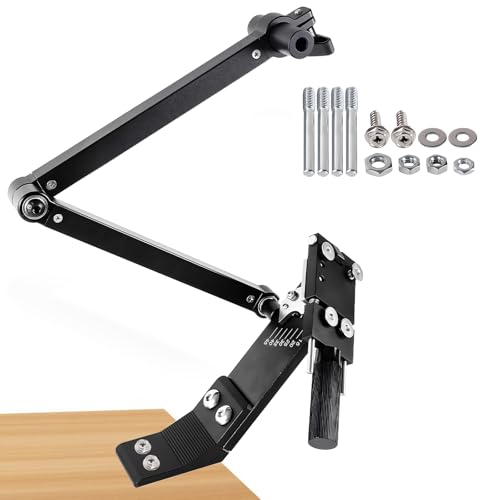
The Aurorasters Large Size Mower Blade Sharpener is a specialized workshop jig designed to clamp lawn mower blades securely and guide an angle grinder along the factory cutting edge. Built around a black aluminum alloy frame, this sharpening assembly features an extended 20.08-inch articulated arm, an enlarged 25mm handle, and an integrated ball bearing structure designed to stabilize the grinding pass. Rather than relying on freehand grinding, this guide system helps operators maintain a consistent edge geometry across the length of the blade.
This sharpening fixture is best suited for DIY homeowners, lawn care enthusiasts, riding mower owners, lawn tractor operators, and commercial property maintenance crews seeking to restore worn blades at home. The manufacturer states compatibility with standard straight, mulching, and high-lift lawn mower blades, making it a versatile tool for walk-behind, self-propelled, and zero-turn mower decks within the supported width parameters.
A core functional attribute of this sharpener is its 15-degree to 45-degree adjustable frame, which provides 7 discrete angle settings to match original factory edge specifications. Maintaining the proper cutting bevel is critical for clean grass cutting and minimizing turf stress, as freehand grinding often results in inconsistent angles or rounded edges. The articulated arm guides the attached grinder along the cutting face, accommodating blade widths specified in the listing between 1.77 inches and 3.15 inches.
From a construction standpoint, the sharpener utilizes wear-resistant and corrosion-resistant aluminum alloy. The manufacturer notes that close-fitting bushings sit snugly over the guide pins, working in tandem with the ball bearing assembly to reduce wobble, vibration, and mechanical slop. The unit measures approximately 13.5 x 9 x 3.4 inches in its boxed dimensions and includes 4 dedicated adapter screws to mount common angle grinder head configurations to the guide plate.
Owners must note that this product is a guiding jig and does not include an angle grinder, abrasive discs, or a blade balancing cone. Additionally, the manufacturer listing presents a slight dimensional variance, citing a blade width range of 1.77 to 3.15 inches in the main features and 7 to 14 cm in the descriptive text, so buyers should measure their mower blades prior to purchase. When sharpening blades, users should always wear personal protective equipment and ensure blades are properly balanced before reinstalling them on the mower spindle according to the equipment manufacturer instructions.
The Aurorasters sharpener features a 7-position angle selector spanning 15 degrees to 45 degrees, allowing users to match OEM bevel specifications accurately. This range covers standard push mower blades, specialized mulching blades with curved cutting profiles, and high-lift bagging blades.
Blade compatibility is listed for blade widths ranging from 1.77 inches to 3.15 inches (with descriptive references up to 7-14 cm). The package includes 4 angle grinder adapter screws designed to secure standard angle grinder housings to the articulated grinding carriage.
Constructed from aluminum alloy, the frame is designed to resist workshop moisture, rust, and surface wear. Mechanical stability is reinforced through snug-fitting bushings over guide pins and a ball bearing pivot design that prevents lateral arm drift during the grinding stroke.
Setup follows a basic four-step procedure: securing the sharpener base to a workbench or sturdy surface, setting the indexing pin to the desired bevel angle, clamping the mower blade firmly into the vise assembly, and securing the user-supplied angle grinder via the provided adapter screws.

Pros
- Sharpens a wide variety of single-edge garden tools quickly
- Reversible blades extend product life
- Safe ergonomic design reduces hand fatigue
- Dishwasher safe for convenient cleaning
- Compact and portable for easy storage
Cons
- Only suitable for single-edge tools, not serrated blades or knives
- Coarse grit may not produce a polished edge for fine cutting tools
- Handle may feel small for users with very large hands
The AccuSharp Garden Tool Sharpener is a straightforward manual sharpener designed to handle the dullest garden tools. It is not a power tool, but an essential workshop accessory for anyone who works with lawn mowers, pruners, shears, hoes, or shovels. Whether you are a homeowner maintaining your own yard or a professional landscaper, this tool saves you time and money by quickly restoring sharp edges without any electricity or complex setup.
Best suited for DIY homeowners, gardeners, and even contractors who need a reliable way to keep their tools in peak condition. The diamond-honed tungsten carbide blade is exceptionally hard, allowing you to sharpen very dull or damaged blades with just a few strokes. The reversible blade feature doubles its useful life, making it a long-term investment for your workshop. Users report getting 5 to 10 years of regular use before needing to replace the blade.
Build quality is solid, with a comfortable ergonomic handle that fits either hand and includes a guard to protect your fingers. The compact size (5 inches) and lightweight design (1.4 ounces) make it easy to store in a drawer or take along on jobs. It is dishwasher safe, so cleaning off residue from sharpening is hassle-free. However, keep in mind that this sharpener works only on single-edge tools; serrated blades or fine knives require a different tool. Also, the coarse grit is great for fast material removal but won't produce a polished, mirror-like finish.
Overall, the AccuSharp Garden Tool Sharpener is a practical, durable addition to any workshop or tool shed. Its ease of use, safety features, and long-lasting performance make it a smart buy for anyone who wants to keep their garden tools working like new without spending much time or money.

Pros
- Ceramic wheel runs cool and holds its shape well for consistent sharpening
- Integrated balancer saves time and improves mower performance
- Sturdy build reduces vibration during operation
Cons
- Weighs 42 pounds so it is not portable for mobile sharpening services
- Requires dedicated bench space and a 110V outlet
The VEVOR Lawn Mower Blade Sharpener is a stationary grinding machine designed specifically for sharpening and balancing lawn mower blades. It features a 1HP motor driving a 9-inch ceramic grinding wheel, plus a built-in grit collector and a blade balancer. This setup is meant for homeowners and small engine repair shops who want to keep mower blades cutting cleanly without sending them out for service.
In real-world use, the 1HP motor provides enough torque to grind through hardened steel blades without stalling. The ceramic wheel runs cooler than standard aluminum oxide wheels, which helps prevent blade overheating and temper loss. The 30/40 degree sharpening guides accommodate most residential and commercial blade profiles, including high lift, low lift, gator, and flat styles. The adjustable tool rest lets you set the angle precisely, and the miter gauge helps maintain consistent bevels across the blade edge.
After sharpening, the included balancer is a practical addition. You mount the blade on the cone and see which side drops. Grind a little more off the heavy side until it balances. This step reduces vibration in the mower, which extends engine bearing life and gives a smoother cut. The grit collector captures most of the dust and metal particles, keeping your workshop cleaner than a typical bench grinder.
Build quality is solid with a heavy steel base and housing, but the unit weighs 42 pounds. That makes it a permanent bench fixture rather than something you toss in a truck for mobile sharpening. It also requires a standard 110V outlet, so it fits most home garages. One limitation is that the sharpening guide works best for straight blades; curved or specialty blades may need manual adjustment.
Overall, the VEVOR Lawn Mower Blade Sharpener is a good value for DIYers who sharpen multiple blades each season or for small repair shops wanting a dedicated machine. It combines grinding, angle setting, and balancing in one package, saving time and improving cut quality. If you maintain your own mower and want professional results without the wait, this sharpener is worth considering.
Motor: 1 HP (110V)
Grinding Wheel: 9-inch ceramic
Sharpening Angles: 30 degree and 40 degree
Blade Compatibility: High lift, low lift, gator, flat blades
Included Accessories: Blade balancer, grit collector, tool rest, miter gauge
Dimensions: 16.93 x 12.4 x 10.43 inches
Weight: 42.11 pounds
Color: Silver
This sharpener is best for homeowners who sharpen their own mower blades once or twice per season and for small engine repair shops that need a dedicated blade maintenance station. It handles standard residential blades up to about 22 inches long. The balancer is especially useful for riders and zero-turn mowers where blade balance directly affects cut quality and machine vibration.

Pros
- Complete sharpening and balancing system in one purchase
- Smooth ball bearing handle reduces fatigue during extended use
- Adjustable angle range covers most common blade bevels
- Magnetic balancer is simple to use and highly accurate
Cons
- Aluminum alloy construction may not withstand heavy commercial use over time
- Some users may need to purchase additional adapter screws for non-standard angle grinders
- Large frame can be bulky to store in smaller workshops
The Aurorasters Lawn Mower Blade Sharpener & Balancer is a practical two-in-one tool designed for homeowners and DIYers who want to keep their mower blades in top condition without a trip to the shop. This kit includes both a sharpener with an extended 20.08-inch articulated arm and a magnetic blade balancer, so you can sharpen and balance in one workflow. It's best suited for weekend warriors and hobbyists who maintain their own lawn equipment, though it could also serve light commercial use.
In real-world use, the ball bearing handle glides smoothly, reducing hand fatigue when you're working through a set of blades. The adjustable frame lets you set the sharpening angle from 15 to 45 degrees across 7 positions, which covers most standard mower blades. The magnetic balancer is straightforward: just set the blade on the magnetic post and see where it dips. That makes it easy to spot and correct imbalances that cause vibration and uneven cuts. The included adapter screws fit most angle grinders, so you don't need to buy extra hardware.
Build quality is decent for the price point. The aluminum alloy frame feels sturdy enough for regular home use, but it's not built to withstand the abuse of a professional landscaping crew working daily. The bushings fit snugly over the guide pins, which helps reduce wobble during sharpening and improves accuracy. At 5.81 pounds, the kit is portable but not ultralight. The large frame takes up some bench space, so you'll want a dedicated spot in your garage or workshop.
One realistic drawback is that the aluminum construction may show wear over time if you're sharpening heavily pitted or thick blades frequently. Also, while the sharpener works with most angle grinders, you might need to source additional adapter screws for some models. The balancer is magnetic but not overly strong, so larger commercial blades might not hold as securely. These are minor issues for the typical homeowner, but something to consider if you plan to use it every week.
Overall, the Aurorasters Lawn Mower Blade Sharpener & Balancer is a solid investment for anyone who wants to maintain their mower blades at home. It delivers good precision, reduces vibration, and extends blade life between sharpenings. If you're a DIYer or homeowner who values a clean cut and doesn't want to pay for professional sharpening, this kit offers excellent value. For heavy commercial use, you may want to look at a more rugged steel option, but for most people, this will get the job done well.
Color: Black Red
Dimensions: 20 x 10 x 20 inches
Weight: 5.81 Pounds
Product Group: Lawn & Patio
Binding: Unknown Binding
Ideal for homeowners and DIYers who sharpen their lawn mower blades 2-4 times per season. Works well for standard residential mowers, riding mowers, and zero-turn blades. Also suitable for small engine repair shops that need a reliable sharpening setup for walk-behind mowers. Not recommended for heavy daily commercial use where a steel frame would hold up better.
Pros
- Drill-powered sharpening is fast and effortless, saving hours compared to manual filing.
- Corundum material holds up well to heavy use and stays sharp longer than standard stones.
- Blade balancer is a practical addition that helps extend mower life by reducing wobble.
- Compact kit is easy to store and transport, perfect for on-the-go maintenance.
- Affordable price point makes it accessible for weekend DIYers and homeowners.
Cons
- Some users may find the stones wear faster than expected with frequent heavy-duty use.
- The balancer may feel lightweight and less precise than professional-grade models.
- No storage slots for the stones inside the case, so they can shift during travel.
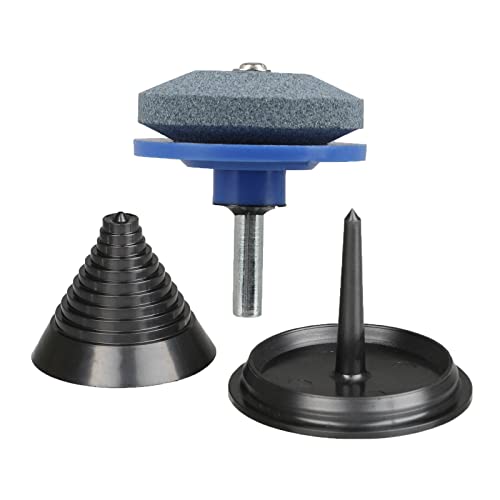
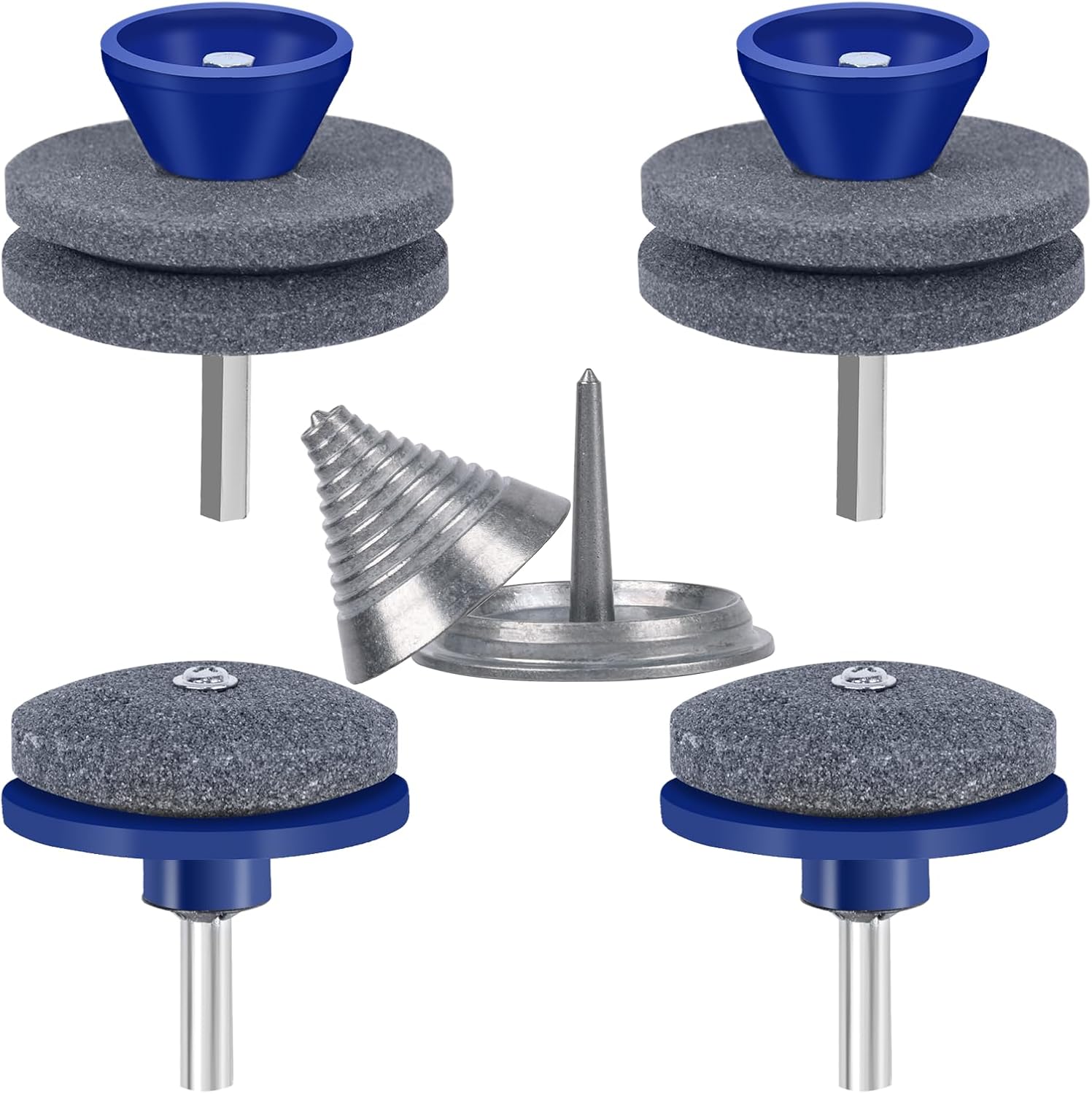
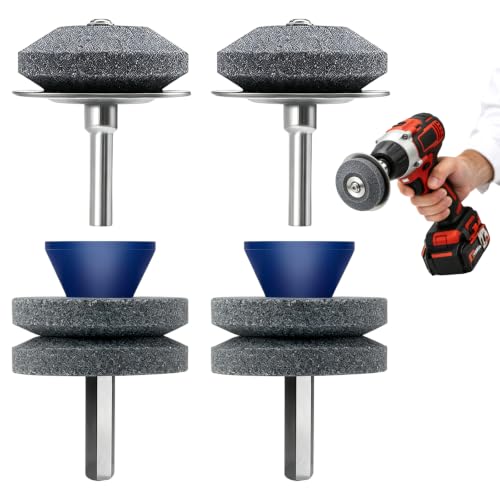
The cenoz 5-Piece Lawn Mower Blade Sharpener Kit is a budget-friendly solution for keeping your mower blades sharp without spending a lot of money or time. This set includes four corundum sharpening stones and a blade balancer, all designed to work with any standard power drill. If you are a DIY homeowner or a weekend gardener looking for a quick way to restore a dull blade, this kit can save you the hassle of manual filing.
In real-world use, the dual-layer stones (coarse and fine grit) handle rust and nicks effectively. Just chuck a stone into your drill, run it along the blade edge, and you will see a noticeable improvement in cutting performance within minutes. The 1/4-inch shank fits snugly into almost any drill, so no adapter is needed. After sharpening, the included balancer lets you check for wobble, which helps protect your mower's spindle bearings and ensures a cleaner cut. For light to medium maintenance on residential mowers, this kit does the job well.
Build quality is decent for the price. The corundum material is durable enough for occasional use, but professional landscapers who sharpen blades daily may find the stones wear faster than premium alternatives. The balancer is made of metal and feels functional but not heavy-duty. The plastic storage case keeps everything together, though the stones can slide around a bit. The kit also works on other tools like garden shears and tiller blades, adding to its versatility.
One realistic drawback is that the stones are relatively small, so you will need to take care not to overheat the blade edge when using a high-speed drill. Also, the balancer's adjustment steps may not fit every blade perfectly, but it covers the most common sizes. For the price, these are acceptable trade-offs.
Overall, the cenoz 5-Piece Blade Sharpener Kit is a practical buy for DIYers who want to maintain their lawn equipment without a big investment. It is not built for commercial abuse, but for home use and light shop work, it offers good value. If you own a drill and need a sharpening solution that is fast and simple, this kit delivers.
Brand: cenoz
Model: US20-320561
Included Items: 4 sharpening stones (2 gray dual-layer, 2 blue single-layer), 1 blade balancer, 1 storage case
Stone Material: Industrial corundum
Shank Size: 1/4 inch (universal for drills)
Balancer Compatibility: Fits blades 5/8" to 1.5" center hole
Product Dimensions: 2"D x 1"W x 2"H
Weight: 0.8 pounds
Power Source: Manual (drill-powered)
Style: Garden
This kit is ideal for DIY homeowners who mow their own lawns and want to sharpen blades once or twice per season. It works great for walk-behind mowers, riding tractors, and zero-turn mowers with standard blade holes. Because the stones are compact, you can also use them on garden shears, hedge trimmers, and rototiller blades. The included balancer makes it easy to check your work and prevent vibration-related damage. For professional landscapers who sharpen dozens of blades daily, a larger rotary tool or bench grinder may be faster, but this kit is a solid backup or travel option.

Pros
- Incredibly easy to use – just chuck it in a drill and run along the blade edge.
- Stainless steel base adds durability and resists melting from friction heat.
- Versatile – sharpens a wide range of garden blades beyond just mowers.
- Great value for the price, especially with five sharpeners in one pack.
Cons
- Requires a steady hand and consistent drill speed to avoid overheating the blade.
- Not designed for heavy-duty or industrial use; best for regular home maintenance.
- Some users report the abrasive can wear down faster than expected on very hard blades.
The cenoz Lawn Mower Blade Sharpener 5 Pack is a simple yet effective tool accessory that turns your electric drill into a quick blade sharpener. If you're tired of lugging a bench grinder outside or paying for sharpening services, this little attachment offers a convenient alternative. It's built with a corundum abrasive disc bonded to a stainless steel base, which addresses a common issue with cheaper plastic-based sharpeners that can warp or melt under high-speed friction.
This product is best suited for homeowners and DIYers who mow their own lawns and want to keep their blades sharp without a big investment. It's also handy for small-scale contractors who need a quick touch-up on the jobsite. The 5-pack gives you plenty of spares or lets you keep one in the shed, one in the truck, and a few for friends. Installation is as easy as inserting the included hex shaft into your drill chuck and running the rotating stone along the blade bevel at the correct angle.
In real-world use, this sharpener works surprisingly well for removing nicks and restoring a decent edge on standard mower blades. It won't give you a mirror finish like a professional grinder, but it'll get the blade sharp enough for a clean cut. The built-in balancer is a nice touch – you can mount the blade on the center hole and see if one side is heavier, then remove a bit more material from that side. Just remember to wear eye protection and gloves, as sparks and metal filings will fly.
Build quality is decent for the price. The stainless steel base feels sturdy, and the corundum stone holds up for several sharpenings. However, you need to be careful not to apply too much pressure or run the drill at max speed for too long, or you could overheat the blade edge and ruin its temper. The 5-pack means you can replace the stone easily if one wears out. Downsides? This isn't a tool for sharpening very dull or damaged blades – you'd still need a grinder for major reshaping. Also, the stone can load up with metal particles, so you'll need to clean it occasionally with a dressing stick.
Overall, the cenoz Lawn Mower Blade Sharpener 5 Pack is a smart buy for anyone who wants a fast, affordable way to maintain their mower blades without a dedicated sharpening station. It's not a heavy-duty pro tool, but for routine maintenance on residential mowers, it gets the job done. If you value convenience and are okay with a bit of manual effort, this is a solid addition to your workshop or shed.
Brand: cenoz
Model: Lawn Mower Blade Sharpener 5 Pack
Material: Corundum abrasive with stainless steel base
Size per sharpener: 50 x 47 mm (1.97 x 1.85 inches)
Package includes: 5 sharpeners, 1 packing box
Compatibility: Works with any power hand drill with a standard chuck
Weight: 1.04 pounds (package)
Home Lawn Mowing: Ideal for keeping residential push mower and rider blades sharp throughout the season.
Garden Maintenance: Also works on sickle bars, rototiller tines, and hedge trimmer blades for quick touch-ups.
DIY and Hobby Use: Perfect for homeowners who want to save money on blade replacements or sharpening services.
Workshop Standby: Keep a pack in your tool drawer for those times you notice a blade is dull right before mowing.
The short answer is no, you generally do not sharpen new mower blades before their first use. Manufacturers grind the edges of new blades to a specific angle and sharpness level during the production process. This factory edge is designed to handle the initial mowing sessions effectively. Sharpening a new blade immediately can actually remove material unnecessarily, potentially altering the balance or the specific cutting geometry intended by the mower designer. Instead, the focus should be on inspection and installation.
| Blade Condition | Action Required | Reason |
|---|---|---|
| Factory New (OEM/Quality Aftermarket) | Install and Use | Edge is pre-sharpened and balanced |
| New with Visible Nicks/Dents | Inspect and Sharpen | Damage from shipping or handling |
| New but Dull Edge | Sharpen if Needed | Budget manufacturing or specific design |
| Used/Refurbished | Sharpen and Balance | Edge is already worn down |
Before installing a new blade, perform a quick visual check. Look for any cracks, bends, or deep gouges that might have occurred during shipping. If the edge looks smooth and uniform, it is ready for the deck.
If you see significant damage, it is better to replace the blade than to try and repair it, as a compromised structural integrity can be dangerous. A simple test is to run your finger lightly along the edge (carefully, from the spine toward the tip) to gauge the sharpness. If it feels smooth rather than catching, the factory edge is likely sufficient.
There are specific scenarios where sharpening a new blade might be beneficial. If you are using a blade for a specific purpose, such as heavy mulching in a very dense, tall grass area, you might prefer a sharper edge than the factory standard provides.
Some users find that the initial cut is not as clean as expected, which can indicate that the blade needs a quick touch-up. However, this should be done with precision tools to maintain the original angle. If you are unsure, it is safer to mow a small test area and evaluate the cut quality before committing to sharpening.
Here are the key checks to perform on a new blade before installation:
- Inspect the edge for any cracks, bends, or shipping damage
- Verify the blade balance using a balancer tool or a nail test
- Check the mounting hole pattern against your mower deck
- Ensure the blade orientation (handedness) matches the deck requirements
- Confirm that the included hardware (bolts, washers) is present
Understanding Factory Edges and Blade Types
Not all mower blades are created equal, and the factory edge varies by blade type. A standard side-discharge blade often has a simpler, straighter edge designed for efficient grass collection. In contrast, a mulching blade features a more complex geometry with additional cuts or curves near the tip. These designs create an airflow pattern that chops the grass clippings into smaller pieces, which fall back onto the lawn. The factory edge on a mulching blade is critical for this performance, and altering it can reduce the mulching efficiency.
OEM (Original Equipment Manufacturer) blades, such as those from Honda or other major mower brands, are typically held to strict quality control standards. The listed specifications for these parts often include specific part numbers that guarantee compatibility with certain model years and deck configurations. For example, a Honda HRR216 blade kit includes specific upper and lower blades designed for that exact model.
These blades arrive with a sharp, consistent edge. Aftermarket blades, while often more affordable, may vary in edge sharpness. Some are designed to be “ready to use,” while others may require a light sharpening to reach their full potential. Always check the product description for notes on the edge condition.
Material quality also plays a role in how a new blade performs. High-carbon steel blades can hold an edge well but may be more susceptible to rust if not stored properly. Some blades come with a protective coating to prevent corrosion during storage. If you are buying a blade for long-term use, the material’s ability to retain a sharp edge after several mowing seasons is a key consideration.
A blade that loses its edge quickly will require more frequent sharpening, which adds to the maintenance effort. Understanding the material and design helps you set realistic expectations for how often you will need to sharpen the blade in the future.
When to Sharpen a New Blade
While immediate sharpening is rarely necessary, there are clear indicators that a new blade needs attention. The most common reason is visible damage. If the blade was dropped during installation or arrived with a nicked edge, it should be sharpened to remove the imperfection. A nicked edge can vibrate during operation, leading to premature wear on the spindle and deck. Sharpening out these small defects restores the blade’s balance and ensures a smoother ride. Always remove the blade from the mower before sharpening to ensure safety and precision.
Another reason to sharpen a new blade is if the cut quality is unsatisfactory. If the grass is torn or shredded rather than cut cleanly, the blade may be too dull. This is more common with lower-cost blades or those that have been sitting in inventory for a long time. In such cases, a light sharpening can improve the cut.
However, if the blade is a specialized type, such as a high-lift blade for bagging, altering the edge can affect the airflow. Consult the manufacturer’s guidelines or a local mower service shop if you are unsure about the appropriate sharpening angle for your specific blade type.
It is also worth noting that some blades are designed to be sharpened only on one side. This is common with certain mulching blades or blades with a specific lifting edge. Sharpening both sides on a one-sided blade can reduce its effectiveness.
Check the blade for any markings or consult the mower manual to determine the correct sharpening procedure. If you are not confident in your ability to sharpen the blade correctly, it is best to leave it as is and replace it when it becomes too dull. Improper sharpening can be more damaging than a dull blade.
Tools for Sharpening and Balancing
If you decide to sharpen your new mower blade, having the right tools is essential. A standard file can be used for minor touch-ups, but it requires steady hands and the correct angle. For more precise work, a bench grinder or an angle grinder with a sharpening jig is recommended.
These tools allow you to maintain a consistent angle along the entire edge, which is crucial for a balanced blade. Many mower owners invest in a dedicated blade sharpening jig to make this process easier and safer. The jig holds the blade securely and guides the grinder to the correct angle.
Balancing is just as important as sharpening. A new blade should be balanced, but if you sharpen it, you may remove material unevenly, causing it to become unbalanced. An unbalanced blade causes vibration, which can loosen the spindle bolt and damage the mower deck. A blade balancer is a simple tool that allows you to check the balance of the blade after sharpening.
If the blade tilts to one side, you need to remove more material from the heavier side until it balances horizontally. This step is critical for extending the life of your mower and ensuring a smooth cut. If you do not have a balancer, you can use a nail or a screw as a makeshift pivot, but a dedicated tool is more accurate.
Here are the essential tools for maintaining mower blades:
- Blade sharpening jig for consistent angle control
- Angle grinder or bench grinder with appropriate disc
- Blade balancer to check and correct balance
- Safety glasses and gloves for protection
- Socket wrench for removing and installing the blade
- Metal file for minor touch-ups and deburring
Safety and Maintenance Tips
Safety is paramount when working with mower blades. Always disconnect the spark plug wire before removing or installing a blade to prevent accidental starting. This is a critical step that is often overlooked. Wear safety glasses to protect your eyes from metal shards, and use gloves to handle the blade, as the edges can be sharp.
When sharpening, secure the blade firmly in a vise or jig to prevent it from slipping. A slipping blade can cause serious injury. Follow the manufacturer’s instructions for any specific safety precautions related to your mower model.
Proper storage of your mower blades can also help maintain their edge and prevent rust. Store the blades in a dry place, away from moisture. If you live in a humid climate, consider applying a light coat of oil to the blade surface before storage.
This will help prevent rust, which can dull the edge and require more aggressive sharpening. Regularly inspect the blades for signs of wear or damage. If you notice any cracks or significant bends, replace the blade immediately. Continuing to use a damaged blade can lead to further damage to the mower or even injury.
For more detailed information on maintaining your mower, you might find our guide on filing lawn mower blades helpful. It covers the specific techniques for using a file to sharpen blades without a grinder. Additionally, if you are dealing with a stuck blade bolt, our guide on loosening stuck blade bolts provides practical tips for removing stubborn hardware. These resources can complement your blade maintenance routine and help you keep your mower in top condition.
Ultimately, the decision to sharpen a new mower blade depends on its condition and your specific needs. In most cases, a new blade is ready to use as is. Focus on proper installation, balancing, and regular inspection. If you do choose to sharpen, use the correct tools and techniques to maintain the blade’s geometry and balance.
By following these guidelines, you can ensure that your mower blades perform optimally and last for many mowing seasons. A well-maintained blade not only cuts better but also reduces strain on your mower, extending its overall lifespan.




Write Your Review
No reviews yet. Be the first to share your experience!