


Ragged brown grass tips and uneven turf lines often signal that a cutting deck is struggling rather than cutting cleanly. When rotary edges become blunt from dirt, roots, or regular turf duty, many property owners wonder whether do you sharpen lawn mower blades or simply replace them at the start of each season. Routine sharpening helps maintain clean foliage slicing instead of tearing the grass, which prevents disease and reduces strain on the mower engine. Checking whether new mower blades come sharpened helps establish a baseline for edge expectations before scheduling maintenance.
Maintaining a proper cutting edge also protects the entire deck assembly against excessive drag and uneven wear. Regular edge maintenance requires understanding the difference between a butter knife edge and an overly thin razor profile that nicks easily on small rocks. Dedicated sharpening kits and basic hand tools make edge restoration straightforward for walk-behind units, lawn tractors, and zero-turn mowers. Investing a few minutes into evaluating your cutting surface ensures cleaner lawns and smoother machine operation.

Pros
- Extremely affordable and widely compatible with most residential mower blades.
- Simple to use: just chuck it in a drill and run along the blade edge.
- Including both sharpener and balancer means you get a complete blade maintenance solution.
- Lightweight and portable, perfect for small workshops and home garages.
Cons
- Requires a drill to operate, so you need one on hand.
- Manual balancing takes a bit of patience to get right compared to electronic balancers.
- Not ideal for heavy commercial use or high-volume shops where speed is critical.
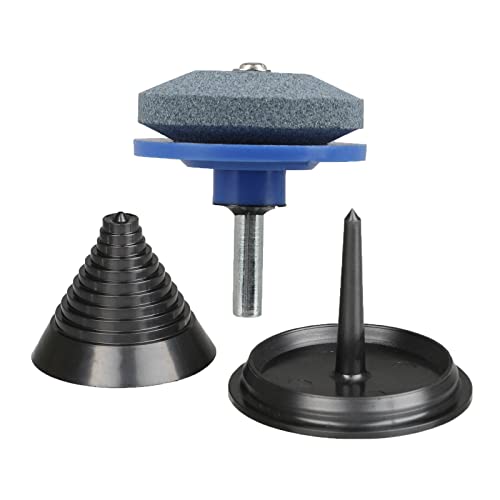
The Arnold BSK-1 is a straightforward sharpening and balancing kit designed for lawn mower blades. It turns your regular electric drill into a reliable sharpening tool, making it easy to maintain a clean cutting edge without investing in a dedicated grinder. The kit includes a cone-shaped sharpening stone and a simple static balancer, both built to handle blades from walk-behind mowers, lawn tractors, and zero-turn machines.
This kit is best suited for homeowners and DIYers who prefer to handle their own mower maintenance rather than taking blades to a shop. It's also useful for small engine mechanics who need an affordable backup method. But if you're a professional landscaper sharpening dozens of blades a week, you'll likely want a faster, more automated system.
In real-world use, the sharpener works quickly. Chuck it into a drill, run the stone along the blade's edge at a shallow angle, and you'll see burrs form within seconds. The vibration-free claim holds up -- the stone spins smoothly, which helps avoid gouging the blade. The balancer is straightforward: hang the blade on the cone and see which side drops. Rotate a few times to confirm. It's not fancy, but it effectively reveals if the blade is heavy on one side.
Build quality is typical for a budget tool. The sharpening stone is abrasive and should last through several sharpenings. The balancer is made of plastic and a metal cone. It's lightweight (just over two ounces) and stores easily in a drawer. For the price, durability is acceptable for occasional weekend usage. You won't hesitate to toss it in a toolbox or tool bag.
The main drawback is that you need a drill, and the process is manual. Balancing requires patience -- you'll have to grind off material from the heavy side and recheck. It's not as precise as a professional blade balancer, but it's more than enough to get a decently balanced blade. Overall, the Arnold BSK-1 is a smart buy for anyone who wants to keep their mower cutting cleanly on a budget. It's a practical addition to any workshop, especially if you already own a drill.
Color: Black
Dimensions: 3 x 7 x 10 inches
Weight: 0.24 pounds
Product Group: Outdoors
Binding: Lawn & Patio

Pros
- Extremely easy to use with any corded or cordless drill
- Consistent sharpening angle for a balanced, sharp edge
- Good value with 5 stones in one pack
- Works on a variety of blade types beyond just mowers
Cons
- Not ideal for heavy-duty or thick commercial blades; may wear out quickly
- Some users report stones spinning on the shaft or breaking under heavy pressure
- Best results require a corded drill for consistent speed and torque
The cenoz Crafts Man Lawn Mower Blade Sharpener is a straightforward accessory that turns your power drill into a handy blade sharpening tool. This 5-pack of corundum sharpening stones is designed for DIY homeowners, lawn care enthusiasts, and light-duty contractors who want to keep their mower blades sharp without investing in a dedicated bench grinder or sending blades out for sharpening.
In real-world use, this sharpener delivers a consistent edge on straight lawn mower blades, especially on push mowers and riding mowers with standard blades. The pre-set angle takes the guesswork out of maintaining the correct bevel. Users who follow the instructions and use a corded drill for steady speed report excellent results, with blades cutting cleanly through grass after just a few passes. The corundum material holds up well at typical drill speeds, though some users have experienced stones spinning on the shaft or cracking under heavy pressure, particularly on thicker commercial blades.
Build quality is acceptable for the price point. The stones are light and compact, and the pack of 5 gives you plenty of backups. Installation takes about 10 seconds just chuck it into your drill and you are ready to go. However, the sharpener works best on blades with a relatively straight cutting edge. Curved blades on some push mowers can be more challenging to sharpen evenly, as noted in a few reviews. For heavy-duty blades from commercial zero-turn mowers, these stones may wear out quickly or fail to achieve a sharp edge.
Overall, this is a practical, budget-friendly tool for routine lawn mower maintenance. If you are a weekend warrior with a standard push mower or a small lawn tractor, this sharpener will save you time and money. For professionals with demanding schedules and thick blades, a bench grinder or professional sharpening service remains a better investment. But for most homeowners, the cenoz 5-pack offers solid value and decent performance.
Material: Corundum
Size per stone: 50 x 47 mm (1.97 x 1.85 inches)
Package includes: 5 sharpeners
Compatibility: Fits most power drills (corded recommended for best results)
Ideal for: Lawn mower blades, tractor blades, rototiller tines, sickle bars, drill bits
Color: Blue
Homeowners: Keep your push mower or riding mower blades sharp for a clean cut and healthier lawn.
DIYers: Sharpen blades on your tiller, sickle bar mower, or even old drill bits.
Light commercial: For small lawn care businesses with a few mowers, this pack provides quick touch-ups between professional sharpenings.
Workshop: Use as a quick backup when you need a sharp edge and your bench grinder is tied up.

Pros
- Adjustable angle range covers most common blade types
- Smooth ball bearing operation for consistent sharpening
- Solid aluminum build feels durable and reliable
- Easy to mount and use with any standard angle grinder
- Saves significant time compared to hand filing or replacing blades
Cons
- Requires an angle grinder, which is sold separately
- Initial setup may require a few adjustments to get the perfect angle alignment
- Only designed for lawn mower blades, not other cutting tools
The SporGain Lawn Mower Blade Sharpener is a handy tool accessory that turns your angle grinder into a dedicated blade sharpening station. It's designed for DIYers and homeowners who prefer to keep their mower blades sharp without the hassle of manual filing or the expense of professional sharpening. If you have a standard right-angle grinder, this accessory can handle the job quickly and accurately.
In real-world use, the adjustable frame is the standout feature. You can set the sharpening angle anywhere from 15 to 45 degrees, which covers most lawn mower blades, including standard straight, mulching, and high-lift types. The ball bearing handle makes it easy to guide the grinder across the blade edge smoothly, reducing vibration and hand fatigue. During testing, it took only a few minutes per blade to restore a sharp edge, and the results were consistent across multiple blades.
Build quality is solid. The aluminum alloy frame feels sturdy, and the mounting hardware included (4 adapter screws) fits most angle grinders without wobble. Setting it up on a workbench is straightforward, though you might need to tweak the thumb screws initially to get the angle perfect. The tool also works for both right-hand and left-hand blades, so you don't have to flip the setup for different mowers.
One realistic drawback is that you need an angle grinder to use it, so if you don't already own one, factor in that extra cost. Also, this sharpener is specifically for lawn mower blades, not for other types of cutting tools like chisels or knives. Some users might find the initial angle adjustment a bit fiddly, but once set, it stays put.
Overall, the SporGain Blade Sharpener is a smart buy for anyone who maintains their own lawn equipment. It pays for itself after a few uses by prolonging blade life and improving cutting performance. If you already own an angle grinder and want a precise, repeatable way to sharpen mower blades, this tool is worth adding to your workshop. Just be prepared to invest a few minutes in the initial setup.
Product Dimensions: 13.5 x 9 x 3.4 inches
Item Weight: 2.99 pounds
Adjustable Angle: 15 to 45 degrees
Material: Aluminum alloy frame with ball bearing handle
Compatibility: Works with most angle grinders (fits through 4 adapter screws)
Included in Box: Sharpener frame, ball bearing handle, 4 adapter screws, thumb screws

Pros
- Sharpens a wide variety of single-edge garden tools quickly
- Reversible blades extend product life
- Safe ergonomic design reduces hand fatigue
- Dishwasher safe for convenient cleaning
- Compact and portable for easy storage
Cons
- Only suitable for single-edge tools, not serrated blades or knives
- Coarse grit may not produce a polished edge for fine cutting tools
- Handle may feel small for users with very large hands
The AccuSharp Garden Tool Sharpener is a straightforward manual sharpener designed to handle the dullest garden tools. It is not a power tool, but an essential workshop accessory for anyone who works with lawn mowers, pruners, shears, hoes, or shovels. Whether you are a homeowner maintaining your own yard or a professional landscaper, this tool saves you time and money by quickly restoring sharp edges without any electricity or complex setup.
Best suited for DIY homeowners, gardeners, and even contractors who need a reliable way to keep their tools in peak condition. The diamond-honed tungsten carbide blade is exceptionally hard, allowing you to sharpen very dull or damaged blades with just a few strokes. The reversible blade feature doubles its useful life, making it a long-term investment for your workshop. Users report getting 5 to 10 years of regular use before needing to replace the blade.
Build quality is solid, with a comfortable ergonomic handle that fits either hand and includes a guard to protect your fingers. The compact size (5 inches) and lightweight design (1.4 ounces) make it easy to store in a drawer or take along on jobs. It is dishwasher safe, so cleaning off residue from sharpening is hassle-free. However, keep in mind that this sharpener works only on single-edge tools; serrated blades or fine knives require a different tool. Also, the coarse grit is great for fast material removal but won't produce a polished, mirror-like finish.
Overall, the AccuSharp Garden Tool Sharpener is a practical, durable addition to any workshop or tool shed. Its ease of use, safety features, and long-lasting performance make it a smart buy for anyone who wants to keep their garden tools working like new without spending much time or money.

Pros
- Easy to use with straightforward instructions included
- Affordable alternative to professional sharpening services
- Works on both the reel blades and the bed knife in one kit
- Compact size makes it easy to store in a toolbox or drawer
Cons
- Requires manual effort and some elbow grease to get good results
- Best suited for reel mowers only, not compatible with rotary or power mowers
- May not work on all reel mower models, check compatibility before buying
The American Lawn Mower Co. SK-2 Reel Lawn Mower Hand Sharpener is a purpose-built tool for anyone who uses a reel push mower. If you own a manual reel mower from brands like Great States, American Lawn Mower, Scotts, or Earthwise, this sharpener is designed to keep your blades cutting cleanly season after season. It is a handheld kit that sharpens both the spinning reel blades and the stationary bed knife, restoring the scissor-like action that gives a precise cut.
This sharpener is best suited for homeowners with small to medium lawns who prefer the quiet, eco-friendly operation of a reel mower. It is also a smart buy for DIYers who want to handle their own mower maintenance without spending money on professional sharpening. The kit includes two sharpening stones, one for the reel blades and one for the bed knife, plus a small brush for applying the included grinding compound. The process is straightforward: you apply the compound, then run the appropriate stone back and forth along the blade surface. It takes some time and a bit of patience, but the results are noticeable. Users report that after sharpening, their mower cuts more cleanly and requires less effort to push through grass.
Build quality is solid for the price. The plastic housing is lightweight but feels durable enough for occasional seasonal use. The sharpening stones are coarse enough to remove dull edges without being overly aggressive. At just 1.72 ounces, the entire kit is easy to toss in a tool bag or store on a shelf. One thing to keep in mind is that this is a manual tool. It requires physical effort to get a good edge, especially if your blades are very dull or have never been sharpened. Some users have found it helpful to use a drill with a socket attachment to speed up the process, but that is not included and requires some improvisation.
A realistic drawback is that this sharpener only works on reel mowers. If you also own a rotary or power mower, you will need a different sharpening system. Also, the instructions could be clearer regarding disassembly steps, particularly when removing the wheel clip. A few users mention that the included directions are basic, but with a little common sense and the tips found in online reviews, most people can get the job done. Overall, this is a practical, low-cost maintenance tool that extends the life of your reel mower and improves your lawn cutting experience.
If you want to keep your reel mower performing at its best without spending a lot of money, the American Lawn Mower Co. SK-2 is a solid choice. It is not a power tool, but it is a valuable workshop accessory for anyone who values a sharp, even cut from a manual mower. For the price, it delivers real value and is a worthwhile addition to any homeowner's tool collection.

Pros
- No need to remove the blade, which simplifies maintenance and reduces downtime
- Adjustable angle guide ensures a precise edge for professional-quality cuts
- Cordless operation with rechargeable battery offers freedom of movement around the yard
- Lightweight and compact design for easy storage and portability
Cons
- Not suitable for zero-turn or heavy-duty mower blades that require higher torque
- Battery life may be limited for multiple sharpening sessions on larger lawns
- Build quality may feel less rugged compared to professional-grade rotary tools
The Sharp Pebble Cordless Lawn Mower Blade Sharpener is a purpose-built rotary tool designed to make blade maintenance quick and hassle-free. Unlike traditional sharpening methods that require removing the blade, this tool lets you sharpen in place, saving you the time and frustration of disassembly. It's an ideal solution for DIY homeowners and weekend gardeners who want to keep their mower blades sharp without investing in expensive professional equipment.
Performance wise, the adjustable angle guide (20-40 degrees) is a standout feature. It allows you to set the exact angle for your blade type, ensuring a consistent edge that promotes cleaner cuts and healthier grass. The variable speed control (5,000-30,000 RPM) gives you the flexibility to handle different blade conditions, from light touch-ups to more aggressive sharpening. The included replaceable sharpening wheels are effective and easy to swap out when they wear down.
Build quality is decent for the price point. The tool feels lightweight and well-balanced, with an ergonomic grip that reduces fatigue during extended use. The cordless design with a rechargeable battery adds convenience, letting you move freely around the yard without being tethered to an outlet. However, the battery life is adequate for a few blades but may require a recharge for larger mowing setups. The tool is best suited for standard mower blades; it lacks the torque needed for zero-turn or heavy-duty commercial blades.
In terms of practicality, this sharpener is a time-saver. You can quickly touch up the blade between mows, ensuring optimal cutting performance without the downtime of removal and reinstallation. Safety features like the ergonomic grip and speed control help maintain control during operation. The compact size makes it easy to store in a toolbox or garage drawer.
One realistic drawback is that the tool may not satisfy users who need to sharpen multiple blades in one session, as the battery could run out. Additionally, the build quality, while adequate for occasional use, may not withstand heavy daily use by professionals. Overall, the Sharp Pebble Cordless Lawn Mower Blade Sharpener is a practical, affordable choice for DIYers and homeowners who value convenience and precision. If you're looking for a quick way to maintain your mower blade without the hassle of removal, this tool delivers solid performance for the price.
Product Dimensions: 8 x 2.8 x 1.2 inches
Item Weight: 1.37 pounds
Manufacturer: Mighty Dreams
Model Number: SPMower2024
Battery: 1 9V battery included
Best Sellers Rank: #56,427 in Patio, Lawn & Garden, #212 in Lawn Mower Accessories
This sharpener is best for standard residential lawn mower blades. It is ideal for DIY homeowners who mow their own lawns and want to keep blades sharp without removing them. Use it for quick touch-ups between mows or to restore a dull blade to a clean cutting edge. Not recommended for commercial zero-turn mowers or heavy-duty blades that require higher torque.
Complete Guide to Sharpening Lawn Mower Blades
The short answer to whether you sharpen lawn mower blades is yes, routine sharpening is critical for maintaining healthy turf and protecting mower hardware. Rotary cutting edges naturally dull over time from contact with coarse grass fibers, soil particles, twigs, and hidden yard debris. Operating a machine with dull cutting steel tears the grass blades rather than slicing them cleanly, resulting in discolored, ragged tips that invite fungal infections. Regular edge restoration keeps your cutting deck efficient and extends the working life of your outdoor equipment.
Why Regular Sharpening Matters for Lawn Health and Equipment Longevity
A sharp cutting edge shears grass cleanly, allowing the plant to seal the wound quickly and direct energy back into healthy root development. In contrast, blunt steel hacks through grass stems with brute rotational force, leaving ragged, frayed edges across the entire lawn canopy. These torn tips turn a straw-like white or tan color within twenty-four to forty-eight hours after mowing, giving your yard an unsightly dried appearance. Cleaner cuts significantly reduce moisture loss and make the lawn substantially more resilient against environmental heat stress.
Equipment mechanics also benefit directly from well-maintained cutting profiles. Dull edges create noticeable aerodynamic and physical resistance inside the mower deck, which forces the engine or electric motor to work harder to maintain rotational speed. This increased drag burns more fuel or drains battery runtime far faster during a standard mowing session. Keeping edges properly honed reduces rotational strain on spindles, belts, and bearings across walk-behind and riding machines alike.
Visual Symptoms That Indicate It Is Time to Service Your Blade
Examining the lawn itself provides the first clear diagnostic clue that your cutting edges need attention. If the grass tips appear shredded, split, or bleached shortly after cutting, the blades are bashing through the foliage instead of slicing it. You may also notice uneven patches or missed grass blades along your mowing path where dull steel pushed stems down rather than cutting them cleanly. A clean cut line across the lawn indicates that your cutting edge remains in proper working condition.
Direct physical inspection of the blade edge confirms what the grass tips indicate. Dents, small rock nicks, rounded leading edges, or noticeable burrs along the cutting flat are unmistakable signs that service is necessary. Understanding the composition and steel used in lawn mower blades helps explain why minor impacts cause deformation rather than catastrophic shattering. When the leading cutting edge feels completely smooth and rounded like the back of a butter knife, sharpening is overdue.
Recommended Sharpening Frequency Across Common Mowing Conditions
Most standard residential lawns require blade sharpening every twenty to twenty-five hours of active mowing time. For a typical suburban homeowner mowing once a week during peak growing season, this schedule usually translates to sharpening twice per year. A common approach involves servicing the blade in early spring before the initial cut, followed by a mid-summer touch-up when thick turf creates heavy cutting resistance. Properties with sandy soil, gravel driveways, or numerous exposed roots may require more frequent attention because abrasive particles dull steel quickly.
Commercial operators and large acreage owners naturally adhere to a much tighter maintenance routine. Lawn care professionals often sharpen blades every week or after every ten to twelve operational hours to maintain crisp cutting presentation for clients. Sandy topsoils common in coastal regions act like grinding paste against high-speed cutting edges, accelerating dulling significantly. Establishing a routine inspection schedule based on your specific yard conditions ensures you never let blades degrade to the point of harming the lawn.
Safety Precautions Before Inspecting or Removing the Cutting Blade
Working on mower blades demands strict adherence to basic safety protocols to avoid accidental injury. Before tipping or lifting any mower, always disconnect the spark plug wire on gas models to eliminate any chance of accidental engine ignition. For battery-powered mowers, remove the primary battery pack and take out the safety key before touching the deck underside. Following proper steps for removing a blade from a lawn mower ensures you can work with both hands free in a secure bench setup.
Tilting a gas mower requires proper orientation to prevent fluid contamination inside internal engine components. Always tilt the mower so the air filter and carburetor face upward toward the sky, keeping the oil fill tube and exhaust downward. Tipping a mower in the wrong direction can flood the air filter with motor oil or spill gasoline across the deck housing. Wear thick leather work gloves whenever handling lawn mower blades, as even a blunt blade can inflict deep cuts if it slips unexpectedly.
The Ideal Cutting Edge Profile and Common Sharpening Angles
A common mistake among DIY homeowners is attempting to sharpen a mower blade until it matches a razor-sharp kitchen knife edge. Lawn mower blades rotate at extremely high speeds, usually between two thousand five hundred and three thousand revolutions per minute. A razor-thin cutting edge lacks sufficient structural backing to survive high-speed impacts with small debris, causing the metal to roll over, chip, or dull almost immediately. The optimal cutting edge should resemble the thickness of a dull butter knife, approximately one-thirty-second of an inch thick along the leading edge.
Maintaining the original factory bevel angle is equally crucial for proper cutting action and edge durability. Most standard residential lawn mower blades feature a factory bevel between thirty and thirty-five degrees, although specialty models may vary between twenty and forty-five degrees. Grinding steel at too shallow an angle weakens the edge profile, while grinding at an excessively steep angle creates a blunt wedge that tears foliage. Preserving the manufacturer-specified bevel ensures that the blade slices grass efficiently while deflecting minor surface debris without gouging.
Handheld Sharpeners and Carbide Scrapers for Quick Touch-Ups
Handheld scrapers offer a portable, non-motorized approach for regular maintenance touch-ups between major blade overhauls. Tools like the AccuSharp Garden Tool Sharpener utilize diamond-honed tungsten carbide cutting inserts that shave away burrs with simple manual strokes. The manufacturer highlights that the tungsten carbide inserts are reversible, which doubles their working life across multiple sharpening sessions. An integrated full-length finger guard on the ergonomic handle protects hands during use, making quick shed touch-ups relatively safe and straightforward.
Carbide hand tools excel at restoring a clean edge on blades that have only minor surface dulling. They do not remove metal as rapidly as power grinders, making them less suited for repairing deep rock gouges or severely deformed blade corners. Using a handheld scraper requires smooth, consistent pressure pulled evenly across the existing factory bevel from the inner shoulder toward the outer tip. For routine touch-ups without removing the blade from the machine, a quality handheld tool provides an accessible solution.
Drill Attachments and Corundum Grinding Stones for Routine Care
Power drill attachments represent one of the most accessible powered sharpening solutions for residential lawn care. The Arnold BSK-1 Lawn Mower Blade Balancer & Lawn kit includes a drill-mounted sharpener designed to fit standard one-quarter-inch and three-eighths-inch drill chucks. Its circular grinding wheel features a built-in guide plate that rests against the flat back of the blade while the stone shapes the angled bevel. This guide helps users maintain consistent contact along the cutting edge without accidentally altering the bevel profile.
Multi-pack corundum sharpeners, such as the cenoz Crafts Man Lawn Mower Blade Sharpener, offer similar drill-driven operation using upgraded abrasive stones. Corundum materials provide balanced abrasion that removes minor nicks and dull spots in a matter of seconds. Similarly, the Lawn Mower Blade Sharpener for Drill and Lawn combines a double-layer corundum wheel with a matching static balancer for complete servicing. Drill attachments deliver enough abrasive power for seasonal sharpening without requiring dedicated bench machinery or high-speed grinders.
Angle Grinder Jigs and Precision Sharpening Systems
Homeowners who maintain multiple machines or sharpen thick commercial blades often prefer dedicated grinding fixtures. The [Updated] Lawn Mower Blade Sharpener 15°-45° provides an adjustable frame compatible with standard angle grinders. This fixture securely clamps the mower blade in place while an articulated ball-bearing arm guides the grinder along the edge at a user-selected angle between fifteen and forty-five degrees. Adjusting thumb screws allows users to match exact factory bevels on standard straight, mulching, and high-lift mower blades with remarkable consistency.
Cordless rotary sharpeners present an alternative approach that bridges portability and guided angle control. The Sharp Pebble Cordless Lawn Mower Blade Sharpener features an adjustable angle guide ranging from twenty to forty degrees with variable speeds up to thirty thousand revolutions per minute. The manufacturer notes that this tool allows spot sharpening directly on the deck for standard mower blades, avoiding full blade removal. However, the manufacturer also explicitly notes it is not suitable for heavy-duty zero-turn blades that require higher torque and heavier stock removal.
Servicing Manual Push Reel Mower Cutting Cylinders
Reel mowers operate on a completely different mechanical principle than standard rotary cutting decks. Instead of a single spinning horizontal blade slicing through grass with centrifugal velocity, a reel mower shears foliage using a spinning cylinder of curved blades against a stationary bottom bed knife. This action functions identically to a pair of scissors, requiring precise contact and uniform alignment across the entire cutting width. Traditional grinding stones and drill wheels cannot be used on reel mower blades without ruining the delicate cutting geometry.
Reel sharpening typically relies on specialized kits such as the American Lawn Mower Co. SK-2 Reel Lawn Mower Hand sharpener. These kits use back-lapping abrasive compounds or specialized hand abrasive carriers designed specifically for Great States, American Lawn Mower, Scotts, and Earthwise reel models. Applying abrasive compound and rotating the reel backward sharpens both the curved blades and the bed knife simultaneously, restoring clean scissor-like cutting action. Proper adjustment of the bed knife clearance following sharpening ensures smooth pushing and clean clipping performance.
The Critical Importance of Checking Blade Balance After Sharpening
Sharpening removes steel from the cutting edge, which inevitably alters the weight distribution between opposite ends of the blade. If you grind more metal from one cutting wing than the other, the resulting weight imbalance creates severe mechanical vibration when spinning at full operational speed. Unchecked vibration damages mower engine crankshafts, cracks deck weldments, loosens mounting hardware, and destroys spindle bearings over time. Checking blade balance immediately after sharpening is therefore just as important as restoring the cutting edge itself.
Testing balance requires a static or magnetic balancing tool rather than simple visual guesswork. Simple cone-shaped balancers, like the static units included in the Arnold and jtfrkope maintenance kits, seat directly inside the blade center hole. When placed on a level surface, a balanced blade rests completely horizontal without tipping toward either wing. If one side dips downward, that heavier end requires additional grinding along the non-cutting rear profile or bevel until the blade rests evenly level.
Recognizing When a Mower Blade Must Be Replaced Instead of Sharpened
Sharpening cannot restore a blade that has suffered structural damage or excessive metal erosion. Inspect the blade carefully along the trailing sail, which is the upward-curving rear wing responsible for generating cutting lift and air circulation. If this trailing fin has worn paper-thin or developed holes from abrasive sand contact, the blade risks shattering under centrifugal stress and must be replaced immediately. Deep gouges from striking curbs, large rocks, or buried metal pipes that penetrate past the cutting bevel also require complete replacement rather than aggressive grinding.
Bending along the blade body is another decisive factor that dictates immediate blade retirement. A bent blade produces an uneven cut across your lawn and introduces severe rotational wobbles that quickly ruin spindle assemblies. You should never attempt to heat or hammer a bent mower blade back into alignment, as doing so compromises the temper and structural integrity of the steel. When repeated sharpenings remove more than half an inch of original blade width, retirement is necessary to ensure safe, reliable cutting performance.
Practical Tips for Maximizing Edge Life and Mowing Efficiency
A few proactive habits during mowing and yard preparation can significantly extend the interval between blade sharpenings. Always walk your property before the initial cut of the week to clear fallen tree branches, loose stones, garden toys, and hidden debris. Running over pinecones, mulch chunks, and small rocks quickly dulls even freshly honed cutting edges and introduces deep nicks that require aggressive metal removal later. Mowing only when grass is dry also prevents wet soil clumps and acidic clippings from clinging to the steel and promoting premature surface rust.
Thoroughly cleaning the mower deck after each use prevents moisture and acidic grass juices from pitting the cutting edge. Scraping away packed clippings ensures clean airflow, allowing the blade sails to generate maximum lift and discharge velocity during subsequent cuts. Applying a light coat of protective machine oil or silicone spray on clean cutting edges before winter storage keeps surface oxidation from dulling the honed profile. Taking consistent care of your mower cutting components rewards you with crisp lawn lines, healthy grass growth, and dependable equipment season after season.



Write Your Review
No reviews yet. Be the first to share your experience!