


Yes, you can mow leaves with a riding mower, provided the leaf layer is dry and not excessively thick. Using a riding mower for this task can be efficient for large properties, but it requires attention to deck clearance and airflow to prevent clogging. Many homeowners find that mowing leaves is a practical way to break them down into mulch that benefits the soil during winter.
The key to success is understanding the difference between light leaf drop and heavy accumulation. A standard deck is designed to cut grass, not process large volumes of organic matter at once. If the leaves are wet or matted, they will clump and block the discharge chute.
For smaller areas or very thin layers, a push mower might be easier to maneuver, but for extensive coverage, the speed of a riding machine offers a significant advantage. This approach saves time and reduces the need for raking, though it demands a specific technique to avoid damaging the machine.


Pros
- Wide 40-inch path cleans large suburban lawns and rural acreage in a fraction of the time
- Integrated weight tray accommodates up to 70 pounds of standard concrete blocks for deeper thatch pulling
- Heat-treated steel tines are durable, rust-resistant, and individually replaceable if damaged
- Universal pull-behind hitch couples quickly to riding mowers and lawn tractors with minimal hassle
Cons
- Requires an existing riding mower, lawn tractor, or ATV equipped with a standard tow hitch
- Initial assembly requires time and patience to secure all tine bolts and frame hardware properly
- Ballast bricks or weights are not included in the package and must be supplied separately
The FTOPBTB 40-Inch Tine Tow Dethatcher is a pull-behind lawn tractor attachment engineered to remove matted dead grass, moss, and accumulated plant debris from residential turf. Designed specifically to hitch behind riding mowers, lawn tractors, or small utility vehicles, this implement replaces hours of strenuous manual raking with a fast, tractor-driven sweep across your property. It is particularly well suited for suburban homeowners with half-acre or larger yards, rural property owners, and lawn care enthusiasts looking to refresh their grass before seasonal overseeding or fertilizing.
Lawn thatch naturally accumulates over time, forming a dense barrier of dead stems and roots between green blades and the topsoil. When this layer grows too thick, it blocks vital moisture, sunlight, and fertilizer from reaching the root zone. Based on product specifications, this dethatcher utilizes 20 heat-treated spring steel tines aligned across a 40-inch working width. As your tractor moves forward, the tines flick through the turf canopy, dislodging compacted thatch and pulling it to the surface where it can be easily collected with a bagger, sweeper, or mulching mower.
A notable feature of this attachment is the built-in 40-inch weight tray, which is rated to hold up to 70 pounds of ballast such as standard concrete blocks or patio pavers. Adding downward weight keeps the spring tines firmly engaged with the ground, preventing the frame from bouncing across uneven patches or hard-packed soil. The rust-proof, heat-treated tines offer the flex required to ride over small surface roots and rocks without snapping, while their bolt-on design allows for individual tine replacement whenever wear occurs after multiple seasons.
In terms of build quality, the dethatcher features a powder-coated black steel frame weighing approximately 27 pounds without extra ballast. This relatively compact weight makes it easy for one person to move, hitch, and store against a garage wall or shed corner when not in use. The universal pin hitch fits standard tractor tow plates, making hookup a matter of inserting a single hitch pin. As with most mechanical yard implements of this type, assembling the unit requires careful tightening of numerous nuts and bolts to ensure proper tine alignment and rigidity.
For homeowners who already maintain their property with a riding mower or lawn tractor, this 40-inch tow-behind dethatcher provides a practical, cost-effective way to handle essential seasonal lawn renovation. While it does require a separate towing vehicle and user-supplied ballast weights for maximum penetration, it turns an otherwise grueling weekend chore into a smooth, tractor-powered cleanup that leaves your lawn ready for lush new growth.
Dethatching is a critical step in maintaining a healthy lawn cycle, typically performed in early spring or early autumn depending on your grass type. Cool-season grasses like Kentucky bluegrass and fescue benefit greatly from an early fall dethatching session right before aeration and overseeding, as the loosened soil bed allows grass seed to achieve direct soil contact.
For warm-season grasses like Bermuda or Zoysia, late spring or early summer after the lawn has fully greened up is generally the ideal window. Running this tow-behind dethatcher on slightly damp soil yields the best results, as the tines can scratch the ground without causing excessive stress to the root system.
The dethatcher is constructed around a rigid steel body finished with a black protective powder coating to combat moisture, fertilizer salts, and surface rust. The 20 tines undergo heat treatment to balance strength and elasticity, ensuring they flex under load instead of bending permanently or breaking.
Because tines naturally experience friction against soil and roots, individual tines can be removed and replaced using standard hardware tools. Storing the implement indoors or under shelter after wiping off damp soil will further protect the finish and extend its operating lifespan across many mowing seasons.
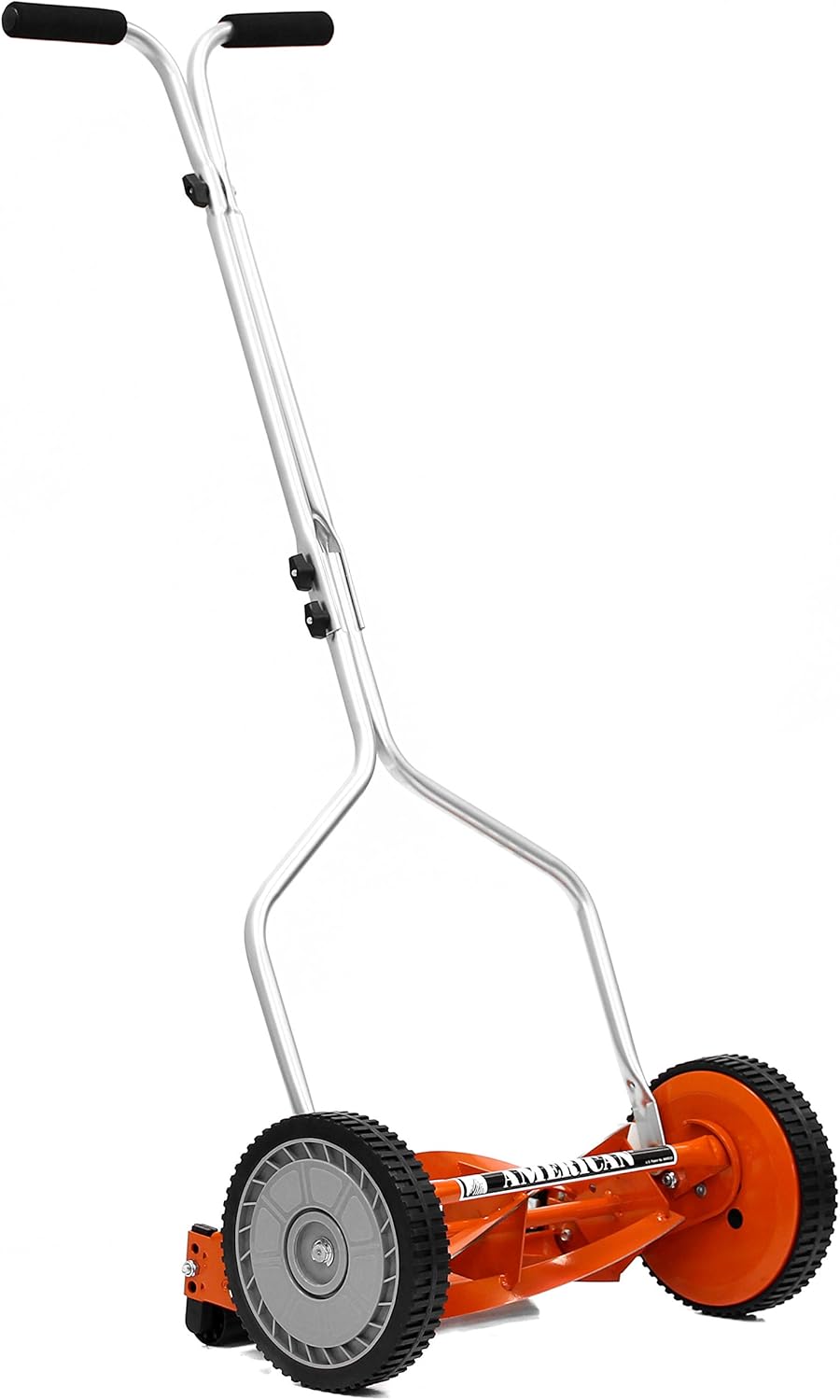
Pros
- Quiet and emission-free, great for early morning or late evening mowing without disturbing neighbors
- Very easy to assemble and requires almost no ongoing maintenance
- Cuts grass cleanly without shredding, leading to a healthier lawn appearance
- Lightweight and easy to store, takes up minimal garage or shed space
Cons
- Not suitable for tall or wet grass; requires frequent mowing when grass is dry and under 4 inches
- Limited cutting width of 14 inches means more passes on larger lawns, best for small to medium yards
- No power assist, so uneven or hilly terrain can make pushing more difficult
The American Lawn Mower Company 1204-14 is a classic push reel mower that brings back the simplicity of manual lawn care. Unlike gas or electric mowers, this tool relies entirely on your own muscle power to spin the reel and cut grass. It's a straightforward, no-nonsense machine designed for homeowners who prioritize quiet operation, zero emissions, and low maintenance over speed and brute force.
This mower is best suited for small, flat lawns with cool-season grasses like bluegrass, fescue, and rye. It's ideal for DIY homeowners who enjoy a bit of exercise while taking care of their yard. If you have a quarter acre or less and don't mind mowing more frequently during the growing season, this reel mower can deliver a clean, precise cut that actually promotes a healthier lawn by slicing rather than shredding the grass blades.
In real-world use, the 1204-14 performs best when you stay on top of your mowing schedule. It handles grass up to 4 inches tall, but for the best results, you should mow when the grass is dry and no more than about 3 inches high. The adjustable cutting height ranges from 0.5 to 1.75 inches, giving you good control over lawn appearance. The 8.5-inch polymer wheels roll smoothly on flat ground, but the mower can struggle on uneven or bumpy terrain. You'll need to make multiple passes if the grass is on the taller side, and wet grass will clog the reel and leave an uneven cut.
Build quality is decent for the price point. The frame is made of steel, and the reel blades are heat-treated alloy steel that stay sharp for years with minimal care. Assembly is straightforward and can be done in about 15 minutes with basic tools. The cushioned T-handle is comfortable for most users, though taller individuals might find it a bit low. At just 19 pounds, the mower is easy to lift and store, and it takes up very little space in a garage or shed.
One realistic drawback is that this mower won't replace a gas or electric model for larger or more demanding lawns. If you have a half-acre or more, or if your yard has hills, you'll likely find the manual effort tiring and time-consuming. Also, the 14-inch cutting width means more passes compared to a 21-inch power mower. But for its intended use - small, flat lawns - the American Lawn Mower 1204-14 is a reliable, eco-friendly, and cost-effective choice that gets the job done without noise, fumes, or ongoing fuel costs.
Managing Leaf Debris with a Riding Mower
Mowing leaves with a riding mower is a viable strategy for breaking down debris into fine mulch. The rotating blade shreds the leaves into smaller pieces that can fall through the deck or be discharged. This process, often called mulching, helps enrich the soil with nutrients. However, the effectiveness depends heavily on the condition of the leaves and the setup of your mower.
| Leaf Condition | Mowing Suitability | Recommended Action |
|---|---|---|
| Dry and Light | High | Mulch or Side Discharge |
| Dry and Heavy | Moderate | Mow in Multiple Passes |
| Wet or Matted | Low | Rake or Blow First |
| Mixed with Grass | High | Standard Mowing Cycle |
Before you start, assess the thickness of the leaf layer. A general rule is to avoid mowing if the leaves cover more than half the height of the grass. If the layer is thicker, mow the grass first to shorten the blades, then return to process the leaves. This two-step approach ensures the blade has room to rotate freely and shred the debris effectively. It also prevents the deck from becoming overloaded with uncut material.
The following checklist helps you prepare your riding mower for leaf mowing:
- Ensure the deck is clean and free of old grass clippings.
- Check that the blade is sharp to cut through dry leaves cleanly.
- Verify the discharge chute is unobstructed and ready for use.
- Confirm the cutting height is set to the highest position.
- Inspect the deck for any rust or damage that could cause issues.
Deck Clearance and Airflow Dynamics
Airflow is the primary mechanism that moves leaves through the mower deck. When the blade spins, it creates a vortex that lifts the grass and leaves, carrying them to the discharge chute. If the deck is too clogged or the airflow is restricted, the leaves will not move. This can lead to a build-up of debris under the deck, which reduces cutting efficiency and can strain the engine. Maintaining a clear path for the air is essential for successful leaf mowing.
Most riding mowers have a specific deck design that influences how well they handle mulch. Some decks are optimized for bagging, while others are designed for mulching. If your mower has a mulching plug, you can use it to keep the leaves inside the deck for further shredding.
This is ideal for turning leaves into fine mulch that stays on the lawn. However, if the leaves are too thick, the plug may not be sufficient to prevent clogging. In such cases, side discharge is a safer option to remove the debris from the lawn.
Some users find that using a lawn mower for small yards is more practical for leaf management due to better maneuverability. While a riding mower is faster, it may struggle in tight spaces where leaves tend to accumulate, such as under shrubs or along fences. For these areas, a smaller walk-behind mower or a leaf blower might be more effective. The key is to match the tool to the specific task and the size of the area.
Dry vs. Wet Leaf Processing
The moisture content of the leaves is a critical factor in determining whether mowing is a viable option. Dry leaves are brittle and break apart easily when cut by the blade. They flow through the deck smoothly and do not stick to the metal surfaces.
This makes the mowing process faster and cleaner. On the other hand, wet leaves are pliable and tend to clump together. When cut, they form a paste-like substance that can clog the deck and discharge chute. This can damage the mower and leave a mess on the lawn.
If you must mow wet leaves, do so in very thin layers and frequently clear the deck. You can also use a leaf blower to dry the leaves before mowing. This extra step can make a significant difference in the outcome. Mowing wet leaves is generally not recommended for most homeowners, as the risk of clogging and damage is high. It is better to wait for the leaves to dry or use a different method of removal, such as raking or blowing them into piles.
Here are some key points to consider when dealing with wet leaves:
- Wait for the leaves to dry completely before mowing.
- If mowing is necessary, use a side discharge chute.
- Clear the deck frequently to prevent clogging.
- Avoid mowing large areas of wet leaves in one pass.
- Consider using a leaf blower to remove wet leaves first.
Blade Sharpness and Cutting Efficiency
A sharp blade is essential for effective leaf mowing. A dull blade will tear the leaves instead of cutting them cleanly. This results in larger, uneven pieces that do not break down as quickly. It also increases the effort required by the engine, which can lead to overheating or stalling. A sharp blade ensures that the leaves are shredded into fine mulch, which is easier to manage and more beneficial for the soil. Regular blade maintenance is a simple but important task for any mower owner.
Checking the blade sharpness is a straightforward process. You can use a file or a grinder to sharpen the blade if it is dull. Always ensure the mower is powered off and the spark plug is disconnected before working on the blade. This is a critical safety step that should never be skipped. A well-maintained blade not only improves leaf mowing performance but also enhances the overall quality of your grass cutting. It is a small investment of time that pays off in better results.
Mulching vs. Side Discharge Strategies
The choice between mulching and side discharge depends on the volume of leaves and your desired outcome. Mulching is ideal for light leaf drop, as it breaks the leaves into small pieces that stay on the lawn. This provides a natural fertilizer and helps insulate the soil during winter.
Side discharge is better for heavier leaf layers, as it removes the leaves from the lawn quickly. You can then rake or blow the discharged leaves into piles for disposal or composting. Both methods have their advantages, and the best choice depends on your specific situation.
If you are using a mulching plug, ensure it is installed correctly to prevent debris from escaping. The plug should fit snugly in the discharge chute to create the necessary airflow for shredding. If the plug is loose or damaged, it will not work effectively, and the leaves will not be mulched properly. You can also use a bagger to collect the leaves, but this is less efficient for large volumes of debris. A bagger can fill up quickly, requiring frequent stops to empty it, which interrupts the mowing process.
For those interested in optimizing their blade setup, our guide on good mower blade setup provides detailed tips on maintaining and adjusting your blades for various tasks. Proper blade alignment and sharpness are crucial for both grass cutting and leaf mowing. By following these guidelines, you can ensure that your mower performs at its best, regardless of the season or the type of debris you are dealing with.
Safety Considerations for Leaf Mowing
Safety is always a top priority when operating a riding mower. Mowing leaves can be more challenging than mowing grass, as the debris can obscure your view of the ground. Be cautious of hidden objects, such as rocks, sticks, or toys, that could be thrown by the blade. Always wear appropriate eye and ear protection, and avoid mowing in low light or poor weather conditions. Keep your hands and feet away from the moving parts, and never reach into the deck or chute while the mower is running.
Before you start mowing, walk the area to check for any hazards. Remove any large debris or obstacles that could damage the mower or pose a safety risk. If you encounter a problem while mowing, stop the engine and wait for the blade to come to a complete stop before investigating. This simple precaution can prevent serious injuries. By following these safety guidelines, you can enjoy the benefits of leaf mowing without risking your well-being.
Always follow the manufacturer’s safety instructions for your specific mower model. These guidelines are designed to protect you and others from potential hazards. Ignoring them can lead to accidents and damage to the equipment. If you are unsure about any aspect of leaf mowing, consult the user manual or seek advice from a professional. Your safety is the most important consideration, and taking the time to do it right is always worth it.
In summary, mowing leaves with a riding mower is a practical and effective method for managing leaf debris. By following the guidelines outlined above, you can ensure that the process is safe, efficient, and beneficial for your lawn. Whether you choose to mulch or side discharge, the key is to match your technique to the conditions and the capabilities of your mower. With proper preparation and attention to detail, you can keep your yard clean and healthy throughout the fall season.


Write Your Review
No reviews yet. Be the first to share your experience!