


Using the wrong engine oil can cause premature wear, difficult starting, or engine damage. The answer to can i use any oil for lawn mower is no; you must use the specific viscosity grade and API service category listed in your owner’s manual.
Most small engines require SAE 30, SAE 5W-30, or SAE 10W-30 oil, depending on the climate and manufacturer recommendations.
- Some oils marketed for small engines are not universally interchangeable with automotive or motorcycle oils.
- Understanding differences between synthetic, synthetic blend, and conventional oils helps you protect your investment.
- The products listed below offer various viscosity options and safety storage solutions to help you maintain your equipment correctly.
- Always verify the exact specification before pouring oil into your machine to ensure proper lubrication and longevity.

Pros
- Genuine OEM formula ensures perfect compatibility with Briggs & Stratton engines.
- Full synthetic protection works across a wide temperature range, from cold starts to hot summer mowing.
- Reduces oil consumption compared to conventional oils, saving you money over time.
- Backed by a strong 4.8-star rating from over 4,000 reviews, showing real-world dependability.
Cons
- Priced higher than generic small engine oils, but the added protection is worth it for premium equipment.
- 32 oz bottle may require multiple bottles for larger engines, increasing upfront cost.
- Not recommended for 2-cycle engines or non-Briggs & Stratton equipment without checking compatibility.
If you own any air-cooled 4-cycle engine, whether it is a lawn mower, generator, pressure washer, or log splitter, you know that using the right oil is not optional. The Briggs & Stratton SAE 5W-30 Synthetic Small Engine Motor Oil is the genuine OEM lubricant designed specifically for these engines. It is a 32 oz bottle of full synthetic 5W-30 detergent oil that meets API service classification SJ/CD. This is the oil Briggs & Stratton engineers recommend in their operator manuals, and for good reason.
This oil is best suited for homeowners who maintain their own lawn equipment, as well as contractors running commercial mowing fleets or rental generators. Its synthetic base offers better viscosity response across temperature extremes, meaning your engine gets proper lubrication whether you are starting on a frosty morning or mowing under the July sun. Real-world users consistently report easier cold starts and noticeably lower oil consumption compared to conventional 30-weight oils. Many reviewers mention using it in generators that run for hours during power outages, with zero issues and clean oil at change time.
Build quality here is exactly what you expect from a major OEM. The bottle is sturdy, the pour spout is easy to control, and the labeling is clear. The synthetic formulation provides better thermal stability and oxidation resistance, which translates to less sludge and varnish buildup inside your engine. For anyone who has torn down a neglected small engine, you know how critical deposit control is for long-term durability. This oil delivers on that front. It also meets the requirements for continuous-use applications like commercial lawn cutting or pressure washing, where standard oils might break down faster.
One realistic drawback is the price. It costs more than generic small engine oil, but the added protection and reduced wear justify the premium for most users. Also, the 32 oz size may not be enough for larger engines; you might need two bottles for a full change. Some users also note that it is overkill for very old, low-hour engines that have been running on conventional oil for years. But for any modern Briggs & Stratton engine, or any air-cooled 4-cycle engine that calls for 5W-30, this is the gold standard.
Overall, the Briggs & Stratton SAE 5W-30 Synthetic is a top-tier choice for anyone serious about extending the life of their small engines. It performs reliably in all seasons, reduces maintenance headaches, and comes from a brand that knows these engines inside and out. If you want your mower, generator, or pressure washer to start easily and run strong for years, this oil is a smart investment.
Viscosity: SAE 5W-30
Type: Full Synthetic
Volume: 32 fl oz (946 ml)
API Service: SJ/CD
Brand: Briggs & Stratton
Part Number: 100074
Item Weight: 1.7 pounds
Package Dimensions: 8.82 x 4.22 x 2.36 inches
Suitable for: All air-cooled 4-cycle engines
This oil is ideal for lawn mowers, riding mowers, garden tractors, generators, pressure washers, log splitters, and any other air-cooled 4-cycle engine. It excels in climates with temperature swings, providing reliable cold starts and consistent protection in heat. Commercial landscapers and homeowners who demand maximum engine life will appreciate the synthetic formulation. It is also a great choice for seasonal equipment that sits idle for months, as the oil resists breakdown and keeps components coated during storage.
When selecting oil for your small engine, always check the operator manual for the recommended viscosity and API classification. For Briggs & Stratton engines, this SAE 5W-30 synthetic is the best all-around choice for year-round use. If you operate in consistently hot climates, SAE 30 may be sufficient, but synthetic 5W-30 offers better protection. Do not mix different oil types. Change oil according to the manufacturer's schedule, typically every 50 hours or once per season. Always dispose of used oil properly at a recycling center.

Pros
- Reliable protection for a variety of small engines, from push mowers to generators.
- All-weather formula allows use in both summer and winter without needing different oils.
- Positive reviews confirm good engine cleanliness and reduced wear after use.
- Competitive price point for a synthetic blend that still offers excellent value per quart.
Cons
- Synthetic blend, not full synthetic: some users may prefer a fully synthetic oil for high-performance engines.
- Each bottle is 32 oz, which may require multiple bottles for larger engines (e.g., riding mowers or snow blowers).
- Best suited for standard maintenance; may not be the top choice for extreme-duty commercial use.
STP's Premium Synthetic Blend 4 Cycle Small Engine Oil SAE 10W-30 is a well-rounded lubricant designed for the vast majority of outdoor power equipment. Whether you maintain a push mower, generator, tractor, or snow blower, this oil meets the basic needs of 4-cycle engines operating in a wide range of conditions. The pack of two 32 oz bottles gives you enough oil for several oil changes on smaller machines.
This oil is best suited for DIYers and homeowners who want dependable protection without needing to step up to a full synthetic. Its synthetic blend formula combines the benefits of synthetic base oils with conventional oil to keep costs reasonable while still offering easier cold-weather starts, better resistance to thermal breakdown, and enhanced engine cleanliness. Users report consistent viscosity and reduced deposits even after extended storage periods.
In real-world use, the oil flows smoothly at low temperatures, making those first pulls of the season less frustrating. The anti-wear additives help minimize scuffing on piston rings and cylinder walls, which is especially important during the initial break-in period of a new engine. The corrosion inhibitors add extra peace of mind during summer or winter layup, protecting internal metal parts from moisture damage.
One realistic limitation is that this is a synthetic blend, not a full synthetic oil. For engines that see extreme loads, high heat, or extended running times (like commercial mowing or continuous generator operation), a full synthetic might offer marginally better longevity. But for the average homeowner pushing a mower every week or running a generator for a few hours during a storm, this oil performs more than adequately.
Overall, STP's small engine oil delivers exactly what it promises: reliable, affordable protection for your outdoor equipment. If you change your oil regularly and store your gear properly, this pack will keep your engines running smoothly for seasons to come. It is a practical choice for anyone who wants to maintain their lawn and garden tools without spending a premium.
Viscosity: SAE 10W-30
Type: Synthetic Blend (4-Cycle)
Volume: 32 fl oz per bottle (Pack of 2)
Total Volume: 64 fl oz
Brand: STP
Model Number: 18588
Package Dimensions: 9.29 x 3.78 x 2.56 inches
Item Weight: 3.91 pounds

Pros
- Affordable protection for a wide range of outdoor power equipment.
- Reduces wear and extends engine life in push mowers and tractors.
- Corrosion inhibitor is excellent for equipment stored in garages or sheds.
- Easy-pour 32 oz bottle with transparent window for accurate measurement.
Cons
- SAE 30 viscosity may not be ideal for very cold weather starting - check your manual for multi-grade options.
- Only formulated for 4-cycle engines; not suitable for 2-cycle or small equipment like weed trimmers.
- Some users may prefer a larger container for multiple oil changes on riding mowers.
STP Premium Small Engine 4-Cycle Oil SAE-30 is a dedicated lubricant for the heart of your outdoor power equipment. Whether you are pushing a mower through thick grass or running a generator during a storm, this oil is designed to handle the heat and grime of small engines. It is a straightforward 32-ounce bottle of mineral-based oil with advanced additives that go beyond basic lubrication.
This oil is best suited for homeowners and DIYers who maintain their own lawnmowers, riding tractors, generators, or snow blowers. It is not for professionals running heavy equipment all day, but for the typical one- to two-hour weekend session, it provides reliable engine protection. The anti-wear technology cushions moving parts, reducing friction and preventing premature engine failure. The corrosion inhibitor is a smart addition if you store your equipment for months during off-seasons, as it protects internal surfaces from rust and oxidation.
In real-world use, this oil holds up well during hot summer mowing. The viscosity stays stable even after extended runtime, and the detergents help keep deposits from building up on valves and pistons. Antioxidants keep the oil from breaking down thermally, which is important for generators that run for hours. The pour spout is easy to control, and the bottle has a clear window for checking oil level. One limitation is that SAE 30 is a single-grade oil, so if you operate in consistently cold climates, you might want a multi-grade like 10W-30 for easier starting. Also, this is strictly for 4-cycle engines – do not use in 2-cycle mix equipment.
Build quality is typical STP – a trusted brand in automotive and small engine oils. The oil meets API SJ standards, which covers most modern small engines, but always check your owner's manual for exact spec requirements. The 32-ounce size is enough for most push mowers (around 20 oz) and leaves a little left for topping off. For riding mowers, you might need two bottles for a full change. Overall, it offers solid protection at a reasonable price point.
If you want to keep your lawnmower starting reliably season after season and protect your investment in outdoor power tools, this STP oil is a smart choice. Pair it with a good fuel stabilizer for winter storage, and you will have less hassle next spring. Just be aware of the viscosity limitations for extreme cold and the 4-cycle only restriction.
Brand: STP
Viscosity: SAE 30
Volume: 32 Fluid Ounces (1 Quart)
Product Type: 4-Cycle Small Engine Oil
Vehicle Service Type: Tractor, Lawnmower, Generator, Snow Blower
API Classification: SJ
Item Weight: 2.05 pounds
Package Dimensions: 9.7 x 4.3 x 2.4 inches
Model Number: 18589
UPC: 071153185890
This oil is formulated for small 4-cycle engines found in push mowers, self-propelled mowers, riding mowers, lawn tractors, generators, and snow blowers. It is not intended for automotive engines or 2-cycle equipment. Use it for seasonal oil changes before storage or after break-in of new equipment. The corrosion inhibitor makes it particularly suited for equipment stored in garages or sheds for months at a time.

Pros
- Specifically formulated for air-cooled engines that run hotter than car engines.
- No need to mix or add extra additives; just pour and go.
- Reliable protection for both new and older mowers.
- 20-ounce size perfect for single changes on most walk-behind mowers.
- Lawn-Boy brand is widely recognized and trusted for lawn equipment.
Cons
- Only 20 ounces - may not be enough for larger engines that require more than 20 oz capacity.
- 10W-30 viscosity is not ideal for very cold climates; check your manual for recommended weight.
- Not suitable for 2-cycle engines - designed exclusively for 4-cycle applications.
The Lawn-Boy 89885 20-Ounce Premium Lawn Mower 4-Cycle Engine Oil is a purpose-built lubricant for air-cooled engines found in walk-behind mowers, riders, and other outdoor power equipment. Unlike standard automotive oils, this 10W-30 blend is formulated to withstand the sustained high temperatures that these small engines generate during use, making it a solid choice for homeowners and DIYers who want to keep their equipment running reliably.
In real-world use, this oil delivers exactly what you'd expect from a reputable brand. It circulates quickly on cold starts, reduces friction, and helps dissipate heat from critical parts like the cylinder and crankcase. The additive package cleans carbon deposits and varnish, which can build up over time, and the seal-conditioning agents help maintain compression. The result is smoother operation, less smoke, and longer intervals between overhauls.
Build quality is consistent with Lawn-Boy's reputation. The oil is bottled in a clear 20-ounce container with a convenient pour spout, making it easy to top off or perform a full change. No extra additives are needed, so you can simply drain the old oil, pour in the new, and rest assured your engine is protected. However, keep in mind that 20 ounces may not be enough for larger engines (some riders hold over 40 oz), and 10W-30 is not the best choice for very cold climates where a 5W-30 might be recommended by the manufacturer.
Overall, the Lawn-Boy 89885 is a dependable, no-fuss option for anyone who maintains a 4-cycle mower or similar small engine. It performs especially well in hot weather and heavy cutting conditions, offering peace of mind that your equipment isn't overheating or wearing prematurely. For the DIYer or homeowner looking for a dedicated small-engine oil that matches the specific needs of their mower, this is a smart buy.
Viscosity: 10W-30
Brand: Lawn-Boy
Liquid Volume: 20 Fluid Ounces
Package Information: Bottle
Vehicle Service Type: Lawn Mower

Pros
- Effective wear protection for extended engine life.
- Works in both push mowers and riding mowers.
- Prevents rust during storage with anti-corrosion additives.
Cons
- Only available in 1 quart size, so you may need multiple bottles for larger mowers.
- Not suitable for two-stroke engines.
- No pour spout included, so careful pouring is needed.
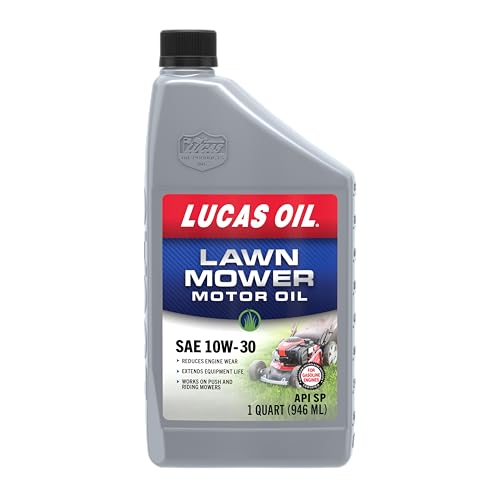
Lucas Oil 11315 SAE 30 Lawn Mower Motor Oil is a dedicated four-stroke engine oil designed for push and riding mowers. It is not a power tool in the traditional sense but an essential maintenance product for the gas engines that power many lawn tractors, walk-behind mowers, and other outdoor power equipment. For anyone who takes their lawn care seriously, using a quality oil like this is one of the simplest ways to keep equipment running reliably year after year.
This oil is best suited for homeowners and DIY landscapers who own push mowers or riding mowers with four-stroke engines. It delivers proven protection against engine wear and overheating, which are two of the biggest enemies of small engines during the mowing season. The formulation also includes rust preventatives that help protect internal components during storage, a major plus if you live in a region with long winters. Users report that engines start easier and run smoother after switching to this Lucas Oil product.
The SAE 30 viscosity is a common recommendation for lawn mower engines, providing the right thickness for lubrication in warm weather. While the quart size is convenient for a single oil change on most push mowers, you may need a few bottles for larger riding mowers with bigger crankcase capacities. The bottle lacks a pour spout, so be careful to avoid spills when adding oil to your mower. This is a minor inconvenience that can be solved with a funnel.
Lucas Oil is a well-known brand in the lubricants world, and this oil lives up to its reputation for quality. For anyone looking for a dependable, off-the-shelf oil that does exactly what it promises, this is a strong choice. It will help extend the life of your mower and keep it performing well all season long.
Size: 1 Quart (1 Pack)
Dimensions: 4.35 x 2.42 x 9 inches
Product Group: Lawn & Patio
Binding: Automotive
Pros
- Specifically designed for lawn mower engines, offering targeted protection against wear and heat
- Helps prevent rust and corrosion during off-season storage, a real plus for seasonal gear
- Promotes easier starting and smoother running, which means less hassle on mowing day
Cons
- Only available as a 1-quart bottle, which may not be enough for larger riding mowers that require a full oil change
- Not suitable for 2-stroke engines, so make sure your equipment is a 4-stroke before buying
- Premium price compared to generic oils, but the added protection may justify the cost for serious DIYers
The Lucas Oil 11313 SAE 10W-30 Lawn Mower Motor Oil is a four-stroke engine oil designed to keep push and riding mowers running reliably through the season. It's not a power tool itself, but it's an essential consumable for anyone who maintains small engines in their workshop or shed. If you own a lawn mower, tiller, or generator with a 4-stroke engine, this oil can help reduce wear and extend equipment life.
This oil is best suited for DIY homeowners and small engine enthusiasts who want a dedicated product rather than using leftover car oil. Lucas Oil specifically targets the challenges of mower operation: heat buildup from dense grass, frequent stop-start cycles, and long storage periods. The formulation includes additives that minimize engine wear and prevent overheating, which is a common issue when mowing in summer heat.
In real-world use, users can expect easier starting and a noticeably smoother idle after an oil change. The anti-rust properties are a standout advantage for those who store their mower for months at a time. Instead of fighting corroded internal components in spring, you'll get quick, clean starts. The oil also helps the engine maintain consistent operating temperature, reducing the risk of vapor lock or premature breakdown.
Build quality is what you'd expect from Lucas Oil: a reputable brand known for lubricants and additives. The 1-quart bottle is practical for small engines, though owners of larger riding mowers may need two bottles for a full change. The oil is not designed for 2-stroke engines, so be sure to confirm your equipment's requirements before use.
One realistic drawback is the price. It costs more than generic 10W-30, but the targeted protection and storage benefits can be worth the extra expense for those who value equipment longevity. If you're a weekend mower who just wants quick, reliable operation and engine protection, this Lucas Oil product is a solid investment. It's not flashy, but it does the job well.
Size: 1 Pack (1 Quart)
Type: SAE 10W-30
Application: Four-stroke small engines (push mowers, riding mowers, tillers, generators)
Dimensions: 4.35 x 2.42 x 9 inches
Product Group: Lawn and Patio
Binding: Automotive
This oil is ideal for routine oil changes on push mowers and small riding mowers used on residential properties. It's also suitable for other 4-stroke small engines like pressure washers, log splitters, and portable generators. If you store your equipment in an unheated shed or garage for the winter, the anti-rust protection is especially valuable. For best results, follow your owner's manual viscosity recommendation and change at the start of each season.


Readers working through this often check what type of oil does lawn mower use next.
Understanding Oil Compatibility and Specifications
The engine oil in a lawn mower serves three critical functions: lubricating moving parts, cooling the engine, and sealing piston rings. Using an oil that does not match the manufacturer’s specifications can compromise these functions. The most common question homeowners have is whether they can use the same oil found in their car. The short answer is that while some automotive oils share similar viscosities, they often contain additives that are not ideal for small, high-RPM engines like those found in mowers.
| Oil Type | Typical Viscosity | Best For | Key Characteristic |
|---|---|---|---|
| Conventional | SAE 30 | Warm climates, older engines | Standard lubrication, affordable |
| Synthetic Blend | SAE 10W-30 | All-season use, varied temps | Better cold starts, stable viscosity |
| Fully Synthetic | SAE 5W-30 | Severe conditions, new engines | Superior wear control, high temp stability |
Viscosity is the measure of an oil’s thickness and resistance to flow. A single-number grade like SAE 30 is a monograde oil, meaning it has one viscosity level. These are best used in warmer temperatures where the oil does not need to flow as easily at startup. Multi-grade oils, such as SAE 5W-30 or SAE 10W-30, contain additives that allow the oil to flow like a thinner oil when cold and thicken like a heavier oil when hot. This makes them ideal for regions with significant temperature swings.
The API (American Petroleum Institute) service category is another critical factor. Small engine oils are often labeled with API SJ or API SL. These ratings indicate the level of protection against wear, oxidation, and sludge formation. An oil with a lower API rating may not provide the same level of protection as one with a higher rating. When selecting an oil, check the bottle for the API diamond symbol and ensure the service category meets or exceeds the requirement in your manual.
It is a common misconception that any 4-cycle oil will work in any 4-cycle engine. While the basic lubricating function is similar, the additive packages differ. Automotive oils may contain detergents that are too aggressive for small engine seals, or they may lack the specific anti-wear agents needed for high-revving small engines. Using the correct oil ensures that the engine components are protected during the high-stress periods of mowing.
Based on the supplied specifications, brands like Briggs & Stratton and STP formulate their oils specifically for these small engine applications. The Briggs & Stratton SAE 5W-30 is a 100% synthetic oil designed for air-cooled 4-cycle engines. It is marketed as providing better wear control under severe operating conditions. Similarly, STP offers both SAE 10W-30 and SAE 30 options, with the 10W-30 being a synthetic blend that promotes easier starts in all seasons. These product descriptions highlight the importance of matching the oil to the specific engine design.
If you are unsure which oil to use, the owner’s manual is the definitive source. It will list the acceptable viscosity grades and API service categories. In cases where the manual is missing, the oil cap on the engine often provides a general recommendation. However, this is not a substitute for the manual, as it may not list all acceptable alternatives. Always prioritize the manufacturer’s listed specifications over general advice found online or in hardware store aisles.
Reading the Oil Cap and Manual
The oil cap on your lawn mower is a convenient first check. It typically displays a recommended viscosity, such as SAE 30 or SAE 10W-30. This recommendation is often a general guideline that covers a wide range of operating conditions. The owner’s manual, however, provides a more detailed breakdown, often separating recommendations by temperature range. For example, a manual might recommend SAE 30 for temperatures above 40 degrees Fahrenheit and SAE 10W-30 for temperatures below that.
When reading the manual, look for a table that correlates temperature with oil viscosity. This table is the most accurate guide for your specific climate. If you live in an area with extreme cold, a multi-grade oil like SAE 5W-30 may be necessary to ensure the engine starts easily. In consistently warm climates, a single-grade SAE 30 oil is often sufficient and more cost-effective. The manual may also specify the maximum oil capacity, which is crucial to avoid overfilling the engine.
Overfilling the engine with oil can cause more problems than underfilling. Excess oil can enter the combustion chamber, leading to blue smoke and fouled spark plugs. It can also increase pressure in the crankcase, causing leaks at the breather tube or seals. Always check the oil level with the dipstick before adding more. The dipstick has “Full” and “Add” marks, and the oil level should be between these two points. This simple check prevents potential damage and ensures optimal engine performance.
Differences Between Synthetic and Conventional Oils
Synthetic oils are chemically engineered to provide superior performance compared to conventional mineral oils. They have a more uniform molecular structure, which allows them to flow more easily in cold temperatures and maintain their viscosity at high temperatures. This makes them ideal for engines that operate in extreme conditions or for high-performance applications. Fully synthetic oils, such as the Briggs & Stratton SAE 5W-30, offer better wear control and longer drain intervals.
Conventional oils are derived directly from crude oil and are less expensive. They perform well in moderate temperatures and are a suitable choice for older engines or those used infrequently. SAE 30 is the most common conventional oil for lawn mowers. It provides adequate lubrication in warm weather but may become too thick to flow properly in cold weather, leading to increased wear during startup. If you live in a cold climate, a conventional SAE 30 oil may not be the best choice.
Synthetic blend oils offer a middle ground between conventional and fully synthetic oils. They contain a mixture of mineral and synthetic base stocks, providing some of the benefits of synthetic oil at a lower cost. STP’s SAE 10W-30 is a synthetic blend that is designed to promote easier starts and reduce wear.
It is a good option for homeowners who want the improved cold-start performance of a multi-grade oil without the higher cost of a fully synthetic product. The choice between these three types depends on your climate, budget, and the specific requirements of your mower engine.
It is important to note that you should not mix different types of oil. While mixing conventional and synthetic oil is generally not harmful to the engine, it dilutes the benefits of the synthetic additives.
If you need to top off the oil level, use the same type and viscosity as what is already in the engine. If you are unsure what type of oil is in your engine, it is best to drain it and refill with the recommended type. This ensures consistent performance and protection for your engine components.
Common Mistakes to Avoid
One of the most common mistakes is using automotive oil in a lawn mower. While the viscosity may be similar, the additive package is different. Automotive oils are designed for engines that operate at lower RPMs for longer durations. Lawn mower engines operate at higher RPMs for shorter periods, requiring different lubrication properties. Using the wrong oil can lead to increased wear, oil consumption, and potential engine failure.
Another mistake is ignoring the API service category. An oil with a lower API rating may not provide the necessary protection against wear and oxidation. Always check the bottle for the API symbol and ensure it meets the requirement in your manual. Using an oil with an outdated API rating can void your engine warranty and lead to premature engine failure. The API rating is a standardized measure of oil quality and performance, and it should not be overlooked.
Overlooking the storage conditions of your mower is also a significant issue. If your mower is stored outdoors or in a garage with fluctuating temperatures, the oil can degrade over time. This degradation can reduce the oil’s effectiveness and lead to increased wear. Using an oil with corrosion inhibitors, such as those found in STP and Lucas Oil products, can help protect the engine during storage. These inhibitors prevent rust and corrosion, which can damage internal engine components.
Finally, failing to check the oil level regularly is a common oversight. Many homeowners only check the oil when they notice a problem, such as smoke or a loss of power. By then, the engine may already be damaged. Checking the oil level before each use is a simple habit that can prevent major issues. It takes only a few seconds and can save you from costly repairs. Make it a part of your pre-mowing routine to ensure your engine is always properly lubricated.
Readers working through this often check what type of oil to use in a lawn mower next.
Safe Storage and Handling of Oil
Proper storage of engine oil is essential for safety and environmental protection because it is a flammable liquid that requires specific handling to prevent hazards.
- Engine oil should be stored in a cool, dry place away from open flames and sparks to ensure safety.
- Using a safety can, such as the Justrite Type I Oils Safety Can, can help reduce fire hazards effectively.
- These cans are designed with flame arresters and self-closing lids to prevent ignition and vapor release.
- They are FM Approved, UL/ULC Listed, and TÜV Certified, ensuring they meet industry safety standards.
When handling used oil, it is important to dispose of it properly. Used oil can contaminate soil and water, causing environmental damage. Many auto parts stores and recycling centers accept used motor oil for free. Do not pour used oil down the drain or into the ground. Store used oil in a sealed container until you can dispose of it at a designated facility. This simple step helps protect the environment and complies with local regulations.
When pouring new oil, use a funnel to avoid spills. Spills can make the ground slippery and create a fire hazard. If you do spill oil, clean it up immediately using absorbent material. Dispose of the absorbent material according to local regulations. Wearing gloves and safety glasses when handling oil is also recommended to protect your skin and eyes. These precautions ensure that you handle oil safely and responsibly.
The Justrite safety cans are constructed from 24-gauge galvanized steel with a chemical-resistant powder-coat finish. This construction provides durability and resistance to corrosion. The counterbalanced swinging handle and integrated bottom lip provide better balance and pouring control. These features make it easier to handle and dispense oil safely. Investing in a quality safety can is a smart move for anyone who regularly handles flammable liquids like engine oil.
Seasonal Considerations for Oil Choice
The temperature outside plays a significant role in determining the best oil for your lawn mower. In cold weather, oil becomes thicker, making it harder for the engine to start. A multi-grade oil like SAE 5W-30 or SAE 10W-30 flows more easily at low temperatures, reducing wear during startup. In warm weather, oil becomes thinner, which can reduce its lubricating effectiveness. A single-grade oil like SAE 30 maintains its viscosity better in high temperatures, providing consistent lubrication.
If you live in an area with significant temperature swings, a multi-grade oil is the best choice. It provides adequate protection in both cold and warm conditions. If you live in a consistently warm climate, a single-grade SAE 30 oil is sufficient and more cost-effective. The Lucas Oil 11313 SAE 10W-30 and Lucas Oil 11315 SAE 30 are both good options for different climates. The 10W-30 is a synthetic blend that works well in varied temperatures, while the SAE 30 is a conventional oil ideal for warm weather.
It is not necessary to change the oil type with the seasons if you use a multi-grade oil. A quality multi-grade oil like SAE 10W-30 is designed to perform well in a wide range of temperatures. Switching between single-grade oils can be inconvenient and may lead to errors. If you choose to use single-grade oils, make sure to switch to the appropriate viscosity when the temperature changes significantly. This ensures that your engine is always properly lubricated.
Some users find that using a multi-grade oil year-round simplifies their maintenance routine. It eliminates the need to keep different types of oil on hand and reduces the risk of using the wrong oil. The STP Premium Small Engine 4 Cycle Oil Formula SAE 10W-30 is marketed as an all-weather formula that can be used in all seasons. This convenience can be a significant benefit for busy homeowners who want to ensure their mower is always ready to use.
Checking Oil Level and Condition
Checking the oil level is a simple task that should be performed before each use. Start the engine and let it run for a minute to circulate the oil. Then, turn off the engine and wait a few minutes for the oil to drain back into the oil pan. Pull out the dipstick, wipe it clean with a cloth, and reinsert it fully. Pull it out again to check the level. The oil level should be between the “Full” and “Add” marks.
In addition to checking the level, inspect the oil’s condition. Fresh oil should be clear and amber in color. If the oil is dark, dirty, or has a burnt smell, it is time for an oil change. Used oil loses its lubricating properties and can contain contaminants that damage the engine. Changing the oil regularly is one of the most important maintenance tasks for your lawn mower. The manufacturer’s manual will specify the recommended oil change interval, which is typically every 50 hours of use or once a season.
If the oil level is low, add oil slowly and check the level frequently to avoid overfilling. Use the same type and viscosity of oil that is already in the engine. If you are unsure what type of oil is in your engine, it is best to drain it and refill with the recommended type. Overfilling can cause oil to enter the combustion chamber, leading to smoke and fouled spark plugs. Always err on the side of caution and check the level after adding oil.
Some mowers have a sight glass instead of a dipstick. This is a small window on the side of the engine that allows you to see the oil level. The sight glass usually has a high and low mark. The oil level should be between these two marks.
If the level is low, add oil until it reaches the high mark. Sight glasses are convenient because they allow you to check the oil level without removing a dipstick. However, they can be harder to read if the glass is dirty or the oil level is close to the edge.
Maintaining the correct oil level is crucial for engine health. Low oil levels can cause the engine to overheat and wear out quickly. High oil levels can cause leaks and fouled spark plugs. By checking the oil level regularly, you can prevent these issues and extend the life of your engine. This simple task takes only a few minutes and can save you from costly repairs. Make it a habit to check the oil before every mowing session to ensure your engine is always protected.
Choosing the right oil for your lawn mower is not a matter of guesswork. It is a matter of following the manufacturer’s specifications and understanding the properties of different oils. By using the correct viscosity and API service category, you can ensure that your engine is properly lubricated and protected.
Whether you choose a conventional, synthetic blend, or fully synthetic oil, the key is to use the oil that is recommended for your specific engine and climate. This simple step can make a significant difference in the longevity and performance of your lawn mower.
If you are still unsure which oil to use, consult your owner’s manual or contact the manufacturer. They can provide you with the specific recommendations for your model. Do not rely on general advice or guesswork. The cost of the right oil is minimal compared to the cost of repairing a damaged engine. Take the time to choose the correct oil, and you will enjoy many seasons of reliable mowing. If you are looking for more information on maintaining your equipment, our lawnmower blade cost guide covers related maintenance expenses.
For more on a connected point, our page on can i use any 10w30 oil in my lawn mower goes into it separately.






Write Your Review
No reviews yet. Be the first to share your experience!