


On most Briggs & Stratton walk-behind mowers, the carburetor sits directly beneath the air filter housing on the side of the engine. This placement is consistent across many small engine models, making it the first spot to check if you need to service the fuel system. Understanding where this component is located helps you diagnose issues like hard starting or stalling before attempting any repairs.
Identifying the correct location depends on the specific engine series installed in your mower. Different Briggs & Stratton models, such as the EX series or vertical shaft engines, may have slight variations in how the carburetor is mounted relative to the fuel tank and primer. Knowing these distinctions ensures you access the part safely and correctly, avoiding unnecessary disassembly of unrelated components.

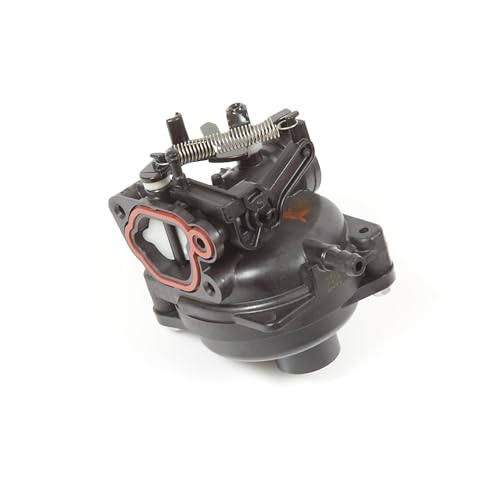

Pros
- Direct bolt-on fit for numerous Briggs & Stratton push mower engines
- Includes all gaskets and parts for a complete install
- Zinc body resists rust and holds up well to fuel exposure
- Restores engine performance at a fraction of dealer repair cost
Cons
- May require minor adjustment of the idle mixture screw to dial in perfect performance
- Some users report the included gaskets can be a bit thin; using a thin layer of gasket sealant can help
- Not designed for high-performance or commercial mowers, strictly a stock replacement part
If your Briggs & Stratton push mower has been acting up lately (hard starting, surging, or stalling under load), chances are the carburetor is due for a swap. The Gioong 799583 carburetor is a direct-fit replacement designed for a huge range of Briggs engines, including the 300E, 450E, 500E, 550EX, and the 125cc/140cc series found on many MTD, Murray, and Toro walk-behind mowers.
This carburetor is best suited for the homeowner or DIYer who wants to bring a tired mower back to life without spending big money at a repair shop. It's a straightforward swap that takes about 15-20 minutes with basic hand tools. The zinc body feels solid and resists corrosion, which is important since mower carbs live in damp, grassy conditions. The kit includes the carburetor itself plus all the gaskets and mounting hardware you need, so there's no running to the store for extra parts.
In real-world use, this carburetor restores smooth idle and reliable starting. The air-fuel mix is set close to factory spec, though you might need to tweak the idle mixture screw a quarter turn for perfect operation on your specific engine. Once dialed in, the mower should accelerate cleanly and run without surging. It won't add power, but it will return the engine to its original performance level, which is exactly what you want from a replacement part.
Build quality is good for the price. The zinc alloy casting is clean, and the throttle shaft moves freely without play. The included gaskets are functional but on the thinner side; if you have a rough mounting surface, a dab of gasket sealant ensures a leak-free seal. One thing to keep in mind: this is a stock replacement, not a performance part. If you're running a commercial mowing operation, you might prefer an OEM carb, but for the typical homeowner cutting a half-acre lot, this Gioong unit does the job.
Overall, this is a smart buy for anyone with a Briggs & Stratton push mower that's getting hard to start or running rough. It's an easy DIY fix that saves money and keeps your mower out of the landfill. Pair it with a fresh spark plug and air filter, and you'll have a machine that starts on the first pull for seasons to come.
Color: Zinc
Dimensions: 1 x 1 x 1 inches
Product Group: Automotive Parts and Accessories
This carburetor is ideal for restoring performance on Briggs & Stratton push mowers used on residential lawns. It's a perfect fit for DIY tune-ups on MTD, Murray, Toro, and similar walk-behind mowers with 300E, 450E, 500E, 550EX, or 125cc/140cc engines. Great for homeowners who want to fix a surging or hard-starting mower without a trip to the shop.
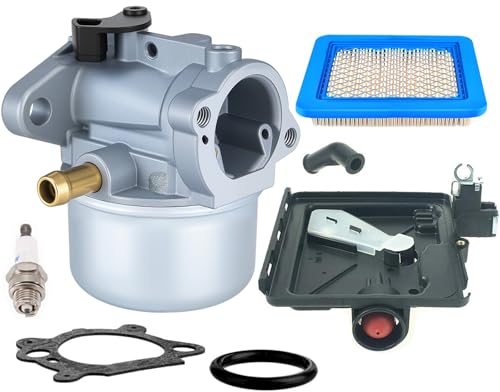
Pros
- Pre-adjusted carburetor saves time and guesswork during installation
- All-in-one kit includes the primer base and air filter for a full tune-up
- Broad compatibility with many Briggs & Stratton engines and mower brands
- Affordable alternative to OEM parts without sacrificing fit or function
Cons
- May require minor adjustment on some engines due to manufacturing tolerances
- Not compatible with engines that have a choke system
- Limited to 122000 series engines; verify your model before buying
If you own a walk-behind mower with a Briggs & Stratton engine from the 122000 series, you know that a clogged carburetor is often the reason it won't start or runs rough. The LEIMO 799868 carburetor kit is a direct replacement designed to get your mower back in action without the hassle of rebuilding the old carb. It comes pre-adjusted, so you can simply swap it in and go.
This kit is best suited for DIY homeowners and small engine enthusiasts who want to save money on repairs. It fits a wide range of models including the 120XXX, 121XXX, 122XXX, 12EXXX, and 12TXXX series, and it works with popular mower brands like Craftsman, Snapper, Toro, and Ninja. The included air filter and primer base mean you get everything needed for a complete carburetor service in one box.
In real-world use, the pre-adjusted carburetor performs reliably right out of the box. Most users report that their mower starts easily and idles smoothly after installation. The build quality feels solid and matches OEM specifications, so you don't have to worry about poor fitment or leaks. For a weekend mechanic, this is a straightforward fix that avoids the complexity of cleaning and rebuilding the original carb.
One thing to keep in mind is that this carburetor is designed for engines without a choke system. If your engine has a choke, this won't work. Also, while it's pre-adjusted, some engines may need a minor tweak to the idle mixture screw for perfect performance. That's a simple turn with a screwdriver and not a deal breaker.
Overall, the LEIMO carburetor kit is a smart buy for anyone with a compatible Briggs & Stratton mower engine. It saves time, includes all the necessary parts, and costs less than a trip to the repair shop. If you're comfortable with basic tools and want to get your mower running like new, this is a solid choice.

Pros
- Affordable price point for a replacement part
- Wide compatibility with popular Briggs and Stratton mower engines
- Easy to install with simple tools and online tutorials
- Good customer support with a return policy for peace of mind
Cons
- Not an OEM part so quality may vary between units
- Some users may need to adjust idle or mixture screws after installation for optimal performance
- Limited to specific engine models; verify compatibility before purchase
The PSLER 799584 carburetor is a replacement part designed for a range of Briggs and Stratton lawn mower engines. It directly replaces OEM numbers like 594058, 592361, 594057, and 594529, making it a versatile option for many popular mower models including the TB110, TB200, 550EX, 625EX, 675EX, and 725EX. This carburetor is a common upgrade for DIY homeowners and small engine mechanics looking to restore performance without the high cost of a dealer repair.
In real world use, this carburetor addresses typical issues like hard starting, rough idling, stalling under load, or poor fuel efficiency. When installed correctly, it can bring a sluggish mower back to life, delivering smooth throttle response and reliable operation throughout the cutting season. The build quality is decent for the price, with a metal body and plastic components that resist warping and corrosion. It comes with pre installed gaskets and seals, so you can swap it out in under 30 minutes with basic socket and screwdriver skills.
One thing to keep in mind is that this is an aftermarket part, not a genuine Briggs and Stratton OEM unit. While it fits and functions well for most users, the tolerances may not be as tight as the original. You might need to fine tune the idle speed or mixture screws after installation to get perfect performance, especially if your mower has high hours. The included instructions are minimal, but plenty of YouTube videos cover the swap for these engines.
Overall, the PSLER carburetor is a smart buy for anyone comfortable doing their own small engine repairs. It offers a budget friendly way to extend the life of your mower and avoid costly shop visits. If you are a weekend warrior or a hands on homeowner with a Briggs and Stratton powered machine, this carb is a solid choice. Just double check your engine model against the compatibility list before ordering, and be prepared for a small amount of tuning after installation.
Locating the Carburetor on Briggs & Stratton Engines
The carburetor is a critical fuel-metering device that mixes air and gasoline before it enters the combustion chamber. On Briggs & Stratton engines found in lawn mowers, this component is typically mounted on the side of the engine block, directly under the air filter assembly. The exact position can vary slightly depending on the engine model, such as the 550EX, 625EX, or vertical shaft configurations. Identifying the correct spot is the first step in addressing fuel system issues or performing maintenance.
| Engine Series | Typical Location | Access Method |
|---|---|---|
| EX Series (550EX, 625EX, etc.) | Side of engine, under air filter | Remove air filter housing |
| Vertical Shaft (125cc, 140cc) | Side of engine, near fuel tank | Remove air filter, check fuel line |
| Horizontal Shaft (122000, 123000) | Side of engine, opposite pull cord | Remove air filter housing |
Start by identifying the fuel line running from the fuel tank to the engine. This line usually terminates at a nipple on the carburetor body. Following the fuel line is the most reliable way to locate the component, as it eliminates guesswork. Once you find the fuel line connection, the carburetor body should be immediately visible underneath the air filter housing. This method works for most standard walk-behind mower engines.
Before accessing the carburetor, ensure the engine is cool and the spark plug is disconnected. This safety step prevents accidental starting while you are working near the fuel system. The air filter housing is usually secured by one or two screws or a clamp. Removing this housing provides direct visual access to the top of the carburetor and its associated linkages. You will see the throttle linkage and possibly the choke linkage attached to the carburetor body.
Different engine families have distinct mounting patterns. The EX series engines, common in mid-range mowers, typically feature a carburetor mounted on the left side of the engine block. Vertical shaft engines, often found in older or budget models, may have the carburetor positioned slightly lower or closer to the fuel tank. Horizontal shaft engines, used in larger mowers, usually place the carburetor on the side opposite the recoil starter. Understanding your specific engine type helps you anticipate where to look.
- Disconnect the spark plug wire to prevent accidental engine start.
- Locate the fuel line running from the tank to the engine.
- Remove the air filter housing to expose the carburetor top.
- Identify the throttle and choke linkages attached to the body.
- Check for fuel leaks around the gasket and fuel line connection.
Distinguishing Engine Models and Mounting Positions
Briggs & Stratton produces several engine families that use different carburetor designs. The EX series engines, such as the 550EX and 625EX, are popular in self-propelled mowers and feature a specific carburetor orientation. These engines often use an auto-choke system, which affects how the carburetor is linked to the throttle control. The carburetor is mounted to the side of the engine block, with the fuel inlet facing the fuel tank.
Vertical shaft engines, like those in the 125cc and 140cc classes, have a different mounting arrangement. The carburetor is typically positioned lower on the engine block, close to the crankcase. This design allows for a more compact engine layout. The fuel line may enter from the top or side, depending on the specific model year. Identifying the engine model number on the data plate helps confirm the correct carburetor location and type.
Horizontal shaft engines, found in larger mowers, mount the carburetor on the side of the engine opposite the recoil starter. This placement keeps the fuel system away from the high-heat area near the exhaust. The air filter housing is larger on these engines, providing more clearance for the carburetor. When accessing the carburetor, you may need to remove additional components, such as the spark plug wire cover or a side panel, to gain full access.
Visual Cues for Identifying the Component
The carburetor body is usually made of aluminum or cast iron and has a distinct shape with multiple ports and linkages. The fuel inlet nipple is a small brass or plastic fitting where the fuel line connects. The air inlet is a larger opening that connects to the air filter housing. The throttle shaft is a small metal rod that rotates to open and close the throttle plate inside the carburetor. These visual cues help you distinguish the carburetor from other engine components.
Look for the primer bulb or primer diaphragm, which is often attached to the top or side of the carburetor. This component is used to draw fuel into the carburetor bowl for easier starting. The presence of a primer bulb can help confirm that you are looking at the correct component. Some engines use a manual primer, while others have an automatic primer integrated into the fuel system. The type of primer can vary by engine model and year.
The choke linkage is another key visual cue. On engines with a manual choke, a lever or cable connects to the carburetor to control the choke plate. On auto-choke engines, a mechanical linkage connects the choke to the engine’s operating temperature. The choke plate is located inside the carburetor’s air inlet and restricts airflow when closed. Identifying the choke linkage helps you understand how the carburetor interacts with the engine’s starting system.
- Fuel inlet nipple where the fuel line connects to the carburetor.
- Air inlet opening that connects to the air filter housing.
- Throttle shaft that rotates to control engine speed.
- Choke linkage or lever that controls the choke plate.
- Primer bulb or diaphragm for drawing fuel into the bowl.
- Gasket surface that seals the carburetor to the engine block.
Common Maintenance Access Points
Accessing the carburetor for maintenance requires removing the air filter housing first. This housing is typically secured by one or two screws or a spring clamp. Once removed, you will have direct access to the top of the carburetor and its linkages. This access point is used for adjusting the idle speed, cleaning the throttle linkage, or inspecting the choke mechanism. It is the most common entry point for basic carburetor maintenance.
For deeper maintenance, such as cleaning or rebuilding the carburetor, you may need to remove the entire carburetor assembly. This involves disconnecting the fuel line, removing the throttle and choke linkages, and unbolting the carburetor from the engine block. The carburetor is usually held in place by two bolts or screws that pass through the engine block. Removing these bolts allows you to lift the carburetor off the engine for cleaning or replacement.
When removing the carburetor, be careful not to damage the gasket surface on the engine block. The gasket seals the carburetor to the engine and prevents fuel and air leaks. If the gasket is damaged or worn, it should be replaced during reinstallation. The fuel line may also need to be disconnected and reconnected, so check for any cracks or leaks in the line. Proper reassembly ensures the carburetor functions correctly and does not cause fuel leaks.
Understanding the location and access points of the carburetor helps you perform maintenance safely and effectively. Always refer to the engine manual for specific instructions and safety guidelines. If you are unsure about any step, consider consulting a professional mechanic. Proper maintenance of the carburetor can help ensure reliable engine performance and longevity. For more detailed guidance on engine maintenance, check our mower blade removal guide for general engine access tips.
Knowing where the carburetor is located on your Briggs & Stratton lawn mower allows you to address fuel system issues efficiently. By following the fuel line and removing the air filter housing, you can quickly identify the component and perform necessary maintenance. Always prioritize safety by disconnecting the spark plug and ensuring the engine is cool before working. This knowledge empowers you to maintain your mower and keep it running smoothly.



Write Your Review
No reviews yet. Be the first to share your experience!