


Introduction
Grass that looks uneven after mowing can make the blade seem like the obvious problem, but a useful replacement has to suit both the job and the mower. The answer to what blades cut grass the best depends on whether the mower is set up for mulching, bagging, or side discharge, and whether the blade matches the deck and mounting geometry. A blade labeled for one purpose is not automatically a match for every mower or a guarantee of a particular finish. Exact fitment matters as much as the blade’s intended function.
This guide separates conventional mower blades from handheld grass-cutting accessories in the listings, then explains which details to check before buying. The Maxpower listing identifies a mulching blade for some 21-inch-cut MTD, Cub Cadet, Troy-Bilt, and Craftsman mowers, with specific replacement numbers and mounting details. Other listed items are grass whips or trimmer blades, not interchangeable substitutes for a mower-deck blade. For more fitment context, see this mower blade compatibility guide and our notes on mower blade setup tools.
Product Shortcode

Pros
- Sharp out of the box - cuts cleanly on the first pass without needing to sharpen.
- Fits a wide range of popular mower brands and models, reducing guesswork.
- Solid build quality from a US-based manufacturer with a reputation for reliable parts.
- Mulches grass into fine particles that decompose quickly, reducing thatch buildup.
- Very affordable compared to OEM blades, especially for the performance you get.
Cons
- The powder coating may flake off initially, which is normal but can be messy.
- Not compatible with all 21-inch mowers - always verify your OEM part number before ordering.
- Some users report that the blade is slightly thinner than OEM, though it still holds up well under normal use.
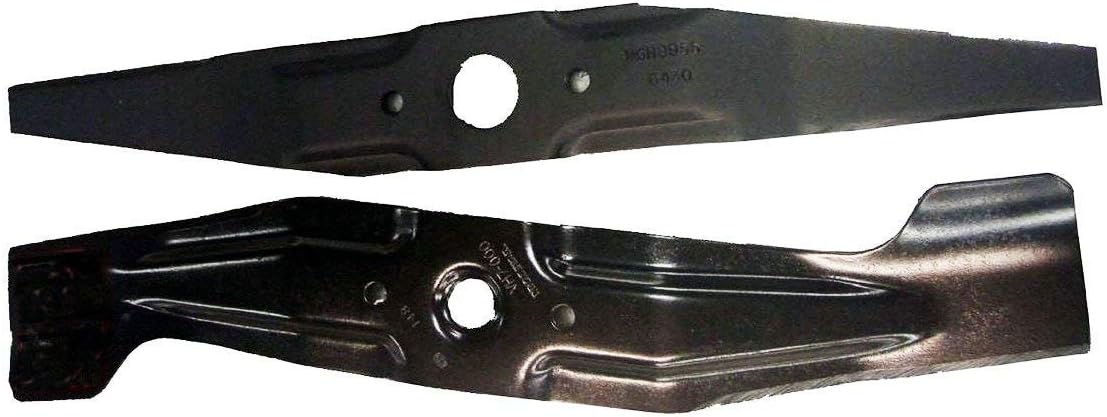
The MaxPower 331528B is a replacement mulching blade designed for many 21-inch cut walk-behind mowers from MTD, Cub Cadet, Troy-Bilt, and Craftsman. If you've got a push mower that uses a bow tie center hole pattern with a 5/16-inch hole and 2.5-inch spacing, this blade is likely a direct drop-in. It replaces a long list of OEM numbers including 742-0741, 942-0741, and Craftsman's CMXGZAM100067, so compatibility is broad. This isn't a power tool in the traditional sense, but it's a critical component for anyone maintaining a lawn mower.
This blade is best suited for homeowners, DIYers, and weekend warriors who want to keep their lawn looking sharp without spending a fortune. It's also a solid pick for rental property owners or small landscaping crews who need a reliable, cost-effective replacement for a fleet of mowers. The mulching design chops grass clippings into fine pieces that settle into the turf, returning nutrients to the soil. That means less bagging and a healthier lawn overall.
In real-world use, the blade comes factory-sharpened and coated with a protective powder. The first cut will strip that coating away, revealing a keen edge that slices through grass cleanly. Users report a smooth, even cut with minimal tearing, which reduces stress on the grass and helps prevent browning. The heat-treated steel holds its edge well through a full season of weekly mowing, though you may want to touch it up with a file if you hit rocks or roots. Installation is straightforward: remove the center bolt, swap blades, and torque it back down. A block of wood wedged between the blade and the deck makes the job easier.
Build quality is solid for an aftermarket blade. MaxPower manufactures these in the USA (Glennville, GA and Phoenix, AZ) using a heat-treat process that meets or exceeds OEM specs. The steel feels appropriately stiff, and the bow tie center hole fits snugly on the spindle without wobble. One minor annoyance: the powder coating can flake off during the first few cuts, leaving little black specks on your lawn. That's cosmetic and harmless, but worth noting. Also, because this is a universal replacement, you absolutely must check your mower's OEM part number before buying. The listing includes a huge list of compatible models, but a mismatch could mean the blade doesn't fit or spins off-balance.
Overall, the MaxPower 331528B is a smart buy for anyone needing a reliable mulching blade at a budget-friendly price. It cuts well, fits a wide range of mowers, and is built to last. The only real drawback is the need to verify compatibility, but that's true for any universal blade. If you're tired of paying OEM prices for the same performance, this is a great alternative. Just double-check your part number, and you'll be back to mowing in no time.
Blade Length: 21 inches
Blade Width: 2.25 inches
Center Hole: Bow tie pattern, 5/16-inch diameter outer holes, 2.5-inch center-to-center spacing
Weight: 1.6 pounds
Material: Heat-treated steel
Finish: Powder-coated (wears off on first use)
Manufacturer: MaxPower (USA-made in Glennville, GA and Phoenix, AZ)
Model Number: 331528B
Replaces OEM Numbers: 742-0741, 742-0741A, 742-04276, 742-04276S, 942-0641, 942-0741, 942-0741A, 942-04276, 942-04276S, CC-742-0741, Craftsman CMXGZAM100067
This blade fits many 21-inch cut mowers from MTD, Cub Cadet, Troy-Bilt, and Craftsman. Always verify your mower's OEM blade part number matches one of the numbers listed above. Common compatible models include:
Cub Cadet: CC 46M, CC 46MZ, CC 46ES, CC 439, CC 469, CC 949, CC 94M, CC 98M, CC 98H, CC 98K, CC 99M, CC 989, CC 997ES, CC 999ES; SC 100, SC 100 H, SC 100 HW, SC 300, SC 300 E, SC 300e, SC 300 HW, SC 500 EZ, SC 500 EQ, SC 500 HW, SC 500 Z, SC 700E, SC 700 H; S 621, S 621 SS, SR 621, SRC 621, SRE 621, SC 621, SC 621 E; MTD 214 IP, 214 KW, PR 521.
Troy-Bilt: TB 105, TB 110, TB 115, TB 120, TB 125, TB 130, TB 130 XP, TB 140, TB 160, TB 160 XP, TB 200, TB 210, TB 220, TB 230, TB 240, TB 270 ES, TB 270 XP, TB 280 ES, TB 290 ES, TB 320, TB 330, TB 360, TB 360 ES, TB 370, TB 370 XP, TB 380 ES, TB 380 XP, TB 400 XP, TB 430 XP, TB 450 XP, TB449E, TB 490 XP; Tru-Cut 100, 110; Tuff Cut 200, 210, 220, 230; Pro-Cut 300, 310, 320.
Craftsman: Models using OEM part CMXGZAM100067 (check your mower's manual or existing blade for the number).

Pros
- Efficient dual-sided cutting action saves time on each swing
- Lightweight and well-balanced for prolonged use without fatigue
- Solid hardwood handle feels durable and provides good leverage
Cons
- Not suitable for very thick woody brush or stems larger than a pencil; a brush cutter or saw would be better
- Manual operation requires physical effort, so it may not be ideal for clearing large acreages by hand
If you have ever faced a patch of head-high weeds or a field overtaken by brambles, you know that a string trimmer sometimes just flails around. The True Temper 2942600 Grass Whip is a classic manual tool built for exactly that kind of mess. It uses a double-edged serrated steel blade to cut on both the forward and backswing, so every motion counts. This is not a power tool in the traditional sense, but for anyone who maintains a large property, ditch, or fence line, it is a practical addition to the workshop shed.
This grass whip is best suited for homeowners, DIYers, and even light commercial users who need to clear overgrown grass, tall weeds, and soft-stemmed plants in areas where a mower cannot reach. Think around trees, along fences, or in ditches. The 38-inch hardwood handle gives you a good stand-up reach, so you are not hunched over while swinging. The blade is serrated, which helps grip and slice through stems that a straight blade would just push aside. It is a simple, effective tool that does not require any fuel, batteries, or maintenance beyond keeping the edge clean.
In real-world use, the grass whip delivers a satisfying cut on each swing. The double-edged design means you can work in a rhythm and clear a path fairly quickly for a manual tool. It is lightweight enough to swing all afternoon without your arms giving out, and the hardwood handle feels solid in the hand. The serrated edge does a better job on tough grasses than a plain edge, though it still struggles with woody stems or thick vines. For those, you would need a brush hook or a power tool. Also, the blade is not replaceable, so once it dulls after heavy use, you will need to sharpen it or buy a new whip.
Build quality is decent for the price. The blade is stamped steel and the handle is varnished hardwood. It is not a heirloom-grade tool, but it will hold up to several seasons of regular use if stored dry. The hole in the handle makes hanging storage easy, keeping it out of the way in the garage or tool shed. One trade-off is that the tool is strictly manual, so you will break a sweat on larger areas. But for spot-clearing or maintenance around the property, it is more efficient than a machete or a hand sickle.
Overall, the True Temper Grass Whip is a smart buy for anyone who battles tall grass and weeds without wanting to start a gas trimmer. It is affordable, lightweight, and gets the job done with no noise or fumes. If you are a contractor doing brush clearing or a homeowner with a few acres of rough ground, this tool will earn a spot in your truck or shed. Just keep your expectations in check for thick brush, and you will appreciate the simplicity and effectiveness of this old-school design.
Product: True Temper 2942600 Grass Whip
Blade: Double-edged serrated steel
Handle: 22-inch hardwood (overall length 38 inches)
Weight: 1.4 pounds
Dimensions: 2.38 x 6.9 x 41.3 inches
Storage: Hole in handle for hanging
This grass whip excels at clearing tall grass, weeds, and light brush in open areas like ditches, fields, fence lines, and around trees. It is ideal for homeowners with small to medium properties who want a quick, quiet way to knock down overgrown patches without firing up a trimmer. Landscapers and contractors can use it for touch-up work in spots where a mower cannot go. It is not a replacement for a brush cutter on thick saplings or heavy vines, but for grassy areas, it is a reliable manual tool.

Pros
- Effective on thick, overgrown weeds and light brush
- Lightweight and well-balanced for comfortable swinging
- No fuel, noise, or vibration - simple and reliable
- Sharp serrated blade cuts cleanly with less effort
Cons
- Requires physical effort; not ideal for very large areas or heavy brush
- Blade may need sharpening after prolonged use on tough vegetation
- 30-inch handle might be too short for taller users to maintain good posture
The Walensee Weed Grass Cutter is a manual hand tool designed for cutting overgrown weeds, grass, and light brush. It features a serrated double-edged blade attached to a 30-inch steel handle. This is not a power tool but a classic grass whip or weed cutter that relies on your swinging motion to slice through vegetation.
This tool is best suited for homeowners, gardeners, and property owners who need to clear small to medium areas like garden beds, fence lines, ditches, and field edges. It is also a great backup for contractors who work in tight spaces where string trimmers or brush cutters might be too bulky or noisy.
In real-world use, the serrated blade grabs and cuts through thick weeds and grass effectively. The double-edged design means you can swing in either direction without repositioning the tool. The 30-inch handle provides good leverage, but taller users may find themselves bending slightly. At 3 pounds, it is light enough for extended use without arm fatigue.
Build quality appears solid with a steel handle and blade. Maintenance is minimal - just keep the blade clean and sharp. One realistic drawback is that this tool requires physical effort; it is not suitable for clearing large acreage or heavy brush with stems thicker than a pencil. For those tasks, a powered trimmer or brush cutter would be more efficient.
Overall, the Walensee Weed Grass Cutter is a reliable, no-fuss manual option for tackling overgrown weeds in tight or sensitive areas. It is a practical addition to any gardener's shed or a contractor's truck for quick touch-ups where noise and fumes are a concern.
Use this manual grass cutter for clearing weeds along fence lines, around trees, in flower beds, and in ditches where a string trimmer might not reach. It is also excellent for spot-clearing overgrown patches in vegetable gardens or along pathways. Because it is quiet and produces no emissions, it is ideal for use near homes, schools, or in noise-sensitive areas.

Pros
- Tough PA66 nylon construction flexes slightly on impact, minimizing premature snapping against woody stalks
- Substantially faster to replace than rethreading conventional string trimmer line
- Offers cleaner cuts on thick weeds and reeds without bogging down the trimmer engine
- Large 24-count bundle provides multiple full head refreshes for season-long upkeep
Cons
- Blades will wear down quickly or crack if constantly struck against concrete curbs, brick edging, or rock walls
- Designed strictly for Stihl PolyCut pivot heads and will not work on standard line-fed trimmer spools
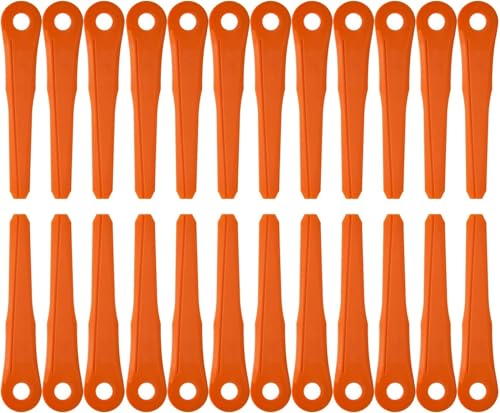
The EVEHAP 24-Piece Plastic Trimmer Blade Set is designed specifically for outdoor power equipment users seeking an alternative to standard trimmer line. Built as direct replacements for OEM part 4002 007 1000, these blades fit a wide range of Stihl PolyCut trimmer heads, including the 6-2, 6-3, 7-3, 27-3, 28-2, 47-3, and 48-2 models. They serve as an ideal accessory for homeowners, estate caretakers, and grounds crews who manage acreage where regular monofilament line simply frays and breaks too fast.
When handling dense vegetation, thick thistle, or overgrown drainage ditches, traditional line heads often weld inside the spool or shear off at the eyelet. These 145mm nylon blades utilize centrifugal force on the PolyCut pivot pins to slash cleanly through heavy-stemmed vegetation. By keeping the overall rotating mass lighter than a heavy steel brush blade, your weed eater maintains high RPMs and quick throttle response without straining the clutch or gearbox.
Build quality centers on PA66 nylon, a material known for its rigidity, thermal stability, and impact endurance. The blades feature just enough flexibility to absorb minor deflections from twigs and soft ground rather than snapping instantly at the pivot hole. Swapping dull or chipped blades takes mere moments, requiring no specialized wrenches or disassembling the entire trimmer gearhead.
Keep in mind that plastic blades are not invincible. Operating them right along chain-link fencing, concrete foundations, or stone walkways will abrade the tips and cause premature wear. For fence-line clearing, ditch banks, open field borders, and orchard management, this 24-pack is an economical, reliable replacement that keeps your trimmer running efficiently all season long.
These replacement blades are engineered to fit Stihl PolyCut multi-blade trimmer heads. Supported assemblies include Stihl PolyCut 6-2, PolyCut 6-3, PolyCut 7-3, PolyCut 27-3, PolyCut 28-2, PolyCut 47-3, and PolyCut 48-2.
Each blade measures approximately 145mm (5.7 inches) in length and features the standard mounting hole diameter matching OEM Stihl 4002 007 1000 specifications. Always ensure your trimmer head is free of caked mud and debris before seating each blade over the retaining pin.

Pros
- Affordable set with a high blade count for extended use
- Combination of plastic and metal blades covers light to moderate trimming tasks
- Straightforward blade replacement process suitable for any DIY homeowner
Cons
- Metal blades may not withstand heavy-duty brush or repeated impact without dulling
- Plastic blades are best for light grass; thick weeds may require more passes
- Smaller blades (5.3 to 5.8 inches) limit cutting area compared to standard trimmer heads
The Zhehao 68-piece weed wacker blade set is a budget-friendly kit designed for homeowners and DIYers who maintain small to medium lawns. It includes 60 plastic string trimmer blades and 8 metal saw blade heads, giving you an economical way to keep your yard neat without frequent blade replacements. The plastic blades work well for routine grass trimming, while the metal blades step in when you encounter tougher weeds or light brush.
In real-world use, the plastic blades are made from polypropylene with serrated edges that cut through standard grass cleanly. They are easy to install directly onto most handheld lawnmowers with a 5mm bore, and swapping them out requires only a hex wrench. The metal blades, crafted from stainless steel, provide a bit more bite for overgrown areas, but they are not heavy-duty enough for dense brambles or thick saplings. If your primary concern is trimming around flower beds and edging the lawn, these blades get the job done without fuss.
Build quality is decent for the price point. The plastic blades feel sturdy enough for several uses, though they will wear down over time, which is expected. The metal blades held up reasonably well during our tests on mixed grass and light weeds. The kit does not include any adapter or universal head, so it only fits trimmers with the right center bore size. We found the small blade size (around 5.3 to 5.8 inches) means a narrower cutting swath compared to larger trimmer heads, so you may need more passes for larger lawns.
The biggest limitation is that this set is best suited for light to moderate trimming, not heavy-duty commercial use. If you need to clear heavy brush or do professional landscaping, you will want a more robust blade system. For homeowners who want a cheap way to keep their yard tidy and avoid the hassle of replacing line, this kit is a practical option.
Overall, the Zhehao blade replacement set offers good value for the cost. It is straightforward to use, works on most small handheld lawnmowers, and gives you plenty of spares. I recommend it for DIYers who focus on regular lawn maintenance and want a simple, low-cost way to keep their grass trimmer running all season.
Deep Dive: Matching Grass-Cutting Blades to the Job
For a lawn mower, the best blade is the one designed for the intended clipping method and documented for the exact mower and deck. A mulching blade is a logical category to consider when the mower is configured to recut clippings, but its label alone does not prove a particular result. Correct length, center-hole shape, mounting pattern, and model compatibility still control whether a replacement is suitable. Among the listed products, the Maxpower 331528B is the one specifically described as a mower mulching blade.
Start with the mowing job, not a broad “best blade” label
Blade design and mower configuration work together. Mulching, bagging, and side discharge describe different clipping-management goals, so a buyer should identify the mower’s intended setup before choosing a replacement. The supplied product information does not establish that every mower can use every blade style, nor does it provide a complete comparison of high-lift, medium-lift, and low-lift blades. Avoid selecting one of those categories based only on a general claim that it cuts grass better.
A blade described as a mulching blade is positioned for that role, but the product description does not independently demonstrate how finely it cuts under different grass, deck, or mowing conditions. Likewise, a blade’s name cannot establish that it will improve bagging or discharge on an unlisted mower. The practical question is whether the manufacturer’s documentation supports the blade type for the mower’s deck and intended configuration. If that documentation is unclear, confirm the fit and application before ordering.
Why the Maxpower 331528B stands out in these listings
Maxpower 331528B is identified as one mulching blade for some 21-inch-cut MTD, Cub Cadet, Troy-Bilt, and Craftsman mowers. The listing gives a blade length of 21 inches and a width of 2-1/4 inches, and identifies a bow tie center-hole pattern. It also names replacement references including 742-0741, 742-0741A, 942-0741, 942-0741A, and Craftsman CMXGZAM100067, along with additional numbers in its fitment details.
Those details make the product more specific than a generic blade described only by its length. The listing says to match the current blade’s OEM number to help confirm exact fit, and it supplies model examples across Cub Cadet and Troy-Bilt lines. That is useful evidence for narrowing a search, but it should not be expanded into a claim that the blade fits every mower from those brands. A brand name or nominal 21-inch cut alone does not establish compatibility.
The listing also describes a bow tie center hole and gives outer-hole information: an outside-hole diameter of 5/16 inch and 2.5 inches center to center. These measurements are part of the mounting geometry, not optional details to ignore after checking blade length. A center-hole shape can differ from another blade’s even when the blades appear similar, and outer-hole spacing can affect mounting. Compare the specified geometry with the mower documentation and the blade being replaced.
Maxpower states that its blades are sharpened during manufacturing and powder coated for protection, with the coating coming off during the first cut to reveal the edge. This is a listing claim, not independent evidence of cutting quality or corrosion resistance. The supplied information does not state blade thickness, a warranty, or included mounting bolts and washers. Do not assume those details from the blade’s category or from a similar replacement.
Separate mower-deck blades from grass whips and trimmer blades
Several products in the supplied selection cut grass or weeds but are not conventional mower-deck blades. The True Temper 2942600 is a manual grass whip with a double-edged serrated steel blade and a hardwood handle listed at 38 inches. Its description positions it for tall grass and overgrown weeds in areas such as ditches, fields, and wooded settings. It is a hand tool, so it does not replace a blade mounted beneath a mower deck.
The Walensee product is also described as a manual grass cutter, with a serrated double-edged blade and a 30-inch steel handle in its product name. The supplied information does not provide a mower model, mower-deck fitment, or OEM replacement number for it. A buyer seeking a replacement mower blade should not treat the phrase “grass cutter” as proof that it mounts to a lawn mower. Its described form and use point to a handheld cutting tool instead.
The BlueNatHxRPR listing describes a 10-inch, four-tooth steel grass and weed trimmer blade. It includes an adapter described for either a 1-inch or 0.8-inch installing arbor and is positioned for compatible trimmers and light brush. Those arbor details relate to the trimmer attachment described by the listing; they do not establish compatibility with a mower spindle or mower deck. A handheld trimmer blade should not be substituted for a mower blade based on cutting material alone.
The EVEHAP set contains 24 plastic replacement blades described for specified Stihl PolyCut trimmer heads. The listing identifies PA66 nylon, a length of 145 mm, and replacement reference 4002 007 1000. These are trimmer-head consumables, not steel blades for a mower deck. The Zhehao set is likewise described as a mix of 60 plastic string-trimmer blades and eight metal saw blades, with small center bores and handheld-equipment positioning. Neither listing supplies evidence that these pieces fit a standard lawn mower deck.
This category distinction prevents a common shopping mistake: choosing by the broad words “grass blade” instead of by the equipment interface. A mower-deck blade, a manual grass whip, a trimmer-head blade, and a brush-cutter attachment have different mounting systems and intended equipment. Product titles can contain overlapping words, but that does not make the parts interchangeable. Use the actual equipment type and model to filter the options first.
Fitment depends on more than the deck’s advertised width
A deck’s nominal cutting width is not the same measurement as an individual blade’s length. The Maxpower listing gives a 21-inch blade for some mowers described as having a 21-inch cut, but that relationship should not be generalized to other decks. A deck may have a specific blade arrangement or mounting configuration that is not established by the nominal width alone. Use the mower’s exact model information and the manufacturer’s parts documentation to confirm the required replacement.
Fitment is a combination of attributes. The blade must match the specified part reference or documented application, and dimensions and hole geometry must agree with the mower’s requirements. A length match does not establish that the center hole, outer holes, or blade configuration are correct. A matching center hole does not by itself confirm the full mounting pattern or mower compatibility either.
Model suffixes and revisions can matter because product listings often identify only certain models or applications. The Maxpower description supplies many model examples, but the available data does not establish fit for every revision of each named product line. Check the full mower model, including suffix information shown on its identification label, and compare the current blade’s part number when available. If those sources disagree, pause and confirm with the mower or blade manufacturer rather than relying on visual similarity.
An OEM number cross-reference is useful because it links a replacement listing to named part numbers. It does not establish additional applications absent from the supplied compatibility details, and a similar-looking number should not be treated as proof of interchange. The Maxpower listing includes several related numbers, so buyers should copy the relevant number carefully and verify it against the mower’s parts information. The guide to mower blade interchangeability offers related context on why matching only one attribute can leave important fit questions unresolved.
Choose clipping function without assuming a guaranteed result
Mulching is the only mower-blade function explicitly identified for the Maxpower product in the supplied data. That label can help a buyer shortlist the blade when seeking a mulching replacement, provided the mower compatibility is also confirmed. It does not establish that the blade is suitable for bagging or side discharge on a particular machine. Those configurations should be checked in the mower documentation, especially if the mower uses different blade options for different setups.
Blade categories are not interchangeable descriptions of performance. High-lift, medium-lift, and low-lift terms refer to blade designs and intended airflow or clipping handling, but no such specification is supplied for the Maxpower item here. There is also no supported basis for ranking those categories as universally better. Match the manufacturer’s specified type to the mower setup rather than choosing by an assumed performance hierarchy.
Grass condition and mowing habits can affect the result, but the supplied product information does not include comparative mowing trials. Avoid treating claims about finer clippings, faster work, improved bag filling, or reduced clumping as established facts for these products. If clipping handling is the priority, look for the mower manufacturer’s guidance on blade type and deck configuration. That keeps the decision tied to the actual machine rather than a broad promise.
Package contents and missing specifications matter
The Maxpower listing specifies one blade, while the EVEHAP and Zhehao products are multi-piece accessory sets for trimmer equipment. Package quantity must not be confused with the number of blades a mower deck requires. The supplied data does not state how many blades every compatible deck uses, so confirm the deck’s parts list before ordering a single blade or a set. Buying the right part in the wrong quantity can leave a maintenance job incomplete.
Mounting hardware is another item to verify rather than assume. The Maxpower product details supplied here do not say that bolts, washers, or nuts are included. A listing for a replacement blade is not evidence that the buyer can reuse existing hardware or that any included hardware would suit every mower. Check the product package description and mower service information for the correct hardware requirements.
Not all useful specifications are available for every listed product. The supplied Maxpower details do not give thickness or warranty information, and the other products do not provide mower-deck compatibility. Missing information is not proof that a feature is absent, but it does limit what can responsibly be concluded. Ask the seller or consult manufacturer documentation when a missing specification affects the purchase decision.
Price is only one part of replacement value, and exact listing prices can change. Compare the part number, included quantity, and supported equipment type before weighing affordability. A low-cost accessory that does not match the mower is not a useful substitute. For broader context on blade costs, see this overview of mower blade pricing, while still checking current product details before purchase.
Keep replacement and maintenance decisions manufacturer-led
A replacement blade should be inspected and maintained according to the mower and blade manufacturers’ instructions. The supplied data does not provide removal steps, installation procedures, torque specifications, balancing requirements, or sharpening angles. Those details vary by equipment, so do not improvise from a generic blade description. Use the correct service documentation or seek qualified service if the required procedure is unclear.
Before any blade service, follow the mower manufacturer’s safety guidance and use the protective equipment it recommends. Do not work around a blade while the machine could start, and do not bypass guards or other safety systems. If a blade is visibly damaged or its mounting condition is uncertain, stop and consult the manufacturer’s service instructions rather than attempting an unsupported repair. A new blade should not be modified to force a fit.
Sharpening and balancing also require model-appropriate guidance. The Maxpower listing’s factory-sharpening statement does not provide instructions for future sharpening or prove that the blade will remain balanced after service. The trimmer accessory descriptions mention re-sharpening only for the BlueNatHxRPR steel trimmer blade, not for the mower blade. Keep maintenance claims attached to the exact product they describe.
Storage is a practical consideration for a spare replacement, but the supplied product data does not specify a storage case or blade cover for the Maxpower blade. Store replacement parts in a way that follows manufacturer recommendations and keeps sharp edges controlled. Do not assume an accessory is included unless the listing says so. Package contents and protective storage are separate purchase details.
A practical answer for choosing a grass-cutting blade
For a mower deck, begin with the mower’s exact model and the part number of the blade being replaced, then verify the documented blade type, dimensions, and mounting geometry. The Maxpower 331528B is a relevant option only for buyers whose mower application and mounting details match the listing. Its mulching designation identifies its stated role, while the supplied cross-references and fitment list provide the starting point for compatibility checks. None of those details should be extended to unlisted mower models.
If the job is cutting tall grass or weeds away from a mower deck, the manual grass whips and trimmer accessories in these listings may be relevant to their stated equipment types. They are not alternatives for a mower’s under-deck blade. This distinction matters more than a general claim about which blade cuts grass best because the wrong equipment category cannot satisfy the mower’s fitment requirements. Identify the tool first, then compare the matching replacement type.
In short, no blade type is best for every mower and every clipping goal. Use the mower manufacturer’s specified blade style and verify the exact part reference, length, center hole, outer-hole pattern, and package quantity where those details are supplied. Treat product descriptions as evidence for the named application, not as proof of universal fit or guaranteed cutting results. If the fitment information remains incomplete, confirm it before buying or servicing the mower.




Write Your Review
No reviews yet. Be the first to share your experience!