


Struggling with compacted soil that refuses to drain or absorb water? Many property owners find that thick, hard ground prevents grass roots from reaching essential nutrients, leading to patchy growth and weak turf. Selecting the right Lawn Fork Aerator is critical for breaking up this density without damaging your existing lawn. You need a tool that penetrates deep enough to relieve pressure while remaining easy to operate for extended periods. This guide examines ten top-rated options to help you choose the best fit for your specific yard conditions and maintenance goals.
Based on product specifications and user feedback, these tools vary significantly in tine design, material quality, and ergonomic features. Some models use hollow tines to extract soil plugs, while others rely on solid spikes to create simple holes. The difference matters because it affects how much effort you exert and how quickly you can cover your lawn. We analyzed the construction, height adjustability, and cleaning mechanisms of each unit to ensure you get a durable, effective solution. Whether you have a small garden bed or a larger suburban yard, there is a practical option here that balances cost with long-term performance for your yard care routine.


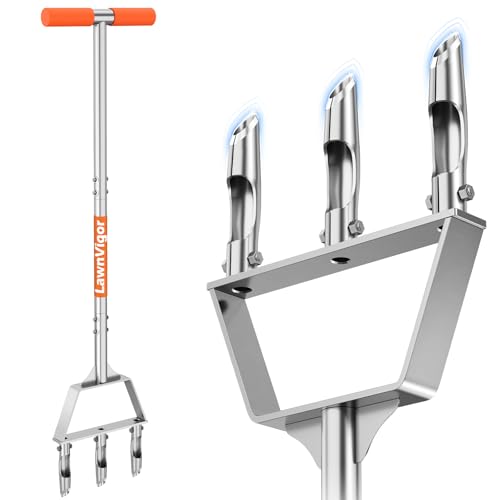


Frequently Asked Questions
Do I need to water my lawn before aerating?
Yes, water the lawn one to two days prior. Slightly moist soil allows the tines to enter smoothly without excessive force. Dry ground resists penetration, making the task harder on your body and the tool.
What is the difference between spike and core aerators?
Spike aerators punch holes, while core aerators remove soil plugs. Core tools create larger openings for better airflow and water absorption. This distinction is vital for heavily compacted clay soils that need deep relief.
How often should I aerate my lawn?
Most lawns benefit from aeration once or twice a year. Spring and fall are ideal seasons for this maintenance task. High-traffic areas or clay soils may require more frequent attention to prevent compaction.
Can I use an aerator on wet soil?
No, avoid aerating when the ground is saturated. Wet soil becomes muddy and can tear the grass roots. Wait until the surface is dry to the touch but still moist underneath for the best results.
Are hollow tines better for clogged soil?
Hollow tines are superior for clogged conditions because they eject the soil plugs. This prevents the tool from becoming blocked during use. You can find more tips on lawn maintenance tools to keep your yard healthy.




Write Your Review
No reviews yet. Be the first to share your experience!