


Choosing a riding lawn mower requires balancing deck width, engine power, and your specific yard terrain. Most homeowners find that a 30 to 42-inch deck handles standard suburban lots efficiently, while larger properties may benefit from wider cutting paths or zero-turn designs. The right choice reduces mowing time significantly and prevents strain on your back and legs during extended use. Understanding these core specifications helps you avoid common buyer mistakes and select a machine that fits your needs.
Many buyers focus only on price, ignoring critical factors like engine displacement and drive system type. A reliable mower should match the grass density and slope of your property. For example, uneven terrain requires a self-propelled or four-wheel drive system for better traction. If you are considering smaller walk-behind options for tight spaces, our guide to mowers for small yards offers useful context. This article breaks down the essential features to evaluate, ensuring you make an informed decision based on practical usage rather than marketing claims.

Pros
- Lightweight at just over 30 pounds, easy to push and lift for storage.
- Brushless motor requires minimal maintenance, no gas, oil, or pull cords.
- Quiet operation lets you mow early without upsetting neighbors.
- Foldable handle and compact design fit in small storage spaces.
Cons
- 14-inch cutting deck is narrow for larger lawns, requiring more passes.
- Battery runtime around 30 minutes may not finish a full yard if it's over 3000 sq ft.
The Litheli Cordless Lawn Mower 14 Inch is a compact electric push mower designed for small to mid-sized yards up to 3,000 square feet. It runs on a brushless motor powered by a 5.0Ah lithium-ion battery, offering cord-free convenience without the hassle of gas or extension cords. This mower is particularly well-suited for homeowners with modest lawns, apartment dwellers maintaining a patio or small green space, and seniors or first-time mower buyers who want a lightweight, easy-to-use machine.
When it comes to cutting performance, the 14-inch steel blade delivers a clean, even cut on typical grass types. The five-position height adjustment, controlled by a single lever, lets you switch between 1 and 2.5 inches to match the season - trim low in spring, keep it longer during summer heat. The included 9-gallon grass bag collects clippings efficiently, so you can skip the raking. For those who prefer mulching, you can let the clippings fall back onto the lawn as natural fertilizer, though the mower does not include a dedicated mulching plug per the description. The side discharge opening is not explicitly mentioned, but the bagging system handles most grass nicely.
Build quality is practical for its price point. The deck appears to be a durable polymer or steel material (the description doesn't specify, but typical for this class). The frame feels sturdy enough for regular use on flat terrain. The handle is adjustable and folds down quickly for storage, a big plus for anyone with limited garage or shed space. The battery is removable and can also serve as a power bank for charging devices, a thoughtful extra. Assembly is straightforward - most users can have it ready to mow in under 15 minutes with basic tools.
Ease of use is a strong suit. The push-button start eliminates the fuss of pull cords, and the mower is remarkably quiet compared to gas models. You can mow early Saturday morning without waking the household. The lightweight design (around 30 pounds) makes it easy to maneuver around flower beds, garden hoses, and tight corners. Storage is a breeze: fold the handle, and it stands upright, taking up very little floor space. Maintenance is minimal - just keep the blade sharp and the battery charged. No oil changes, no spark plugs, no fuel mixing.
That said, the 14-inch deck is narrower than standard 20-inch mowers, so you'll need more passes to cover the same area. The battery runtime is rated at 30 minutes, which is adequate for the claimed 3,000 sq ft, but if your lawn is slightly larger or the grass is thick, you might need a second charge. Also, the mower is a push model, not self-propelled, so on slopes or thick grass, it requires some effort. For small, flat yards, this is a non-issue. Overall, the Litheli is a solid choice for budget-conscious buyers who want a reliable, low-maintenance electric mower for light-duty lawn care. It's especially ideal for apartment dwellers, suburban homeowners with small yards, and eco-conscious users looking to reduce emissions and noise.

Pros
- Heavy duty 420D material holds up well against weather and repeated use
- Waterproof performance is solid, keeps mower dry during rain and snow
- Elastic hem provides a snug fit, even in gusty conditions
Cons
- May not fit larger mowers with decks over 54 inches or unusual shapes
- Some users report the cover can be a bit tight on taller mower profiles
- Color may fade over time with prolonged sun exposure
If you store your riding lawn mower outside, you know how fast sun, rain, and debris can wear it down. The IndeedBUY Riding Lawn Mower Cover is a practical solution that keeps your tractor protected without breaking the bank. Made from 420D ripstop polyester, this cover is built to handle the elements better than many budget options.
This cover measures 72 inches long by 54 inches wide by 46 inches high, fitting most mowers with decks up to 54 inches. It works with popular brands like Toro, Craftsman, Honda, Husqvarna, John Deere, and Troy Bilt. The elastic hem cinches tight around the base, so strong winds won't blow it off. That's a big plus if you live in a breezy area.
Performance wise, the waterproof PU coating and double stitched seams do a great job keeping rain and snow out. The material also resists UV rays, which helps prevent the mower's paint and plastic from fading. Inside, a soft lining prevents scratches, so you don't have to worry about the cover rubbing against the finish. It's easy to toss on and off, and it comes with a storage bag for when you're using the mower.
Build quality is solid for the price. The 420D fabric is noticeably thicker than the 210D or 300D covers you see everywhere. It feels tough and should last several seasons with normal use. That said, the fit can be a bit snug on taller mowers, and some users mention the green color might lighten over time in direct sun. But for the money, it's hard to beat the protection this cover offers.
Overall, the IndeedBUY cover is a smart buy for any homeowner or DIYer who keeps their riding mower outdoors. It's durable, waterproof, and fits a wide range of models. If you want a reliable cover that won't cost a fortune, this is a solid choice. Just measure your mower first to make sure it fits.

Pros
- Robust, waterproof fabric with sealed seams prevents moisture damage.
- Windproof buckles and drawstrings keep cover secure during storms.
- Easy to clean and store with included storage bag.
- UV-resistant fabric prevents fading and cracking over time.
- Universal fit accommodates a wide range of riding mowers.
Cons
- May not fit zero-turn mowers or larger lawn tractors beyond the specified dimensions.
- Fabric may feel heavy and bulky when wet, requiring careful handling during removal.
- Buckles could scratch painted mower wheels if not padded.
If you own a riding lawn mower, you know how much of an investment it is. The Kipiea Riding Lawn Mower Cover is designed to protect that investment from the elements. Made from 600D Oxford fabric with a double-layer PU coating and sealed seams, this cover creates a waterproof barrier against rain, snow, and morning dew. It's a straightforward accessory that focuses on durability and long-term protection, making it a solid choice for homeowners and DIYers who want to keep their lawn tractor in top shape without constant maintenance.
In real-world use, the cover holds up well. The 600D fabric is thick and sturdy, resisting tears and UV damage even after extended exposure to direct sunlight. The four buckles clip directly onto the mower's wheels, providing a secure fit that stays put in windy conditions. Two drawstrings add extra tightening, so you don't have to worry about the cover blowing off during a storm. It's easy to clean, too: just rinse off dirt or bird droppings with a hose and wipe it dry. The included storage bag is a nice touch for keeping the cover tidy when not in use.
Build quality is solid for the price point. The fabric feels heavy-duty, and the stitching around the seams is reinforced to prevent leaks. The cover is sized at 72 inches long, 54 inches wide, and 46 inches high, which fits most standard riding lawn mowers. However, it may not accommodate larger zero-turn mowers or tractors with accessories like baggers or snow plows. It's best suited for a typical garden tractor used for mowing a few acres.
One drawback is the weight. At nearly 3 pounds, the fabric is substantial, and when wet, it can be a bit cumbersome to remove and fold. The buckles, while effective, might scratch painted wheel hubs if you're not careful. Also, the cover is black, which can absorb heat in direct sunlight, but that's a minor trade-off for UV protection. Overall, it's a practical solution for extending the life of your lawn mower by keeping it dry and shielded from the elements.
For the price, the Kipiea Riding Lawn Mower Cover offers reliable protection with a secure fit and easy maintenance. It's a worthwhile investment for anyone who stores their mower outdoors and wants to avoid premature rust, fading, or weather damage. If you have a standard riding mower and need a durable, waterproof cover that won't break the bank, this is a strong contender.
Color: Black
Size: 72" L x 54" W x 46" H
Weight: 2.87 pounds
Material: 600D Oxford fabric with double-layer PU coating
Features: 4 buckles, 2 drawstrings, sealed seams, storage bag included
Compatibility: Universal fit for most riding lawn mowers and tractors
This cover is ideal for homeowners and DIYers who store their riding lawn mower outdoors. It's perfect for protecting against rain, snow, UV rays, and dust. Use it during the off-season or between mowing sessions to keep your mower clean and dry. The windproof design makes it suitable for open areas or sheds without full enclosure. Not recommended for zero-turn mowers or tractors with tall accessories like baggers without measuring first.

Pros
- Reliable 170cc OHV engine with auto choke for easy starts, even after the mower has sat for a few weeks.
- Steel deck adds durability and impact resistance compared to lighter polymer decks, especially if you occasionally hit a rock or root.
- Self-propelled rear-wheel drive gives confident traction on gentle slopes and uneven ground without requiring you to push hard.
- 3-in-1 mowing options (mulch, bag, side discharge) make it a versatile tool for spring grass, summer clippings, and fall leaves.
Cons
- At 59 pounds, the mower feels solid but may be heavy for some users to lift over curbs or load into a truck, despite the self-propelled drive.
- The 21-inch cutting width is standard for residential mowers but not ideal for very large rural lawns where a wider deck would save more time.
- Gas engine operation requires regular maintenance like oil changes and spark plug checks, which may be less appealing to eco-conscious or low-maintenance buyers.
The PowerSmart 21-Inch Self Propelled Gas Lawn Mower is a classic walk-behind gas mower designed for residential yard work. It pairs a 170cc OHV 4-stroke engine with rear-wheel self-propelled drive and a durable steel deck, offering a practical middle ground between a basic push mower and a premium lawn tractor. For homeowners with a quarter-acre lot, suburban lawns, or slightly sloped properties, this type of mower delivers the power and traction you need without the expense or storage footprint of a riding mower.
This mower is best suited for homeowners who want dependable cutting performance with less physical effort. The self-propelled rear-wheel drive is especially helpful on gentle slopes and uneven terrain, so you can guide the mower rather than muscle it. First-time mower buyers will appreciate the auto choke system, which simplifies starting compared to older gas mowers that require manual priming and choking. Budget-conscious shoppers get a solid set of features at a reasonable price point, while those with mobility concerns may find the self-propelled drive reduces strain during a full yard mowing session.
In real-world lawn care, the 21-inch steel deck handles standard residential grass well. The 3-in-1 capability means you can mulch clippings to feed the lawn, side discharge thick grass to avoid clumping, or attach a rear bag (sold separately, depending on package) for a clean finish before a backyard barbecue or holiday gathering. The 6-position height adjustment from 1.5 to 3.9 inches gives you enough range to keep cool-season grasses longer in summer or cut warm-season lawns shorter in spring. The 170cc engine provides enough torque to power through damp grass after a spring rain, although very wet or overgrown grass will still require slower passes to avoid stalling or clogging.
Build quality is centered around the steel deck, which offers better durability and impact resistance than many polymer decks in this price range. The foldable handle is a practical feature for storing the mower upright in a garage or shed, and the 59-pound weight is manageable for most users when rolling, though lifting it into a vehicle or over a curb takes some effort. The rear-wheel drive system gives good traction on moderate slopes, and the 21-inch cutting width is a good balance between maneuverability around landscaping and efficiency for open lawn areas. Users with very tight spaces or complex garden layouts may find a smaller 20-inch model easier to turn, but this mower remains reasonably agile for its deck size.
Maintenance is typical for a gas mower. You will need to check the oil before the first start, change it periodically, keep the air filter clean, and inspect the spark plug each season. The engine is designed for simple access to these components, and blade replacement is a standard job that most DIY homeowners can handle with basic tools. Cleaning the underside of the deck after each use helps prevent grass buildup and rust, and the steel deck should hold up well if you keep it dry between mowings. The self-propelled drive reduces the physical effort of mowing, but the gas engine does produce noise and emissions, so early Saturday morning sessions may not be the quietest option for close neighbors.
Realistic limitations include the need for regular gas engine upkeep, the 59-pound weight when lifting, and the fact that this mower is not designed for commercial landscaping crews or extremely large rural acreage. For a typical suburban home, a 21-inch self-propelled gas mower like this is a reliable workhorse that can handle weekly cutting, fall leaf mulching, and the occasional overgrown patch after vacation. If you are a homeowner looking for an affordable, dependable walk-behind mower with useful features like self-propelled drive and 3-in-1 versatility, the PowerSmart model is worth considering. Just be prepared to perform basic maintenance and store it properly to get the longest service life out of the steel deck and engine.
This mower gives you three ways to handle grass clippings. For mulching, the cut grass is finely shredded and returned to the lawn, which helps retain moisture and recycle nutrients. Many homeowners find mulching the best option during regular weekly mowing in summer when grass growth is steady and clippings are short. The 170cc OHV engine provides enough power to keep the blade spinning at high speed, which is essential for a clean mulch cut.
When grass is thick or slightly damp, side discharge is often the better choice because it moves clippings out of the deck quickly and reduces the chance of clumping. This is useful for the first mow of spring or after a week of heavy growth. For a pristine finish before a gathering, the rear bag (if included, otherwise sold separately) collects clippings neatly and makes disposal easy. The bagging system works best when the grass is dry and you mow at a moderate pace.
Switching between modes is straightforward with the included plugs and chute. You should always remove the side discharge chute when mulching to ensure proper airflow inside the deck. For fall leaf cleanup, mulching leaves into the lawn can be a real time saver, provided the leaves are not too thick. Overall, the 3-in-1 flexibility makes this mower a practical partner for year-round lawn maintenance.
The steel deck is the cornerstone of this mower's build. Steel is heavier than plastic or aluminum, but it offers excellent impact resistance and long-term durability. If you accidentally hit a rock, a tree root, or a hidden garden stake, the steel deck is more likely to bend or dent rather than crack. Over time, a steel deck also makes it easier to remove grass buildup because you can scrape it without worrying about damaging the housing.
The 59-pound weight reflects the solid construction. The wheels are designed for residential use, and the rear-wheel drive system adds traction for slopes. The foldable handle is made of sturdy tubes and locks into place during operation, which is important for safety and control. The painted finish on the deck helps resist rust, but you should still avoid leaving the mower out in the rain and keep the underside clean. With reasonable care, this mower can provide many seasons of dependable service for the home lawn.
Keeping this gas mower running well is mostly about routine checks. Before each season, inspect the oil level and top off with the recommended 4-stroke oil. Change the oil after the first 5 hours of use, then once a year or every 25 hours of operation. The air filter should be cleaned every few mowings and replaced if it looks worn. The spark plug should be removed and inspected annually, with replacement if the electrode is worn or fouled.
The blade will eventually need sharpening or replacement, especially if you hit branches or rocks. Always disconnect the spark plug wire before working under the deck. Use a socket wrench to remove the blade bolt, sharpen or replace the blade, and reattach it securely. To clean the deck, tip the mower with the spark plug side up (or use a stick to scrape off grass from above) and remove wet clippings after each use. For winter storage, drain the fuel or add a fuel stabilizer, clean the deck, and fold the handle for compact storage in a dry place.

Pros
- Powerful gas engine handles thick, wet, and tall grass without bogging down.
- Self-propelled drive reduces effort on slopes and long stretches, great for larger lawns.
- 22-inch cutting width strikes a good balance between speed and maneuverability.
- Versatile 3-in-1 system covers mulching, bagging, and side discharge for year-round lawn care.
- Single-lever height adjustment is quick and tool-free, convenient for adjusting on the fly.
Cons
- Weighs 79 pounds, which may be heavy for some users to push manually if the self-propelled system fails or on flat ground.
- Gas engine requires regular maintenance like oil changes and fuel stabilization, less convenient than cordless electric models.
- Grass bag capacity not specified; may need frequent emptying on large lawns with heavy growth.
The SENIX 201cc 22-inch self-propelled gas lawn mower is designed for homeowners who need reliable cutting power for medium to large lawns. Powered by a 201cc 4-cycle OHV engine, this mower delivers consistent performance to tackle thick grass, uneven terrain, and seasonal overgrowth. Its 22-inch steel cutting deck is wider than many entry-level mowers, helping you cover more ground in fewer passes and finish mowing faster.
This mower is best suited for suburban and rural property owners with sloped or uneven lawns. The rear-wheel-drive self-propelled system, paired with large 11-inch rear wheels, provides excellent traction on hills and helps you maintain control on bumpy ground. The variable speed control lets you match your walking pace, which is especially helpful for elderly users or those with larger yards. First-time mower buyers will appreciate the straightforward single-lever height adjustment, offering six positions from 1.25 to 4 inches for precise cutting across different grass types and seasons.
In terms of lawn care performance, the 3-in-1 cutting system gives you flexibility: bag clippings for a clean finish during peak growth, mulch to nourish the lawn, or side discharge for tall grass after a vacation. The sharp steel blade and powerful engine handle mulching well, returning fine clippings that break down quickly. Bagging efficiency is solid for a gas mower, though the bag capacity may require frequent emptying on large lawns. The side discharge chute works effectively for thick, wet grass without clogging.
Build quality is practical for the price point. The steel deck feels durable and resistant to impacts from rocks and roots, though it may rust over time if not cleaned and stored properly. The large rear wheels roll smoothly over uneven ground, and the handle is comfortable with a rubberized grip. Assembly is straightforward with clear instructions and included tools, typically taking 30-45 minutes. Storage is easy thanks to a foldable handle that reduces the mower's footprint in a garage or shed.
Maintenance is manageable: you'll need to check and change oil, replace the air filter periodically, and sharpen or replace the blade. The gas engine requires fuel stabilization if storing over winter, which is a minor hassle compared to cordless electric models. However, for users who prefer the range and power of gas, this mower offers good value. The 79-pound weight is noticeable but manageable with the self-propelled drive engaged.
Overall, the SENIX 201cc self-propelled mower is a solid choice for budget-conscious homeowners who need reliable performance on medium to large lawns with slopes. It may not be the lightest or most feature-rich option, but its powerful engine, versatile cutting modes, and user-friendly adjustments make it a practical workhorse for routine weekly mowing and seasonal yard cleanup.
Pros
- Versatile three-function design saves money and garage space
- Auto-feed spool reduces downtime and frustration
- Lightweight and easy to maneuver for users of all strengths
- Quick tool-free conversion between mowing, trimming, and edging modes
Cons
- Corded electric limits range and requires nearby outlet or extension cord
- Fixed cutting height at 1.6 inches may not suit all grass types or preferences
- 12-inch deck size is best for small lawns not large acreage
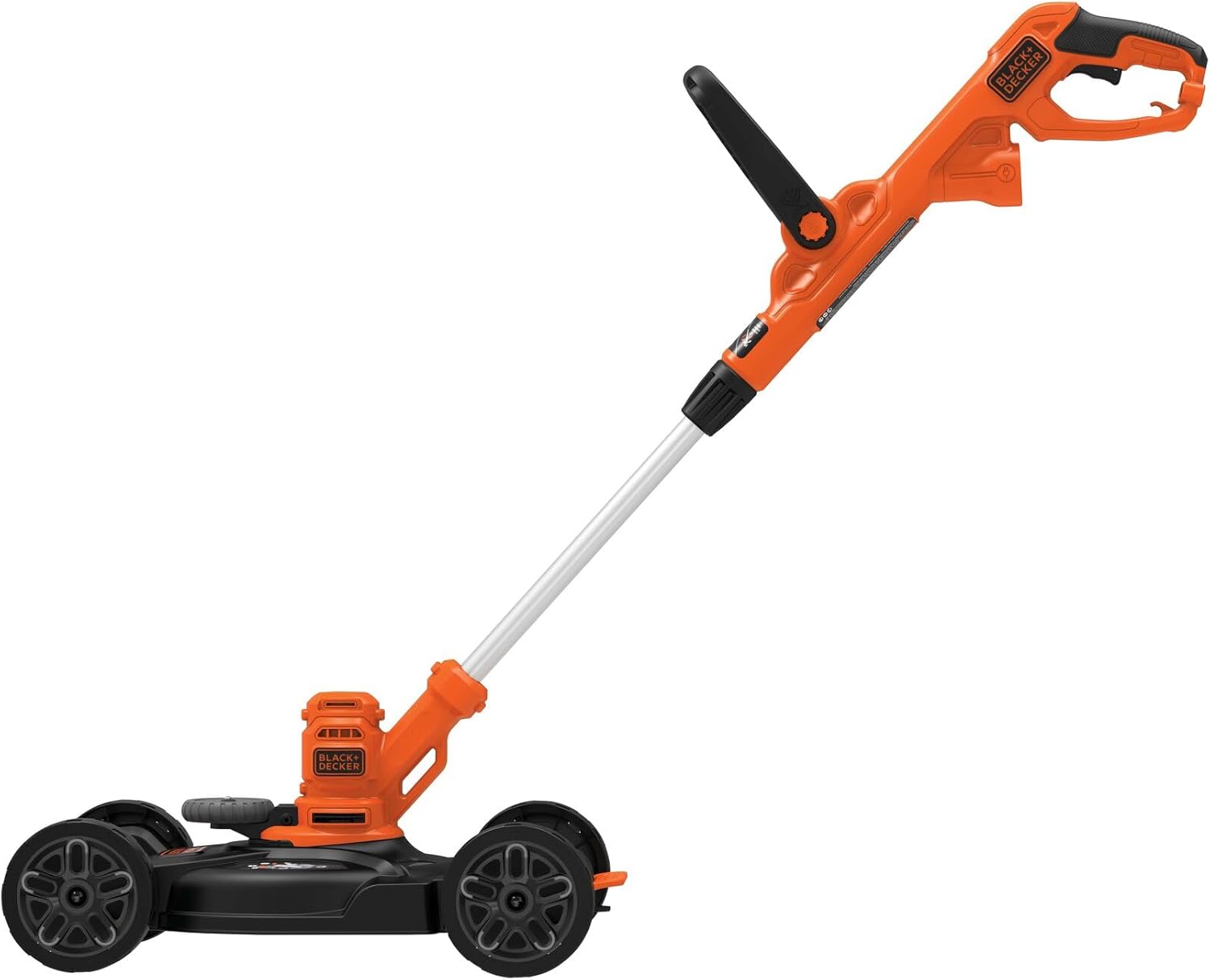
The BLACK+DECKER BESTA512CM is a corded electric 3-in-1 lawn mower, weed trimmer, and edger designed for homeowners with compact yards. It combines three essential lawn care tools into one lightweight package, making it a practical choice for small lots, townhouse gardens, or precision work around flower beds and patios. Powered by a 6.5 amp motor with PowerDrive transmission, this unit delivers enough torque to cut through thick grass and tough weeds without bogging down.
In real-world use, the automatic feed spool is a standout feature. You don't have to stop and bump the head to advance the line, which keeps your workflow smooth. Switching between modes is tool-free and quick: detach the mower deck to turn it into a string trimmer, then rotate the head to use it as a wheeled edger. The lightweight 9.9-pound build and adjustable handle make it easy to carry and comfortable to operate, even for extended sessions.
Build quality is typical for BLACK+DECKER: solid enough for regular home use but not built for commercial abuse. The alloy steel frame holds up well, and the cord retention system prevents accidental unplugging. However, the 1.6-inch fixed cutting height limits adjustability. Some users might prefer a taller or lower setting depending on grass type. The corded design means you're tethered to an outlet, so you'll need a long extension cord for medium-sized yards.
For DIYers and homeowners who want an affordable all-in-one tool that handles the basics without breaking the bank, the BESTA512CM is a solid choice. It's not meant for large acreage or heavy-duty commercial work, but for small lawn care, trimming edges, and keeping borders tidy, it's a capable and convenient solution.

Pros
- Lightweight and easy to push, even on uneven terrain.
- No gas, oil, or spark plugs to deal with; just press a button and go.
- Battery swaps quickly if you have extra 40V batteries from other Greenworks tools.
- Quiet enough for early morning or evening mowing in tight neighborhoods.
Cons
- 16-inch cutting deck is narrow for larger lawns; expect more passes on anything over half an acre.
- Plastic deck may not hold up as well as steel over many seasons of rough use.
- Runtime of 35 minutes might require a second battery to finish a full half-acre lawn in one go.
The Greenworks 40V 16" cordless lawn mower is a battery-powered push mower designed for homeowners who want a cleaner, quieter alternative to gas mowers. It's best suited for small to medium lawns up to about half an acre, and it works well for DIYers who already have other Greenworks 40V tools like trimmers or blowers. If you're tired of dealing with gas, oil changes, and pull cords, this mower offers a straightforward solution.
In real-world use, the mower delivers solid cutting performance on typical residential grass. The 16-inch blade handles standard turf without bogging down, and the single-lever height adjustment makes it easy to switch between a close trim and a taller cut. The 4.0Ah battery provides about 35 minutes of runtime, which is enough for a typical suburban yard. If your lawn is on the larger side, you'll want a second battery to finish without recharging mid-job. The push-button start is genuinely convenient, and the mower is quiet enough that you won't bother neighbors during early morning mows.
Build quality is decent for the price point. The plastic deck keeps weight down to 37.5 pounds, which makes it easy to push and maneuver on slopes. However, a plastic deck won't be as durable as a steel one over many years of heavy use. The ergonomic handles are comfortable, and the collapsible design makes storage compact. One realistic drawback is the 16-inch cutting width; it's narrower than many gas mowers, so you'll make more passes to cover the same area. Also, the included 4.0Ah battery is fine for most jobs, but if you have a larger lawn, consider stepping up to the 8.0Ah battery for longer runtime.
Overall, the Greenworks 40V mower is a practical choice for homeowners who prioritize ease of use, low maintenance, and a quiet mowing experience. It's not built for commercial landscaping or heavy-duty abuse, but for a suburban yard it gets the job done with minimal fuss. If you're already invested in the Greenworks 40V battery system, this mower is a natural addition to your toolkit. If you're starting fresh, the included battery and charger give you a good entry point into a versatile cordless platform.
Brand: Greenworks
Model: 25322
Power Source: 40V Lithium-Ion Battery
Cutting Width: 16 inches
Cutting Height: 1.25 to 3.75 inches (5 positions)
Deck Material: Plastic
Weight: 37.5 pounds
Battery Included: 4.0Ah
Charger Included: Yes
Runtime: 35 minutes per charge
Charge Time: 2 hours
Bag Capacity: Rear bag (included)
Warranty: 3 years tool, 3 years battery

Pros
- Engine starts reliably without choke or primer, saving time and frustration.
- Adjustable cutting height with single lever is fast and intuitive.
- Solid build with a steel deck and large wheels feels durable for regular use.
- Good value compared to similar gas mowers from big brands.
Cons
- Heavy at nearly 74 pounds – pushing it uphill or over soft ground is a workout.
- Not designed for slopes over 15 degrees, so hilly lawns need another solution.
- Hand push only, no self-propelled option – may tire out users with larger yards.
If you are a homeowner looking for a dependable gas push mower that balances power, ease of use, and affordability, the BILT HARD 21 Inch Gas Lawn Mower deserves a close look. This is a straight-up manual push mower (no self-propelled drive) powered by a 201cc 4-stroke OHV engine. It is best suited for owners of flat or gently sloping lawns up to about a quarter acre, where you don't mind a bit of extra weight in exchange for robust cutting performance.
In real-world use, the engine starts up quickly thanks to the no choke, no primer system – pull the cord and it usually fires on the first or second pull. The 21-inch steel deck offers a good balance between maneuverability and cutting width. You can switch between mulching (for returning nutrients to the soil), rear bagging (for a clean lawn), or side discharge (for tall grass) quickly. The 8-position cutting height lever is easy to reach and adjusts all four wheels simultaneously, letting you change from a 1.2-inch close cut to a 3.75-inch tall cut without bending down.
Build quality is solid for the price point. The 9.5-inch rear and 8-inch front wheels with double ball bearings roll smoothly over moderate bumps, and the foam wrapped handle grip is comfortable even after an hour of mowing. However, the mower weighs around 74 pounds, so pushing it on any incline or through very thick, wet grass can become tiring. It also cannot handle slopes steeper than 15 degrees – the engine may starve for oil or lose traction. That limitation is clearly stated.
Drawbacks are mostly tied to its weight and manual push nature. If your lawn has several inclines, or if you have a large yard over half an acre, a self-propelled model would be a better investment. Also, some users have reported that the bagger attachment can fill up quickly in dense grass, requiring frequent stops. But for the typical suburban lawn, the BILT HARD gas mower offers strong performance without breaking the bank.
In summary, this mower is a smart buy for DIY homeowners who want a straightforward gas mower that starts reliably, cuts well, and offers flexible discharge options. It does a great job on flat lawns and provides excellent value. If you can handle a bit of pushing and avoid steep hills, the BILT HARD 21 Inch Gas Lawn Mower will keep your yard looking sharp season after season.
Engine: 201cc 4-cycle OHV gas, 9.0 ft-lb torque
Deck Width: 21 inches
Mowing Options: Mulch, rear bag, side discharge
Cutting Height: 1.2 inch to 3.75 inch, 8 positions, single lever adjustment
Wheels: 9.5 inch rear, 8 inch front, double ball bearings
Start Method: Recoil, no choke, no primer
Weight: 73.8 pounds
Dimensions: 62.5 x 26.3 x 41 inches
Color: Blue
Model: TMA-0561
This push mower is ideal for homeowners with flat or gently sloping lawns up to about a quarter acre. It works well for regular weekly cutting, mulching clippings to feed the lawn, or bagging for a clean finish. It is also a good choice for rental properties or small lots where a self-propelled machine is not necessary. Avoid using it on slopes over 15 degrees or in very tall, thick grass that may clog the deck.

Pros
- Ultra-tough 1680D polyester fabric resists abrasion when towed over rough lawn terrain, driveways, and tree roots
- Full-length side zipper simplifies dumping without needing to disconnect the tractor hood mounting hardware
- Top airflow mesh panel maintains proper deck suction and keeps fine dust from blowing back toward the operator
- Three sturdy handle grips provide balanced leverage when dumping heavy debris into compost bins or trailers
Cons
- Requires an existing two-bag collection hood and discharge chute on your riding mower to function
- Can become quite heavy to lift manually when packed to full capacity with wet leaves or damp grass clippings
- Requires tying a firm stop knot on the drawstring cords to prevent slippage during bumpy yard towing
Fall yard maintenance can quickly turn into an all-day chore when you have to stop your riding mower every few passes to empty small collection bins. The Focmot 1680D Lawn Tractor Leaf Bag is an oversized, universal collector designed to slip over the existing hood of standard two-bag grass collection systems on riding mowers, lawn tractors, and zero-turn models. It is built specifically for suburban homeowners with mature shade trees, rural acreage managers, and lawn care enthusiasts who want to drastically reduce the number of trips to the backyard compost pile or curb.
Practical grass handling and airflow management are essential for any tractor bagger attachment, and this design addresses common suction issues with an integrated mesh airflow panel. The breathable mesh allows exhaust air from the cutting deck to escape freely, which maintains strong airflow through the discharge chute while trapping leaves, pine needles, and grass clippings inside. This balanced airflow prevents annoying dust blowback toward the operator seat and keeps the bag from over-inflating like a balloon, allowing the expansive 96 by 56 inch volume to pack tightly with yard debris.
In terms of durability, the bag is constructed from true 1680D anti-tear oxford material featuring reinforced seam stitching. Standard lightweight collection bags often fray or puncture when dragged across uneven turf, hidden tree roots, or gravel driveways. The heavy-duty 1680D fabric resists abrasion along the ground while you maneuver around landscape beds, fences, and garden borders. Additionally, a water-resistant interior coating prevents morning dew and damp turf moisture from soaking into dry leaf piles, keeping the material easy to wipe clean after long yard cleanup sessions.
Emptying oversized tractor bags can be physically demanding, but the side zipper mechanism makes disposal straightforward. Instead of wrestling the entire hood setup off your mower, you simply unbuckle the side closure, pull the heavy-duty zipper open, and rake or slide the contents directly into your mulch pile or yard waste trailer. Three reinforced lift handles on the opposite side provide steady grip points, making it easy to shake loose stubborn debris without straining your back or tearing the fabric seams.
Homeowners should bear in mind that this bag requires an existing two-bag collection frame and discharge chute on your riding mower, as it functions as an outer collector rather than a standalone bagger. When loaded to full capacity with damp autumn leaves or freshly mowed wet turf, the bag will add significant weight to the rear of your tractor, so tying a secure stop knot in the drawstrings and buckling the retention straps is vital to prevent slippage. For property owners looking to spend less time bagging clippings and more time enjoying clean Saturday lawns, this heavy-duty leaf collector offers exceptional utility and dependable seasonal performance.
Crafted from dense 1680D polyester fabric, this tractor leaf bag offers significantly higher tensile strength and tear resistance than standard 420D or 600D lawn accessories. The bottom panel handles repetitive friction from dirt, turf, gravel, and asphalt surfaces without developing friction holes.
Reinforced double stitching along high-stress stress points prevents split seams when towing full loads. The heavy-gauge side zipper and sturdy buckle clips are engineered to withstand continuous outdoor exposure, resisting corrosion and mechanical failure throughout demanding cleanup seasons.
During peak autumn drop, pair this collection bag with high-lift mower blades to shred leaves into fine mulch, maximizing internal capacity and reducing the total volume of yard debris. Operating at moderate tractor ground speeds ensures the discharge chute remains clear while the bag packs evenly from back to front.
After completing your seasonal yard cleanup, empty any remaining clippings and allow the bag to air dry completely to avoid mildew buildup. The flexible fabric folds flat for compact vertical hanging or shelf storage inside a garage or garden shed, keeping it ready for spring dethatching and routine weekly lawn maintenance.
Key Specifications for Riding Lawn Mowers
Selecting the right riding mower starts with matching the cutting width to your property size. A wider deck covers more ground per pass, but maneuverability decreases in tight spaces. Most residential riders range from 30 to 54 inches, with larger decks suitable for acreage. You must also consider the engine power, measured in cubic centimeters (cc), which determines how well the mower handles thick grass or slopes.
| Feature | Typical Range | Best For |
|---|---|---|
| Cutting Width | 30″ – 54″ | Suburban to Large Properties |
| Engine Size | 160cc – 300cc+ | Grass Density and Slopes |
| Drive Type | 2WD / 4WD | Flat vs. Uneven Terrain |
| Deck Material | Steel / Aluminum | Durability vs. Weight |
Before finalizing a purchase, verify these critical dimensions and capabilities against your specific yard conditions. The following checklist ensures you do not overlook features that affect daily usability and long-term maintenance costs.
- Measure the widest open area to determine maximum deck width
- Check gate widths to ensure the mower fits through easily
- Assess slope steepness to decide between 2WD and 4WD
- Verify storage space for the folded or upright position
- Confirm battery or fuel type based on maintenance preference
- Review the warranty coverage for engine and deck components
Deck Width and Maneuverability Tradeoffs
Deck width is the primary factor affecting mowing speed. A 30-inch deck is standard for smaller lots, while 42 to 54-inch decks suit larger properties. However, wider decks turn more slowly, making it difficult to navigate around trees, shrubs, and flower beds. If your yard has many obstacles, a narrower deck or a zero-turn mower may provide better control. This tradeoff is crucial for properties with complex landscaping.
Storage constraints also influence deck width selection. Larger mowers often require more garage or shed space. Some models offer vertical folding handles or compact frames to ease storage. Check the overall dimensions when the mower is not in use. A mower that is too large for your storage area may end up left outside, leading to premature wear from weather exposure.
Engine Power and Terrain Capability
Engine displacement, measured in cc, correlates with the mower’s ability to cut through thick or wet grass. Standard residential riders typically range from 160cc to 250cc. For larger properties or dense grass, a 250cc or higher engine may be necessary. Electric riders use motor power ratings instead, often measured in amps or volts. Both types require sufficient power to maintain blade speed under load.
Terrain type dictates the necessary drive system. Flat, even lawns work well with two-wheel drive (2WD) models. Uneven or sloped yards benefit from four-wheel drive (4WD) or hydrostatic drive systems. These systems provide better traction and control, reducing the risk of slipping or stalling. Always check the manufacturer’s slope rating before using a mower on steep inclines. Safety should always be the priority when assessing terrain capability.
Drive Systems and Control Features
The drive system determines how the mower moves and how easily you can control it. Mechanical drive systems use belts and gears, offering simple and reliable performance. Hydrostatic drive systems use fluid pressure, allowing for variable speed control and easier maneuvering. Many modern riders feature self-propelled options, where the mower moves itself with a simple lever or pedal. This feature reduces physical effort, especially on larger lots.
Control features also include steering responsiveness and braking systems. Zero-turn mowers offer independent wheel control, enabling sharp turns and high-speed maneuvering. This is ideal for large, open properties but may be challenging in tight spaces. Standard riders use a steering wheel, which is more intuitive for beginners. Consider your comfort level with different steering mechanisms when making your selection. The right control system enhances both safety and mowing efficiency.
Material Quality and Durability
The material of the cutting deck significantly impacts the mower’s longevity and performance. Steel decks are heavy but highly durable, resisting dents and damage from rocks or debris. Aluminum decks are lighter, reducing overall mower weight, but may be more prone to denting. The frame construction also matters, as a sturdy frame supports the engine and deck during operation. Look for weld quality and rust protection in the product specifications.
Wheels and tires affect traction and comfort. Larger, pneumatic tires provide better shock absorption and grip on uneven ground. Smaller wheels may be lighter but offer less stability. Check the tire size and type to ensure they match your terrain. Maintenance of these components is essential for consistent performance. Regularly inspect tires for wear and pressure to prevent handling issues. Durable materials and well-maintained components extend the life of your investment.
Clipping Management and Versatility
How you handle grass clippings depends on your lawn care preferences and local regulations. Most riders offer three options: bagging, mulching, and side discharge. Bagging collects clippings in a rear container, keeping the lawn clean but requiring frequent stops to empty the bag. Mulching chops clippings finely and returns them to the lawn, acting as natural fertilizer. Side discharge ejects clippings to the side, which is faster but may leave clumps in the grass.
Versatility is key for year-round use. Some mowers include attachments for snow blowing, aerating, or spreading fertilizer. These add-ons increase the mower’s utility but also its cost. Consider whether you need these features or if a standard mower suffices. If you are interested in specific blade configurations that affect cutting quality, our article on mower blade setup options provides detailed insights. The right clipping management system saves time and effort during each mowing session.
Power Source: Gas vs. Electric
Choosing between gas and electric power involves balancing runtime, maintenance, and environmental impact.
- Gas mowers offer unlimited runtime and high power, making them ideal for large properties.
- However, they require regular oil changes, spark plug replacements, and fuel storage.
- Electric mowers, powered by batteries or cords, are quieter and require less maintenance.
- Cordless electric riders are gaining popularity due to their convenience and lower operating costs.
Battery capacity is a critical factor for electric riders. Check the amp-hour (Ah) rating to estimate runtime. A higher Ah rating means longer mowing time on a single charge. Some systems allow for hot-swapping batteries, enabling continuous mowing of large lots. Gas mowers, on the other hand, are not limited by battery life but may struggle in cold weather. Consider your local climate and property size when deciding on the power source. Both options have distinct advantages depending on your specific needs.
Maintenance and Long-Term Costs
Long-term costs include fuel, oil, filters, and parts replacement. Gas mowers incur higher fuel and maintenance expenses over time. Electric mowers have lower operating costs but may require battery replacement after several years. Factor these costs into your budget to avoid unexpected expenses. Regular maintenance, such as blade sharpening and air filter cleaning, is essential for both types. Neglecting maintenance can lead to reduced performance and premature failure.
Warranty coverage is another important consideration. Look for mowers with comprehensive warranties that cover the engine, transmission, and deck. A longer warranty period indicates manufacturer confidence in the product’s durability. Check what is excluded from the warranty, such as normal wear parts. Keeping maintenance records helps when making warranty claims. Investing in a well-warranted mower provides peace of mind and protects your financial investment.
Safety Features and User Comfort
Safety features are non-negotiable in any riding mower. Look for models with seat sensors that stop the engine if the operator stands up. Blade brake clutches allow for quick stopping of the blade without turning off the engine. These features prevent accidents and protect the operator. Always read the safety manual and follow all guidelines before operating the mower. Proper use of safety equipment, such as hearing protection, is also recommended.
User comfort affects how long you can mow without fatigue. Adjustable seats, cushioning, and armrests improve comfort during extended use. Vibration damping systems reduce hand and arm fatigue. A comfortable seating position ensures better control and reduces the risk of injury. Consider your physical condition and the duration of typical mowing sessions when selecting comfort features. A comfortable ride makes lawn care a less burdensome task.
Ultimately, the best riding lawn mower is one that fits your specific yard size, terrain, and maintenance preferences. By evaluating deck width, engine power, drive system, and material quality, you can make an informed decision. Take time to measure your property and assess your storage options. A well-chosen mower will serve you reliably for many years, making lawn care more efficient and less strenuous. Prioritize features that align with your daily routine and long-term goals.


Write Your Review
No reviews yet. Be the first to share your experience!