


A dull mower blade creates ragged, brown-tipped grass that is more susceptible to disease and stress. The how sharp should a mower blade be question is best answered by looking at the cut quality rather than a single metric. Ideally, the cutting edge should be sharp enough to slice through grass stems cleanly without tearing or crushing the tissue.
This clean cut allows the plant to heal faster and stay green. If your lawn looks shredded after a pass, the edge is likely too dull. Maintaining the correct sharpness is a fundamental part of lawn care that directly impacts the health and appearance of your turf.
Most standard mower blades are designed with a specific bevel angle, typically between 30 and 45 degrees, depending on the manufacturer and blade type. While you do not need a protractor for every session, understanding that a consistent, keen edge is the goal helps in choosing the right sharpening tool. A blade that is too dull requires more engine power to cut, which can strain the motor or engine. Conversely, a blade that is sharpened incorrectly, such as by removing too much metal, can become unbalanced. This leads to vibration, which can damage the mower deck and spindle over time.
Many homeowners find that a quick check for a clean edge before mowing season is a simple way to ensure better results. For more detailed instructions on manual sharpening methods, you might find our lawn mower blade sharpening guide helpful. Additionally, understanding the basics of mower blade setup ensures that your sharpened blade is installed correctly for optimal performance.
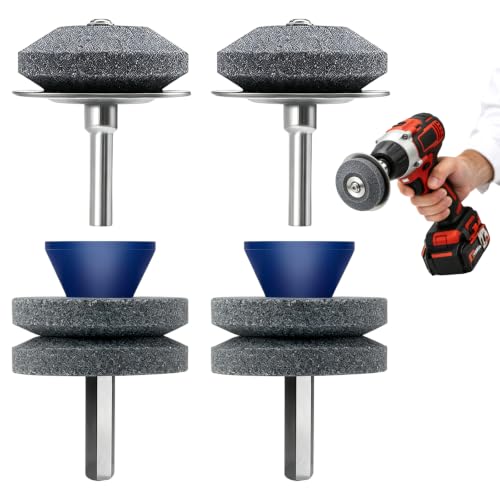
Pros
- Fast 10-second chuck installation works with standard drill chucks
- Double-layer corundum grinds steel evenly with minimal pressure
- Four-pack setup delivers excellent spare backup value for the shop
- Lightweight and compact enough to store inside any field tool tote
Cons
- Guide disc can get scored if pressed too aggressively against sharp metal
- Not intended for heavily gouged, warped, or cracked commercial blades
- Requires high drill RPM to achieve smooth, chatter-free grinding
The Bneykrir 4-Piece Lawn Mower Blade Sharpener is a specialized drill attachment designed to take the headache out of seasonal lawn equipment maintenance. Instead of wrestling blades on a heavy stationary bench grinder or risking uneven hand-filing, this tool uses a double-layer corundum wheel that mounts right into your drill chuck. It is aimed squarely at homeowners, DIYers, and small-property groundskeepers who want clean, healthy grass cuts without spending shop fees on blade balancing and sharpening.
In practical workshop use, setting up the sharpener takes only a few seconds. Chuck the metal shaft into an 18V or 20V cordless drill, clamp your lawn mower blade securely into a bench vise, and bring the drill up to speed. The abrasive corundum stone cuts through mild surface oxidation, dull bevels, and small turf nicks smoothly. The plastic guide disc rests along the flat underside of the blade, keeping the abrasive angled against the factory bevel without demanding pinpoint freehand steadying.
Build quality is suited well for light to medium maintenance runs. The corundum material holds up to standard lawn tractor and push mower steel, though users should avoid leaning too heavily into the work. Applying steady, moderate passes keeps heat buildup low and avoids burning the temper on thin steel. The four-pack arrangement is practical, giving you plenty of abrasive material to work through multiple seasonal tune-ups, tiller blades, and utility yard tools.
There are a few trade-offs to keep in mind. The plastic collar can wear down if it drags forcefully against jagged metal edges, and deep gouges from rocks will still require an angle grinder with a flap disc first. That said, for routine seasonal maintenance and quick edge touch-ups, this four-piece kit provides straightforward functionality and solid value for any home garage.
Routine edge touch-ups on standard residential walk-behind and riding lawn mower blades.
Cleaning and sharpening curved garden tools, rototiller tines, sickle cutters, and axes.
Pre-season garage tune-ups where removing the blade for quick bench vise work is preferred.
Home toolkits where space or budget does not justify a dedicated stationary grinder.

Pros
- Excellent mulching action leaves fine clippings that decompose quickly
- Tough steel build stands up to thick grass and occasional debris
- Easy to install with standard hardware, no modifications needed
Cons
- Higher lift may reduce engine RPM slightly on smaller mowers in very thick grass
- Single blade, so you may need to buy two for some twin-blade decks
The Oregon Gator G3 Mulching Lawnmower Replacement Blade (model 95-621) is a 21-inch single blade designed to upgrade the cutting performance of many residential and commercial walk-behind mowers. Its patented Gator G3 design features a serrated, multi-angle cutting edge that lifts grass aggressively before slicing it multiple times, producing finer clippings that settle into the turf rather than clumping on top. This is a true mulching blade, but it also handles side discharge and bagging well thanks to the high-lift wing profile.
Best suited for homeowners with average to large lawns, as well as landscaping crews who mow multiple properties, this blade is a straight swap for popular OEM numbers from AYP, Sears, Husqvarna, Craftsman, and Poulan. Installation is straightforward, and the 5/8-inch round center hole fits most standard spindles. The blade runs true with minimal vibration out of the box, which speaks to Oregon's 26-point quality control process.
In real-world use, the Gator G3 shines in thick, fast-growing grass. It chews through clippings without bogging down the engine as much as some aggressive mulching blades. The hardened steel edge stays sharp longer than standard blades, reducing the need for frequent sharpening. One trade-off is that the high-lift design creates more suction, which can cause a slight power drag on smaller mowers when cutting wet or very dense grass. However, for most users, this is a worthwhile trade for the superior cut quality.
Build quality is excellent, with the blade heat-treated for hardness and impact resistance. It's made in the USA and backed by Oregon's limited lifetime warranty. The blade weighs about half a pound, which is typical for its size, and the black powder-coat finish helps resist rust in storage. For anyone wanting to maximize their mower's mulching capability without spending a lot, the Gator G3 is a top choice.
Overall, the Oregon 95-621 is a practical upgrade for any 21-inch mower owner who values a clean, mulched lawn with less bagging. It's not the cheapest blade on the market, but its durability and performance justify the price. For DIYers and pros who want reliable cutting without fuss, this blade earns a strong recommendation.

Pros
- Extremely affordable and widely compatible with most residential mower blades.
- Simple to use: just chuck it in a drill and run along the blade edge.
- Including both sharpener and balancer means you get a complete blade maintenance solution.
- Lightweight and portable, perfect for small workshops and home garages.
Cons
- Requires a drill to operate, so you need one on hand.
- Manual balancing takes a bit of patience to get right compared to electronic balancers.
- Not ideal for heavy commercial use or high-volume shops where speed is critical.
The Arnold BSK-1 is a straightforward sharpening and balancing kit designed for lawn mower blades. It turns your regular electric drill into a reliable sharpening tool, making it easy to maintain a clean cutting edge without investing in a dedicated grinder. The kit includes a cone-shaped sharpening stone and a simple static balancer, both built to handle blades from walk-behind mowers, lawn tractors, and zero-turn machines.
This kit is best suited for homeowners and DIYers who prefer to handle their own mower maintenance rather than taking blades to a shop. It's also useful for small engine mechanics who need an affordable backup method. But if you're a professional landscaper sharpening dozens of blades a week, you'll likely want a faster, more automated system.
In real-world use, the sharpener works quickly. Chuck it into a drill, run the stone along the blade's edge at a shallow angle, and you'll see burrs form within seconds. The vibration-free claim holds up -- the stone spins smoothly, which helps avoid gouging the blade. The balancer is straightforward: hang the blade on the cone and see which side drops. Rotate a few times to confirm. It's not fancy, but it effectively reveals if the blade is heavy on one side.
Build quality is typical for a budget tool. The sharpening stone is abrasive and should last through several sharpenings. The balancer is made of plastic and a metal cone. It's lightweight (just over two ounces) and stores easily in a drawer. For the price, durability is acceptable for occasional weekend usage. You won't hesitate to toss it in a toolbox or tool bag.
The main drawback is that you need a drill, and the process is manual. Balancing requires patience -- you'll have to grind off material from the heavy side and recheck. It's not as precise as a professional blade balancer, but it's more than enough to get a decently balanced blade. Overall, the Arnold BSK-1 is a smart buy for anyone who wants to keep their mower cutting cleanly on a budget. It's a practical addition to any workshop, especially if you already own a drill.
Color: Black
Dimensions: 3 x 7 x 10 inches
Weight: 0.24 pounds
Product Group: Outdoors
Binding: Lawn & Patio

Pros
- Heavy-duty American steel build offers dependable durability against tough grass and seasonal yard debris
- Mulching-optimized wing profile promotes fine clipping recirculation and smoother lawn discharge
- Reduces clipping clumps on sidewalks and driveways, making post-mow leaf blower cleanup faster
- Manufactured under rigorous factory balancing standards to help protect mower spindles and engines
Cons
- Requires verifying your mower deck clearance and 1-inch round spindle dimensions before purchase
- DIY replacement requires standard safety precautions, including work gloves and a properly torqued mounting bolt
A crisp, clean cut is the foundation of a healthy lawn, and having a sharp, well-balanced blade under your mower deck makes all the difference. The Oregon 21-Inch Universal Lawn Mower Blade (measuring 20-3/4 inches in total length) is designed as a direct replacement component for standard 21-inch residential walk-behind mowers. Manufactured in the United States, this heavy-duty blade provides suburban homeowners, budget-conscious property caretakers, and DIY lawn enthusiasts with a dependable way to restore cutting performance without paying steep original-equipment prices.
In everyday yard care, the cutting performance of this replacement blade helps maintain neat grass height across front lawns, backyards, and side strips. Its raised rear lift geometry creates strong under-deck airflow, pulling grass blades upright just before the cutting edge strikes. This air movement also enhances mulching capability, chopping clippings into fine bits that decompose quickly into the soil. As a result, you spend less time blowing thick mats of grass off concrete patios, walkways, and driveway edges after your Saturday morning mowing session.
Durability is a major strength of this Oregon blade. Weighing over two pounds, the heavy-gauge steel construction resists bending or warping when brushing against minor turf obstacles such as small twigs, pine cones, or concealed tree roots. According to manufacturer specifications, each blade undergoes a 26-point quality certification standard to confirm structural integrity, finish consistency, and rotational balance. Maintaining proper balance is critical for any rotary mower, as an uneven blade can cause excessive deck vibration, increase operator fatigue, and wear out the engine spindle bearings prematurely.
Installation is straightforward for anyone comfortable handling routine lawn equipment maintenance. The blade features a standard 1-inch round center hole, fitting many common residential walk-behind mower shafts. Prior to swapping the blade, always remember to disconnect the mower spark plug boot for safety. With a standard socket wrench, a block of scrap wood to hold the blade in place, and sturdy work gloves, homeowners can swap out a dull factory blade in under fifteen minutes. Checking your deck clearance and center bolt size beforehand ensures an effortless fit.
While this universal blade fits a broad selection of standard mowers, it is always wise to confirm that your specific mower model accepts a 1-inch round center hole rather than a star, bowtie, or specialized adapter mount. For suburban residents, first-time yard care buyers, and seasoned gardeners who want a manicured lawn and less cleanup debris around their property, this Oregon replacement blade provides a practical, cost-effective solution built for seasonal longevity.
Oregon has earned a strong reputation among outdoor power equipment users for producing rugged, long-lasting replacement components. This 21-inch mower blade is forged from heavy-duty steel and weighs approximately 2.16 pounds, providing the heft needed to power through thick fescue, Bermuda, or overgrown spring turf without losing momentum.
The blade is finished with a protective coating to help resist moisture, sap, and early surface corrosion during wet spring cuttings. Furthermore, its compliance with a strict 26-point factory certification process helps guarantee consistent dimensional tolerances and balance, minimizing unnecessary engine stress over years of routine yard upkeep.
Routine maintenance keeps your mower blade running smoothly throughout the growing season. At the start of spring and midpoint of summer, inspect the cutting edge for any nicks caused by hidden gravel or curbside debris. A quick touch-up with a standard metal file or grinding wheel restores the cutting angle without removing excessive metal.
Whenever you remove the blade for sharpening, place the center hole on a cone balancer or screwdriver to confirm that both sides remain evenly weighted. Before winter shed storage, wipe the blade clean of dried grass residue and apply a light coat of household tool oil to protect the bare steel edges until spring arrives.

Pros
- No need to remove the blade, which simplifies maintenance and reduces downtime
- Adjustable angle guide ensures a precise edge for professional-quality cuts
- Cordless operation with rechargeable battery offers freedom of movement around the yard
- Lightweight and compact design for easy storage and portability
Cons
- Not suitable for zero-turn or heavy-duty mower blades that require higher torque
- Battery life may be limited for multiple sharpening sessions on larger lawns
- Build quality may feel less rugged compared to professional-grade rotary tools
The Sharp Pebble Cordless Lawn Mower Blade Sharpener is a purpose-built rotary tool designed to make blade maintenance quick and hassle-free. Unlike traditional sharpening methods that require removing the blade, this tool lets you sharpen in place, saving you the time and frustration of disassembly. It's an ideal solution for DIY homeowners and weekend gardeners who want to keep their mower blades sharp without investing in expensive professional equipment.
Performance wise, the adjustable angle guide (20-40 degrees) is a standout feature. It allows you to set the exact angle for your blade type, ensuring a consistent edge that promotes cleaner cuts and healthier grass. The variable speed control (5,000-30,000 RPM) gives you the flexibility to handle different blade conditions, from light touch-ups to more aggressive sharpening. The included replaceable sharpening wheels are effective and easy to swap out when they wear down.
Build quality is decent for the price point. The tool feels lightweight and well-balanced, with an ergonomic grip that reduces fatigue during extended use. The cordless design with a rechargeable battery adds convenience, letting you move freely around the yard without being tethered to an outlet. However, the battery life is adequate for a few blades but may require a recharge for larger mowing setups. The tool is best suited for standard mower blades; it lacks the torque needed for zero-turn or heavy-duty commercial blades.
In terms of practicality, this sharpener is a time-saver. You can quickly touch up the blade between mows, ensuring optimal cutting performance without the downtime of removal and reinstallation. Safety features like the ergonomic grip and speed control help maintain control during operation. The compact size makes it easy to store in a toolbox or garage drawer.
One realistic drawback is that the tool may not satisfy users who need to sharpen multiple blades in one session, as the battery could run out. Additionally, the build quality, while adequate for occasional use, may not withstand heavy daily use by professionals. Overall, the Sharp Pebble Cordless Lawn Mower Blade Sharpener is a practical, affordable choice for DIYers and homeowners who value convenience and precision. If you're looking for a quick way to maintain your mower blade without the hassle of removal, this tool delivers solid performance for the price.
Product Dimensions: 8 x 2.8 x 1.2 inches
Item Weight: 1.37 pounds
Manufacturer: Mighty Dreams
Model Number: SPMower2024
Battery: 1 9V battery included
Best Sellers Rank: #56,427 in Patio, Lawn & Garden, #212 in Lawn Mower Accessories
This sharpener is best for standard residential lawn mower blades. It is ideal for DIY homeowners who mow their own lawns and want to keep blades sharp without removing them. Use it for quick touch-ups between mows or to restore a dull blade to a clean cutting edge. Not recommended for commercial zero-turn mowers or heavy-duty blades that require higher torque.

Pros
- Incredibly easy to use – just chuck it in a drill and run along the blade edge.
- Stainless steel base adds durability and resists melting from friction heat.
- Versatile – sharpens a wide range of garden blades beyond just mowers.
- Great value for the price, especially with five sharpeners in one pack.
Cons
- Requires a steady hand and consistent drill speed to avoid overheating the blade.
- Not designed for heavy-duty or industrial use; best for regular home maintenance.
- Some users report the abrasive can wear down faster than expected on very hard blades.
The cenoz Lawn Mower Blade Sharpener 5 Pack is a simple yet effective tool accessory that turns your electric drill into a quick blade sharpener. If you're tired of lugging a bench grinder outside or paying for sharpening services, this little attachment offers a convenient alternative. It's built with a corundum abrasive disc bonded to a stainless steel base, which addresses a common issue with cheaper plastic-based sharpeners that can warp or melt under high-speed friction.
This product is best suited for homeowners and DIYers who mow their own lawns and want to keep their blades sharp without a big investment. It's also handy for small-scale contractors who need a quick touch-up on the jobsite. The 5-pack gives you plenty of spares or lets you keep one in the shed, one in the truck, and a few for friends. Installation is as easy as inserting the included hex shaft into your drill chuck and running the rotating stone along the blade bevel at the correct angle.
In real-world use, this sharpener works surprisingly well for removing nicks and restoring a decent edge on standard mower blades. It won't give you a mirror finish like a professional grinder, but it'll get the blade sharp enough for a clean cut. The built-in balancer is a nice touch – you can mount the blade on the center hole and see if one side is heavier, then remove a bit more material from that side. Just remember to wear eye protection and gloves, as sparks and metal filings will fly.
Build quality is decent for the price. The stainless steel base feels sturdy, and the corundum stone holds up for several sharpenings. However, you need to be careful not to apply too much pressure or run the drill at max speed for too long, or you could overheat the blade edge and ruin its temper. The 5-pack means you can replace the stone easily if one wears out. Downsides? This isn't a tool for sharpening very dull or damaged blades – you'd still need a grinder for major reshaping. Also, the stone can load up with metal particles, so you'll need to clean it occasionally with a dressing stick.
Overall, the cenoz Lawn Mower Blade Sharpener 5 Pack is a smart buy for anyone who wants a fast, affordable way to maintain their mower blades without a dedicated sharpening station. It's not a heavy-duty pro tool, but for routine maintenance on residential mowers, it gets the job done. If you value convenience and are okay with a bit of manual effort, this is a solid addition to your workshop or shed.
Brand: cenoz
Model: Lawn Mower Blade Sharpener 5 Pack
Material: Corundum abrasive with stainless steel base
Size per sharpener: 50 x 47 mm (1.97 x 1.85 inches)
Package includes: 5 sharpeners, 1 packing box
Compatibility: Works with any power hand drill with a standard chuck
Weight: 1.04 pounds (package)
Home Lawn Mowing: Ideal for keeping residential push mower and rider blades sharp throughout the season.
Garden Maintenance: Also works on sickle bars, rototiller tines, and hedge trimmer blades for quick touch-ups.
DIY and Hobby Use: Perfect for homeowners who want to save money on blade replacements or sharpening services.
Workshop Standby: Keep a pack in your tool drawer for those times you notice a blade is dull right before mowing.

Pros
- Very affordable and easy to install on a standard power drill
- Includes a balancer to help maintain even blade wear
- Versatile for multiple garden cutting tools beyond just mower blades
Cons
- Lower customer rating suggests inconsistent performance or durability issues
- Manual sharpening with a drill still requires careful angle control and may not match factory edge quality
- Best suited for light to moderate sharpening tasks; heavy use may wear the abrasive quickly
The Calsoling 3-Piece Lawn Mower Blade Sharpener is a straightforward, no-frills accessory designed to help homeowners and DIYers keep their mower blades and other garden cutting tools sharp without investing in expensive sharpening equipment. This set includes three corundum abrasive stones mounted on stainless steel bases, plus a blade balancer, all for a price that makes it easy to try. The concept is simple: chuck one into any standard power drill, touch it to the blade edge, and grind away the dullness. For those who mow a standard suburban lawn once a week, this can be a practical way to extend blade life between professional sharpenings or replacements.
In real-world use, the sharpener works best on blades that are merely dull rather than heavily nicked or damaged. The corundum material handles moderate wear and resists heat buildup, which is important when using a drill at higher RPMs. The included balancer is a nice bonus, letting you check if the blade is still balanced after sharpening, which helps reduce vibration and uneven cuts. However, the sharpening process requires a steady hand and a consistent angle to avoid creating an uneven edge. It's not as precise as a dedicated sharpening jig or a professional grinder, but for quick touch-ups, it gets the job done.
Build quality is adequate for the price point. The steel backing provides some rigidity, but the abrasive stones are relatively small, measuring about 1.97 inches in diameter. This means you'll need to make multiple passes along longer blades. The three-pack is a practical advantage, allowing you to keep one in the garage, one in the shed, and maybe a spare. The 12-month warranty is a nice touch for such an inexpensive item, indicating the manufacturer stands behind it.
On the downside, the overall customer rating is modest, and some users have reported inconsistent performance or the abrasive wearing down faster than expected. This is not a tool for professional landscapers or anyone who sharpens blades daily. It also requires a power drill, which most homeowners already have, but it's an added step if you don't. The lack of a guide or depth stop means you could accidentally remove too much material if you're not careful.
Overall, the Calsoling 3-Piece Lawn Mower Blade Sharpener is a solid budget option for the DIY homeowner who wants a quick, easy way to maintain mower blades and similar tools. It's not a replacement for professional sharpening or high-end sharpening systems, but for the occasional touch-up, it offers good value. If you're a weekend warrior with a modest lawn and a cordless drill, this set is worth considering. Just go in with realistic expectations about its durability and precision.
Product Dimensions: 1.9 x 1.5 x 0.8 inches per stone
Item Weight: 3.53 ounces (total set)
Material: Corundum abrasive with stainless steel backing
Stone Diameter: 50 x 47 mm (1.97 x 1.85 inches)
Package Includes: 3 sharpening stones + 1 blade balancer
Compatibility: Works with power drills and hand drills; fits 99% of mower blade center holes
Warranty: 12 months
This sharpener set is best suited for homeowners and DIYers who need to touch up standard lawn mower blades, sickle bars, rotary tillers, hoes, and drill knives on a regular basis. It's ideal for quick maintenance between professional sharpenings or for those who prefer to keep their blades sharp without the expense of a dedicated sharpening station. Not recommended for heavy-duty or commercial use where blades are heavily damaged or need precise edge geometry.

Pros
- Affordable 6 pack offers great value for frequent sharpening needs.
- Works with any standard drill, no special equipment required.
- Aluminum oxide construction holds up well against repeated use.
- Simple to use with a guide piece that automatically sets the correct sharpening angle.
- Versatile for various blade types beyond just lawn mowers.
Cons
- Requires a vise to hold the blade securely during sharpening, which may not be available to all users.
- Sharpening by hand with a file is still an option, but this drill attachment may not produce as fine an edge as a dedicated sharpening system.
- No included instructions or guides for specific drill types, so users must follow general safety and technique guidelines.
The S SATC 6 Pack Lawn Mower Blade Sharpener is a simple, cost-effective tool that turns any standard power drill into a blade sharpening station. Designed for DIY homeowners, small engine mechanics, and anyone who maintains a lawn, this set of six aluminum oxide stones allows you to quickly restore a sharp edge to mower blades, tractor blades, rototiller tines, and even sickle bar cutters. It is a practical addition to any workshop or garage where lawn equipment is serviced.
In real-world use, the sharpener performs well for its intended purpose. The stones are 1.97 inches in diameter and 1.85 inches tall, with a beveled edge that matches the typical 45-degree angle of mower blades. The flat guide piece helps maintain consistent contact, so you don't have to guess the angle. Clamp the blade in a vise, insert the sharpener into your drill, and run it back and forth along the blade edge. After a few passes, you will notice a clean, sharp edge that cuts grass cleanly rather than tearing it. The process is fast and requires minimal effort compared to filing by hand.
Build quality is decent for the price. The aluminum oxide material is hard and durable, and the stones hold up well after multiple sharpenings. The 6 pack means you have plenty of replacements on hand, which is useful if you frequently sharpen several blades or if you drop and break a stone. The compact size allows you to work in tight spaces, and the spinning balance is good enough to avoid excessive vibration. However, the stones are not as aggressive as some higher-end sharpeners, so heavily nicked blades may require more passes or a preliminary filing.
One realistic limitation is that you need a vise to hold the blade securely. If you don't have one, you may find it difficult to apply consistent pressure. Also, the included instructions are generic; you will need to follow standard safety precautions like wearing eye protection and disconnecting the spark plug. For most DIYers, this is not a dealbreaker, but it is something to keep in mind.
Overall, the S SATC 6 Pack Lawn Mower Blade Sharpener is a solid value for anyone who wants to maintain sharp blades without spending a lot of money. It is best suited for homeowners with a few mowers or small tractors, or for hobbyists who work on small engines. If you already own a drill and a vise, this set is a no-brainer for keeping your lawn equipment cutting cleanly. Just be aware that it is a basic tool and not a replacement for professional sharpening services on extremely damaged blades.
The standard for mower blade sharpness is a clean, tear-free cut on the grass. When a blade is properly sharp, it severs the leaf blade at the base, leaving a smooth cross-section. If the grass tips appear frayed, shredded, or brown immediately after mowing, the blade is dull.
This tearing action wounds the plant tissue, creating entry points for pathogens and increasing water loss. A sharp blade is not just about aesthetics; it is a biological necessity for a healthy lawn. The goal is to restore the factory edge geometry, which is typically a consistent angle along the entire cutting surface.
| Condition | Visual Indicator | Impact on Lawn |
|---|---|---|
| Sharp | Clean, green cut; smooth stem ends | Healthy growth, less disease risk |
| Dull | Shredded, brown-tipped grass; crushed stems | Stress, disease entry points, slower healing |
| Chipped/Bent | Visible nicks, bends, or cracks | Vibration, uneven cut, safety hazard |
Before sharpening, you must inspect the blade for damage. A sharp edge on a bent or cracked blade is useless and dangerous. Check for nicks, cracks, or bends along the edge and the center hole. If the blade is bent, it must be straightened or replaced. If it is cracked, it must be replaced immediately. Never attempt to sharpen a damaged blade. Also, check the balance of the blade.
An unbalanced blade causes vibration that can loosen mounting hardware and damage the spindle. Use a blade balancer or a simple hook to check if the blade hangs level. If it tilts to one side, it needs balancing. This step is crucial because a sharp but unbalanced blade will still cause problems. Here is a quick checklist to perform before you start sharpening:
- Inspect the blade edge for nicks, cracks, or severe wear.
- Check the center hole for wear or deformation.
- Verify the blade is straight by holding it against a flat surface.
- Test the balance using a blade balancer or a hook.
- Ensure the blade is clean of grass clippings and dirt.
Understanding Blade Angles and Edge Geometry
Most mower blades have a beveled edge, meaning the cutting surface is angled relative to the flat face of the blade. The typical angle for standard lift blades is between 30 and 45 degrees. Mulching blades often have a more complex geometry with additional edges and channels to recycle clippings. When sharpening, it is important to maintain this original angle. If you sharpen at a different angle, you may remove too much metal from one side, leading to imbalance.
For standard blades, a consistent angle along the entire length is key. You do not need to measure the angle with a tool for basic maintenance, but if you are using a sharpening jig, follow the manufacturer’s recommended angle. This ensures that the cutting action remains effective and that the blade retains its structural integrity. Changing the angle significantly can alter the airflow under the deck, which may affect bagging or mulching performance.
The type of blade also influences the sharpening approach. High-lift blades are designed to create strong airflow to lift grass for bagging. They often have a sharper, more aggressive edge than low-lift or mulching blades. Mulching blades have a serrated or notched edge that chops clippings into smaller pieces. These blades require more frequent sharpening because the notches wear down quickly. When sharpening a mulching blade, focus on restoring the sharpness of the notches and the main edge.
Bagging blades typically have a standard bevel and are designed to direct clippings into the bag. The edge geometry is similar to high-lift blades but may be slightly different in profile. Understanding these differences helps you choose the right sharpening method. A generic sharpening tool may not be ideal for all blade types, so consider the specific design of your blade. For example, a drill-attached sharpener is great for standard beveled edges but may struggle with the complex geometry of a mulching blade.
Tools and Methods for Sharpening
There are several ways to sharpen a mower blade, ranging from simple manual tools to powered sharpeners. The most common method for homeowners is using a drill-attached sharpening stone. These tools are inexpensive and easy to use. You attach the stone to a power drill and run it along the blade edge at a consistent angle. This method is quick and effective for restoring a dull edge. However, it requires practice to maintain a consistent angle. If you remove too much metal from one side, the blade becomes unbalanced. Another option is a bench grinder.
This is a more traditional method that allows for precise control. You can sharpen the blade by holding it against the grinding wheel at the correct angle. This method is faster but requires more skill to avoid overheating the steel. Overheating can temper the steel, making it softer and more prone to wear. Always use water to cool the blade if you see it glowing red. A file is another manual option, but it is slower and less effective for heavy wear. It is best for light touch-ups rather than restoring a severely dull blade.
When choosing a tool, consider the type of blade and the amount of wear. For standard lift blades, a drill-attached sharpener is often sufficient. For mulching blades, a bench grinder or a specialized sharpening jig may be better. Jigs help maintain the correct angle, which is crucial for complex blade geometries. Cordless sharpeners are also available, offering portability and ease of use. These tools often have adjustable angle guides, which can help ensure consistency.
When using any tool, safety is paramount. Always disconnect the spark plug or unplug the mower before removing the blade. Wear safety glasses and gloves to protect yourself from sharp edges and debris. Never hold the blade by hand while sharpening; use a clamp or a vise to secure it. This prevents the blade from slipping and causing injury. The right tool can make the process faster and safer, but technique is just as important. Take your time and maintain a steady hand to achieve a uniform edge.
Step-by-Step Sharpening Process
Start by removing the blade from the mower. You will need a socket wrench or a ratchet to remove the blade bolt. Be aware that the bolt is often reverse-threaded, so you will need to turn it clockwise to loosen it. Place a block of wood under the blade to support it while you loosen the bolt. Once the bolt is removed, take the blade off the spindle. Clean the blade thoroughly with a wire brush or a degreaser to remove grass clippings and rust.
This ensures that you can see the edge clearly and that the sharpening tool makes good contact with the metal. Secure the blade in a vise, clamping the flat surface, not the edge. This prevents the edge from being damaged or deformed. If you do not have a vise, you can use a clamp and a block of wood. Make sure the blade is held firmly and does not move during sharpening. This stability is crucial for a consistent cut. If the blade moves, you may end up with an uneven edge that is difficult to correct.
Next, select your sharpening tool and set it to the appropriate angle. For a drill-attached sharpener, attach the stone to the drill and ensure it is secure. Turn on the drill at a low to medium speed. Hold the blade at the correct angle relative to the stone. Start at one end of the blade and move the drill steadily along the edge. Maintain consistent pressure and speed. Do not stop and start, as this can create uneven spots. Work your way along the entire length of the edge. Repeat this process on the other side of the blade.
It is important to remove an equal amount of metal from both sides to maintain balance. After sharpening, check the balance again. If the blade is unbalanced, you may need to sharpen the heavier side slightly more. Once the blade is balanced, reattach it to the mower. Tighten the bolt securely, but do not over-tighten. Follow the manufacturer’s torque specifications if available. A properly sharpened and balanced blade will result in a cleaner cut and less strain on your mower.
Maintenance and Storage Tips
Regular maintenance extends the life of your mower blade and ensures consistent performance. After each mowing session, clean the blade to remove grass clippings and moisture. This prevents rust and corrosion, which can dull the edge over time. Use a wire brush or a degreaser to clean the blade thoroughly. If you live in a humid climate, consider applying a light coat of oil to the blade after cleaning. This provides an extra layer of protection against rust. Store the mower in a dry, covered area to protect the blade from the elements.
Avoid storing the mower in a damp garage or basement, as this can accelerate rust formation. If you are storing the mower for an extended period, such as during the winter, remove the blade and store it separately. This prevents the blade from being damaged by the mower’s weight or movement. Label the blade with the mower model to ensure you put it back on the correct machine. Proper storage is a simple step that can save you from having to replace a rusted blade.
Sharpen your blade at least once a year, or more frequently if you mow often. A dull blade is a sign that it is time to sharpen. Do not wait until the blade is severely dull, as this can be harder to correct. Regular sharpening maintains the edge geometry and prevents excessive wear. If you notice the blade becoming dull, address it immediately. A sharp blade is easier to sharpen than a dull one. Keep a sharpening tool on hand so you can perform quick touch-ups as needed.
This proactive approach ensures that your mower is always ready for use. By following these maintenance tips, you can keep your blade in good condition for years. A well-maintained blade not only cuts better but also lasts longer, saving you money in the long run. Consider keeping a log of when you sharpened the blade to track its condition over time. This can help you identify patterns in wear and plan for future maintenance.
Common Mistakes to Avoid
One of the most common mistakes is not balancing the blade after sharpening. An unbalanced blade causes vibration, which can damage the mower’s spindle and deck. Always check the balance after sharpening and make adjustments if necessary. Another mistake is removing too much metal from one side of the blade. This leads to imbalance and can reduce the life of the blade. Maintain a consistent angle and pressure to ensure even wear.
Overheating the blade is another frequent error. If the steel glows red, it has lost its temper and will wear out quickly. Use water to cool the blade if you see signs of overheating. Finally, not cleaning the blade after mowing can lead to rust and corrosion. This dulls the edge and shortens the life of the blade. By avoiding these mistakes, you can ensure that your blade remains sharp and balanced for optimal performance. Here are a few key points to remember:
- Always balance the blade after sharpening to prevent vibration.
- Remove an equal amount of metal from both sides of the edge.
- Cool the blade with water if it becomes overheated during sharpening.
- Clean the blade after each use to prevent rust and corrosion.
- Store the blade in a dry place to protect it from the elements.
When to Replace Your Blade
While sharpening can extend the life of a mower blade, there are times when replacement is the better option. If the blade is severely worn, with a large portion of the metal removed, it may not be worth sharpening. The remaining metal may be too thin to hold an edge or may be structurally weak. If the blade is cracked or bent, it should be replaced immediately. A damaged blade is a safety hazard and can cause serious injury. If the center hole is worn or deformed, the blade may not fit securely on the spindle, leading to vibration and potential failure.
In these cases, replacing the blade is the safest and most effective solution. When replacing a blade, ensure that you use the correct size and type for your mower. Check the manufacturer’s specifications for the blade length, width, and center hole diameter. Using the wrong blade can lead to poor performance and potential damage to the mower. A new blade will provide a clean cut and restore the mower’s performance to its original state.
Consider the cost of sharpening versus replacing. If the blade is inexpensive and heavily worn, it may be more cost-effective to replace it. However, if the blade is of high quality and only lightly worn, sharpening is a good option. High-quality blades are often made from better steel and can hold an edge longer. They are also more durable and less likely to crack or bend. By investing in a quality blade and maintaining it properly, you can save money in the long run.
Regular sharpening and cleaning are key to extending the life of your blade. If you are unsure whether to sharpen or replace, inspect the blade carefully. Look for signs of severe wear, cracks, or bends. If you are in doubt, err on the side of caution and replace the blade. A safe and well-maintained mower is essential for a healthy lawn and a safe mowing experience. By following these guidelines, you can ensure that your mower blade is always in top condition.
Ultimately, the sharpness of your mower blade is a key factor in the health and appearance of your lawn. By understanding the ideal edge angle, using the right tools, and following proper maintenance practices, you can ensure a clean cut every time. A sharp blade reduces stress on the grass, prevents disease, and makes mowing easier on your equipment. Take the time to inspect, sharpen, and balance your blade regularly.
This simple maintenance task will pay off in a healthier, more vibrant lawn. Remember to always prioritize safety when working with mower blades. Disconnect the power source, wear protective gear, and use the right tools for the job. With a little care and attention, your mower blade can provide years of reliable service. Keep your blade sharp, balanced, and clean, and you will enjoy a better mowing experience and a healthier lawn.



Write Your Review
No reviews yet. Be the first to share your experience!