


Tackling massive hardwood trunks or setting up an Alaskan chainsaw mill requires relentless engine torque that standard residential chainsaws simply cannot deliver. Professional forestry powerheads from premier manufacturers often carry steep investments that give rural landowners and hobbyist sawyers pause. This economic hurdle leads many operators to explore high-displacement import alternatives and ask whether are neotec chainsaws good enough for demanding cutting operations. These machines have gained widespread attention across logging communities because they utilize proven powerhead architectures closely patterned after legendary commercial platforms. Understanding how these saws manage heat dissipation, structural rigidity, and fuel delivery helps determine if they fit your timber processing needs.
Operating equipment in rugged woodlots requires dependable components that withstand continuous mechanical stress and thermal load. Saws in this lineup feature split magnesium crankcases, full-crank two-stroke engines, and extensive parts compatibility with legacy commercial platforms. Sourcing mechanical components can often mirror the challenges of sourcing replacement chainsaw parts for vintage utility equipment, making cross-brand interchangeability a major consideration for buyers. Examining the engineering standards, starting mechanisms, and realistic power outputs reveals where these tools excel and where operational compromises exist. Evaluating these factors allows woodcutters to invest wisely without risking unexpected downtime during critical clearing projects.


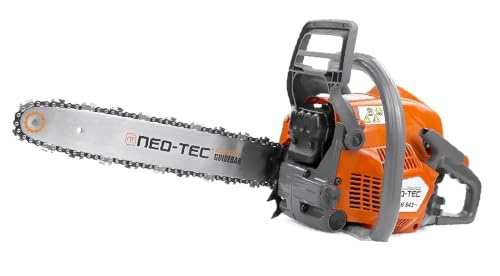
A Practical Engineering Analysis of NEO-TEC Chainsaws
Determining whether are neotec chainsaws good requires looking past basic brand marketing to evaluate mechanical design, power delivery, and ongoing maintenance demands. These chainsaws offer substantial displacement and heavy cutting capability at an accessible entry point for operators willing to perform basic mechanical upkeep. They are not turnkey dealer-supported units designed for hands-off owners. Instead, they serve as robust powerheads built upon time-tested commercial designs that appeal to firewood processors, small-scale sawyers, and rural property owners.
Platform Engineering and Commercial Architecture Heritage
NEO-TEC establishes its reputation by producing saws patterned after proven commercial designs from industry leaders like Husqvarna and Stihl. Rather than engineering an unproven engine configuration from scratch, models like the NH872, NS892V1, NH895, and NH8120 mirror the structural layouts of classic forestry legends. This design philosophy gives woodcutters access to split magnesium alloy crankcases, robust full-crank crankshafts, and proven cylinder port geometry. Magnesium alloy construction provides rigid support for internal bearings and dissipates heat far more effectively than composite clamshell engines commonly found in typical consumer powerheads.
Structural rigidity remains essential when driving long guide bars through dense hardwoods such as oak, hickory, and maple. Consumer-grade clamshell saws often flex under heavy rotational torque, which can distort crankcase seals and induce fatal engine air leaks. The split-crankcase architecture resists torsional flexing during deep bucking and directional felling. This structural foundation also allows experienced mechanics to rebuild the bottom end, replace crankshaft bearings, and install fresh gaskets when high operating hours finally take their toll.
Displacement Tiers and Power Output Across the Lineup
The brand spans multiple displacement brackets designed to match specific cutting environments and workload demands. At the compact end, the NH843 features a 43cc stratified scavenging engine that produces 2.95 horsepower and 2.4 Newton-meters of torque for routine trail clearing and limbing. Moving into the professional mid-range, the NH872 delivers 5.3 horsepower from a 71cc engine patterned after the venerable Husqvarna 372XP platform. This 70cc class remains the universal benchmark for felling medium hardwoods, processing firewood cords, and navigating all-day woodland maintenance without excessive operator fatigue.
Heavy timber harvesting and chainsaw milling require significantly greater displacement to sustain chain speed across wide cutting kerfs. The NS892V1 brings 92cc of displacement and 7.0 horsepower, providing the substantial rotational torque needed to drive guide bars up to 42 inches. Similarly, the NH895 utilizes a 94cc powerhead delivering 6.6 horsepower, patterned after the robust Husqvarna 395XP legacy platform. For extreme cutting tasks, the massive NH8120 offers a 120cc displacement engine generating 8.4 horsepower, mirroring the Husqvarna 3120XP built for immense tree felling and wide milling slabs.
Guide Bar Length Matching and Cutting Equipment Dynamics
Proper guide bar selection requires adhering to the practical two-inch rule, which suggests choosing a bar length roughly two inches greater than the maximum timber diameter. A 71cc powerhead balances comfortably with a 24-inch guide bar, allowing operators to drop 20-inch to 22-inch hardwood trees in single clean cuts. Larger engines, such as the 92cc NS892V1 and 94cc NH895, handle 28-inch to 36-inch bars with ease and can even pull a 42-inch guide bar when properly oiled. Oversizing the bar on any powerhead risks oil starvation, rail discoloration, and severe engine bogging under load.
Chain specifications must match the bar tail mount pattern, drive sprocket pitch, and bar rail gauge exactly to ensure safe operation. NEO-TEC large-displacement saws typically utilize standard 3/8-inch pitch chain with a .063-inch gauge and drive link counts tailored to specific bar lengths, such as 114 drive links for 36-inch bars or 136 drive links for 42-inch bars. Meanwhile, smaller utility saws like the NH843 or cordless battery chainsaws rely on 3/8-inch low-profile pitch and .043-inch gauge chains with 45 drive links. Installing an incorrect pitch or gauge creates immediate driveline binding, accelerates sprocket wear, and risks sudden chain derailment.
Cutter tooth geometry also dictates how efficiently the saw pulls through clean versus dirty wood fibers. Full-chisel cutters feature square corner profiles that slice through clean green hardwoods with maximum cutting speed and minimal drag. However, full-chisel teeth dull rapidly if they encounter frozen timber, dirty bark, or soil near root flares. Semi-chisel chains feature rounded working corners that maintain an effective cutting edge far longer in abrasive, sandy, or seasoned wood. Equipping high-displacement saws with the appropriate cutter profile keeps the engine working within its sweet spot and reduces sharpening frequency.
Parts Interchangeability and Aftermarket Support
The primary advantage of choosing these machines lies in their comprehensive parts compatibility with established commercial equipment lines. Because models like the NH872 and NS892V1 closely replicate Husqvarna 372XP and Stihl MS660 architectures, owners can source replacement parts from countless OEM and aftermarket vendors. If an ignition module fails, an intake boot tears, or an oil pump requires replacement, you are never locked into proprietary manufacturer supply chains. This cross-compatibility mirrors the flexibility found when keeping a legacy forestry chainsaw operational using shared platform components across different manufacturing eras.
Upgrading factory components with authentic OEM parts is a common practice among seasoned operators seeking maximum long-term dependability. Many sawyers choose to run the factory cylinder and crankcase while swapping in an OEM Walbro or Zama carburetor, genuine OEM fuel lines, and high-performance clutch springs. This modular approach allows users to build an exceptionally reliable commercial-grade cutting tool without proprietary lock-in. Standardizing on widely available D009 Husqvarna or D025 Stihl bar mount patterns further simplifies replacing sprockets, guide bars, and cutting chains at local service shops.
Fuel Induction, Carburetor Tuning, and Ignition Systems
Modern commercial saws from major brands increasingly feature electronic fuel injection or auto-tuning carburetors that adjust fuel mixtures automatically. In contrast, NEO-TEC chainsaws rely on traditional mechanical diaphragm carburetors with standard low-speed, high-speed, and idle adjustment screws. Manual carburetors provide simple mechanical adjustability, allowing woodcutters to tune the fuel-air mixture specifically for seasonal temperatures, varying bar lengths, and differing fuel blends. However, this design also demands that the operator possesses basic small engine tuning skills and access to a digital tachometer to prevent lean engine seizures.
Two-stroke engine longevity depends heavily on fuel quality and correct lubrication ratios. Running a proper 50:1 fuel mixture using high-quality synthetic two-stroke oil provides essential boundary lubrication for cylinder walls, wrist pin bearings, and crankshaft journals. Operators should always avoid pump gas containing high ethanol levels, which can cause phase separation, corrode internal carburetor passages, and stiffen flexible metering diaphragms during storage. Using ethanol-free high-octane gasoline or engineered premixed fuels guarantees stable combustion and protects fuel delivery lines from premature hardening and cracking.
Dependable spark ignition ensures prompt cold starting and clean fuel burn across the entire throttle range. Models in this range come fitted with quality components like NGK spark plugs and digital ignition coils designed to generate strong magnetic induction. Fast spark generation combined with double-spring recoil mechanisms and air purge primer bulbs significantly reduces the physical pulling effort needed to achieve engine ignition. Maintaining the correct spark plug gap and routinely inspecting the electrode for dark carbon fouling or white lean-running discoloration provides clear insight into engine health.
Mechanical Inspection, Break-In Protocol, and Out-of-Box Tuning
Purchasing a saw directly online means the machine arrives without the pre-delivery inspection typically performed by an authorized dealership mechanic. Each powerhead and cutting attachment usually ships in two separate packages to ensure safe transit, requiring complete initial assembly by the buyer. Before fueling the engine for the first time, operators must carefully inspect all structural fasteners, cylinder base bolts, and muffler screws. Vibrational harmonics from high-displacement two-stroke engines can loosen unseated hardware, making a thorough pre-start mechanical check essential for long-term reliability.
A disciplined break-in protocol ensures that new piston rings seat cleanly against the chrome-plated cylinder walls. During the initial tanks of fuel, avoid holding the engine at sustained wide-open throttle with no cutting load, which can induce catastrophic engine over-revving. Make moderate bucking cuts in medium-sized timber, allowing the engine to experience varied loads while keeping the carburetor tuned slightly rich on the high-speed needle. Allowing the powerhead to cool completely between cutting intervals relieves internal thermal stresses and establishes a durable compression seal for thousands of operating hours.
Chain oiler verification represents another crucial pre-flight check that must never be skipped. Adjustable automatic oil pumps allow operators to increase lubricant delivery when mounting longer 36-inch or 42-inch guide bars. Before cutting wood, run the saw at half throttle with the bar tip pointing toward a clean piece of light-colored cardboard or tree stump. A distinct spray pattern of bar oil should appear across the target surface within ten seconds, confirming that the internal oil pump, pickup screen, and bar feed holes are completely unobstructed.
Safety Systems, Ergonomics, and Operational Trade-Offs
Operating high-displacement cutting equipment requires unwavering attention to safety mechanisms and operator ergonomics. Saws in this class feature inertia-activated and manual chain brakes designed to halt chain rotation instantly in the event of rotational kickback. Safety interlock triggers prevent unintended throttle engagement, while aluminum or plastic chain catchers protect the operator if a chain snaps or derails from the bar rails. Always verify that the front handguard trips the chain brake cleanly before making your first cut of the day.
Vibration mitigation is critical for preventing operator fatigue and long-term neurovascular conditions like Hand-Arm Vibration Syndrome. NEO-TEC equips these professional-scale powerheads with steel coil spring or rubber elastomer anti-vibration mounts isolating the handles from the engine crankcase. While these isolation systems reduce buzzing through the hands, the sheer working weight of a 90cc or 120cc powerhead fully fueled with a long bar remains substantial. Operators must maintain balanced, athletic foot positioning and use proper body mechanics rather than muscling the saw through heavy cuts.
Proper personal protective equipment is non-negotiable whenever running powerful outdoor cutting machinery. Essential gear includes cut-retardant chainsaw chaps or forestry pants, heavy-duty steel-toe boots with high ankle support, and cut-resistant leather gloves. A comprehensive forestry helmet with an integrated mesh face shield and acoustic hearing protection shields the eyes and ears from high-velocity wood chips and deafening exhaust decibels. Maintaining a clean cutting zone, establishing clear escape routes, and avoiding the upper quadrant of the guide bar tip will prevent dangerous kickback situations.
Buyer Profile and Long-Term Ownership Expectations
Evaluating whether these powerheads suit your needs ultimately comes down to your mechanical comfort level and operational frequency. If you are an experienced hobbyist sawyer, a rural landowner processing seasonal firewood, or someone building an Alaskan sawmill, these saws provide exceptional displacement value. They offer the raw cutting torque needed for large-diameter hardwoods without requiring the massive commercial capital investment demanded by premier showroom brands. Much like operating a dependable utility farm chainsaw, success depends on proactive maintenance, regular air filter cleaning, and careful chain sharpening.
Prospective buyers must also recognize key legal and support boundaries before making a purchase. Most of these high-displacement two-stroke models are not CARB certified, meaning they cannot be legally sold or shipped to addresses in California. Furthermore, direct parcel delivery means you do not have immediate walk-in warranty support at a local brick-and-mortar dealer. Operators who rely on equipment for daily municipal tree care or commercial production logging may prefer dealer-backed brands to minimize project delays. For self-sufficient woodcutters who enjoy tuning their own machines, these saws represent a capable and cost-effective timber harvesting platform.
When evaluated objectively against their engineering heritage, are neotec chainsaws good alternatives for woodcutters seeking commercial-grade cutting capacity on a budget. They combine split magnesium crankcases, proven two-stroke engine layouts, and extensive cross-brand parts interchangeability into a practical timber processing platform. While they require manual tuning, thorough initial inspection, and diligent fuel management, their performance in heavy hardwoods remains impressive. With proper break-in, routine chain maintenance, and adherence to safety protocols, these saws deliver dependable cutting power for demanding forestry and firewood tasks.



Write Your Review
No reviews yet. Be the first to share your experience!