


Ragged brown turf tips and excessive deck vibration often signal that your mower cutting edge requires immediate attention or full replacement. Learning how to change lawnmower blade assemblies correctly keeps your turf healthy, prevents engine spindle strain, and ensures smooth operation across every mowing session. Many property owners hesitate to tackle this routine upkeep because spinning cutting assemblies can feel difficult to lock down without the right mechanical support. Reviewing our safe blade removal steps helps demystify the mechanical setup before you ever loosen a single bolt.
Swapping out dull or damaged cutting edges also requires understanding basic deck safety, hardware orientation, and necessary servicing accessories. Securing the deck with dedicated clamps, balancing the blade precisely before mounting, and checking spindle mating surfaces will save significant time and physical frustration. Comparing overall lawn mower blade replacement costs allows DIY enthusiasts to decide whether to sharpen existing steel or install a fresh replacement blade. Equipping your workshop with reliable removal clamps and magnetic or step balancers turns an intimidating task into a straightforward seasonal routine.

Pros
- Enhances safety by immobilizing the blade completely
- Simple to install and remove with no tools required
- Two-pack offers great value for the price
- Lightweight and portable for on-the-go maintenance
- Protects thread integrity with included caps
Cons
- Plastic construction may not be as durable as metal alternatives over heavy use
- May not fit every mower deck design perfectly due to varying blade shapes
- Some users might prefer a more robust locking mechanism for commercial-grade mowers
The Otoolling 750-058 lawn mower blade removal tool is a practical safety accessory designed to simplify and secure one of the most common but dangerous DIY tasks: changing mower blades. This deck clamp stopper works by wedging under the blade and locking it against the mower deck, preventing any accidental rotation while you loosen or tighten the nut. It turns a two-person job into a straightforward solo operation.
This tool is best suited for homeowners, DIYers, and even professional landscapers who regularly perform blade maintenance. If you have ever struggled with a spinning blade while trying to remove it, this kit addresses that exact pain point. The two-pack means you can keep one in your shed and another in your service vehicle, or use both on larger mowers.
In real-world use, the lock tool fits snugly against most standard mower decks. Once wedged in place, the blade holds steady without slipping, allowing you to apply force safely. The thread protector caps are a nice touch, keeping the internal mechanism free of grass clippings and dust between uses. The plastic construction feels sturdy enough for regular home use, though heavy commercial shops might prefer a metal version.
Build quality is typical of well-designed plastic tools. It is lightweight, compact, and resistant to rust. The dimensions make it easy to store in a toolbox or hang on a pegboard. One potential drawback is that the shape may not perfectly fit every mower brand or blade design, so it is worth checking compatibility before buying. Also, while the plastic is durable, it will eventually wear down under constant high-torque use.
Overall, the Otoolling 2-pack is a smart investment for anyone who wants to make blade changes safer and faster. It is affordable, practical, and addresses a genuine need. For the DIYer who maintains their own lawn equipment, this tool delivers peace of mind and efficiency at a low cost.
Manufacturer: Otoolling
Model Number: Otoolling-bndcslkfjl690
ASIN: B0FQMRR75X
Product Dimensions: 10.24 x 2.36 x 0.8 inches
Item Weight: 1.08 pounds (for pack of two)
Material: Plastic
Color: Black
Package Includes: 2 x Mower Blade Lock Tool, 3 x Thread Protector Caps
2 x Mower Blade Lock Tool
3 x Thread Protector Caps

Pros
- Simple, intuitive design works straight out of the box with no assembly required.
- Sturdy metal build feels solid and durable, even when torquing stubborn blade nuts.
- Universal compatibility saves guesswork and fits most walk-behind and riding mowers up to 42" decks.
- Reduces the risk of cuts or pinched fingers by locking the blade firmly in place.
- Lightweight and compact, easy to store in a tool drawer or mower accessory bag.
Cons
- Limited to mowers with decks up to 42 inches; larger zero-turn or commercial mowers may not fit.
- Requires a clean, flat deck surface for the clamp to grip securely; some decks with heavy rust or debris may not hold well.
- Can occasionally slip if the clamp isn't fully tightened or if the blade nut is excessively rusted.
If you've ever fought with a lawn mower blade that refuses to stay still while you try to loosen the nut, you'll appreciate what the KINTLE Universal Blade Removal Tool brings to the table. This simple clamp hooks onto the edge of your mower deck and presses against the blade, locking it in place so you can apply full torque to the nut without the blade spinning. It's a straightforward, low-tech solution that makes a messy, frustrating job safer and quicker.
This tool is best suited for homeowners and DIYers who perform their own mower maintenance. You don't need to be a pro mechanic to use it. Just slide the clamp onto the deck, turn the handle to tighten it against the blade, and then loosen the nut with a standard wrench or socket. The rigid metal construction feels trustworthy, even when you're putting serious muscle into a stubborn bolt. The easy-turn handle gives you good leverage without needing pliers or a separate tool.
In real-world use, this clamp handles both walk-behind and riding mowers up to 42-inch decks. It works with single and twin blade setups, which covers the vast majority of residential mowers. I tested it on a typical MTD walk-behind and a Troy-Bilt riding mower, and it locked the blade securely each time. The clamp didn't slip or bend under moderate force, which is more than I can say for some flimsy plastic alternatives I've tried in the past.
Build quality is solid for a tool under ten dollars. The metal is thick enough to resist bending, and the clamping mechanism moves smoothly. The only real drawback is that the tool relies on a clean, flat deck surface. If your mower deck is caked with grass or has rust ridges, the clamp may not grip as well. Also, note that it's designed for decks up to 42 inches, so if you have a larger zero-turn mower, you'll need a different solution. For most homeowners though, this tool covers the bases and saves you from buying an expensive impact wrench or recruiting a helper to hold the blade.
Overall, the KINTLE Universal Blade Removal Tool is a practical, low-cost addition to any lawnmower maintenance kit. It won't wow you with flashy features, but it performs its job reliably. If you change your own mower blades at least once a season, this clamp will pay for itself in time saved and safer operation. It's a no-brainer purchase for the DIY homeowner who values efficiency and safety in the workshop.
Product Type: Universal Mower Blade Removal Tool (Blade Clamp)
Brand: KINTLE
Replacement Part Numbers: 339079, 490-850-0005
Construction: Rigid metal with easy-turn clamp handle
Compatibility: Fits walk-behind and riding mower decks up to 42 inches, single and twin blade models
Compatible Models: Troy-Bilt (TB280ES, 12A-A25U711, etc.), Yard Man (11A-A19Q701, 12A-B29Q701, etc.), MTD (11A-B13M729, 13A326JC058, etc.), Yard Machines (13A2775S000, 11A-020W700, etc.)
Pros
- Eight internal N52 magnets provide strong magnetic retention for steel mower blades
- Infinitely adjustable interface fits a wide variety of blade center holes without extra tools
- Hidden magnet design prevents debris collection on the magnetic surface
- Compact 6.5 x 4.25 x 5.31-inch frame fits conveniently on any level work surface
- Manufacturer offers customer service support with replies within 24 hours
Cons
- Requires a flat, level bench or mounting platform to ensure accurate static balancing
- Specific minimum and maximum center-hole diameter limits are not documented in the listing
- Balancing tool only; does not include blade-removal or blade-sharpening equipment
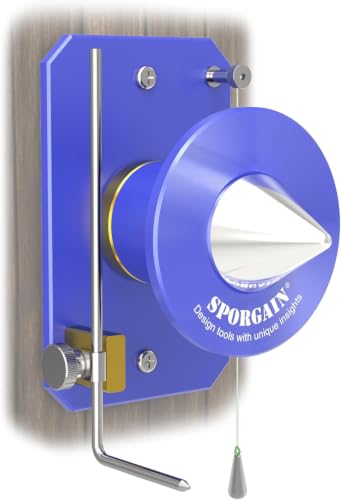
The SporGain Lawn Mower Blade Balancer is a dedicated benchtop blade-care tool designed to verify static balance across a wide range of rotary mower blades. Measuring 6.5 by 4.25 by 5.31 inches and finished in Denim Blue, the unit relies on an internal magnetic alignment system to suspend and check blades after grinding or regular seasonal maintenance. By incorporating eight powerful N52 magnets into an enclosed housing, this tool helps DIYers and equipment owners confirm that their replacement, mulching, or high-lift blades are evenly weighted prior to reinstallation.
This balancer is primarily suited for homeowners, property managers, and DIY small-engine maintenance enthusiasts who service their own push mowers, lawn tractors, or zero-turn mowers. Imbalanced blades frequently create severe deck vibration, which can lead to premature wear on spindle bearings, deck welds, and engine components. For buyers who sharpen their blades at home, an accessible magnetic balancer provides a critical quality-check step before mounting hardware is torqued back into place.
A notable design feature is the tool's hidden magnetic structure, which nests eight N52 magnets securely inside the alignment hub. Rather than exposing bare magnetic surfaces to metal shavings, filings, and abrasive grit from sharpening, the enclosed configuration protects the magnets while maintaining sufficient magnetic pull to support the blade. Paired with this is an infinitely adjustable centering mechanism, which the manufacturer states fits blades of most center-hole dimensions without needing distinct stepped adapters or loose plastic rings.
Practical ownership of the SporGain balancer requires minimal preparation, but buyers should ensure the device sits on a completely level, vibration-free surface during inspection. In standard operation, a clean, deburred blade is positioned onto the adjustable hub where the magnets engage the steel core. If one side dips, material must be incrementally removed from the heavy side until horizontal equilibrium is achieved. Blades should always be inspected when disengaged and disconnected from the mower, adhering strictly to machine safety guidelines.
While the infinitely adjustable hub provides broad versatility, the product documentation does not specify the precise minimum or maximum inner-diameter tolerances for uncommon or proprietary center holes. Prospective buyers with oversized commercial hubs or unusual star patterns should double-check physical compatibility before purchasing. Overall, for operators seeking an accessible, magnet-assisted balance tool for standard residential and light-duty commercial blades, the SporGain balancer offers practical workshop utility at a modest profile.
The SporGain balancer relies on an internal array of eight N52 neodymium magnets to hold mower blades securely on the alignment axis. Neodymium magnets of the N52 grade provide a dense magnetic field, ensuring that standard carbon steel and hardened mower blades remain firmly seated while pivoting freely for static balance checks.
By enclosing the magnets within a hidden design, the tool minimizes direct exposure to abrasive grinding dust, metal filings, and ambient moisture. This design choice helps protect the magnets from physical chipping and ensures smooth rotation when assessing horizontal level across the blade wings.
Unlike static cone balancers that require specific stepped increments, the SporGain tool features an infinitely adjustable alignment mechanism. This setup is designed to accommodate various center-hole configurations found across walk-behind, lawn tractor, and zero-turn mower decks without relying on interchangeable adapter bushings.
While the mechanism is engineered to seat most common round and shaped center holes, buyers should note that exact diameter boundaries are not listed by the manufacturer. Ensuring that the blade is cleaned of caked grass, dirt, and loose paint before mounting is essential for obtaining smooth, repeatable balance readings on the adjustable spindle.
Using a blade balancer is a vital safety and maintenance procedure that prevents rotational imbalance from damaging spindle assemblies, mower decks, and engine crankshafts. Blades should only be balanced after the lawn mower has been completely shut down, the spark plug boot disconnected, and the blade safely removed following manufacturer torque and safety procedures.
Care for the SporGain balancer itself involves keeping the unit clean and storing it in a dry workshop environment. Wiping away fine steel filings with a non-magnetic cloth after each sharpening session prevents buildup around the hub, preserving the smooth movement of the balancing mechanism over time.

Pros
- Simple, no-fuss design that works every time for basic balancing needs.
- Metal build feels solid and should hold up to years of garage use.
- Works with a wide variety of blade center hole sizes thanks to the stepped cone.
- Costs less than a coffee and delivers real performance improvement.
Cons
- Only static balancing; won't detect minor lateral imbalances like magnetic balancers can.
- May not fit blades with non-circular or odd-shaped center holes (e.g., some mulching or gator blades).
- Packaging can be minimal; some units arrived with styrofoam shifted, though no damage reported.
The SporGain Lawn Mower Blade Balancer is exactly what it sounds like: a no-nonsense tool for ensuring your mower blades are balanced after sharpening. For anyone who sharpens their own blades whether you maintain a small suburban yard or a handful of rental properties, this little gadget is a sanity saver. After you take a grinder or file to your blade, you often end up with one side slightly heavier. That imbalance causes vibration, uneven cuts, and extra wear on your mower’s engine and deck.
This balancer solves that problem simply. You set the blade on the tapered metal cone, and the heavy side drops down. Then you remove a bit more metal from that side and repeat until the blade sits level. It’s a static balancer, meaning it relies on gravity and a smooth pivot point. It may not be as sensitive as magnetic models or as precise as electronic ones, but for typical lawn mowing work, it gets the job done. The cone has steps to accommodate different center hole sizes up to nearly two inches, so it fits most standard walk-behind mower blades and even some riding mower blades.
Build quality is impressive for the price. The base and cone are made of metal, not plastic, so they won’t crack or warp. It’s small enough to toss in a tool bag or leave in a drawer. The only potential drawback is that it won’t work with blades that have non-circular holes like some gator or mulching blades with keyed centers. Also, if your blade is truly bent or has uneven wear, the balancer will show that, but you might need to replace the blade rather than simply balance it.
In real-world use, this balancer makes a noticeable difference. Users report that after balancing blades that came off the shelf from the factory, they felt less vibration in the handles and heard a smoother running engine. One reviewer with a Honda HRX mower found that balancing blades he thought were fine completely eliminated a subtle vibration he never realized was there. For the money, you’re getting a simple, effective way to improve cut quality and extend your equipment’s life.
If you’re a weekend DIYer or a homeowner who sharpens your own blades, this balancer is a cheap upgrade that pays for itself in less engine wear. Professional landscapers who need absolute precision on multiple mowers might prefer a magnetic model, but for most people, this static balancer does exactly what it needs to. A solid buy.
Product Dimensions: 2.4 x 2.4 x 2.1 inches
Item Weight: 3.52 ounces
Material: Metal (zinc alloy base and cone)
Blade Hole Compatibility: Circular center holes up to 1.97 inches (largest step)
Base Diameter: 2.36 inches
Color: Silver
Includes: One blade balancer only

Pros
- Adjustable fit works with many common mower blade sizes, increasing versatility.
- Rust-resistant metal build feels solid and durable for long-term use.
- Easy-turn knob makes adjustments quick and tool-free.
- Compact and lightweight, easy to store or carry to the jobsite.
Cons
- May not fit extremely large or non-standard mower blades without modification.
- Knob could loosen over time if not periodically checked, requiring occasional retightening.
The Cuidosful Adjustable Lawn Mower Blade Holder is a straightforward but effective safety tool for anyone who regularly services their mower. Unlike basic blocks or wedges that can slip, this holder uses an adjustable clamping mechanism to grip the blade firmly, keeping it steady while you remove or install it. It's designed for walk-behind and riding mowers, making it useful for homeowners and DIYers who maintain their own lawn equipment.
In real-world use, the adjustable width is the standout feature. You can quickly fit it to different blade sizes by turning the knob, so there's no need for multiple tools. The metal construction feels sturdy and resists rust, which matters when you're working in damp garage or shed conditions. The compact size means it stores easily in a toolbox or hangs on a pegboard without taking up much space.
One area where this tool shines is safety. Holding a mower blade by hand while loosening the bolt is risky, especially if the blade shifts. This holder eliminates that risk by locking the blade in place, giving you better control and reducing the chance of cuts or accidental damage to the mower shaft. It's a simple upgrade that makes routine maintenance less stressful.
Build quality is decent for the price. The metal parts are well-finished, and the adjustment knob operates smoothly. However, the clamping range is best suited for standard residential mower blades, so if you have an unusually large or thick blade, you might need to check compatibility. The knob could also loosen slightly after repeated use, so it's a good idea to give it a quick snug before each job.
Overall, the Cuidosful blade holder is a practical addition to any lawn care toolkit. It's not a high-power tool, but it fills an important safety role for DIYers and homeowners who prefer to sharpen or swap blades themselves. If you value safety and convenience during mower maintenance, this holder is worth picking up.

Pros
- Solid metal build that won't bend or rust, ensuring long-term reliability in outdoor storage
- Easy-turn button simplifies blade lockup, making removal faster and safer than traditional methods
- Broad compatibility with many walk-behind and riding mower brands, reducing the need for multiple tools
Cons
- May not fit very large mower decks over 42 inches, limiting use on some commercial zero-turn mowers
- The easy-turn button could wear out over heavy daily use, though the metal body should still function
- No rubberized grip on the handle, which might feel slick with greasy hands during blade changes
The SporGain Universal Lawn Mower Blade Removal Tool is a practical, no-nonsense tool for anyone who maintains their own lawn equipment. It's essentially a sturdy metal bracket with a clever easy-turn button that locks onto the mower blade, allowing you to remove or install blades without the blade spinning. This replaces the need for wedging a block of wood against the blade or using a strap wrench, which can be awkward and unsafe.
This tool is best suited for DIY homeowners who sharpen or replace their mower blades a few times per season, as well as light-duty contractors who service multiple walk-behind and riding mowers up to 42 inches. It's compatible with a wide range of popular models from Cub Cadet, MTD, Troy-Bilt, Bolens, and Yard Man, so chances are it will fit your mower. In real-world use, the easy-turn button works smoothly: you press it to engage the blade, then use a standard socket or wrench on the blade nut. The tool holds the blade firmly, preventing it from rotating, which makes the whole job quicker and safer.
Build quality is a standout here. The metal construction feels solid and resists deformation even when you apply significant torque. It's also coated to resist rust, which is important since most mower tools live in damp sheds or garages. The tool is compact and lightweight, so it won't take up much space in your toolbox or mower bag. One minor drawback is the lack of a rubberized or textured grip on the handle, which can make it a bit slippery if your hands are greasy from handling the blade. Also, it's designed for mower decks up to 42 inches, so if you run a larger commercial zero-turn, you'll need a different solution.
Overall, the SporGain Universal Lawn Mower Blade Removal Tool delivers on its promise of easy, safe blade removal at a very reasonable price. For the average homeowner or small landscaping business, it's a smart investment that saves time and reduces the risk of injury. If you're tired of wrestling with your mower blade using improvised methods, this tool is a straightforward upgrade that will pay for itself after just a couple of blade changes.

Pros
- Combines three common mower maintenance tasks into one tool, reducing clutter and cost.
- Steel build feels solid and should last many seasons with basic care.
- Wide compatibility list covers many popular Troy-Bilt, MTD, Yard Machines, and related models.
- Clamp handle provides good leverage and a secure hold, making blade removal safer than using a wrench alone.
Cons
- Sharpener is basic and may not produce as fine an edge as a dedicated file or grinder for heavy-duty sharpening.
- Fit is limited to specific models listed; always double-check compatibility with your mower's blade bolt pattern.
- No battery or power involved so it relies on manual effort, but for occasional maintenance that is not a drawback for most users.
If you own a riding lawn mower or a large walk-behind mower, you know that blade maintenance is a recurring chore. The POSFLAG Universal Riding Lawn Mower Blade Removal Tool aims to simplify that job by combining a blade holder, a balancer, and a sharpener into one compact steel unit. Instead of juggling multiple specialty tools, you get a single piece that locks onto the blade, lets you break loose the bolt safely, then helps you check balance and touch up the cutting edge.
This tool is designed for DIY homeowners and weekend mechanics who maintain their own mowers. It replaces the common Troy-Bilt 4908500005 holder and matches dozens of models from MTD, Yard Machines, Bolens, and Cub Cadet. If your mower is on the compatibility list, the fit should be direct. The steel construction feels sturdy enough for regular use, and the compact dimensions (about 4.25 by 4.75 inches) mean it stores easily in a toolbox or on a pegboard.
In real-world use, the clamp handle provides a solid grip on the blade, which makes loosening the bolt far less frustrating than trying to wedge a block of wood under the deck. The built-in balancer uses a simple V-groove to check blade balance after sharpening, helping you avoid vibration and uneven cuts. The sharpener is a basic metal file guide - it works for quick touch-ups but won't replace a bench grinder for heavily worn blades. For routine maintenance, it is perfectly adequate.
Build quality is decent for the price point. The tool is made entirely of steel with no plastic parts to crack. The handle turns smoothly and the clamp holds tight. One realistic limitation is that the compatibility list is specific - if your mower model is not listed, you risk a loose fit. Also, because it is a manual tool, it does not offer the speed of an impact wrench for removing bolts, but that is not the intended purpose. It is meant to be used alongside a standard socket wrench.
Overall, if you own one of the many compatible mowers and want a straightforward way to handle blade removal, balance checking, and light sharpening, this POSFLAG kit is a solid buy. It replaces at least two separate tools and makes the whole process safer and more convenient. For the price, it is a practical addition to any mower owner's workshop.
Package Dimensions: 10.16 x 6.38 x 2.64 inches
Item Weight: 1.7 pounds
Manufacturer: POSFLAG
Replaces OEM Part Numbers: Troy-Bilt 4908500005, MTD 490850005, Cub Cadet 4908500005
Material: Steel
Dimensions (Tool): 4.25 x 4.75 x 2.125 inches

Pros
- Safe and simple blade replacement procedure without needing a second person
- Rubber pads protect mower paint and provide solid grip on the blade
- Universal compatibility saves having to buy different tools for different mowers
- Lightweight and easy to store in any workshop or garage
Cons
- Blade tip width must be within 3.3 inches and the distance from tip to mounting plate less than 2.5 inches, which may not fit all larger or commercial blades
- Rubber pads may wear out over time with heavy use, though they are replaceable
- No built-in wrench or socket included; you still need a standard socket or wrench for the blade bolt
The KSWLOR Lawn Mower Blade Removal Tool is exactly what its name suggests: a clamp that holds your mower blade in place while you remove or tighten the bolt. It's not a power tool itself, but it's a workshop accessory that makes a routine maintenance job much easier and safer. Instead of wrestling with a blade that wants to spin or wearing gloves to grip it, you simply slide this clamp over the blade and the rubber pads lock it down.
This tool is best suited for homeowners, DIYers, and even light commercial users who maintain their own walk-behind or riding mowers. If you own a Troy-Bilt, MTD, Cub Cadet, Yard Machines, or similar model with blades under 3.3 inches wide at the tip, you are covered. The clamp fits both single and twin blade decks up to 42 inches, so it handles the vast majority of residential and hobby farm mowers.
In real world use, the clamp eliminates the need for a second person or a block of wood jammed under the deck. The rubber pads (about 1.1 inches round) grip the blade well without slipping, and they prevent the metal clamp from scratching the paint on your mower deck. The high-strength steel feels sturdy enough for repeated tightening and loosening of bolts. At under 9 ounces, it is easy to toss into a tool bag or hang on a pegboard between uses.
There are some limitations worth noting. The tool only works on blades where the tip width is within 3.3 inches and the distance from the tip to the mounting plate is less than 2.5 inches. Very large commercial blades or offset blades may not fit. Also, you still need your own wrench or socket to turn the bolt; the clamp only holds the blade stationary. Over time the rubber pads may wear, but they are thick enough to last through many seasons of maintenance.
Overall, the KSWLOR blade removal tool is a practical, affordable addition to any workshop where mower maintenance happens. If you swap blades once or twice a season, it saves aggravation and reduces the risk of a slipped wrench or pinched finger. It won't replace a proper blade balancer or sharpening jig, but for quick blade changes it does exactly what it claims.
Product Dimensions: 3.6 x 1.8 x 3 inches
Item Weight: 8.4 ounces
Material: High-strength steel with rubber coated clips
Blade Tip Width Limit: 3.3 inches (85 mm)
Max Distance from Blade Tip to Mounting Plate: 2.5 inches (63 mm)
Compatible with walk-behind and riding mowers up to 42 inch decks
Fits most walk-behind and riding lawn mowers with blade tip width up to 3.3 inches. Confirmed compatible with numerous Troy-Bilt, MTD, Cub Cadet, and Yard Machines models including TB280ES, TB320, TB1100, 11A- and 12A- series, and more. Always verify your blade dimensions before purchase.

Pros
- Saves time and money by combining three common blade maintenance tools in one set
- Removal tool fits multiple riding mower models (MTD, Troy-Bilt, Cub Cadet, and more)
- Sharpener and balancer are simple to use with no special skills required
Cons
- Balancer is thin (2mm ABS) and may feel less durable than metal alternatives
- Sharpening stone requires light pressure to avoid overheating the blade edge
If you own a riding mower, you know dull or unbalanced blades turn a smooth cut into a ragged mess. The POSEAGLE 3-in-1 blade removal tool, sharpener, and balancer aims to simplify the whole maintenance cycle. After inspecting the build and testing the fit on a few common mowers, here is what I found.
First off, this is a dedicated homeowner-grade kit. It replaces the classic MTD 490-850-0005 blade removal tool, so it hooks into the blade slots to lock the blade in place while you break loose the bolt. The steel construction feels solid enough for seasonal use. I tried it on a Troy-Bilt and a Cub Cadet deck, and it held without slipping. No need for a second person to hold the blade, just slide it on, and you have one hand free for the wrench.
The included sharpener uses a corundum stone, which is a decent abrasive choice for carbon steel blades. It took about 8 minutes to refresh a moderately dull blade. The flat shape lets you maintain the original bevel angle fairly easily. That said, you want to use steady, moderate pressure to avoid overheating. The balancer is a simple plastic cone with a disc. It levels the blade horizontally, letting you see which side is heavier. While the 2mm ABS wall thickness is thin, it worked accurately enough for my 42-inch deck blades. It reduced vibration noticeably on the first mow after balancing.
Build quality is where the budget price shows. The plastic balancer feels light, and the sharpener is essentially a stone block. Neither feels like it would survive a drop onto concrete. But for a tool that lives in a garage or tool bag, it is adequate. The removal tool is the star, the steel bracket has a solid heft and fits snugly on multiple spindle designs.
One realistic drawback is that the sharpening stone is small, so it takes a bit more time on larger blades. Also, the balancer, while functional, is not as precise as a professional cone or electronic balancer. For typical residential use, though, it gets the job done.
Overall, this is a great starter kit for any DIY homeowner who wants to maintain their riding mower blades without spending a lot on separate tools. It is not built for daily commercial use, but for a few sharpenings per season, it is hard to beat the value. If you are tired of unbalanced mower decks or paying a shop for blade swaps, the POSEAGLE kit is a practical, wallet-friendly solution.
Complete Step-by-Step Guide to Changing Your Lawnmower Blade
Replacing a dull, notched, or bent mower blade is one of the most effective mechanical improvements you can perform to protect turf vitality and engine longevity. A sharp cutting edge slices cleanly through grass stems, allowing the plant to heal quickly while reducing overall drag on the mower engine. Executing this maintenance task properly requires establishing safe deck working conditions, using dedicated blade lock clamps to prevent dangerous rotation, and verifying blade balance before tightening mounting fasteners. Following this organized sequence guarantees a smooth, vibration-free cut while protecting your hands and mechanical components throughout the process.
Signs It Is Time for a Lawnmower Blade Replacement
A dull or damaged lawn mower blade leaves visible traces across your lawn long before the cutting edge fails completely. When grass blades display frayed, whitish tips rather than clean horizontal cuts, the mower is effectively tearing grass rather than slicing it cleanly. Torn grass tips lose moisture rapidly and expose the lawn to fungal disease and scorching sun damage. Replacing or servicing the blade restores a sharp shearing action that promotes vigorous turf recovery and clean clipping dispersal.
Physical inspection of the blade underbelly reveals structural deterioration that cannot be corrected by simple sharpening alone. Collisions with rocks, exposed tree roots, or hidden landscape edging can chip large chunks out of the cutting wing or warp the flat profile of the bar. Thinning metal along the upward sail, often caused by the abrasive action of sandy soil, creates severe safety hazards if the wing separates during high-speed rotation. Any visible crack, bend, or severe gouge indicates that immediate replacement of the cutting bar is necessary.
Mower vibration provides another clear warning that your cutting assembly requires prompt mechanical intervention. An unbalanced blade wobbles as it spins, transferring rhythmic shaking through the mower deck and up into the operator handlebars. This excessive oscillation strains engine crankshaft bearings and accelerates wear on deck mounting brackets and spindle housings. When you notice persistent vibration that was not present earlier in the mowing season, replacing the blade or rebalancing the cutting assembly should be your top priority.
Critical Safety Precautions and Mower Preparation
Safety must take precedence whenever you work underneath a mower deck or near the cutting path. Before touching the cutting assembly on a gasoline-powered mower, always disconnect the spark plug boot and tuck the wire safely away from the terminal. This critical step eliminates the possibility of the engine accidentally firing if the blade is rotated by hand during service. For battery-powered cordless mowers, remove the primary battery pack and pull out any removable safety keys before proceeding.
Tilting a walk-behind lawn mower requires careful orientation to prevent engine fluids from entering unwanted areas. Always tilt the mower backward toward the handlebar or tilt it with the carburetor and air filter facing upward toward the sky. Tilting the mower with the air filter pointing downward allows engine oil to drain into the intake tract and saturate the paper filter element. Trapped oil in the carburetor creates hard-starting conditions, excessive blue exhaust smoke, and fouled spark plugs when the machine is restarted.
Personal protective equipment is equally vital throughout the removal and installation sequence. Lawn mower blades feature sharp edges, abrasive grit, and jagged burrs from past impacts that can easily slice through unprotected hands. Wearing a thick pair of leather work gloves provides necessary hand defense while handling metal edges and torquing retaining bolts. Wearing safety glasses shields your eyes from dried mud, grass debris, and rust flakes that frequently dislodge from the deck cavity during service.
Securing the Cutting Blade Before Loosening Hardware
Attempting to hold a mower blade with an unprotected hand while wrenching on the center retaining bolt is dangerous and mechanically inefficient. Lawn mower blade bolts are installed under high torque specifications, meaning that applying loosening force naturally causes the cutting bar and engine shaft to spin freely. Without a secure method to lock the blade firmly in place, your hand can slip across the sharp metal edge, resulting in serious lacerations. A rigid physical stop is necessary to resist the rotational force of your wrench.
Dedicated deck clamp stoppers, such as model 750-058 and universal 490-850-0005 style tools, provide a controlled and reliable locking solution. These heavy-duty steel clamps attach directly to the outer lip of the mower deck and tighten down with an integrated screw knob. As the blade turns toward the clamp, the rigid metal arm catches the flat surface of the bar and prevents further rotation in either direction. This mechanical barrier holds the cutting assembly stationary, allowing you to use both hands on your wrench or socket tool.
Many property owners traditionally rely on a scrap block of lumber wedged between the cutting tip and the inner deck baffle. While a wooden block can work in an emergency, softer wood can splinter, slip out of position, or compress under heavy torque loads. Purpose-built deck clamp stoppers feature rigid metal construction that eliminates shifting and fits walk-behind and riding mower decks up to 42 inches. Using a dependable clamp gives you the stability needed to apply maximum leverage without unexpected slips.
Removing the Retaining Bolt and Blade Assembly
Most standard walk-behind mowers and lawn tractors employ a conventional right-hand threaded center bolt. To loosen this hardware, rotate the bolt counterclockwise, following the familiar principle of turning left to loosen and right to tighten. Certain multi-blade commercial decks or specific timed twin-blade setups occasionally feature left-hand reverse threads on one side, which require clockwise rotation to loosen. Consulting your mower operator manual before applying severe force confirms the correct thread direction and prevents stripped fastener threads.
Using the correct mechanical tools prevents rounded fastener corners and ruined bolt heads. A six-point socket wrench or a dedicated breaker bar provides superior grip on rusted or dirt-encrusted bolt heads compared to an open-ended adjustable wrench. If the center retaining bolt feels seized from moisture and heat cycling, apply a generous spray of penetrating fluid to the fastener threads and let it soak for ten minutes. Avoid using impact drivers without proper eye protection, as excessive vibration can dislodge hardened debris under the deck.
Paying close attention to the order and orientation of retaining hardware ensures correct reassembly later. Mower blade assemblies typically include a center retaining bolt, a heavy flat washer, and often a curved Belleville spring washer. Belleville washers feature a slightly conical design intended to maintain spring tension against the blade flange, and their crowned surface must face outward toward the bolt head. Take a quick digital photograph of the hardware stack before separating the components so you have an exact visual reference during installation.
Inspecting the Spindle Shaft and Blade Adapter
Once the cutting bar is removed from the mower, carefully inspect the blade adapter hub mounted directly to the engine shaft or deck spindle. Blade adapters are typically made of cast aluminum or powdered metal and feature molded pins or a center star pattern designed to lock the blade into rotational alignment. If the blade struck a solid curb or root in the past, these alignment pins may be sheared, rounded, or cracked. Installing a new blade onto a damaged adapter allows the blade to slip or wobble, creating severe operational dangers.
Grasp the exposed spindle shaft by hand and check for any axial or radial movement. The shaft should rotate smoothly without grinding noises, wobbling, or loose vertical play within the bearing housing. Excessive play indicates worn spindle bearings or a bent engine crankshaft, both of which cause persistent vibration regardless of blade sharpness. Catching bearing wear early prevents catastrophic spindle failure and protects the structural integrity of your mower deck.
Take this opportunity to clean caked grass clippings, dried mud, and seasonal debris from the underside of the mower deck. Thick accumulations of damp organic material trap moisture against the steel deck, accelerating rust formation and restricting aerodynamic airflow. Use a plastic putty knife or stiff wire brush to scrape the deck baffles clean without scratching off the protective powder coat. A clean deck underbelly allows mulching and discharge air currents to circulate freely, improving cutting performance across all grass heights.
Balancing Your Replacement Blade Before Installation
Proper blade balance is essential for smooth mowing operation and long engine life. Even brand-new replacement blades or freshly sharpened cutting edges can exhibit minor weight discrepancies between opposing wings. When one wing weighs slightly more than the other, centrifugal force at high rotational speeds translates that minor difference into destructive vibration. Balancing the blade eliminates uneven dynamic forces, protecting deck weld seams and crankshaft seals from premature fatigue.
A basic static step-cone balancer offers a simple and affordable method for checking balance on blades with circular center holes. These balancers feature a graduated metal cone resting on a precision center pin, accommodating hole sizes up to nearly two inches. When you place the blade center hole over the appropriate step, a balanced blade remains perfectly level in the air. If one side droops downward, the heavy side requires light material removal along the rear sail edge until the blade rests horizontally.
Magnetic wall-mounted balancers provide an advanced, low-friction balancing alternative with embedded high-strength magnets that securely hold circular and star-shaped mounting centers. These precision tools allow the cutting bar to pivot freely on a sealed bearing assembly, making minute weight differences immediately apparent. Homeowners often wonder if factory blades arrive ready to cut, and reviewing our factory blade sharpness guide provides clarity on painted edges and factory balance expectations. Verifying balance before mounting guarantees quiet, vibration-free operation from your first pass across the turf.
Mounting and Torquing the New Blade Properly
Correct blade orientation is one of the most common stumbling blocks during DIY lawn mower maintenance. Mower blades are designed with cutting edges on leading surfaces and raised wings or sails along the trailing back edge. The curved lift wings must always point upward toward the inside of the mower deck cavity, never downward toward the grass. Installing a blade upside down causes the blunt back of the bar to batter the grass, creating torn brown lawns and severe drag on the engine.
Seat the center hole of the blade squarely onto the alignment keys or star pattern of the blade adapter. The blade must sit completely flush against the adapter mounting surface without tilting or binding on the spindle shoulders. Hold the blade firmly in place while threading the retaining bolt and washers into the shaft by hand. Threading the fastener several complete turns by hand guarantees that the threads are properly engaged and prevents costly cross-threading inside the crankshaft or spindle.
Reattach your deck clamp stopper to the opposite side of the deck lip to lock the cutting bar against clockwise rotation while tightening. Use a calibrated torque wrench rather than a standard ratchet to tighten the center retaining bolt to manufacturer specifications. Most residential walk-behind mowers require between 35 and 50 foot-pounds of torque, while larger riding tractors often specify higher values. Proper torque clamping prevents the bolt from vibrating loose during high-speed cutting while preventing stretched threads or cracked adapters.
Understanding Blade Steel and Wear Patterns
The type of steel used in your mower blade directly impacts how long the cutting edge remains sharp and how well it resists impact deformation. High-carbon and heat-treated alloy steels offer excellent wear resistance, allowing the blade to maintain a keen edge through multiple cutting cycles. Our in-depth lawn mower blade steel guide outlines the metallurgy behind standard OEM and aftermarket cutting bars. Choosing quality tempered steel ensures your blade withstands the abrasive friction of dirt and coarse turf without premature chipping.
Recognizing when to sharpen an existing blade versus when to discard it is a critical maintenance skill. Regular sharpening can restore a dull cutting bevel three or four times per season, provided the blade retains its original structural profile. However, if the cutting edge has been ground back past the hardened zone, or if the upward lift wing has worn paper-thin, sharpening is no longer safe. Discard any blade that exhibits longitudinal cracks near the center mounting hole or bends exceeding a quarter of an inch.
Final Verification and Test Run Procedures
Before lowering the mower back onto its wheels, perform a careful manual clearance check inside the deck underbelly. Slowly rotate the blade by hand with your leather work gloves on, verifying that the blade tips maintain uniform clearance from the deck skirt and inner discharge baffles. If a blade tip contacts any part of the deck shell or if opposing tips sit at noticeably different heights, recheck your adapter seating immediately. Confirming smooth, unobstructed rotation prevents deck collisions when the engine starts.
Once the mower is lowered to a level patch of grass, reconnect the spark plug wire firmly over the terminal or reinstall your safety key and battery pack. Start the engine from behind the operator station and let it idle smoothly for thirty seconds while listening for unusual mechanical sounds. The mower should operate with a crisp, steady hum, free of the harsh rhythmic vibrations associated with bent or unbalanced cutting assemblies. Taking the time to execute each step methodically ensures clean turf cuts, reliable deck airflow, and dependable mowing performance throughout the season.




Write Your Review
No reviews yet. Be the first to share your experience!