


Ragged grass tips and browning lawn patches often indicate that a cutting edge has lost its clean slicing ability. Knowing how to sharpen push mower blades is essential for any homeowner aiming to maintain turf health without tearing grass blades or overworking the mower drive system. Routine maintenance helps preserve clean cutting patterns, reduces strain on walk-behind equipment, and prevents lawn diseases caused by frayed leaf tissue. Investing in proper blade-maintenance accessories or keeping dedicated replacement mower blades on hand ensures that your lawn receives a crisp cut throughout the entire growing season.
Different push mowers require distinctly different sharpening strategies depending on whether the deck houses a high-speed rotary bar or a manual cylinder reel. While rotary walk-behind mowers demand precision edge profiling and strict dynamic balancing, manual reel push mowers rely on contour hand stones or back-lapping abrasive kits to maintain precise reel-to-bed-knife contact. Selecting the proper sharpening method restores cutting efficiency while avoiding expensive hardware damage. Understanding how to handle both rotary blades and manual push reel mechanisms allows you to choose the exact tools required for clean yard upkeep.
Pros
- All-in-one kit includes everything needed for sharpening
- Simple operation with hand crank control
- Extends blade life and maintains cutting quality
- Compatible with multiple major reel mower brands
Cons
- Not compatible with Fiskars, Gilmour, Scott, or Sears Craftsman mowers
- Manual operation requires some elbow grease for best results
- Lapping compound can be messy if not applied carefully
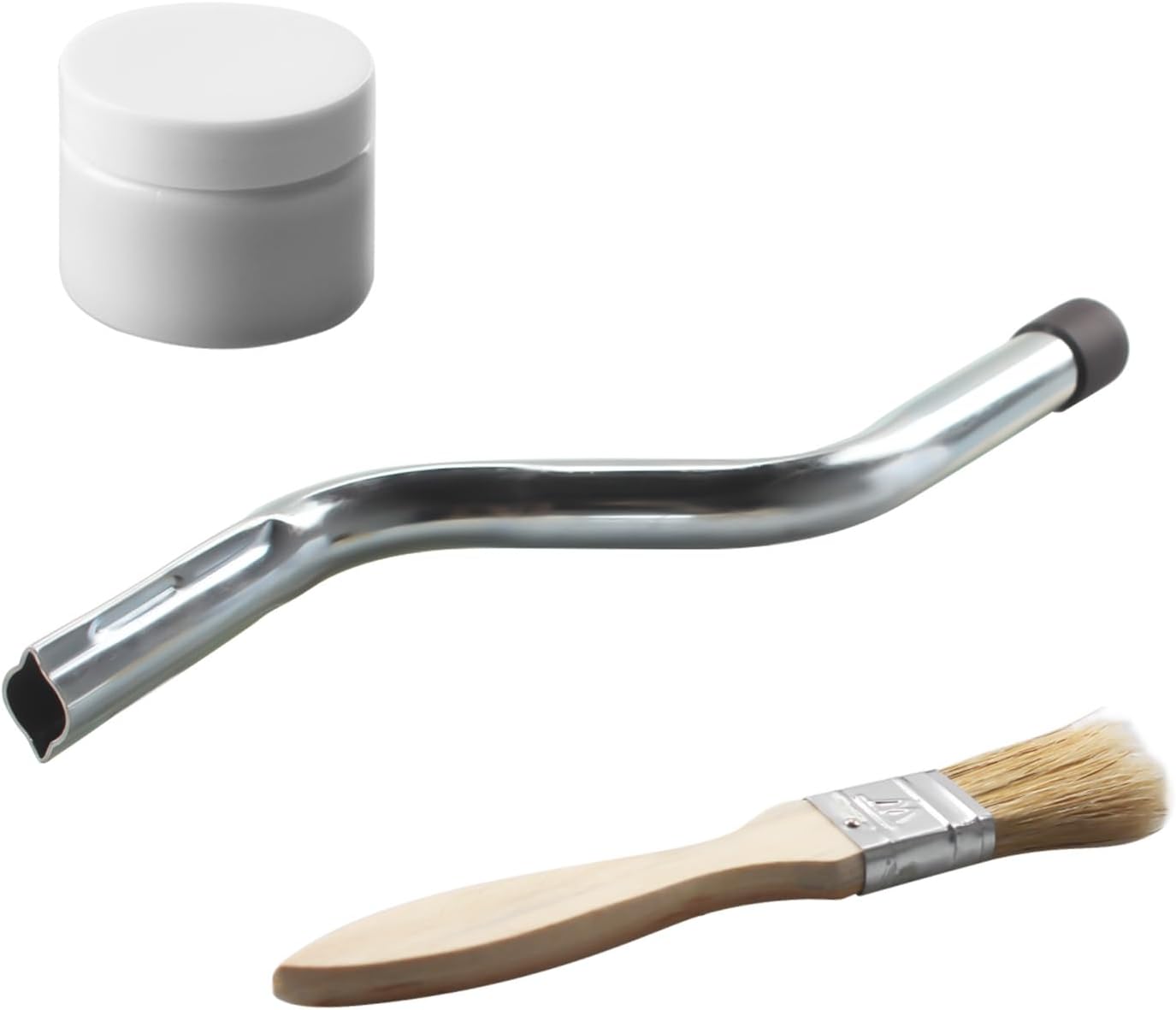
The Rasaech SK-1 Compound Sharpening Kit is a manual accessory designed specifically for maintaining push reel lawn mowers. It includes lapping compound, a hand crank, brush, and a glove, giving you everything needed to sharpen blades without removing them from the mower. This kit is intended for use with American Lawn Mower, Great States, and Earthwise reel mowers, but it is not compatible with Fiskars, Gilmour, Scott, or Sears Craftsman models.
This kit is best suited for homeowners and DIY users who own a compatible push reel mower and want to keep it cutting cleanly season after season. If you have a small to medium lawn and prefer the quiet, eco-friendly operation of a manual reel mower, this sharpening kit will help you maintain that crisp, scissor-like cut without the hassle of disassembly or professional service.
In real-world use, the sharpening process is straightforward. You apply the lapping compound to the blades, then use the hand crank to rotate the reel against the bed knife. The compound grinds both surfaces evenly, restoring a sharp edge. The brush helps clean excess compound, and the glove protects your hands from the compound and sharp blades. The whole job takes about 15-20 minutes, and you can notice a definite improvement in cutting performance afterward. The kit is lightweight (11.3 ounces) and compact, so it stores easily in a toolbox or garage shelf.
Build quality is adequate for occasional home use. The hand crank is plastic but feels sturdy enough for the torque required. The brush is basic but does the job. The lapping compound is the key component, and it works effectively on the hardened steel blades of compatible mowers. One realistic drawback is that the kit is not universal, so you must check compatibility before buying. Also, the manual operation means you need to apply consistent pressure and speed for even sharpening, which might take a couple tries to get right. The compound can also be a bit messy, so working over a drop cloth or newspaper is recommended.
Overall, the Rasaech SK-1 is a practical, budget-friendly solution for maintaining a push reel mower. It is not a professional-grade tool, but for the average homeowner who wants to keep their mower cutting well without spending money on professional sharpening, it is a solid choice. If you own a compatible mower and want a simple DIY sharpening option, this kit is worth picking up.
Product Dimensions: 1 x 1 x 1 inches
Item Weight: 11.3 ounces
Manufacturer: Rasaech
Model Number: SK-1-1
ASIN: B0FDKC9F2K
Best Sellers Rank: #160,887 in Sports & Outdoors; #137 in Fishing Reel Care Accessories
Reel mower lapping compound
Hand crank
Brush
Glove

Pros
- Dedicated sharpening channels for both stationary cutter bars and rotating reel blades
- Articulating arms follow blade curvature to maintain consistent contact angles
- Compact, lightweight build allows for fast mid-season touch-ups right on the lawn or in the garage
- Requires zero electricity, batteries, or specialized bench tools for routine maintenance
Cons
- Requires steady manual pressure and multiple strokes to remove noticeable blade burrs
- Exclusively built for manual reel mowers and cannot sharpen rotary mower blades
- Not intended to repair severely bent blades or deep rock gouges that require machine grinding
The Ximoon SK-2 is a purpose-built manual maintenance accessory designed specifically for push reel lawn mowers. Ideal for homeowners, turf hobbyists, and DIY lawn enthusiasts who appreciate the scissor-cut precision of a reel mower, this hand tool handles regular blade upkeep without the headache of complete disassembly or costly professional sharpening services.
Its primary performance advantage lies in the clever two-in-one abrasive layout. One slot is dedicated to dressing the stationary bed knife across the bottom of the mower, while the opposite end features spring-action guide arms that slot over the curved reel blades. As you slide the tool across the cutting components, the pivoting arms track the natural spiral twist of the metal, helping you maintain a consistent edge profile across the entire width of the cut.
From a workshop and storage standpoint, the SK-2 is small, light, and easy to handle. Measuring just 3.4 by 2.6 inches, it fits comfortably in your palm and tucks away into any tool tray. The plastic casing provides adequate rigidity for manual honing strokes, making it practical to flip your mower upside down on the driveway and complete a routine edge touch-up in under ten minutes.
Keep in mind that this is a honing and edge-dressing tool rather than a heavy material-removal system. It will not fix bent metal or replace precision relief grinding on neglected, severely pitted blades. For seasonal maintenance, deburring after hitting small twigs, and keeping your cutting edges razor-sharp between seasons, the SK-2 is an accessible, reliable tool that delivers real utility for push reel owners.
The Ximoon SK-2 works best as a routine maintenance tool for residential push reel mowers. It is well-suited for early spring prep work to ensure your mower is ready for the first cut of the season, as well as mid-summer tune-ups whenever you notice the tips of your grass tearing instead of shearing cleanly.
It is also a handy field accessory if you encounter small pebbles, acorn caps, or twigs that leave small burrs along the cutting edge. A few passes with this pocket sharpener smooths out rough spots before they cause uneven contact between the reel blades and the bed knife.
To sharpen the bed knife, invert the reel mower safely on a stable work surface. Place the flat bed knife slot over the cutter bar edge and slide the sharpener back and forth along the full length using moderate, consistent downward pressure. Rotate the reel slightly by hand as needed to clear working room.
For the reel blades, position the articulating guide arms over one blade at a time. Run the tool along the full spiral sweep from one side to the other, letting the guide arms follow the natural curve. Repeat the process on each individual blade until a clean, uniform edge is restored.

Pros
- Restores cutting edges directly on the mower without removing components
- Dedicated slots handle both rotating reel blades and fixed bed knives
- Compact and lightweight design fits easily into any tool bag or drawer
- Substantially cuts down on mower push effort by maintaining sharp scissor action
Cons
- Designed strictly for manual push reel mowers and cannot sharpen rotary mower blades
- Requires steady hand pressure and multiple passes to clean up heavily notched steel
- Demands heavy work gloves during use because hands are inches away from open cutting edges
Push reel mowers offer a precise scissor cut that gas and electric rotary decks struggle to match, but they only perform well when the blades stay sharp. The Ulreon SK-2 Reel Mower Sharpener is a specialized hand tool built specifically for homeowners and DIY yard maintainers who want to bypass messy back-lapping compound kits or expensive machine shop servicing. It provides a simple, direct way to touch up standard manual reel mowers from popular makers like Scotts, Earthwise, and American Lawn Mower Company.
The standout mechanical feature here is the dual-slot abrasive configuration. Rather than forcing you to guess edge angles, one slot fits the curved contours of rotating reel blades while the second slot accommodates the flat edge of the lower bed knife. As you slide the sharpener along the cutting edge, the internal abrasive block deburrs the contact surfaces. Taking 10 to 15 light passes per blade edge cleans away oxidation, fine chips, and roll-over burrs, immediately improving how smoothly the reel interacts with the bed knife.
From a workshop standpoint, this tool is straightforward and packable. Measuring roughly 3.5 inches long, it tucks into a toolbox tray or hangs conveniently in a garden shed. The molded plastic body feels sturdy enough to handle firm downward pressure, and the bright orange color keeps it from getting lost in grass clippings. Because your fingers work close to sheared steel edges while sliding the tool, wearing a pair of thick leather mechanics gloves is non-negotiable for safe operation.
Keep your expectations practical regarding blade wear. This sharpener is an edge-maintenance accessory, not a full re-grinding system. It works best for regular seasonal touch-ups and light nick removal. If a reel has struck gravel and suffered deep gouges, it will require a file or a comprehensive back-lapping session first. For standard seasonal upkeep, the Ulreon SK-2 delivers reliable maintenance efficiency that keeps push mowing easy on the back and gentle on your lawn.
This tool is ideal for seasonal spring tune-ups before the primary mowing season begins. Running it across the reel clears winter oxidation and establishes a crisp cutting edge before tackling lush grass.
It also excels at mid-season touch-ups after your push mower encounters twigs, acorns, or hidden yard debris. Rather than waiting for uneven turf tip browning to signal dullness, a five-minute session with this sharpener restores clean clipping action.
Finally, it serves as a lightweight field tool for tight urban yards and micro-lawns where electric bench grinders and heavy shop equipment are unavailable or impractical.

Pros
- Fast 10-second chuck installation works with standard drill chucks
- Double-layer corundum grinds steel evenly with minimal pressure
- Four-pack setup delivers excellent spare backup value for the shop
- Lightweight and compact enough to store inside any field tool tote
Cons
- Guide disc can get scored if pressed too aggressively against sharp metal
- Not intended for heavily gouged, warped, or cracked commercial blades
- Requires high drill RPM to achieve smooth, chatter-free grinding
The Bneykrir 4-Piece Lawn Mower Blade Sharpener is a specialized drill attachment designed to take the headache out of seasonal lawn equipment maintenance. Instead of wrestling blades on a heavy stationary bench grinder or risking uneven hand-filing, this tool uses a double-layer corundum wheel that mounts right into your drill chuck. It is aimed squarely at homeowners, DIYers, and small-property groundskeepers who want clean, healthy grass cuts without spending shop fees on blade balancing and sharpening.
In practical workshop use, setting up the sharpener takes only a few seconds. Chuck the metal shaft into an 18V or 20V cordless drill, clamp your lawn mower blade securely into a bench vise, and bring the drill up to speed. The abrasive corundum stone cuts through mild surface oxidation, dull bevels, and small turf nicks smoothly. The plastic guide disc rests along the flat underside of the blade, keeping the abrasive angled against the factory bevel without demanding pinpoint freehand steadying.
Build quality is suited well for light to medium maintenance runs. The corundum material holds up to standard lawn tractor and push mower steel, though users should avoid leaning too heavily into the work. Applying steady, moderate passes keeps heat buildup low and avoids burning the temper on thin steel. The four-pack arrangement is practical, giving you plenty of abrasive material to work through multiple seasonal tune-ups, tiller blades, and utility yard tools.
There are a few trade-offs to keep in mind. The plastic collar can wear down if it drags forcefully against jagged metal edges, and deep gouges from rocks will still require an angle grinder with a flap disc first. That said, for routine seasonal maintenance and quick edge touch-ups, this four-piece kit provides straightforward functionality and solid value for any home garage.
Routine edge touch-ups on standard residential walk-behind and riding lawn mower blades.
Cleaning and sharpening curved garden tools, rototiller tines, sickle cutters, and axes.
Pre-season garage tune-ups where removing the blade for quick bench vise work is preferred.
Home toolkits where space or budget does not justify a dedicated stationary grinder.

Pros
- Powerful 700W motor handles tough blade restoration quickly.
- Integrated dust collection keeps metal shavings contained for a cleaner workspace.
- Includes three grit sandpapers for complete sharpening stages.
- Heavy steel base provides stability and reduces vibration during use.
Cons
- No blade holder or guide included, requiring careful hand positioning.
- Some assembly and setup may be needed before first use.
The WEWEAL 7-Inch Lawn Mower Blade Sharpener is a benchtop grinder designed specifically for restoring dull, chipped, or damaged mower blades to a sharp edge. Unlike manual files or angle grinders, this dedicated sharpener offers a more controlled and efficient process, making it a valuable tool for homeowners who prefer to maintain their own equipment. With a 700W motor, built-in dust collection, and a set of three sandpaper grits, it aims to simplify blade maintenance while keeping your workspace clean.
This sharpener is best suited for homeowners, lawn care enthusiasts, and gardeners who regularly mow their lawns and want to keep their blades cutting cleanly. It's also a practical option for budget-conscious shoppers who prefer to sharpen blades themselves rather than pay for professional sharpening or replace blades frequently. The product description highlights compatibility with a wide range of blade types, including high lift, low lift, gator, and flat designs, so it should work with most standard walk-behind mowers and some riding mower blades.
In terms of real-world performance, the 700W motor provides ample power for grinding through hardened steel. The included 60-grit disc handles coarse grinding on heavily damaged edges, while the 120-grit refines the edge, and the 320-grit produces a smooth finish. The hook-and-loop system allows quick sandpaper changes, which is convenient when moving between stages. The built-in dust collection case captures most metal shavings, reducing mess and making cleanup easier. According to the manufacturer, it captures up to 99% of particles, which is a significant advantage over open bench grinders.
Build quality appears solid with a heavy-duty steel base that adds stability and helps minimize vibration. The ceramic wheel is designed for longevity and consistent sharpening. The detachable dust box is a thoughtful feature that allows you to empty shavings without stopping work. The overall dimensions (13 x 9.3 x 10.4 inches) mean it will occupy a permanent spot on your workbench, but it's not overly large.
Ease of use is straightforward: mount the sharpener on a stable surface, attach the desired sandpaper disc, and guide the blade along the wheel. However, there is no included blade guide or holder, so you'll need to manually control the angle and pressure. This requires a steady hand, especially for beginners. Maintenance of the sharpener itself is minimal: occasional cleaning of the dust box and replacement of sandpaper discs as they wear. The product does not include a blade holder, which some users may find as a limitation.
Realistic limitations include the price point, which is higher than manual sharpening tools but lower than industrial-grade sharpeners. Also, the sharpener is not designed for very wide blades or those with complex profiles. For most standard mower blades, it should work well. Overall, if you value a clean workspace, consistent results, and have multiple blades to maintain, the WEWEAL 7-Inch Lawn Mower Blade Sharpener is a worthwhile investment for your lawn care toolkit.
The WEWEAL sharpener uses a 700W motor to drive a ceramic wheel at high speed, allowing it to grind through steel efficiently. The three included sandpaper grits (60, 120, 320) cover the full sharpening cycle: coarse grinding to reshape the edge, medium sharpening to refine it, and fine finishing to polish. The hook-and-loop attachment makes switching between grits quick, so you can move through the stages without delay. The dust collection system is a standout feature, capturing most metal particles and keeping your bench clean. For homeowners who sharpen blades seasonally, this system reduces cleanup time significantly.
The sharpener features a reinforced steel base that adds weight and stability, reducing vibration during operation. The ceramic wheel is durable and resists wear, maintaining its shape over many sharpening sessions. The housing appears to be impact-resistant, and the detachable dust box is made of sturdy plastic. Overall, the build quality seems designed for regular use in a home workshop. The product dimensions are compact enough to fit on most benches, and the base has mounting holes if you want to secure it permanently. The manufacturer provides a standard warranty, though the exact length is not specified in the product data.

Pros
- Simple to use with no setup required ideal for quick blade touch-ups before mowing.
- Compact size stores easily in a tool bag or workshop cabinet without taking up much space.
- Affordable price point makes it accessible for budget-conscious DIYers and homeowners.
- Manual operation eliminates the need for electricity or batteries, perfect for sheds or remote storage.
Cons
- Requires multiple passes and consistent pressure to achieve a sharp edge, which can be time-consuming for larger reels.
- Does not include any alignment guide or angle adjustment, so users need a steady hand for even sharpening.
- Plastic construction may not withstand heavy use in a commercial landscaping setting long term.
The Niahm Manual Reel Mower Blade Sharpener is a straightforward, no-frills tool designed for keeping push mower blades sharp. It consists of a sharpened steel blade mounted in a durable orange plastic handle. You simply run it along the edge of the reel blades while the mower is stationary. This is a manual sharpener, meaning there are no motors, batteries, or electricity involved. It is best suited for DIY homeowners and hobbyist gardeners who own a manual or push reel mower and want to maintain that precise cut without investing in power equipment or taking the reel to a shop.
In real-world use, this sharpener handles well on typical residential reel mower blades. You will need to apply steady, even pressure along the blade length and repeat several times to restore a clean edge. The ergonomic handle fits comfortably in the hand, and the overall weight is minimal, so it is easy to maneuver. The sharpening blade itself is hardened steel and holds an edge well for numerous sharpening sessions. However, because it is manual, the process is slower than using a power sharpener or grinder. It is ideal for a quick touch-up before mowing, not for restoring a badly dulled or damaged reel.
Build quality is adequate for light to moderate use. The plastic handle feels solid but is not as robust as metal alternatives. The sharpening blade is held securely, but the whole unit is best suited for occasional residential use rather than daily commercial landscaping. The compact size means it fits easily in a tool drawer, workshop shelf, or even a lawn bag. There are no accessories or carrying case included, which is typical at this price point.
The main drawback is the time and effort required to achieve a razor-sharp edge. Users who expect a quick, effortless process may be disappointed. Additionally, there is no guide to ensure the correct sharpening angle, so novices might need a few tries to get consistent results. For heavy-use contractors or landscapers with multiple mowers, a power sharpener would be a better investment. But for the typical homeowner with a single reel mower, this Niahm sharpener offers a practical, low-cost solution. It is a good choice for anyone who values simplicity, portability, and hands-on maintenance without needing extra gear.
Brand: Niahm
Color: Blue
Dimensions: 0.1 x 0.1 x 0.1 Inches
Weight: Lightweight (exact weight not provided)
Material: Hardened steel sharpening blade, plastic handle
Compatibility: Designed for use with manual reel push mowers
Included: One manual reel mower blade sharpener
This sharpener is best for:
- Quick blade touch-ups between mowing sessions
- DIY homeowners with push reel mowers on small to medium lawns
- Maintaining a sharp edge without removing the reel blades
- Users who prefer manual, quiet, electricity-free maintenance
- Budget-conscious gardeners who want to extend blade life
Before buying the Niahm Manual Reel Mower Blade Sharpener, consider your mowing frequency and the condition of your current blades. If you mow a small lawn weekly, this sharpener is a convenient way to keep the cutting edge fresh. For larger lawns or duller blades, you might need more passes or a power sharpener. Always wear work gloves when sharpening to protect your hands from the sharp steel edge. This tool is a practical addition to any homeowner's workshop for basic lawn care maintenance.

Pros
- Includes all necessary components to back-lap blades immediately out of the box
- Eliminates the ongoing expense of commercial reel mower sharpening services
- Restores precise scissor-action cuts on dull reel blades without removing the cylinder
- Requires zero electricity or specialized workshop power equipment to operate
Cons
- Incompatible with Fiskars, Gilmour, Scott, and Sears Craftsman reel mower designs
- Requires manual physical effort to turn the hand crank through the paste friction
- Exclusively intended for manual reel mowers and cannot sharpen rotary mower blades
The AAAQQ SK-1 Sharpening Kit is a dedicated back-lapping maintenance kit built for push reel mower owners looking to keep their cutting edges sharp without paying for commercial servicing. If you take pride in manual reel mowing and want clean, crisp grass cuts rather than torn brown tips, this compact package brings traditional workshop blade tuning right to your garage or backyard.
Rather than grinding away valuable steel with angle grinders or rotary files, this kit utilizes the tried-and-true back-lapping method. You brush the specialized abrasive paste across the edges of the reel blades, attach the hand crank to the mower drive, and rotate the reel in reverse. As the blades sweep backwards against the fixed bed knife, the abrasive paste laps the metal surfaces together, grinding down minor nicks and restoring an edge that cleanly slices paper.
The included hand crank provides enough leverage to keep the drum turning smoothly against the friction of the compound. While it does take a few minutes of steady elbow grease to work through heavily dulled blades, the mechanical setup gives you full tactile feedback so you never risk taking off too much metal or overheating the blade temper. Once you wipe down the drum and rinse the residual grit, the tool stores away in a drawer without taking up valuable shop space.
Keep in mind that fitment depends strictly on your mower model. It works seamlessly with common models from American Lawn Mower, Great States, Earthwise, and Scotts, but it will not mount to Fiskars, Gilmour, or Sears Craftsman push mowers due to different drive hub styles. For homeowners maintaining compatible push reel mowers, the AAAQQ SK-1 is an affordable, practical solution that keeps your lawn looking manicured all season long.
Push reel mowers require matching drive fittings to spin the cylinder backwards during the lapping process. The AAAQQ SK-1 hand crank is specifically sized to fit drive hubs on Great States, American Lawn Mower Company, Earthwise, and Scotts manual reel units.
Do not purchase this kit if you own a Fiskars StaySharp, Gilmour, Scott-branded gear-drive models with proprietary hubs, or Sears Craftsman reel mowers. Those units feature different wheel-gear retention systems that will not accept this hand crank spindle.

Pros
- Affordable way to extend the life of your reel mower
- Simple, intuitive operation that anyone can master in minutes
- Small and lightweight, easy to store anywhere
- By keeping blades sharp, you can reduce the physical effort needed to push the mower
Cons
- Only works with reel mowers, not standard rotary mowers
- Manual sharpening takes some elbow grease compared to professional sharpening services
- Does not include a guide for perfect blade angle, so results depend on your technique
This is a manual blade sharpener made specifically for reel lawn mowers, which are the classic push mowers with a spinning cylinder of blades. Instead of replacing the whole reel or paying for professional sharpening, this small tool lets you touch up the cutting edges at home. It is designed for homeowners who want a simple, low-cost maintenance solution for their manual mower.
Who is this sharpener best suited for? Anyone who owns a reel mower will find it useful, but it is especially helpful for eco-conscious homeowners who have switched to a manual mower to avoid gas and emissions. It is also great for apartment dwellers with small yards, suburban homeowners who value quiet Saturday morning mowing, and elderly users who prefer lightweight equipment and simple maintenance. Budget-conscious shoppers will appreciate that it can keep a mower running effectively for years without spending money on new parts.
In terms of lawn care performance, keeping reel blades sharp makes a real difference. Dull blades can tear grass, leaving ragged edges that turn brown and make the lawn look unhealthy. Using this sharpener regularly helps the reel cut cleanly, which promotes denser, greener grass. The handheld design means you can sharpen the blades while the mower is tipped on its side, and you do not need to remove the reel. Many homeowners find that a quick sharpening session at the start of the season and again mid-summer keeps the mower cutting well.
The build quality of this sharpener is practical and durable. It is made from high-quality materials that are meant to withstand repeated use, and the compact dimensions of about 4.7 x 1.1 x 3.9 inches make it easy to store in a garage, shed, or even a small apartment closet. The green color makes it easy to spot among other tools. Since it is a manual tool, there are no batteries, cords, or complicated parts to worry about, which also means very little can go wrong with it.
One realistic limitation is that this sharpener only works with reel mowers, not the more common rotary mowers that most people own. It also requires a bit of patience and a steady hand, since you are manually running the sharpener along the blade edge. There may be a learning curve to get the angle right, but many users find that a few practice passes are all it takes. Also, while it can restore a mildly dull blade, a badly nicked or damaged reel might still need professional servicing.
Overall, this is a highly practical accessory for reel mower owners who want to get the most out of their equipment. It is inexpensive, easy to use, and directly improves the quality of your cuts, which benefits your lawn health. If you already own a manual reel mower or are thinking about going the eco-friendly route, this sharpener is a smart way to keep that investment in top shape for many seasons.
This sharpener is designed for reel mowers, which are sometimes called cylinder mowers or manual push mowers. It is not intended for rotary mowers, electric mowers, gas mowers, or riding mowers. According to the manufacturer, it is compatible with multiple brands of reel trimmers and reel lawn mowers, so it should work with most popular manual mowers on the market. If you are unsure whether your mower is a true reel type, look for the spinning cylinder of blades that cuts against a fixed bed knife. That design is the one this sharpener is built for.
To get the best results with this reel mower blade sharpener, start by cleaning the reel and bed knife with a brush to remove grass clippings and debris. Tip the mower on its side so you can see the reel clearly. Apply a light sharpening compound or paste to the blades if your mower manufacturer recommends it, then run this handheld sharpener along the cutting edge at the same angle as the original bevel. Work slowly and evenly, moving from one end of the reel to the other. After sharpening, wipe off any metal filings and apply a thin coat of oil to prevent rust. Repeating this process once or twice per mowing season will keep your reel mower cutting smoothly and reduce the effort needed to push it.

Complete Step-by-Step Guide to Sharpening Push Mower Blades
Restoring a dull cutting edge requires matching your sharpening technique to the specific mechanical design of your push mower. Walk-behind push mowers generally fall into two categories: rotary mowers that spin a horizontal steel blade at high velocity, and manual push reel mowers that shear grass like scissors between rotating helical blades and a stationary bed knife. Rotary blades require careful bevel grinding and dynamic balancing to eliminate spindle strain. Manual reel blades require specialized contour profiling stones or reverse-lapping compounds to true the contact surfaces. Following the correct procedure for your equipment ensures a clean lawn cut without damaging tempered steel components.
Identifying Rotary vs Manual Reel Push Mower Blade Systems
Determining whether your push mower utilizes a rotary blade or a manual cylindrical reel dictates your entire sharpening strategy. Rotary push mowers feature an enclosed mowing deck with a single flat or contoured steel bar bolted to a central motor or engine shaft. This spinning blade impacts grass at high speed, meaning edge sharpness and blade balance directly govern cut quality and engine longevity. Maintaining this style of blade involves removing the hardware, assessing the factory bevel angle, and eliminating impact gouges.
Manual push reel mowers operate on an entirely different mechanical principle that does not utilize a motor. These traditional mowers push several curved helical blades across a stationary horizontal cutter bar known as a bed knife. Because the grass is sheared between two contacting edges, sharpening a reel mower focuses on creating a uniform scissor interface across the entire cylinder width. Using rotary grinding tools on a reel mower can ruin the cylinder geometry, which is why manual reel maintenance requires dedicated compound kits or specialized guide stones.
Safety Precautions and Pre-Sharpening Inspection
Every blade sharpening task must begin with thorough equipment disconnection to eliminate any accidental startup hazard. For gas rotary push mowers, always disconnect the spark plug boot and tuck the wire away from the terminal. If you are servicing a cordless battery push mower, remove the safety key and disconnect the battery pack completely before tipping the mower deck. For corded electric push mowers, disconnect the extension cord from the power supply before touching the blade assembly.
Once the equipment is rendered inert, inspect the blade surfaces under bright lighting for severe structural fatigue. Look closely for deep stress cracks near the center mounting hole, bent blade tips, or thin trailing sails worn away by abrasive sandy soil. If a rotary blade exhibits cracks or excessive metal loss, attempting to sharpen the metal creates a severe safety hazard during high-speed rotation. Similar caution applies to manual push reels, where bent cylinder spiders or warped bed knives demand hardware replacement rather than routine sharpening.
Sharpening Rotary Blades Using Drill Attachments and Bench Grinders
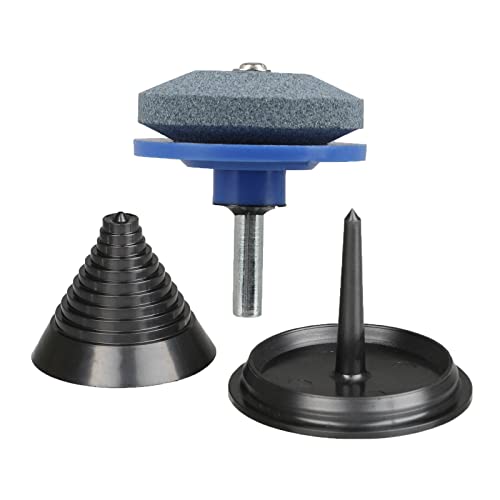
Rotary push mower blades can be sharpened effectively using either handheld power drill attachments or dedicated stationary grinding machines. Double-layer corundum drill sharpeners, such as the rotary stones from Bneykrir or jtfrkope, mount directly into standard drill chucks and utilize a plastic guide disc to ride along the flat back of the blade. This guide keeps the abrasive corundum wheel seated against the cutting edge, allowing homeowners to quickly dress dull edges without specialized shop machinery. Running the drill at moderate speeds while sweeping smoothly along the cutting bevel prevents concentrated friction and uneven gouging.
For heavily dinged blades or frequent maintenance, a dedicated tool like the WEWEAL 7-inch lawn mower blade sharpener bench grinder provides superior motor power and stability. Featuring a robust 700W motor and multi-grit ceramic discs ranging from 60 to 320 grit, this style of bench grinder removes material evenly while maintaining consistent bevel angles. The built-in dust collection system captures flying metal shavings to keep work areas clean and safe during aggressive grinding stages. When using any motorized grinder, take light passes and avoid applying excessive pressure that could overheat the steel.
Overheating mower blade steel alters its factory heat treatment and softens the cutting edge. If the metal turns blue or dark purple during grinding, the steel has become annealed and will dull rapidly in the lawn. To preserve blade hardness, keep a bucket of cold water nearby and quench the blade frequently during grinding passes. Maintain the factory bevel angle, which typically sits between 30 and 35 degrees on standard rotary push blades. Never grind the flat underside of the blade, as that surface must remain completely flat to ensure proper airflow and clean turf cutting.
Proper Blade Balancing for Rotary Push Mowers
Sharpening inevitably removes metal, which frequently leaves one side of a rotary push mower blade heavier than the other. Operating an unbalanced blade creates severe rotational vibration that damages engine bearings, loosens deck fasteners, and wears out spindle assemblies prematurely. Using an inexpensive multi-tier cone balancer, such as the universal balancer included in the jtfrkope sharpener set, allows you to verify that both blade wings weigh exactly the same. Balancing is a non-negotiable step every single time a rotary mower blade is sharpened.
To test the balance, seat the center hole of the sharpened blade horizontally across the stepped tiers of the cone balancer placed on a level surface. If one side tilts downward, that wing contains excess metal and requires further adjustment. Never remove metal from the freshly sharpened cutting edge to correct balance errors. Instead, grind away small amounts of steel from the heavy side trailing sail or back edge until the blade rests completely horizontal on the balance cone.
Achieving balance prevents violent shaking, which is particularly noticeable when mowing across uneven terrain where engine mounts and mower decks already experience high physical stress. Smooth operation prolongs the life of walk-behind push mowers and produces a noticeably cleaner, flatter cut across your yard. After confirming balance, reinstall the rotary blade using the original mounting hardware and tighten the bolt securely to the manufacturer torque specification.
Sharpening Manual Push Reel Blades with Handheld Contour Tools
Homeowners maintaining manual push reel mowers often prefer handheld sharpening guides for fast seasonal touch-ups. Specialized handheld sharpeners, such as the SK-2 standard tools from Ulreon, Ximoon, XCWT, and Niahm, feature dual abrasive slots molded into a durable handheld plastic body. One slot is engineered specifically for the straight profile of the stationary bed knife, while the opposing rotating arm slot conforms to the curved radius of the helical reel blades. This design enables blade dressing without dismantling the mower cylinder or removing complex mounting brackets.
To dress the bed knife, invert the reel mower on a stable workbench and position the bed knife slot over the horizontal cutter bar. Slide the sharpener back and forth along the full length of the straight edge 10 to 15 times using firm, even pressure. Wearing thick work gloves is essential to protect your hands from accidental contact with adjacent reel blades. Keep the tool seated flush against the bar to prevent rounding off the critical shear corner of the bed knife.
After dressing the bed knife, reposition the handheld sharpener onto each helical reel blade in sequence. The pivoting guide arms naturally follow the spiral curvature of the steel as you push the tool along the blade length. Work systematically across every cylinder blade, applying identical stroke counts to ensure even material removal. Handheld contour tools remove minor burrs, polish dull spots, and restore cutting keenness without messy compounds or mechanical disassembly.
Back-Lapping Push Reel Mower Blades with Lapping Compound
When a manual reel mower suffers from widespread dullness or slight contact irregularities, back-lapping provides the most comprehensive restoration method. Complete kits, such as the SK-1 compound sharpening sets from Rasaech, AAAQQ, and Kwongfoyii, contain fine abrasive lapping paste, an application brush, and a specialized reverse-drive hand crank. Back-lapping spins the reel blades backward against the stationary bed knife while coated in abrasive grit, honing both mating surfaces simultaneously into perfectly matched cutting edges.
The back-lapping procedure begins by removing one ground wheel or drive gear cover to access the reel shaft axle. Fit the kit hand crank onto the designated axle fitting or drive pin, ensuring that turning the crank rotates the reel cylinder in reverse. Never rotate the reel forward during lapping, as forward motion can bite into the bed knife and cause serious structural binding. Once the crank is secured, inspect the clearance between the reel blades and bed knife, adjusting the side adjustment screws until the blades make light, uniform contact.
Using the included brush, apply a generous layer of abrasive lapping compound across the entire length of each reel blade and the front face of the bed knife. Turn the hand crank steadily in reverse, allowing the abrasive grit to grind the microscopic high spots off both components. As the compound works, you will hear a consistent grinding sound that gradually smooths out into a quiet, uniform hum. Continue cranking for several minutes, periodically brushing displaced compound back over the edges until the entire contact zone displays a polished, shiny surface.
Once the grinding sound becomes consistent across all blades, thoroughly clean the mower before testing or storing. Hose off every trace of the gritty lapping compound using water, or wipe the metal surfaces down with shop rags and a degreasing solvent. Leaving abrasive paste on the blades will accelerate wear and quickly destroy the freshly honed edges once you resume regular mowing. Dry the metal thoroughly and apply a light mist of penetrating oil or silicone lubricant to protect the raw steel from surface corrosion.
Setting Bed Knife Clearance and Testing Edge Keenness
Achieving a sharp edge is only half the battle on a manual push reel mower, because proper clearance between the reel and bed knife dictates cutting success. If the bed knife is adjusted too loosely, grass slips between the blades and tears instead of cutting. Conversely, overtightening the bed knife creates excessive metal friction that makes the mower exhausting to push and rapidly dulls the newly sharpened edges. Use the mower adjustment screws on each side of the chassis to achieve light contact or paper-thin clearance according to manufacturer guidance.
The definitive test for reel mower sharpness is the classic newspaper shear test. Insert strips of standard newspaper perpendicular to the bed knife at various points along the cutting width while carefully rotating the reel cylinder by hand. A properly sharpened and adjusted reel mower will cleanly slice through the paper along the full length of every helical blade, mimicking sharp desk scissors. If the paper folds over or tears rather than slicing crisply, readjust the bed knife screws slightly or repeat light lapping along that specific section.
For rotary push mowers, cutting edge sharpness should resemble a sharp butter knife rather than a surgical razor. An overly thin, razor-like edge on a high-speed rotary blade tends to roll over or chip immediately when striking hard debris or dense grass crowns. Keeping a clean, uniform bevel with an edge thickness roughly the width of a fingernail provides the optimal balance between slicing power and edge durability. Maintaining this profile allows electric lawn mowers for thick grass and gas push mowers alike to cleanly chop tough vegetation without suffering rapid edge degradation.
Recognizing When to Resharpen Versus When to Replace Push Mower Blades
Sharpening cannot rescue every damaged mower blade, and learning to identify unserviceable components prevents dangerous mechanical failures. On rotary push mowers, inspect the upward curve of the trailing sail, which creates the lift necessary to stand grass upright before cutting. If sand abrasion or repeated grinding has thinned this curved sail to less than half its original thickness, the blade must be replaced immediately. A weakened sail can detach under rotational forces, turning a high-speed steel fragment into a hazardous projectile.
Deep gouges that penetrate more than a quarter-inch into the cutting edge also warrant blade replacement rather than aggressive grinding. Grinding out massive gouges removes too much tempered metal, throwing off blade balance and altering the aerodynamic profile of the mowing deck. Similarly, any rotary blade that has struck a hidden pipe, rock, or tree root and developed a permanent bend should never be straightened. Bending cold steel introduces microscopic stress fractures that compromise structural integrity.
For manual push reel mowers, assess the remaining width of the stationary bed knife lip and the cylinder diameter. If repeated lapping over many years has worn the bed knife down to its mounting bar, the assembly can no longer maintain proper clearance. Damaged reel spiders, bent axle shafts, or severely notched cylinder blades that cannot make uniform contact also demand component replacement. Knowing when to stop sharpening and invest in fresh factory hardware ensures safe mowing and protects your lawn from ragged, disease-prone turf cuts.
Establishing a consistent seasonal sharpening routine keeps your push mower operating with minimal physical pushing effort and delivers crisp, professional lawn stripes. Sharpening rotary blades every 25 to 50 mowing hours and lapping manual reel mowers once per season prevents ragged grass browning and costly motor strain. Always wear protective gloves, verify dynamic balance on rotary blades, and maintain precise reel-to-bed-knife clearance. With the right sharpening stones, lapping kits, and careful inspection practices, your push mower will continue cutting cleanly and reliably for years to come.


Write Your Review
No reviews yet. Be the first to share your experience!