


Clean turf cuts depend directly on maintaining a true cutting edge on your cutting deck rather than tearing grass blades until they turn brown at the tips. Understanding how to sharpen mower blades grinder methods allows lawn care enthusiasts and property owners to restore factory bevels without overheating the steel or altering critical balance. Whether you maintain standard lift units or specialized mulching edges, regular grinding maintenance extends the life of your equipment and protects mower spindles from destructive vibration. If your cutting deck components are already showing deep fractures or metal loss, reviewing proper replacement mower blade selection will help you determine when sharpening should give way to an outright blade swap.
Grinding tools range from handheld angle grinders fitted with guide jigs to dedicated benchtop sharpening stations and portable rotary stones. Selecting the right grinding approach keeps your cutting bevel consistent across high-lift wings and curved profiles, which is especially vital when operating electric lawn mowers for thick grass where sharp steel reduces motor strain and preserves battery runtimes. Taking a methodical approach to wheel grit, pass speed, and rotational balance ensures every pass delivers dependable cutting performance without compromising operator safety.

Pros
- Fast 10-second chuck installation works with standard drill chucks
- Double-layer corundum grinds steel evenly with minimal pressure
- Four-pack setup delivers excellent spare backup value for the shop
- Lightweight and compact enough to store inside any field tool tote
Cons
- Guide disc can get scored if pressed too aggressively against sharp metal
- Not intended for heavily gouged, warped, or cracked commercial blades
- Requires high drill RPM to achieve smooth, chatter-free grinding
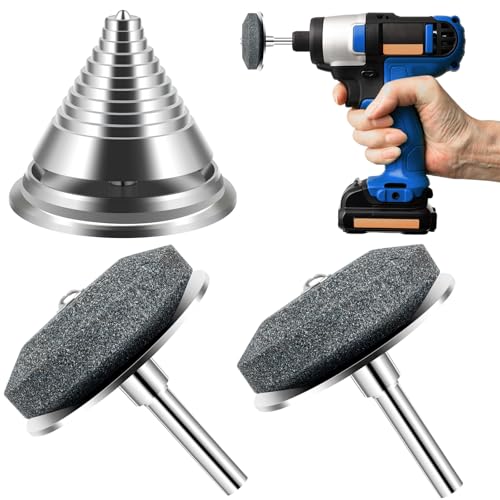
The Bneykrir 4-Piece Lawn Mower Blade Sharpener is a specialized drill attachment designed to take the headache out of seasonal lawn equipment maintenance. Instead of wrestling blades on a heavy stationary bench grinder or risking uneven hand-filing, this tool uses a double-layer corundum wheel that mounts right into your drill chuck. It is aimed squarely at homeowners, DIYers, and small-property groundskeepers who want clean, healthy grass cuts without spending shop fees on blade balancing and sharpening.
In practical workshop use, setting up the sharpener takes only a few seconds. Chuck the metal shaft into an 18V or 20V cordless drill, clamp your lawn mower blade securely into a bench vise, and bring the drill up to speed. The abrasive corundum stone cuts through mild surface oxidation, dull bevels, and small turf nicks smoothly. The plastic guide disc rests along the flat underside of the blade, keeping the abrasive angled against the factory bevel without demanding pinpoint freehand steadying.
Build quality is suited well for light to medium maintenance runs. The corundum material holds up to standard lawn tractor and push mower steel, though users should avoid leaning too heavily into the work. Applying steady, moderate passes keeps heat buildup low and avoids burning the temper on thin steel. The four-pack arrangement is practical, giving you plenty of abrasive material to work through multiple seasonal tune-ups, tiller blades, and utility yard tools.
There are a few trade-offs to keep in mind. The plastic collar can wear down if it drags forcefully against jagged metal edges, and deep gouges from rocks will still require an angle grinder with a flap disc first. That said, for routine seasonal maintenance and quick edge touch-ups, this four-piece kit provides straightforward functionality and solid value for any home garage.
Routine edge touch-ups on standard residential walk-behind and riding lawn mower blades.
Cleaning and sharpening curved garden tools, rototiller tines, sickle cutters, and axes.
Pre-season garage tune-ups where removing the blade for quick bench vise work is preferred.
Home toolkits where space or budget does not justify a dedicated stationary grinder.

Pros
- Powerful 700W motor handles tough blade restoration quickly.
- Integrated dust collection keeps metal shavings contained for a cleaner workspace.
- Includes three grit sandpapers for complete sharpening stages.
- Heavy steel base provides stability and reduces vibration during use.
Cons
- No blade holder or guide included, requiring careful hand positioning.
- Some assembly and setup may be needed before first use.
The WEWEAL 7-Inch Lawn Mower Blade Sharpener is a benchtop grinder designed specifically for restoring dull, chipped, or damaged mower blades to a sharp edge. Unlike manual files or angle grinders, this dedicated sharpener offers a more controlled and efficient process, making it a valuable tool for homeowners who prefer to maintain their own equipment. With a 700W motor, built-in dust collection, and a set of three sandpaper grits, it aims to simplify blade maintenance while keeping your workspace clean.
This sharpener is best suited for homeowners, lawn care enthusiasts, and gardeners who regularly mow their lawns and want to keep their blades cutting cleanly. It's also a practical option for budget-conscious shoppers who prefer to sharpen blades themselves rather than pay for professional sharpening or replace blades frequently. The product description highlights compatibility with a wide range of blade types, including high lift, low lift, gator, and flat designs, so it should work with most standard walk-behind mowers and some riding mower blades.
In terms of real-world performance, the 700W motor provides ample power for grinding through hardened steel. The included 60-grit disc handles coarse grinding on heavily damaged edges, while the 120-grit refines the edge, and the 320-grit produces a smooth finish. The hook-and-loop system allows quick sandpaper changes, which is convenient when moving between stages. The built-in dust collection case captures most metal shavings, reducing mess and making cleanup easier. According to the manufacturer, it captures up to 99% of particles, which is a significant advantage over open bench grinders.
Build quality appears solid with a heavy-duty steel base that adds stability and helps minimize vibration. The ceramic wheel is designed for longevity and consistent sharpening. The detachable dust box is a thoughtful feature that allows you to empty shavings without stopping work. The overall dimensions (13 x 9.3 x 10.4 inches) mean it will occupy a permanent spot on your workbench, but it's not overly large.
Ease of use is straightforward: mount the sharpener on a stable surface, attach the desired sandpaper disc, and guide the blade along the wheel. However, there is no included blade guide or holder, so you'll need to manually control the angle and pressure. This requires a steady hand, especially for beginners. Maintenance of the sharpener itself is minimal: occasional cleaning of the dust box and replacement of sandpaper discs as they wear. The product does not include a blade holder, which some users may find as a limitation.
Realistic limitations include the price point, which is higher than manual sharpening tools but lower than industrial-grade sharpeners. Also, the sharpener is not designed for very wide blades or those with complex profiles. For most standard mower blades, it should work well. Overall, if you value a clean workspace, consistent results, and have multiple blades to maintain, the WEWEAL 7-Inch Lawn Mower Blade Sharpener is a worthwhile investment for your lawn care toolkit.
The WEWEAL sharpener uses a 700W motor to drive a ceramic wheel at high speed, allowing it to grind through steel efficiently. The three included sandpaper grits (60, 120, 320) cover the full sharpening cycle: coarse grinding to reshape the edge, medium sharpening to refine it, and fine finishing to polish. The hook-and-loop attachment makes switching between grits quick, so you can move through the stages without delay. The dust collection system is a standout feature, capturing most metal particles and keeping your bench clean. For homeowners who sharpen blades seasonally, this system reduces cleanup time significantly.
The sharpener features a reinforced steel base that adds weight and stability, reducing vibration during operation. The ceramic wheel is durable and resists wear, maintaining its shape over many sharpening sessions. The housing appears to be impact-resistant, and the detachable dust box is made of sturdy plastic. Overall, the build quality seems designed for regular use in a home workshop. The product dimensions are compact enough to fit on most benches, and the base has mounting holes if you want to secure it permanently. The manufacturer provides a standard warranty, though the exact length is not specified in the product data.


Pros
- Durable all-metal build with diamond grit for long-lasting performance
- Simple attachment to any drill makes sharpening quick and convenient
- Extends the life of your mower blades, saving money over time
- Versatile tool that can sharpen various blades and garden tools
- Compact size for easy storage
Cons
- Requires a hand drill for operation, not a standalone tool
- May not be suitable for very dull or damaged blades that need professional grinding
- Limited to 100 grit, which may not provide the finest edge for all users
The UF-SHARP Diamond Lawn Mower Blade Sharpener is a handy accessory designed to help homeowners and lawn care enthusiasts keep their mower blades sharp without the hassle or expense of replacing them. This compact tool is particularly well-suited for budget-conscious shoppers, DIYers, and anyone who prefers to maintain their own lawn equipment. It also works well for suburban homeowners with medium-sized yards who want to extend the life of their blades between professional sharpenings.
In terms of performance, this sharpener attaches directly to any standard hand drill via its 5mm handle, making the sharpening process fast and straightforward. The 100-grit diamond grinding wheel provides consistent material removal, helping restore a sharp edge to dull blades. This directly improves cutting performance, resulting in cleaner grass cuts and reducing the risk of torn or ragged edges that can lead to lawn disease. Many users find that regular sharpening with this tool helps maintain a healthier lawn and better overall mowing results.
The build quality of the UF-SHARP sharpener is notable for its all-metal construction, which offers durability and reliability over plastic alternatives. The diamond grinding wheel is designed for long use and can be flipped to utilize both sides, effectively doubling its lifespan. This rugged design makes it a practical addition to any garage or shed, able to withstand repeated use without wearing down quickly.
Ease of use is a key advantage here. Simply insert the sharpener into your drill chuck, secure it, and run it along the edge of your mower blade. The process takes just a few minutes per blade, and the compact size of the tool allows for easy storage in a toolbox or drawer. Maintenance is minimal, as the grinding wheel requires no special care beyond occasional cleaning. This makes it an excellent option for first-time mower buyers or elderly users who want a simple, low-effort way to keep their blades sharp.
However, there are some realistic limitations to consider. The sharpener works best on blades that are moderately dull; severely damaged or excessively worn blades may still require professional grinding or replacement. Additionally, because it relies on a hand drill, you need to have a drill available and be comfortable using it. The 100-grit wheel provides a good balance of speed and finish, but some users may prefer a finer grit for a razor-sharp edge.
Overall, the UF-SHARP Diamond Lawn Mower Blade Sharpener offers excellent value for homeowners who want to maintain their lawn equipment without frequent blade replacements. It is a practical, cost-effective solution for suburban lawn owners, apartment dwellers with small mowers, and anyone who takes pride in keeping their yard tools in top shape. If you already own a hand drill and want to save money on blade changes, this sharpener is a smart investment for your lawn care routine.


Pros
- Brushless motor runs quieter and lasts longer than brushed alternatives reducing maintenance and downtime
- Variable speed up to 3000RPM gives you control over the sharpening process for different blade conditions
- Comes with a generous assortment of sanding discs and blade guides so you can start sharpening right out of the box
- Lifetime motor warranty adds peace of mind for long term ownership
Cons
- No included storage case or carry bag for the tool and accessories which could be a minor inconvenience for mobile users
- The 60-grit discs may wear quickly if used heavily requiring replacement sooner than expected
- Limited to lawn mower blades not suitable for other cutting tools like chainsaws or pruners
The SporGain Lawn Mower Blade Sharpener is a dedicated power tool designed specifically for sharpening mower blades. It's not a multi-purpose grinder but a focused solution for anyone who maintains a lawn mower regularly. Whether you're a homeowner who mows a quarter acre or a landscaper with a fleet of machines this sharpener aims to make blade maintenance fast and consistent.
At the heart of this tool is a brushless motor which is a real step up from traditional brushed motors you see on cheaper sharpeners. Brushless motors run cooler, quieter, and last significantly longer. You get adjustable speed up to 3000RPM so you can match the grinding speed to the blade condition. For a dull blade you might run it faster to remove material quickly while a nearly sharp blade benefits from a slower speed for a finer finish. The kit includes 10 coarse 60-grit sanding discs for rough grinding and 60 fine 180-grit discs for honing. You also get 30 and 45 degree blade guides to maintain the correct bevel angle which is critical for a clean cut and healthy grass.
Assembly is straightforward and the tool is simple to operate. It sits on a workbench or can be mounted for more stability. The compact dimensions 12.01 x 7.48 x 11.81 inches mean it won't dominate your workspace. Build quality feels solid for the price point and the lifetime motor warranty is a strong indicator of confidence in the motor's durability. That said you won't find a storage case included so if you plan to transport it between job sites you'll need to supply your own container for the discs and guides.
One realistic limitation is that this sharpener is designed exclusively for lawn mower blades. It won't handle chainsaw chains, pruners, or other cutting tools. Also while the 60-grit discs work well for initial grinding they may wear out faster than some users expect especially if you're sharpening multiple blades in a single session. Having extra discs on hand is a good idea. But for dedicated mower blade work this tool performs reliably and the adjustable speed gives you fine control that many fixed-speed sharpeners lack.
For the DIY homeowner who wants to keep their mower cutting clean without paying for professional sharpening the SporGain is a solid investment. Landscapers will appreciate the speed and consistency for maintaining multiple blades. The brushless motor and lifetime warranty support long-term value. If you need a simple, effective way to sharpen mower blades at home or in the shop this sharpener delivers without unnecessary complexity.
Color: Black
Dimensions: 12.01 x 7.48 x 11.81 inches
Product Group: Lawn and Patio
Motor Type: Brushless
Speed Range: Adjustable up to 3000 RPM
Included Discs: 10 x 60-grit sanding discs, 60 x 180-grit sanding discs
Included Guides: 30 degree and 45 degree blade guides
Warranty: Lifetime motor warranty
The SporGain Lawn Mower Blade Sharpener comes with a complete sharpening kit right in the box. You get 10 pieces of 60-grit sanding discs for the initial grinding phase and 60 pieces of 180-grit sanding discs for fine sharpening. Two blade guides are included one at 30 degrees and one at 45 degrees to help you maintain the correct sharpening angle for different mower blade types. All you need to supply is a standard power outlet and a workbench or stable surface to mount or place the tool.

Pros
- Precise angle adjustment from 15 to 45 degrees covers most blade requirements.
- Durable metal build with ball bearings ensures long-lasting stability and accuracy.
- Integrated balancer promotes even blade weight distribution, reducing vibration and extending engine life.
- Easy to set up and use with most grinders, thanks to included guide pins.
Cons
- Requires a compatible angle grinder; not a standalone sharpener.
- Initial learning curve to dial in exact angle and balance for different blade types.
- Best suited for lawn mower blades only, not for other workshop tools.
The SporGain Lawn Mower Blade Sharpener and Balancer Kit is a practical workshop accessory for anyone who takes lawn care seriously. This two-in-one set includes a sharpening jig and a balancer tool, designed to keep your mower blades in top shape. It's best suited for DIY homeowners, lawn care enthusiasts, and small-scale contractors who maintain their own equipment and want a reliable, efficient way to sharpen and balance blades without frequent trips to a shop.
In real-world use, the sharpener's adjustable 15 to 45 degree angle lets you match the factory bevel on most blades, resulting in a clean, precise edge. The metal jig with ball bearings holds the blade securely while you run a grinder across it, and the enlarged handle gives you a firm grip. After sharpening, the zinc alloy balancer helps you check for even weight distribution, which cuts down on vibration and engine wear. This process is straightforward and makes a noticeable difference in how smoothly the mower runs.
Build quality is solid for the price. The frame is made from thick metal and high-density aluminum alloy, with bushings that keep wobble to a minimum. The included four guide pins fit most common angle grinders, so you can usually get started without hunting for adapters. The tool-free setup is a nice touch, letting you switch between sharpening and balancing quickly. However, keep in mind that this kit is specialized for lawn mower blades. If you sharpen other workshop tools, you'll need a different setup.
One realistic drawback is that the sharpener requires some practice to get the angle just right, especially if you're new to blade maintenance. Also, you need a grinder that's compatible with the guide pins, though most standard models work. The balancer is simple to use but relies on a level surface for accurate readings. These are minor issues for the value this kit provides.
Overall, the SporGain Lawn Mower Blade Sharpener and Balancer Kit is a smart buy for DIYers and homeowners who want to extend the life of their mower blades and improve cutting performance. It saves you money on professional sharpening and gives you the satisfaction of well-maintained equipment. If you maintain your own lawn gear and have an angle grinder, this kit is a worthwhile addition to your workshop.
Color: Dark
Dimensions: 13.5 x 9 x 3.4 inches
Product Group: Lawn & Patio
Material: High-density aluminum alloy sharpener, zinc alloy balancer, thick metal frame with ball bearings
Adjustment Range: 15-45 degrees
Included Guide Pins: 4 different sizes for compatibility with most angle grinders
Tool-Free Operation: Yes

Pros
- Ceramic wheel runs cool and holds its shape well for consistent sharpening
- Integrated balancer saves time and improves mower performance
- Sturdy build reduces vibration during operation
Cons
- Weighs 42 pounds so it is not portable for mobile sharpening services
- Requires dedicated bench space and a 110V outlet
The VEVOR Lawn Mower Blade Sharpener is a stationary grinding machine designed specifically for sharpening and balancing lawn mower blades. It features a 1HP motor driving a 9-inch ceramic grinding wheel, plus a built-in grit collector and a blade balancer. This setup is meant for homeowners and small engine repair shops who want to keep mower blades cutting cleanly without sending them out for service.
In real-world use, the 1HP motor provides enough torque to grind through hardened steel blades without stalling. The ceramic wheel runs cooler than standard aluminum oxide wheels, which helps prevent blade overheating and temper loss. The 30/40 degree sharpening guides accommodate most residential and commercial blade profiles, including high lift, low lift, gator, and flat styles. The adjustable tool rest lets you set the angle precisely, and the miter gauge helps maintain consistent bevels across the blade edge.
After sharpening, the included balancer is a practical addition. You mount the blade on the cone and see which side drops. Grind a little more off the heavy side until it balances. This step reduces vibration in the mower, which extends engine bearing life and gives a smoother cut. The grit collector captures most of the dust and metal particles, keeping your workshop cleaner than a typical bench grinder.
Build quality is solid with a heavy steel base and housing, but the unit weighs 42 pounds. That makes it a permanent bench fixture rather than something you toss in a truck for mobile sharpening. It also requires a standard 110V outlet, so it fits most home garages. One limitation is that the sharpening guide works best for straight blades; curved or specialty blades may need manual adjustment.
Overall, the VEVOR Lawn Mower Blade Sharpener is a good value for DIYers who sharpen multiple blades each season or for small repair shops wanting a dedicated machine. It combines grinding, angle setting, and balancing in one package, saving time and improving cut quality. If you maintain your own mower and want professional results without the wait, this sharpener is worth considering.
Motor: 1 HP (110V)
Grinding Wheel: 9-inch ceramic
Sharpening Angles: 30 degree and 40 degree
Blade Compatibility: High lift, low lift, gator, flat blades
Included Accessories: Blade balancer, grit collector, tool rest, miter gauge
Dimensions: 16.93 x 12.4 x 10.43 inches
Weight: 42.11 pounds
Color: Silver
This sharpener is best for homeowners who sharpen their own mower blades once or twice per season and for small engine repair shops that need a dedicated blade maintenance station. It handles standard residential blades up to about 22 inches long. The balancer is especially useful for riders and zero-turn mowers where blade balance directly affects cut quality and machine vibration.
Sharpening Mower Blades with a Grinder: Technical Principles and Procedures
Restoring a clean cutting edge with a grinding tool requires balancing metal removal rates against thermal control and geometric consistency. Spinning at thousands of revolutions per minute, grinding wheels reshape nicked and rounded cutting edges far faster than manual files. But aggressive grinding without proper angular alignment or balance verification quickly ruins blade temper and stresses mower spindle assemblies. Understanding how to set up your work area, secure the blade, match the original bevel, and verify balance turns an intimidating maintenance chore into a repeatable, efficient workshop routine.
Essential Safety Protocols and Deck Disassembly Safeguards
Safety preparation begins before unfastening a single mounting bolt from your mower deck. Always disconnect the spark plug boot on gas mowers or remove the safety key and battery pack on cordless models to prevent accidental engine engagement. Securing the blade with a heavy-duty wooden block clamped against the deck prevents rotation while you loosen the retaining bolt with a breaker bar or impact wrench. Heavy leather gloves protect your hands from unexpected blade slips against burred or jagged metal edges during removal.
Workshop personal protective equipment is equally mandatory once motorized grinding begins. High-speed grinding generates hot metal sparks, ceramic debris, and abrasive dust that pose serious hazards to eyesight and respiratory health. Safety goggles paired with a full-face shield provide essential impact defense against flying metal shavings and fractured wheel material. A properly fitted particulate respirator and hearing protection round out the personal safeguards needed when operating high-velocity grinding equipment.
Choosing Between Angle Grinders, Bench Grinders, and Drill Attachments
Homeowners and commercial property managers utilize several distinct categories of grinding tools depending on blade volume and available workshop space. Handheld angle grinders equipped with dedicated sharpening fixtures, such as the All American Sharpener 5002 kit, offer exceptional portability and rigid angle control. Clamping the blade into a dedicated fixture ensures the grinding wheel moves smoothly across the cutting face without wobbling off pitch. This handheld approach appeals to users who already own an angle grinder and want precision without dedicating bench space to a single-purpose tool.
Stationary benchtop machines offer another level of stability, power, and metal-containment capability. Units like the WEWEAL 7-inch sharpener or the 1HP VEVOR machine provide fixed grinding platens, integrated grit collectors, and high-wattage electric motors. These dedicated machines feature factory-calibrated guide rests that support the blade at common bevel angles like 30 or 40 degrees. Heavy steel bases minimize vibration, allowing you to pass curved mulching blades across abrasive ceramic wheels with continuous tactile feedback.
Portable rotary stones designed for standard power drills represent an accessible option for quick touch-ups between major service intervals. Systems from brands like Bneykrir, UF-SHARP, and jtfrkope use corundum or diamond-coated wheels mounted on 5mm shanks that chuck directly into hand drills. These compact stones feature molded plastic or metal guide rings intended to rest against the flat backside of the blade while the stone grinds the angled bevel. While rotary drill attachments lack the rapid material removal capacity of a 700W motor, they serve well for smoothing out minor rolling edges without dismounting extensive grinding rigs.
Selecting Proper Abrasive Discs and Grinding Wheel Compounds
Matching the abrasive material to mower blade steel prevents excessive heat buildup and unwanted surface gouging. Ceramic grinding wheels and alumina ceramic corundum discs deliver aggressive stock removal without glazing over quickly. Coarse grits around 60 grit work efficiently for roughing out deep gouges caused by hidden yard rocks or hard roots. Transitioning to medium grits, such as 100 or 120 grit, refines the cutting face and removes deep grinding ridges that can cause premature stress cracking.
Abrasive discs mounted via hook-and-loop backings on machines like the SporGain brushless sharpener allow quick transitions between shaping and fine finishing stages. Starting with 60-grit abrasives quickly restores the cutting angle on dull steel without requiring prolonged dwell time. Following up with 180 or 320 grit smooths the newly cut bevel and preps the metal for long-term cutting duty. Diamond wheels, such as those featured in UF-SHARP drill attachments, maintain their outer geometry throughout their service life rather than wearing down into concave profiles.
Establishing and Maintaining the Correct Factory Cutting Bevel
Preserving the manufacturer-specified bevel angle remains the most important geometric factor in blade sharpening. Most rotary mower blades feature a cutting bevel angled between 30 and 35 degrees, while commercial and heavy-duty mulching blades often specify a 40 or 45-degree angle. Grinding an angle that is too steep produces a blunt wedge that batters grass rather than cutting cleanly. Conversely, grinding an edge that is too shallow creates a delicate razor bevel that rolls over and chips upon contacting the first twig.
Jigs featuring adjustable guide pins and sliding arms take the guesswork out of maintaining these angles across the entire length of the cutting edge. Tooling like the SporGain jig provides indexed adjustments from 15 to 45 degrees, allowing users to match the exact profile of their original equipment. Aligning the grinder rest parallel to the existing factory bevel ensures uniform metal removal from the inner shoulder to the outer tip. Consistent angle control also preserves the aerodynamic sail of the blade, which is critical for generating lift inside the mower deck.
Specialty cutting profiles, such as those found on electric mulching lawn mowers, require careful attention to curved transitions and stepped cutting planes. Mulching blades frequently incorporate undulating edges or secondary cutting teeth designed to recirculate clippings within the chamber. When grinding these contour blades, adjustable tool rests or hand-guided attachments allow you to follow individual curved sections without flattening out the built-in geometry. Attempting to force a straight-line grind across a curved mulching blade compromises its ability to finely chop clippings.
Thermal Management and Preventing Steel Annealing During Grinding
Excessive friction during grinding generates intense localized heat that permanently damages the metallurgical structure of lawn mower blade steel. When the cutting edge turns blue, purple, or deep straw yellow, the steel has exceeded its tempering threshold and suffered annealing. Annealed steel becomes soft and loses its hardness, causing the cutting edge to dull rapidly after only a few minutes of mowing. Managing heat requires light tool pressure, continuous motion, and allowing the steel adequate time to dissipate thermal energy.
Using variable-speed grinders or machines equipped with brushless motors allows operators to dial down rotational speed when touching delicate tips. The SporGain sharpener features adjustable speed settings up to 3000 RPM, giving you precise control over friction and surface heat generation. Keeping a water quench container near your workstation lets you periodically dip the blade to cool the steel if it becomes warm to the touch. Discarding severely burned cutting edges is often necessary because no amount of filing can restore temper to heat-damaged metal without specialized heat treatment.
Step-by-Step Grinding Execution on Straight and High-Lift Profiles
Executing a proper grind begins with securing the blade firmly in a bench vise or mounting it into a dedicated sharpening guide fixture. Align the grinding wheel or abrasive disc so it lies flat against the existing bevel without tilting forward into the cutting flat. Activate the grinder and bring it up to operating speed before gently introducing the wheel to the heel of the cutting edge. Move the grinder in one fluid, continuous stroke along the bevel toward the outer tip using light, even pressure.
Never let the grinder linger in one spot, as stationary grinding creates localized hot spots and uneven hollows in the steel. Lift the grinder away from the blade at the end of each pass and return to the starting position rather than scrubbing back and forth. Repeat these unidirectional strokes until the original angle is re-established and all rock dings and dull spots disappear. Count your grinding passes on the first cutting edge so you can apply approximately the same number of passes to the opposite side of the blade.
High-lift blades demand special care along the transition zone between the flat cutting edge and the upward-sweeping rear sail. The lift wing generates the airflow necessary to pull grass upright, making it vital to avoid grinding away metal from the curved rear surface. Confine your grinding strictly to the leading cutting edge and its specified length, which typically extends 3 to 4 inches inward from the outer tip. Grinding further inward toward the center mounting hole removes structural steel unnecessarily without contributing to cutting efficiency.
Backside Deburring and the Truth About Razor-Sharp Edges
Sharpening the primary bevel naturally pushes a thin ridge of displaced steel, known as a wire edge or burr, onto the flat backside of the blade. Leaving this burr intact causes the edge to fracture under the stress of high-speed rotation, leaving behind a prematurely dull surface. To remove the burr properly, flip the blade over and lay a fine abrasive stone or flat bastard file completely flat against the unground bottom surface. Make two or three gentle strokes along the edge to shear off the burr without grinding an angle or bevel onto the bottom of the blade.
Many homeowners mistakenly believe a mower blade should be sharpened to a razor-like edge similar to a kitchen carving knife. A razor-sharp edge on outdoor power equipment is actually counterproductive because extremely thin steel rolls over, folds, and fractures upon striking the first dense grass stem or soil mound. Lawn mower manufacturers generally recommend leaving a flat edge thickness roughly equivalent to the edge of a butter knife, approximately one-thirty-second of an inch. This robust edge provides clean shearing action against plant cellulose while retaining the structural mass needed to resist chipping.
Static Balancing Verification to Protect Spindle Bearings
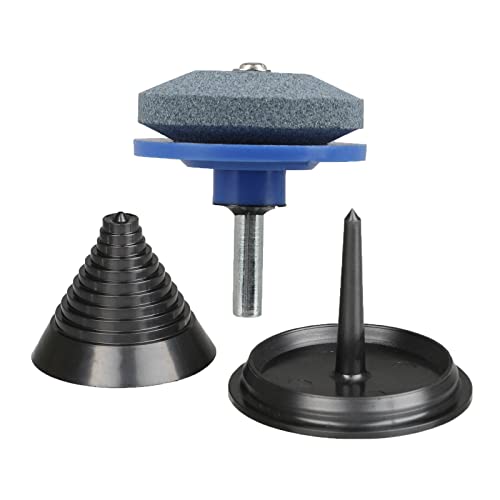
Balancing is a non-negotiable final step after any grinding operation because uneven metal removal creates rotational eccentricity. An out-of-balance blade spinning at over 3,000 RPM exerts tremendous radial forces that quickly destroy spindle bearings, crack aluminum decks, and cause severe operator fatigue. Tools like the universal zinc alloy cone balancers included in kits from Anglekai, SporGain, and jtfrkope provide an immediate visual check of weight distribution. Place the center hole of your cleaned blade onto the stepped cone and observe whether the blade remains level or dips toward one end.
If one end dips downward, that side is heavier and requires additional metal removal to restore dynamic equilibrium. Never remove weight from the cutting edge you just shaped; instead, grind metal from the outer trailing edge or rear sail of the heavy side. Continue checking the blade on the balancing cone after every brief grinding touch-up until the blade rests horizontally without listing. High-precision wall-mounted magnetic balancers provide even finer sensitivity for commercial operators who run wide decks on mowers built for uneven terrain where spindle loads are already elevated.
Verifying that the center mounting hole remains circular and free of distortion is equally vital to proper balance. Round center holes, as well as star-shaped, five-point, or six-point patterns, must seat squarely on the spindle shaft without lateral play. If metal shavings or dried grass clippings coat the center hub area, scrape them clean before placing the blade on your balancing fixture. Accurate static balancing depends entirely on true seating against the mounting reference surface.
Diagnosing Irreparable Blade Damage Versus Re-Grindable Wear
Not every worn mower blade can or should be salvaged with a grinding wheel. Routine dulling, small surface nicks, and minor edge rounding are easily repaired through systematic grinding and deburring. However, blades with deep cracks, structural bends, or severe gouges extending more than halfway through the cutting face must be retired immediately. Attempting to grind out deep fractures removes excessive structural material, creating weak points that can catastrophically snap under centrifugal force during operation.
Inspect the lift wings and the steel surrounding the center mounting hole during every maintenance cycle. High-velocity sand and abrasive soil gradually erode the upturned rear sail of the blade until the metal becomes paper-thin. When the trailing edge develops holes or shows significant thinning compared to the central body of the blade, replace the unit regardless of cutting edge sharpness. Operating a mower with eroded or structurally compromised blades creates severe safety risks that no amount of grinding can resolve.
Reinstallation Protocols and Fastener Torque Verification
Once your blade is sharpened, deburred, and statically balanced, proper reinstallation onto the mower spindle completes the maintenance cycle. Ensure the blade is oriented correctly, with the flat cutting surface facing the turf and the upturned lift wings pointing toward the mower deck. Installing a blade upside down is a surprisingly frequent mistake that flattens grass rather than lifting and cutting it. Inspect your mounting hardware, including heavy concave washers and spindle bolts, checking for stripped threads or crushed flanges before assembly.
Tightening spindle bolts requires an accurate torque wrench rather than guesswork with an open-end wrench. Lawn mower manufacturers specify exact bolt torque ratings, typically ranging between 35 and 60 foot-pounds depending on shaft diameter and thread pitch. Under-tightening allows the blade to slip or wobble on the spindle adapter, which rapidly rounds off star patterns and causes severe vibration. Over-tightening can stretch the bolt shank or crack the spindle housing, leading to dangerous fastener failure during heavy cutting conditions.
Systematic blade maintenance using proper grinding fixtures and balancing protocols preserves clean cutting performance and protects your outdoor power equipment for years to come. By matching the manufacturer bevel angle, avoiding thermal damage, and confirming static balance before reinstallation, you ensure every pass across your turf is clean, efficient, and safe. Taking the time to execute each phase with care transforms blade sharpening into a reliable workshop procedure that pays dividends in lawn health and machinery longevity.


Write Your Review
No reviews yet. Be the first to share your experience!