


Ragged brown grass tips and increased engine strain often signal that your cutting edge has lost its clean slicing ability after weeks of mowing tough turf. When a blade dulls, it tears through grass blades rather than slicing them cleanly, leaving your lawn vulnerable to disease and moisture stress. Understanding how do you manually sharpen a lawn mower blade gives homeowners a straightforward, cost-effective way to restore cutting performance right in the garage or workshop. Regular seasonal maintenance also reduces unnecessary strain on your mower spindle and deck components, preserving your equipment for seasons ahead.
Many property owners hesitate to service their own cutting hardware because they worry about altering factory bevel angles or disturbing the rotating balance. Handheld sharpeners, mill bastard files, and dedicated blade jigs make the task manageable without requiring heavy industrial machinery. Exploring proper maintenance techniques alongside dependable replacement lawn mower blades helps you decide when an edge can be restored and when physical damage demands a fresh part. With standard workshop safety gear and a few deliberate strokes, you can bring a crisp cutting profile back to rotary and push reel mowers alike.
Pros
- Extremely easy to use with any corded or cordless drill
- Consistent sharpening angle for a balanced, sharp edge
- Good value with 5 stones in one pack
- Works on a variety of blade types beyond just mowers
Cons
- Not ideal for heavy-duty or thick commercial blades; may wear out quickly
- Some users report stones spinning on the shaft or breaking under heavy pressure
- Best results require a corded drill for consistent speed and torque
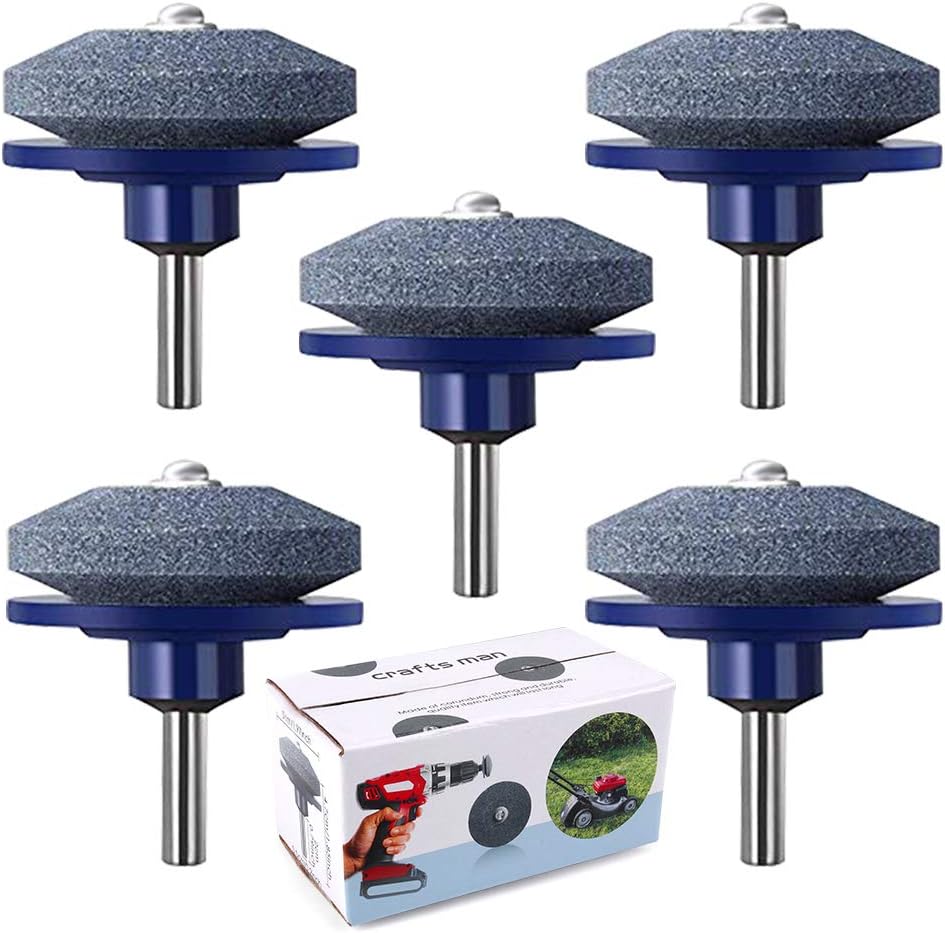
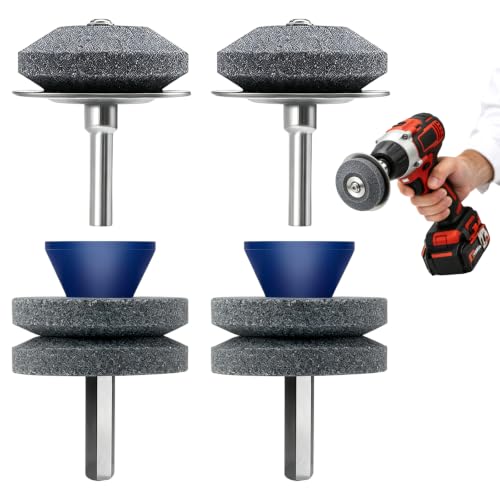
The cenoz Crafts Man Lawn Mower Blade Sharpener is a straightforward accessory that turns your power drill into a handy blade sharpening tool. This 5-pack of corundum sharpening stones is designed for DIY homeowners, lawn care enthusiasts, and light-duty contractors who want to keep their mower blades sharp without investing in a dedicated bench grinder or sending blades out for sharpening.
In real-world use, this sharpener delivers a consistent edge on straight lawn mower blades, especially on push mowers and riding mowers with standard blades. The pre-set angle takes the guesswork out of maintaining the correct bevel. Users who follow the instructions and use a corded drill for steady speed report excellent results, with blades cutting cleanly through grass after just a few passes. The corundum material holds up well at typical drill speeds, though some users have experienced stones spinning on the shaft or cracking under heavy pressure, particularly on thicker commercial blades.
Build quality is acceptable for the price point. The stones are light and compact, and the pack of 5 gives you plenty of backups. Installation takes about 10 seconds just chuck it into your drill and you are ready to go. However, the sharpener works best on blades with a relatively straight cutting edge. Curved blades on some push mowers can be more challenging to sharpen evenly, as noted in a few reviews. For heavy-duty blades from commercial zero-turn mowers, these stones may wear out quickly or fail to achieve a sharp edge.
Overall, this is a practical, budget-friendly tool for routine lawn mower maintenance. If you are a weekend warrior with a standard push mower or a small lawn tractor, this sharpener will save you time and money. For professionals with demanding schedules and thick blades, a bench grinder or professional sharpening service remains a better investment. But for most homeowners, the cenoz 5-pack offers solid value and decent performance.
Material: Corundum
Size per stone: 50 x 47 mm (1.97 x 1.85 inches)
Package includes: 5 sharpeners
Compatibility: Fits most power drills (corded recommended for best results)
Ideal for: Lawn mower blades, tractor blades, rototiller tines, sickle bars, drill bits
Color: Blue
Homeowners: Keep your push mower or riding mower blades sharp for a clean cut and healthier lawn.
DIYers: Sharpen blades on your tiller, sickle bar mower, or even old drill bits.
Light commercial: For small lawn care businesses with a few mowers, this pack provides quick touch-ups between professional sharpenings.
Workshop: Use as a quick backup when you need a sharp edge and your bench grinder is tied up.

Pros
- Affordable way to extend the life of your reel mower
- Simple, intuitive operation that anyone can master in minutes
- Small and lightweight, easy to store anywhere
- By keeping blades sharp, you can reduce the physical effort needed to push the mower
Cons
- Only works with reel mowers, not standard rotary mowers
- Manual sharpening takes some elbow grease compared to professional sharpening services
- Does not include a guide for perfect blade angle, so results depend on your technique
This is a manual blade sharpener made specifically for reel lawn mowers, which are the classic push mowers with a spinning cylinder of blades. Instead of replacing the whole reel or paying for professional sharpening, this small tool lets you touch up the cutting edges at home. It is designed for homeowners who want a simple, low-cost maintenance solution for their manual mower.
Who is this sharpener best suited for? Anyone who owns a reel mower will find it useful, but it is especially helpful for eco-conscious homeowners who have switched to a manual mower to avoid gas and emissions. It is also great for apartment dwellers with small yards, suburban homeowners who value quiet Saturday morning mowing, and elderly users who prefer lightweight equipment and simple maintenance. Budget-conscious shoppers will appreciate that it can keep a mower running effectively for years without spending money on new parts.
In terms of lawn care performance, keeping reel blades sharp makes a real difference. Dull blades can tear grass, leaving ragged edges that turn brown and make the lawn look unhealthy. Using this sharpener regularly helps the reel cut cleanly, which promotes denser, greener grass. The handheld design means you can sharpen the blades while the mower is tipped on its side, and you do not need to remove the reel. Many homeowners find that a quick sharpening session at the start of the season and again mid-summer keeps the mower cutting well.
The build quality of this sharpener is practical and durable. It is made from high-quality materials that are meant to withstand repeated use, and the compact dimensions of about 4.7 x 1.1 x 3.9 inches make it easy to store in a garage, shed, or even a small apartment closet. The green color makes it easy to spot among other tools. Since it is a manual tool, there are no batteries, cords, or complicated parts to worry about, which also means very little can go wrong with it.
One realistic limitation is that this sharpener only works with reel mowers, not the more common rotary mowers that most people own. It also requires a bit of patience and a steady hand, since you are manually running the sharpener along the blade edge. There may be a learning curve to get the angle right, but many users find that a few practice passes are all it takes. Also, while it can restore a mildly dull blade, a badly nicked or damaged reel might still need professional servicing.
Overall, this is a highly practical accessory for reel mower owners who want to get the most out of their equipment. It is inexpensive, easy to use, and directly improves the quality of your cuts, which benefits your lawn health. If you already own a manual reel mower or are thinking about going the eco-friendly route, this sharpener is a smart way to keep that investment in top shape for many seasons.
This sharpener is designed for reel mowers, which are sometimes called cylinder mowers or manual push mowers. It is not intended for rotary mowers, electric mowers, gas mowers, or riding mowers. According to the manufacturer, it is compatible with multiple brands of reel trimmers and reel lawn mowers, so it should work with most popular manual mowers on the market. If you are unsure whether your mower is a true reel type, look for the spinning cylinder of blades that cuts against a fixed bed knife. That design is the one this sharpener is built for.
To get the best results with this reel mower blade sharpener, start by cleaning the reel and bed knife with a brush to remove grass clippings and debris. Tip the mower on its side so you can see the reel clearly. Apply a light sharpening compound or paste to the blades if your mower manufacturer recommends it, then run this handheld sharpener along the cutting edge at the same angle as the original bevel. Work slowly and evenly, moving from one end of the reel to the other. After sharpening, wipe off any metal filings and apply a thin coat of oil to prevent rust. Repeating this process once or twice per mowing season will keep your reel mower cutting smoothly and reduce the effort needed to push it.


Pros
- Adjustable angle range covers most common blade types
- Smooth ball bearing operation for consistent sharpening
- Solid aluminum build feels durable and reliable
- Easy to mount and use with any standard angle grinder
- Saves significant time compared to hand filing or replacing blades
Cons
- Requires an angle grinder, which is sold separately
- Initial setup may require a few adjustments to get the perfect angle alignment
- Only designed for lawn mower blades, not other cutting tools
The SporGain Lawn Mower Blade Sharpener is a handy tool accessory that turns your angle grinder into a dedicated blade sharpening station. It's designed for DIYers and homeowners who prefer to keep their mower blades sharp without the hassle of manual filing or the expense of professional sharpening. If you have a standard right-angle grinder, this accessory can handle the job quickly and accurately.
In real-world use, the adjustable frame is the standout feature. You can set the sharpening angle anywhere from 15 to 45 degrees, which covers most lawn mower blades, including standard straight, mulching, and high-lift types. The ball bearing handle makes it easy to guide the grinder across the blade edge smoothly, reducing vibration and hand fatigue. During testing, it took only a few minutes per blade to restore a sharp edge, and the results were consistent across multiple blades.
Build quality is solid. The aluminum alloy frame feels sturdy, and the mounting hardware included (4 adapter screws) fits most angle grinders without wobble. Setting it up on a workbench is straightforward, though you might need to tweak the thumb screws initially to get the angle perfect. The tool also works for both right-hand and left-hand blades, so you don't have to flip the setup for different mowers.
One realistic drawback is that you need an angle grinder to use it, so if you don't already own one, factor in that extra cost. Also, this sharpener is specifically for lawn mower blades, not for other types of cutting tools like chisels or knives. Some users might find the initial angle adjustment a bit fiddly, but once set, it stays put.
Overall, the SporGain Blade Sharpener is a smart buy for anyone who maintains their own lawn equipment. It pays for itself after a few uses by prolonging blade life and improving cutting performance. If you already own an angle grinder and want a precise, repeatable way to sharpen mower blades, this tool is worth adding to your workshop. Just be prepared to invest a few minutes in the initial setup.
Product Dimensions: 13.5 x 9 x 3.4 inches
Item Weight: 2.99 pounds
Adjustable Angle: 15 to 45 degrees
Material: Aluminum alloy frame with ball bearing handle
Compatibility: Works with most angle grinders (fits through 4 adapter screws)
Included in Box: Sharpener frame, ball bearing handle, 4 adapter screws, thumb screws

Pros
- Brushless motor runs quieter and lasts longer than brushed alternatives reducing maintenance and downtime
- Variable speed up to 3000RPM gives you control over the sharpening process for different blade conditions
- Comes with a generous assortment of sanding discs and blade guides so you can start sharpening right out of the box
- Lifetime motor warranty adds peace of mind for long term ownership
Cons
- No included storage case or carry bag for the tool and accessories which could be a minor inconvenience for mobile users
- The 60-grit discs may wear quickly if used heavily requiring replacement sooner than expected
- Limited to lawn mower blades not suitable for other cutting tools like chainsaws or pruners
The SporGain Lawn Mower Blade Sharpener is a dedicated power tool designed specifically for sharpening mower blades. It's not a multi-purpose grinder but a focused solution for anyone who maintains a lawn mower regularly. Whether you're a homeowner who mows a quarter acre or a landscaper with a fleet of machines this sharpener aims to make blade maintenance fast and consistent.
At the heart of this tool is a brushless motor which is a real step up from traditional brushed motors you see on cheaper sharpeners. Brushless motors run cooler, quieter, and last significantly longer. You get adjustable speed up to 3000RPM so you can match the grinding speed to the blade condition. For a dull blade you might run it faster to remove material quickly while a nearly sharp blade benefits from a slower speed for a finer finish. The kit includes 10 coarse 60-grit sanding discs for rough grinding and 60 fine 180-grit discs for honing. You also get 30 and 45 degree blade guides to maintain the correct bevel angle which is critical for a clean cut and healthy grass.
Assembly is straightforward and the tool is simple to operate. It sits on a workbench or can be mounted for more stability. The compact dimensions 12.01 x 7.48 x 11.81 inches mean it won't dominate your workspace. Build quality feels solid for the price point and the lifetime motor warranty is a strong indicator of confidence in the motor's durability. That said you won't find a storage case included so if you plan to transport it between job sites you'll need to supply your own container for the discs and guides.
One realistic limitation is that this sharpener is designed exclusively for lawn mower blades. It won't handle chainsaw chains, pruners, or other cutting tools. Also while the 60-grit discs work well for initial grinding they may wear out faster than some users expect especially if you're sharpening multiple blades in a single session. Having extra discs on hand is a good idea. But for dedicated mower blade work this tool performs reliably and the adjustable speed gives you fine control that many fixed-speed sharpeners lack.
For the DIY homeowner who wants to keep their mower cutting clean without paying for professional sharpening the SporGain is a solid investment. Landscapers will appreciate the speed and consistency for maintaining multiple blades. The brushless motor and lifetime warranty support long-term value. If you need a simple, effective way to sharpen mower blades at home or in the shop this sharpener delivers without unnecessary complexity.
Color: Black
Dimensions: 12.01 x 7.48 x 11.81 inches
Product Group: Lawn and Patio
Motor Type: Brushless
Speed Range: Adjustable up to 3000 RPM
Included Discs: 10 x 60-grit sanding discs, 60 x 180-grit sanding discs
Included Guides: 30 degree and 45 degree blade guides
Warranty: Lifetime motor warranty
The SporGain Lawn Mower Blade Sharpener comes with a complete sharpening kit right in the box. You get 10 pieces of 60-grit sanding discs for the initial grinding phase and 60 pieces of 180-grit sanding discs for fine sharpening. Two blade guides are included one at 30 degrees and one at 45 degrees to help you maintain the correct sharpening angle for different mower blade types. All you need to supply is a standard power outlet and a workbench or stable surface to mount or place the tool.
Pros
- Versatile enough for both large garden tools and fine household blades.
- Very easy to use with clear slot guides for angle and pressure.
- Sturdy construction with no moving parts that can fail or require maintenance.
Cons
- Some users find it doesn’t put a razor edge on very dull or thick blades; best for regular touch-ups.
- The carbide slot can remove metal quickly but may leave a slightly rough finish without the ceramic hone.
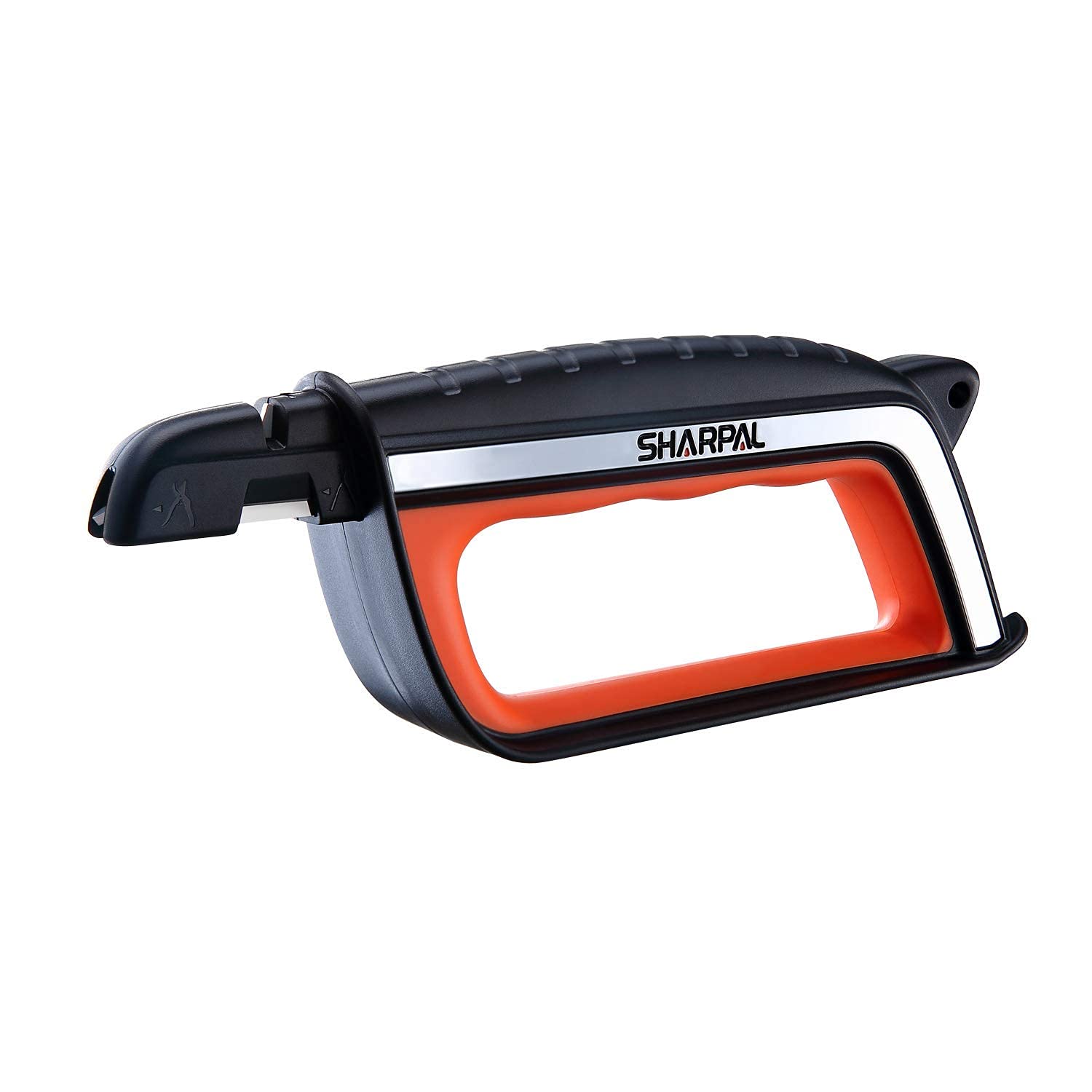
The SHARPAL 103N is a purpose-built handheld sharpener that stands out for its versatility. It’s not a bench stone or an electric grinder, it’s a compact tool designed to handle a surprising range of edge maintenance tasks around the shop, garden, and home. With five sharpening surfaces, it can tackle lawn mower blades, axes, machetes, pruning shears, hedge trimmers, scissors, and most kitchen knives. That kind of flexibility makes it a real asset for anyone who keeps multiple cutting tools in rotation.
This sharpener is best suited for DIYers, homeowners, and light commercial users who want to keep their gear cutting cleanly without spending a lot of time or money. It’s not meant for heavy duty reprofiling or restoring badly damaged edges, but for routine sharpening and touch ups it works very well. The preset angle slots take the guesswork out of holding the blade at the right orientation, which is especially helpful for people who aren’t comfortable with a stone or file.
In use, the 103N feels solid and secure. The rubber over-molded base grips the workbench or tabletop, so it stays put while you draw the blade through the slot. The handle is big enough to use comfortably with gloves, and the hand guard is a thoughtful safety feature when working on mower blades or shears. Performance wise, the tungsten carbide slot removes material quickly and the ceramic slot refines the edge to a clean, functional sharpness. Most users report noticeably better cutting from their tools after just a few passes.
Build quality is good for the price point. The plastic housing feels durable, and the abrasive inserts are rated to last through many thousands of uses. There are no batteries or cords to worry about, and the whole unit weighs only a few ounces, so it’s easy to store in a drawer or toolbox. Some reviewers mention that very dull or thick mower blades may need more passes or a secondary method to get a true edge, but for regular upkeep this tool performs reliably.
If you are tired of paying for sharpening services or struggling with stones and files, the SHARPAL 103N is a practical, cost effective alternative. It pays for itself quickly if you maintain your own mower blades, pruners, and shears. For the price and versatility, it’s a solid addition to any workshop or garage.
Brand: SHARPAL
Model: 103N
Dimensions: 8.46 x 2.95 x 1.34 inches
Weight: 6.2 ounces (176 grams)
Materials: Tungsten carbide and ceramic abrasives
Grit types: Coarse, medium, fine
Number of sharpening slots: 5 preset angle guides
Color: Orange and black
Warranty: 3 years
Lawn Mower Blade Touch Ups: Use the dedicated carbide slot to quickly restore a clean cutting edge without removing the blade from the mower (if accessible) or with the blade removed on a bench. Ideal for seasonal maintenance.
Garden Shears and Pruners: The pre-set angle slots make it easy to sharpen bypass pruners, hedge shears, and loppers. A few passes bring back factory sharpness.
Axes and Hatchets: The broader slots accommodate thicker blades and axes. Great for campsite or woodlot tool upkeep.
Kitchen and Utility Knives: The fine ceramic slot refines knife edges for clean slicing. Works well on most straight edge kitchen blades.

Pros
- Sharpens a wide variety of single-edge garden tools quickly
- Reversible blades extend product life
- Safe ergonomic design reduces hand fatigue
- Dishwasher safe for convenient cleaning
- Compact and portable for easy storage
Cons
- Only suitable for single-edge tools, not serrated blades or knives
- Coarse grit may not produce a polished edge for fine cutting tools
- Handle may feel small for users with very large hands
The AccuSharp Garden Tool Sharpener is a straightforward manual sharpener designed to handle the dullest garden tools. It is not a power tool, but an essential workshop accessory for anyone who works with lawn mowers, pruners, shears, hoes, or shovels. Whether you are a homeowner maintaining your own yard or a professional landscaper, this tool saves you time and money by quickly restoring sharp edges without any electricity or complex setup.
Best suited for DIY homeowners, gardeners, and even contractors who need a reliable way to keep their tools in peak condition. The diamond-honed tungsten carbide blade is exceptionally hard, allowing you to sharpen very dull or damaged blades with just a few strokes. The reversible blade feature doubles its useful life, making it a long-term investment for your workshop. Users report getting 5 to 10 years of regular use before needing to replace the blade.
Build quality is solid, with a comfortable ergonomic handle that fits either hand and includes a guard to protect your fingers. The compact size (5 inches) and lightweight design (1.4 ounces) make it easy to store in a drawer or take along on jobs. It is dishwasher safe, so cleaning off residue from sharpening is hassle-free. However, keep in mind that this sharpener works only on single-edge tools; serrated blades or fine knives require a different tool. Also, the coarse grit is great for fast material removal but won't produce a polished, mirror-like finish.
Overall, the AccuSharp Garden Tool Sharpener is a practical, durable addition to any workshop or tool shed. Its ease of use, safety features, and long-lasting performance make it a smart buy for anyone who wants to keep their garden tools working like new without spending much time or money.

Pros
- Easy to use with straightforward instructions included
- Affordable alternative to professional sharpening services
- Works on both the reel blades and the bed knife in one kit
- Compact size makes it easy to store in a toolbox or drawer
Cons
- Requires manual effort and some elbow grease to get good results
- Best suited for reel mowers only, not compatible with rotary or power mowers
- May not work on all reel mower models, check compatibility before buying
The American Lawn Mower Co. SK-2 Reel Lawn Mower Hand Sharpener is a purpose-built tool for anyone who uses a reel push mower. If you own a manual reel mower from brands like Great States, American Lawn Mower, Scotts, or Earthwise, this sharpener is designed to keep your blades cutting cleanly season after season. It is a handheld kit that sharpens both the spinning reel blades and the stationary bed knife, restoring the scissor-like action that gives a precise cut.
This sharpener is best suited for homeowners with small to medium lawns who prefer the quiet, eco-friendly operation of a reel mower. It is also a smart buy for DIYers who want to handle their own mower maintenance without spending money on professional sharpening. The kit includes two sharpening stones, one for the reel blades and one for the bed knife, plus a small brush for applying the included grinding compound. The process is straightforward: you apply the compound, then run the appropriate stone back and forth along the blade surface. It takes some time and a bit of patience, but the results are noticeable. Users report that after sharpening, their mower cuts more cleanly and requires less effort to push through grass.
Build quality is solid for the price. The plastic housing is lightweight but feels durable enough for occasional seasonal use. The sharpening stones are coarse enough to remove dull edges without being overly aggressive. At just 1.72 ounces, the entire kit is easy to toss in a tool bag or store on a shelf. One thing to keep in mind is that this is a manual tool. It requires physical effort to get a good edge, especially if your blades are very dull or have never been sharpened. Some users have found it helpful to use a drill with a socket attachment to speed up the process, but that is not included and requires some improvisation.
A realistic drawback is that this sharpener only works on reel mowers. If you also own a rotary or power mower, you will need a different sharpening system. Also, the instructions could be clearer regarding disassembly steps, particularly when removing the wheel clip. A few users mention that the included directions are basic, but with a little common sense and the tips found in online reviews, most people can get the job done. Overall, this is a practical, low-cost maintenance tool that extends the life of your reel mower and improves your lawn cutting experience.
If you want to keep your reel mower performing at its best without spending a lot of money, the American Lawn Mower Co. SK-2 is a solid choice. It is not a power tool, but it is a valuable workshop accessory for anyone who values a sharp, even cut from a manual mower. For the price, it delivers real value and is a worthwhile addition to any homeowner's tool collection.

Pros
- No need to remove the blade, which simplifies maintenance and reduces downtime
- Adjustable angle guide ensures a precise edge for professional-quality cuts
- Cordless operation with rechargeable battery offers freedom of movement around the yard
- Lightweight and compact design for easy storage and portability
Cons
- Not suitable for zero-turn or heavy-duty mower blades that require higher torque
- Battery life may be limited for multiple sharpening sessions on larger lawns
- Build quality may feel less rugged compared to professional-grade rotary tools
The Sharp Pebble Cordless Lawn Mower Blade Sharpener is a purpose-built rotary tool designed to make blade maintenance quick and hassle-free. Unlike traditional sharpening methods that require removing the blade, this tool lets you sharpen in place, saving you the time and frustration of disassembly. It's an ideal solution for DIY homeowners and weekend gardeners who want to keep their mower blades sharp without investing in expensive professional equipment.
Performance wise, the adjustable angle guide (20-40 degrees) is a standout feature. It allows you to set the exact angle for your blade type, ensuring a consistent edge that promotes cleaner cuts and healthier grass. The variable speed control (5,000-30,000 RPM) gives you the flexibility to handle different blade conditions, from light touch-ups to more aggressive sharpening. The included replaceable sharpening wheels are effective and easy to swap out when they wear down.
Build quality is decent for the price point. The tool feels lightweight and well-balanced, with an ergonomic grip that reduces fatigue during extended use. The cordless design with a rechargeable battery adds convenience, letting you move freely around the yard without being tethered to an outlet. However, the battery life is adequate for a few blades but may require a recharge for larger mowing setups. The tool is best suited for standard mower blades; it lacks the torque needed for zero-turn or heavy-duty commercial blades.
In terms of practicality, this sharpener is a time-saver. You can quickly touch up the blade between mows, ensuring optimal cutting performance without the downtime of removal and reinstallation. Safety features like the ergonomic grip and speed control help maintain control during operation. The compact size makes it easy to store in a toolbox or garage drawer.
One realistic drawback is that the tool may not satisfy users who need to sharpen multiple blades in one session, as the battery could run out. Additionally, the build quality, while adequate for occasional use, may not withstand heavy daily use by professionals. Overall, the Sharp Pebble Cordless Lawn Mower Blade Sharpener is a practical, affordable choice for DIYers and homeowners who value convenience and precision. If you're looking for a quick way to maintain your mower blade without the hassle of removal, this tool delivers solid performance for the price.
Product Dimensions: 8 x 2.8 x 1.2 inches
Item Weight: 1.37 pounds
Manufacturer: Mighty Dreams
Model Number: SPMower2024
Battery: 1 9V battery included
Best Sellers Rank: #56,427 in Patio, Lawn & Garden, #212 in Lawn Mower Accessories
This sharpener is best for standard residential lawn mower blades. It is ideal for DIY homeowners who mow their own lawns and want to keep blades sharp without removing them. Use it for quick touch-ups between mows or to restore a dull blade to a clean cutting edge. Not recommended for commercial zero-turn mowers or heavy-duty blades that require higher torque.
Essential Techniques and Tools for Manually Sharpening Mower Blades
Manually restoring the cutting edge on a lawn mower blade requires maintaining the factory bevel angle, preserving uniform weight across both cutting wings, and working with controlled hand pressure. A sharp cutting edge slices grass stalks cleanly, which helps the turf heal quickly and prevents shredded, yellowing tips across your lawn. Rotary mower blades and reel mower cylinders demand distinct manual methods, ranging from flat mill bastard files and handheld carbide tools to guided drill attachments and specialized reel sharpening kits. Taking a methodical approach ensures your blade cuts smoothly without compromising spindle bearings, engine crankshafts, or structural steel integrity.
Evaluating Blade Condition and Deciding When to Sharpen
A visual inspection of the cutting edge serves as the first step before picking up any sharpening file or handheld tool. Rotary blades accumulate minor nicks and dull rounded corners over weeks of normal mowing as they strike soil, twigs, and small pebbles. If the cutting edge displays rounded surfaces or small burrs, manual filing can readily restore a workable edge without removing excessive metal. Deep gouges, extensive pitting, or visible stress cracks near the center mounting hole indicate structural fatigue that manual sharpening cannot safely resolve.
Blade thickness and straightness must also factor into your decision before attempting manual restoration. As mower blades are sharpened repeatedly over their lifespan, the sail area behind the cutting face gradually thins out from continuous abrasive contact with grass and sand. When the cutting wing or lift sail wears too thin, the blade can fracture under high rotational speed and pose severe safety hazards. Placing the blade against a straightedge helps identify warps or bent tips that occur after striking hidden tree roots or surveyor stakes.
Mowing performance on your turf often reveals dullness before you even inspect the underside of the mower deck. When you notice a whitish or light brown haze across the lawn a day after cutting, dull blades are likely shredding the leaf blades rather than slicing them. Tearing grass leaves open wounds that increase water loss and invite fungal infections during humid summer periods. Regular seasonal inspections allow you to address minor dullness early, requiring far fewer filing strokes than restoring a heavily neglected cutting edge.
Safe Blade Removal and Workspace Preparation
Disconnecting all power sources remains the most critical initial safety measure before reaching near any mower cutting deck. For gas-powered mowers, you must disconnect the spark plug wire and tuck it away from the terminal so the engine cannot inadvertently fire. Cordless battery mowers require removing the battery pack entirely, while corded electric models must be unplugged from the wall receptacle. Securing the ignition key or safety key on riding mowers ensures the machine remains completely inert while you service the undercarriage.
Tipping the mower requires careful orientation to prevent engine fluids from fouling internal components. Gas mowers should always be tipped with the air filter and carburetor pointing upward toward the sky, keeping the oil sump downward. Tipping the mower incorrectly allows crankcase oil to seep into the air cleaner, saturate the paper filter, and flood the carburetor throat. Once the mower rests securely on a level surface, wedging a sturdy block of scrap wood between the blade and the inner deck rim prevents the spindle from spinning while you loosen the retaining bolt.
Loosening the mounting bolt demands a standard heavy socket wrench or breaker bar matching the exact bolt head size. Most standard rotary mower blades use a conventional right-hand thread that loosens by turning counterclockwise, though specific commercial models may differ. Inspect the blade bolt, conical washer, and blade adapter splines for excessive wear, stripping, or galling as you slide the parts free. Labeling the grass-facing side of the blade with a grease pencil or noting the factory stamp prevents accidentally mounting the blade upside down later.
Selecting Manual Sharpening Tools and Guided Systems
A traditional ten-inch or twelve-inch mill bastard file remains one of the most reliable manual tools for restoring rotary mower edges on a workshop bench. Single-cut mill files remove controlled amounts of metal with every forward stroke, allowing the user to feel the contour of the factory bevel. Clamping the blade firmly inside a heavy-duty bench vise stabilizes the steel and eliminates chatter that can ruin a consistent cutting plane. Unlike high-speed dry bench grinders that generate intense friction heat, a hand file never overheats the steel or destroys the blade’s original heat treatment.
Handheld carbide sharpeners offer a compact, portable alternative for quick touch-ups between seasonal mowing sessions. Tools like the AccuSharp Garden Tool Sharpener utilize diamond-honed tungsten carbide blades set inside an ergonomic handle with a protective finger guard to draw clean strokes along single-beveled edges. Similarly, multi-tool sharpeners such as the SHARPAL 103N All-in-1 Knife Garden Tool incorporate preset angle slots, tungsten carbide bars, and ceramic finishing rods to sharpen edged lawn equipment. These compact handheld tools allow homeowners to hone edges quickly without dragging out heavy shop fixtures, provided the cutting face has not suffered severe stone damage.
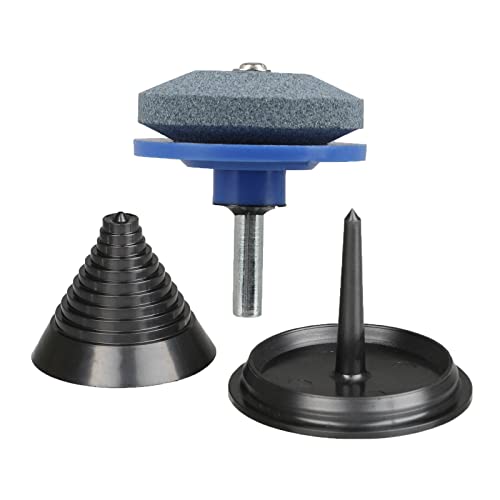
Guided sharpening accessories designed for electric drills provide a hybrid manual approach that balances speed and angle consistency. Sets like the cenoz Crafts Man Lawn Mower Blade Sharpener or the Lawn Mower Blade Sharpener for Drill and Lawn feature corundum grinding stones with integrated nylon guide collars that rest against the flat back of the blade. The guide collar automatically aligns the abrasive stone against the factory bevel, helping eliminate guesswork for users unfamiliar with freehand filing. Maintaining a moderate drill rotation speed prevents the stone from grooving the blade edge or overheating the cutting shoulder.
Dedicated jig platforms and motorized sharpeners offer precision for property owners maintaining multiple mower decks. Adjustable frames such as the [Updated] Lawn Mower Blade Sharpener 15°-45° lock onto workbenches and hold an angle grinder securely at fixed degree intervals between 15 and 45 degrees. For users seeking specialized bench equipment, the SporGain Lawn Mower Blade Sharpener,Brushless provides a dedicated motor with variable speeds up to 3000 RPM and included angle guides. Portable rotary options like the Sharp Pebble Cordless Lawn Mower Blade Sharpener feature adjustable guides for standard blades, giving users flexible options depending on their equipment needs.
Restoring Rotary Mower Blade Angles Step by Step
Maintaining the correct bevel angle represents the foundation of effective rotary mower blade sharpening. Most walk-behind and riding mower blades feature a factory cutting bevel set between 30 and 35 degrees relative to the flat bottom plane. Filing at too shallow an angle creates an overly thin, razor-like edge that rolls over or chips immediately upon striking dense turf or pinecones. Conversely, filing too blunt an angle creates a wedge that impacts grass stems rather than slicing through them cleanly.
Securing the blade horizontally in a sturdy vise with the cutting bevel facing upward provides optimal access for manual filing. Grasp the handle of the mill bastard file with your dominant hand while resting the fingers of your opposite hand lightly on the file tip for guidance. Push the file forward across the cutting edge in smooth, deliberate strokes following the existing factory angle, lifting the file completely off the steel on the return stroke. Dragging a file backward across the blade dulls the file teeth quickly without removing any steel.
Count your file strokes on the first cutting edge so you can duplicate the exact number on the opposite cutting edge. Matching stroke counts and maintaining uniform downward pressure helps preserve the mechanical balance between both wings of the blade. Continue filing across the bevel until you achieve a continuous, bright metal surface that removes visible nicks along the cutting line. A properly finished lawn mower edge should be roughly as sharp as a butter knife, leaving a visible blunt flat about one-thirty-second of an inch thick to withstand impact.
Once the primary bevel is established, you must remove the slender wire burr that naturally forms on the flat underside of the blade. Turn the file perfectly flat against the bottom surface of the blade and draw one or two light passes across the back. This stroke shears off the hanging metal burr without creating a secondary bevel on the bottom face. Keeping the bottom face completely flat ensures clean aerodynamic airflow within the cutting chamber, which supports optimal bagging and mulching on electric mulching lawn mowers and conventional gas decks alike.
Hand Sharpening Push Reel Mowers Without Disassembly
Push reel mowers require a completely different sharpening technique because their cutting action mimics a pair of scissors rather than a rotary scythe. The curved cylinder blades sweep past a stationary bottom cutting bar called the bed knife to shear grass blades cleanly. Sharpening a reel mower does not involve dismantling the complex cylinder reel assembly or altering factory gear clearances. Specialized manual hand sharpeners provide a direct way to abrade both the rotating reel edges and the stationary bed knife right on the assembled chassis.
Dedicated manual tools make reel blade maintenance straightforward for suburban homeowners using push mowers. Sharpeners such as the American Lawn Mower Co. SK-2 Reel Lawn Mower Hand sharpener and the SK-2 Reel Lawn Mower Blade Sharpener Kit clamp onto the reel blade frame to hone the cutting surfaces evenly. The XCWT Manual Push Reel Lawn Mower Blade Sharpener operates on a similar principle, allowing users to restore clean cutting action across multiple reel mower brands without complex shop disassembly. Sliding these abrasive holders across each reel blade systematically smooths out minor imperfections and reestablishes an intimate shearing interface with the bed knife.
After applying the abrasive tool, checking the reel-to-bedknife clearance ensures the mower cuts grass rather than pinching or jamming. You can test the shearing adjustment by sliding narrow strips of standard newspaper between the cylinder blades and the bed knife while slowly rotating the reel by hand. The cutting cylinder should slice cleanly through the paper across the full width of the bed knife without binding against the steel. If the blades bind tightly or miss the paper entirely, adjusting the micro-tension screws on the side frames restores proper clearance and prevents premature metal wear.
Dynamic Balancing and Checking Blade Straightness
Checking the balance of a rotary mower blade is an essential maintenance step that must immediately follow any sharpening procedure. When one wing of a blade has more metal removed than the other, the resulting weight imbalance creates heavy centrifugal vibrations at standard operating speeds of three thousand revolutions per minute. Over time, that vibration damages spindle bearings, loosens deck mounting hardware, and can even fracture engine crankshafts. Balancing ensures that both blade ends travel through the cutting circle with equal momentum and smooth rotation.
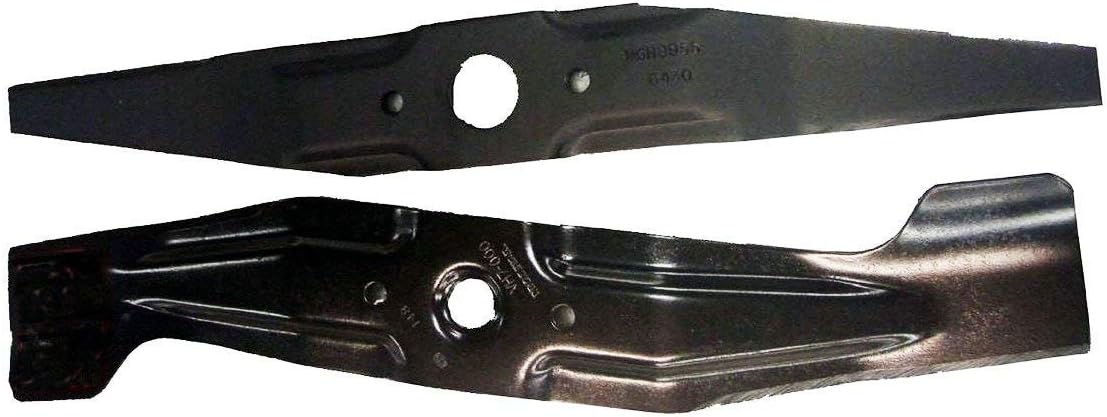
A static cone balancer or stepped pyramid tool provides a fast, accurate assessment of weight distribution across the blade assembly. Place the center mounting hole of the blade onto a cone balancer, such as the one included in the Lawn Mower Blade Sharpener for Drill and Lawn set, resting on a level, vibration-free surface. If the blade tips downward on one side, that lower wing is heavier and requires additional metal removal. Never remove metal from the cutting edge to achieve balance; instead, file metal away from the back edge or the flat non-cutting wing until the blade rests completely horizontal.
Homeowners can also perform a basic balance check using a simple round nail clamped horizontally inside a bench vise. Hanging the blade through its round center hole allows gravity to reveal the heavier side as it swings downward toward the bench floor. Keep in mind that specialized star-shaped or proprietary center holes require stepped cone balancers designed to support complex geometric hubs. Verifying balance before every reinstallation protects your mower deck from unnecessary stress and ensures a uniform cutting plane across your entire lawn.
Reinstalling the Blade and Verifying Deck Clearance
Reattaching the blade to the spindle assembly requires careful attention to blade orientation and component alignment. The curved wings or lift sails must always point upward toward the underside of the mower deck, while the flat cutting bevel faces the lawn. Installing a blade upside down causes the blunt back edge of the steel to bash into the grass rather than slicing it, severely damaging the turf. Align the center hole precisely over the spindle star or adapter locating pins so the blade seats flush against the spindle housing.
Threading the mounting hardware back into place demands a clean bolt and washer free of accumulated grass residue or rust. Hand-tighten the retaining bolt first to ensure the threads engage smoothly without cross-threading into the spindle shaft. Block the blade securely with your wooden block once again to prevent rotation, then tighten the bolt using a calibrated torque wrench to the manufacturer’s specified torque rating. Proper bolt torque prevents the blade from slipping out of alignment when encountering dense growth, which frequently occurs when operating electric lawn mowers for thick grass and overgrown field patches.
Before reconnecting the spark plug or battery pack, spin the blade slowly by hand through a full 360-degree rotation under the deck. Confirm that the blade tips maintain uniform clearance from the inner deck housing, baffles, and discharge chute opening. Measure the distance from each blade tip to the deck lip to verify that the blade is not warped or sitting crookedly on the spindle adapter. Once proper clearance and smooth rotation are confirmed, lower the mower to the ground and reconnect the power source for safe operation.
Choosing Between Edge Restoration and Blade Replacement
Knowing when to stop filing and replace the blade entirely is critical for operating safe lawn maintenance equipment. A quality mower blade can typically withstand four to six manual sharpenings before the removal of metal compromises the original cutting geometry. When repeated sharpening pushes the cutting edge back more than half an inch toward the center body, the blade loses its aerodynamic lift characteristics. Reduced lift leads to poor bagging performance, uneven clipping dispersal, and ragged cutting patterns across your turf.
Physical damage from striking solid obstacles like rocks, exposed pipes, or concrete curbs demands immediate blade replacement rather than sharpening. Striking hard debris can create micro-fractures in the steel that expand rapidly under the cyclic stresses of spinning at high velocity. If you notice any hairline cracks radiating outward from the center mounting hole, discard the blade immediately to prevent catastrophic failure. Similarly, severely bent blades should never be hammered or straightened in a vise, as bending compromises the structural temper of the steel alloy.
Purchasing a matched backup blade allows you to keep your lawn care routine on schedule without rushing through maintenance sessions. Having a fresh blade on hand means you can swap out a dull cutting edge in minutes and take your time sharpening the spare blade on your workbench. High-lift, low-lift, and mulching blades each serve distinct turf conditions, making it helpful to maintain blades suited for specific seasons. Investing in proper manual files or guided sharpening kits gives you full control over blade maintenance while ensuring every cut across your yard remains crisp and healthy.
Manually sharpening your lawn mower blade is a practical maintenance routine that restores pristine cutting performance while protecting your lawn and machinery from unnecessary strain. Whether you choose a classic mill bastard file, an ergonomic carbide sharpener, or a guided drill stone, maintaining consistent angles and exact balance remains the key to clean, healthy turf. Inspect your cutting edges every twenty-five mowing hours, address minor nicks promptly, and never hesitate to replace steel that shows deep cracks or severe thinning. Taking a methodical, safety-first approach to blade maintenance ensures smooth mowing, lower fuel or battery consumption, and a lush, resilient lawn all season long.





Write Your Review
No reviews yet. Be the first to share your experience!