


Maintaining a clean turf cut requires more than just engine power and sharp edges; the metal composition underneath your mowing deck dictates how well your equipment survives hidden rocks, roots, and abrasive sandy soil. When homeowners and property caretakers ask what type of steel are lawn mower blades made, they are usually trying to balance edge retention against impact toughness so cutting edges do not shatter under heavy strikes. Understanding the underlying metallurgy helps buyers avoid brittle aftermarket metals while evaluating replacement sets such as high-lift, mulching, or standard discharge options. If you are preparing for seasonal maintenance, reviewing a guide on how to remove a mower blade safely ensures you can inspect your current metal without injury.
The metallurgical demands placed on outdoor cutting tools require specialized alloys that can flex slightly upon impact rather than fracturing into dangerous metal fragments. Most standard manufacturing processes rely on medium to high-carbon compositions or heat-treated alloy blends enriched with chromium and molybdenum to withstand constant rotational stress. Navigating replacement choices also involves balancing overall longevity against maintenance routines, as outlined in our overview of mower blade costs across common residential deck sizes. Knowing the exact material makeup behind your blades allows you to select durable hardware that holds a dependable cutting bevel throughout demanding mowing seasons.

Pros
- Restores sharp cutting performance with heat-treated steel
- Precise fit for Greenworks 25302 mower
- Easy to install and remove for maintenance
- Affordable solution compared to replacing the mower
- Sturdy build that handles typical yard debris
Cons
- Only compatible with specific Greenworks model (25302)
- Blade length is shorter than deck size, which may limit cutting width
- May need periodic sharpening or replacement depending on usage
These Greenworks replacement blades are a practical solution for anyone who owns the Greenworks 20-inch Twin Force mower (model 25302). Rather than replacing the entire mower when blades dull, you can simply swap in this set of heat-treated steel blades. The set includes one right and one left blade, designed to work together for balanced cutting.
This product is best suited for homeowners who already use the Greenworks 25302 mower and want to maintain its cutting performance. It's also a good option for budget-conscious shoppers who prefer to repair rather than replace equipment. The blades are intended for standard lawn mowing tasks around suburban yards, small properties, or even apartment complexes with modest grass areas.
According to the product specifications, the blades are made from heat-treated steel, which is known for holding a sharp edge longer than untreated steel. Each blade measures 9.5 inches in length, and the set is designed to fit the 20-inch deck. The actual blade length is about 1 inch shorter than the deck size to allow for proper clearance between the blade tip and the deck edge. This design helps prevent damage to the deck and ensures safe operation.
Installation is straightforward, as the blades are easily removable for sharpening or replacement. Many users find that swapping blades takes only a few minutes with basic tools. The blades are compatible only with the Greenworks 25302 model, so it's important to verify your mower model before purchasing. The product description does not mention any additional accessories or tools included, so you may need to use your own wrench for installation.
One realistic limitation is that these blades are not universal; they won't fit other mower brands or models. Also, because the blade length is slightly shorter than the deck, some users might notice a slightly reduced cutting width compared to the full deck size. However, this is a standard design feature for clearance and safety. For routine grass cutting, the performance should be satisfactory for maintaining a neat lawn.
Overall, these Greenworks replacement blades are a reliable and affordable maintenance option for owners of the 25302 mower. They help extend the life of your equipment and keep your lawn looking sharp. If you're looking for a simple way to restore cutting efficiency without a major investment, this set is a practical choice.

Pros
- Excellent mulching performance that leaves a fine, even clippings distribution
- Durable construction stands up to rocky, sandy, or tough turf without chipping
- Compatible with dozens of mower models, making replacement easy
Cons
- Not designed for walk-behind mowers; strictly for 54-inch deck riding mowers
- Heavier than OEM blades, which may slightly affect mower balance if not properly installed
The Oregon Gator G3 mulching blades (model 95-605) are a heavy-duty replacement set designed for 54-inch deck riding mowers. Each blade measures 18-7/16 inches in length with a 5-point star center hole and a thickness of 0.187 inches. These aren't your average OEM blades. Oregon builds them with heat-treated steel and a unique Gator Mulcher feature that aggressively cuts clippings into fine particles, allowing them to decompose quickly and return nutrients to your lawn. If you're tired of stopping to empty a bag or dealing with clumpy discharge, this set is a practical upgrade.
This 3-pack is best suited for homeowners with large properties or contractors who maintain multiple lawns with riding mowers. The blades fit a broad range of popular models from Ariens, Craftsman, Husqvarna, Dixon, Poulan, and Murray, among others. The high-lift angle creates powerful airflow that pushes debris up and out, so you get consistent cutting in wet grass, dry grass, or even sandy turf. In real-world use, you'll notice a cleaner cut with less streaking and fewer missed patches compared to standard blades.
Build quality is where Oregon shines. Each blade undergoes a 26-point certification process that checks everything from raw steel microstructure to final balance and finish. The result is a blade that resists bending and stays sharp longer, even when you hit hidden rocks or roots. The protective finish also prevents rust, so the blades hold up well through multiple seasons. Installation is straightforward using the 5-point star hole, which fits most common spindles. Just make sure to torque the bolts to your mower's specifications and check for proper balance after mounting.
One realistic drawback is that these blades are heavier than many OEM replacements. That extra weight can help with momentum in thick grass, but it also puts a bit more load on the spindle and deck. If your mower is older or you're running on a lower horsepower engine, you might notice a slight drop in RPMs. Also, these are strictly for 54-inch decks; they won't work on smaller walk-behind mowers. But for the intended application, the tradeoff is well worth the performance gains.
Overall, the Oregon Gator G3 3-pack offers exceptional value for anyone who wants a premium cut without constant bagging. The blades deliver on their promise of superior mulching, and the durability means you won't be replacing them every season. Whether you're a DIY homeowner or a pro landscaping contractor, this set is a smart investment for a cleaner, healthier lawn.
Blade Length: 18-7/16 inches (22.8 cm)
Blade Width: 2.5 inches
Blade Thickness: 0.187 inches
Center Hole: 5-point star
Lift: 4/9 inch
Deck Size: 54 inches
Pack Quantity: 3 blades
Material: Heat-treated steel with protective finish
Certification: 26-point quality checklist
Made in: USA

Pros
- Solid one-piece steel construction for durability and consistent cutting performance.
- Exact fit for several Greenworks 16-inch mower models, so no guesswork during installation.
- Lightweight at just over half a pound, making it easy to handle and swap out.
- Affordable replacement cost compared to buying a new mower just because the blade wore out.
Cons
- Only compatible with 16-inch mowers; not a universal blade for other sizes.
- Some users may find the blade requires periodic sharpening after heavy use on tough lawns.
- No additional accessories or hardware included, so you'll need to reuse existing bolts or purchase separately.
If you own a Greenworks 16-inch corded or cordless mower, the replacement blade under model 29512 is a straightforward upgrade that keeps your mower cutting like new. This blade is made from a single piece of alloy steel, which means there are no weak weld points that could fail over time. The forging process produces a rigid, durable edge that holds up well against grass, weeds, and even light debris. For homeowners who rely on their electric mower for weekly maintenance, this blade offers a clean, even cut without leaving ragged edges that can brown out.
The installation process is simple. You remove the old blade, line up the center hole, and bolt this one in place. The 15.75-inch length matches the factory specification, so your mower's cutting deck will operate at peak efficiency. Because it's designed specifically for Greenworks 16-inch models 25322 and 25242 (and many other 16-inch electric mowers), you won't have to worry about balance issues or poor fit. Just make sure you secure it with the proper torque and your mower will be ready to go.
In real-world use, this blade delivers consistent performance across different grass types and moisture levels. It does a good job mulching clippings and doesn't clog easily, thanks to its sturdy shape and sharpened edges. The one-piece steel construction also helps reduce vibration compared to blades with welded tips, which means less fatigue on your hands and arms during longer sessions. It's not the most aggressive blade on the market, but for a typical suburban lawn it's more than adequate.
Build quality is solid. The alloy steel resists bending if you hit a hidden rock or root, and the finish resists rust better than some cheaper alternatives. That said, like any mower blade, it will eventually need sharpening. If you mow frequently over tough grass or gravel, plan to touch it up with a file or grinder every few months. The lightweight design (just under 0.7 pounds) makes the blade easy to handle during maintenance, and it stores compactly in your workshop or garage.
One limitation is that it's not a universal blade. It only fits 16-inch mowers with the specific center hole pattern. Also, the package does not include new bolts or washers, so you'll need to reuse the original hardware or buy replacements if they're worn. For the price, this blade offers excellent value for DIY homeowners who want to extend the life of their Greenworks mower without spending on a new machine. It's a practical, reliable choice that gets the job done neatly.
Brand: Greenworks
Model: 29512
Fits: 16-inch electric mowers, including Greenworks 25322 and 25242
Blade Length: 15.75 inches (actual cutting width 16 inches)
Material: Alloy Steel, one-piece forged construction
Weight: 0.69 pounds
Dimensions: 15.75 x 1.97 x 0.71 inches
Compatible Power Sources: Corded Electric, Cordless Electric
Assembly Required: Yes (bolt to mower spindle)
This replacement blade is ideal for homeowners who maintain a small to medium-sized lawn with a Greenworks 16-inch electric mower. It's perfect for routine weekly mowing of Bermuda, fescue, or rye grass. Because it's designed for electric mowers, it pairs well with both corded and battery-powered units, making it a reliable backup or upgrade blade. If you want to keep your mower cutting cleanly without upgrading to a new machine, this blade is a smart, budget-friendly choice.

Pros
- Durable alloy steel construction resists bending when running through thick patches or small yard debris
- Efficient mulching contour chops clippings finely enough to avoid ugly lawn clumping
- Exact 6-point star cutout sits flat and firm against spindle assemblies without slippage
- Provides an economical alternative to expensive OEM branded replacement pairs
Cons
- Factory black paint on the bevel dulls the initial edge until it wears off after the first mow
- Strictly fits 6-point star shafts, so owners must check their spindle shape before buying
- Homeowners tackling thick, wet grass may still experience slight underside deck accumulation
Keeping a riding tractor in prime cutting condition requires routine deck maintenance, and these Hipa 942-0616 mulching blades offer an accessible replacement set for 42-inch mowing decks. Designed specifically for outdoor equipment owners running Cub Cadet, Troy-Bilt, or MTD tractors, this matched pair replaces worn, nicked, or unbalanced factory steel. If you are a homeowner or small acreage owner handling your own seasonal tune-ups, swapping in fresh blades is one of the easiest ways to eliminate ragged grass tips and improve overall lawn health.
In practical lawn care, mulching capability comes down to blade geometry and rotational lift. These blades feature an upward kick designed to swirl clippings within the deck cavity long enough for repeated cuts. The result is a fine mulch that settles down into the thatch layer without requiring you to rake or haul heavy bags. While heavily overgrown or damp grass will test any mulching setup, these blades generate plenty of airflow on standard 42-inch decks to keep material circulating cleanly under normal mowing schedules.
Build quality centers on an alloy steel composition fortified with chromium and molybdenum. This mixture provides greater tensile strength and abrasion resistance than plain low-carbon steel, which helps prevent deep notches if you graze a stray tree root or gravel edge. Hipa dips these blades in a protective black coating to ward off rust while sitting in warehouse storage. That coating also covers the cutting edge; while it prevents nasty cuts while wrestling the blades onto the spindle, you will find that the cutting edge sharpens up significantly once that paint wears off after your first twenty minutes of mowing.
The primary consideration before buying is spindle fitment. The center mounting hole is a true 6-point star, which will not work on round, triangular, or 5-point patterns found on other mower years. Always verify your current spindle shaft before turning a wrench. For property owners looking to knock out annual spring prep without paying dealership markups, this Hipa 2-pack provides a solid balance of edge life, straightforward installation, and reliable yard cleanup.
Verify your machine fits these replacement specifications before installation:
Center Mount Pattern: 6-Point Star configuration.
Deck Size: 42-inch cutting decks (requires 2 blades for a full set).
Replaces Part Numbers: 942-0616A, 742-0616A, 942-0616, 742-0616, 942-04126, and 742-04126.
Compatible Riding Mowers: Troy-Bilt Bronco, Troy-Bilt Pony, Cub Cadet XT1 LT42, XT2 LX42, LT1040, LT1042, LT4200, ZT1-42, and select MTD 42-inch lawn tractors.

Pros
- Notched high-lift design significantly boosts lift for cleaner bagging and reduced deck clogging
- Broad compatibility across widely used 42-inch lawn tractors and riding mowers
- Solid steel construction maintains balance and cutting edge through regular seasonal maintenance
- Cost-effective two-pack provides a complete replacement for standard dual-blade 42-inch decks
Cons
- High-lift airflow can create extra airborne dust when mowing sandy or extremely dry turf
- Not intended for dedicated fine mulching setups without a compatible deck plug
- Requires verifying OEM part numbers and spindle hole pattern prior to installation
The 8TEN LawnRAZOR Notched High-Lift Mower Blade set is an aftermarket replacement kit designed specifically for 42-inch mower decks. Engineered to replace common original equipment parts from brands like Husqvarna, Poulan, AYP, and Ariens, this two-blade pack directly targets homeowners seeking to revive their cut quality without paying premium dealership prices. Whether you are maintaining a wide suburban lawn or managing a rural property, replacing worn or bent blades is one of the most effective ways to restore proper deck operation.
In practical lawn maintenance, high-lift blades excel at generating significant air velocity under the cutting deck. The distinct rear sail and notched edges draw limp grass upright before the cutting edge makes contact, resulting in a consistent, manicured look across the entire yard. This enhanced suction works exceptionally well for bagging clippings during peak growing season or propelling damp discharge out of the chute to prevent clumping. Suburban lawn owners preparing their turf for weekend barbecues will appreciate the clean lines and reduced need for rake cleanup.
Build quality centers on resilient steel stock with a total package weight of nearly four pounds. The blades come finished with a durable green powder coating that guards against surface corrosion while sitting in humid garden sheds or garages between mowings. While the factory edge provides a dependable working sharpness out of the box, some lawn care enthusiasts may prefer a quick touch-up with a file for an ultra-sharp cut before mounting them to the deck spindles.
Swapping out blades is a manageable seasonal task for DIY homeowners. Because this package includes a matched pair, replacing both sides simultaneously ensures smooth deck rotation and minimizes spindle vibration. As long as users disconnect the spark plug wire and secure the deck properly before wrenching, installation is straightforward. Routine maintenance involves periodic checks for nicks after hitting hidden rocks, alongside standard end-of-season sharpening.
Realistic limitations relate primarily to your specific yard conditions and deck setup. Because these blades generate strong upward suction, mowing on parched ground or sandy soil can throw up extra dust and debris. Additionally, while they handle heavy bagging and side discharge admirably, dedicated mulching setups may require standard or specialized mulching blades to achieve powder-fine clippings. For general weekly mowing and bagging duties, however, this set provides an affordable and reliable refresh for your riding mower.
The notched high-lift profile on these 8TEN blades is built to optimize air movement beneath standard 42-inch mower decks. By pulling grass blades vertically before shearing, the cutting deck leaves behind fewer missed strands and prevents the uneven patches often caused by bent or dull factory blades. Homeowners tackling fast-growing spring grass will find the extra lift helpful in keeping discharge chutes free from wet blockages.
When paired with a rear bagging attachment, the suction generated by high-lift wings drives clippings and chopped leaves directly into the collection bins with fewer clogs in the discharge chute. This efficient airflow also helps disperse heavy clippings evenly when side discharging, preventing thick clumps from smothering green grass during regular weekend cuts.
This blade set is engineered as a direct replacement for standard 42-inch riding mowers and lawn tractors built by AYP, Husqvarna, Poulan, Craftsman, and Ariens. It replaces OEM part numbers including AYP 138498, 134149, and 127843, along with Husqvarna numbers 532138498 and 532127843. It fits popular riding tractor models such as the Husqvarna YTH series, Poulan PB models, and corresponding lawn tractors.
Before purchasing, homeowners should verify their mower deck width and check the center mounting hole against their existing spindle shaft. Installing properly matched blades protects the spindle bearings from unnecessary stress, prevents blade overlap collisions, and ensures a level cut across the entire mowing path.
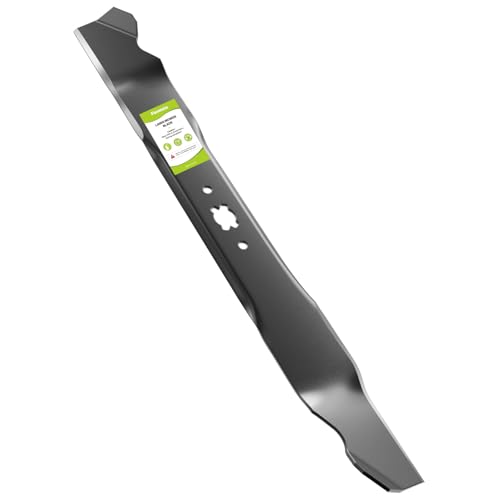
Pros
- Stronger lift than many stock blades improves bagging and mulching efficiency.
- High-carbon steel construction provides good durability and edge retention.
- Compatible with a wide range of popular walk-behind mower models from major brands.
- Easy to sharpen and maintain over time.
Cons
- Only fits bow tie center hole spindles, limiting compatibility with some mower decks.
- Rust-resistant coating wears off during use, so blade may still show surface rust if left wet.
- No reviews available yet, so long-term performance is unproven.
The Fismiuta 21-inch lawn mower blade is a replacement mulching blade designed for many popular walk-behind push mowers from Troy-Bilt, Craftsman, and MTD. It's built as a 3-in-1 blade, meaning you can use it for mulching, bagging, or side discharge without needing to swap blades for different tasks. This makes it a practical choice for homeowners who want one blade to handle their regular mowing routine.
In real-world use, the standout feature here is the 32mm air lift height. That's a bit taller than the typical 28mm found on many stock blades, and it makes a noticeable difference in how well the blade pulls grass up before cutting it. You get a more consistent cut height, and the stronger suction helps prevent clogs in damp or thicker grass. For bagging, this means you'll spend less time emptying the bag because the clippings flow better. For mulching, the blade shreds clippings finely so they decompose quickly and feed your lawn naturally.
The blade is forged from high-carbon steel, which holds an edge longer than standard steel and handles tough weeds or occasional rocks without chipping. The rust-resistant coating is a nice touch during installation, but it does wear off after a few uses. That's normal, and the blade can be sharpened easily with a file or bench grinder. Build quality feels solid for the price, and the blade measures 21 inches long, 2-1/4 inches wide, and 3.4mm thick, which matches OEM specs for a direct swap.
One thing to watch out for is the center hole shape. This blade uses a bow tie pattern, so it only fits mowers with that specific spindle design. If your mower has a star or round hole, it won't work. Double-check your mower's center hole before ordering. Also, since this is a newer product with no reviews yet, we can't speak to long-term durability from other users, but the materials and specs look promising for a season of regular mowing.
Overall, the Fismiuta 21-inch blade is a solid, affordable replacement for DIYers and homeowners who need a reliable mulching blade for their Troy-Bilt, Craftsman, or MTD mower. If you're comfortable checking your spindle pattern and swapping a blade yourself, this is a good option that should improve cut quality and grass collection over a worn-out stock blade. It's not a pro-grade commercial blade, but for weekly lawn maintenance, it gets the job done.
Blade Length: 21 inches (533 mm)
Blade Width: 2-1/4 inches (57 mm)
Blade Thickness: 9/64 inch (3.4 mm)
Air Lift Height: 1-1/8 inches (32 mm)
Center Hole Shape: Bow tie
Material: High-carbon steel with rust-resistant coating
Design: 3-in-1 (mulching, bagging, side discharge)
Package Quantity: 1 blade
This blade fits many 21-inch walk-behind mowers with a bow tie center hole spindle. Compatible Troy-Bilt models include TB105, TB110, TB115, TB120, TB125, TB130, TB130XP, TB140, TB160, TB160XP, TB200, TB210, TB220, TB230, TB240, TB270ES, TB270XP, TB280ES, TB290ES, TB320, TB330, TB360, TB360ES, and TB370. Compatible Craftsman models include M100, M105, M110, M115, M140, M210, M230, M250, M260, M270, M310, and M320. Also fits many MTD and Cub Cadet models with the same spindle pattern. Always verify your mower's center hole shape before purchasing.
Metallurgical Breakdown: What Type of Steel Are Lawn Mower Blades Made From?
Lawn mower blades face harsh rotational friction while colliding with tough grass, hidden yard debris, and abrasive soil particulates. Understanding the metal composition helps you evaluate edge retention, sharpening longevity, and structural safety during routine cutting operations. Most outdoor power equipment manufacturers rely on specialized carbon steels or alloy steels formulated specifically to deliver impact resistance and dependable cutting performance.
The Core Chemistry: Carbon Steel Versus Alloy Steel Formulations
At the center of mower blade manufacturing lies carbon steel, which is generally categorized into medium-carbon and high-carbon grades. Medium-carbon varieties like AISI 1045 contain around 0.45 percent carbon, providing adequate ductility and decent strength for standard residential decks. High-carbon grades such as 1075 or 1085 offer greater hardness, which helps maintain a crisp cutting bevel through dense turfgrass and tough weeds. For example, the Fismiuta replacement blade specifies a high-carbon steel forging designed to stay sharp across rugged terrain.
Alloy steels improve upon basic carbon compositions by blending secondary elements such as chromium, molybdenum, manganese, or nickel. Adding chromium improves hardenability and wear resistance while conferring baseline rust protection against acidic grass juices. Molybdenum enhances high-temperature strength during thermal processing and improves fracture toughness when the cutting edge hits buried obstacles. The Hipa 42-inch mulching blade documentation specifies an alloy steel that incorporates chromium and molybdenum into high-carbon steel to extend service life.
Another frequent metallurgical benchmark in outdoor power equipment is spring steel, most notably AISI 5160 or similar silicon-manganese alloys. Spring steels exhibit high fatigue limits and elastic recovery, allowing the blade body to flex slightly upon striking an obstruction before returning to its true shape. This spring quality prevents permanent bending during incidental soil strikes, which keeps deck vibration down and spares spindle bearings from excessive shock. Whether a manufacturer selects a straight carbon composition or an alloy blend, the core chemical formulation dictates how the metal handles rotational strain.
The Role of Heat Treatment and Quenching in Blade Durability
Raw stamped steel lacks the structural strength required to cut grass cleanly without bending, rolling its edge, or warping under engine torque. Manufacturers subject finished blade blanks to controlled thermal cycles, heating the metal into an austenitic phase before quenching it rapidly in oil, water, or brine. This rapid cooling transforms the soft microscopic grain structure into martensite, a crystalline structure characterized by high hardness and tensile strength. As noted in the Greenworks twin force blade specifications, heat-treated steel provides the necessary hardness for precise cutting capability and clean clipping shears.
Quenching alone leaves steel excessively brittle, making a secondary tempering stage essential to relieve internal thermal stresses. During tempering, the hardened metal is reheated to a moderate temperature range, typically between 400 and 800 degrees Fahrenheit, before cooling down gradually. This controlled reheating reduces peak brittleness while adjusting the final hardness into a safe operational window. A properly tempered lawn mower blade generally registers between 40 and 50 on the Rockwell C scale (HRC), balancing wear resistance with impact absorption.
Austempering represents an alternative advanced thermal treatment favored by several premium blade fabricators. Rather than producing standard tempered martensite, austempering quenches the steel in an isothermal salt bath to produce bainite, a microstructural phase prized for superior impact energy absorption. Blades processed through austempering resist cracking around stamped mounting holes and lift wings where rotational forces concentrate under heavy loads. This metallurgical refinement ensures the blade maintains sufficient surface hardness along the cutting bevel while preserving internal ductility throughout the central body.
Toughness Versus Hardness: Why Mower Blades Must Flex on Impact
A common misconception among homeowners is that mower blades should be as hard as high-end kitchen cutlery or woodworking chisels. Cutlery and shop tools often achieve hardness ratings between 58 and 62 HRC to hold razor edges through delicate slicing tasks. However, applying that degree of hardness to a mower blade rotating at 3,000 revolutions per minute would prove hazardous. Ultra-hard steel is inherently brittle, meaning a sudden impact with a tree root, brick, or pipe could cause the blade to shatter like glass.
Mower blade metallurgists intentionally prioritize toughness over extreme edge hardness to ensure safe operation. Toughness describes the capacity of a material to absorb kinetic energy and undergo minor plastic deformation without experiencing catastrophic fracture. When an appropriately tempered blade strikes an immovable object, the metal is designed to gouge, dent, or slightly bend rather than break. This controlled deformation prevents flying metal fragments from puncturing mower decks or injuring nearby operators and bystanders.
The Oregon Gator G3 mulching blades reflect this design approach by emphasizing resistance to bending and breaking across abrasive soil conditions. While property owners must sharpen their cutting tools more frequently than kitchen knives, the moderate Rockwell rating ensures the metal survives recurring impacts safely. Balancing edge durability with fracture toughness remains the primary challenge in outdoor power equipment metallurgy. Knowing how these metallurgical characteristics interact helps property owners select blades that provide consistent cutting performance without sacrificing operational safety.
Protective Coatings, Surface Finishes, and Corrosion Prevention
Freshly ground carbon and low-alloy steels are susceptible to rapid oxidation when exposed to moisture, morning dew, and grass sap. To prevent corrosion during storage and transport, manufacturers apply specialized surface treatments across the entire blade blank. Common finishes include electrostatic powder coatings, dipped electro-deposition layers, and specialized enamel paints formulated to inhibit surface rust. Both the Hipa mulching blades and Fismiuta push mower blades explicitly feature protective paint coatings that shield the bare steel until initial yard deployment.
These factory paint coatings also protect user hands from minor burrs and bare metal edges during unpacking and deck mounting. Once mowing begins, friction from high-speed contact with turfgrass, soil granules, and debris naturally scours the paint away from the sharpened bevel. This wear is completely standard and expected, revealing the clean, heat-treated steel underneath to perform the actual cutting action. Homeowners often mistake this stripping paint for premature failure, but product documentation notes that coating wear along the cutting bevel is part of normal operation.
After the factory coating wears off the cutting zones, routine maintenance plays a critical role in preventing deep pitting corrosion. Chlorophyll and organic acids from shredded grass clippings can eat into unpainted carbon steel if damp mulch cakes against the blade deck for extended periods. Scraping accumulated clipping residue from the underside of the deck after damp mowing prevents localized rust from weakening the blade body. A light mist of multi-purpose oil or protective film before winter storage keeps the exposed steel sound for the following cutting season.
How Blade Steel Influences Sharpening Habits and Edge Retention
The chemical composition and heat treatment of a blade directly determine how easy it is to recondition the cutting edge. High-carbon steels grind smoothly, allowing homeowners to restore a clean 30-degree bevel using basic bench grinders, angle grinders, or manual mill bastard files. Alloy steels enriched with molybdenum or chromium require slightly more patience and firm abrasive tools due to their increased resistance to frictional abrasion. Checking whether new mower blades arrive sharpened clarifies whether you need to touch up the factory bevel prior to initial installation.
Grinding technique must always respect the metallurgical limits of heat-treated steel during routine maintenance sessions. Applying excessive pressure against a grinding wheel generates intense localized friction, which can overheat the cutting bevel past its original tempering temperature. When steel overheats, it displays bluish or bronze discoloration, indicating that the tempered hardness has been permanently lost in that zone. Overheated, annealed steel becomes exceptionally soft, causing the freshly sharpened edge to dull rapidly after only a few mowing sessions.
Maintaining a balanced profile during sharpening is just as vital as preserving the heat-treated edge temper. Removing more material from one cutting wing than the other alters the center of gravity, causing severe high-speed rotational vibrations that damage deck spindle bearings. Periodic checks on a cone balancer or magnetic wall balancer confirm that metal removal remains symmetric across both blade halves. Ensuring that edge thickness remains approximately equal to the thickness of a butter knife avoids paper-thin bevels that nick instantly upon meeting small twigs.
Forged One-Piece Steel Versus Stamped Production Methods
Manufacturing methods exert a measurable influence on blade density, grain refinement, and fatigue resistance under cyclical loads. Stamped blades are cut from wide coils or sheets of hot-rolled carbon steel using heavy mechanical presses and forming dies. This stamping method is economical and highly consistent, making it the dominant fabrication approach for residential walk-behind and riding lawn mower blades. After stamping, the lift wings and cutting contours are formed under pressure before entering the heat treatment furnaces.
Forged construction, such as the one-piece steel forging highlighted on the Greenworks 16-inch replacement blade, involves shaping heated billets under compressive mechanical forces. Forging aligns the internal crystalline grain flow along the physical contours of the blade, substantially reducing internal microscopic void spaces. This continuous grain structure provides superior directional toughness and fatigue strength, making forged blades resilient against cyclic bending stresses. While stamped blades offer dependable everyday cutting, one-piece forged steel provides added structural confidence on compact electric platforms where weight and rigidity must balance.
Examining blade cross-sections also reveals variations in blade thickness and width that correlate with the manufacturing method. Compact electric walk-behind mowers often use thinner steel, such as 9/64-inch stock, to minimize rotational mass and conserve battery power. Larger residential riding tractors and commercial zero-turn decks utilize thicker steel stock, typically ranging from 0.150 inches to nearly 0.250 inches, to handle broader spans and higher ground speeds. In-depth resources offering a detailed look at lawn mower blade steel demonstrate how metal thickness interacts with rotational inertia across different deck sizes.
Practical Fitment and Steel Selection for Common Deck Configurations
Selecting replacement blades requires pairing the right metallurgical properties with exact physical deck dimensions and mounting geometry. A blade made from high-grade alloy steel will still fail if its center hole or overall length mismatches the mower spindle assembly. For example, the Oregon Gator G3 three-pack features an 18-7/16-inch length configured with a 5-point star center hole to match designated 54-inch decks from brands like Ariens, Craftsman, and Husqvarna. Verifying the star pattern, round arbor, or specialized geometry on your spindle prevents dangerous slippage during blade clutch engagement.
Center-hole interfaces vary widely across major equipment manufacturers, demanding careful inspection before placing orders. The Hipa 42-inch mulching blade set utilizes a 6-point star mounting hole to service Troy-Bilt, Cub Cadet, and MTD platforms. In contrast, the Fismiuta 21-inch walk-behind blade requires a distinctive bow-tie center hole designed specifically for designated walk-behind push mower spindles. Installing a blade with an improper arbor interface can strip the spindle splines, warp the blade center, or cause mounting hardware to back out under load.
Multi-blade configurations present additional engineering nuances, particularly when comparing traditional staggered decks with twin-blade electric platforms. The Greenworks twin force 20-inch mower incorporates paired 9.5-inch counter-rotating blades designed with designated right and left rotational dynamics. Each blade in this paired configuration operates within tight deck clearance tolerances, requiring exact blade lengths to prevent overlapping tips from striking each other. Matching replacement part numbers and verified physical specifications ensures your selected blade steel performs safely within the intended deck enclosure.
Safe Inspection and Replacement Guidelines for Worn Steel
Lawn mower blades do not last indefinitely, even when crafted from premium alloy compositions and hardened through advanced heat treatment. As hundreds of mowing hours accumulate, abrasive sand and soil particles act like liquid sandpaper against the curved rear lift wings of the blade. This airflow erosion gradually thins the metal behind the cutting edge, creating curved notches and deep scallops in the steel. Once the sail area thins down significantly, the metal loses its structural integrity and can detach under high rotational speeds.
Inspecting blades before each cutting season involves looking for subtle metal fatigue signals that indicate retirement is necessary. Carefully inspect the blade face around the central mounting hole for radial micro-cracks, which often emerge from overtightened mounting bolts or severe impact shock. Check the straightness of the blade along its horizontal span by laying it flat on a verified level surface. If either cutting tip drops or lifts more than an eighth of an inch from true alignment, the blade has suffered permanent plastic deformation and should be replaced.
Always disconnect the spark plug boot on gas mowers or remove the lithium battery pack on electric units before touching the blade assembly. Secure the cutting edge with a wooden block against the deck skirt to prevent unprompted rotation while loosening or torquing mounting hardware. Adhere strictly to the manufacturer torque specifications listed in your owner manual when fastening replacement blades back onto the spindle. Choosing quality carbon or alloy steel replacements and retiring worn hardware proactively preserves crisp cutting results while safeguarding everyone on your property.



Write Your Review
No reviews yet. Be the first to share your experience!