


Clean cutting edges make the difference between a crisp green turf and frayed, brown-tipped grass that invites lawn disease. Dull cutting edges tear through grass instead of slicing cleanly, forcing the mower engine to work harder and dragging down yard maintenance efficiency. Many homeowners look for methods on how to sharpen lawn mower blades without taking them off because detaching rusted bolts and stubborn spindle hardware can turn a quick touch-up into an exhausting chore. While taking the cutting assembly off the deck provides the most thorough access, touching up the bevel while it stays mounted offers a convenient mid-season maintenance shortcut for minor dulling.
Achieving a sharp cutting profile without dropping the assembly requires specific safety precautions, stable deck positioning, and tools suited for cramped under-deck clearance. Handheld hone tools and compact motorized attachments allow property owners to restore a functional working bevel on rotary units, while specialized compound kits handle manual reel mechanisms directly on the frame. Understanding factory blade sharpness condition helps set realistic expectations for edge retention before you start grinding. Knowing the mechanical limits of on-deck sharpening ensures you maintain clean cuts without compromising spindle bearings, blade balance, or personal safety.

Pros
- Extremely affordable and widely compatible with most residential mower blades.
- Simple to use: just chuck it in a drill and run along the blade edge.
- Including both sharpener and balancer means you get a complete blade maintenance solution.
- Lightweight and portable, perfect for small workshops and home garages.
Cons
- Requires a drill to operate, so you need one on hand.
- Manual balancing takes a bit of patience to get right compared to electronic balancers.
- Not ideal for heavy commercial use or high-volume shops where speed is critical.
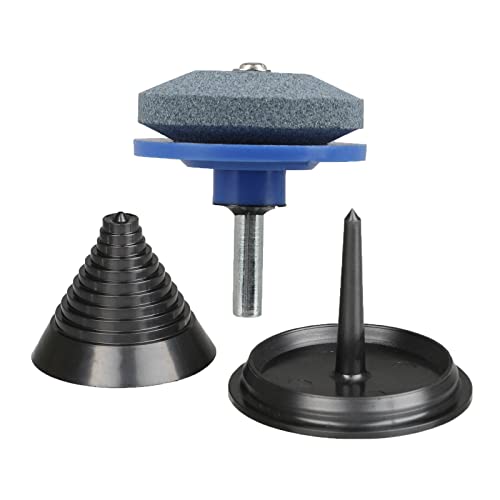
The Arnold BSK-1 is a straightforward sharpening and balancing kit designed for lawn mower blades. It turns your regular electric drill into a reliable sharpening tool, making it easy to maintain a clean cutting edge without investing in a dedicated grinder. The kit includes a cone-shaped sharpening stone and a simple static balancer, both built to handle blades from walk-behind mowers, lawn tractors, and zero-turn machines.
This kit is best suited for homeowners and DIYers who prefer to handle their own mower maintenance rather than taking blades to a shop. It's also useful for small engine mechanics who need an affordable backup method. But if you're a professional landscaper sharpening dozens of blades a week, you'll likely want a faster, more automated system.
In real-world use, the sharpener works quickly. Chuck it into a drill, run the stone along the blade's edge at a shallow angle, and you'll see burrs form within seconds. The vibration-free claim holds up -- the stone spins smoothly, which helps avoid gouging the blade. The balancer is straightforward: hang the blade on the cone and see which side drops. Rotate a few times to confirm. It's not fancy, but it effectively reveals if the blade is heavy on one side.
Build quality is typical for a budget tool. The sharpening stone is abrasive and should last through several sharpenings. The balancer is made of plastic and a metal cone. It's lightweight (just over two ounces) and stores easily in a drawer. For the price, durability is acceptable for occasional weekend usage. You won't hesitate to toss it in a toolbox or tool bag.
The main drawback is that you need a drill, and the process is manual. Balancing requires patience -- you'll have to grind off material from the heavy side and recheck. It's not as precise as a professional blade balancer, but it's more than enough to get a decently balanced blade. Overall, the Arnold BSK-1 is a smart buy for anyone who wants to keep their mower cutting cleanly on a budget. It's a practical addition to any workshop, especially if you already own a drill.
Color: Black
Dimensions: 3 x 7 x 10 inches
Weight: 0.24 pounds
Product Group: Outdoors
Binding: Lawn & Patio


Pros
- Simple process – just apply compound and crank backward to sharpen blades
- Works on multiple reel mower brands, making it versatile for different owners
- Affordable alternative to professional sharpening services
Cons
- Only suitable for reel mowers – not for rotary or powered mowers
- May require multiple applications for heavily dull or nicked blades
- Compound and brush included are single-use or limited, so you may need to buy refills for frequent sharpening
If you own a manual reel mower, you know that sharp blades are everything. A dull reel tears grass instead of cutting it cleanly, leaving a ragged lawn and making your push harder. The American Lawn Mower SK-2 Reel Mower Sharpener kit addresses this problem directly. It's a back-lapping system that lets you restore the cutting edge without removing the reel from the mower. Just apply the included grinding compound to the blades, attach the crank handle, and rotate backward to lap the reel against the stationary bed knife.
This kit is best suited for DIY homeowners who maintain a small to medium lawn with a manual push mower. If you're someone who prefers the quiet, emissions-free operation of a reel mower and wants to keep it performing like new, this sharpener is a practical addition to your garage. Professional landscapers might prefer a more robust sharpening method, but for occasional home use, the SK-2 gets the job done.
In real-world use, the process takes about 15 minutes and noticeably improves cut quality after a dull season. The compound is abrasive enough to restore a clean edge, and the brush helps remove debris. Build quality is solid – the crank handle is metal and the compound is thick. The kit is small and stores easily. One limitation is that the included compound and brush are good for a few applications, so you may need to order more for frequent sharpening. Also, this only works on reel mowers, so it's not a catch-all tool.
Overall, for the price, the SK-2 is a smart buy for anyone wanting to extend the life of their reel mower blades without a trip to the shop. It's straightforward, safe, and delivers noticeable results. If you're already invested in a manual mower, this kit will save you time and hassle.
Brand: American Lawn Mower Company
Model: SK-2 Sharpener Kit
Color: Orange
Product Group: Lawn and Patio
Compatibility: American Lawn Mower, Great States, Earthwise, Scotts reel mowers
Includes: Grinding compound, brush, back-lapping crank handle
Weight: Lightweight and portable
The kit contains three items you need for the sharpening process:
- Grinding compound tube – abrasive paste for lapping the reel edge
- Small brush – for applying compound and cleaning blades
- Back-lapping crank handle – attaches to the reel shaft to rotate the blades
Everything comes in a single package, ready to use with your compatible reel mower.

Pros
- Ball-bearing pivot arm delivers smooth, repeatable grinding strokes without lateral play.
- Preset angle increments make matching original factory bevels fast and foolproof.
- Included zinc cone balancer provides immediate verification of blade balance before reinstallation.
- Multi-thread guide pin selection fits standard corded and cordless grinder brands without custom adapters.
Cons
- Requires a sturdy bench vise or workbench mounting surface to operate safely.
- Does not fit heavy-duty commercial brush cutter blades thicker than 0.28 inches.
- Angle grinder and flap discs must be supplied separately.
The Iontravel Lawn Mower Blade Sharpener is a dedicated grinding jig designed to turn a standard workshop angle grinder into a controlled blade profiling station. Freehand grinding often rounds off cutting edges or removes uneven amounts of metal, leading to torn grass and unbalanced blades. This jig locks the blade in place and guides the grinder along a fixed track, giving DIY homeowners and landscaping crews a consistent way to maintain their equipment throughout the mowing season.
Performance centers on the tool's ball-bearing pivot arm and stepped angle adjustment. Ranging from 15 to 45 degrees in 5-degree detents, it accommodates low-angle commercial high-lift blades as easily as standard straight residential decks. Because the pivot arm moves smoothly along the guide pin without wobbling, your flap disc or grinding wheel stays flat against the bevel. The result is a crisp, uniform cutting edge that slices grass cleanly instead of fraying the tips.
Build quality is reassuringly solid. The main body is machined from thick aluminum alloy with a protective blue anodized finish that resists corrosion and workshop grime. An ergonomic ribbed handle gives you positive control over your feed rate and grinding pressure. With four included thread pins covering M8, M10, 3/8-inch, and 5/16-inch sizes, the bracket secures snugly to most major grinder brands, whether you run corded shop tools or cordless jobsite platforms.
Keep in mind that this sharpener requires a secure mounting point, such as a sturdy bench vise or a dedicated tabletop clamp, before you can start working. It is also limited to blades up to 3.15 inches wide and 0.28 inches thick, which covers virtually all residential and commercial lawn mowers but rules out heavy agricultural brush mowers. For anyone maintaining multiple mower decks who wants fast, repeatable sharpening without spending hundreds on a standalone sharpening machine, this jig is a practical and cost-effective solution.
Setting up the Iontravel sharpener takes only a few minutes once you understand the assembly sequence. Clamp the base securely into your bench vise or bolt it to a dedicated mounting plate to eliminate vibration during operation. Select the guide pin that matches your angle grinder's auxiliary handle socket, thread it into your tool, and seat the grinder into the jig bushing.
Position your mower blade against the clamping stop, matching the factory bevel angle using the indexed degree scale. Tighten the clamp firmly against the blade spine. For best grinding results, use a 40-grit or 60-grit flap disc rather than a standard hard grinding wheel. The flap disc removes metal smoothly without overheating the steel and ruining the blade temper.
After completing grinding passes on both ends of the blade, place the center hole onto the included zinc alloy balancer cone. If one side dips, lightly touch up the non-cutting back edge of that side until the blade rests completely level. Balancing is essential to protect mower spindles and deck bearings from high-speed vibration.

Pros
- Sharpens a wide variety of single-edge garden tools quickly
- Reversible blades extend product life
- Safe ergonomic design reduces hand fatigue
- Dishwasher safe for convenient cleaning
- Compact and portable for easy storage
Cons
- Only suitable for single-edge tools, not serrated blades or knives
- Coarse grit may not produce a polished edge for fine cutting tools
- Handle may feel small for users with very large hands
The AccuSharp Garden Tool Sharpener is a straightforward manual sharpener designed to handle the dullest garden tools. It is not a power tool, but an essential workshop accessory for anyone who works with lawn mowers, pruners, shears, hoes, or shovels. Whether you are a homeowner maintaining your own yard or a professional landscaper, this tool saves you time and money by quickly restoring sharp edges without any electricity or complex setup.
Best suited for DIY homeowners, gardeners, and even contractors who need a reliable way to keep their tools in peak condition. The diamond-honed tungsten carbide blade is exceptionally hard, allowing you to sharpen very dull or damaged blades with just a few strokes. The reversible blade feature doubles its useful life, making it a long-term investment for your workshop. Users report getting 5 to 10 years of regular use before needing to replace the blade.
Build quality is solid, with a comfortable ergonomic handle that fits either hand and includes a guard to protect your fingers. The compact size (5 inches) and lightweight design (1.4 ounces) make it easy to store in a drawer or take along on jobs. It is dishwasher safe, so cleaning off residue from sharpening is hassle-free. However, keep in mind that this sharpener works only on single-edge tools; serrated blades or fine knives require a different tool. Also, the coarse grit is great for fast material removal but won't produce a polished, mirror-like finish.
Overall, the AccuSharp Garden Tool Sharpener is a practical, durable addition to any workshop or tool shed. Its ease of use, safety features, and long-lasting performance make it a smart buy for anyone who wants to keep their garden tools working like new without spending much time or money.

Pros
- Easy to use even for beginners, with a clear instruction manual included
- Restores sharpness without removing blades, saving time and effort
- Affordable way to extend the life of your reel mower and improve cut quality
Cons
- Only works with reel (manual push) mowers, not rotary or powered mowers
- Requires some manual effort and repetition to get all blades evenly sharpened
- Grinding compound can be messy if not applied carefully
The American Lawn Mower Company SK-1 Reel Lawn Mower Sharpening Kit is a simple, well-designed solution for keeping your manual push mower in top cutting shape. If you own a reel mower from brands like Great States, American Lawn Mower, Scotts, or Earthwise, this kit lets you sharpen the blades at home without special tools or a trip to the shop.
This kit is best for homeowners who prefer a quiet, environmentally friendly mowing experience and want to maintain that crisp, scissor-like cut that reel mowers are known for. You don't need to be a mechanical expert. The included back-lapping crank rotates the reel backward while the compound is applied, grinding away dull spots and nicks. It's a straightforward process that takes about 15 to 20 minutes and can be done right in your garage or driveway.
In real-world use, this kit restores cutting performance noticeably. After a few seasons of mowing, reel blades naturally lose their edge. With this sharpener, the mower cuts cleanly again, reducing the need to go over the same spot twice. The grinding compound is coarse enough to remove metal but fine enough to leave a smooth edge. The brush lets you apply it evenly, and the crank fits the reel hub securely.
Build quality is solid. The crank is metal and feels durable, the brush bristles are firm, and the compound jar holds enough for several sharpenings. The kit is compact, so it stores easily in a toolbox or shed shelf. One realistic drawback is that you need to be patient and work methodically to get even results across all blades. Also, it only works on reel mowers, not on rotary or gas-powered push mowers.
Overall, the SK-1 Sharpening Kit is a smart investment for anyone with a manual reel mower. It saves money, extends the life of your mower, and keeps your lawn looking its best. For the DIY homeowner who values a sharp, efficient cut without the noise and fumes of a gas mower, this kit is a must-have accessory.
Brand: American Lawn Mower Company
Model: SK-1
Type: Compound Sharpening Kit
Material: Metal crank, abrasive compound
Color: Silver
Item Weight: 0.5 pounds
Product Dimensions: 10.6 x 5.5 x 1.8 inches
Compatible Mowers: Great States, American Lawn Mower, Scotts, Earthwise manual reel mowers (models 1705-16, 1815-18 and similar)
Included Items: Grinding compound, application brush, back-lapping crank, instruction manual
Operation: Manual, no battery or power required

Pros
- Easy to use with straightforward instructions included
- Affordable alternative to professional sharpening services
- Works on both the reel blades and the bed knife in one kit
- Compact size makes it easy to store in a toolbox or drawer
Cons
- Requires manual effort and some elbow grease to get good results
- Best suited for reel mowers only, not compatible with rotary or power mowers
- May not work on all reel mower models, check compatibility before buying
The American Lawn Mower Co. SK-2 Reel Lawn Mower Hand Sharpener is a purpose-built tool for anyone who uses a reel push mower. If you own a manual reel mower from brands like Great States, American Lawn Mower, Scotts, or Earthwise, this sharpener is designed to keep your blades cutting cleanly season after season. It is a handheld kit that sharpens both the spinning reel blades and the stationary bed knife, restoring the scissor-like action that gives a precise cut.
This sharpener is best suited for homeowners with small to medium lawns who prefer the quiet, eco-friendly operation of a reel mower. It is also a smart buy for DIYers who want to handle their own mower maintenance without spending money on professional sharpening. The kit includes two sharpening stones, one for the reel blades and one for the bed knife, plus a small brush for applying the included grinding compound. The process is straightforward: you apply the compound, then run the appropriate stone back and forth along the blade surface. It takes some time and a bit of patience, but the results are noticeable. Users report that after sharpening, their mower cuts more cleanly and requires less effort to push through grass.
Build quality is solid for the price. The plastic housing is lightweight but feels durable enough for occasional seasonal use. The sharpening stones are coarse enough to remove dull edges without being overly aggressive. At just 1.72 ounces, the entire kit is easy to toss in a tool bag or store on a shelf. One thing to keep in mind is that this is a manual tool. It requires physical effort to get a good edge, especially if your blades are very dull or have never been sharpened. Some users have found it helpful to use a drill with a socket attachment to speed up the process, but that is not included and requires some improvisation.
A realistic drawback is that this sharpener only works on reel mowers. If you also own a rotary or power mower, you will need a different sharpening system. Also, the instructions could be clearer regarding disassembly steps, particularly when removing the wheel clip. A few users mention that the included directions are basic, but with a little common sense and the tips found in online reviews, most people can get the job done. Overall, this is a practical, low-cost maintenance tool that extends the life of your reel mower and improves your lawn cutting experience.
If you want to keep your reel mower performing at its best without spending a lot of money, the American Lawn Mower Co. SK-2 is a solid choice. It is not a power tool, but it is a valuable workshop accessory for anyone who values a sharp, even cut from a manual mower. For the price, it delivers real value and is a worthwhile addition to any homeowner's tool collection.

Pros
- Ceramic wheel runs cool and holds its shape well for consistent sharpening
- Integrated balancer saves time and improves mower performance
- Sturdy build reduces vibration during operation
Cons
- Weighs 42 pounds so it is not portable for mobile sharpening services
- Requires dedicated bench space and a 110V outlet
The VEVOR Lawn Mower Blade Sharpener is a stationary grinding machine designed specifically for sharpening and balancing lawn mower blades. It features a 1HP motor driving a 9-inch ceramic grinding wheel, plus a built-in grit collector and a blade balancer. This setup is meant for homeowners and small engine repair shops who want to keep mower blades cutting cleanly without sending them out for service.
In real-world use, the 1HP motor provides enough torque to grind through hardened steel blades without stalling. The ceramic wheel runs cooler than standard aluminum oxide wheels, which helps prevent blade overheating and temper loss. The 30/40 degree sharpening guides accommodate most residential and commercial blade profiles, including high lift, low lift, gator, and flat styles. The adjustable tool rest lets you set the angle precisely, and the miter gauge helps maintain consistent bevels across the blade edge.
After sharpening, the included balancer is a practical addition. You mount the blade on the cone and see which side drops. Grind a little more off the heavy side until it balances. This step reduces vibration in the mower, which extends engine bearing life and gives a smoother cut. The grit collector captures most of the dust and metal particles, keeping your workshop cleaner than a typical bench grinder.
Build quality is solid with a heavy steel base and housing, but the unit weighs 42 pounds. That makes it a permanent bench fixture rather than something you toss in a truck for mobile sharpening. It also requires a standard 110V outlet, so it fits most home garages. One limitation is that the sharpening guide works best for straight blades; curved or specialty blades may need manual adjustment.
Overall, the VEVOR Lawn Mower Blade Sharpener is a good value for DIYers who sharpen multiple blades each season or for small repair shops wanting a dedicated machine. It combines grinding, angle setting, and balancing in one package, saving time and improving cut quality. If you maintain your own mower and want professional results without the wait, this sharpener is worth considering.
Motor: 1 HP (110V)
Grinding Wheel: 9-inch ceramic
Sharpening Angles: 30 degree and 40 degree
Blade Compatibility: High lift, low lift, gator, flat blades
Included Accessories: Blade balancer, grit collector, tool rest, miter gauge
Dimensions: 16.93 x 12.4 x 10.43 inches
Weight: 42.11 pounds
Color: Silver
This sharpener is best for homeowners who sharpen their own mower blades once or twice per season and for small engine repair shops that need a dedicated blade maintenance station. It handles standard residential blades up to about 22 inches long. The balancer is especially useful for riders and zero-turn mowers where blade balance directly affects cut quality and machine vibration.

Pros
- Complete sharpening and balancing system in one purchase
- Smooth ball bearing handle reduces fatigue during extended use
- Adjustable angle range covers most common blade bevels
- Magnetic balancer is simple to use and highly accurate
Cons
- Aluminum alloy construction may not withstand heavy commercial use over time
- Some users may need to purchase additional adapter screws for non-standard angle grinders
- Large frame can be bulky to store in smaller workshops
The Aurorasters Lawn Mower Blade Sharpener & Balancer is a practical two-in-one tool designed for homeowners and DIYers who want to keep their mower blades in top condition without a trip to the shop. This kit includes both a sharpener with an extended 20.08-inch articulated arm and a magnetic blade balancer, so you can sharpen and balance in one workflow. It's best suited for weekend warriors and hobbyists who maintain their own lawn equipment, though it could also serve light commercial use.
In real-world use, the ball bearing handle glides smoothly, reducing hand fatigue when you're working through a set of blades. The adjustable frame lets you set the sharpening angle from 15 to 45 degrees across 7 positions, which covers most standard mower blades. The magnetic balancer is straightforward: just set the blade on the magnetic post and see where it dips. That makes it easy to spot and correct imbalances that cause vibration and uneven cuts. The included adapter screws fit most angle grinders, so you don't need to buy extra hardware.
Build quality is decent for the price point. The aluminum alloy frame feels sturdy enough for regular home use, but it's not built to withstand the abuse of a professional landscaping crew working daily. The bushings fit snugly over the guide pins, which helps reduce wobble during sharpening and improves accuracy. At 5.81 pounds, the kit is portable but not ultralight. The large frame takes up some bench space, so you'll want a dedicated spot in your garage or workshop.
One realistic drawback is that the aluminum construction may show wear over time if you're sharpening heavily pitted or thick blades frequently. Also, while the sharpener works with most angle grinders, you might need to source additional adapter screws for some models. The balancer is magnetic but not overly strong, so larger commercial blades might not hold as securely. These are minor issues for the typical homeowner, but something to consider if you plan to use it every week.
Overall, the Aurorasters Lawn Mower Blade Sharpener & Balancer is a solid investment for anyone who wants to maintain their mower blades at home. It delivers good precision, reduces vibration, and extends blade life between sharpenings. If you're a DIYer or homeowner who values a clean cut and doesn't want to pay for professional sharpening, this kit offers excellent value. For heavy commercial use, you may want to look at a more rugged steel option, but for most people, this will get the job done well.
Color: Black Red
Dimensions: 20 x 10 x 20 inches
Weight: 5.81 Pounds
Product Group: Lawn & Patio
Binding: Unknown Binding
Ideal for homeowners and DIYers who sharpen their lawn mower blades 2-4 times per season. Works well for standard residential mowers, riding mowers, and zero-turn blades. Also suitable for small engine repair shops that need a reliable sharpening setup for walk-behind mowers. Not recommended for heavy daily commercial use where a steel frame would hold up better.
Sharpening Lawn Mower Blades on the Deck: Practical Methods, Safety, and Limitations
Sharpening a rotary mower blade while it remains attached to the deck is mechanically possible for light touch-ups, but it comes with distinct operational tradeoffs. Homeowners frequently seek this shortcut to bypass seized mounting hardware, rusted blade bolts, or the physical effort of locking the spindle. However, while hand files, carbide scrapers, and small drill-driven stones can refresh a dull cutting edge on the machine, benchtop grinding jigs require complete blade removal. Understanding the differences between quick field maintenance and full bench service helps prevent accidental spindle damage and uneven blade wear.
Feasibility and Tradeoffs of On-Deck Mower Blade Sharpening
Rotary blades operate at high rotational velocity, requiring uniform mass distribution along both cutting wings to prevent destructive machine vibration. When you sharpen a blade directly on the spindle, you can easily clean away mild grass burrs and restore a functional bevel angle. But you cannot place the blade onto a static cone or magnetic balancer without unbolting it from the deck. This limitation means on-deck sharpening works best as a temporary touch-up between thorough seasonal overhauls rather than a permanent maintenance substitute.
Manual reel mowers present an entirely different mechanical layout that actually favors on-frame sharpening. Push reel mowers use a cylinder of curved helical blades rotating against a stationary bottom bedknife to snip grass like scissors. Specialized back-lapping compound kits allow homeowners to restore this shearing contact without removing the reel cylinder from its chassis. Differentiating between rotary decks and reel mechanisms clarifies which tools deliver genuine results without requiring mechanical teardown.
Essential Safety Steps Before Working Under the Mower Deck
Safety precautions must take priority before placing hands or metal tools near any mower cutting chamber. An accidental engine turnover can occur if the blade is rotated by hand while the ignition system remains active. For gas-powered walk-behind mowers, firmly disconnect the spark plug boot and tuck the wire completely away from the terminal. Cordless electric mowers require removing the battery pack and safety key, while corded electric units must be unplugged from the outlet.
Protective equipment is equally crucial when handling hardened steel edges in confined under-deck spaces. Heavy leather work gloves protect fingers from unexpected slips against sharp factory edges or metal burrs created during filing. Safety glasses shield your eyes from falling dried grass debris, rust flakes, and metal shavings dislodged during the sharpening process. Sturdy footwear prevents foot injuries in case a hand tool slips while you apply leverage under the deck.
Safe Mower Positioning and Engine Disconnection Procedures
Tilting a walk-behind lawn mower incorrectly can flood the air filter and carburetor with engine oil or gasoline. Always inspect the machine to locate the air filter housing before tipping the deck upward for maintenance access. The mower must always be tilted with the carburetor and air cleaner pointing upward toward the sky. Tilting the machine toward the oil reservoir or carburetor side can saturate the paper air element, foul the spark plug, and cause severe engine hydro-lock.
Riding mowers and zero-turn machines require entirely different access protocols because they cannot simply be tipped back by hand. Homeowners servicing commercial-style decks on the machine typically rely on heavy-duty mower jacks or secure maintenance ramps to elevate the front axle. Always engage the mechanical parking brake and insert wheel chocks behind the rear tires before crawling near the cutting chamber. Lowering the deck to its lowest pin setting after securing the lift provides optimal visual clearance for reaching the cutting wings.
Stabilizing the cutting blade prevents unexpected rotation while you apply filing pressure against the steel edge. Wedging a scrap block of solid two-by-four lumber between the blade wing and the inner deck baffle creates a firm mechanical stop. Alternatively, heavy-duty C-clamps secured to the deck lip can immobilize the blade assembly during sharpening strokes. Never attempt to hold the cutting wing stationary with a bare or gloved hand while pushing a sharpening tool across the edge.
Handheld Sharpening Tools for On-Deck Rotary Blade Touch-Ups
Handheld manual sharpeners offer the safest and most controllable option for refreshing edges inside an inverted mower deck. Tools such as the AccuSharp Garden Tool Sharpener utilize diamond-honed tungsten carbide cutting inserts configured to scrape along the factory bevel. Because these tools require no electrical cords or high-speed spinning wheels, they generate zero sparks near fuel tanks or dry clippings. The built-in full-length finger guard on such handheld scrapers helps shield your knuckles from the opposing cutting edge during each stroke.
Traditional ten-inch flat mill bastard files provide another dependable manual method for restoring a clean cutting profile on the deck. A coarse single-cut or double-cut steel file removes minor dings while allowing precise tactile control over the thirty-degree bevel angle. Examining the metallurgical traits in our guide to lawn mower blade steel composition helps explain why quality files bite cleanly into heat-treated carbon steel. Pushing the file smoothly in one forward direction prevents dulling the file teeth and leaves a consistent working edge.
Using Drill-Mounted Grinding Stones Under the Cutting Deck
Power drill attachments provide a motorized option for homeowners seeking faster material removal without unbolting the blade assembly. Compact grinding stones, such as the Lawn Mower Blade Sharpener for Drill and Lawn and the Arnold BSK-1 Lawn Mower Blade Balancer & Lawn kit, feature a round corundum stone paired with a plastic guide plate. The quarter-inch or three-eighths-inch steel shank inserts directly into any standard cordless drill chuck for rapid setup. The angled abrasive disc rides against the blade bevel while the nylon guide plate rests against the flat back surface.
Operating a drill sharpener beneath a mower deck requires strict speed management and smooth directional passes. Run the drill at moderate revolutions per minute to avoid overheating the blade edge and drawing the factory temper from the steel. High frictional heat discolors the cutting bevel into a deep blue shade, indicating the steel has lost its hardened edge-holding capability. Move the spinning stone smoothly from the inner heel toward the outer tip in steady, uninterrupted sweeps rather than lingering in one spot.
Step-by-Step Technique for Filing Rotary Blades on the Spindle
Begin by thoroughly scraping hardened grass clippings, dried mud, and caked debris from both faces of the cutting blade. Use a stiff wire brush or a plastic putty knife to reveal the bare steel along the entire cutting edge. Inspect the edge closely under a bright work light to evaluate whether the blade has simple dullness or deep stone gouges. If the cutting wing shows deep notches exceeding a quarter of an inch, surface filing on the deck will not restore cutting performance.
Position your manual file or carbide scraper against the existing factory bevel, which typically sits between thirty and thirty-five degrees. Push the sharpening tool along the length of the cutting edge using firm, even pressure toward the outer tip of the wing. Lift the tool on the return stroke rather than dragging it backward, which can round off the newly established apex. Count your sharpening strokes carefully on the first side so you can replicate the exact same count on the opposite cutting wing.
Rotate the blade assembly one hundred eighty degrees to bring the second cutting wing into comfortable working reach. Reinsert the wooden stop block against the opposite deck wall to lock the blade firmly in place before filing. Apply the exact same number of strokes and uniform pressure to remove an equal amount of steel from the second cutting edge. Matching material removal between both wings is critical for preserving approximate static balance while the blade remains attached to the central spindle.
Finish the procedure by feeling the flat underside of each cutting wing for raised metal burrs created by the filing process. A light, flat pass with a fine hand file or hone along the bottom surface gently removes this wire edge without altering the flat profile. Never file a bevel into the flat underside of a rotary lawn mower blade, as this disrupts clean grass lift and bagging airflow. Wipe the finished edges with a lightly oiled shop rag to deter surface oxidation before lowering the machine back down.
Sharpening Push Reel Mowers Without Disassembly Using Back-Lapping Kits
Push reel mowers are engineered for maintenance without blade disassembly through a precision mechanical process known as back-lapping. Products like the American Lawn Mower SK-2 Reel Mower Sharpener and the American Lawn Mower Company SK-1 Reel Lawn Mower compound kit provide everything needed for this task. Instead of grinding steel away with an angle wheel, back-lapping uses an abrasive lapping paste applied directly across the helical cutting blades. The accompanying hand crank or drill adapter turns the reel cylinder in reverse against the stationary bedknife to true the cutting surfaces.
Setting up a push reel for back-lapping begins with removing one drive wheel to expose the central reel axle pin. Attaching the hand crank from the American Lawn Mower Co. SK-2 Reel Lawn Mower Hand kit allows the operator to rotate the cylinder backward. Using the included application brush, spread a generous layer of carborundum or aluminum oxide grinding paste along each individual reel blade edge. Adjust the bedknife screws slightly until the rotating blades make light, uniform contact across the entire width of the stationary bar.
Cranks rotated backward cause the abrasive paste to hone mating surfaces perfectly flat where the reel blades meet the bedknife bar. After several minutes of steady backward rotation, wash away the remaining grinding compound using warm water and a stiff nylon brush. Test the resulting sharpness across the full width of the cutter bar by sliding strips of ordinary newspaper between the reel and bedknife. A properly lapped reel cleanly shears the paper across every blade without tearing, binding, or requiring cylinder removal from the chassis.
Why Dynamic and Static Blade Balancing Still Requires Removal
The primary technical drawback of sharpening rotary blades directly on the deck is the complete inability to test static balance. Even minor differences in material removal between opposing cutting wings create an imbalance that manifests as high-frequency vibration during mowing. Over time, spinning an unbalanced blade at three thousand revolutions per minute accelerates wear on spindle bearings, deck welds, and engine crankshaft seals. Tools like the static cone balancer included in the Arnold BSK-1 Lawn Mower Blade Balancer & Lawn set require a free central mounting hole.
Precision magnetic balancers provide even finer diagnostic accuracy but also require placing the bare blade on a precision wall-mounted spindle. When dealing with persistent mower deck shaking or severe impact damage, consult our practical walkthrough on removing the mower blade from the deck to perform full balancing checks. Unbolting the assembly allows you to rest the center bore on a balanced magnetic cone to determine which wing carries excess weight. Correcting balance by grinding small amounts of metal from the non-cutting back edge can only happen when the blade is detached.
Workshop Sharpening Systems Versus On-Mower Maintenance Tools
Dedicated workshop sharpening fixtures are engineered specifically for off-mower blade reconditioning rather than on-deck touch-ups. Heavy-duty commercial units like the VEVOR Lawn Mower Blade Sharpener, 1HP feature a nine-inch ceramic grinding wheel and fixed angle brackets for high-volume blade restoration. Similarly, precision articulated jigs like the All American Sharpener 5002 Sharpener Kit clamp standard straight blades into a rigid frame alongside an angle grinder. These workshop tools deliver unmatched bevel consistency across thirty-degree and forty-degree angles, but they fundamentally require an unbolted, loose blade to function.
Adjustable benchtop frames such as the Lawn Mower Blade Sharpener 15°-45° Adjustable and the New Upgrade Large Size Lawn Mower Blade Sharpener provide versatile angle adjustments between fifteen and forty-five degrees. These assemblies accommodate blade widths up to 3.15 inches and utilize heavy aluminum arms with ball bearings to guide an external grinder. While these fixtures produce razor-sharp edges and factory-grade bevel profiles, they are completely unusable while the blade remains bolted under a lawn tractor. Recognizing this distinction helps buyers choose handheld field tools for touch-ups and benchtop jigs for comprehensive workshop restoration.
Identifying Blade Damage That Demands Complete Off-Deck Service
Certain blade conditions cannot be remedied with on-deck filing and require immediate blade unbolting or full replacement. Striking rocks, exposed tree roots, or buried metal pipes often bends one cutting wing out of its true tracking plane. Operating a bent blade creates an uneven, stepped lawn appearance and places tremendous lateral strain on the rotating spindle assembly. If you notice a visible vertical deflection between the two blade tips, remove the blade immediately for measurement or safe disposal.
Deep stone gouges, rounded cutting tips, and severe blade erosion also necessitate full off-deck service. Mulching blades and high-lift bagging wings frequently experience sail thinning from sand and abrasive soil kicked up inside the cutting chamber. When the curved lift sail behind the cutting edge wears thin, the blade risks catastrophic metal fatigue and fracture at high operational speeds. Handheld filing while the blade is mounted cannot rebuild lost metal thickness or restore structural integrity to severely worn cutting sails.
Practical Mower Blade Maintenance Guidelines for Long-Term Lawn Health
Establishing a sensible maintenance rhythm ensures your turf receives crisp, clean cuts without creating unnecessary labor. Quick on-deck touch-ups using handheld carbide sharpeners or drill stones serve as an excellent mid-season refresh every twenty to twenty-five mowing hours. This brief filing clears minor grass glaze, sharpens dull tips, and keeps your mower operating efficiently during rapid summer lawn growth. Reserve full blade removal, thorough static balancing, and heavy bench grinding for the beginning and end of each mowing season.
Following conservative service practices protects your cutting equipment while preserving healthy, lush turf across your property. Always confirm that all ignition sources remain disconnected, deck supports stay firmly braced, and blades remain immobilized before beginning any work underneath the deck. When in doubt regarding blade balance, severe cracking, or deep structural damage, take the time to unbolt the assembly for proper inspection. Balancing practical convenience with thorough safety standards gives you the best cutting results while keeping your lawn mower operating smoothly all season.





Write Your Review
No reviews yet. Be the first to share your experience!