


Smooth yard maintenance starts with a clean cutting deck and a properly spinning blade. When setting up replacement cutting hardware, homeowners frequently ask do new lawn mower blades need to be balanced before tightening down the mounting bolt. While many replacement blades leave manufacturing facilities ready for service, subtle weight variations can still occur across opposite cutting wings. Verifying balance beforehand takes only a couple of minutes and saves significant frustration later, much like confirming factory mower blade sharpness before the first spring cut.
Severe deck vibration, scalloped turf lines, and premature spindle bearing failure often stem from a cutting edge that carries uneven mass. Whether you manage a compact suburban yard or several acres of rough grass, catching an unbalanced blade before running the engine protects critical deck components. Taking time to follow safe service procedures, such as removing a mower blade safely with reliable hand tools, prevents equipment damage and ensures clean cutting performance across the entire mowing season.

Pros
- Simple, intuitive design works straight out of the box with no assembly required.
- Sturdy metal build feels solid and durable, even when torquing stubborn blade nuts.
- Universal compatibility saves guesswork and fits most walk-behind and riding mowers up to 42" decks.
- Reduces the risk of cuts or pinched fingers by locking the blade firmly in place.
- Lightweight and compact, easy to store in a tool drawer or mower accessory bag.
Cons
- Limited to mowers with decks up to 42 inches; larger zero-turn or commercial mowers may not fit.
- Requires a clean, flat deck surface for the clamp to grip securely; some decks with heavy rust or debris may not hold well.
- Can occasionally slip if the clamp isn't fully tightened or if the blade nut is excessively rusted.
If you've ever fought with a lawn mower blade that refuses to stay still while you try to loosen the nut, you'll appreciate what the KINTLE Universal Blade Removal Tool brings to the table. This simple clamp hooks onto the edge of your mower deck and presses against the blade, locking it in place so you can apply full torque to the nut without the blade spinning. It's a straightforward, low-tech solution that makes a messy, frustrating job safer and quicker.
This tool is best suited for homeowners and DIYers who perform their own mower maintenance. You don't need to be a pro mechanic to use it. Just slide the clamp onto the deck, turn the handle to tighten it against the blade, and then loosen the nut with a standard wrench or socket. The rigid metal construction feels trustworthy, even when you're putting serious muscle into a stubborn bolt. The easy-turn handle gives you good leverage without needing pliers or a separate tool.
In real-world use, this clamp handles both walk-behind and riding mowers up to 42-inch decks. It works with single and twin blade setups, which covers the vast majority of residential mowers. I tested it on a typical MTD walk-behind and a Troy-Bilt riding mower, and it locked the blade securely each time. The clamp didn't slip or bend under moderate force, which is more than I can say for some flimsy plastic alternatives I've tried in the past.
Build quality is solid for a tool under ten dollars. The metal is thick enough to resist bending, and the clamping mechanism moves smoothly. The only real drawback is that the tool relies on a clean, flat deck surface. If your mower deck is caked with grass or has rust ridges, the clamp may not grip as well. Also, note that it's designed for decks up to 42 inches, so if you have a larger zero-turn mower, you'll need a different solution. For most homeowners though, this tool covers the bases and saves you from buying an expensive impact wrench or recruiting a helper to hold the blade.
Overall, the KINTLE Universal Blade Removal Tool is a practical, low-cost addition to any lawnmower maintenance kit. It won't wow you with flashy features, but it performs its job reliably. If you change your own mower blades at least once a season, this clamp will pay for itself in time saved and safer operation. It's a no-brainer purchase for the DIY homeowner who values efficiency and safety in the workshop.
Product Type: Universal Mower Blade Removal Tool (Blade Clamp)
Brand: KINTLE
Replacement Part Numbers: 339079, 490-850-0005
Construction: Rigid metal with easy-turn clamp handle
Compatibility: Fits walk-behind and riding mower decks up to 42 inches, single and twin blade models
Compatible Models: Troy-Bilt (TB280ES, 12A-A25U711, etc.), Yard Man (11A-A19Q701, 12A-B29Q701, etc.), MTD (11A-B13M729, 13A326JC058, etc.), Yard Machines (13A2775S000, 11A-020W700, etc.)
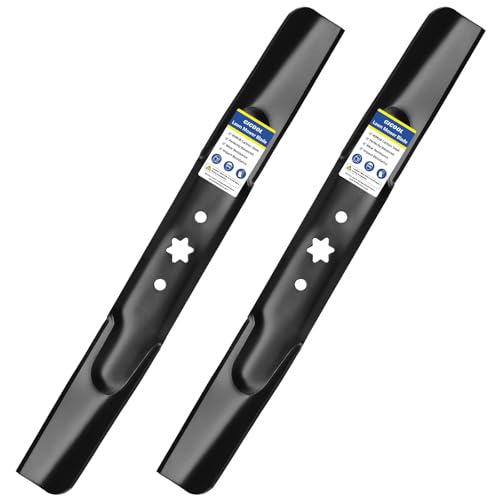
Pros
- Durable 40MnB steel construction resists bending and dulling
- High lift improves clipping collection in tall or damp grass
- Rust-resistant coating adds longevity and cleaner handling
- Simple swap with 6-point star center hole for fast installation
- Compatible with a wide range of 42-inch Cub Cadet and Troy Bilt mowers
Cons
- Not designed for mulching (only bagging and side discharge)
- Specific to 42-inch deck models, so verify compatibility before purchase
- May require more frequent sharpening if mowing over rocky or sandy soil
If you own a Cub Cadet or Troy Bilt mower with a 42-inch deck, the GICOOL 942-04308 replacement blade is a solid, no-nonsense option. It's a high-lift blade engineered to move grass clippings efficiently into the bag or out the side chute, making it ideal for homeowners who want a clean cut without constant clogs. This blade is best suited for DIY lawn care enthusiasts and homeowners who maintain their own yards and need reliable performance from spring through fall.
In real-world mowing, the high-lift design really shines when the grass is a bit long or damp. The blade generates strong airflow that lifts the grass before cutting, then directs clippings straight into the collection bag. That means fewer stops to clear a clogged chute and more time spent actually mowing. The 21-3/16-inch length and 2-3/8-inch width match factory specs, so you get the same swath and lift as the original part. The 40MnB steel holds an edge well for a budget-conscious blade, and the rust-resistant coating is a nice touch for those who store their mower in a damp shed.
Installation is straightforward. The 6-point star center hole fits the standard 5/8-inch spindle, and you just bolt it on with no extra adapters or modifications. It's a direct swap that takes about five minutes with a wrench. Build quality feels solid for the price, though the steel isn't quite as thick as some premium blades. That said, it's plenty durable for typical residential use. The coating wears off quickly during the first mow, but that's expected and doesn't affect performance.
A couple of realistic drawbacks: this blade is 2-in-1 only, so if you want a mulching blade, you'll need to look elsewhere. Also, it's specifically designed for 42-inch decks, so double-check your mower model before ordering. While the blade works well in normal conditions, very rocky or sandy lawns will dull it faster, and you might need to sharpen it more often than premium options.
Overall, the GICOOL 942-04308 is a smart buy for anyone with a compatible 42-inch mower who wants a reliable, easy-to-install replacement blade. It handles the tough stuff like damp grass without bogging down, and the price is right for homeowners who prefer to change blades regularly rather than sharpen. If you're looking for a no-fuss upgrade that keeps your lawn looking tidy, this blade delivers.
Blade Length: 21-3/16 inches (538 mm)
Blade Width: 2-3/8 inches (60 mm)
Thickness: 5/32 inches (4 mm)
Air Lift: 1 inch (25.5 mm)
Center Hole: 6-point star, 5/8 inch (16 mm) diameter
Blade Type: High lift
Material: 40MnB steel with rust-resistant coating
Compatible Deck Size: 42 inches
Modes: Bagging and side discharge

Pros
- Dramatically improves cut quality and mulching efficiency compared to standard blades.
- Very quiet operation - reduces mowing noise significantly, making early morning or late evening mowing more neighbor-friendly.
- Easy to install with a perfect fit on compatible decks, no extra hardware or modifications required.
- Durable construction that holds its edge well over time, even with regular use on tough grass.
Cons
- Mulching action is so effective that it can suck up small objects like hoses or sticks, so clear the lawn first.
- Safety paint on the blades may initially look dull but wears off after the first mowing session.
- Not recommended for bagging - these are designed primarily for mulching, so bagging performance may be reduced.
The UDC Parts GY20850 mower blades are a set of two mulching blades designed specifically for John Deere 42-inch lawn tractor decks. They replace a host of OEM part numbers including GY20850, GX22151, AM141033, and many others, making them a versatile drop-in upgrade for a wide range of models. Whether you own a D100, E100, S100 series, X300, or Z225, these blades are engineered to fit without any modifications.
Who should buy these blades? They are best suited for homeowners and DIYers who mow their own lawns and want professional-grade results without paying dealership prices. Contractors who maintain multiple properties will also appreciate the consistent cut quality and long blade life. If you prefer a manicured lawn with no clippings left behind, these mulching blades are an excellent choice.
Real-world performance is where these blades shine. Users consistently report a dramatic improvement in cut quality - the grass is cut cleanly and evenly, with the mulching action completely disintegrating clippings so there are no piles left to rake or re-mow. The blades operate with a noticeably quieter hum compared to standard blades, which reduces noise fatigue during long mowing sessions. The vacuum-like lift stands grass up for a more uniform cut, but it also means you should avoid running over hoses or debris.
Build quality is solid: the blades are made from premium high-strength steel that holds its edge well. They come pre-sharpened with a protective paint coating that wears off after the first use. Installation is straightforward - just remove the old blades, bolt on these, and you're ready. The balanced design minimizes vibration, which is easier on your mower's spindle bearings.
There are a couple of realistic drawbacks to consider. The aggressive mulching action can suck up small objects, so a quick lawn sweep is recommended before mowing. Also, if you prefer bagging your clippings, these blades may not perform as well as dedicated bagging blades - they are optimized for mulching. The safety paint may look dull initially, but it quickly disappears.
Overall, the UDC Parts GY20850 mower blades offer exceptional value. They deliver OEM-level or better performance at a fraction of the cost, backed by thousands of positive reviews. If you want a cleaner cut, less noise, and fewer clippings, these blades are a no-brainer upgrade for your John Deere 42-inch mower.
Blade Length: 21-3/8 inches (measured diagonally)
Blade Width: 2-3/4 inches
Thickness: 0.164 inches
Center Hole: 7-point star
Air Lift: 1 inch
Cutting Edge Length: 5-7/16 inches
Compatible Deck Size: 42 inches
Package Dimensions: 21.89 x 3.15 x 1.93 inches
Item Weight: 5.15 pounds (per pack of 2)
Manufacturer: UDC Parts
These blades replace John Deere OEM part numbers: UC21583, GX22151, GY20850, AM141033, AM137333, AM141034, AM141031, M154062, M145970, AM137327, AM141032, AM137329.
Compatible with John Deere 42-inch mower decks on models: 102, 105, 115, 125, 135, D100, D105, D110, D120, D125, D130, E100, E110, E120, E130, LA100, LA105, LA110, LA115, LA120, LA125, LA135, S100, S110, S120, S130, X105, X106, X107, X110, X120, X125, X126, X145, X305R, Z225, Z235, X300 (42-inch X Edge Deck), X304 (42-inch X Edge Deck), X310 (42-inch Edge Deck), X500 (42-inch Edge Deck), X520 (42-inch Edge Deck), SST15 (42C Deck), SST16 (42C Deck), LT160 (42C Deck), LT180 (42C Deck), S240 (42C Inch Deck).
Note: Parts may differ between different configurations of the same mower model. Please confirm your complete model number and deck type to ensure a proper fit.

Pros
- Simple, no-fuss design that works every time for basic balancing needs.
- Metal build feels solid and should hold up to years of garage use.
- Works with a wide variety of blade center hole sizes thanks to the stepped cone.
- Costs less than a coffee and delivers real performance improvement.
Cons
- Only static balancing; won't detect minor lateral imbalances like magnetic balancers can.
- May not fit blades with non-circular or odd-shaped center holes (e.g., some mulching or gator blades).
- Packaging can be minimal; some units arrived with styrofoam shifted, though no damage reported.
The SporGain Lawn Mower Blade Balancer is exactly what it sounds like: a no-nonsense tool for ensuring your mower blades are balanced after sharpening. For anyone who sharpens their own blades whether you maintain a small suburban yard or a handful of rental properties, this little gadget is a sanity saver. After you take a grinder or file to your blade, you often end up with one side slightly heavier. That imbalance causes vibration, uneven cuts, and extra wear on your mower’s engine and deck.
This balancer solves that problem simply. You set the blade on the tapered metal cone, and the heavy side drops down. Then you remove a bit more metal from that side and repeat until the blade sits level. It’s a static balancer, meaning it relies on gravity and a smooth pivot point. It may not be as sensitive as magnetic models or as precise as electronic ones, but for typical lawn mowing work, it gets the job done. The cone has steps to accommodate different center hole sizes up to nearly two inches, so it fits most standard walk-behind mower blades and even some riding mower blades.
Build quality is impressive for the price. The base and cone are made of metal, not plastic, so they won’t crack or warp. It’s small enough to toss in a tool bag or leave in a drawer. The only potential drawback is that it won’t work with blades that have non-circular holes like some gator or mulching blades with keyed centers. Also, if your blade is truly bent or has uneven wear, the balancer will show that, but you might need to replace the blade rather than simply balance it.
In real-world use, this balancer makes a noticeable difference. Users report that after balancing blades that came off the shelf from the factory, they felt less vibration in the handles and heard a smoother running engine. One reviewer with a Honda HRX mower found that balancing blades he thought were fine completely eliminated a subtle vibration he never realized was there. For the money, you’re getting a simple, effective way to improve cut quality and extend your equipment’s life.
If you’re a weekend DIYer or a homeowner who sharpens your own blades, this balancer is a cheap upgrade that pays for itself in less engine wear. Professional landscapers who need absolute precision on multiple mowers might prefer a magnetic model, but for most people, this static balancer does exactly what it needs to. A solid buy.
Product Dimensions: 2.4 x 2.4 x 2.1 inches
Item Weight: 3.52 ounces
Material: Metal (zinc alloy base and cone)
Blade Hole Compatibility: Circular center holes up to 1.97 inches (largest step)
Base Diameter: 2.36 inches
Color: Silver
Includes: One blade balancer only

Pros
- Low-cost investment that pays off by preventing premature mower repairs.
- All-metal build feels solid and stable during use.
- Works with nearly any residential lawn mower blade with a center hole.
- Simple to use no learning curve required.
Cons
- Static design may be slightly less sensitive than magnetic balancers for very heavy blades.
- Only accommodates blades with a center hole; some specialty blades may not fit.
- Small parts could be misplaced if not stored properly.
The SporGain Lawn Mower Blade Balancer is a straightforward, no-frills accessory that belongs in every DIY homeowner's workshop. It solves a common problem: after you sharpen your mower blade, an unbalanced blade causes annoying vibration, uneven cuts, and extra wear on the engine and spindle. This static balancer lets you quickly check and correct that balance before reinstalling the blade.
This tool is best suited for homeowners, gardeners, and anyone who maintains their own lawn equipment. It is not a power tool itself but an essential precision tool for blade maintenance. The metal construction feels sturdy the base and cone are made of durable alloy that should hold up well to repeated use in a garage or shed. The largest step on the cone measures 1.97 inches, and the base diameter is 2.36 inches, which fits most standard residential mower blades with a circular center hole.
In real-world use, you simply place the cone on the base, set the sharpened blade on top, and watch where it settles. A heavy side will drop, showing you where to remove more material. This static method is effective and requires no batteries or magnets. It is a bit slower than magnetic balancers, but for most home users, the extra few seconds are not an issue. The two-pack is a nice bonus you can keep one in your tool box and one near your workbench, or share with a neighbor.
Build quality is solid for the price point. The metal surface resists rust better than plastic balancers, though you should still wipe it clean after use. One drawback is that the cone and base are separate pieces, so they could be separated and lost if you are not careful. Also, while it works for most blades, blades with non-standard center openings or extremely heavy commercial blades may not balance as accurately. But for typical homeowner mowers it performs just fine.
Overall, the SporGain blade balancer is a smart, inexpensive addition to your lawn care routine. If you sharpen your own blades even once a season, this tool will help you get a smoother cut, reduce vibration, and prolong the life of your mower. It is a practical buy for any DIY yard worker.
Product Dimensions: 2.4 x 2.4 x 2.1 inches
Item Weight: 6 ounces
Material: Metal (aluminum alloy with zinc alloy base)
Type: Static blade balancer
Compatibility: Most lawn mower blades with circular center holes up to 1.97-inch diameter step
Package Includes: 2 blade balancers (each with base and step cone)

Pros
- Durable titanium coating extends blade life against abrasive turf and morning moisture
- Includes matching replacement screws for safe and secure installation on the cutting disc
- Clean cutting edge promotes healthier grass tips and prevents brown, frayed turf ends
- Generous 30-count pack covers multiple seasonal blade rotations at an accessible price point
Cons
- Requires careful handling during installation due to extremely sharp factory edges
- Blade life can shorten noticeably if the lawn contains frequent gravel, acorns, or exposed roots
- Not universally compatible with all robotic brands outside listed Husqvarna, Gardena, and Yard Force mount patterns
Maintaining a pristine suburban lawn with an automated robotic mower requires sharp, dependable blades. The FOTEEMO 30-pack titanium-coated robotic lawn mower blades are aftermarket replacements designed to fit widely used robotic mowers like Husqvarna Automower and Gardena units. These blades are well-suited for busy suburban homeowners, tech-savvy lawn enthusiasts, and eco-conscious yard owners who depend on daily automated cutting to keep their grass manicured without pushing a heavy gas mower.
When robotic mowers operate with dull blades, they tear grass blades rather than slicing them cleanly, which leads to unsightly brown tips and lawn dehydration. At 0.75 mm thick, these stainless steel blades feature a fine, razor-sharp edge that provides a clean, even trim across every pass. A clean slice allows turf to heal quickly, reducing lawn stress during hot summer dry spells. Because robotic units cut in continuous micro-cycles, having a sharp cutting profile ensures minimal resistance against the motor, helping the mower preserve battery runtime per charge cycle.
Each blade in this set features a gold-tone titanium coating applied over durable stainless steel. This surface treatment provides valuable resistance against moisture, lawn fertilizer salts, and plant acidity, preventing premature rust and edge degradation during damp spring mornings. In addition to the blades, the set includes brand-new mounting screws, which is crucial because old screws can strip, rust, or loosen after prolonged vibration on uneven ground. The balanced weight distribution helps the cutting disc spin freely without causing unwanted vibration in the mower chassis.
Swapping out blades on a robotic mower is one of the simplest DIY maintenance tasks a homeowner can perform. Using a standard screwdriver, replacing the three swinging blades takes less than five minutes on a Saturday morning. With 30 blades in the pack, homeowners have enough stock to change blades every few weeks through spring, summer, and peak fall growth without constantly needing to reorder. Storing the compact pack on a garage pegboard or workbench shelf takes up practically zero space.
While these blades deliver reliable everyday cutting performance, they are designed to swing freely on impact, meaning hidden rocks, fallen twigs, or surface tree roots can still nick or dull the edge over time. Homeowners with bumpy yards or heavy tree cover should do a quick sweep for fallen branches before daily scheduled runs. For owners of Husqvarna, Gardena, or Yard Force robot mowers seeking an economical, sharp, and rust-resistant alternative to pricey original factory parts, this 30-pack is a sensible choice for keeping your grass green and evenly clipped all season long.
The FOTEEMO replacement blades utilize a stainless steel core treated with a specialized titanium coating. This layer acts as a barrier against moisture and lawn chemicals that commonly cause pitting and rust on standard steel blades. Robotic mowers operate in dew-covered grass, light rain, and moist soil conditions, making corrosion resistance essential for extending the working life of the cutting edge.
At 0.75 mm in thickness, the blades strike a practical balance between edge retention and flexibility. When rotating on the cutting disc, the blades swing out via centrifugal force. If a blade strikes a solid pebble or pinecone, the swinging mount allows it to pivot back, reducing the likelihood of snapping. The included replacement screws feature fresh threads to ensure a snug fit that keeps each blade safely anchored while permitting free rotation.
Routine blade inspection is vital for keeping an automated mower running efficiently. Homeowners should plan to inspect the underside of the mower every two to four weeks during the active growing season. If grass tips start showing white or brownish frayed edges, the blades are likely becoming dull and should be swapped out promptly.
Before changing blades, turn off the mower master switch and wear safety gloves to protect your hands from the sharp edges. Remove the three old screws, wipe away any caked clippings from the mounting disc, and install three new blades using the fresh screws provided in the pack. Avoid overtightening so the blades can pivot smoothly on their mounting posts, ensuring balanced operation and reliable cutting performance.

Pros
- Wide compatibility with multiple blade hole types and brands
- Helps achieve smoother cutting and less vibration after sharpening
- Lightweight and easy to store in any workshop or garage
- Affordable price point for hobbyists and homeowners
Cons
- Plastic adapters may fit loosely on some balancer spindles, affecting precision
- Requires a level surface and careful visual inspection for accurate results
- Not as robust as metal balancing tools for heavy-duty commercial use
The LIZEWEI Lawn Mower Blade Balance Adapter Set is a practical accessory for anyone who sharpens their own mower blades. It includes a universal precision blade balancer plus five plastic adapters designed to fit different blade hole patterns: 5-point star, 6-point star, 7-point star, T-shirt holes, and bowtie holes (which also fit rectangular openings). This solves the common frustration of blades that won't center properly on the balancer's rounded steps, allowing for accurate balancing after sharpening.
This set is best suited for DIY homeowners, weekend lawn care enthusiasts, and small-scale property maintainers. If you regularly sharpen your reel or rotary mower blades and want to reduce vibration and engine wear, this kit provides a straightforward solution. It is not designed for high-frequency commercial use but handles typical residential lawn maintenance tasks with ease.
In real-world use, the system works as intended on a level surface. Place the appropriate adapter on the balancer spindle, set the blade on top, and observe if one end drops lower than the other. That indicates the heavier side needs more material removed. Several verified buyers report success balancing blades for brands like John Deere, Troy-Bilt, and Cub Cadet. The adapters effectively center the blade, making the process faster than balancing on a nail or screw.
Build quality is adequate for the price. The balancer is a simple tapered cone, and the plastic adapters feel reasonably sturdy. However, some users note that the adapters can have a slight slop on the balancer spindle, which may introduce minor inaccuracies. For the average homeowner, these tolerances are acceptable, but perfectionists might want to check fitment before purchase. The compact size (3.4 x 3.4 x 2.5 inches) makes it easy to store in a tool bag or drawer.
Overall, the LIZEWEI set offers good value for money. It addresses a specific pain point in blade maintenance and delivers on its promise of easier, more consistent balancing. If you are tired of guessing the center or using improvised methods, this inexpensive kit is a worthwhile addition to your workshop. Just be sure to use it on a stable, level workbench for best results.
Package Dimensions: 3.43 x 3.43 x 2.52 inches
Item Weight: 5 ounces
Manufacturer: LIZEWEI
ASIN: B0CHDH1QPL
Compatible Brands: Stihl, Oregon, Troy-Bilt, Cub Cadet, Honda, Lawn-Boy, Lawnmaster, Scotts, Snapper, Toro, and more
1 x 5-point star adapter
1 x 6-point star adapter
1 x 7-point star adapter
1 x T-shirt hole adapter
1 x Bowtie hole adapter (also fits rectangular holes)
1 x Universal precision mower blade balancer
The Reality of Balancing New Lawn Mower Blades
Yes, checking whether do new lawn mower blades need to be balanced is a vital maintenance step that every equipment owner should perform before bolting on new hardware. Even though most reputable manufacturers produce replacement blades intended to be ready for immediate installation, production tolerances and protective surface coatings can introduce subtle weight discrepancies between opposing blade tips. Installing an out-of-balance blade immediately subjects your mower deck, spindle assembly, and engine crankshaft to harmful harmonic vibrations. Taking two minutes to verify equilibrium on a static balancer prevents premature mechanical fatigue and ensures an even, manicured lawn surface.
Why Factory-New Blades Can Arrive Out of Balance
Heavy protective coatings are among the most common reasons brand-new cutting steel arrives with uneven weight distribution. Manufacturers routinely coat bare steel with thick powder coat layers or rust-inhibiting enamel to preserve the metal during warehouse storage and overseas transit. During the drying process, hanging blades can cause liquid coatings to pool toward one tip or along a single cutting edge. This localized layer of paint may seem minor to the eye, but even a few grams of excess coating on one wing creates measurable centrifugal imbalance at high operating speeds.
Industrial stamping and automated beveling processes also contribute to minor physical variations between the two ends of a single blade. Blades are stamped from large sheets of hardened steel, followed by mechanical grinding along the primary cutting edges. Slight differences in grinding wheel wear or heat dissipation during factory milling can leave one cutting sail slightly thicker or wider than the other. Mass production tolerances mean that individual blades can occasionally slip past inspection with minute weight differences.
Handling and transit impacts can also alter the physical profile of a replacement blade before you open the package. Steel components packaged in thin cardboard boxes often endure drops, rough stacking, and vibration across distribution networks. A severe jolt during freight transport can create minute bends or twists along the blade plane that affect rotational equilibrium. Checking balance before mounting ensures you detect manufacturing flaws, shipping shifts, or surface irregularities before spinning the blade on your machine.
Mechanical Consequences of Running an Unbalanced Blade
Standard lawn mower blades spin at rotational speeds typically exceeding three thousand revolutions per minute. At this velocity, even a minor weight imbalance produces massive centrifugal forces that pull the center of rotation away from the spindle axis. The resulting harmonic vibration radiates directly through the blade spindle housing, deck mounting brackets, and machine chassis. Operators will quickly notice this vibration through the handle grips on a push mower or through the floor pan of a riding tractor.
Persistent deck vibration accelerates physical wear across critical mechanical connections. Spindle bearings are particularly vulnerable to lateral eccentric forces, which break down internal grease seals and lead to noisy, overheating bearing failure. On walk-behind mowers where the blade mounts directly to the engine crankshaft via a blade adapter, severe vibration can damage the lower oil seal or even bend the engine shaft. Constant cyclic stress can crack thin stamped steel decks or loosen structural mounting hardware while mowing.
Turf quality also deteriorates rapidly when an unbalanced blade wobbles inside the cutting chamber. Because one blade wing travels slightly lower or oscillates vertically during rotation, grass blades are clipped at uneven heights across each pass. This leaves behind noticeable ridges, stepped patterns, and frayed turf tips that turn brown in the sun. Running a verified, balanced blade keeps the cutting plane flat and parallel to the ground, producing the crisp, uniform turf cut every homeowner expects.
Static Balancers and Cone Balancing Devices
Testing replacement blades at home requires simple, reliable tools designed to reveal gravitational tilt. A standard static cone balancer, such as the metal design from SporGain, uses a pointed central pivot pin supporting a tiered step cone. The user places the center hole of the blade over the appropriate cone step, allowing the blade to pivot freely on the sharp center pin. If the blade remains level in the air, both wings carry identical mass, but if one side drops toward the table, the heavier side requires adjustment.
Static cone balancers made from machined metal provide greater rigidity and precision than lightweight plastic alternatives. Plastic balancing cones can warp under the weight of thick commercial steel or develop flat spots that cause false readings. The base of the balancer must rest on a completely level workbench, as even a minor slant on your work surface will distort the balance reading. Checking your work surface with a small bubble level before setting up the balancer guarantees that observed tilting comes solely from the blade itself.
Some DIY homeowners attempt to balance blades horizontally on a wall-mounted nail or screwdriver shaft. While this improvised method can detect severe weight differences, friction between the mounting hole and the nail shaft often conceals minor imbalances. A dedicated static balancer with a low-friction pivot point provides far greater sensitivity to subtle weight discrepancies. Investing in reliable balancing equipment ensures accurate results every time you swap blades or perform seasonal maintenance.
Handling Star Holes and Irregular Mounting Geometries
Many modern residential mowers feature proprietary center-hole patterns rather than standard circular bores. Equipment brands frequently employ 5-point, 6-point, or 7-point star designs, as well as bowtie and rectangular mounting patterns. Placing a star-shaped center hole directly onto a smooth, rounded balancing cone often causes the blade to seat off-center. When the center hole fails to locate accurately on the cone axis, the balancer gives misleading readings that suggest an imbalance where none exists.
Specialized balancing adapters solve this centering issue by matching the exact internal profile of the blade hole. The LIZEWEI balance adapter set, for example, includes dedicated inserts for 5-point, 6-point, and 7-point stars alongside bowtie configurations. These adapters nest securely into the irregular center cutout while providing a true circular center that seats evenly on a static balancer cone. Using the correct adapter ensures that the rotational axis during testing perfectly matches the spindle center on your mower deck.
Verifying adapter fit before testing is essential to prevent false readings. The adapter insert must fit snugly into the center cutout without binding or cocking sideways at an angle. Any canting of the adapter will tilt the blade and generate a false indication of wing heaviness. Once seated squarely, the blade and adapter assembly rests on the balancer pin, revealing the true balance profile of the cutting wings.
How Blade Geometries Affect Weight Distribution
Different blade styles feature distinct aerodynamic shapes and physical contours that influence balance sensitivity. Standard low-lift and medium-lift blades feature relatively flat profiles with subtle upturned rear sails, making them simple to center and balance. High-lift designs, such as the GICOOL high-lift replacement blades crafted from 40MnB steel for 42-inch decks, feature much taller rear wings. These pronounced sails generate strong vacuum airflow for bagging, but their taller profiles require careful centering on the balancer cone.
Specialized mulching blades present additional surface contours that require careful visual inspection. Blades such as the UDC Parts GY20850 gator-style mulching blades feature serrated teeth along the rear sails to chop clippings repeatedly. Understanding lawn mower blade steel types helps explain how different alloy compositions and stamping methods handle these intricate shapes. With mulching designs, uneven coating accumulation inside the rear tooth serrations is a frequent cause of minor factory imbalances that you can resolve before bolting the blade to the deck.
Robotic mower blades operate on a completely different mechanical principle than traditional rotary cutting steel. Replacement packs like the FOTEEMO titanium-coated 0.75 mm razor blades utilize small, free-swinging individual blades secured with shoulder screws. Because these individual blades weigh only a fraction of an ounce and swing freely from a rotating disc, they do not require balancing on a static cone. Instead, manufacturers maintain balance by stamping them to uniform weights and recommending that users replace the full set of small blades simultaneously.
Correcting Imbalance on a New Blade Without Damaging It
When a static balancer indicates that one wing of a new blade is heavier than the other, correcting the issue requires targeted, conservative metal removal. Homeowners should never attempt to correct an imbalance by grinding material off the cutting edge bevel. Altering the factory-ground cutting angle weakens the cutting bevel and creates mismatched edge profiles between the two ends. Furthermore, aggressive grinding along the cutting bevel can introduce heat that ruins the steel temper.
The safest place to remove excess material is along the flat back edge or the rear sail of the heavy wing. Using a flat metal hand file, lightly remove protective powder coating or a minute layer of steel from the trailing back edge. Work slowly, making three or four smooth, even strokes across the back edge before returning the blade to the balancer cone. In many cases, simply scraping away a heavy run of dried paint from the heavy side is enough to restore horizontal equilibrium.
Avoid using aggressive power grinders or bench wheels to balance a brand-new blade. High-speed grinding discs remove metal too quickly, making it easy to remove excessive material and shift the imbalance to the opposite wing. A simple hand file offers total control and prevents over-grinding while keeping the blade cool. Once the blade rests horizontally without dipping to either side, the balancing procedure is complete.
Safe Deck Preparation and Secure Blade Installation
Working under a mower deck requires strict adherence to safety protocols to prevent accidental engine starts. On gasoline mowers, always disconnect the spark plug boot and tuck the wire safely out of reach before reaching near the blade chamber. If working on a battery-powered mower, remove the safety key and disconnect the lithium-ion battery pack entirely. Wearing heavy leather work gloves shields your fingers from sharp factory edges while handling the cutting steel.
Securing the blade during installation prevents dangerous slipping when tightening the central mounting hardware. Utilizing a dedicated blade lock, such as the KINTLE 490-850-0005 universal removal tool, securely clamps the cutting blade to the deck flange. This clamp immobilizes the blade, allowing you to apply proper torque to the mounting bolt without fighting blade spin. Improvised wooden blocks can shift or slip under heavy wrench pressure, whereas a rigid metal clamp holds the blade firmly in place.
Always inspect the spindle face, mounting washer, and retention bolt before tightening the assembly. Debris, dried grass clippings, or rust trapped between the blade and the spindle adapter will cause the blade to mount at a slight angle. This mechanical misalignment mimics blade imbalance by causing severe rotational vibration even if the blade itself is balanced. Cleaning the mating surfaces with a wire brush ensures flat, flush seating against the spindle hub.
Pre-Installation Checks Versus Long-Term Maintenance
Verifying new blade balance sets a reliable baseline that makes future maintenance faster and more predictable. While new blades typically require only minor coating removal, blades that have completed a full mowing season face stone strikes, dirt abrasion, and uneven sharpening wear. Tracking ongoing mower blade replacement costs helps homeowners decide when an old, heavily worn blade should be retired in favor of fresh replacement steel. When replacement steel arrives, checking its initial balance guarantees you are not starting the season with pre-existing vibration issues.
Mid-season sharpening routines demand even closer attention to balance than initial pre-installation checks. Hand filing or bench grinding dull cutting edges naturally removes varying amounts of metal from opposite wings over time. Placing the blade back on the static balancer after every sharpening session prevents progressive weight divergence. Maintaining balance throughout the blade lifecycle protects your equipment investment and prevents costly spindle rebuilds.
Establishing a consistent deck inspection routine keeps your outdoor power equipment operating smoothly across every month of the growing season. Taking a few moments to inspect mounting hardware, scrape deck buildup, and verify blade balance pays massive dividends in turf health and mower longevity. By verifying balance right out of the box, you ensure that every rotation delivers clean cuts, minimal deck stress, and reliable performance across your entire lawn.


Write Your Review
No reviews yet. Be the first to share your experience!