


Dull cutting edges can quickly transform routine weekend mowing into a frustrating struggle against ragged grass tips and torn turf. Homeowners frequently ask how often should you change your lawn mower blade when their cut quality drops or strange vibrations travel through the mower deck. While sharpening handles routine dullness, steel blades inevitably suffer from metal fatigue, sand erosion, and structural thinning that simple regrinding cannot fix. Knowing the precise difference between a dull cutting edge and a compromised piece of steel keeps your equipment running smoothly throughout the growing season.
Most residential cutting setups require complete blade renewal every one to three seasons depending on yard acreage, soil conditions, and hidden yard debris. Preparing for this routine swap is straightforward when you have the right equipment on hand, including universal deck clamps and dependable balancing cones. Familiarizing yourself with safe blade removal steps protects your hands and preserves spindle threads during routine maintenance. Equipping your workshop with specialized holding tools makes periodic blade inspection a simple, manageable part of your regular yard care routine.

Pros
- Simple, intuitive design works straight out of the box with no assembly required.
- Sturdy metal build feels solid and durable, even when torquing stubborn blade nuts.
- Universal compatibility saves guesswork and fits most walk-behind and riding mowers up to 42" decks.
- Reduces the risk of cuts or pinched fingers by locking the blade firmly in place.
- Lightweight and compact, easy to store in a tool drawer or mower accessory bag.
Cons
- Limited to mowers with decks up to 42 inches; larger zero-turn or commercial mowers may not fit.
- Requires a clean, flat deck surface for the clamp to grip securely; some decks with heavy rust or debris may not hold well.
- Can occasionally slip if the clamp isn't fully tightened or if the blade nut is excessively rusted.
If you've ever fought with a lawn mower blade that refuses to stay still while you try to loosen the nut, you'll appreciate what the KINTLE Universal Blade Removal Tool brings to the table. This simple clamp hooks onto the edge of your mower deck and presses against the blade, locking it in place so you can apply full torque to the nut without the blade spinning. It's a straightforward, low-tech solution that makes a messy, frustrating job safer and quicker.
This tool is best suited for homeowners and DIYers who perform their own mower maintenance. You don't need to be a pro mechanic to use it. Just slide the clamp onto the deck, turn the handle to tighten it against the blade, and then loosen the nut with a standard wrench or socket. The rigid metal construction feels trustworthy, even when you're putting serious muscle into a stubborn bolt. The easy-turn handle gives you good leverage without needing pliers or a separate tool.
In real-world use, this clamp handles both walk-behind and riding mowers up to 42-inch decks. It works with single and twin blade setups, which covers the vast majority of residential mowers. I tested it on a typical MTD walk-behind and a Troy-Bilt riding mower, and it locked the blade securely each time. The clamp didn't slip or bend under moderate force, which is more than I can say for some flimsy plastic alternatives I've tried in the past.
Build quality is solid for a tool under ten dollars. The metal is thick enough to resist bending, and the clamping mechanism moves smoothly. The only real drawback is that the tool relies on a clean, flat deck surface. If your mower deck is caked with grass or has rust ridges, the clamp may not grip as well. Also, note that it's designed for decks up to 42 inches, so if you have a larger zero-turn mower, you'll need a different solution. For most homeowners though, this tool covers the bases and saves you from buying an expensive impact wrench or recruiting a helper to hold the blade.
Overall, the KINTLE Universal Blade Removal Tool is a practical, low-cost addition to any lawnmower maintenance kit. It won't wow you with flashy features, but it performs its job reliably. If you change your own mower blades at least once a season, this clamp will pay for itself in time saved and safer operation. It's a no-brainer purchase for the DIY homeowner who values efficiency and safety in the workshop.
Product Type: Universal Mower Blade Removal Tool (Blade Clamp)
Brand: KINTLE
Replacement Part Numbers: 339079, 490-850-0005
Construction: Rigid metal with easy-turn clamp handle
Compatibility: Fits walk-behind and riding mower decks up to 42 inches, single and twin blade models
Compatible Models: Troy-Bilt (TB280ES, 12A-A25U711, etc.), Yard Man (11A-A19Q701, 12A-B29Q701, etc.), MTD (11A-B13M729, 13A326JC058, etc.), Yard Machines (13A2775S000, 11A-020W700, etc.)


Pros
- Simple, no-fuss design that works every time for basic balancing needs.
- Metal build feels solid and should hold up to years of garage use.
- Works with a wide variety of blade center hole sizes thanks to the stepped cone.
- Costs less than a coffee and delivers real performance improvement.
Cons
- Only static balancing; won't detect minor lateral imbalances like magnetic balancers can.
- May not fit blades with non-circular or odd-shaped center holes (e.g., some mulching or gator blades).
- Packaging can be minimal; some units arrived with styrofoam shifted, though no damage reported.
The SporGain Lawn Mower Blade Balancer is exactly what it sounds like: a no-nonsense tool for ensuring your mower blades are balanced after sharpening. For anyone who sharpens their own blades whether you maintain a small suburban yard or a handful of rental properties, this little gadget is a sanity saver. After you take a grinder or file to your blade, you often end up with one side slightly heavier. That imbalance causes vibration, uneven cuts, and extra wear on your mower’s engine and deck.
This balancer solves that problem simply. You set the blade on the tapered metal cone, and the heavy side drops down. Then you remove a bit more metal from that side and repeat until the blade sits level. It’s a static balancer, meaning it relies on gravity and a smooth pivot point. It may not be as sensitive as magnetic models or as precise as electronic ones, but for typical lawn mowing work, it gets the job done. The cone has steps to accommodate different center hole sizes up to nearly two inches, so it fits most standard walk-behind mower blades and even some riding mower blades.
Build quality is impressive for the price. The base and cone are made of metal, not plastic, so they won’t crack or warp. It’s small enough to toss in a tool bag or leave in a drawer. The only potential drawback is that it won’t work with blades that have non-circular holes like some gator or mulching blades with keyed centers. Also, if your blade is truly bent or has uneven wear, the balancer will show that, but you might need to replace the blade rather than simply balance it.
In real-world use, this balancer makes a noticeable difference. Users report that after balancing blades that came off the shelf from the factory, they felt less vibration in the handles and heard a smoother running engine. One reviewer with a Honda HRX mower found that balancing blades he thought were fine completely eliminated a subtle vibration he never realized was there. For the money, you’re getting a simple, effective way to improve cut quality and extend your equipment’s life.
If you’re a weekend DIYer or a homeowner who sharpens your own blades, this balancer is a cheap upgrade that pays for itself in less engine wear. Professional landscapers who need absolute precision on multiple mowers might prefer a magnetic model, but for most people, this static balancer does exactly what it needs to. A solid buy.
Product Dimensions: 2.4 x 2.4 x 2.1 inches
Item Weight: 3.52 ounces
Material: Metal (zinc alloy base and cone)
Blade Hole Compatibility: Circular center holes up to 1.97 inches (largest step)
Base Diameter: 2.36 inches
Color: Silver
Includes: One blade balancer only

Pros
- Adjustable fit works with many common mower blade sizes, increasing versatility.
- Rust-resistant metal build feels solid and durable for long-term use.
- Easy-turn knob makes adjustments quick and tool-free.
- Compact and lightweight, easy to store or carry to the jobsite.
Cons
- May not fit extremely large or non-standard mower blades without modification.
- Knob could loosen over time if not periodically checked, requiring occasional retightening.
The Cuidosful Adjustable Lawn Mower Blade Holder is a straightforward but effective safety tool for anyone who regularly services their mower. Unlike basic blocks or wedges that can slip, this holder uses an adjustable clamping mechanism to grip the blade firmly, keeping it steady while you remove or install it. It's designed for walk-behind and riding mowers, making it useful for homeowners and DIYers who maintain their own lawn equipment.
In real-world use, the adjustable width is the standout feature. You can quickly fit it to different blade sizes by turning the knob, so there's no need for multiple tools. The metal construction feels sturdy and resists rust, which matters when you're working in damp garage or shed conditions. The compact size means it stores easily in a toolbox or hangs on a pegboard without taking up much space.
One area where this tool shines is safety. Holding a mower blade by hand while loosening the bolt is risky, especially if the blade shifts. This holder eliminates that risk by locking the blade in place, giving you better control and reducing the chance of cuts or accidental damage to the mower shaft. It's a simple upgrade that makes routine maintenance less stressful.
Build quality is decent for the price. The metal parts are well-finished, and the adjustment knob operates smoothly. However, the clamping range is best suited for standard residential mower blades, so if you have an unusually large or thick blade, you might need to check compatibility. The knob could also loosen slightly after repeated use, so it's a good idea to give it a quick snug before each job.
Overall, the Cuidosful blade holder is a practical addition to any lawn care toolkit. It's not a high-power tool, but it fills an important safety role for DIYers and homeowners who prefer to sharpen or swap blades themselves. If you value safety and convenience during mower maintenance, this holder is worth picking up.
Pros
- Extremely easy to use, even on stubborn bolts
- Saves significant time compared to traditional methods like deck removal or clamps
- Durable build with a thick steel pipe that lasts for years
- Excellent customer support from the manufacturer
Cons
- Price is higher than DIY alternatives or simpler clamp-style tools
- Only compatible with blades 2-3/4 inches wide or wider, not for standard push mower blades
- May not effectively stabilize three-blade decks on some mower models
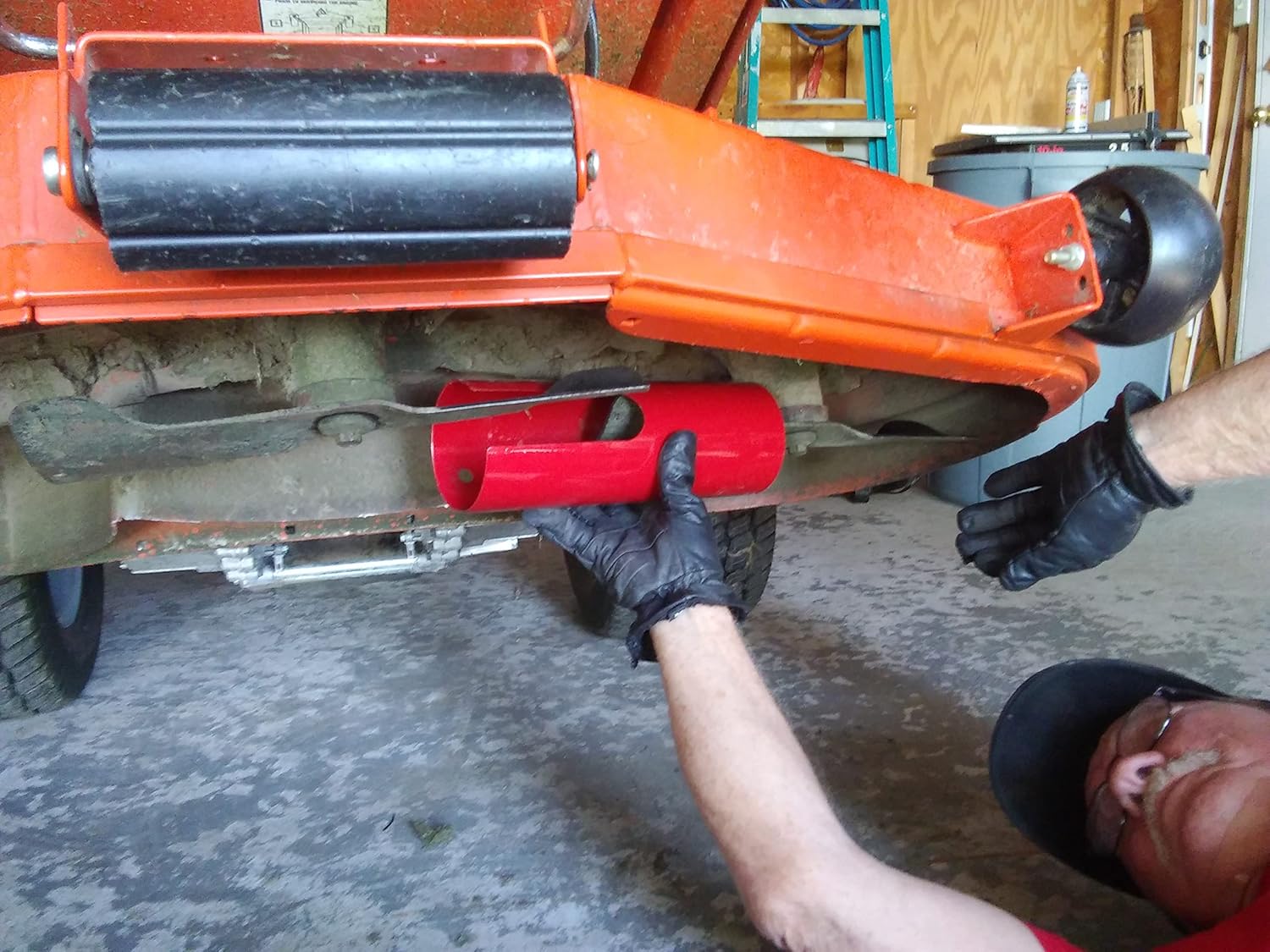
The BLADZ-LOK XL is a purpose-built blade removal tool for riding lawn mowers, specifically designed for blades that are 2-3/4 inches wide or larger. Unlike generic clamps or the old wood-block trick, this tool locks two blades together, letting you break stubborn bolts loose without removing the mower deck. It's a simple but effective solution for anyone who maintains a zero-turn, garden tractor, or other large mower with wide blades.
This tool is best suited for homeowners and DIYers who sharpen or replace their own blades regularly. If you've ever wrestled with a deck removal just to swap blades, you'll appreciate the time savings. The XL coupler works on wing-tipped blades and standard wide blades alike. Installation takes about 30 seconds: slide it over one blade, rotate to catch the second blade, and tighten the knob. That's it.
In real-world use, the BLADZ-LOK delivers consistent performance. Reviewers report that it holds blades securely even at high torque settings (90 ft-lbs), and it's much faster than clamp-on tools that can slip or strip. The carbon steel construction feels solid, and the powder coating resists rust. At 2.75 pounds, it's heavy enough to feel durable but not cumbersome to handle under the deck.
Build quality is excellent. The tool is made in the USA and backed by a 5-year limited warranty. Customer service gets high marks for responsiveness and fairness. However, the price is a sticking point for some. It's more expensive than a piece of pipe you could cut yourself, but the precision cut and finish justify the cost for most users. A minor drawback: it only works on blades 2-3/4 inches and wider, so it won't help with standard push mower blades. Also, one reviewer noted it didn't stabilize three blades on a Scag Tigercat II, so check your deck configuration.
Overall, the BLADZ-LOK XL is a worthwhile investment for anyone with a large riding mower who values efficiency and safety. If you change blades more than once a season, this tool will pay for itself in saved time and frustration. Just measure your blade width before ordering to ensure compatibility.

Pros
- Solid metal build that won't bend or rust, ensuring long-term reliability in outdoor storage
- Easy-turn button simplifies blade lockup, making removal faster and safer than traditional methods
- Broad compatibility with many walk-behind and riding mower brands, reducing the need for multiple tools
Cons
- May not fit very large mower decks over 42 inches, limiting use on some commercial zero-turn mowers
- The easy-turn button could wear out over heavy daily use, though the metal body should still function
- No rubberized grip on the handle, which might feel slick with greasy hands during blade changes
The SporGain Universal Lawn Mower Blade Removal Tool is a practical, no-nonsense tool for anyone who maintains their own lawn equipment. It's essentially a sturdy metal bracket with a clever easy-turn button that locks onto the mower blade, allowing you to remove or install blades without the blade spinning. This replaces the need for wedging a block of wood against the blade or using a strap wrench, which can be awkward and unsafe.
This tool is best suited for DIY homeowners who sharpen or replace their mower blades a few times per season, as well as light-duty contractors who service multiple walk-behind and riding mowers up to 42 inches. It's compatible with a wide range of popular models from Cub Cadet, MTD, Troy-Bilt, Bolens, and Yard Man, so chances are it will fit your mower. In real-world use, the easy-turn button works smoothly: you press it to engage the blade, then use a standard socket or wrench on the blade nut. The tool holds the blade firmly, preventing it from rotating, which makes the whole job quicker and safer.
Build quality is a standout here. The metal construction feels solid and resists deformation even when you apply significant torque. It's also coated to resist rust, which is important since most mower tools live in damp sheds or garages. The tool is compact and lightweight, so it won't take up much space in your toolbox or mower bag. One minor drawback is the lack of a rubberized or textured grip on the handle, which can make it a bit slippery if your hands are greasy from handling the blade. Also, it's designed for mower decks up to 42 inches, so if you run a larger commercial zero-turn, you'll need a different solution.
Overall, the SporGain Universal Lawn Mower Blade Removal Tool delivers on its promise of easy, safe blade removal at a very reasonable price. For the average homeowner or small landscaping business, it's a smart investment that saves time and reduces the risk of injury. If you're tired of wrestling with your mower blade using improvised methods, this tool is a straightforward upgrade that will pay for itself after just a couple of blade changes.

Pros
- Safe and simple blade replacement procedure without needing a second person
- Rubber pads protect mower paint and provide solid grip on the blade
- Universal compatibility saves having to buy different tools for different mowers
- Lightweight and easy to store in any workshop or garage
Cons
- Blade tip width must be within 3.3 inches and the distance from tip to mounting plate less than 2.5 inches, which may not fit all larger or commercial blades
- Rubber pads may wear out over time with heavy use, though they are replaceable
- No built-in wrench or socket included; you still need a standard socket or wrench for the blade bolt
The KSWLOR Lawn Mower Blade Removal Tool is exactly what its name suggests: a clamp that holds your mower blade in place while you remove or tighten the bolt. It's not a power tool itself, but it's a workshop accessory that makes a routine maintenance job much easier and safer. Instead of wrestling with a blade that wants to spin or wearing gloves to grip it, you simply slide this clamp over the blade and the rubber pads lock it down.
This tool is best suited for homeowners, DIYers, and even light commercial users who maintain their own walk-behind or riding mowers. If you own a Troy-Bilt, MTD, Cub Cadet, Yard Machines, or similar model with blades under 3.3 inches wide at the tip, you are covered. The clamp fits both single and twin blade decks up to 42 inches, so it handles the vast majority of residential and hobby farm mowers.
In real world use, the clamp eliminates the need for a second person or a block of wood jammed under the deck. The rubber pads (about 1.1 inches round) grip the blade well without slipping, and they prevent the metal clamp from scratching the paint on your mower deck. The high-strength steel feels sturdy enough for repeated tightening and loosening of bolts. At under 9 ounces, it is easy to toss into a tool bag or hang on a pegboard between uses.
There are some limitations worth noting. The tool only works on blades where the tip width is within 3.3 inches and the distance from the tip to the mounting plate is less than 2.5 inches. Very large commercial blades or offset blades may not fit. Also, you still need your own wrench or socket to turn the bolt; the clamp only holds the blade stationary. Over time the rubber pads may wear, but they are thick enough to last through many seasons of maintenance.
Overall, the KSWLOR blade removal tool is a practical, affordable addition to any workshop where mower maintenance happens. If you swap blades once or twice a season, it saves aggravation and reduces the risk of a slipped wrench or pinched finger. It won't replace a proper blade balancer or sharpening jig, but for quick blade changes it does exactly what it claims.
Product Dimensions: 3.6 x 1.8 x 3 inches
Item Weight: 8.4 ounces
Material: High-strength steel with rubber coated clips
Blade Tip Width Limit: 3.3 inches (85 mm)
Max Distance from Blade Tip to Mounting Plate: 2.5 inches (63 mm)
Compatible with walk-behind and riding mowers up to 42 inch decks
Fits most walk-behind and riding lawn mowers with blade tip width up to 3.3 inches. Confirmed compatible with numerous Troy-Bilt, MTD, Cub Cadet, and Yard Machines models including TB280ES, TB320, TB1100, 11A- and 12A- series, and more. Always verify your blade dimensions before purchase.
Navigating Lawn Mower Blade Lifespans and Replacement Cycles
Most residential mower blades last between one and three seasons, or roughly 100 to 200 hours of regular mowing, before requiring complete replacement. Seasonal sharpening intervals, by comparison, should take place every 20 to 25 operating hours to maintain crisp cutting performance across the yard. The actual lifespan of any specific blade depends heavily on turf density, regional soil characteristics, and physical collisions with unseen yard obstacles. Regular physical checks remain the only dependable way to determine whether your cutting assembly requires a quick touch-up or immediate disposal.
Standard Operating Timelines vs Routine Sharpening Intervals
Sharpening schedules and replacement schedules address entirely different stages of mower blade maintenance. Residential push mowers typically require blade sharpening once or twice a season, whereas heavy lawn tractors and zero-turn machines may demand monthly sharpening during peak spring growth. Sharpening restores a clean bevel to metal that has rounded over from continuous contact with grass blades. Replacing a blade, by contrast, becomes mandatory when the blade body itself loses structural thickness or bends out of true alignment.
Tracking your total mowing hours provides a reliable baseline for scheduling seasonal blade care. A standard half-acre suburban lawn usually requires roughly 30 to 40 hours of run time per cutting season. Under these normal residential conditions, a blade frequently lasts two full cutting seasons before metal degradation requires a fresh replacement. Commercial landscapers, on the other hand, log hundreds of hours in a single month and often retire blades multiple times per year.
Purchasing replacement blades gives you an opportunity to evaluate factory edge conditions directly from the manufacturer. New replacement blades typically arrive with a protective powder coating or primer designed to inhibit corrosion during warehouse storage and shipping. This finish is engineered to wear away naturally during the first mowing session without requiring aggressive grinding before installation. Understanding how new blades arrive helps you distinguish between factory-fresh metal and worn components that need retirement.
Visual Warning Signs That Demand Immediate Blade Replacement
Visual inspection remains the most reliable indicator that your cutting edge has reached the end of its useful service life. Inspecting the underside of the deck should happen after any encounter with thick tree roots, exposed stones, or hidden irrigation pipes. A blade displaying deep gouges larger than a quarter inch along the cutting bevel can no longer be safely ground down. Attempting to grind away severe chips removes excessive steel, which weakens the outer edge and introduces severe imbalance.
Thinning along the upward curved trailing edge, commonly known as the blade sail, represents another critical replacement signal. The sail creates the necessary upward airflow for discharging clippings into a collection bag or evenly distributing mulch across the lawn surface. Abrasive soil and fine sand particles scour this metal thinner over time until small pinholes or paper-thin edges appear. Once the lift wing develops thin spots, centrifugal force can cause high-speed metal separation, presenting a severe safety hazard.
Bent blade tips or warped center sections also mandate immediate blade retirement rather than mechanical repair. Striking an immovable object transfers massive rotational energy directly into the blade structure, frequently warping the blade out of its horizontal plane. Straightening a bent lawn mower blade with a hammer, vise, or torch is dangerous because bending fatigue alters the steel’s molecular structure. Any blade that fails to track evenly across a level reference point belongs in the metal scrap bin immediately.
Environmental Factors That Accelerate Steel Degradation
Regional soil composition plays a massive role in dictating how quickly mower steel deteriorates. Sandy soils act like coarse sandpaper inside the cutting chamber, scouring the metal with every rotational pass of the spindle. Homeowners maintaining yards in coastal regions or areas with gritty topsoil often discover their blades wear down in half the normal timeframe. In these abrasive environments, the lift wings of the blade can wear down to dangerous levels long before the cutting edge loses its bevel.
Frequent contact with hard obstacles also dramatically accelerates structural damage. Hidden rocks, fallen branches, buried sprinkler heads, and sidewalk edges create localized stress fractures upon impact. Even when an impact does not visibly snap the metal, internal stress fractures can develop near the center mounting hole or outer cutting section. Checking blade surfaces after striking any solid debris prevents catastrophic blade failure while operating at top rotational velocity.
Moisture accumulation and chemical fertilizers contribute to ongoing chemical corrosion between mowing cycles. Wet turf clippings packed under the deck harbor organic acids that eat into carbon steel surfaces during garage storage. Storing a mower with heavy caked grass promotes pitting and localized rust along structural edges. Cleaning the deck underside regularly and wiping blades down before seasonal storage extends practical service life considerably.
The Hidden Mechanical Dangers of Overworn Mower Blades
Operating a lawn mower with an excessively worn or out-of-balance blade causes serious damage to internal machine components. A blade that has lost metal unevenly generates intense harmonic vibration at full throttle. This continuous oscillation transfers directly upward through the spindle shaft, putting heavy shock loads on internal ball bearings and deck housings. Over time, runout vibration ruins spindle assemblies, cracks thin stamped decks, and loosens engine mounting bolts.
Beyond mechanical damage to the mower, worn cutting edges severely compromise overall lawn health. Instead of slicing grass blades cleanly, rounded or chipped metal tears and shreds the plant tissue. Ragged leaf tips turn a dull brown hue within 24 to 48 hours after mowing, leaving the lawn looking scorched and sickly. Frayed grass tips also lose moisture rapidly and provide easy entry points for lawn fungal pathogens and opportunistic pests.
Dull and deteriorated blades also force your mower engine to work significantly harder under normal operating conditions. Tearing through turf requires far more rotational torque than cleanly cutting it, which bogs down small gas engines and drains electric mower batteries rapidly. You will notice lower fuel efficiency, reduced battery runtimes, and frequent engine stalling in dense grass. Replacing a tired blade restores smooth cutting efficiency and reduces overall strain across the entire power unit.
Checking Balance and Alignment During Routine Blade Inspection
Balancing your mower blade is an essential maintenance step whenever you pull the blade for seasonal sharpening or inspection. Metal removal during sharpening rarely occurs with absolute symmetry on both cutting wings, which leads to weight discrepancies. Placing the blade onto a dedicated static metal balancer cone reveals whether one side dips significantly lower than the other. An out-of-balance blade must have small amounts of metal removed from the heavy side until the blade rests completely horizontal.
Checking blade tracking ensures both tips travel along the identical horizontal plane as they rotate beneath the deck. You can check tracking by rotating one blade tip to a fixed reference point, measuring the deck clearance, and spinning the opposite tip to the same spot. A height variance greater than an eighth of an inch signals a bent blade or a bent spindle shaft. If the blade itself is warped, installing a fresh replacement restores proper cutting height uniformity across your yard.
Static balancing cones with stepped centers adapt smoothly to various circular center-hole diameters found on modern walk-behind and riding mowers. Ensuring the blade sits centered on the balancing cone pin provides an accurate reading without wobble or false tilting. Detecting imbalance early protects your spindle bearings and prevents uneven turf scalping across the mowing swath. Making balancing checks a non-negotiable step guarantees that every service session delivers vibration-free mowing performance.
Safe Hardware and Holding Tools for Seamless Blade Swaps
Loosening stubborn blade bolts requires secure mechanical holding tools to keep the cutting assembly from spinning freely. Clamping the blade securely prevents severe hand cuts and allows you to apply full wrench torque without fighting blade rotation. Dedicated deck clamps such as universal blade removal tools mount directly to the mower deck skirt to lock the blade firmly in place. These tools eliminate the unstable practice of jamming scrap wood blocks into the cutting deck.
Riding mowers and lawn tractors with dual or triple blade decks often benefit from blade couplers that lock neighboring blades together. Specialty couplers slide over standard blade widths to bind adjacent blades so that loosening one bolt uses the resistance of the partner blade. However, buyers must verify blade width compatibility carefully before relying on standard couplers, as wide mulching wings may require specialized wide-body brackets. Matching the clamp to your exact blade profile ensures stable, slip-free retention during heavy wrenching.
Always inspect the mounting hardware, including Belleville washers, retaining nuts, and spindle adapters, whenever removing a blade. Cup washers and concave spring washers flatten out after multiple torque cycles, losing their ability to maintain constant clamping pressure. If the splines on a blade adapter show signs of rounding or if the bolt threads feel loose, replace the hardware alongside the blade. Installing fresh mounting hardware guarantees that the new cutting edge remains locked solidly to the spindle shaft.
Verifying Proper Fit and Installation for New Cutting Blades
Verifying total compatibility before installing a replacement blade prevents serious deck clearance and mounting problems. Never rely purely on nominal deck cutting width, because multi-blade decks require individual blades that measure significantly shorter than the total deck rating. Confirm the exact blade length, width, thickness, and center-hole pattern specified by the mower manufacturer before tightening hardware. Star-shaped center holes, rectangular slots, and standard round holes must seat flush against the spindle boss without forced misalignment.
Carefully observing blade orientation during installation ensures you do not mount the cutting edge upside down. The lifted wind wings or mulching contours must always point upward toward the underside of the mower deck, not downward toward the turf. Installing a blade upside down causes the blunt trailing edge to impact the grass, creating severe lawn damage and terrible airflow. Take a photo of the original blade setup before disassembly so you have a clear reference for washer and adapter orientation.
Reviewing overall replacement blade pricing factors shows that keeping a spare blade set on hand is an economical way to minimize mowing downtime. Rotating between two sets of blades allows you to install a fresh, balanced blade immediately while setting the dull set aside for sharpening at your leisure. This rotation strategy guarantees that you never have to delay yard maintenance while waiting for service. It also gives you ample time to inspect and balance your standby blades before the next heavy growth surge arrives.
Balancing Sharpening Economics Against Complete Blade Replacement
Deciding whether to sharpen or replace comes down to measuring remaining steel thickness against safe operational limits. Sharpening is the cost-effective answer when the blade retains its original shape, uniform thickness, and clean trailing wings. A single mower blade can comfortably endure four to six sharpenings if you remove only minimal metal during each touch-up. But once the cutting edge recedes toward the lift wing or the metal exhibits excessive pitting, replacement becomes the only responsible choice.
A professional touch-up can extend blade life, but the cumulative expense of shop labor can quickly surpass the cost of a brand-new blade. Homeowners who perform their own sharpening should use an angle grinder, bench grinder, or dedicated blade file while keeping the original factory bevel angle intact. Excessive heat buildup during aggressive power grinding must be avoided, as bluing the steel destroys its temper and leaves the edge brittle. When grinding reveals hairline cracks or deep structural flaws, stop sharpening immediately and replace the blade.
Prioritizing proactive blade replacement protects your lawn, mower deck, and personal safety every time you fire up the engine. Maintaining sharp, structurally sound blades ensures smooth operation, crisp cuts, and optimal fuel or battery efficiency across the entire season. Keeping proper removal clamps, balancing tools, and compatible spare blades in your garage makes seasonal maintenance simple and reliable. Inspect your cutting edges regularly so you can enjoy a vibrant, cleanly manicured lawn with complete peace of mind.






Write Your Review
No reviews yet. Be the first to share your experience!