


Ragged grass tips and torn lawn stalks often signal that a mower has lost its clean cutting edge. When a rotary cutting edge becomes blunt from colliding with hidden stones, compacted soil, or routine turf density, mowing takes longer and places unnecessary strain on the mower engine. Learning how to sharpen a lawn mower blade with a drill offers a practical, budget-friendly way to restore an effective cutting bevel right in your garage. Instead of purchasing expensive bench grinding machinery or paying a shop for basic maintenance, homeowners can use specialized corundum stones or diamond abrasive discs mounted in a standard power hand drill to sharpen dull steel quickly.
Before tackling edge maintenance, checking blade dimensions and deck clearance ensures that your equipment operates smoothly. If you cut with a specific brand or deck width, consulting a Craftsman mower blade sizing guide can help verify model requirements and mounting configurations before you begin grinding. Taking a few minutes to master drill-mounted sharpening attachments can revive dull rotary blades, maintain blade balance, and produce neat turf cuts across the entire mowing season.

Pros
- Saves significant time over manual sharpening when paired with a drill.
- Sturdy construction with stainless steel base and quality abrasive stones.
- Blade balancer included helps prevent uneven cuts and extends blade life.
- Good value considering the number of replacement stones and included accessories.
Cons
- Requires a drill with variable speed around 4000 RPM; not all drills may reach that speed.
- The sharpener may be too small for very large commercial mower decks.
- Achieving a consistent angle takes a little practice; not as forgiving as a dedicated sharpening jig.
The HIMOEPA Lawn Mower Blade Sharpener is a drill-mounted accessory designed to quickly restore the cutting edge on dull mower blades. It targets homeowners and DIY enthusiasts who already own a power drill and want a fast, cost-effective way to maintain their lawn equipment without replacing blades or paying for professional sharpening.
Real-world performance is straightforward: attach the sharpener to your drill, set the speed around 4000 RPM, and run it along the blade edge. The brown corundum stone bites aggressively without overheating, allowing you to sharpen a standard blade in under a minute. The included blade balancer is a thoughtful addition it lets you check for even sharpening and reduce vibration during mowing, which protects your mower's spindle over time.
Build quality is a strong point. The stainless steel base is a clear upgrade over plastic competitors it won't crack under the torque of a drill or degrade after exposure to moisture in your garage. The stones themselves are dense and hold up well to repeated use. The kit includes two sharpeners and four replacement stones, so you have spares when the abrasive eventually wears down.
One realistic limitation is the speed requirement. Not all drills offer precise RPM control, and running at lower speeds dulls the stone rather than the blade. Also, achieving a consistent sharpening angle takes a few tries; this isn't a precision jig. It's best suited for homeowners with standard walk-behind or riding mowers, not for commercial operators with huge decks. The kit doesn't include a drill, so factor that in if you don't already own one.
Overall, the HIMOEPA sharpener offers excellent value for the price. If you have a drill and a few blades to maintain, this kit pays for itself after the first sharpening session. It's a practical, durable tool that belongs in any DIYer's garage workshop.
Color: Silver
Material: Brown corundum stone, stainless steel base
Dimensions: 1 x 0.5 x 1 inches (each sharpener)
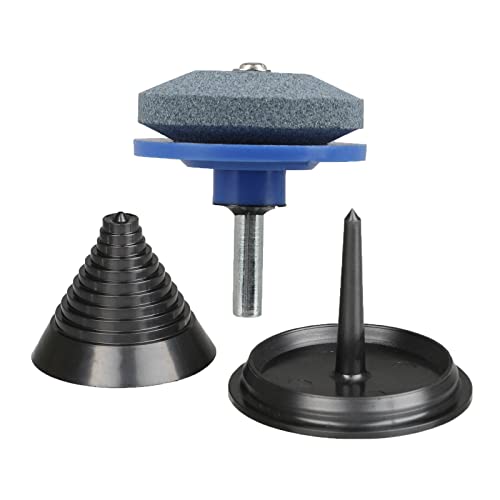
Included: 2 sharpeners, 4 replacement stones, 1 blade balancer
Compatibility: Standard electric drill (not included); recommended speed ~4000 RPM
Weight: Lightweight, easily stored in tool box
Two drill-mounted sharpeners with brown corundum stones
Four replacement stones for extended life
One blade balancer to check even sharpening
All items come in a compact package ready for workshop storage

Pros
- Extremely easy to use with any corded or cordless drill
- Consistent sharpening angle for a balanced, sharp edge
- Good value with 5 stones in one pack
- Works on a variety of blade types beyond just mowers
Cons
- Not ideal for heavy-duty or thick commercial blades; may wear out quickly
- Some users report stones spinning on the shaft or breaking under heavy pressure
- Best results require a corded drill for consistent speed and torque
The cenoz Crafts Man Lawn Mower Blade Sharpener is a straightforward accessory that turns your power drill into a handy blade sharpening tool. This 5-pack of corundum sharpening stones is designed for DIY homeowners, lawn care enthusiasts, and light-duty contractors who want to keep their mower blades sharp without investing in a dedicated bench grinder or sending blades out for sharpening.
In real-world use, this sharpener delivers a consistent edge on straight lawn mower blades, especially on push mowers and riding mowers with standard blades. The pre-set angle takes the guesswork out of maintaining the correct bevel. Users who follow the instructions and use a corded drill for steady speed report excellent results, with blades cutting cleanly through grass after just a few passes. The corundum material holds up well at typical drill speeds, though some users have experienced stones spinning on the shaft or cracking under heavy pressure, particularly on thicker commercial blades.
Build quality is acceptable for the price point. The stones are light and compact, and the pack of 5 gives you plenty of backups. Installation takes about 10 seconds just chuck it into your drill and you are ready to go. However, the sharpener works best on blades with a relatively straight cutting edge. Curved blades on some push mowers can be more challenging to sharpen evenly, as noted in a few reviews. For heavy-duty blades from commercial zero-turn mowers, these stones may wear out quickly or fail to achieve a sharp edge.
Overall, this is a practical, budget-friendly tool for routine lawn mower maintenance. If you are a weekend warrior with a standard push mower or a small lawn tractor, this sharpener will save you time and money. For professionals with demanding schedules and thick blades, a bench grinder or professional sharpening service remains a better investment. But for most homeowners, the cenoz 5-pack offers solid value and decent performance.
Material: Corundum
Size per stone: 50 x 47 mm (1.97 x 1.85 inches)
Package includes: 5 sharpeners
Compatibility: Fits most power drills (corded recommended for best results)
Ideal for: Lawn mower blades, tractor blades, rototiller tines, sickle bars, drill bits
Color: Blue
Homeowners: Keep your push mower or riding mower blades sharp for a clean cut and healthier lawn.
DIYers: Sharpen blades on your tiller, sickle bar mower, or even old drill bits.
Light commercial: For small lawn care businesses with a few mowers, this pack provides quick touch-ups between professional sharpenings.
Workshop: Use as a quick backup when you need a sharp edge and your bench grinder is tied up.



Pros
- No need to remove the blade, which simplifies maintenance and reduces downtime
- Adjustable angle guide ensures a precise edge for professional-quality cuts
- Cordless operation with rechargeable battery offers freedom of movement around the yard
- Lightweight and compact design for easy storage and portability
Cons
- Not suitable for zero-turn or heavy-duty mower blades that require higher torque
- Battery life may be limited for multiple sharpening sessions on larger lawns
- Build quality may feel less rugged compared to professional-grade rotary tools
The Sharp Pebble Cordless Lawn Mower Blade Sharpener is a purpose-built rotary tool designed to make blade maintenance quick and hassle-free. Unlike traditional sharpening methods that require removing the blade, this tool lets you sharpen in place, saving you the time and frustration of disassembly. It's an ideal solution for DIY homeowners and weekend gardeners who want to keep their mower blades sharp without investing in expensive professional equipment.
Performance wise, the adjustable angle guide (20-40 degrees) is a standout feature. It allows you to set the exact angle for your blade type, ensuring a consistent edge that promotes cleaner cuts and healthier grass. The variable speed control (5,000-30,000 RPM) gives you the flexibility to handle different blade conditions, from light touch-ups to more aggressive sharpening. The included replaceable sharpening wheels are effective and easy to swap out when they wear down.
Build quality is decent for the price point. The tool feels lightweight and well-balanced, with an ergonomic grip that reduces fatigue during extended use. The cordless design with a rechargeable battery adds convenience, letting you move freely around the yard without being tethered to an outlet. However, the battery life is adequate for a few blades but may require a recharge for larger mowing setups. The tool is best suited for standard mower blades; it lacks the torque needed for zero-turn or heavy-duty commercial blades.
In terms of practicality, this sharpener is a time-saver. You can quickly touch up the blade between mows, ensuring optimal cutting performance without the downtime of removal and reinstallation. Safety features like the ergonomic grip and speed control help maintain control during operation. The compact size makes it easy to store in a toolbox or garage drawer.
One realistic drawback is that the tool may not satisfy users who need to sharpen multiple blades in one session, as the battery could run out. Additionally, the build quality, while adequate for occasional use, may not withstand heavy daily use by professionals. Overall, the Sharp Pebble Cordless Lawn Mower Blade Sharpener is a practical, affordable choice for DIYers and homeowners who value convenience and precision. If you're looking for a quick way to maintain your mower blade without the hassle of removal, this tool delivers solid performance for the price.
Product Dimensions: 8 x 2.8 x 1.2 inches
Item Weight: 1.37 pounds
Manufacturer: Mighty Dreams
Model Number: SPMower2024
Battery: 1 9V battery included
Best Sellers Rank: #56,427 in Patio, Lawn & Garden, #212 in Lawn Mower Accessories
This sharpener is best for standard residential lawn mower blades. It is ideal for DIY homeowners who mow their own lawns and want to keep blades sharp without removing them. Use it for quick touch-ups between mows or to restore a dull blade to a clean cutting edge. Not recommended for commercial zero-turn mowers or heavy-duty blades that require higher torque.

Pros
- Quick and easy to use with any standard power drill no need for a bench grinder or expensive sharpening system.
- Durable double-layer corundum stone handles high heat without degrading, unlike cheaper single-layer stones.
- Compact and portable enough to carry in a pocket or tool pouch for on-site sharpening anywhere.
- Versatile compatibility with multiple blade types including mowers, tractors, and rototillers.
Cons
- May not restore severely damaged or nicked blades as effectively as a professional grinder or file.
- Requires a steady hand and consistent pressure to maintain a uniform edge angle across the entire blade.
- Limited to sharpening flat blades; not suitable for curved or serrated edges found on some specialty mowers.
If you are tired of pushing a dull mower blade through thick grass, the 2025 Lawnmower Blade Sharpener by Home offers a practical, budget-friendly fix. This small but capable tool attaches directly to any power hand drill, turning it into a portable sharpening station. The double-layer corundum stone is key here it handles the heat generated by high-speed drilling without melting or glazing over, unlike cheaper stones that fail after a few passes. For the DIY homeowner or weekend warrior, this means you can sharpen your mower blade in place without removing it, saving a ton of time and hassle.
In real-world use, this sharpener excels at bringing dull blades back to life. Just chuck it into your drill, spin it against the blade edge at a shallow angle, and you will see a noticeable improvement in cut quality after a few passes. It works on standard lawn mowers, riding tractors, rototillers, and even drill bits or scythe blades. The compact size (about 2 inches across) makes it easy to carry in a pocket or toss in a tool bag, so you can touch up blades right on the jobsite or in the field. For small property owners who mow once a week, this tool can extend blade life between professional sharpenings, saving both money and frustration.
Build quality is decent for the price point. The corundum stone is bonded to a steel core, and the plastic handle provides a secure grip during use. However, it is not a heavy-duty industrial solution. If you have severely nicked or bent blades, you will still need a bench grinder or file to remove deep damage before using this sharpener. Also, maintaining a consistent edge angle takes a bit of practice, especially on longer blades. But for routine maintenance and light to moderate wear, this tool delivers reliable results that any homeowner can achieve.
Drawbacks are relatively minor given the low cost. The sharpener works best on flat, straight blades; curved or serrated edges are not ideal candidates. You also need a steady hand to avoid uneven sharpening, which can lead to vibration during mowing. And while the corundum stone is heat-resistant, prolonged use at high RPM can still cause some wear, so take breaks and let the stone cool if you are doing multiple blades. That said, for the price of a fast-food meal, this is a solid addition to any DIYer's tool kit.
Overall, the 2025 Lawnmower Blade Sharpener is a smart buy for homeowners who want to keep their mower blades sharp without investing in expensive equipment. It is simple, effective, and portable, making it perfect for quick touch-ups before a mowing session. If you value a clean cut and want to reduce mowing time, this tool delivers practical value that justifies its place in your workshop or shed. Just keep your expectations realistic, and you will not be disappointed.
Product Dimensions: 1.97 x 1.97 x 2.16 inches
Item Weight: 7.4 ounces
Material: Corundum stone, steel, plastic
Color Options: Blue, Red
Package Includes: 3 or 5 lawn mower sharpeners depending on variant
Compatibility: Works with most power hand drills
Manufacturer: Surlveia
ASIN: B0D5YG1H4R
This lawnmower blade sharpener is ideal for quick touch-ups on standard walk-behind mowers, riding lawn tractors, and small rototillers. It works best for routine maintenance where blades are dull but not severely damaged. Homeowners with less than an acre of grass will find it particularly useful for keeping blades sharp between professional sharpenings. It is also handy for contractors who need to sharpen mower blades on-site without returning to the shop. For best results, use it with a drill that has variable speed control to adjust RPM based on blade condition.

Pros
- Very affordable and easy to install on a standard power drill
- Includes a balancer to help maintain even blade wear
- Versatile for multiple garden cutting tools beyond just mower blades
Cons
- Lower customer rating suggests inconsistent performance or durability issues
- Manual sharpening with a drill still requires careful angle control and may not match factory edge quality
- Best suited for light to moderate sharpening tasks; heavy use may wear the abrasive quickly
The Calsoling 3-Piece Lawn Mower Blade Sharpener is a straightforward, no-frills accessory designed to help homeowners and DIYers keep their mower blades and other garden cutting tools sharp without investing in expensive sharpening equipment. This set includes three corundum abrasive stones mounted on stainless steel bases, plus a blade balancer, all for a price that makes it easy to try. The concept is simple: chuck one into any standard power drill, touch it to the blade edge, and grind away the dullness. For those who mow a standard suburban lawn once a week, this can be a practical way to extend blade life between professional sharpenings or replacements.
In real-world use, the sharpener works best on blades that are merely dull rather than heavily nicked or damaged. The corundum material handles moderate wear and resists heat buildup, which is important when using a drill at higher RPMs. The included balancer is a nice bonus, letting you check if the blade is still balanced after sharpening, which helps reduce vibration and uneven cuts. However, the sharpening process requires a steady hand and a consistent angle to avoid creating an uneven edge. It's not as precise as a dedicated sharpening jig or a professional grinder, but for quick touch-ups, it gets the job done.
Build quality is adequate for the price point. The steel backing provides some rigidity, but the abrasive stones are relatively small, measuring about 1.97 inches in diameter. This means you'll need to make multiple passes along longer blades. The three-pack is a practical advantage, allowing you to keep one in the garage, one in the shed, and maybe a spare. The 12-month warranty is a nice touch for such an inexpensive item, indicating the manufacturer stands behind it.
On the downside, the overall customer rating is modest, and some users have reported inconsistent performance or the abrasive wearing down faster than expected. This is not a tool for professional landscapers or anyone who sharpens blades daily. It also requires a power drill, which most homeowners already have, but it's an added step if you don't. The lack of a guide or depth stop means you could accidentally remove too much material if you're not careful.
Overall, the Calsoling 3-Piece Lawn Mower Blade Sharpener is a solid budget option for the DIY homeowner who wants a quick, easy way to maintain mower blades and similar tools. It's not a replacement for professional sharpening or high-end sharpening systems, but for the occasional touch-up, it offers good value. If you're a weekend warrior with a modest lawn and a cordless drill, this set is worth considering. Just go in with realistic expectations about its durability and precision.
Product Dimensions: 1.9 x 1.5 x 0.8 inches per stone
Item Weight: 3.53 ounces (total set)
Material: Corundum abrasive with stainless steel backing
Stone Diameter: 50 x 47 mm (1.97 x 1.85 inches)
Package Includes: 3 sharpening stones + 1 blade balancer
Compatibility: Works with power drills and hand drills; fits 99% of mower blade center holes
Warranty: 12 months
This sharpener set is best suited for homeowners and DIYers who need to touch up standard lawn mower blades, sickle bars, rotary tillers, hoes, and drill knives on a regular basis. It's ideal for quick maintenance between professional sharpenings or for those who prefer to keep their blades sharp without the expense of a dedicated sharpening station. Not recommended for heavy-duty or commercial use where blades are heavily damaged or need precise edge geometry.
Sharpening a lawn mower blade using a power drill requires chucking a dedicated rotary sharpening attachment into your drill, securing the blade firmly in a vise, and passing the abrasive stone across the factory bevel at a steady angle. Drill attachments provide a guided grinding surface with a stabilizing backer disc, making them far simpler for DIY property owners than freehand grinding with an angle grinder. By working in light, overlapping passes, removing the underside burr, and verifying dynamic weight on a cone balancer, you can achieve a crisp cutting edge without overheating the steel.
Understanding Drill Sharpening Attachments and Abrasive Materials
Drill-powered blade sharpeners typically feature a grinding wheel bonded to a metal shank with a flat guide collar. The grinding stone is angled to match standard mower blade bevels, which usually sit between thirty and thirty-five degrees. When the tool spins in a hand drill, the abrasive wheel grinds the angled cutting face while the flat backer collar rests against the smooth underside of the blade to stabilize the tool. This mechanical guide helps prevent gouging the steel and keeps the grinding angle relatively consistent along the entire cutting edge.
Most conventional drill sharpeners rely on corundum stone, also known as aluminum oxide ceramic, which provides dependable material removal on hardened steel. Corundum attachments, such as those produced by cenoz and jtfrkope, grind down dull edges without wearing away too quickly under normal drill speeds. However, excessive friction or thin plastic base plates can melt or deform if the stone overheats during prolonged contact. Upgraded versions from brands like HIMOEPA and Calsoling incorporate stainless steel base backings to withstand friction and eliminate base wear during heavy sharpening jobs.
Diamond-coated abrasive discs represent an alternative approach to traditional bonded grinding stones. Products like the Prozwee diamond sharpener feature a 120-grit diamond abrasive layer fitted with an upgraded lock washer to keep the disc secure under load. Diamond abrasives tend to maintain their flat profile over multiple uses rather than wearing into grooves like porous corundum wheels. Because diamond abrasives generate efficient cutting action with less downward pressure, they offer predictable material removal and leave a clean edge on standard high-carbon mower steel.
Preparing the Mower and Removing the Cutting Blade
Safe blade maintenance begins by completely disabling the mower before reaching under the cutting deck. For gas-powered mowers, disconnect the spark plug wire and secure the boot away from the terminal to eliminate any possibility of accidental combustion. For battery-powered models, remove the lithium-ion power pack and pull out any safety keys. For riding mowers or lawn tractors, engage the parking brake, drop the deck to a serviceable height or remove the deck entirely, and take out the ignition key.
Tilt the mower so that the carburetor and air filter face upward toward the sky. Tilting a gas engine with the carburetor facing downward causes motor oil and fuel to drain into the air intake, soaking the paper filter and causing hard starting problems later. Place a heavy scrap block of wood between the blade and the inner deck wall to jam the blade firmly in place. This prevents the spindle from rotating while you apply torque to the center mounting bolt with a breaker bar or socket wrench.
Turn the center mounting bolt counterclockwise on standard right-hand spindles, though some dual-blade timed decks may feature reverse threads on one side. Note the orientation of any cupped washers, Belleville springs, or adapter plates as you loosen the hardware. Photographing the hardware arrangement before removal helps prevent backward installation during reassembly. Once the hardware is free, pull the blade from the spindle shaft and clean away caked grass clippings, dirt, and dried sap using a wire brush or putty knife.
Inspecting the Blade for Structural Integrity Before Grinding
Not every dull mower blade should be sharpened, because grinding cannot repair severe metal fatigue or structural damage. Inspect the entire length of the blade under good lighting, paying close attention to the center mounting hole and the curved lift wings at the back. Look for hairline cracks spreading outward from the center hole, star mount, or outer positioning holes. A blade with cracks or bends poses a serious hazard because high-speed rotation can shatter compromised steel, sending dangerous metal fragments flying outward.
Check the thickness of the uplift sail located on the rear trailing edge of each cutting tip. The lift wings push air upward into grass catchers or discharge chutes, but abrasive sand and turf debris thin this curved metal over time. If the trailing sail has worn down to paper-thin metal or shows large holes from sand erosion, the blade has reached the end of its useful lifespan. In that situation, sharpening the front edge provides no benefit, and you should browse replacement mower blade options to restore safe airflow and structural strength to your cutting deck.
Examine the cutting edge for deep nicks, gouges, or rolled impacts caused by rocks and roots. Minor nicks less than one-sixteenth of an inch deep can be ground out smoothly during routine drill sharpening. Large gouges requiring extensive metal removal, however, may force you to grind away too much steel, shortening blade life and altering balance. If the blade retains uniform thickness, straight geometry, and solid lift wings, it is fully ready for the sharpening process.
Setting Up Your Hand Drill and Sharpening Stone
Secure the cleaned lawn mower blade horizontally in a sturdy bench vise with the beveled cutting edge facing upward. Clamping the center section of the blade firmly between vise jaws prevents movement and vibration during grinding. If you do not have a bench vise, clamp the blade firmly to a heavy workbench using two heavy C-clamps, making sure the cutting edge overhangs the edge of the table safely. Never attempt to hold the blade in one hand while operating a drill with the other hand.
Insert the metal shaft of your sharpener attachment into your electric or cordless drill chuck. Tighten the chuck firmly, ensuring the three chuck jaws grip the shank evenly and centrally. If your sharpener includes an upgraded lock washer or retaining nut, verify that the abrasive disc cannot wobble on its central spindle. A loose sharpening disc creates severe vibration, chatters across the steel, and can damage the tool or gouge the blade edge.
Set the drill rotation to forward so that the wheel rotates in the intended cutting direction. Adjust your drill speed according to the abrasive manufacturer specifications, which often recommend moderate to higher speeds, such as 2,500 to 4,000 RPM, to keep corundum stones cutting cleanly rather than stalling. Cordless drills work well for light touch-ups, while corded power drills deliver steady RPM under load without battery drainage. Put on safety glasses, heavy work gloves, and ear protection before spinning the tool against bare metal.
Step-by-Step Sharpening Technique Along the Cutting Bevel
Position the sharpener so that the flat guide collar rests flush against the flat underside of the mower blade. The angled abrasive stone will naturally align against the factory bevel on the top side of the blade. Start the drill before touching the steel so the grinding wheel reaches operational speed without catching. Bring the rotating stone into light contact with the inner end of the cutting edge, nearest the center of the blade.
Move the drill smoothly along the cutting edge toward the outer tip using consistent, moderate pressure. Maintain an even travel speed across the edge, taking approximately four to five seconds to complete one continuous pass. Never pause or hold the grinding stone stationary in one spot, as concentrated friction generates intense localized heat. Excessive heat discolors the metal to a dark blue or purple hue, indicating that the steel has lost its factory temper and will dull much faster in the lawn.
Complete four to six steady passes along the cutting bevel, then inspect the edge profile. You are aiming for a clean, uniform edge roughly the thickness of a butter knife, rather than a razor-sharp edge. A razor-thin cutting edge lacks support and rolls over or chips the moment it strikes a twig, acorn, or dense turf stalk. A consistent bevel with a slight flat margin provides durable cutting efficiency that slices grass blades cleanly while resisting premature edge deformation.
Deburring the Flat Underside Without Ruining the Cutting Edge
Grinding the top bevel pushes a thin, ragged curl of displaced metal over onto the flat underside of the blade. This curled edge, known as a burr or wire edge, feels rough when touched and interferes with clean cutting performance. To remove this burr, you must address the bottom of the blade carefully without altering its flat geometry. Mower blades rely on a perfectly flat bottom surface to slice grass stalks cleanly without lifting or shredding turf fibers.
Never grind an angled bevel into the flat underside of a rotary mower blade. Creating a double bevel on both sides destroys the engineered cutting dynamics, increases drag, and prevents the blade from creating clean turf cuts. Instead, hold a flat hand file, diamond hone, or the flat side of your grinding tool perfectly flush against the bottom surface of the blade. Make two or three gentle, flat passes along the length of the edge to snap off the thin wire burr.
Check the underside with a gloved finger moving safely away from the edge to ensure the burr is gone. Once the underside feels smooth and completely flat, flip the blade around in the vise or clamps. Repeat the exact same bevel grinding and deburring sequence on the opposite cutting tip, counting your passes carefully to keep material removal reasonably balanced between both ends.
Checking Blade Balance with a Cone Balancer
Equal material removal is critical because an unbalanced lawn mower blade generates destructive rotational vibration. When a blade spins at roughly 3,000 RPM under your mower deck, even a few grams of weight discrepancy between the two cutting ends strains the engine crankshaft, destroys spindle bearings, and loosens mounting hardware. Modern electric mowers with direct-drive motors are especially sensitive to out-of-balance blades, so verifying weight distribution on a brushless electric mower blade setup is essential after any sharpening session.
Cone balancers, such as the multi-tiered plastic or metal balancers supplied in kits from jtfrkope, HIMOEPA, and Calsoling, offer a quick and effective testing method. Place the cone balancer on a level workbench or table away from drafts. Set the center mounting hole of the mower blade onto the stepped cone, allowing the blade to pivot freely on the conical tip. Release the blade gently and observe how it settles.
If the blade remains level and horizontal, both cutting ends have equal weight and the blade is properly balanced. If one side dips downward toward the table, that side is heavier and contains excess metal. Do not correct the balance by grinding more metal off the cutting edge of the heavy side, as this narrows the cutting face unevenly. Instead, remove the blade from the balancer and grind away a small amount of steel from the back sail or trailing edge of the heavy tip. Retest the blade on the cone balancer until it rests perfectly level.
Reinstalling the Blade and Verifying Deck Clearance
Before bolting the sharpened blade back onto the spindle, clean all debris and rust off the spindle face and adapter star. Place the blade onto the shaft, ensuring correct orientation. The beveled cutting edge must face the direction of rotation, while the curved lift wings must point upward into the undercarriage of the mower deck. Installing a blade upside down is an extraordinarily common mistake that results in the blunt back edge pounding against grass instead of cutting it cleanly.
Thread the center bolt, cupped washer, and any factory retention plates back onto the spindle by hand to prevent cross-threading. Jam your scrap block of wood on the opposite side of the deck wall to prevent the blade from spinning while you tighten the bolt. Use a torque wrench to tighten the bolt according to the manufacturer specifications found in your mower operator manual, which typically range between 35 and 60 foot-pounds depending on deck size and bolt diameter. If you do not have a torque wrench, tighten the bolt securely with a long socket handle until it is completely snug without overtightening.
Rotate the blade slowly by hand through a full 360-degree rotation to verify that both tips clear the inner deck walls, baffle plates, and discharge opening with ample room. Check that the blade does not wobble on the spindle adapter. Once clearance is confirmed, remove the wooden block, wipe down the deck undercarriage, reconnect your spark plug wire or reinstall the battery pack, and start the mower briefly on a level paved surface to confirm that there is no abnormal vibration.
Comparing Drill Attachments to Bench Grinders and Dedicated Rotary Tools
Drill-mounted sharpeners occupy a unique middle ground between manual hand filing and heavy stationary bench grinders. Bench grinders remove metal rapidly and excel at reshaping badly battered blades, but they require removing significant steel freehand and can easily overheat thin edges if used without care. Manual hand files provide exceptional control and preserve temper, but they require considerable physical effort and time to remove stubborn nicks from hardened steel.
Drill attachments provide quick cutting action with built-in angle assistance, making them accessible to average homeowners who want fast seasonal maintenance without buying specialized machinery. Meanwhile, dedicated cordless rotary sharpeners, such as the Sharp Pebble cordless sharpener, feature adjustable 20 to 40 degree angle guides and high variable speeds up to 30,000 RPM. Rotary tools provide precision angle selection for fine lawn care implements, but standard drill sharpeners offer higher torque and larger abrasive contact surfaces, which can be preferable for standard walk-behind and lawn tractor blades.
For homeowners who maintain one or two residential lawns, drill sharpeners strike a practical balance between cost, speed, and simplicity. They allow you to touch up dulled edges in less than fifteen minutes without complicated jigs or workshop machinery. As long as you maintain light pressure, control drill speed, and verify blade balance after grinding, a simple drill attachment will keep your rotary mower cutting effectively year after year.
Maintenance Schedules and Knowing When to Sharpen
A sharp mower blade cuts clean turf tips that heal rapidly, whereas a dull blade shreds and frays grass blades, leaving brown, withered tips vulnerable to fungal disease. As a general guideline, residential mower blades should be sharpened every twenty to twenty-five hours of active mowing time. For typical suburban quarter-acre yards, this translates to sharpening the blade twice per season, usually once in late spring during peak growth and once in mid-summer.
You should also inspect and sharpen the blade immediately after striking hard objects such as exposed tree roots, landscaping stones, or thick branches. Running your fingers safely along the grass blades after mowing offers the easiest diagnostic test. If grass tips look brown, jagged, or torn like frayed rope within twenty-four hours of cutting, the blade has lost its clean edge and needs attention.
Keeping a spare sharpened blade on hand makes seasonal maintenance much simpler. When your primary blade becomes dull, you can swap in the sharp replacement in ten minutes and sharpen the dull blade with your drill at your convenience. This rotation ensures that your lawn always receives crisp, clean cuts without delaying your weekend yard work.


Write Your Review
No reviews yet. Be the first to share your experience!