


Ragged grass tips and browning lawn patches often trace back to dull cutting edges that tear grass blades rather than slicing them cleanly. Routine seasonal maintenance restores cutting efficiency, reduces strain on mower deck spindles, and promotes healthier turf throughout the active growing season. Knowing how to sharpen lawn mower blades with an angle grinder gives homeowners and equipment owners a fast, effective method to recondition nicked steel without relying on slow manual hand filing. Verifying proper blade sizing and fitment before servicing ensures that the cutting component remains within factory operational boundaries.
An angle grinder removes metal quickly, but precision matters just as much as speed when reshaping cutting bevels. Maintaining the original factory bevel angle, avoiding heat discoloration from excessive friction, and balancing the blade afterward are crucial steps for safe mower operation. Dedicated grinding jigs and magnetic balancers help stabilize handheld tools, giving DIY users repeatable results on standard, high-lift, and mulching blades alike. Understanding the proper setup, protective equipment, and grinding wheel choices keeps the refurbishment process controlled and predictable.

Pros
- Adjustable angle range works with various blade types for custom sharpening
- Solid build with minimal wobble when properly mounted on a workbench
- Quick setup saves time compared to handheld sharpening methods
Cons
- Requires an angle grinder and a stable workbench, which may not be suitable for everyone
- Sharpening results depend on user technique and grinder quality
Keeping your lawn mower blade sharp is one of the simplest ways to ensure a clean, healthy cut. Dull blades tear grass rather than slice it, leaving ragged edges that turn brown and invite disease. The SporGain Lawn Mower Blade Sharpener is designed to make resharpening blades at home straightforward, without needing a professional shop. This jig works with most angle grinders to guide the sharpening stone along your blade at a consistent angle, restoring a keen edge quickly.
This tool is ideal for homeowners who maintain their own mowers, whether you have a push mower, self-propelled model, or even a riding mower with removable blades. If you prefer to handle routine maintenance yourself rather than paying for sharpening service, this jig may be a good fit. Budget-conscious shoppers will also appreciate the long-term savings from sharpening blades multiple times instead of buying new ones. However, it does require a compatible angle grinder and a bench or table where you can clamp the jig down for stability. It is not a standalone sharpener; you need a grinder to use it.
The sharpening jig allows you to set the angle between 15 and 45 degrees, which covers most standard mower blades, including straight blades, mulching blades, and high-lift designs. According to the product info, the included guide pins fit most angle grinders and the bushings help reduce wobble for a more consistent cut. The blade holder accommodates blades from 1.65 to 3.60 inches wide, so it works with many popular residential mower blades.
Setup is fairly simple: you clamp the jig to your workbench, adjust the angle using the thumb screws, place your blade in the holder, and then run the grinder along the blade edge. The jig keeps the grinder at a fixed orientation, helping you maintain the proper angle across the entire blade. This can be easier and more consistent than freehand sharpening, especially for beginners. Once you finish, you can reinstall the sharpened blade on your mower and get back to cutting grass.
Some limitations to keep in mind: the jig needs to be mounted on a sturdy surface, so if you lack a workbench or vice, setup might be less convenient. Also, achieving the best edge is still somewhat dependent on your grinder quality and your experience. Users with no prior sharpening may need a few tries to get a perfect edge. Additionally, this tool only sharpens the cutting edge and does not balance the blade, so you will still want to balance the blade before reinstalling it on your mower to avoid vibration and uneven cutting.
Overall, if you already own an angle grinder and have a place to mount the jig, the SporGain sharpener offers an affordable, repeatable way to maintain your mower blades. It saves money compared to repeated professional sharpening and helps keep your lawn looking its best with clean cuts. For homeowners who like to do their own maintenance and want a simple sharpening guide, this is a practical addition to the garage or shed.

Pros
- Extremely easy to use with any corded or cordless drill
- Consistent sharpening angle for a balanced, sharp edge
- Good value with 5 stones in one pack
- Works on a variety of blade types beyond just mowers
Cons
- Not ideal for heavy-duty or thick commercial blades; may wear out quickly
- Some users report stones spinning on the shaft or breaking under heavy pressure
- Best results require a corded drill for consistent speed and torque
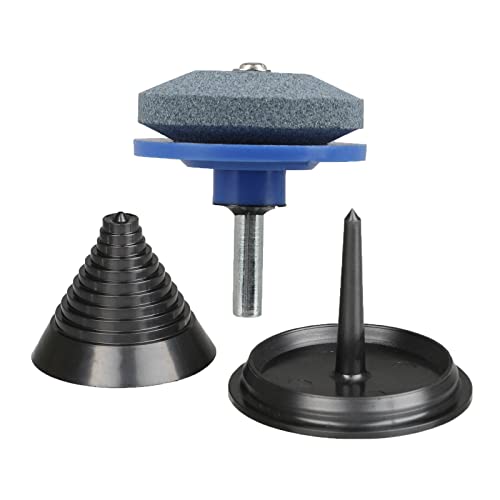
The cenoz Crafts Man Lawn Mower Blade Sharpener is a straightforward accessory that turns your power drill into a handy blade sharpening tool. This 5-pack of corundum sharpening stones is designed for DIY homeowners, lawn care enthusiasts, and light-duty contractors who want to keep their mower blades sharp without investing in a dedicated bench grinder or sending blades out for sharpening.
In real-world use, this sharpener delivers a consistent edge on straight lawn mower blades, especially on push mowers and riding mowers with standard blades. The pre-set angle takes the guesswork out of maintaining the correct bevel. Users who follow the instructions and use a corded drill for steady speed report excellent results, with blades cutting cleanly through grass after just a few passes. The corundum material holds up well at typical drill speeds, though some users have experienced stones spinning on the shaft or cracking under heavy pressure, particularly on thicker commercial blades.
Build quality is acceptable for the price point. The stones are light and compact, and the pack of 5 gives you plenty of backups. Installation takes about 10 seconds just chuck it into your drill and you are ready to go. However, the sharpener works best on blades with a relatively straight cutting edge. Curved blades on some push mowers can be more challenging to sharpen evenly, as noted in a few reviews. For heavy-duty blades from commercial zero-turn mowers, these stones may wear out quickly or fail to achieve a sharp edge.
Overall, this is a practical, budget-friendly tool for routine lawn mower maintenance. If you are a weekend warrior with a standard push mower or a small lawn tractor, this sharpener will save you time and money. For professionals with demanding schedules and thick blades, a bench grinder or professional sharpening service remains a better investment. But for most homeowners, the cenoz 5-pack offers solid value and decent performance.
Material: Corundum
Size per stone: 50 x 47 mm (1.97 x 1.85 inches)
Package includes: 5 sharpeners
Compatibility: Fits most power drills (corded recommended for best results)
Ideal for: Lawn mower blades, tractor blades, rototiller tines, sickle bars, drill bits
Color: Blue
Homeowners: Keep your push mower or riding mower blades sharp for a clean cut and healthier lawn.
DIYers: Sharpen blades on your tiller, sickle bar mower, or even old drill bits.
Light commercial: For small lawn care businesses with a few mowers, this pack provides quick touch-ups between professional sharpenings.
Workshop: Use as a quick backup when you need a sharp edge and your bench grinder is tied up.

Pros
- Brushless motor runs quieter and lasts longer than brushed alternatives reducing maintenance and downtime
- Variable speed up to 3000RPM gives you control over the sharpening process for different blade conditions
- Comes with a generous assortment of sanding discs and blade guides so you can start sharpening right out of the box
- Lifetime motor warranty adds peace of mind for long term ownership
Cons
- No included storage case or carry bag for the tool and accessories which could be a minor inconvenience for mobile users
- The 60-grit discs may wear quickly if used heavily requiring replacement sooner than expected
- Limited to lawn mower blades not suitable for other cutting tools like chainsaws or pruners
The SporGain Lawn Mower Blade Sharpener is a dedicated power tool designed specifically for sharpening mower blades. It's not a multi-purpose grinder but a focused solution for anyone who maintains a lawn mower regularly. Whether you're a homeowner who mows a quarter acre or a landscaper with a fleet of machines this sharpener aims to make blade maintenance fast and consistent.
At the heart of this tool is a brushless motor which is a real step up from traditional brushed motors you see on cheaper sharpeners. Brushless motors run cooler, quieter, and last significantly longer. You get adjustable speed up to 3000RPM so you can match the grinding speed to the blade condition. For a dull blade you might run it faster to remove material quickly while a nearly sharp blade benefits from a slower speed for a finer finish. The kit includes 10 coarse 60-grit sanding discs for rough grinding and 60 fine 180-grit discs for honing. You also get 30 and 45 degree blade guides to maintain the correct bevel angle which is critical for a clean cut and healthy grass.
Assembly is straightforward and the tool is simple to operate. It sits on a workbench or can be mounted for more stability. The compact dimensions 12.01 x 7.48 x 11.81 inches mean it won't dominate your workspace. Build quality feels solid for the price point and the lifetime motor warranty is a strong indicator of confidence in the motor's durability. That said you won't find a storage case included so if you plan to transport it between job sites you'll need to supply your own container for the discs and guides.
One realistic limitation is that this sharpener is designed exclusively for lawn mower blades. It won't handle chainsaw chains, pruners, or other cutting tools. Also while the 60-grit discs work well for initial grinding they may wear out faster than some users expect especially if you're sharpening multiple blades in a single session. Having extra discs on hand is a good idea. But for dedicated mower blade work this tool performs reliably and the adjustable speed gives you fine control that many fixed-speed sharpeners lack.
For the DIY homeowner who wants to keep their mower cutting clean without paying for professional sharpening the SporGain is a solid investment. Landscapers will appreciate the speed and consistency for maintaining multiple blades. The brushless motor and lifetime warranty support long-term value. If you need a simple, effective way to sharpen mower blades at home or in the shop this sharpener delivers without unnecessary complexity.
Color: Black
Dimensions: 12.01 x 7.48 x 11.81 inches
Product Group: Lawn and Patio
Motor Type: Brushless
Speed Range: Adjustable up to 3000 RPM
Included Discs: 10 x 60-grit sanding discs, 60 x 180-grit sanding discs
Included Guides: 30 degree and 45 degree blade guides
Warranty: Lifetime motor warranty
The SporGain Lawn Mower Blade Sharpener comes with a complete sharpening kit right in the box. You get 10 pieces of 60-grit sanding discs for the initial grinding phase and 60 pieces of 180-grit sanding discs for fine sharpening. Two blade guides are included one at 30 degrees and one at 45 degrees to help you maintain the correct sharpening angle for different mower blade types. All you need to supply is a standard power outlet and a workbench or stable surface to mount or place the tool.

Pros
- Complete sharpening and balancing system in one purchase
- Smooth ball bearing handle reduces fatigue during extended use
- Adjustable angle range covers most common blade bevels
- Magnetic balancer is simple to use and highly accurate
Cons
- Aluminum alloy construction may not withstand heavy commercial use over time
- Some users may need to purchase additional adapter screws for non-standard angle grinders
- Large frame can be bulky to store in smaller workshops
The Aurorasters Lawn Mower Blade Sharpener & Balancer is a practical two-in-one tool designed for homeowners and DIYers who want to keep their mower blades in top condition without a trip to the shop. This kit includes both a sharpener with an extended 20.08-inch articulated arm and a magnetic blade balancer, so you can sharpen and balance in one workflow. It's best suited for weekend warriors and hobbyists who maintain their own lawn equipment, though it could also serve light commercial use.
In real-world use, the ball bearing handle glides smoothly, reducing hand fatigue when you're working through a set of blades. The adjustable frame lets you set the sharpening angle from 15 to 45 degrees across 7 positions, which covers most standard mower blades. The magnetic balancer is straightforward: just set the blade on the magnetic post and see where it dips. That makes it easy to spot and correct imbalances that cause vibration and uneven cuts. The included adapter screws fit most angle grinders, so you don't need to buy extra hardware.
Build quality is decent for the price point. The aluminum alloy frame feels sturdy enough for regular home use, but it's not built to withstand the abuse of a professional landscaping crew working daily. The bushings fit snugly over the guide pins, which helps reduce wobble during sharpening and improves accuracy. At 5.81 pounds, the kit is portable but not ultralight. The large frame takes up some bench space, so you'll want a dedicated spot in your garage or workshop.
One realistic drawback is that the aluminum construction may show wear over time if you're sharpening heavily pitted or thick blades frequently. Also, while the sharpener works with most angle grinders, you might need to source additional adapter screws for some models. The balancer is magnetic but not overly strong, so larger commercial blades might not hold as securely. These are minor issues for the typical homeowner, but something to consider if you plan to use it every week.
Overall, the Aurorasters Lawn Mower Blade Sharpener & Balancer is a solid investment for anyone who wants to maintain their mower blades at home. It delivers good precision, reduces vibration, and extends blade life between sharpenings. If you're a DIYer or homeowner who values a clean cut and doesn't want to pay for professional sharpening, this kit offers excellent value. For heavy commercial use, you may want to look at a more rugged steel option, but for most people, this will get the job done well.
Color: Black Red
Dimensions: 20 x 10 x 20 inches
Weight: 5.81 Pounds
Product Group: Lawn & Patio
Binding: Unknown Binding
Ideal for homeowners and DIYers who sharpen their lawn mower blades 2-4 times per season. Works well for standard residential mowers, riding mowers, and zero-turn blades. Also suitable for small engine repair shops that need a reliable sharpening setup for walk-behind mowers. Not recommended for heavy daily commercial use where a steel frame would hold up better.

Pros
- Very affordable and easy to install on a standard power drill
- Includes a balancer to help maintain even blade wear
- Versatile for multiple garden cutting tools beyond just mower blades
Cons
- Lower customer rating suggests inconsistent performance or durability issues
- Manual sharpening with a drill still requires careful angle control and may not match factory edge quality
- Best suited for light to moderate sharpening tasks; heavy use may wear the abrasive quickly
The Calsoling 3-Piece Lawn Mower Blade Sharpener is a straightforward, no-frills accessory designed to help homeowners and DIYers keep their mower blades and other garden cutting tools sharp without investing in expensive sharpening equipment. This set includes three corundum abrasive stones mounted on stainless steel bases, plus a blade balancer, all for a price that makes it easy to try. The concept is simple: chuck one into any standard power drill, touch it to the blade edge, and grind away the dullness. For those who mow a standard suburban lawn once a week, this can be a practical way to extend blade life between professional sharpenings or replacements.
In real-world use, the sharpener works best on blades that are merely dull rather than heavily nicked or damaged. The corundum material handles moderate wear and resists heat buildup, which is important when using a drill at higher RPMs. The included balancer is a nice bonus, letting you check if the blade is still balanced after sharpening, which helps reduce vibration and uneven cuts. However, the sharpening process requires a steady hand and a consistent angle to avoid creating an uneven edge. It's not as precise as a dedicated sharpening jig or a professional grinder, but for quick touch-ups, it gets the job done.
Build quality is adequate for the price point. The steel backing provides some rigidity, but the abrasive stones are relatively small, measuring about 1.97 inches in diameter. This means you'll need to make multiple passes along longer blades. The three-pack is a practical advantage, allowing you to keep one in the garage, one in the shed, and maybe a spare. The 12-month warranty is a nice touch for such an inexpensive item, indicating the manufacturer stands behind it.
On the downside, the overall customer rating is modest, and some users have reported inconsistent performance or the abrasive wearing down faster than expected. This is not a tool for professional landscapers or anyone who sharpens blades daily. It also requires a power drill, which most homeowners already have, but it's an added step if you don't. The lack of a guide or depth stop means you could accidentally remove too much material if you're not careful.
Overall, the Calsoling 3-Piece Lawn Mower Blade Sharpener is a solid budget option for the DIY homeowner who wants a quick, easy way to maintain mower blades and similar tools. It's not a replacement for professional sharpening or high-end sharpening systems, but for the occasional touch-up, it offers good value. If you're a weekend warrior with a modest lawn and a cordless drill, this set is worth considering. Just go in with realistic expectations about its durability and precision.
Product Dimensions: 1.9 x 1.5 x 0.8 inches per stone
Item Weight: 3.53 ounces (total set)
Material: Corundum abrasive with stainless steel backing
Stone Diameter: 50 x 47 mm (1.97 x 1.85 inches)
Package Includes: 3 sharpening stones + 1 blade balancer
Compatibility: Works with power drills and hand drills; fits 99% of mower blade center holes
Warranty: 12 months
This sharpener set is best suited for homeowners and DIYers who need to touch up standard lawn mower blades, sickle bars, rotary tillers, hoes, and drill knives on a regular basis. It's ideal for quick maintenance between professional sharpenings or for those who prefer to keep their blades sharp without the expense of a dedicated sharpening station. Not recommended for heavy-duty or commercial use where blades are heavily damaged or need precise edge geometry.
Sharpening lawn mower blades with an angle grinder requires controlled passes, the proper abrasive disc, and consistent bevel alignment to restore a clean cutting bevel without overheating the metal. An angle grinder operates at high rotational speeds, making it significantly faster than hand filing, but this aggressive material removal also demands discipline to avoid altering the factory profile. The primary objective is to clean up impact dings and establish a crisp cutting edge while preserving blade balance and structural integrity. Following a methodical sequence ensures that the refurbished blade delivers clean cuts, protects mower spindles from vibration, and maintains safe mowing performance.
Essential Safety Equipment and Workstation Preparation
Safety precautions must take precedence before beginning any cutting-edge maintenance on outdoor power equipment. Disconnect the spark plug wire on gas mowers or remove the safety key and battery pack on electric machines to eliminate any accidental startup risk while unbolting the blade. Heavy leather work gloves protect hands from sharp burs and unexpected slips during both removal and grinding. Eye protection such as impact-rated safety glasses paired with a full-face shield shields against flying sparks and abrasive dust.
A dedicated, clutter-free workspace ensures complete control over the power tool throughout the sharpening process. Clear dry leaves, cardboard, and flammable chemicals away from the grinding area because angle grinders throw a shower of hot sparks during metal removal. A sturdy workbench fitted with a heavy-duty bench vise provides the rigid support required to clamp the steel blade securely during passes. Hearing protection and a dust mask complete the protective setup, guarding against the noise and airborne particulate generated by abrasive wheels.
Choosing the Right Grinding Disc for Mower Steel
Selecting the appropriate abrasive wheel determines both the speed of metal removal and the final surface finish on the blade bevel. Rigid grinding wheels remove stock rapidly, but they generate intense friction that can quickly temper and soften the hardened steel. Flap discs composed of overlapping abrasive cloth sheets provide a smoother, more controllable alternative for sharpening garden tool edges. A 40-grit or 60-grit zirconia flap disc strikes an ideal balance, cutting through nicks quickly while producing far less heat than solid abrasive wheels.
Flap discs also conform slightly to surface contours, reducing the risk of gouging the blade profile during freehand passes. Coarser grits work best when reprofiling edges that have suffered deep gouges from pebbles and hidden yard debris. Once the major imperfections are smoothed away, a finer 80-grit disc can deliver a clean finish without stripping excess metal. Inspect the disc before starting to verify that the abrasive backing is intact, securely threaded onto the grinder arbor, and rated for the tool’s maximum operating speed.
Inspecting Blade Condition and Determining Bevel Angle
Careful physical inspection should precede any metal removal to confirm that the mower blade remains structurally sound. Check the blade along its entire length for signs of bending, severe thinning around the lift sail, or hairline fractures near the center mounting hole. A cracked, deeply pitted, or warped blade poses severe safety hazards and must be replaced rather than sharpened. If the blade exhibits only normal dulling and minor edge nicking, it can safely undergo sharpening and rebalancing.
Mower blade cutting edges typically feature a factory bevel angle between 30 degrees and 35 degrees, although specific designs range from 15 degrees to 45 degrees. Mulching blades, high-lift blades, and standard flat blades may have subtle differences in their edge profiles designed to optimize air circulation and clipping discharge. Reviewing specialized configurations such as brushless electric mower blade configurations can clarify how manufacturer lift profiles and edge geometry influence mowing efficiency. Maintaining this manufacturer bevel preserves cutting efficiency while retaining sufficient steel thickness behind the cutting edge to withstand minor impacts.
Using a permanent marker to color the existing bevel helps visualize material removal as you work. When the grinder disc passes across the colored area, the abrasive removes the ink first, showing whether your angle matches the original bevel exactly. If the marker disappears only at the top of the bevel, the grinder angle is too steep, whereas ink remaining at the bottom indicates an angle that is too shallow. This simple visual cue prevents guesswork and ensures consistent geometry across the entire length of the cutting edge.
Securing the Blade and Establishing Grinding Angles
Rigidly clamping the blade in a heavy bench vise prevents vibration and keeps the workpiece stationary during grinding strokes. Position the blade with the cutting edge facing upward and horizontal, clamping firmly near the center of the bar to minimize harmonic chatter. If clamping directly on painted or coated surfaces, soft vise jaws or scrap wood blocks prevent marring the metal. Clamping stability is essential because any shift during grinding can cause the tool to catch and ruin the bevel profile.
Freehand sharpening requires steady hands and muscle memory to hold the angle grinder at a consistent tilt across multiple passes. Positioning your body with a balanced stance and gripping the tool firmly with both hands provides maximum control over grinding pressure. Maintain a continuous visual line along the blade bevel to ensure that the grinder disc remains flat against the existing angled face. Moving your entire torso rather than just your wrists produces smoother, more uniform strokes across the cutting zone.
Homeowners and landscape mechanics seeking foolproof consistency often utilize specialized sharpening jigs to guide the angle grinder. Adjustable sharpening frames, such as the SporGain jig or large-size Aurorasters fixtures, feature articulated arms and guide pins that lock the grinder at preset angles between 15 degrees and 45 degrees. These fixtures accommodate blade widths ranging from approximately 1.65 inches to over 3.6 inches, clamping the steel securely to eliminate wobble. Utilizing an adjustable jig takes the variance out of freehand grinding, ensuring both cutting edges share identical angles and consistent material removal.
Step-by-Step Angle Grinder Sharpening Technique
Begin the grinding pass at the inside shoulder of the cutting edge and sweep smoothly outward toward the blade tip. Pulling or pushing the grinder in one fluid, continuous motion prevents localized dwell points that could carve uneven dips into the steel. Apply light to moderate pressure, letting the abrasive grit do the cutting work rather than forcing the tool into the workpiece. Keep the wheel moving steadily across the bevel, completing a full pass in roughly two to three seconds.
Heat management is critical during angle grinder operation because excessive friction can ruin the steel’s heat treatment. If the blade surface turns blue, purple, or dark brown, the metal has overheated, leading to loss of hardness and premature dulling in the field. Avoid lingering in one spot, especially around deep nicks that tempt users to apply heavy grinding force. Keeping a container of water nearby allows you to quench the blade periodically if it becomes warm to the touch.
Address severe nicks by grinding material down evenly along the entire cutting edge rather than creating a deep gouge at the damaged spot. A minor nick that does not catch on grass stems can often be left alone, as removing excessive metal shortens the usable lifespan of the blade. Continue making light, even passes across the bevel until a clean, uniform edge is established from the inner shoulder to the outer corner. Count the number of passes made on the first side so you can match material removal approximately when sharpening the opposite cutting edge.
Never sharpen a lawn mower blade to a razor-sharp, knife-like edge because thin edges chip and roll over upon the first contact with small sticks or compacted soil. A properly sharpened mower blade should have a slight flat edge, roughly the thickness of a standard butter knife or about one thirty-second of an inch. This robust profile cuts grass cleanly while retaining enough structural mass to resist rapid deformation. Once the top bevel is complete, flip the blade and make a single light pass on the flat underside to remove the wire burr without beveling the bottom face.
Static and Magnetic Balancing Procedures
Balancing the blade after grinding is just as vital as sharpening the cutting edge itself. An unbalanced blade spins thousands of times per minute under the mower deck, creating severe rotational vibration that damages deck bearings, spindle assemblies, and engine crankshafts. Checking balance prevents premature mechanical failure and ensures smooth deck operation throughout the mowing season. Proper balancing also contributes to an even cut across the lawn by maintaining level blade rotation.
A basic cone balancer or a precision wall-mounted magnetic balancer verifies whether both ends of the blade weigh the same. Cone balancers rest on a flat bench, centering the blade hole over tiered steps, while magnetic balancers suspend the blade on a horizontal pivot with low-friction bearings. When suspended, a balanced blade remains perfectly horizontal, whereas a heavy side immediately tips toward the bench. Matching your sharpening setup with platform-specific maintenance, like reviewing Ryobi mower blade setup tips, reinforces how spindle geometry and deck tolerances demand accurate blade balance.
Correcting an unbalanced blade requires grinding small amounts of metal from the heavy side until the blade rests completely level on the balancer. Never remove material from the freshly sharpened cutting edge to correct balance, as this ruins the uniform bevel profile. Instead, grind metal from the trailing edge, the non-cutting back spine, or the lift sail on the heavy half of the blade. Grind a small amount, wipe away metal dust, and retest balance frequently until the blade stays horizontal without tipping.
Comparing Angle Grinder Jigs, Dedicated Sharpeners, and Drill Attachments
Mower owners have several tool choices when reconditioning dull blades, ranging from simple drill stones to specialized workshop sharpeners. Basic drill-mounted corundum sharpeners, such as multi-packs from cenoz, jtfrkope, or Calsoling, offer low-cost convenience for minor edge touch-ups without dismounting large grinding tools. These stones fit into standard hand drill chucks and run against the bevel with an attached plastic or steel guide. However, corundum drill stones remove metal slowly and struggle to reshape blades with heavy rock damage or distorted bevels.
Angle grinder jigs offer a rugged, versatile middle ground by combining workshop rigidity with the cutting speed of standard angle grinders. Fixtures from brands like SporGain and Aurorasters clamp directly to a workbench, utilizing articulated arms, guide pins, and adapter screws to support standard grinders. They support multiple angle adjustments, typically from 15 degrees to 45 degrees, making them suitable for standard, mulching, and high-lift blade profiles. This mechanical guidance prevents hand fatigue and eliminates the angular errors common in purely freehand grinding.
Dedicated motorized blade sharpeners represent a specialized investment for high-volume maintenance and commercial landscaping shops. Standalone units like the SporGain brushless motor sharpener operate with variable speeds up to 3000 RPM, utilizing dedicated sanding discs and fixed 30-degree and 45-degree guide fences. These machines run quietly and minimize heat buildup through controlled abrasive discs, but they occupy permanent bench space and cost more than general-purpose tools. Evaluating your seasonal mowing volume and equipment fleet helps determine whether a drill stone, an angle grinder jig, or a dedicated bench machine fits your maintenance needs.
Correcting Common Grinding Mistakes and Preventing Edge Damage
One of the most frequent grinding mistakes is creating a hollow or rounded bevel by rocking the tool during passes. Rocking the angle grinder alters the angle of attack, resulting in an inconsistent edge that tears grass tips rather than cutting them cleanly. Maintaining a steady wrist position and resting the flat face of the flap disc evenly against the bevel face prevents this rounding effect. Practicing smooth, deliberate strokes on an old scrap blade can help build consistent tool control before sharpening your primary cutting set.
Another widespread error is grinding the flat bottom side of the lawn mower blade during burr removal. Mower blades rely on a perfectly flat bottom surface to generate proper aerodynamic lift and clean clipping discharge. Adding an unintentional bevel to the underside disrupts deck airflow and creates an irregular cutting profile. Always keep bottom passes strictly flat and brief, applying only enough light pressure to swipe away the hanging metal burr.
Failing to clean the blade before grinding can also contaminate grinding wheels and cause uneven material removal. Caked-on grass clippings, dried mud, and surface rust should be scraped off with a wire brush or putty knife before placing the blade in the vise. A clean blade surface allows you to clearly see cracks, check straightness, and achieve accurate balance readings on your magnetic or cone balancer. Taking the extra minute to scrape the steel creates a safer, cleaner, and more precise grinding operation.
Reinstallation Checks and Operational Verification
Once the blade is sharpened, deburred, and balanced, reinstallation must follow exact mechanical orientation to ensure safe cutting performance. The curved lift wings or sails of the blade must always point upward toward the underside of the mower deck, not downward toward the turf. Installing a blade upside down causes poor cutting, tears grass, and can damage the mower deck or spindle assembly. Verify that the center hole aligns properly with the spindle star, circle, or adapter spline before tightening the mounting bolt.
Inspect the mounting bolt, washer, and spindle flange for signs of thread wear, stretching, or corrosion before torquing the assembly. Thread the bolt by hand first to prevent cross-threading, then tighten it securely according to the equipment manufacturer’s specified torque recommendations. Block the blade securely with a block of wood wedged against the deck housing while tightening to prevent the blade from turning during final fastening. Reconnect the spark plug wire or battery pack, run the mower briefly in a clear area, and listen for abnormal vibration before resuming routine lawn mowing.





Write Your Review
No reviews yet. Be the first to share your experience!