


A popping sound from a lawn mower engine usually indicates a fuel system issue, such as unburned fuel igniting in the exhaust, or a misfire caused by a faulty spark plug. This common symptom in gas mowers often points to simple maintenance needs rather than major engine damage.
The issue typically arises from stale fuel, a clogged air filter, or incorrect air-fuel mixture settings. Addressing these root causes can restore smooth operation and prevent further wear on the engine components. For a deeper look at blade maintenance, see our guide on replacing push mower blades.
Many homeowners notice this noise after storing their mower for the season or using fuel that has been sitting for weeks.
- The engine may run roughly before settling down, or the popping may persist throughout the mowing session.
- Identifying whether the sound comes from the exhaust pipe or the engine compartment helps narrow down the cause.
- Most modern mowers, including models with 4-cycle OHV engines, are sensitive to fuel quality and proper tuning.
- Checking the spark plug condition and ensuring the air filter is clean are the first steps in diagnosing the problem.
- If the issue continues after basic checks, inspecting the carburetor or fuel lines may be necessary to ensure proper fuel delivery and combustion.
Pros
- Durable 21-inch steel deck stands up well to everyday debris and small yard obstacles
- Single-lever 6-position height adjustment simplifies switching between high spring grass and close summer cuts
- Relatively lightweight design makes manual pushing comfortable on flat residential lots
- Auto choke eliminates guesswork when starting the engine cold on weekend mornings
Cons
- Manual push operation requires steady physical effort on hilly ground or uneven terrain
- Does not include a grass collection bag for homeowners who prefer bagging clippings
- Engine displacement of 144cc is geared toward routine maintenance rather than dense, overgrown brush
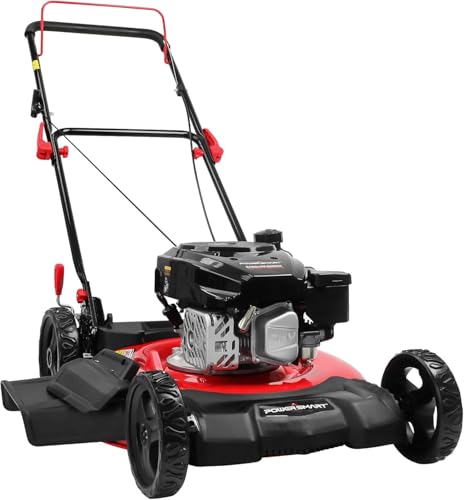
The PowerSmart DV8621C is a walk-behind gas push lawn mower engineered specifically for routine residential yard upkeep. Powered by a dependable 144cc 4-cycle OHV engine, this machine caters to suburban homeowners, first-time property buyers, and budget-conscious yard owners with small to medium-sized lawns. For anyone looking to bypass the limited runtime of cordless battery tools while avoiding complex commercial machinery, this mower offers an accessible, straightforward entry into gas-powered lawn care.
During regular mowing sessions, the 21-inch steel deck provides ample coverage to help cut down on overall walking time. The mower features a practical 2-in-1 cutting system that lets users choose between mulching clippings back into the turf or ejecting them through the side-discharge chute. Mulching is ideal for returning vital nitrogen to the soil during warm summer months, while the side-discharge function assists when cutting slightly taller grass after steady spring rain. A convenient single-lever adjustment lets you select between six cutting heights ranging from 1.5 to 3.9 inches, helping you avoid scalping on uneven patches.
Build quality centers on a durable stamped steel deck that resists cracking from stray pebbles and roots far better than standard plastic alternatives. Weighing in at roughly 59 pounds, the unit remains agile enough for operators to steer around flower beds, sidewalks, and patio corners without excessive fatigue. The engine features an automatic choke connected to a traditional recoil pull-cord, which removes the need for manual primer bulbs and helps ensure smooth starts before a Saturday morning backyard cookout.
Setup and daily operation are refreshingly simple. Arriving approximately 95 percent assembled, the mower only requires unfolding the upper handle, securing the locking knobs, and adding standard four-cycle engine oil along with fresh unleaded gasoline. The folding handle system collapses down over the engine shroud, allowing homeowners to park the mower tightly against a garage wall or slide it beneath shed shelving. Routine engine maintenance is equally accessible, with easy reach to the oil fill neck, foam air filter, and spark plug.
There are a few realistic limitations to keep in mind before making a purchase. Because this is a standard push mower without a self-propelled transmission, users with sloped yards, steep ditches, or thick turf will need to supply all the forward momentum. Additionally, the unit is strictly configured for mulching and side discharge, so homeowners who prefer bagging their clippings for a completely clear finish will need to consider other options. The 144cc engine is engineered for standard weekly maintenance rather than reclaiming wild, overgrown fields.
For homeowners maintaining up to a half-acre of relatively flat suburban turf, this PowerSmart mower represents an excellent balance of cutting width, durability, and practical value. Its straightforward mechanical design, rugged steel construction, and space-saving footprint make it a dependable companion for seasonal yard cleanup and routine grass maintenance.
The heart of this push mower is its 144cc 4-cycle OHV engine, designed to deliver steady torque to the 21-inch cutting blade. Because it is a 4-cycle design, there is no need to mix two-stroke oil with gasoline, keeping routine fill-ups quick and clean. The auto-choke feature regulates fuel intake automatically, making cold pull-starts reliable without manual carb adjustments.
Beneath the chassis, the 21-inch steel mowing deck provides durability against debris impacts. Operators can easily configure the deck for mulching to promote lawn health or install the included side-discharge chute when tackling taller, moisture-laden grass. The single-point height adjustment lever raises or lowers all four wheels simultaneously across six positions, accommodating different grass species and regional climates throughout the growing season.
Compact storage is a major advantage for suburban homes with limited garage space. The upper handle folds forward across the engine block, substantially reducing the vertical and horizontal footprint of the mower. This makes it easy to tuck the unit away during the off-season or slide it between utility shelves.
Routine maintenance tasks are straightforward for beginners and experienced DIYers alike. The oil fill port and dipstick are easy to reach on the engine side, and the air filter housing can be serviced quickly without specialized equipment. Keeping the underside of the steel deck free of wet grass buildup after each mow will help preserve the finish and maintain optimal airflow for clean mulching year after year.

Pros
- Reliable 144cc engine with no oil mixing needed, plus better fuel economy than 2-stroke alternatives.
- Durable steel deck and overmolded wheels handle rocky or hilly lawns well.
- 5 height settings give you control over cut length from short to tall grass.
- Low noise compared to many gas mowers, making it neighbor-friendly during early morning or evening mowing.
- Easy maintenance with accessible air filter and blade replacements.
Cons
- No self-propulsion; you'll need to push it manually, which can be tiring on larger yards or steep slopes.
- At 43.4 pounds, it's heavier than some comparable push mowers, though the wheels help rolling.
- Only side discharge included; no bagging or mulching option mentioned, limiting versatility for some users.
The SENIX LSPG-L5 is a gas-powered push lawn mower designed for homeowners who want a dependable machine without the complexity of battery charging or 2-stroke engine maintenance. It uses a 144cc 4-cycle OHV engine that runs on straight gasoline, offering a simple start and consistent power for cutting grass on small to medium lawns (up to about a quarter acre).
This mower is best suited for DIY-oriented homeowners who value fuel efficiency and low noise over the convenience of self-propulsion. The 20-inch steel deck provides a good balance between cutting width and maneuverability, allowing you to trim around flower beds and fences without too much hassle. The 5-position height lever lets you quickly adjust from 1.25 to 3.75 inches, accommodating different grass lengths and seasonal conditions.
Performance is solid for its class. The engine starts reliably (prime and pull) and runs smoothly, cutting through typical turf grass without bogging down. The side discharge clears clippings well, though on very thick wet grass you may need to overlap passes. The 7-inch overmolded wheels roll easily over uneven ground and small bumps, but the lack of self-propulsion means you'll feel the weight on inclines or longer sessions. At 43 pounds, it's manageable but not lightweight.
Build quality is good for the price point. The steel deck feels sturdy and the plastic components are well fitted. Assembly takes about 20 minutes with basic tools. The 2-year warranty adds peace of mind, though you'll want to keep the blade and air filter clean to ensure longevity. A realistic drawback: there's no mulching or bagging attachment included, so if you need those features you'll have to look at other models or buy accessories separately.
Overall, the SENIX 144cc gas lawn mower is a smart choice for budget-conscious homeowners who want a reliable gas mower for flat to slightly rolling yards. It's not for steep hills or large acreage, but for everyday lawn care it delivers good value with low operating costs.
Brand: SENIX
Power Source: Gas Powered (4-stroke OHV engine, 144cc)
Cutting Width: 20 inches
Cutting Height Range: 1.25 - 3.75 inches (5 positions)
Discharge Type: Side discharge
Wheel Size: 7 inches front and rear (overmolded)
Deck Material: Heavy-duty steel
Weight: 43.4 pounds
Dimensions (assembled): 27.2 x 22.2 x 14.2 inches
Assembly Required: Yes
Warranty: 2-year manufacturer warranty
UPC: 843212102748
Model Number: GCJ-LSPG-L5

Pros
- Auto choke simplifies startup, especially for beginners or users who don't want to fiddle with manual controls
- Steel deck feels sturdier than plastic competitors and can handle occasional bumps or debris
- Height adjustment is quick and tool free from the rear, letting you adapt to different grass lengths on the fly
- Mulching performance effectively chops clippings fine, returning nutrients to the lawn without clumping
Cons
- Side discharge chute can be a bit finicky to attach and remove, and may clog in thick, wet grass
- Engine vibrates noticeably at higher RPMs compared to more expensive brands, but still operates fine for its class
- Pull cord can be stiff initially, requiring a few strong tugs to break in the engine
The PowerSmart 21 inch gas lawn mower is a straightforward push mower designed for homeowners who need a reliable cutting tool for smaller lawns. It's best suited for DIY homeowners with flat, fenced yards of about a quarter acre or less. This isn't a self propelled model, so you'll be doing the pushing, but on level ground the large wheels and manageable 59 pound weight make it reasonably easy to maneuver around flower beds and trees.
Performance wise, the 144cc OHV engine delivers enough torque to power through typical grass without bogging down. The auto choke is a standout feature that eliminates the classic pull start frustration. Pull the cord and it starts on the first or second try, even after sitting for weeks. The 21 inch cutting width is a standard sweet spot for this size lawn, letting you make decent passes without too much back and forth. The six position height adjustment lever at the rear is easy to reach and click into place, giving you solid control over cut length from 1.5 to 3.9 inches. Mulching chops clippings fine enough to feed the lawn, and the side discharge works well when grass is longer than average.
Build quality centers on an all steel 15 gauge deck that feels substantial for the price point. It's not a fabricated deck like on commercial mowers, but it's far more durable than the plastic decks found on similar budget push mowers. The folding handle collapses for compact storage, which is a real plus if you're short on shed space. Assembly out of the box is minimal; just unfold the handle and add oil and fuel. The manual does recommend 10W 30 oil, and the fuel tank holds only 0.21 gallons, enough for a full yard on a single tank if you're efficient.
That said, there are a few realistic drawbacks. The side discharge chute can feel flimsy during attachment and removal, and it may clog if you're cutting wet or overly thick grass. The engine does produce a fair amount of vibration compared to higher end models, but it's not a deal breaker for occasional weekly mowing. The pull cord required some muscle for the first few starts before loosening up. Additionally, the manual operation means you'll be doing all the pushing, so hills or steep slopes will be a workout.
Overall, the PowerSmart 21 inch gas lawn mower offers solid value for the budget conscious homeowner who doesn't want to overspend on a premium self propelled model. It's a practical choice for flat lawns, easy starting, and reliable cutting performance. If your yard is under a quarter acre and you're comfortable with a push mower, this will handle the job without breaking the bank. For larger or sloped properties, you'll want to look at a self propelled version or a model with a bigger engine.
Engine: 144cc OHV 4 stroke, auto choke
Power Type: Gasoline, pull cord start
Cutting Width: 21 inches
Deck Material: 15 gauge steel
Cutting Height: 6 positions, 1.5 to 3.9 inches
Cutting Options: Mulch, side discharge
Wheel Size: Front 7 inch, Rear 10 inch
Fuel Tank Capacity: 0.21 gallons
Recommended Oil: SAE 10W 30
Dimensions (open): 56 D x 22 W x 42 H inches
Folded Size: 33 H x 22 W x 17 D inches
Weight: 59.4 pounds
Recommended Lawn Size: Up to 1/4 acre
Terrain: Flat
Before buying a push gas mower, consider your lawn size and terrain. The PowerSmart 21 inch is best for flat, smaller yards. If you have hills or a larger lawn, a self propelled model will save you effort. Check your grass type to see if the 1.5 to 3.9 inch height range covers your needs. Also, remember you'll need to buy SAE 10W 30 oil and gasoline separately. The folding storage is a big plus if space is tight.

Pros
- Powerful 201cc engine handles thick grass without bogging down.
- Easy no-choke, no-primer starting system works reliably.
- Versatile 3-in-1 deck adapts to mulching, bagging, or side discharge.
- 8-position height adjustment gives you control over lawn finish.
- Smooth-rolling wheels and comfortable handle reduce operator fatigue.
Cons
- Not designed for slopes over 15 degrees, limiting use on hilly properties.
- At nearly 74 pounds, it can be heavy to maneuver in tight spaces or over uneven ground.
- Manual push operation requires more physical effort compared to self-propelled models.
The BILT HARD 21 Inch 201cc Gas Push Lawn Mower is a solid entry-level gas mower built for homeowners who need reliable cutting power on flat to gently sloping lawns. Powered by a 201cc 4-cycle OHV engine that delivers 9.0 ft-lb of torque, this mower handles thick grass and moderate growth without bogging down. The 21-inch steel deck offers three mowing options: mulching, rear bagging, or side discharge, giving you flexibility based on your lawn care routine.
This mower is best suited for DIY homeowners with medium to large flat yards who want an affordable gas alternative to battery-powered models. The no-choke, no-primer starting system is a real plus, letting you get to work quickly without fussing with fuel valves or priming bulbs. The single-lever 8-position height adjustment allows you to change cutting height from 1.2 to 3.75 inches in seconds, so you can adapt to seasonal grass growth or preferred lawn height.
Build quality is decent for the price point. The steel deck feels sturdy, and the large 9.5-inch rear wheels with double ball bearings roll smoothly over uneven ground, reducing pushing effort. The foam-wrapped handle is comfortable and angled to reduce wrist strain during longer mowing sessions. However, at 73.8 pounds, this is a heavy push mower, and it can be tiring to maneuver in tight spots or over thicker grass. The mower is not designed for slopes over 15 degrees, so hilly properties will need a different machine.
Realistically, the main drawbacks are the weight and lack of self-propulsion. If you have a large, flat lawn and don't mind pushing, this mower offers great value. The bagger collects clippings effectively, though it fills up quickly in tall grass. Mulching performance is decent but may require slower mowing in heavy conditions. Side discharge works well for quick passes when you don't want to stop and empty the bag.
Overall, the BILT HARD 21 Inch Gas Mower is a capable, budget-friendly choice for homeowners with flat lawns who want reliable gas power without complex starting procedures. It's not for pros or hilly terrain, but for regular weekly mowing on level ground, it gets the job done efficiently. If you need a simple, durable mower with versatile cutting options and easy height adjustments, this is a solid pick.
Diagnosing Engine Popping Sounds in Gas Mowers
Engine popping in a gas lawn mower is a diagnostic clue that helps identify specific mechanical or fuel-related issues. The sound is typically a sharp report or crackle that occurs during acceleration or while the engine is idling. Understanding the source and timing of the noise allows you to target the correct component for inspection. Most causes are related to the fuel-air mixture, ignition system, or exhaust flow. A systematic approach to troubleshooting ensures you address the root cause rather than masking the symptom with temporary fixes.
| Possible Cause | Typical Symptom Pattern | Primary Component |
|---|---|---|
| Stale or old fuel | Popping at start, rough idle | Carburetor, Fuel Lines |
| Fouled spark plug | Intermittent popping, misfires | Ignition System |
| Clogged air filter | Popping under load | Intake System |
| Exhaust restriction | Loud backfires, smoke | Exhaust Pipe, Muffler |
Before starting your inspection, ensure the mower is on a flat, stable surface and the engine is cool. Safety is critical when working with fuel and ignition components. Here are the key items to check first:
- Check the fuel age and condition in the tank
- Inspect the spark plug for carbon buildup or damage
- Examine the air filter for dirt or oil contamination
- Look for visible cracks in fuel lines and connections
- Check the exhaust pipe for blockages or loose fittings
- Verify the carburetor float level if accessible
Identifying the Source of the Popping Noise
The location of the popping sound provides the first clue to the underlying issue. If the noise comes from the exhaust pipe, it is often related to unburned fuel igniting in the hot exhaust system. This is common when the engine is running rich, meaning too much fuel is being mixed with air. If the popping originates from the engine block or intake area, it may indicate a misfire or an ignition timing problem. Listening carefully while the engine is running can help you distinguish between these two scenarios.
Backfires from the exhaust are a frequent cause of popping in gas mowers. This happens when unburned gasoline reaches the hot exhaust pipe and ignites suddenly. The result is a loud crack or pop. This is more likely to occur if the engine is cold, the fuel is old, or the air filter is clogged.
A clogged air filter restricts airflow, causing the engine to run rich. This excess fuel does not burn completely in the cylinder and continues to burn in the exhaust. Replacing or cleaning the air filter often resolves this type of popping.
Intake backfires are less common but can happen if the carburetor is running lean, meaning too little fuel is mixed with air. This can cause a popping sound from the air intake or carburetor area. A lean condition may result from a dirty fuel filter, a clogged carburetor jet, or a leak in the intake manifold. These issues require more detailed inspection of the fuel delivery system. If you hear popping from the intake side, check the fuel filter and ensure the carburetor is clean and functioning correctly.
Fuel System Issues and Their Impact
Fuel quality is a major factor in engine popping. Gasoline degrades over time, especially if it contains ethanol. Ethanol absorbs moisture from the air, leading to phase separation and gum formation. This can clog the carburetor jets and fuel lines, causing inconsistent fuel delivery. Inconsistent fuel delivery leads to misfires and unburned fuel in the exhaust, resulting in popping sounds. Always use fresh fuel and consider adding a fuel stabilizer if storing the mower for an extended period.
Old fuel in the tank is a common cause of starting problems and popping. If the fuel has been sitting for more than 30 days, it may have degraded to the point where it no longer burns properly. This is particularly true for fuels with ethanol blends. The ethanol can separate from the gasoline, leaving water and gum in the tank. This residue can clog the carburetor and fuel lines, leading to poor engine performance. Draining the old fuel and refilling with fresh gasoline is often the simplest fix for fuel-related popping.
The carburetor is a critical component in the fuel system. It mixes air and fuel in the correct ratio for combustion. If the carburetor is dirty or clogged, it may not deliver the correct mixture, leading to engine popping. Over time, varnish and gum from degraded fuel can accumulate in the carburetor jets and passages. This restricts fuel flow and causes the engine to run lean or rich. Cleaning or replacing the carburetor may be necessary if the popping persists after checking the fuel and air filter.
Ignition System and Spark Plug Condition
The spark plug is responsible for igniting the air-fuel mixture in the engine cylinder. A fouled or damaged spark plug can cause misfires, leading to unburned fuel in the exhaust and popping sounds. Over time, carbon buildup on the spark plug electrode can reduce the spark’s strength, making it difficult to ignite the mixture. This is especially common in mowers used in dusty or grassy environments. Replacing the spark plug with a new one of the correct heat range is a simple and effective fix for ignition-related popping.
Spark plug gap is another factor that can affect engine performance. If the gap is too wide or too narrow, the spark may not be strong enough to ignite the mixture consistently. This can lead to misfires and popping sounds. Use a feeler gauge to check the spark plug gap and adjust it to the manufacturer’s specification. A properly gapped spark plug ensures reliable ignition and smooth engine operation. If the spark plug is worn or damaged, replace it immediately to prevent further engine issues.
The ignition coil and wiring are also part of the ignition system. A faulty ignition coil can produce a weak or inconsistent spark, leading to misfires and popping. Check the ignition coil for signs of damage or corrosion. Ensure the wiring connections are secure and free from moisture. If the ignition coil is faulty, it may need to be replaced. This is a less common cause of popping but should be considered if the spark plug and fuel system are in good condition.
Exhaust System and Airflow Restrictions
The exhaust system plays a crucial role in engine performance. A restricted exhaust can cause backpressure, leading to unburned fuel in the exhaust and popping sounds. This can happen if the exhaust pipe is clogged with carbon or debris. It can also occur if the muffler is damaged or has a loose fitting. Inspect the exhaust pipe and muffler for any signs of blockage or damage. Clearing any obstructions and ensuring a tight fit can help resolve exhaust-related popping.
Airflow restrictions in the intake system can also contribute to engine popping. A clogged air filter restricts airflow, causing the engine to run rich. This leads to unburned fuel in the exhaust and popping sounds. Check the air filter regularly and clean or replace it as needed. A clean air filter ensures proper airflow and helps maintain the correct air-fuel mixture. This is especially important in dusty environments where the air filter can become clogged quickly.
The throttle linkage and governor system also affect engine performance. If the throttle linkage is stuck or the governor is not functioning correctly, the engine may not respond properly to throttle input. This can lead to inconsistent engine speed and popping sounds. Check the throttle linkage for any signs of wear or damage. Ensure the governor is adjusted correctly according to the manufacturer’s specifications. A properly functioning throttle and governor system ensures smooth engine operation and prevents popping.
Maintenance and Prevention Strategies
Regular maintenance is key to preventing engine popping in gas mowers. Always use fresh fuel and add a fuel stabilizer if storing the mower for an extended period. Check the spark plug and air filter before each mowing season. Clean or replace these components as needed to ensure proper engine performance. Keep the fuel lines and carburetor clean to prevent clogs and inconsistent fuel delivery. Regular maintenance helps extend the life of your mower and prevents costly repairs.
Proper storage is also important for maintaining engine health. Store the mower in a dry, well-ventilated area to prevent moisture buildup. Drain the fuel tank or add a fuel stabilizer if storing the mower for more than 30 days. This prevents fuel degradation and clogging of the carburetor. Keep the mower clean and free from grass clippings and debris. A clean mower is less likely to experience performance issues and popping sounds.
Understanding the specific needs of your mower model can help you address popping issues more effectively. Different models may have different fuel system configurations and maintenance requirements. Refer to the owner’s manual for specific guidance on maintenance and troubleshooting. If the popping persists after basic checks, consider consulting a professional mechanic. They can perform a more detailed inspection and identify any underlying issues. For related maintenance tasks, see our guide on removing mower blades safely.
Addressing engine popping promptly prevents further damage and ensures reliable performance. By checking the fuel system, ignition components, and exhaust flow, you can identify and fix the root cause. Regular maintenance and proper storage are essential for long-term engine health. If the issue persists, professional diagnosis may be necessary to resolve complex mechanical problems. A well-maintained mower provides smoother operation and extends its service life.




Write Your Review
No reviews yet. Be the first to share your experience!