


Clearing autumn leaves from lawn turf often turns into a frustrating chore when an underpowered tool leaves soaked debris glued to the grass. Homeowners shopping for outdoor cleanup equipment frequently ask how fast does a leaf blower blow, expecting that higher velocity automatically guarantees faster yard maintenance. Air speed, measured in miles per hour (MPH), represents only one part of the clearing equation, working hand-in-hand with airflow volume measured in cubic feet per minute (CFM).
Modern cordless handheld blowers generate air speeds ranging anywhere from 150 MPH to over 200 MPH, giving operators plenty of velocity to dislodge stubborn debris from driveways and patio corners. When selecting equipment for larger properties, evaluating velocity alongside battery capacity and ergonomic balance becomes essential, as seen in dedicated leaf blowers for large acreages. Understanding how airspeed interacts with nozzle design and motor output ensures you choose a machine that cleans efficiently without wasting battery runtime or scattering delicate flowerbed mulch.

Pros
- Excellent power-to-weight ratio: 700 CFM and 200 MPH at only 4.1 lbs reduces fatigue
- Two included 4.0Ah batteries mean you can swap and keep working without charging pauses
- Easy assembly and intuitive two-speed trigger make it accessible for homeowners and weekend warriors
- Versatile for wet leaves, grass clippings, and light snow, extending its usefulness beyond fall
Cons
- No variable speed trigger, only two fixed speeds, which limits fine control for delicate areas
- Batteries are brand-specific, so if you already own a different 20V platform, you'll have to manage separate chargers
- Some users may prefer a backpack blower for extended commercial use, but this handheld is fine for typical residential lots
The EWORK 20V Cordless Leaf Blower is a heavy-duty handheld blower designed for homeowners and DIYers who need reliable, portable clearing power. It packs 700 CFM and 200 MPH into a lightweight 4.1-pound body, making it a solid choice for blowing leaves, grass clippings, dust, and even light snow from driveways, patios, and garage floors.
In real-world use, the two-speed control is straightforward: low speed for light debris or dusty workbenches, and high speed for wet leaves or stubborn piles. The 4.0Ah batteries provide enough runtime for most suburban yards, and the included fast charger refills a depleted pack in about an hour. Swapping between the two batteries keeps you moving without waiting for a recharge.
Build quality feels good for the price point. The plastic housing is sturdy enough for occasional bumps, and the rubberized grip is comfortable even during longer sessions. The blower assembles in minutes with a snap-on tube, and the battery slides in securely with a positive click. The overheat protection on the batteries is a nice safety touch, especially if you run the blower hard in summer heat.
One realistic limitation is the lack of a variable-speed trigger; you only get two preset speeds. This can make it tricky to gently move debris without scattering it everywhere. Also, the batteries are exclusive to the EWORK 20V system, so if you already have tools on another platform, you’ll need to manage separate chargers. That said, the included two-battery kit and dual-slot charger mitigate that inconvenience for most users.
Overall, the EWORK 20V Cordless Leaf Blower offers impressive power and portability at a reasonable price. It’s best suited for homeowners with medium-sized yards, DIYers who need a workshop cleanup tool, or anyone looking for a lightweight cordless blower for year-round use. If you need all-day commercial performance, a backpack model might be better, but for typical residential tasks, this setup delivers great value.
Brand: EWORK
Voltage: 20V
Max Airflow: 700 CFM
Max Air Speed: 200 MPH
Speed Settings: 2 (Low/High)
Battery: 2 x 4.0Ah Lithium-ion
Charger: 2.2A Fast Charger
Weight: 4.1 lbs (with battery)
Color: Red
Assembled Dimensions: 35.5 x 3 x 10 inches
The EWORK 20V Cordless Leaf Blower kit comes complete and ready to use out of the box. You get:
- 1 x Leaf Blower Unit
- 2 x 4.0Ah Lithium-ion Batteries
- 1 x 2.2A Fast Charger
- 1 x Blower Tube Set
- 1 x User Manual
No additional purchases are needed for typical yard or workshop cleanup.

Pros
- Excellent runtime with two included batteries, outperforming many competitors that offer only one smaller battery
- Lightweight and well-balanced design makes one-handed operation easy, even for longer sessions
- Quiet operation at 68 dB is a major plus for residential areas and early morning or evening use
- Fast charger refuels a battery in about an hour, minimizing downtime between tasks
Cons
- Batteries are proprietary to the MTKOALA platform, so you cannot swap with other brand tools
- Plastic build may not hold up to heavy daily commercial use, but it is fine for regular homeowner tasks
- No variable speed trigger; only two preset speeds limit fine control for delicate cleanup
The MTKOALA 2026 Upgrade Cordless Leaf Blower is a battery powered leaf blower designed for homeowners and DIYers who want a lightweight, quiet, and effective tool for clearing leaves, grass clippings, dust, and light debris from lawns, patios, driveways, and garages. It is not intended for heavy commercial landscaping but works great for routine yard maintenance around the house.
Performance wise, this blower delivers up to 450 CFM of air volume and 150 MPH of velocity from its brushless motor and axial fan design. In real world use, it moves dry leaves and light debris without trouble on both speed settings. The low speed mode is good for sweeping patios or blowing off a workbench, while high speed handles larger piles of leaves and heavier debris. The runtime of 30 to 35 minutes on low speed with one battery is respectable for a cordless blower in this price range, and having two batteries means you can keep working by swapping packs. The fast charger fully recharges a battery in about an hour, which is convenient for back to back jobs.
Build quality is typical for this price point: the housing is plastic but feels solid enough for occasional use. The blower weighs just 3.5 pounds, and the rubber grip is comfortable and reduces vibration, making it easy to handle with one hand. The detachable design simplifies storage when not in use. At 68 dB, it is significantly quieter than gas powered blowers, so you can use it early in the morning or in noise sensitive areas without bothering neighbors.
One limitation is that the batteries are proprietary to MTKOALA, so you cannot share them with other tool brands. Also, there is no variable speed trigger, only two preset speeds, which means you cannot fine tune airflow for delicate tasks like blowing dust off a car. The plastic construction may not survive repeated drops on a jobsite, but for homeowner use it should hold up fine.
Overall, the MTKOALA 2026 Upgrade Cordless Leaf Blower offers strong value for anyone looking for a lightweight, quiet, and capable blower for light to medium yard work. The dual battery system and fast charger reduce downtime, and the lifetime after sales support adds peace of mind. If you need a dedicated blower for routine cleanup around the house and do not already own a battery platform, this is a solid choice.
Brand: MTKOALA
Model: 2026 Upgrade
Color: Green
Air Volume: 450 CFM
Air Speed: 150 MPH
Speed Settings: 2 (low and high)
Battery: 20V 2.6Ah (x2)
Charger: Fast charger (1 hour full charge)
Runtime: 30-35 minutes on low speed
Weight: 3.5 pounds
Noise Level: 68 dB
Dimensions: 1 x 1 x 1 inches
Product Group: Lawn & Patio
1x MTKOALA Cordless Leaf Blower
2x 20V 2.6Ah Lithium Ion Batteries
1x Fast Charger
1x Tapered Nozzle
1x Wide Nozzle
1x User Manual

Pros
- High 650CFM airflow rivals many corded blowers
- Lightweight at 4.4 lbs with comfortable grip and shoulder strap
- Two included batteries provide plenty of runtime for most yards
- Fast charger gets you back to work quickly
Cons
- Batteries are not compatible with DEWALT or other major tool platforms
- Plastic build may not withstand heavy jobsite abuse
- Runtime on high speed will be shorter than the advertised 150 minutes on low
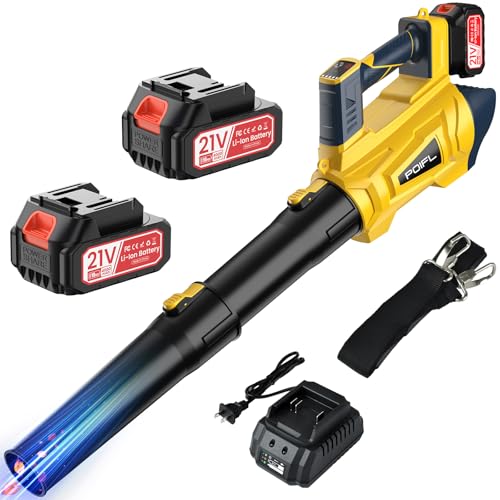
The LOSART cordless leaf blower is a battery powered tool designed for homeowners and DIYers who need to clear leaves, dust, and light snow from yards, decks, garages, and driveways. It is not a contractor grade machine, but it offers impressive performance for its price point and weight class.
With a maximum airflow of 650CFM, this blower can move heavy piles of wet leaves and debris with ease. The three speed settings let you adjust power for different tasks, from gentle dusting on a patio to full blast leaf clearing. The included tapered nozzle concentrates the air stream for more focused work. In real world use, the blower feels responsive and the trigger is easy to modulate.
Build quality is decent for the price. The plastic housing feels sturdy enough for regular yard work, but it is not built for heavy drops or jobsite abuse. At 4.4 pounds, it is one of the lighter cordless blowers available, and the ergonomic handle with rubber overmold reduces fatigue. The shoulder strap is a nice addition for longer sessions. The detachable tube makes storage simple, and the whole setup fits easily in a garage cabinet or on a shelf.
The biggest limitation is battery compatibility. The included 20V 5.0Ah batteries are proprietary to LOSART and will not work with DEWALT or other major platforms. That means you are locked into their system unless you buy additional batteries. Runtime is good on low speed, but expect significantly less on high. The fast charger helps, but you will want to keep both batteries topped off for larger yards.
Overall, the LOSART cordless leaf blower is a strong value for homeowners who want cord free convenience without spending a fortune. It is not for pros who need rugged durability or platform compatibility, but for clearing a typical suburban yard, it gets the job done. If you are a DIYer looking for a lightweight, powerful blower with long runtime, this is worth considering.
Color: Yellow
Dimensions: 31.1 x 10.24 x 6.69 inches
Product Group: Lawn & Patio
Airflow: 650 CFM
Power: 1200W (equivalent)
Speed Settings: 3
Battery: 2 x 20V 5.0Ah
Charger: Fast charger included
Weight: 4.4 lbs
Warranty: 2 years
1 x Leaf blower body
1 x Blower tube
1 x Extension nozzle
2 x 20V 5.0Ah batteries
1 x Fast charger
1 x Shoulder strap
1 x Chassis
1 x User manual

Pros
- Excellent power-to-weight ratio when used as a blower; easy to maneuver one-handed for blowing out flower beds and tight corners.
- Variable speed trigger and dial give fine control for delicate tasks like sweeping decks or stirring up leaves from gravel.
- Quiet enough for urban yards and early morning use without disturbing neighbors.
- Versatile 2-in-1 design with tool-free conversion between blower and vacuum modes.
Cons
- Battery life is limited to about 20-30 minutes of full-power use, making it best for small to medium properties or tasks with intermittent trigger use.
- Vacuum mode feels heavy and awkward after a few minutes, especially for smaller users; a shoulder strap would help but is not included.
- Some users report the vacuum clogs easily with large or oak leaves, requiring frequent clearing.
The Greenworks 40V Brushless Cordless Leaf Blower/Vacuum (model BVF444) is a versatile 2-in-1 yard tool that swaps between blowing and vacuuming in seconds. Powered by a brushless motor and a 40V 5.0Ah battery, it pushes 230 MPH at 505 CFM, making it capable of moving wet leaves, small gravel, and even light snow residue. The turbo button adds a burst of power for stubborn debris, while the variable speed trigger lets you dial in just enough airflow for delicate areas like garden beds or driveways.
Who is it for? This tool best suits homeowners with small to medium lawns who want to replace a gas blower without the noise, fumes, and maintenance. DIYers who already own Greenworks 40V tools will appreciate battery interchangeability. Contractors or property managers with larger lots may find the runtime limiting, but the lightweight blower mode (3.5 lbs tool-only) makes it easy to grab for quick cleanups around decks, patios, and sidewalks.
Real-world performance is strong on the blower side: the brushless motor delivers consistent torque, and the 505 CFM airflow easily moves dry leaves and medium debris. Wet leaves and heavier material require the turbo button, but it gets the job done. The vacuum function works well for dry leaves but struggles with wet or very large leaves that clog the tube. Runtime is the main limitation - expect 20 to 30 minutes of continuous high-speed use. For most suburban yards, that's enough for a full pass, but you'll want a second battery for larger areas.
Build quality is solid for the price point, with durable plastic housing and a comfortable grip. The vacuum collection bag is generous (17 gallons) but can make the unit feel top-heavy. Assembly can be tricky, especially snapping the vacuum tubes into place - expect to wrestle with it a bit. Noise levels are pleasantly low at 69 dB, far quieter than any gas blower, so you can work early mornings without complaints.
Drawbacks are honest: the vacuum mode is best for small jobs due to weight and clogging issues, and the battery simply doesn't last long on full power. Some users reported the advertised CFM/MPH may be optimistic compared to corded models. Still, for a cordless tool that does double duty, the Greenworks 40V blower/vacuum offers excellent convenience and respectable power. If you need a lightweight, quiet option for routine yard cleanup and already own Greenworks 40V tools, this is a solid investment. For heavy-duty commercial use or large properties, consider a backpack blower or corded model instead.
The Mechanics of Leaf Blower Air Speed and Clearing Performance
Air speed stands as one of the most visible performance metrics on any leaf blower carton, yet raw velocity tells only part of the story when tackling outdoor cleanup. Understanding how fast does a leaf blower blow clarifies what kind of work a specific blower can handle, from sweeping dry garage dust to scouring wet autumn leaves off turfgrass. Evaluating velocity alongside volumetric airflow and nozzle dynamics helps you determine the exact clearing power your property demands.
Typical Air Velocity Ranges Across Modern Leaf Blowers
Most residential leaf blowers generate air velocities between 100 MPH and 250 MPH depending on motor power, nozzle design, and intended operational use. Compact handheld models typically operate around 150 MPH, which provides plenty of force for blowing dry lawn clippings off driveways, walkways, and wooden decks. Higher-output handheld electric models and commercial backpack units regularly push air speeds to 200 MPH or even 230 MPH, allowing operators to scour stubborn debris from hard surfaces. Understanding these baseline ranges helps buyers gauge whether a given tool possesses enough velocity to tackle specific seasonal yard tasks.
Air velocity specifications often reflect peak output under optimal conditions using specialized tapered nozzles. For instance, tools like the 2026 Upgrade Leaf Blower deliver 150 MPH to manage general yard and patio maintenance with quiet efficiency. Meanwhile, heavy-duty options like the EWORK 20V Cordless Leaf Blower and the Greenworks 40V (230 MPH / 505 CFM) reach between 200 MPH and 230 MPH to dislodge embedded materials. While high velocity numbers catch the eye on packaging, practical clearing efficiency depends just as heavily on air volume.
Air Velocity Versus Air Volume: Comparing MPH and CFM
Air velocity measured in miles per hour (MPH) indicates how rapidly air exits the blower nozzle, representing the tool’s piercing and dislodging power. Air volume measured in cubic feet per minute (CFM) measures the total quantity of air displaced by the fan each minute. A blower with exceptional MPH but low CFM functions like a pressure washer with a needle-thin spray, cutting into debris piles without pushing them forward. Volumetric airflow acting across a wider swath provides the momentum needed to move broad piles of autumn leaves across lawn grass.
Balancing MPH and CFM produces effective clearing force, preventing operators from sweeping the same area repeatedly. High CFM ratings, such as the 650 CFM delivered by the LOSART Leaf Blower Cordless or 700 CFM from high-output electric platforms, push voluminous piles across open turf. High velocity loosens materials stuck to wet pavement, while high volume carries those loosened materials into manageable windrows. Evaluating both metrics together prevents buyers from purchasing a machine that produces intense wind speed but lacks the air mass needed for efficient cleanup.
How Nozzle Shape Influences Airflow Speed and Spread
The physical geometry of the blower tube and nozzle directly dictates the speed and shape of the exiting airflow. Narrow or tapered concentrator nozzles restrict the opening, forcing the air column into a tighter channel and significantly boosting exit velocity. This concentrated jet excels at dislodging wet leaves plastered against asphalt, cleaning out expansion joints, or blasting stubborn pine needles from grass. But narrowing the stream reduces the physical clearing path, requiring more sweeping passes to cover an open lawn.
Wide, flared sweeper nozzles distribute air across a broad fan pattern, dropping the peak velocity while maximizing ground coverage. This configuration proves ideal for herding large volumes of dry leaves across open lawns or broad driveways where raw shearing force is unnecessary. Many advanced blower designs include interchangeable or tapered nozzles to give homeowners flexibility between scouring speed and sweeping volume. Swapping attachments lets operators adapt the tool to specific cleanup phases without altering motor output.
Velocity Requirements for Different Yard Cleanup Tasks
Sweeping dry grass clippings and loose dust from smooth concrete patios requires minimal air speed, often under 120 MPH. Blasting these lightweight materials with excessive velocity creates chaotic dust clouds and scatters debris into swimming pools or garden beds. Moderate air speeds allow for neat, controlled directional sweeping along borders and retaining walls. Dual-speed controls enable users to dial back output for delicate tasks and save higher speeds for demanding conditions.
Dislodging waterlogged, matted deciduous leaves in late autumn requires substantial velocity combined with heavy airflow. Soaked leaves adhere to turf grass blades, demanding air speeds between 180 MPH and 230 MPH to break surface tension and lift the foliage. Light, fluffy winter snow also responds well to air velocities above 150 MPH, allowing quick porch and car clearing before moisture freezes. Selecting the right air speed ensures effective debris removal without damaging turf or disturbing surrounding mulch.
Blowing Force and the Newton Rating
Air speed and airflow volume combine to produce total dynamic blowing force, which is mathematically quantified in Newtons. While manufacturers prominently display MPH and CFM figures on marketing boxes, Newton force measures the actual physical push exerted on yard debris. A tool with high velocity but modest volume may produce the same Newton rating as a machine with moderate velocity and high volume. Homeowners clearing dense yard debris benefit from looking at total clearing force rather than focusing solely on top speed.
Calculating blowing force accounts for the mass of the moving air multiplied by its acceleration through the tube. Handheld cordless units typically generate between 8 and 18 Newtons of blowing force, which suits suburban yard cleanup and routine surface maintenance. Heavier commercial backpacks can exceed 30 Newtons, providing the sheer power needed to clear deep woodland ground cover. Understanding this combined metric helps avoid the trap of chasing high MPH numbers that fail to move heavy yard waste.
Battery Platform Runtime and Turbo Mode Speed Draw
Delivering maximum air speeds places immense electrical load on cordless tool motors and battery packs. When operators engage high-speed turbo modes to achieve speeds above 200 MPH, battery discharge rates spike dramatically. A battery pack rated at 4.0Ah or 5.0Ah that runs for thirty minutes at moderate speed may deplete in under twelve minutes at maximum velocity. High-velocity motors generate substantial heat, which can trigger thermal protection cutoffs if used continuously on warm afternoons.
Many modern cordless leaf blower kits include dual battery packs to mitigate high-drain runtime limitations. Alternating between paired lithium-ion packs while utilizing fast chargers allows homeowners to maintain productive workflows on larger properties. Selecting tools that offer two or three distinct speed levels lets users reserve peak velocity for stubborn spots while conserving energy for general sweeping. Proper throttle management extends both single-charge runtimes and overall battery cell longevity.
Gas Versus Cordless Airspeed Delivery
Gas-powered leaf blowers and modern cordless electric models achieve similar peak airspeeds, but they deliver power differently. Cordless brushless motors provide instant acceleration, reaching full velocity the moment the operator squeezes the trigger. Two-cycle gas engines require a brief ramp-up as fuel and air enter the combustion chamber, though they sustain high velocity indefinitely as long as fuel remains in the tank. Gas engines also require regular upkeep to maintain top velocity, making leaf blower engine maintenance a familiar routine for small-engine owners.
Battery-powered blowers eliminate carburetor adjustments, oil mixing, and spark plug fouling while delivering comparable airspeeds for residential jobs. Expanding an existing cordless yard care setup with matching batteries, such as investing in cordless lawn mower options that share 40V or 20V battery platforms, lowers total equipment ownership costs. Cordless models also operate with significantly less noise, making them ideal for neighborhoods with strict municipal decibel restrictions. Choosing between power types depends on property size, tolerance for engine maintenance, and required continuous runtimes.
Controlling Airflow Around Delicate Landscape Beds
Operating a leaf blower at maximum airspeed near decorative flowerbeds often creates more yard work than it resolves. Air moving at 150 MPH or faster easily picks up cedar mulch, pine bark nuggets, and pea gravel, scattering them across manicured lawns. Modulating the throttle or selecting low-speed modes keeps the air stream gentle enough to roll dry leaves out of beds while leaving heavy mulch in place. Skilled operators skim the air column horizontally across the bed surface rather than pointing the nozzle directly downward.
Maintaining proper distance and working angle prevents accidental plant damage and soil erosion. Standing several paces back allows the air column to expand, softening the impact while still creating enough air motion to flutter fallen leaves loose. Working in the direction of the natural prevailing wind also prevents dislodged leaves from swirling back into cleaned garden borders. Learning when to decrease air velocity is just as important as knowing when to unleash full power.
Ergonomics, Reactive Force, and Safe High-Speed Operation
Blowing air at velocities exceeding 200 MPH produces noticeable reactive thrust that pushes back against the operator’s hand and wrist. Over extended clearing sessions, resisting this constant backward pressure causes forearm fatigue and wrist strain. Lightweight tool engineering, ergonomic rubber overmolding, and well-balanced center-of-gravity distributions help counter operational fatigue. Shoulder straps and cruise control throttle locks further reduce physical strain by eliminating the need to pinch the trigger continuously.
High exit velocity also turns small pebbles, twigs, and acorns into dangerous airborne projectiles. Operators should always wear impact-resistant eye protection and sturdy work footwear when running blowers at top speed. Hearing protection remains recommended for sustained use, even with quieter electric blowers that operate below 70 decibels. Directing the nozzle away from bystanders, pets, parked vehicles, and open windows prevents accidental property damage and personal injury.
Selecting the Right Air Velocity and Tool for Your Yard
Matching equipment specifications to your property’s specific debris profile prevents buyer frustration and unnecessary spending. Small suburban patios, townhome courtyards, and standard driveways rarely require air speeds exceeding 150 MPH to stay clean and orderly. Properties shaded by mature oak or maple trees benefit from tools capable of 200 MPH or more to move dense, rain-soaked leaf blankets. Evaluating your local tree canopy and yard layout guides you toward the optimal balance of airspeed, air volume, and battery runtime.
Long-term satisfaction comes from choosing a blower that balances adequate clearing velocity with manageable weight and convenient power management. Cordless tools offering multi-speed settings and paired high-capacity batteries provide the flexibility needed for both delicate landscaping and heavy fall cleanups. By evaluating how air speed, volumetric flow, and nozzle design interact, homeowners can tackle outdoor chores with speed and precision.




Write Your Review
No reviews yet. Be the first to share your experience!