


Clearing fallen foliage and stubborn yard debris requires matching your equipment to the density of the cleanup. While many homeowners ask how many mph leaf blower do i need, the answer depends heavily on whether you are sweeping light grass clippings off a flat driveway or dislodging waterlogged leaves from dense turfgrass. Airspeed, measured in miles per hour (MPH), dictates the scouring force that breaks debris free from the ground. However, relying strictly on velocity without considering total airflow volume can lead to frustrating yard sessions. Selecting the proper output ensures you complete seasonal chores quickly without creating excessive physical strain or scattering mulch across garden beds.
For basic property maintenance on hard surfaces and modest lawns, compact cordless tools provide ample velocity while keeping operating weight low. Homeowners managing clean hardscapes and light turf debris often look toward tools like the WORKPRO 20V Cordless Leaf Blower with Battery, while those maintaining larger acreage may evaluate a dedicated leaf blower for large properties to tackle heavier organic piles. Understanding how velocity interacts with air volume helps you select a tool that delivers balanced clearing power. By assessing your specific yard conditions, you can choose an appropriate airspeed rating that handles your cleanup tasks efficiently.

Matching Leaf Blower Airspeed to Yard Cleanup Demands
Most residential cleanup jobs require an airspeed between 100 MPH and 200 MPH depending on the surface and debris moisture. For sweeping dry hardscapes like driveways, patios, and decks, an airspeed of 100 to 130 MPH provides plenty of velocity to push grass clippings and dry leaves. Stepping onto open turfgrass with scattered dry foliage generally calls for 130 to 170 MPH to lift material caught in the grass blades. When dealing with saturated, matted leaves or wet pine needles, clearing speeds of 180 to 220 MPH or more become necessary to peel debris away from the soil. Determining your ideal velocity begins with identifying the toughest debris conditions you expect to encounter across your property.
Airspeed alone never tells the whole clearing story. While miles per hour measures how fast air exits the nozzle, cubic feet per minute measures the actual volume of air displaced. A tool boasting high airspeed with minimal air volume acts like a narrow pressure washer tip, cutting thin lines through leaf piles without moving the pile forward. Conversely, balanced ratings allow you to push broad mounds of yard waste into manageable staging areas. Choosing the right tool requires balancing this exit speed against the mass of air your yard requires.
Evaluating both numbers together reveals how quickly you can clear outdoor spaces. A machine with moderate speed and generous volume often clears flat lawns faster than a unit that prioritizes high velocity at the expense of airflow width. On the other hand, tight corners and damp surfaces benefit directly from high velocity to scrub dirt and twigs loose. Matching the machine to your property layout prevents wasted effort during seasonal cleanups.
The Core Balance Between Airspeed and Air Volume
Airspeed represents the initial kinetic punch that breaks the static friction holding debris in place. When wet leaves stick to asphalt or become tangled in lawn thatch, high-velocity air shears under the leaves to break the seal. A blower operating around 130 MPH produces sufficient force to dislodge dry clippings and surface litter easily. Without adequate velocity, air simply glides over the top of matted debris without lifting it. This makes airspeed the primary metric for scouring power and initial material detachment.
Air volume, measured in cubic feet per minute, determines how much material the air stream can carry once it becomes airborne. A high CFM rating creates a wide, deep cushion of moving air that transports large volumes of leaves simultaneously. If a blower has an impressive velocity rating of 200 MPH but only pushes 150 CFM, it will scour stubborn debris loose but struggle to roll large piles across the lawn. In contrast, pairing moderate velocity with higher volume allows homeowners to sweep wide swaths of turf in a single pass. Both specifications must work in tandem to achieve efficient clearing.
The combination of air velocity and air volume determines the total blowing force of the machine, which engineers measure in Newtons. Total blowing force reflects the true mechanical push applied against outdoor debris. Calculating blowing force accounts for the mass of air exiting the tube and the speed at which it travels. A compact blower delivering 130 MPH and 150 CFM provides a gentle, controlled push suitable for hard surfaces, while commercial units pushing 200 MPH at 600 CFM generate massive Newtons of force. Evaluating these metrics together prevents overbuying heavy machinery or underestimating demanding fall cleanups.
Airspeed Requirements Across Different Yard Surfaces
Paved hardscapes, wooden decks, and concrete driveways require moderate velocity to prevent debris from bouncing erratically. An airspeed rating between 100 and 130 MPH works best for these hard surfaces because it pushes dust and grass clippings smoothly without kicking up dangerous stone chips. When you blast pavement with excessive velocity exceeding 180 MPH, light debris often swirls uncontrollably into the air and redeposits behind you. A controlled speed keeps the material rolling forward in a neat, uniform line toward the collection area. This controlled range also helps preserve delicate surface finishes on painted decks and patio furniture.
Standard suburban lawn turf demands slightly higher airspeed to navigate the resistance created by grass blades. Foliage settles into the turf canopy, requiring speeds between 130 and 170 MPH to lift leaves upward before pushing them forward. If the grass is cut short and the leaves remain completely dry, a 130 MPH tool can systematically shepherd the debris into windrows. For thicker turf varieties like St. Augustine or tall fescue, having access to speeds closer to 160 MPH ensures that leaves do not remain trapped between blades. The key is applying enough speed to overcome grass friction without tearing healthy turf roots.
Wet autumn cleanups present the greatest challenge and demand peak velocity ratings. When autumn rains soak deciduous leaves, surface tension glues them to sidewalks and mats them into dense blankets across the yard. Dislodging these wet leaf mats requires air speeds ranging from 180 to 230 MPH to slice underneath the waterlogged layer. Lower airspeeds will merely ripple the surface of wet foliage without moving the underlying mass. Homeowners surrounded by mature oak or maple trees frequently need this upper-tier velocity to handle post-storm yard recovery.
Delicate landscaping areas, such as mulch beds and gravel pathways, require lower velocity thresholds. Directing an air blast of 150 MPH or higher into decorative bark or pea gravel will blast the ground cover out of the bed, creating an unsightly mess. For these sensitive zones, an airspeed between 60 and 90 MPH is ideal for lifting stray leaves while leaving heavy mulch undisturbed. Having a blower with dual gears or a responsive variable-speed trigger lets you dial back output instantly when working near flowerbeds. Proper velocity control prevents unnecessary repair work after basic maintenance passes.
Comparing Cordless Battery and Gas Airspeed Capabilities
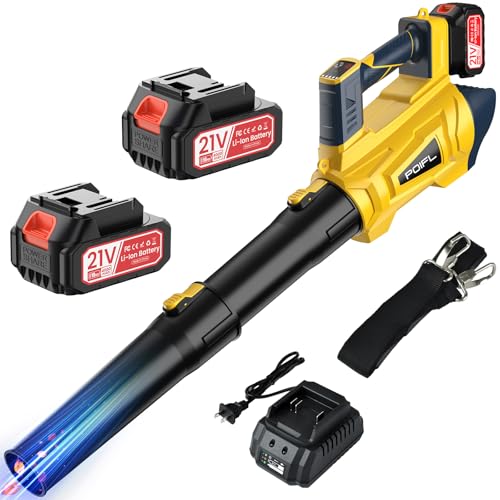
Handheld cordless battery blowers have made remarkable strides in reaching practical airspeed levels. Compact 20V battery systems often generate around 130 MPH with modest air volume, creating an exceptionally lightweight setup for quick hardscape cleanups. These lightweight tools weigh only a few pounds, making them accessible for operators seeking push-button simplicity without muscle strain. Higher-voltage cordless platforms reaching 40V to 60V can push airspeeds beyond 150 to 170 MPH while maintaining competitive airflow volume. The convenience of zero engine maintenance and instant starting makes cordless models highly appealing for suburban routines.
High airspeed on battery tools comes with a clear runtime trade-off that buyers must anticipate. Running a cordless blower at maximum velocity or engaging boost mode pulls maximum continuous amperage from the lithium-ion battery cells. A compact 2.0 Ah battery pack running at peak power may deliver roughly 15 to 18 minutes of operation before requiring a recharge. Dropping the speed gear down to a lower velocity setting often doubles or triples operational time, allowing up to 40 minutes of lighter clearing. Operators should select their working speed intentionally rather than defaulting to maximum throttle on every task.
Gas-powered blowers, particularly commercial backpack units, consistently deliver sustained high airspeeds alongside massive air volume. A quality two-cycle engine can maintain airspeeds between 180 and 220 MPH without experiencing electrical thermal cutoffs or declining power curves. These machines run continuously as long as fuel remains in the tank, making them the standard choice for multi-acre properties with heavy timber. However, maintaining peak velocity on gas platforms requires regular care, such as cleaning the spark arrestor and installing a small engine tune-up kit to prevent carburetor fouling. Choosing between battery convenience and sustained gas output depends on the acreage you need to manage.
Nozzle Geometries and Their Impact on Real Velocity
The shape and diameter of your blower nozzle directly dictate the velocity of the exiting air stream. Manufacturers use the principles of fluid dynamics to adjust airspeed by restricting or widening the exhaust opening. When air travels through a tapered or narrow concentrator nozzle, the restriction accelerates the air stream to higher miles per hour. This focused jet of air is ideal for scraping stubborn debris out of concrete expansion joints, garden borders, and gutters. However, this velocity increase comes at the cost of a narrower clearing path.
Wider flared nozzles produce the opposite effect by spreading air across a broader horizontal fan. Expanding the exit diameter lowers the measured MPH while maintaining maximum CFM distribution. A flared nozzle operating at 110 MPH can sweep a five-foot swath of dry leaves across a flat driveway much faster than a concentrator tip blasting at 150 MPH. The wider pattern moves large surface areas efficiently without carving frustrating trenches through the middle of the leaf pile. Switching nozzle attachments allows operators to adapt their blower to the specific physical task at hand.
Tube length and internal wall friction also influence the velocity reaching the ground. Long extension tubes help operators position the nozzle tip close to the debris without bending over, which reduces lower back fatigue. However, air traveling through extended ducting encounters minor friction against the interior walls, causing a slight drop in static pressure. Most well-designed extension systems maintain a balanced diameter that preserves exit velocity while improving operating ergonomics. Ensuring tight connections between tube sections prevents air leakage that would otherwise sap operational airspeed.
Throttle Control and Ergonomic Handling at High Speeds
Managing high-velocity air streams requires precise throttle modulation to prevent operator fatigue and yard damage. Blowers equipped with multi-gear speed switches or variable-speed triggers give you real-time authority over exit velocity. If you approach a cluster of decorative planters or a mulched bed, feathering the trigger down to a lower speed prevents accidental scattering. Once you turn back toward the open driveway or turf, ramping the trigger back to maximum restores full clearing power. Fixed-speed blowers lack this adaptability, forcing users to constantly alter their nozzle distance to manage air force.
High airspeed creates a noticeable physical reaction force that operators must counter through their wrists and forearms. As air exits the nozzle at speeds exceeding 150 MPH, the resulting recoil pushes the blower tube backward and upward. In handheld tools, compensating for this continuous rotational torque can lead to wrist fatigue during extended yard sessions. Lightweight models weighing under three pounds minimize this strain by positioning the center of gravity directly beneath the handle grip. For heavier commercial blowers delivering extreme velocity, backpack harnesses distribute this recoil across the shoulders and hips instead of the arm.
Cruise control levers and trigger locks provide essential ergonomic relief when clearing large, open yards. Holding down a spring-loaded trigger for twenty minutes can cause severe hand cramping and finger stiffness. Engaging a cruise control lock sets the motor at your desired airspeed, letting you relax your grip while walking steady sweeping patterns. This feature allows operators to focus entirely on nozzle direction and path coverage without maintaining continuous finger pressure. When selecting a high-velocity blower, verified throttle locks significantly improve overall handling comfort.
Acoustic Footprint and Sound Compliance at High Velocities
High air velocities naturally generate significant acoustic energy as fast-moving air shears against ambient room air and nozzle edges. The sound pressure produced by outdoor power equipment is measured in decibels using standardized protocols like ANSI B175.2. This standard evaluates equipment sound levels both at the operator ear position and from a fifty-foot perimeter distance. Blowers operating at elevated airspeeds often generate higher-frequency whine from spinning impeller blades alongside air turbulence noise. Understanding these acoustic ratings helps homeowners remain good neighbors while accomplishing seasonal yard chores.
Many municipalities and homeowners associations enforce strict noise restrictions that limit blower operation to specific decibel levels. Common municipal ordinances establish maximum noise limits of 65 dBA measured at a distance of fifty feet. Battery-powered blowers operating around 120 to 140 MPH frequently comply with these quiet-zone standards, producing significantly less sound pressure than two-stroke gas engines. Gas-powered units running at 200 MPH can generate sound levels exceeding 75 to 80 dBA at fifty feet, often violating local residential codes. Checking local ordinances prevents fines and neighborhood friction during early morning cleanups.
Regardless of the power platform you operate, personal protective equipment remains vital when running high-velocity machinery. Even moderately quiet battery blowers can expose the operator to sustained sound levels near 85 dBA at ear level. Wearing ANSI-rated hearing protection prevents cumulative hearing damage during extended autumn yard sessions. Additionally, air blasting at speeds over 130 MPH can bounce gravel, dried acorns, and wood chips off hard surfaces at dangerous angles. Always wear impact-rated safety glasses and sturdy footwear to protect yourself against ricocheting debris.
Maintaining Impellers and Air Intakes for Sustained Output
A blower cannot generate its rated airspeed if the air intake system becomes obstructed during operation. Intake grates frequently pull in floating leaves, grass strands, and loose clothing when held too close to the operator body. Restricting the incoming air volume starves the fan impeller, resulting in an immediate drop in exit velocity and motor overheating. Before starting each cleanup pass, inspect the intake housing and wipe away any accumulated dirt or plant debris. Establishing a habit of holding the tool slightly away from your clothing ensures unobstructed airflow into the housing.
Internal impeller blades must remain clean and undamaged to accelerate air smoothly through the blower housing. When tiny particles of soil, grit, and damp foliage pass through the fan chamber, they can coat the impeller blades or cause micro-abrasions. Over several seasons, heavy debris buildup alters the aerodynamic profile of the blades, reducing air velocity and introducing unwanted vibration. Disconnecting the battery pack or spark plug lead allows you to inspect the fan blades safely through the intake port. Cleaning away caked-on mud restores proper blade aerodynamics and protects the drive motor bearings.
Proper battery care is equally critical for preserving rated velocity on cordless platforms. Lithium-ion battery packs supply maximum voltage when kept within moderate temperature ranges and fully charged before heavy chores. Operating a battery pack that has been stored in freezing garage conditions can cause premature voltage sag, reducing maximum airspeed output. Store your battery packs in a climate-controlled environment and charge them fully prior to tackling heavy seasonal cleanups. Clean electrical contacts on both the tool and the battery pack ensure unhindered current flow to the motor.
Selecting the Right Velocity for Your Yard Requirements
Selecting the correct airspeed comes down to evaluating your specific yard layout, tree cover, and personal physical requirements. If your property primarily consists of paved driveways, stone patios, and small turf areas with light seasonal leaf drop, an airspeed of 120 to 140 MPH delivers ideal performance without unnecessary tool weight. Homeowners managing dense turf, damp autumn conditions, or extensive oak tree cover will benefit from stepping up to 160 to 200 MPH. Always remember that velocity works hand in hand with air volume to provide true clearing power across your outdoor spaces. Matching these specifications to your landscape ensures fast, comfortable, and efficient yard cleanup season after season.




Write Your Review
No reviews yet. Be the first to share your experience!