


Yes, old gas is bad for your lawn mower. Gasoline begins to degrade immediately after leaving the refinery, and this breakdown causes gum, varnish, and corrosion inside the fuel system. These residues can clog critical components like the carburetor, preventing the engine from starting or running smoothly. Understanding is old gas bad for your lawn mower helps you avoid costly repairs and extends the life of your equipment.
The primary culprit is ethanol, a common additive in modern gasoline. Ethanol is hygroscopic, meaning it attracts moisture from the air, which separates from the fuel and leads to phase separation. This process starts within 30 to 90 days, depending on storage conditions and fuel blend. By the time you pull your mower out of the garage in spring, the fuel may already be compromised. If you are maintaining a gas-powered unit, checking the fuel age is a critical first step before any other maintenance. For those with smaller properties, a guide to small yard mowers often highlights the importance of consistent, easy maintenance routines.

Pros
- Lightweight and easy to push, ideal for small yards and users who prefer a non-self-propelled mower.
- Reliable 144cc gas engine provides ample power for thick grass without the hassle of batteries or cords.
- Side-discharge design effectively handles clippings and reduces cleanup time.
- 3-position height adjustment offers flexibility for different grass lengths and seasonal conditions.
Cons
- No mulching or bagging option included; only side discharge is available, which may require additional raking.
- 18-inch cutting width is narrow, making it less efficient for larger lawns compared to wider models.
- Assembly may require basic tools and some time, though instructions are generally clear.
The SENIX Gas Lawn Mower is a compact, lightweight push mower designed for homeowners with small yards, first-time buyers, or anyone looking for a straightforward gas-powered cutting solution. With an 18-inch steel blade and a 144cc 4-cycle engine, it delivers reliable performance for routine grass maintenance around suburban homes, apartments with small lawns, or even rural properties with modest cutting needs.
This mower is best suited for budget-conscious shoppers and those who prioritize ease of use over advanced features. The 37.5-pound weight makes it one of the lighter gas mowers available, so pushing it across a flat lawn or maneuvering around flower beds and garden hoses feels manageable. The ergonomic handle and 7-inch rear wheels help with turning in tight corners, and the 3-position height adjustment (1.2 to 3.15 inches) allows you to adapt to different grass conditions without needing tools.
In terms of cutting performance, the 144cc engine provides enough power for typical grass growth in small to medium yards. The side-discharge system uses a vortex tunnel design to spread clippings evenly, which can reduce the need for raking after mowing. However, note that this model does not include a mulching plug or grass bag, so you will rely solely on side discharge. If you prefer a clean, bagged finish or want to mulch clippings for lawn health, you may need to purchase additional accessories or consider a different model.
Build quality is practical for the price point. The deck is made of durable materials, and the lightweight construction helps with storage in a garage or shed. The mower's compact dimensions (23.5 x 21 x 11.78 inches) make it a good fit for smaller storage spaces. Maintenance is straightforward: check oil before each use, keep the blade sharp, and clean the underside after mowing to prevent grass buildup. The engine is a standard 4-cycle, so it runs on regular gasoline and requires oil changes periodically.
Realistic limitations include the 18-inch cutting width, which means more passes on larger lawns compared to 21-inch or wider models. Additionally, the lack of self-propulsion means you'll need to push it yourself, which could be tiring on hilly terrain or larger properties. The side-discharge-only design may leave clippings on the lawn, which some users find messy, but it does help return nutrients to the soil if you mow frequently.
Overall, the SENIX Gas Lawn Mower is a solid choice for homeowners who want an affordable, lightweight gas mower for small yards, apartment patios, or as a backup mower. It's especially good for first-time buyers or those who want a simple, no-fuss machine that starts easily and cuts reliably. If you have a larger lawn, need mulching or bagging, or prefer self-propelled convenience, you may want to explore other options. But for basic lawn care on a budget, this mower gets the job done.

Pros
- Reliable 144cc engine starts easily even after storage
- Lightweight and easy to push across small lawns
- Versatile 3-in-1 cutting options for mulching, bagging, or side discharge
- Affordable price point for a gas-powered mower
- Foldable handle saves storage space in compact garages
Cons
- 18-inch cutting width may be small for lawns larger than 1/4 acre
- No self-propelled feature – requires manual pushing on slopes or thick grass
- Grass bag capacity is not specified but likely smaller than larger mowers, requiring more frequent emptying
The PowerSmart EasyCut 18-Inch Gas Lawn Mower is a straightforward push mower designed for homeowners who need reliable performance on small to medium-sized lawns. With its 144cc 4-stroke OHV engine and 18-inch steel deck, this mower targets budget-conscious shoppers, first-time buyers, and those with compact yards up to a quarter acre. It's a practical tool for weekly mowing, mulching fall leaves, or keeping the grass tidy before a backyard barbecue.
When it comes to cutting performance, the 3-in-1 system gives you flexibility: mulch clippings for lawn health, bag them for a clean finish, or side discharge when grass is thick. The 6-position height adjustment lets you dial in the cut from 1 to 3 inches, so you can avoid scalping on uneven ground or leave grass longer during hot summer months. Many users find the 18-inch width nimble enough to navigate around flower beds and garden hoses, though it may take more passes on a larger lawn. The rear bag collects clippings reasonably well, and emptying it is quick – a plus when you're trying to finish before dinner.
Build quality is a highlight for the price. The steel deck is powder-coated to resist rust and impact, and the lightweight 55-pound frame makes it easy to push and maneuver. The handle folds without tools, allowing you to store the mower vertically in a shed or garage corner – a real advantage for apartment dwellers or anyone with limited space. Assembly is tool-free, and you can have it ready to mow in under 10 minutes. The rubberized grip handle is comfortable for most users, though taller folks might wish for a bit more height adjustability.
The engine is a key selling point: the 144cc OHV powerplant starts reliably in 1-2 pulls thanks to the auto choke and recoil starter. It sips gas, so you won't be refueling often during a typical mowing session. Maintenance is straightforward – access to the oil dipstick and air filter is easy, and blade replacement is simple with basic tools. Noise levels are typical for a gas mower, so early morning mowing might disturb neighbors, but the engine is not excessively loud.
Realistically, this mower has limitations. The 18-inch width means more laps on a 1/3-acre lot, and there's no self-propelled drive, so you'll need to push it yourself – fine for flat ground but tiring on slopes. The grass bag capacity is not specified, but based on its size, expect to empty it frequently during peak growth. Some users may prefer a larger cutting deck or a self-propelled model for convenience. However, for its price, the PowerSmart EasyCut offers excellent value.
Overall, the PowerSmart EasyCut is a smart buy for homeowners with small lawns, renters with tiny yards, or anyone looking for an affordable gas mower that's easy to store and maintain. It handles the basics of lawn care reliably, and its lightweight design makes it a good choice for elderly users who don't want to wrestle with a heavy machine. If your yard is under a quarter acre and you prioritize simplicity and budget, this mower is worth considering.
The PowerSmart EasyCut offers a 3-in-1 cutting system that lets you switch between mulching, bagging, and side discharge. The 18-inch steel blade is sharp enough to handle typical grass growth, and the 6-position height adjustment (1 to 3 inches) gives you control over the final cut. For mulching, the mower recirculates clippings finely, returning nutrients to the soil – ideal for eco-conscious homeowners. Bagging is efficient for a clean look, though the bag may fill quickly on thick, damp grass. Side discharge works well for tall growth, reducing clogs and saving time. The cutting width is best for small to medium lawns; larger areas will require more passes.
Many users report that the mower cuts evenly on flat terrain, but scalping can occur on uneven ground if the height is set too low. The lightweight design helps you maneuver around obstacles, but it also means the mower may bounce on bumpy lawns. Overall, the cutting performance is solid for the price point, with reliable grass handling for routine weekly maintenance.
The heart of the PowerSmart EasyCut is a 144cc 4-stroke OHV engine. This overhead valve design provides good torque for a push mower of this size, making it capable of cutting through thick grass without bogging down. The recoil starter with auto choke ensures easy starting, often in 1-2 pulls even after the mower has been sitting for a few days. The engine runs on regular unleaded gasoline and is relatively fuel-efficient, so you can mow a small lawn several times on a single tank.
Maintenance is straightforward: the oil dipstick is easy to access for checking levels, and the air filter can be cleaned or replaced without major disassembly. The engine is not overly loud compared to other gas mowers, but it's still louder than electric models. For suburban lawns, the noise is acceptable for daytime mowing. Overall, the engine delivers dependable power for the mower's intended use – small to medium yards where ease of use and reliability matter more than raw horsepower.

Pros
- Powerful gas engine handles thick, wet, and tall grass without bogging down.
- Self-propelled drive reduces effort on slopes and long stretches, great for larger lawns.
- 22-inch cutting width strikes a good balance between speed and maneuverability.
- Versatile 3-in-1 system covers mulching, bagging, and side discharge for year-round lawn care.
- Single-lever height adjustment is quick and tool-free, convenient for adjusting on the fly.
Cons
- Weighs 79 pounds, which may be heavy for some users to push manually if the self-propelled system fails or on flat ground.
- Gas engine requires regular maintenance like oil changes and fuel stabilization, less convenient than cordless electric models.
- Grass bag capacity not specified; may need frequent emptying on large lawns with heavy growth.
The SENIX 201cc 22-inch self-propelled gas lawn mower is designed for homeowners who need reliable cutting power for medium to large lawns. Powered by a 201cc 4-cycle OHV engine, this mower delivers consistent performance to tackle thick grass, uneven terrain, and seasonal overgrowth. Its 22-inch steel cutting deck is wider than many entry-level mowers, helping you cover more ground in fewer passes and finish mowing faster.
This mower is best suited for suburban and rural property owners with sloped or uneven lawns. The rear-wheel-drive self-propelled system, paired with large 11-inch rear wheels, provides excellent traction on hills and helps you maintain control on bumpy ground. The variable speed control lets you match your walking pace, which is especially helpful for elderly users or those with larger yards. First-time mower buyers will appreciate the straightforward single-lever height adjustment, offering six positions from 1.25 to 4 inches for precise cutting across different grass types and seasons.
In terms of lawn care performance, the 3-in-1 cutting system gives you flexibility: bag clippings for a clean finish during peak growth, mulch to nourish the lawn, or side discharge for tall grass after a vacation. The sharp steel blade and powerful engine handle mulching well, returning fine clippings that break down quickly. Bagging efficiency is solid for a gas mower, though the bag capacity may require frequent emptying on large lawns. The side discharge chute works effectively for thick, wet grass without clogging.
Build quality is practical for the price point. The steel deck feels durable and resistant to impacts from rocks and roots, though it may rust over time if not cleaned and stored properly. The large rear wheels roll smoothly over uneven ground, and the handle is comfortable with a rubberized grip. Assembly is straightforward with clear instructions and included tools, typically taking 30-45 minutes. Storage is easy thanks to a foldable handle that reduces the mower's footprint in a garage or shed.
Maintenance is manageable: you'll need to check and change oil, replace the air filter periodically, and sharpen or replace the blade. The gas engine requires fuel stabilization if storing over winter, which is a minor hassle compared to cordless electric models. However, for users who prefer the range and power of gas, this mower offers good value. The 79-pound weight is noticeable but manageable with the self-propelled drive engaged.
Overall, the SENIX 201cc self-propelled mower is a solid choice for budget-conscious homeowners who need reliable performance on medium to large lawns with slopes. It may not be the lightest or most feature-rich option, but its powerful engine, versatile cutting modes, and user-friendly adjustments make it a practical workhorse for routine weekly mowing and seasonal yard cleanup.
Pros
- Versatile three-function design saves money and garage space
- Auto-feed spool reduces downtime and frustration
- Lightweight and easy to maneuver for users of all strengths
- Quick tool-free conversion between mowing, trimming, and edging modes
Cons
- Corded electric limits range and requires nearby outlet or extension cord
- Fixed cutting height at 1.6 inches may not suit all grass types or preferences
- 12-inch deck size is best for small lawns not large acreage
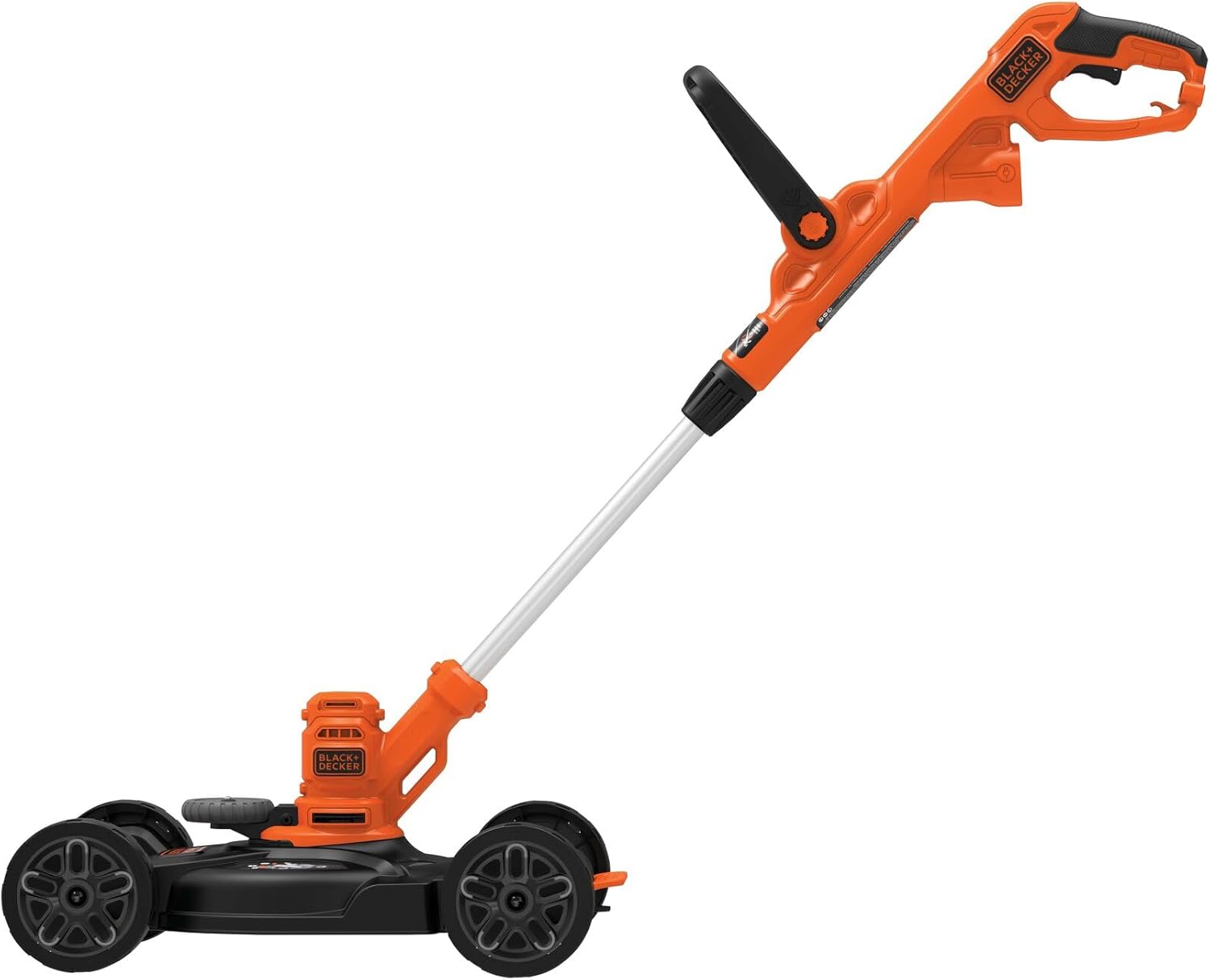
The BLACK+DECKER BESTA512CM is a corded electric 3-in-1 lawn mower, weed trimmer, and edger designed for homeowners with compact yards. It combines three essential lawn care tools into one lightweight package, making it a practical choice for small lots, townhouse gardens, or precision work around flower beds and patios. Powered by a 6.5 amp motor with PowerDrive transmission, this unit delivers enough torque to cut through thick grass and tough weeds without bogging down.
In real-world use, the automatic feed spool is a standout feature. You don't have to stop and bump the head to advance the line, which keeps your workflow smooth. Switching between modes is tool-free and quick: detach the mower deck to turn it into a string trimmer, then rotate the head to use it as a wheeled edger. The lightweight 9.9-pound build and adjustable handle make it easy to carry and comfortable to operate, even for extended sessions.
Build quality is typical for BLACK+DECKER: solid enough for regular home use but not built for commercial abuse. The alloy steel frame holds up well, and the cord retention system prevents accidental unplugging. However, the 1.6-inch fixed cutting height limits adjustability. Some users might prefer a taller or lower setting depending on grass type. The corded design means you're tethered to an outlet, so you'll need a long extension cord for medium-sized yards.
For DIYers and homeowners who want an affordable all-in-one tool that handles the basics without breaking the bank, the BESTA512CM is a solid choice. It's not meant for large acreage or heavy-duty commercial work, but for small lawn care, trimming edges, and keeping borders tidy, it's a capable and convenient solution.

Pros
- Starts reliably on the first pull thanks to auto choke
- Strong enough to handle overgrown grass and weeds without bogging down
- Easy height adjustment with a single lever that works on all four wheels simultaneously
- Lightweight enough for most users to maneuver and store
Cons
- Plastic motor cover and dipstick housing can crack under vibration, leading to oil leaks
- Height adjustment lever may slip during use, requiring a zip tie to hold position
- Not designed for slopes over 15 degrees or hilly terrain
The BILT HARD 20 inch gas lawn mower is a budget friendly push mower aimed at homeowners maintaining small to medium sized flat yards. Powered by a 144cc 4-cycle OHV engine with an auto choke system, it eliminates the hassle of priming and choking, so you just pull the cord and it fires up. The 20 inch cutting deck is a practical size for navigating gates and storage areas while still covering decent ground.
This mower is best suited for people with a quarter to half acre lot that doesn't have steep hills. The 8 position height adjustment lets you go from a short 0.7 inch trim to a taller 3.2 inch cut, which is useful for different grass types or seasonal conditions. In real world use, the engine handled thick grass and weeds without stalling, and the side discharge kept clippings spreading evenly. The foam wrapped grip and ball bearing wheels make pushing comfortable on flat turf, though the mower is not self propelled so you'll need to supply the legwork.
Build quality is a mixed bag. The metal cutting deck feels solid, but several components like the motor cover, dipstick housing, and wheel retainers are plastic. Some users reported excessive vibration that caused those parts to crack or fall off within hours of use. The height adjustment lever also has a tendency to slip, though a simple zip tie fix works. That said, many owners have put multiple seasons on their mower without issues, so your mileage may vary depending on how rough the terrain is.
Ergonomics are decent for a budget mower. The handle is adjustable and the grip stays comfortable even after an hour of mowing. At 51 pounds, it's not overly heavy to lift or push. Storage is straightforward thanks to the compact footprint. Just be mindful that you shouldn't tilt the mower on its side to avoid oil entering the combustion chamber, as noted in the manual.
Drawbacks are worth considering before buying. The plastic parts are a real durability concern, and the mower isn't meant for slopes. If you have a perfectly flat lawn and want a mower that starts easily and cuts well without breaking the bank, the BILT HARD delivers. But if you need something that will survive rough use or tricky terrain, look at a more rugged model with a metal frame and better vibration dampening. For the price, it's a solid value for light duty homeowners.
Engine: 144cc 4-Cycle OHV, 3.8 HP
Cutting Width: 20 inches
Cutting Heights: 8 positions, 0.7 to 3.2 inches
Wheels: 7 inch rear, 6 inch front with ball bearings
Weight: 51 pounds
Dimensions: 57.4 x 21.6 x 38.5 inches
Deck Material: Metal
Discharge: Side
Start Type: Auto choke, recoil pull
Fuel Type: Gasoline (unleaded)

Pros
- Easy, predictable starting thanks to the no-choke, no-primer engine design.
- Self-propelled rear-wheel drive provides good traction on hills and uneven ground.
- 8 cutting height options give you precise control over lawn appearance.
- 3-in-1 versatility saves time by letting you choose the best disposal method for the season.
Cons
- At 89 pounds, this mower is heavier than some electric models, which can be a drawback for storage or transport.
- Single-speed self propel may not be fast enough for some users who prefer a variable speed control.
- The foam handle, while comfortable, may absorb moisture and degrade over time if left in the rain.
The BILT HARD 21" self propelled gas lawn mower is a straightforward, no-nonsense machine built for homeowners who need reliable cutting power without complicated electronics. Its 201cc OHV engine provides solid torque for tackling thick, tall grass, and the 3-in-1 deck lets you bag, mulch, or side discharge clippings as needed. This is a traditional gas mower that trades fancy features for proven performance and ease of use.
Best suited for owners of medium to large lawns, this mower excels when you have a mix of flat areas and gentle slopes. The rear-wheel drive self propel pulls the mower forward consistently, reducing the effort required to push it across the yard. The single lever height adjustment is a real time saver – you can quickly change the cut from a low 1.2 inches for a golf course look to a tall 3.75 inches for drought stressed grass. The no-choke, no-primer starting system is a welcome convenience; a simple pull of the rope usually gets the engine running on the first or second try.
Build quality is decent for the price point. The steel deck feels sturdy enough for regular use, and the foam wrapped handle is comfortable, though it may not hold up as well as rubber grips if left in the elements. The 89 pound weight gives it a solid feel, but it also means you'll need some muscle to lift it over curbs or into a shed. The single speed self propel is adequate for casual mowing, but power walkers might find it a bit slow.
One realistic drawback is the lack of a washout port for cleaning the deck – you'll need to scrape off clippings manually. Also, there are no reviews yet, so long term reliability is unproven. However, BILT HARD offers customer support, and the engine is a common 201cc platform that should be easy to maintain.
Overall, if you want a dependable gas mower that doesn't overcomplicate things, this BILT HARD model is a solid value. It's especially good for homeowners who prefer gas over electric and appreciate a self propel feature that reduces fatigue. Just be prepared for the weight and the single speed limitation.
Engine: 201cc 4-cycle OHV, 9.0 ft-lb torque
Deck: 21 inch steel, 3-in-1 (bag, mulch, side discharge)
Drive: Rear-wheel drive, single speed self propelled
Cutting Height: 8 positions, 1.2" to 3.75"
Start: Recoil, no choke, no primer
Weight: 89.15 pounds
Wheel Size: Not specified, but typical for 21" mowers
Handle: Foam wrapped, angled
This mower works best for homeowners with medium to large lawns (quarter acre to half acre) that have gentle slopes. The self propel feature makes it suitable for yards where pushing a manual mower would be tiring. It's also a good choice for those who want the flexibility of bagging, mulching, or side discharge depending on the season. Not ideal for very small yards where a push mower or electric corded model would be lighter and more maneuverable.
Why Old Fuel Damages Mower Engines
Gasoline is a complex mixture of hydrocarbons that is unstable over time. The lighter, more volatile compounds evaporate first, leaving behind heavier, sticky residues. In small engines, which operate at high speeds with relatively low fuel flow, these residues accumulate quickly in the carburetor. The float bowl and jets are particularly vulnerable to clogging. A clogged carburetor is the most common reason a mower fails to start after winter storage. It requires disassembly and cleaning with specialized solvents to fix.
| Fuel Age | Primary Risk | Engine Impact |
|---|---|---|
| 0-30 days | Minimal | Normal operation |
| 30-90 days | Vapor loss, gum formation | Hard starting, rough idle |
| 3-6 months | Phase separation, corrosion | Stuck valves, carburetor clogs |
| 6+ months | Heavy varnish, rust | Engine failure, major repair |
Ethanol adds another layer of complexity to fuel degradation. Most gasoline sold in the US contains 10% ethanol (E10), and some regions sell E15. Ethanol absorbs water from the air, which can lead to a separate water layer forming at the bottom of the tank.
This water layer is corrosive and can damage fuel lines and the carburetor. It also reduces the energy content of the fuel, potentially leading to power loss. If you notice water in your fuel, do not run the engine. Drain the tank and inspect the fuel system for signs of rust or damage.
Here are the key signs that your fuel has degraded:
- Fuel looks dark or contains sediment at the bottom of the container.
- Engine cranks but will not start or stalls immediately.
- Visible water separation in the fuel tank or line.
- Strong, sour, or varnish-like odor from the fuel.
- Engine runs rich, producing black smoke from the exhaust.
Carburetor Clogging and Internal Damage
The carburetor is the heart of the fuel system in gas mowers. It meters fuel and air into the engine in the correct ratio. Old fuel leaves behind a sticky, tar-like substance called varnish. This varnish coats the inside of the fuel bowl, the float needle, and the tiny jets.
The jets can become completely blocked, stopping fuel flow entirely. Even if the engine starts, it may run poorly due to an incorrect fuel-air mixture. Repairing a clogged carburetor involves removing it from the engine and soaking it in cleaner. In severe cases, the entire carburetor assembly may need replacement.
Internal engine components are also at risk. The piston rings and cylinder walls rely on proper lubrication and clean fuel. Varnish deposits can stick the piston rings, reducing compression and oil control. This leads to increased oil consumption and reduced engine life. In extreme cases, the varnish can cause the piston to seize in the cylinder. This is a catastrophic failure that usually renders the engine unusable. Preventing this damage is far cheaper than replacing the engine or the entire mower.
The Role of Ethanol and Water Separation
Ethanol is a polar molecule, which means it attracts water. Gasoline is non-polar and does not mix well with water. When ethanol in gasoline absorbs moisture, the water eventually separates from the fuel. This process is called phase separation. The water settles at the bottom of the tank because it is denser than gasoline. The fuel line often draws from the bottom, so the engine may ingest water. Water in the combustion chamber does not burn and can cause hydro-lock, a condition where the engine seizes due to incompressible liquid.
Even small amounts of water can cause significant corrosion. Fuel tanks, lines, and carburetor components are often made of aluminum or steel, both of which rust when exposed to water. This corrosion can clog fuel filters and injectors. It can also damage the seals and gaskets in the fuel system, leading to leaks. If you suspect water in your fuel, drain the tank completely. Inspect the fuel lines and filter for signs of rust or cloudiness. Replace any damaged components before refueling with fresh gasoline.
Storage Conditions and Fuel Shelf Life
Fuel degradation is accelerated by heat, sunlight, and air exposure. Storing a mower in a hot garage or shed speeds up the evaporation of volatile compounds. It also increases the rate of oxidation, which forms gum and varnish. Sunlight can cause the fuel to heat up, further accelerating degradation. Air exposure introduces oxygen and moisture, both of which contribute to breakdown. The ideal storage environment is cool, dry, and dark. A basement or enclosed garage away from direct sunlight is preferable. Keeping the fuel tank sealed tightly minimizes air exchange.
The type of fuel container also matters. Gasoline should be stored in approved, vented metal or plastic containers. Using old, unmarked containers is dangerous and can lead to contamination. These containers may have degraded seals or residual chemicals that react with fresh fuel. Always use a dedicated fuel container for small engines. Fill the container to the top to minimize the air space inside. This reduces the amount of oxygen available to react with the fuel. A full tank in the mower also reduces the air space inside the tank, slowing degradation.
Preventing Fuel Degradation Before It Starts
The best way to deal with old gas is to prevent it from becoming old. If you plan to store your mower for more than 30 days, treat the fuel. Fuel stabilizers are additives that slow down the oxidation and evaporation of gasoline.
They keep the fuel stable for up to a year, depending on the product. Add the stabilizer to fresh gasoline before storing it in the tank or container. Mix the fuel thoroughly by running the engine for a few minutes. This ensures the stabilizer is distributed throughout the fuel system.
Another option is to run the fuel out of the tank before storage. Start the mower and let it run until it stalls. This empties the fuel lines, carburetor, and tank. It prevents fuel from sitting in these components over the winter. However, this method leaves the carburetor dry, which can cause seals to shrink. Re-sealing the carburetor may be necessary before the next use. A combination of both methods is often recommended. Treat the fuel, run it through the system, and then store the mower. This provides the best protection for the engine and fuel system.
What to Do If You Have Old Gas in the Tank
If you discover old gas in your mower, do not try to start the engine. Running the engine with degraded fuel can push varnish deeper into the carburetor and engine. Drain the fuel tank first. Use a siphon or fuel pump to remove all the old gas. Dispose of it properly according to local hazardous waste regulations. Never pour gasoline down the drain or into the trash. Once the tank is empty, inspect it for signs of rust or water. If you see rust, the tank may need replacement or a thorough rust treatment.
Next, clean the fuel lines and filter. Replace the fuel filter with a new one. Old filters may be clogged with debris from the degraded fuel. Inspect the fuel lines for cracks, brittleness, or corrosion. Replace any damaged lines. Then, clean the carburetor. Remove it from the engine and soak it in carburetor cleaner. Use a compressed air nozzle to blow out the jets and passages. Reassemble the carburetor and test the engine with fresh fuel. If the engine still does not run, the problem may be more severe, such as a stuck valve or piston ring issue.
Consider these steps when dealing with old fuel:
- Do not start the engine with old gas in the tank.
- Drain and dispose of the old fuel safely.
- Replace the fuel filter and inspect fuel lines.
- Clean or replace the carburetor as needed.
- Fill the tank with fresh, stabilized gasoline.
- Run the engine briefly to circulate the new fuel.
Long-Term Storage Best Practices
Proper storage is essential for maintaining your mower’s health. Before storing the mower, change the oil. Old oil contains contaminants and acid that can damage the engine. A fresh oil change ensures the engine is protected during storage. Clean the air filter and replace it if it is dirty. A clean air filter ensures proper airflow when you start the mower next season. Clean the deck and remove grass clippings and debris. This prevents rust and corrosion on the metal surfaces.
Disconnect the spark plug and add a small amount of oil to the cylinder. Turn the engine over by hand to coat the cylinder walls. This prevents rust on the piston and cylinder. Reconnect the spark plug and install a new spark plug for the next season. Store the mower in a dry, covered area. Use a mower cover to protect it from dust and moisture. Check the mower periodically during storage to ensure it remains dry. These steps take a little time but save you from major repairs later.
For those with larger properties, a guide to mowers for slopes often emphasizes the importance of robust maintenance schedules to handle tougher terrain. Regular maintenance ensures your mower is ready when you need it. It also extends the life of the engine and fuel system. By taking these precautions, you can avoid the headaches of old gas. Your mower will start reliably and run smoothly every season.





Write Your Review
No reviews yet. Be the first to share your experience!