


Most small lawn mower engines run on the same is gas for lawn mower same as car fuel type as passenger vehicles, specifically regular unleaded gasoline with an octane rating of 87 or higher. While the chemical composition is identical, the critical difference lies in the engine design and maintenance intervals, which dictate how long that fuel can sit in the tank without degrading.
Understanding this distinction prevents costly carburetor clogs and ensures your equipment starts reliably each spring. The core answer is yes, the gas is the same, but the usage context changes the storage rules significantly.
Many homeowners assume that because both machines use gasoline, the care is identical, but small single-cylinder engines are more sensitive to fuel varnish and ethanol moisture than large multi-cylinder car engines. If you store your mower with a full tank of fresh gas, the ethanol in modern fuel can absorb water and separate from the gasoline, leading to gummy residue that blocks fuel lines. To avoid this, many users opt for stabilizer additives or drain the tank before long-term storage. This article breaks down the fuel specs, storage risks, and practical tips to keep your mower running smoothly without mixing up automotive and small engine maintenance.

Pros
- Auto choke and recoil start make ignition easy even for first time gas mower users.
- 6 cutting heights offer fine tuning for different grass types and conditions.
- Foldable handle saves storage space, a big plus for small sheds or garages.
- Steel deck is durable enough for regular residential use without rusting quickly.
Cons
- No bagging option included, only mulch and side discharge which may leave clippings on the lawn.
- Without self-propulsion, pushing 59 pounds on hilly terrain can be tiring.
- Gas engine requires regular maintenance like oil changes and fuel management, adding to upkeep chores.
The PowerSmart DV8621C is a straightforward gas push lawn mower built for homeowners who want a reliable cutting tool without extra complexity. It features a 144cc 4-cycle OHV engine that fires up easily thanks to an auto choke and recoil starter. The 21-inch steel deck provides a good balance between cutting width and maneuverability, making it suitable for yards up to about half an acre.
This mower is best suited for DIY homeowners or weekend warriors who prefer a simple, no frills machine. The 2-in-1 cutting system lets you choose between mulching clippings for natural fertilization or side discharging for quick cleanup. The single lever height adjustment offers six positions from 1.5 to 3.9 inches, so you can fine tune the cut for different grass lengths and seasons.
In real world use, the engine delivers enough torque to slice through typical cool season grasses without bogging down. The deck leaves a clean cut, though thick or wet grass may require slower passes. The 10-inch rear wheels handle lumpy terrain reasonably well, but the lack of self-propulsion means you have to push the 59 pound mower yourself. On flat ground this is fine, but hills can become a workout.
Build quality is solid for the price point. The steel deck feels sturdy, and the folding handle reduces storage footprint. Assembly is minimal, with only the handle and grass catcher (if you buy one separately) needing attachment. However, note that a bagger is not included in this model. If you prefer bagging to keep your lawn pristine, you will need to purchase a compatible bag kit.
Overall, the PowerSmart DV8621C offers excellent value for anyone needing a dependable gas mower for a modest sized yard. It is easy to start, simple to adjust, and stores compactly. Just be mindful that it lacks self-propulsion and bagging, so it works best for flat lawns or customers who don't mind mulching. For the price, it is a smart choice for budget conscious DIYers.
Engine: 144cc 4-cycle OHV, recoil start with auto choke
Cutting Width: 21 inches
Cutting Options: Mulch or side discharge (2-in-1)
Height Adjustment: 6 positions, 1.5 to 3.9 inches
Wheels: 10 inch rear, 7 inch front
Deck Material: Steel
Weight: 59.4 pounds
Dimensions: 56.5 x 22 x 42.5 inches
Color: Red

Pros
- Lightweight and easy to push, ideal for small yards and users who prefer a non-self-propelled mower.
- Reliable 144cc gas engine provides ample power for thick grass without the hassle of batteries or cords.
- Side-discharge design effectively handles clippings and reduces cleanup time.
- 3-position height adjustment offers flexibility for different grass lengths and seasonal conditions.
Cons
- No mulching or bagging option included; only side discharge is available, which may require additional raking.
- 18-inch cutting width is narrow, making it less efficient for larger lawns compared to wider models.
- Assembly may require basic tools and some time, though instructions are generally clear.
The SENIX Gas Lawn Mower is a compact, lightweight push mower designed for homeowners with small yards, first-time buyers, or anyone looking for a straightforward gas-powered cutting solution. With an 18-inch steel blade and a 144cc 4-cycle engine, it delivers reliable performance for routine grass maintenance around suburban homes, apartments with small lawns, or even rural properties with modest cutting needs.
This mower is best suited for budget-conscious shoppers and those who prioritize ease of use over advanced features. The 37.5-pound weight makes it one of the lighter gas mowers available, so pushing it across a flat lawn or maneuvering around flower beds and garden hoses feels manageable. The ergonomic handle and 7-inch rear wheels help with turning in tight corners, and the 3-position height adjustment (1.2 to 3.15 inches) allows you to adapt to different grass conditions without needing tools.
In terms of cutting performance, the 144cc engine provides enough power for typical grass growth in small to medium yards. The side-discharge system uses a vortex tunnel design to spread clippings evenly, which can reduce the need for raking after mowing. However, note that this model does not include a mulching plug or grass bag, so you will rely solely on side discharge. If you prefer a clean, bagged finish or want to mulch clippings for lawn health, you may need to purchase additional accessories or consider a different model.
Build quality is practical for the price point. The deck is made of durable materials, and the lightweight construction helps with storage in a garage or shed. The mower's compact dimensions (23.5 x 21 x 11.78 inches) make it a good fit for smaller storage spaces. Maintenance is straightforward: check oil before each use, keep the blade sharp, and clean the underside after mowing to prevent grass buildup. The engine is a standard 4-cycle, so it runs on regular gasoline and requires oil changes periodically.
Realistic limitations include the 18-inch cutting width, which means more passes on larger lawns compared to 21-inch or wider models. Additionally, the lack of self-propulsion means you'll need to push it yourself, which could be tiring on hilly terrain or larger properties. The side-discharge-only design may leave clippings on the lawn, which some users find messy, but it does help return nutrients to the soil if you mow frequently.
Overall, the SENIX Gas Lawn Mower is a solid choice for homeowners who want an affordable, lightweight gas mower for small yards, apartment patios, or as a backup mower. It's especially good for first-time buyers or those who want a simple, no-fuss machine that starts easily and cuts reliably. If you have a larger lawn, need mulching or bagging, or prefer self-propelled convenience, you may want to explore other options. But for basic lawn care on a budget, this mower gets the job done.

Pros
- Powerful 201cc engine provides reliable performance for large lawns without needing to recharge
- Wide 22-inch deck cuts mowing time by covering more grass per pass
- Self-propelled drive reduces pushing effort, especially on slopes and uneven ground
- Versatile 3-in-1 functionality allows bagging, mulching, or side discharge to suit yard conditions
- Easy single-lever height adjustment with 6 positions from 1.25 to 4 inches
Cons
- Gas mower requires regular maintenance like oil changes and air filter cleaning, unlike cordless electric models
- Self-propelled drive is single-speed, so users cannot adjust pace to match walking speed
- Heavier than many electric mowers, which may be less ideal for small or very hilly lawns
The SENIX 201cc 22-inch self-propelled gas lawn mower is a solid choice for homeowners and suburban property owners with medium to large lawns. This walk-behind mower packs a 201cc OHV 4-stroke engine that delivers reliable, long-lasting power for tackling thick grass and uneven terrain. The 22-inch steel cutting deck is wider than many standard 20-inch models, which means you can cover more ground per pass and finish mowing your front yard or backyard faster.
For lawn care enthusiasts or first-time buyers looking for a gas mower that won't break the bank, the SENIX offers great value. The self-propelled drive takes most of the pushing effort out of mowing, especially on gentle slopes or bumpy ground. The 11-inch rear wheels and 8-inch front wheels provide solid traction and help the mower glide smoothly over uneven spots. You can easily navigate around flower beds, garden hoses, and trees without wrestling the machine.
One of the standout features is the 3-in-1 function. You can quickly switch between bagging, mulching, or side discharge depending on your lawn's needs. Mulching clippings returns nutrients to the soil, which is great for lawn health during peak growing season. Bagging leaves a clean finish for a tidy look before a backyard barbecue, and side discharge handles thick grass without clogging. The single-lever height adjustment offers six positions from 1.25 to 4 inches, letting you dial in the perfect cut for different grass types and seasons.
Build quality is practical for everyday use. The steel deck feels sturdy and should hold up well against rocks and roots. The handle is comfortable and the self-propelled engagement is straightforward. Assembly is manageable with clear instructions, and most tools are included. Maintenance is typical for a gas mower: you'll need to check the oil, clean or replace the air filter, and sharpen the blade periodically. The engine has accessible components for oil changes and air filter servicing.
Storage is straightforward thanks to the foldable handle, which reduces the mower's footprint in a garage or shed. The grass bag has decent capacity for a 22-inch mower, though you may need to empty it more often if bagging very thick or wet grass. Some users might find the single-speed self-propelled drive limiting if they prefer to walk at a different pace, but for most homeowners it works well.
Overall, the SENIX 201cc self-propelled gas mower is a practical, budget-friendly option for suburban and rural property owners who need reliable cutting performance without the complexity of electric batteries. It's well-suited for medium to large lawns where gas power and wide deck coverage make a real difference in mowing time. If you're looking for a dependable gas mower that offers good versatility and easy maneuverability, this model is worth considering.
Pros
- Lightweight and easy to maneuver around flower beds and garden hoses.
- Foldable handle for compact storage in a garage or shed.
- 3-in-1 cutting options offer versatile lawn care for mulching, bagging, or side discharge.
- Self-propelled drive reduces user effort on slopes and uneven ground.
Cons
- Limited cutting height adjustment options may not suit all grass types or desired lawn heights.
- Gas engine requires regular maintenance (oil changes, spark plug checks) compared to electric models.
- Brand is relatively new, so long-term durability is unproven based on available user reviews.
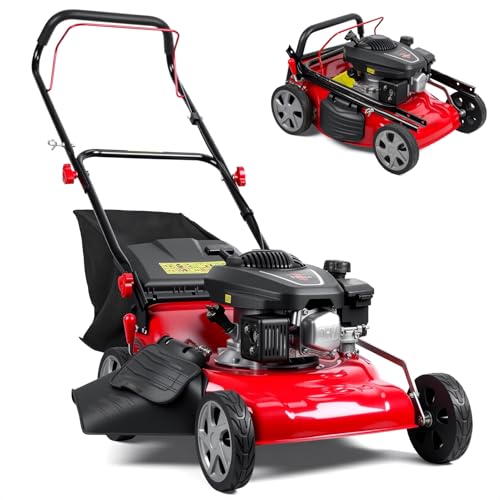
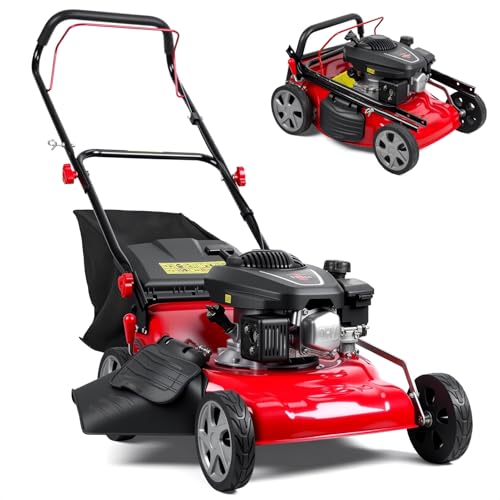
The Smalibal 131cc Gas Self-Propelled Lawn Mower is a budget-friendly walk-behind mower designed for homeowners with small to medium yards. It combines the power of a gas engine with the convenience of self-propulsion, making it a solid choice for first-time mower buyers, budget-conscious shoppers, or anyone looking for an affordable upgrade from a basic push mower. With a foldable handle and lightweight build, this mower also suits those with limited storage space, such as apartment dwellers or suburban residents with small sheds.
In terms of cutting performance, the 131cc engine provides enough torque to handle overgrown grass, thick weeds, and even light brush. The high-strength steel blades work well for mulching leaves or bagging clippings, and the 3-in-1 system lets you switch between mulching, rear bagging, and side discharge without tools. The 50-liter grass bag has a wide opening that makes emptying quick, though you may need to empty it more often in tall or damp grass. According to the product description, the mower can collect a large amount of grass before needing a trip to the compost pile, which is practical for weekly lawn maintenance.
Build quality focuses on lightweight materials and convenience. The mower features a folded design that reduces its footprint for storage, and the self-propelled rear-wheel drive gives good traction on gentle slopes or uneven terrain. The big wheels help with maneuverability around flower beds and garden hoses, and the overall weight is manageable for most users. However, the deck material is not specified in the specs, so we can't confirm if it's steel or polymer. Given the low price point, it's likely a steel deck with a basic paint finish - adequate for regular use but possibly prone to rust if not stored properly.
Ease of use is a highlight. The self-propelled system reduces the effort needed on slopes, and the push-button start simplifies the starting process (though it may still require a pull cord as a backup). Assembly is reportedly straightforward, with clear instructions included. Maintenance follows typical gas mower routines: checking oil levels, cleaning or replacing the air filter, and sharpening the blade each season. The foldable handle also allows for vertical storage, a nice touch for cramped spaces.
Realistically, this mower has limitations. The cutting height adjustment range isn't detailed in the specs, so you may have fewer options for fine-tuning your lawn height. Gas engines are louder and emit fumes, so it's less eco-friendly than electric alternatives and may not be ideal for early-morning mowing in quiet neighborhoods. The brand is relatively new, so long-term reliability is unknown - though the price makes it a low-risk entry point for gas mower ownership.
Overall, the Smalibal 131cc Gas Self-Propelled Lawn Mower offers good value for budget-minded homeowners with small to medium yards, especially if you want self-propelled assistance on slopes. It's a practical choice for routine lawn care, mulching fall leaves, or clearing overgrown patches. If you prioritize quiet operation or eco-friendliness, consider an electric mower instead, but for affordable gas power with convenient storage and versatile cutting options, this mower is worth a look.

Pros
- Starts reliably on the first pull thanks to auto choke
- Strong enough to handle overgrown grass and weeds without bogging down
- Easy height adjustment with a single lever that works on all four wheels simultaneously
- Lightweight enough for most users to maneuver and store
Cons
- Plastic motor cover and dipstick housing can crack under vibration, leading to oil leaks
- Height adjustment lever may slip during use, requiring a zip tie to hold position
- Not designed for slopes over 15 degrees or hilly terrain
The BILT HARD 20 inch gas lawn mower is a budget friendly push mower aimed at homeowners maintaining small to medium sized flat yards. Powered by a 144cc 4-cycle OHV engine with an auto choke system, it eliminates the hassle of priming and choking, so you just pull the cord and it fires up. The 20 inch cutting deck is a practical size for navigating gates and storage areas while still covering decent ground.
This mower is best suited for people with a quarter to half acre lot that doesn't have steep hills. The 8 position height adjustment lets you go from a short 0.7 inch trim to a taller 3.2 inch cut, which is useful for different grass types or seasonal conditions. In real world use, the engine handled thick grass and weeds without stalling, and the side discharge kept clippings spreading evenly. The foam wrapped grip and ball bearing wheels make pushing comfortable on flat turf, though the mower is not self propelled so you'll need to supply the legwork.
Build quality is a mixed bag. The metal cutting deck feels solid, but several components like the motor cover, dipstick housing, and wheel retainers are plastic. Some users reported excessive vibration that caused those parts to crack or fall off within hours of use. The height adjustment lever also has a tendency to slip, though a simple zip tie fix works. That said, many owners have put multiple seasons on their mower without issues, so your mileage may vary depending on how rough the terrain is.
Ergonomics are decent for a budget mower. The handle is adjustable and the grip stays comfortable even after an hour of mowing. At 51 pounds, it's not overly heavy to lift or push. Storage is straightforward thanks to the compact footprint. Just be mindful that you shouldn't tilt the mower on its side to avoid oil entering the combustion chamber, as noted in the manual.
Drawbacks are worth considering before buying. The plastic parts are a real durability concern, and the mower isn't meant for slopes. If you have a perfectly flat lawn and want a mower that starts easily and cuts well without breaking the bank, the BILT HARD delivers. But if you need something that will survive rough use or tricky terrain, look at a more rugged model with a metal frame and better vibration dampening. For the price, it's a solid value for light duty homeowners.
Engine: 144cc 4-Cycle OHV, 3.8 HP
Cutting Width: 20 inches
Cutting Heights: 8 positions, 0.7 to 3.2 inches
Wheels: 7 inch rear, 6 inch front with ball bearings
Weight: 51 pounds
Dimensions: 57.4 x 21.6 x 38.5 inches
Deck Material: Metal
Discharge: Side
Start Type: Auto choke, recoil pull
Fuel Type: Gasoline (unleaded)
Gasoline Compatibility and Engine Requirements
The primary question for any new mower owner is whether the pump at the gas station matches the engine in the yard. The short answer is that standard 87-octane unleaded gasoline is the correct fuel for nearly all modern walk-behind mowers, including gas push and self-propelled models. These engines are designed to handle the ethanol blends common at retail stations, provided the fuel is fresh and clean.
You do not need premium 91 or 93 octane fuel, as higher octane does not provide extra power for these smaller displacement engines and can be a waste of money. The key is to ensure the fuel is unleaded, as leaded gas is no longer sold in most regions and would damage modern catalytic converters and exhaust systems found in larger vehicles, though mowers do not have these components, the lead content would still foul spark plugs.
| Fuel Attribute | Car Requirement | Mower Requirement |
|---|---|---|
| Octane Rating | 87+ (Regular) | 87+ (Regular) |
| Ethanol Blend | E10/E15 | E10 |
| Stabilizer | Not Needed | Recommended |
| Storage Life | Months | 30-60 Days |
While the fuel type is the same, the engine operating conditions differ greatly. Car engines run at high temperatures for long durations, which helps burn off minor impurities. Mower engines often idle at lower RPMs for short bursts, which can allow fuel to condense on cylinder walls and spark plugs. This makes the quality of the gasoline even more critical for small engines.
Using old or contaminated gas can lead to difficult starting, rough idling, and reduced power output. It is always better to use fuel that has been in the tank for less than 30 days to ensure optimal performance and engine longevity. If you are unsure about the age of your fuel, it is safer to discard it and fill the tank with fresh gasoline before your next mowing session.
Some users worry about using E15 fuel, which contains 15% ethanol, as it is sometimes sold at lower prices in certain states.
- While most modern mowers can technically handle E15, many manufacturers specify E10 (10% ethanol) in their owner’s manuals to be safe.
- Ethanol is hygroscopic, meaning it attracts water from the air, which is burned off or evaporated in a car that is driven daily.
- In a mower that sits for weeks, the water can settle at the bottom of the tank, causing corrosion and phase separation.
- To avoid these issues, stick to the standard E10 unleaded gasoline available at most stations, which is widely tested and approved for small engine use.
- This fuel ensures compatibility with the carburetor and fuel system components, providing a reliable option for maintaining your equipment safely.
Octane Rating and Engine Performance
Choosing the right octane rating is a common point of confusion for buyers. For the vast majority of lawn mowers, 87-octane unleaded gasoline is the standard and recommended fuel. Using higher octane fuel like 91 or 93 does not make the engine run faster or stronger; it simply costs more. The octane rating measures the fuel’s resistance to knocking or pinging, a phenomenon that is rare in small, low-compression lawn mower engines.
Using premium fuel in these engines offers no performance benefit and can sometimes lead to incomplete combustion, resulting in carbon buildup on the spark plug. Always check your owner’s manual for the specific octane recommendation, but 87 is the safe default for most models listed in this guide.
There are rare exceptions where a high-performance or racing-style small engine might require higher octane, but these are not typical for residential walk-behind mowers. If your manual specifies 89 or higher, follow that instruction strictly. However, for standard 4-cycle OHV engines found in popular brands, 87-octane is perfect.
Do not use gasoline that has been mixed with oil, as modern small engines are lubricated by the crankcase, not by the fuel. Pre-mixed fuel is only for 2-cycle engines, which are different from the 4-cycle engines used in most modern mowers. Mixing up these fuel types can cause severe engine damage and void your warranty.
Ethanol Blends and Fuel Stability
Ethanol is a renewable fuel component added to gasoline to reduce emissions and support domestic energy production. While it works well in cars, its properties can be challenging for small engines that are not used daily. The main issue is that ethanol absorbs moisture from the air.
In a sealed tank that is not used for a long period, this moisture can cause the fuel to separate into two layers: an ethanol-water layer at the bottom and a gasoline layer on top. The carburetor draws fuel from the bottom, so it will pull the water-ethanol mixture, which cannot burn properly. This leads to hard starting, stalling, and potential corrosion of the metal fuel lines and carburetor jets.
To mitigate these risks, many mower owners use fuel stabilizers. These additives are designed to prevent fuel degradation and keep the ethanol and gasoline mixed together. Adding a stabilizer to a full tank of fresh gasoline before storage can extend the life of the fuel significantly. However, stabilizers are not a magic fix for old, separated fuel.
If your gas already smells sour or looks cloudy, it should be drained and replaced. For short-term storage of a few weeks, fresh fuel is usually sufficient. For long-term storage of several months, a stabilizer or draining the tank is highly recommended. This simple step can save you from expensive carburetor cleaning or replacement later in the season.
Using Old or Stale Gasoline
One of the most common reasons for mower starting issues is the use of stale gasoline. Gasoline begins to degrade as soon as it is exposed to air, even in a sealed tank. Over time, the volatile compounds evaporate, leaving behind gummy residues that can clog the carburetor jets and fuel filter.
These clogs prevent the correct air-fuel mixture from reaching the engine, making it difficult to start or causing the engine to run roughly. If you used your mower last season and left gas in the tank, it is likely that the fuel has degraded. Do not assume that a full tank means the fuel is still good; age is the primary factor, not volume.
To check if your gas is stale, you can pour a small amount into a clear container. If it looks dark, cloudy, or has sediment at the bottom, it is stale. If it smells sharp or sour, it is also likely degraded. Stale gas should never be used in a small engine. Drain the old fuel from the tank and carburetor, then fill the tank with fresh gasoline.
If the engine still has trouble starting, the carburetor may be clogged with varnish from the old fuel. In this case, a carburetor cleaning kit or professional service may be necessary. Preventing this issue is much easier than fixing it, so always use fresh fuel or a stabilizer before storage.
Understanding the relationship between fuel quality and engine health is crucial for any mower owner. By using fresh, 87-octane unleaded gasoline and taking simple steps to prevent fuel degradation, you can ensure your mower starts easily and runs smoothly every time. If you are looking for a mower that is easy to maintain and fuel-efficient, consider the options listed in our small yard mower guide, which features models designed for convenience and reliability. Proper fuel care is a small investment that pays off in long-term engine performance and durability.
Common Fuel Mistakes to Avoid
- Using pre-mixed 2-cycle fuel in a 4-cycle engine
- Storing fuel without a stabilizer for long periods
- Using gasoline that is more than 30 days old
- Mixing fuel with oil or other additives incorrectly
- Ignoring manufacturer recommendations for octane rating
- Using leaded gasoline, which is no longer recommended
Fuel Storage Best Practices
Proper fuel storage is key to maintaining your mower’s performance over time. When storing your mower for the winter or any extended period, you have two main options: drain the tank or use a stabilizer. Draining the tank involves running the engine until it runs out of fuel, then draining any remaining gas from the carburetor and fuel lines.
This ensures that no old fuel remains to degrade and clog the system. Alternatively, you can fill the tank with fresh gasoline and add a fuel stabilizer. This keeps the fuel fresh and prevents varnish buildup, making it easier to start the engine when you are ready to use it again.
Regardless of which method you choose, it is important to store your mower in a cool, dry place. Extreme temperatures can accelerate fuel degradation, so avoid storing the mower in a hot garage or a freezing shed.
If you live in a region with harsh winters, consider storing the mower indoors to protect it from moisture and cold. By following these storage best practices, you can extend the life of your mower and ensure it is ready to go when spring arrives. A little bit of effort now can save you a lot of trouble later.
Remember, the goal is to keep your fuel fresh and your engine clean. By understanding the differences between car and mower fuel requirements, you can make informed decisions that protect your investment. Whether you are a first-time buyer or a seasoned lawn care enthusiast, proper fuel care is a fundamental part of mower maintenance.
If you are interested in other aspects of mower care, check out our mower blade setup guide for tips on maintaining a sharp and balanced blade. Combining good fuel practices with regular maintenance will keep your mower running at its best for years to come.
Ultimately, the question of whether gas for a lawn mower is the same as for a car is answered by the shared fuel type but distinct usage patterns. While you can use the same 87-octane unleaded gasoline from the pump, the small engine’s sensitivity to stale fuel and ethanol moisture requires a bit more attention.
By using fresh fuel, considering a stabilizer for storage, and following the manufacturer’s guidelines, you can avoid most common fuel-related issues. This simple knowledge ensures that your mower starts reliably, runs smoothly, and lasts longer, saving you time and money in the long run. Treat your fuel with the same care you would your car’s, and your mower will reward you with consistent performance every season.




Write Your Review
No reviews yet. Be the first to share your experience!