


Most homeowners assume that owning a large motorized vehicle requires a state-issued license plate and title, but riding lawn mowers are generally classified as personal property or equipment rather than motor vehicles. Because they are not designed for public road use, most jurisdictions do not require a formal title document for ownership transfer.
This distinction is crucial for buyers and sellers who want to ensure a smooth transaction without unnecessary bureaucratic hurdles. The lack of a title means that proof of purchase, such as a receipt or bill of sale, serves as the primary documentation for ownership.
Understanding this classification helps you navigate the buying process more effectively. Whether you are purchasing a new unit or a used model, knowing that a title is not standard allows you to focus on verifying the serial number and maintenance history instead. For those looking to upgrade their yard care routine, resources like our guide to mowers for slopes can help you determine if a riding model suits your terrain. The focus should remain on the machine’s condition, operational history, and any included accessories rather than legal vehicle registration.

Pros
- Powerful brushless motors match gas performance without the maintenance
- Long runtime on a single charge for typical suburban lawns
- Quiet operation and zero emissions make it neighbor-friendly and eco-conscious
- Digital controls and cruise control add convenience and precision
Cons
- Heavy steel crate packaging makes unpacking and disposal challenging
- Some users report blade motor shutoff when mulching thick, wet grass at low deck heights
- Initial setup requires time to remove crate, charge batteries, and read manual carefully
The EGO Power+ TR4204 is a 42-inch electric riding lawn tractor that brings the convenience of battery power to a full-size mowing machine. It's designed for homeowners who want to ditch gas, oil, and spark plugs without sacrificing cutting performance. With six 56V 6.0Ah ARC Lithium batteries included, this tractor can handle up to 1.5 acres on a single charge, making it a strong fit for properties in the one to two acre range.
Under the hood, dual brushless motors deliver the equivalent of 21 horsepower, and Peak Power technology lets the mower draw up to 20,000 watts when needed. In real-world use, that means it chews through thick grass and even light brush without bogging down. The belt-free design reduces maintenance and increases reliability. A digital LCD display gives you control over blade speed, drive speed, and cruise control, so you can dial in exactly how you want to mow. The 12-position deck height adjustment (1.5 to 4.5 inches) with anti-scalp wheels ensures a clean cut on uneven ground.
Build quality is solid. The stamped steel deck feels durable, and the steel front bumper protects against low-speed bumps. A rear tow hitch lets you pull a cart or aerator, and the LED headlights extend your mowing hours. The Bluetooth app adds convenience for firmware updates and checking battery status, though some users found the initial pairing a bit finicky. Assembly requires about an hour to break down the steel crate and another 15 minutes to attach the seat and steering wheel. The included 700W Turbo Charger juices up all six batteries in about four hours from empty.
On the downside, the steel crate is a pain to dispose of. A few owners reported that the blade motors can shut off when mulching very thick, wet grass at low deck heights, requiring a restart. This isn't a dealbreaker but something to be aware of if your lawn stays damp. Also, the 6.0Ah batteries are smaller than the 12.0Ah packs used in EGO's zero-turn models, so if you have more than 1.5 acres, you'll want to invest in additional batteries or a faster charger.
Overall, the EGO TR4204 is a fantastic option for homeowners looking to go electric with a riding mower. It delivers gas-level performance, whisper-quiet operation, and the freedom of the EGO battery ecosystem. If you have a medium-sized lawn and want to avoid the hassle of gas maintenance, this tractor is well worth the investment.
Brand: EGO Power+
Model: TR4204
Deck Width: 42 inches
Power Source: Battery (56V ARC Lithium)
Included Batteries: (6) 56V 6.0Ah
Charger: 700W Turbo Charger
Cutting Heights: 12 positions, 1.5 to 4.5 inches
Speed: Up to 6 MPH
Motor Type: Dual brushless, belt-free
Weight: 640 pounds
Dimensions: 73 x 53 x 43 inches (D x W x H)
Assembly Required: Yes
Color: Green
The TR4204 uses EGO's 56V ARC Lithium platform, which powers over 80 tools including string trimmers, leaf blowers, chainsaws, and walk-behind mowers. The included six 6.0Ah batteries can be swapped with any other EGO tool, so you can share batteries across your entire yard tool lineup. For longer mowing sessions, you can add additional 56V batteries (sold separately) to extend runtime beyond 1.5 acres. The 700W Turbo Charger charges all six batteries simultaneously in about 4 hours.
This riding mower is best suited for homeowners with lawns between 0.5 and 1.5 acres. It handles flat to moderately hilly terrain well, and the 42-inch deck is a good balance between maneuverability and cutting width. Use it for regular weekly mowing, mulching leaves in the fall, or towing a small cart for yard work. It's also a great choice for those who want to reduce noise and emissions in residential neighborhoods.
Pros
- Quiet and emission-free, great for early morning or late evening mowing without disturbing neighbors
- Very easy to assemble and requires almost no ongoing maintenance
- Cuts grass cleanly without shredding, leading to a healthier lawn appearance
- Lightweight and easy to store, takes up minimal garage or shed space
Cons
- Not suitable for tall or wet grass; requires frequent mowing when grass is dry and under 4 inches
- Limited cutting width of 14 inches means more passes on larger lawns, best for small to medium yards
- No power assist, so uneven or hilly terrain can make pushing more difficult
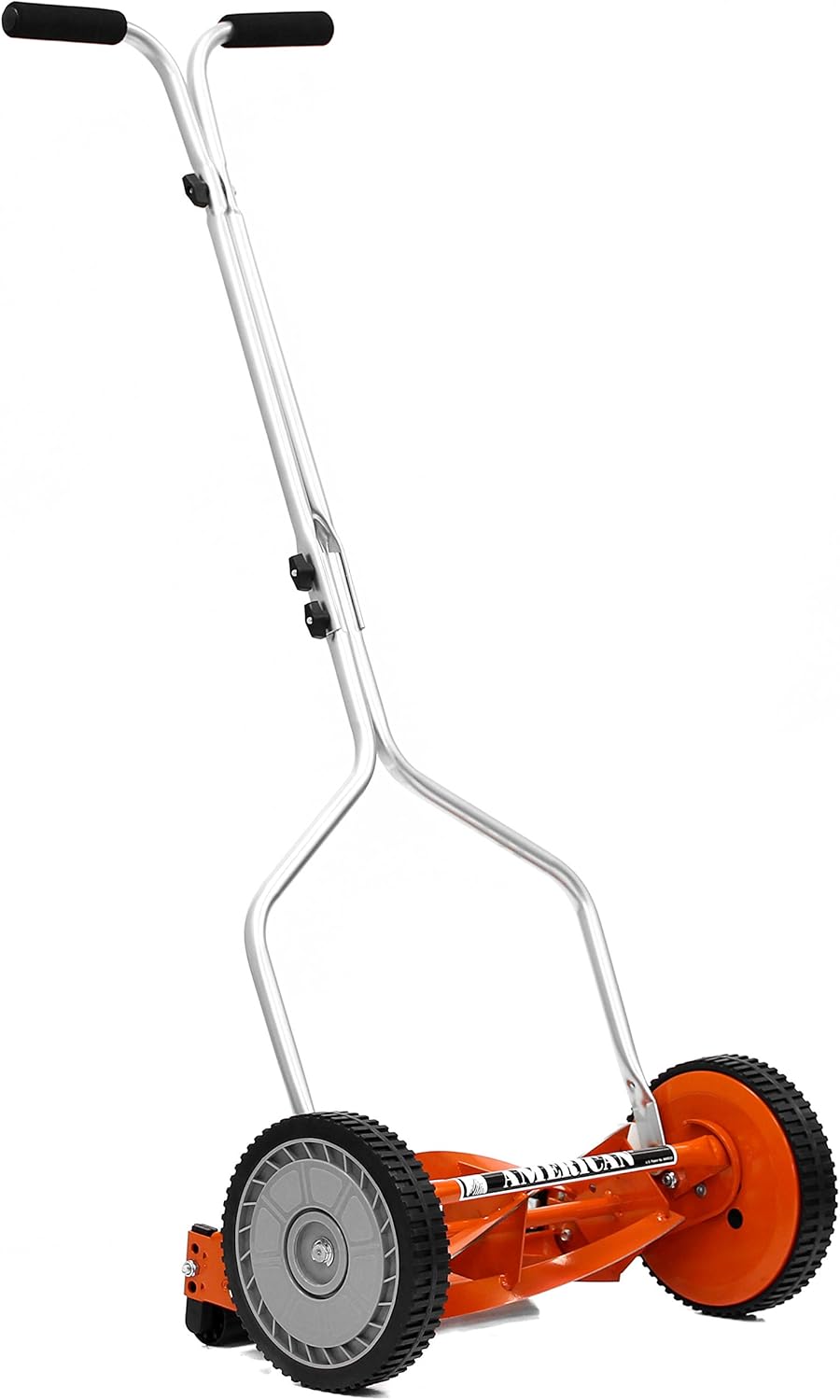
The American Lawn Mower Company 1204-14 is a classic push reel mower that brings back the simplicity of manual lawn care. Unlike gas or electric mowers, this tool relies entirely on your own muscle power to spin the reel and cut grass. It's a straightforward, no-nonsense machine designed for homeowners who prioritize quiet operation, zero emissions, and low maintenance over speed and brute force.
This mower is best suited for small, flat lawns with cool-season grasses like bluegrass, fescue, and rye. It's ideal for DIY homeowners who enjoy a bit of exercise while taking care of their yard. If you have a quarter acre or less and don't mind mowing more frequently during the growing season, this reel mower can deliver a clean, precise cut that actually promotes a healthier lawn by slicing rather than shredding the grass blades.
In real-world use, the 1204-14 performs best when you stay on top of your mowing schedule. It handles grass up to 4 inches tall, but for the best results, you should mow when the grass is dry and no more than about 3 inches high. The adjustable cutting height ranges from 0.5 to 1.75 inches, giving you good control over lawn appearance. The 8.5-inch polymer wheels roll smoothly on flat ground, but the mower can struggle on uneven or bumpy terrain. You'll need to make multiple passes if the grass is on the taller side, and wet grass will clog the reel and leave an uneven cut.
Build quality is decent for the price point. The frame is made of steel, and the reel blades are heat-treated alloy steel that stay sharp for years with minimal care. Assembly is straightforward and can be done in about 15 minutes with basic tools. The cushioned T-handle is comfortable for most users, though taller individuals might find it a bit low. At just 19 pounds, the mower is easy to lift and store, and it takes up very little space in a garage or shed.
One realistic drawback is that this mower won't replace a gas or electric model for larger or more demanding lawns. If you have a half-acre or more, or if your yard has hills, you'll likely find the manual effort tiring and time-consuming. Also, the 14-inch cutting width means more passes compared to a 21-inch power mower. But for its intended use - small, flat lawns - the American Lawn Mower 1204-14 is a reliable, eco-friendly, and cost-effective choice that gets the job done without noise, fumes, or ongoing fuel costs.

Pros
- Spacious 8x10 footprint fits riding mowers, push mowers, string trimmers, and seasonal gear with ease
- Steel-reinforced multi-wall resin construction resists fading, rusting, denting, and wood rot over time
- Integrated reinforced floor and multiple skylights create a clean, well-lit space for routine mower maintenance
- Wide double doors simplify moving wide-deck mowers and heavy power tools in and out without catching
Cons
- Requires a completely flat and level concrete pad, wood platform, or paver foundation before assembly
- Assembly is a multi-person job that takes several hours and careful alignment of large wall panels
- Interior shelving and specialty tool-hanging accessories must be purchased separately to maximize wall space
The Suncast Tremont 8x10 Outdoor Storage Shed is a heavy-duty resin outbuilding engineered specifically to house large outdoor power equipment, seasonal yard tools, and garden machinery. For suburban homeowners, rural property owners, and passionate lawn care enthusiasts, storing bulky machinery like riding mowers, self-propelled push mowers, and zero-turn tractors in a crowded garage often leads to unwanted clutter and scratched car doors. This walk-in resin structure offers an expansive dedicated outbuilding designed to protect valuable groundskeeping machinery from harsh summer sun, heavy winter snow, and rainstorms.
Storage utility and daily accessibility stand out as the strongest practical features of this model. Offering roughly 547 cubic feet of interior space, the shed easily accommodates a standard lawn tractor alongside string trimmers, leaf blowers, spreaders, and garden hoses. The wide double doors open outward to provide generous clearance, preventing mower decks and handlebars from snagging on the door frame during entry. An integrated reinforced resin floor serves as a dependable barrier against ground moisture, helping to keep mower decks clean, prevent tire sinkage, and reduce undercarriage corrosion over the damp spring and fall months.
Working inside the shed is notably comfortable thanks to its functional lighting and ventilation details. Six built-in skylights combined with door windows channel plenty of natural daylight into the interior, making it easy to check engine oil levels, clean dried grass clippings from under a mower deck, or locate replacement trimmer line without needing to string extension cords for portable lamps. Strategically placed gable vents promote natural cross-ventilation, which is essential for safely exhausting residual heat and gasoline fumes after a long Saturday afternoon of mowing and edging.
Build quality focuses heavily on longevity and minimal upkeep. Unlike traditional wood sheds that require recurring coats of paint, rot treatments, and shingle repairs, the Tremont uses steel-reinforced double-wall resin panels that will not rot, rust, or warp. The neutral vanilla finish blends smoothly into backyard landscapes, while the metal roof trusses provide solid structural integrity against snow accumulation. Keeping the shed clean is as simple as spraying down the exterior walls with a garden hose or pressure washer after seasonal pollen and yard dust settle.
Potential buyers should account for the preparation and assembly required. Erecting an 8x10 structure demands a completely level foundation, such as a poured concrete slab or a sturdy treated-wood deck platform, to ensure the wall interlocks snap together properly and the doors align smoothly. The assembly process is a substantial project that typically requires two or more adults, several standard tools, and a dedicated afternoon. In addition, organizing small hand tools and oils will require purchasing compatible resin shelving or storage hooks separately.
For homeowners and property managers seeking a dedicated, weatherproof home for their riding mowers, push mowers, and seasonal landscape gear, the Suncast Tremont 8x10 shed provides reliable long-term value. It delivers the interior space, structural durability, and practical day-to-day access required to keep your primary lawn maintenance equipment secure, dry, and ready for work season after season.
The 8x10 footprint of the Suncast Tremont provides ample floor surface and vertical clearance for both compact and heavy-duty lawn care equipment. Based on standard equipment measurements, the interior comfortably fits a 42-inch or 48-inch lawn tractor with room along the side walls for a secondary push mower, walk-behind string trimmer, and rolling fertilizer spreader.
The walk-in height allows adult users to step inside and walk comfortably without hunching over while guiding equipment into place. The wide double-door entryway eliminates the awkward tight squeezes common with standard shed doors, ensuring that wider mower discharge chutes and wide handlebars pass through without scraping or damaging the door seals.
The Tremont is built using heavy-duty resin reinforced with steel roof supports, allowing it to withstand severe weather conditions including heavy rain, coastal humidity, and seasonal snow loads. The multi-wall construction provides dent resistance against accidental impacts from wheelbarrows, lawn mower wheels, or kicked-up yard debris.
Because resin does not absorb water, the shed panels will not harbor mold, crack from freeze-thaw cycles, or attract wood-boring insects. Routine care is virtually effortless, requiring only an occasional rinse with a garden hose or a mild soapy wash down to keep the vanilla exterior looking neat across years of exposure.

Pros
- Powerful Kohler engine cuts through thick grass without bogging down
- Zero-turn capability significantly reduces mowing time for large lawns
- Comfortable seat and adjustable controls make long mowing sessions easier
- Sturdy steel frame and deck feel solid and durable
Cons
- Some units may have a front wheel squeal that requires diagnosis
- Blade replacement can be tricky due to a less common blade type
- Occasional reports of units not starting right out of the crate, needing dealer service
The Craftsman 46" zero-turn riding lawn mower is a serious piece of outdoor power equipment designed for homeowners who want to cut mowing time without sacrificing cut quality. Powered by a Kohler 7000 series 22 HP engine and paired with a dual hydrostatic transmission, this mower lets you pivot on a dime and cover ground quickly. It's best suited for owners of 1 to 2 acre lots who want a step up from a standard lawn tractor but don't need a commercial zero-turn.
In real-world use, the Kohler engine starts reliably and maintains consistent blade speed even in damp grass. The 46-inch stamped steel deck gives a clean, even cut, and the optional mulching kit helps return nutrients to the lawn. The twin-cylinder design helps with cold starts, and the Turf Master tires provide good grip on slopes. The high-back seat and three adjustable lap bar positions make it comfortable for longer mowing sessions, though some users note the seat could use more lumbar support.
Build quality is solid overall, with a robust steel frame and a deck that feels well-constructed. However, a few owners have reported a front wheel squeal that may require lubrication or adjustment. Also, the blade type is somewhat unique and can be harder to find replacements for. A small number of units have arrived with starting issues, which may require a quick check of the battery or fuel system. Assembly is straightforward but the crate is large and heavy, so plan for two people to unload it.
Drawbacks are relatively minor for the price point. The mower weighs around 500 pounds, so it's not easy to push if it stalls. The cutting height adjusts up to 4 inches, which is adequate for most lawns but may not suit very tall grass. The 20-inch rear wheels handle bumps okay, but the front casters can leave marks on soft ground. Overall, the Craftsman offers good value for homeowners who want zero-turn efficiency without jumping to a commercial model.
If you have a medium to large lawn and are comfortable with basic assembly and occasional maintenance, this mower is a worthwhile investment. It cuts quickly, rides comfortably, and the Kohler engine should provide years of service. Just be prepared to check for any minor issues right out of the crate and keep an eye on blade availability. For the price, it's a capable machine that will save you time and effort.
Engine: Kohler 7000 Series 22 HP
Deck Width: 46 inches (stamped steel)
Transmission: Dual hydrostatic
Cutting Height Range: 1.5 to 4 inches
Tires: 20x8 Turf Master rear, front casters
Weight: 500 pounds
Dimensions: 80" D x 58" W x 45" H
Assembly Required: Yes
Color: Red/Black
Understanding Ownership and Documentation for Riding Mowers
Riding lawn mowers are treated as durable goods, similar to a high-end vacuum or a power tool. This means there is no state database tracking their ownership in the same way cars are tracked. When you buy a mower, you are transferring the physical asset and any associated warranties, not a legal title. This simplifies the process for private sales, as you do not need to visit a Department of Motor Vehicles or equivalent agency to complete the transfer.
The most important document for a riding mower is the original receipt or invoice, which proves the purchase date, critical for warranty claims.
- If you are buying used, a bill of sale signed by the previous owner provides a paper trail.
- While not legally binding in the same way a car title is, it offers evidence of the transaction.
- Serial numbers, usually found on the deck or engine, are the unique identifier for the machine.
- Keeping this number safe helps with parts ordering and warranty service.
Some buyers worry about theft or liability. Since there is no title, liability is generally tied to the user at the time of operation, not the owner. However, keeping records of maintenance and ownership can help resolve disputes. For those interested in electric alternatives, our electric mower guide covers similar documentation practices for battery-powered units. The key is to treat the mower as a valuable piece of equipment that requires proper record-keeping.
Why Titles Are Not Required for Yard Equipment
The primary reason riding mowers lack titles is their intended use. They are designed for off-road, private property use. Public road use is illegal and voids warranties. Because they do not interact with public traffic, the regulatory framework for vehicle registration does not apply. This distinguishes them from utility vehicles that might be street-legal, which do require titles and plates.
Insurance companies may ask for proof of ownership when adding a rider to a homeowner’s policy. This is different from a title. It is simply a verification that you possess the item. Providing a receipt or a bill of sale is usually sufficient. This process is quick and does not involve government agencies. It ensures that the insurer knows the value of the item for coverage purposes.
Some jurisdictions have specific rules for large equipment, but these are rare for standard residential mowers. Always check local ordinances if you are moving the mower across property lines or using it on shared spaces. However, for typical home use, the absence of a title is the norm. This makes the resale process faster and less complicated for both buyers and sellers.
Documentation Needed for Buying and Selling
When selling a riding mower, prepare a simple bill of sale to protect you from future claims regarding the sale price or condition of the machine at the time of transfer.
- Include the make, model, serial number, purchase date, and current condition in the document.
- Both parties should sign and date the document to ensure it is valid and complete.
- Keep a copy for your records to maintain proof of the transaction details.
For buyers, request the original manual and any maintenance logs. These documents add value and provide a history of the machine’s care. A well-maintained mower with records is often worth more than one without. Check that the serial number on the machine matches the documentation. This verifies that the seller is the legitimate owner and that the machine has not been stolen or modified without record.
Warranty transferability is another key documentation point. Some manufacturers allow warranty transfers if the new owner registers the product within a certain timeframe. Check the specific terms for the brand you are buying. This can save you significant money if a major component fails shortly after purchase. Proper documentation ensures you can claim this benefit without issue.
Storage and Security Considerations
Since riding mowers do not have titles, physical security is your primary protection against theft. Store the mower in a locked garage or shed. A dedicated storage space, like a resin outdoor shed, provides weather protection and security. Ensure the storage area is locked and, if possible, alarmed. This deters potential thieves and protects the machine from the elements.
Consider adding a physical lock to the mower itself. Many models have a key cylinder for the ignition. Some owners add a steering wheel lock or a deck lock for extra security. These devices are inexpensive and can provide peace of mind. They make it difficult for someone to move or operate the mower without the key. This is a simple step that adds a layer of protection.
Regularly inspect the storage area for signs of tampering. Ensure the shed doors close and lock properly. Keep the mower in a visible location within the storage area if possible. High visibility can deter theft. Combining good storage practices with physical locks creates a strong security setup for your equipment.
Maintenance Records as Proof of Value
Keeping a maintenance log is a smart practice for any riding mower. Record oil changes, blade sharpenings, and battery replacements. This history demonstrates that the machine has been well cared for. It can increase the resale value significantly. Buyers are often willing to pay more for a machine with a documented maintenance history.
Use a dedicated notebook or a digital app to track these details. Include the date, what was done, and any parts replaced. Keep receipts for major parts. This creates a comprehensive record of the mower’s life. It also helps you remember when routine maintenance is due. This proactive approach extends the life of the machine and saves money on repairs.
When selling, share this log with potential buyers. It builds trust and transparency. It shows that you have been a responsible owner. This can speed up the sale process. Buyers appreciate knowing the history of the equipment they are purchasing. It reduces the risk of hidden problems and ensures a fair transaction for both parties.
Warranty Registration and Ownership Transfer
Registering your mower with the manufacturer is a critical step for warranty coverage. Most warranties are valid only if the product is registered within a specific timeframe after purchase. This registration creates an official record of ownership with the manufacturer. It simplifies the process of claiming warranty service if a defect arises.
If you are buying a used mower, check if the warranty is still valid and if it is transferable. Some manufacturers allow one transfer, while others do not. Read the warranty terms carefully. If transfer is allowed, follow the manufacturer’s instructions to update the ownership record. This ensures the new owner can benefit from the remaining warranty coverage.
Keep the warranty card or registration confirmation in a safe place. This document is proof of registration. It may be required when contacting customer service. Losing this information can complicate warranty claims. Store it with your other important documents, such as the manual and maintenance log. This ensures you have all the necessary information readily available.
Legal Considerations for Used Purchases
When buying a used riding mower, be cautious. Verify the serial number to ensure it matches the seller’s records. Ask about the reason for sale. Are they upgrading? Moving? This context can help you assess the condition of the machine. A seller who is upgrading often has a well-maintained machine, while a seller who is moving may be less motivated to disclose issues.
Inspect the mower thoroughly before purchase. Check for rust, leaks, and wear on the deck and tires. Test the engine or motor to ensure it runs smoothly. Listen for unusual noises. Test the controls to ensure they function correctly. A thorough inspection can reveal potential problems that may not be apparent from photos or descriptions.
Consider having a professional inspect the mower if you are not confident in your own assessment. A local repair shop may offer a pre-purchase inspection service. This can provide an objective assessment of the machine’s condition. It can help you negotiate the price or walk away from a bad deal. This extra step can save you from costly repairs down the line.
Insurance Options for Riding Mowers
While not required, insurance can provide protection for your riding mower. Many homeowner’s insurance policies include coverage for equipment, but limits may be low. Check your policy to see if your mower is covered and what the deductible is. If the coverage is insufficient, consider adding a rider or a separate policy.
Insurance can cover theft, fire, and accidental damage. This can be a significant benefit if your mower is stolen or damaged. The cost of insurance is usually modest compared to the value of the machine. Weigh the cost of insurance against the potential loss. For high-value mowers, insurance is often a wise investment.
When applying for insurance, provide the insurer with proof of ownership and the value of the mower. This helps them determine the appropriate coverage amount. Keep copies of all documents related to the insurance policy. This ensures you can file a claim quickly if necessary. Proper documentation makes the insurance process smoother and more efficient.
Resale Value and Market Trends
The resale value of a riding mower depends on several factors. Age, condition, brand, and features all play a role. Well-maintained mowers from reputable brands tend to hold their value better. Mowers with popular features, such as electric drive or mulching capabilities, may have higher demand. Research the market to understand what similar mowers are selling for.
Seasonality can affect resale value. Mowers are often in higher demand in the spring and early summer. Selling during these months may fetch a higher price. Conversely, selling in the fall or winter may result in a lower price. Timing your sale to match market demand can maximize your return. Consider the condition of the mower when setting your price.
Keep up with maintenance to preserve resale value. A mower that is ready to use, with fresh oil and sharp blades, is more attractive to buyers. Clean the mower before listing it. A clean, well-presented machine sells faster and for a higher price. Invest time in preparation to get the best possible outcome from your sale.
Common Misconceptions About Mower Titles
Many people believe that because a riding mower is large and motorized, it must have a title. This is a common misconception. The size and power of the machine do not determine its legal classification. Intended use is the key factor. Since riding mowers are for off-road use, they are not subject to vehicle titling requirements.
Another misconception is that a title is needed for insurance. As mentioned, insurance requires proof of ownership, not a title. A receipt or bill of sale is sufficient. Understanding this distinction helps you navigate the insurance process without confusion. It ensures you have the right documents to support your claim.
Some think that a title is needed for tax purposes. Property taxes are generally based on the value of the real estate, not equipment. However, some localities may have specific rules for high-value equipment. Check with your local tax authority if you have questions. In most cases, riding mowers are not subject to property tax as personal property.
Practical Tips for New Owners
As a new owner of a riding mower, take the time to read the manual thoroughly. Understand the maintenance schedule and safety guidelines. Register the mower with the manufacturer. Set up a maintenance log. These steps will help you get the most out of your investment and ensure the machine lasts for many years.
Learn the basics of operation before using the mower on your lawn. Practice in a safe, open area. Understand how to control the speed and steering. Familiarize yourself with the cutting height adjustment. This preparation helps you mow efficiently and safely. It also reduces the risk of damage to the mower or your lawn.
Join online communities or forums for your specific mower model. These communities provide valuable tips and advice from other owners. You can learn about common issues, maintenance tricks, and upgrades. This knowledge can help you avoid problems and optimize the performance of your mower. Engaging with the community is a great way to enhance your ownership experience.
Long-Term Ownership and Care
Long-term ownership of a riding mower requires consistent care. Follow the manufacturer’s maintenance schedule. Change the oil, air filter, and spark plugs as recommended. Sharpen the blades regularly. Store the mower properly during the off-season. These practices extend the life of the machine and maintain its performance.
Keep an eye on wear and tear. Inspect the deck, tires, and belts for signs of damage. Replace parts as needed. Proactive maintenance prevents minor issues from becoming major repairs. It saves you time and money in the long run. A well-maintained mower is a reliable tool for yard care.
Consider upgrading parts as they wear out. High-quality replacement parts can improve performance and durability. For example, upgrading to a mulching kit can enhance your mowing options. Research compatible parts before making a purchase. Ensure they are suitable for your specific model. This attention to detail ensures your mower continues to meet your needs.
Ultimately, the lack of a title for riding lawn mowers simplifies ownership and transactions. Focus on maintaining good records, ensuring security, and following proper maintenance practices. These steps will help you enjoy your mower for many years. By understanding the legal and practical aspects of ownership, you can make informed decisions and maximize the value of your investment.



Write Your Review
No reviews yet. Be the first to share your experience!