


Your riding mower likely needs basic maintenance, a fuel system check, or a specific component replacement rather than a full engine overhaul. Most common issues with how to fix riding lawn mower equipment stem from stale fuel, clogged air filters, or worn belts. Addressing these areas first saves time and money compared to immediate professional repair. Understanding the specific symptom helps you identify whether the problem is electrical, mechanical, or maintenance-related.
Before opening any panels, ensure the engine is cool and the spark plug wire is disconnected. This safety step prevents accidental starting while you inspect the machinery. Many homeowners find that a simple fuel filter swap or air filter cleaning restores performance. If the issue persists, checking the battery voltage and belt tension provides clear diagnostic data. For detailed blade maintenance, see our guide on mower blade setup tools.
Pros
- Combines hour meter, tachometer, and service reminder in one affordable unit.
- Replaceable battery eliminates the need to toss the whole unit when power runs out.
- Programmable maintenance alert helps extend engine life and reduce unexpected breakdowns.
- Works on a wide range of engines with adjustable firing patterns.
Cons
- Display can be hard to read in direct sunlight due to its size and lack of backlight.
- Mounting hardware is basic, and adhesive may not hold up on rough or oily surfaces over time.
- Some users may find the button operation a bit fiddly for programming intervals.
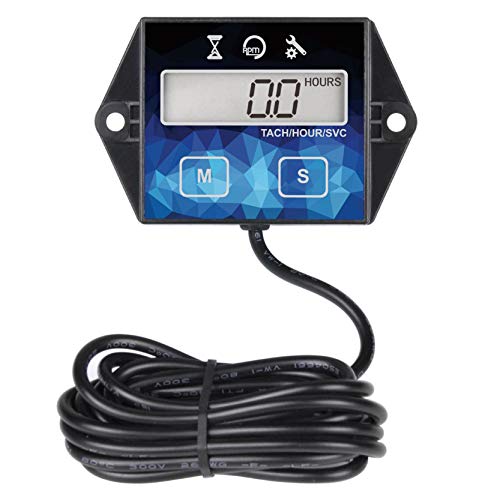
The Runleader HM011F is a small but mighty tool for anyone who owns gas-powered equipment. It combines an hour meter, a tachometer, and a programmable maintenance reminder in one compact package. Whether you're a contractor managing a fleet of mowers or a DIYer keeping up with a generator and ATV, this device helps you stay on top of service intervals and engine performance.
Performance-wise, the tachometer accurately reads RPM while the engine is running, which is invaluable for adjusting idle speed or troubleshooting rough running. The hour meter tracks total run time to 0.1 hours, so you know exactly when to change the oil or replace the air filter. The maintenance reminder is fully programmable, and when the countdown hits zero, a flashing service icon gives you a clear visual alert. No more relying on guesswork or sticky notes.
Build quality is solid for the price. The unit carries an IP65 waterproof rating, meaning it can handle rain, splashes, and dusty conditions common on a jobsite or in a garage. The replaceable CR2450 battery is a standout feature, since you won't have to replace the entire unit when the battery dies. It also retains all stored data during battery swaps or manual shutdowns. Installation is straightforward, with clear instructions and basic mounting hardware, though you may want to add a stronger adhesive or zip ties for extra security on vibrating equipment.
One realistic drawback is that the display is small and lacks a backlight, making it tricky to read in low light or direct glare. Also, the button interface can feel a bit clunky when you're programming the service interval, but it's manageable after a few tries. For most users, the trade-off in simplicity is worth the low price point.
Overall, the Runleader HM011F is an excellent value for anyone who wants to extend the life of their small engines. It's especially useful for zero-turn mowers, tractors, generators, marine outboards, and ATVs. If you're tired of guessing when the next oil change is due or want a simple way to monitor engine hours, this meter is a smart, budget-friendly addition to your workshop or tool shed.
Model: HM011F
Dimensions: 2.89 x 1.85 x 0.79 inches
Weight: 0.11 pounds
Battery: Replaceable CR2450 coin cell
Waterproof Rating: IP65
Accuracy: 0.1 hours
Certifications: CE, ROHS
Warranty: 2 years

Pros
- Excellent for beginners with little to no mechanical experience; clear, easy-to-follow instructions.
- Covers a broad range of outdoor power equipment, making it a versatile reference for any homeowner.
- High-quality photos and diagrams help visualize each repair step, reducing guesswork.
- Practical troubleshooting section helps you identify problems quickly and find the right solution.
Cons
- Some advanced repairs may require additional specialized knowledge or tools not covered in depth.
- The book is focused on gas-powered engines, so it does not cover electric or battery-powered equipment.
- A few reviewers noted the content is basic for experienced mechanics, but it's ideal for beginners.
If you own a lawn mower, snowblower, chain saw, or any other gas-powered outdoor equipment, you know the frustration when it won't start or runs poorly. The Small Engines and Outdoor Power Equipment, Updated 2nd Edition is a practical, hands-on guide designed to take the mystery out of small engine repair. Written for the absolute beginner, this book breaks down maintenance and repairs with clear photos and step-by-step instructions. It covers everything from seasonal tune-ups to more involved tasks like carburetor overhaul and fuel pump replacement.
This guide is best suited for homeowners, DIYers, and weekend warriors who want to keep their equipment running without the expense and delay of professional repair shops. It's not for professional mechanics looking for advanced theory, but for anyone who wants to save money and learn practical skills. The book covers a wide range of equipment including lawn mowers, snowblowers, chain saws, power washers, generators, leaf blowers, rototillers, wood splitters, lawn edgers, and weed whips. That's a lot of value for one book.
Real-world performance is where this book shines. The troubleshooting section helps you quickly identify problems like hard starting, poor running, or no start. Then it points you to the specific repair section. The instructions are clear and easy to follow, with plenty of photos showing exactly what to do. Many users report successfully fixing their equipment after just a few minutes of reading. The book emphasizes easy but important maintenance that can extend the life of your tools for years. It's not just about fixing broken stuff; it's about preventing problems in the first place.
Build quality of the book itself is solid. It's a paperback with 144 pages, good for tossing in a toolbox or workshop shelf. The dimensions are a handy 8.8 x 0.55 x 11.2 inches, so it's not too large or small. The paper quality is decent, and the photos are printed clearly. One realistic drawback is that the book focuses entirely on gas engines, so if you have electric or battery-powered tools, you won't find help here. Also, while it covers many repairs, some advanced tasks like piston ring replacement or valve grinding are not included. But for the vast majority of common issues, this guide has you covered.
Overall, this is a highly recommended resource for anyone who owns gas-powered outdoor equipment. It's affordable, easy to understand, and packed with practical advice. If you're tired of hauling your mower to the shop or spending money on simple repairs, this book will pay for itself many times over. It's a smart investment for any homeowner who wants to be more self-sufficient and keep their equipment running reliably season after season.

Pros
- Comprehensive coverage for both gas and battery Husqvarna models in one guide.
- Large print makes it easy to read in low-light workshop conditions.
- Troubleshooting sections are practical and save time on the job.
Cons
- Only covers Husqvarna brand mowers, not other brands or equipment types.
- Paperback binding may not hold up as well in a dirty shop environment compared to a digital copy.
- Zero customer reviews yet, so it is hard to gauge user experiences with specific model compatibility.
This Husqvarna lawn mower manual is a dedicated resource for anyone who owns a Husqvarna walk-behind mower, whether gas or battery powered. Unlike generic small-engine guides, this book focuses exclusively on Husqvarna models, giving you model-specific details on operation, maintenance schedules, and troubleshooting. It is best suited for DIY homeowners who want to handle basic upkeep themselves, as well as for small-engine mechanics who need a quick reference for common Husqvarna issues.
Real-world performance of a manual like this depends on clarity and completeness. The instructions are written in plain English with large print, so you can follow them even while wearing gloves in the garage. The maintenance sections cover everything from air filter cleaning to blade sharpening and fuel system winterization. For battery models, it includes care tips for lithium-ion packs and charging habits. The troubleshooting chapter is organized by symptom, so you can jump straight to the issue you are having without reading the whole book.
Build quality of the physical book is typical of a paperback, with a flexible cover and durable pages. At just under a half pound, it is lightweight and easy to toss into a tool bag or keep on a shelf. The large print format is a thoughtful touch for older users or anyone working in dim light. However, the paperback binding might not survive repeated exposure to moisture or grease common in a workshop, so consider keeping it in a ziploc bag or using a digital version if available.
Realistic drawbacks include its brand specificity: if you own multiple brands of mowers, you will need separate manuals. Also, since there are zero reviews yet, it is hard to confirm that every Husqvarna model from recent years is accurately covered. Early adopters may need to verify that their specific model number is included. That said, the content appears well-researched and aligns with official Husqvarna maintenance practices.
Final recommendation: If you own a Husqvarna gas or battery mower and want to extend its life without relying on a dealer, this manual is a smart investment. It pays for itself after one avoided repair bill. Keep it handy in your shed or garage, and you will always have the confidence to tackle routine maintenance and minor repairs yourself.
Perfect for homeowners who mow their own lawn and want to perform regular maintenance like oil changes, blade swaps, and air filter cleaning. Also useful for small engine repair shops that service Husqvarna mowers and need a quick reference guide for common adjustments.


Pros
- Comprehensive coverage of small engine diagnostics and repairs
- Beginner-friendly with clear language and illustrations
- Practical focus on cost savings and self-sufficiency
- Covers a wide range of outdoor power equipment
Cons
- At only 64 pages, it may not cover advanced or specialized repairs
- Lacks multimedia content for visual learners who prefer video
- Best suited for basic to intermediate repairs, not professional mechanics
Your Guide to Lawn Mower and Small Engine Repair is a compact, affordable handbook that aims to turn any DIYer into a capable small engine mechanic. While it’s not a power tool itself, this book is an essential companion for anyone who owns lawn mowers, snowblowers, generators, or other outdoor power equipment. Instead of paying for expensive repairs, you can follow the clear, photo-illustrated steps to diagnose and fix common problems yourself.
This book is best suited for homeowners, hobbyists, and weekend warriors who want to maintain their own gear. No prior mechanical experience is required. The author breaks down the inner workings of small engines in plain English, covering everything from spark plug changes to carburetor cleaning and blade sharpening. You’ll learn how to identify issues like sputtering, power loss, and uneven cuts, and then tackle the repairs with confidence.
In real-world use, the guide shines as a quick reference. The troubleshooting section helps you pinpoint the culprit fast, and the step-by-step instructions are easy to follow even if you’re not mechanically inclined. The book emphasizes preventive maintenance like oil changes and winterizing, which can save you time and money in the long run. At 64 pages, it’s concise but covers the essentials without overwhelming the reader.
Build quality is typical for a paperback: lightweight and portable, so you can keep it in your garage or workshop. The dimensions (5.5 x 0.15 x 8.5 inches) make it easy to store, though the thinness means it won’t survive heavy abuse on a dirty workbench. A plastic cover or digital version might be more practical for greasy hands, but the printed book is still durable enough for occasional use.
The main drawback is the length. If you’re a professional mechanic or need in-depth theory, this book might feel too basic. It also doesn’t include video or online resources, so visual learners may want to supplement with YouTube. However, for the price and purpose, it delivers exactly what it promises: a no-nonsense manual to get your equipment running again. If you’re a DIYer tired of repair bills, this guide is a smart investment.
Publisher: Independently published (December 13, 2023)
Language: English
Print length: 64 pages
ISBN-13: 979-8871777367
Item weight: 3.04 ounces
Dimensions: 5.5 x 0.15 x 8.5 inches
Best Sellers Rank: #2,140,015 in Books; #191 in Hand Tools (Books); #776 in Home Repair; #2,610 in Do-It-Yourself Home Improvement (Books)
Pros
- Comprehensive coverage of both push mowers and riding mowers in one book
- Easy-to-follow steps even if you have never done maintenance before
- Cost-effective way to keep your equipment in top shape without frequent shop visits
Cons
- Does not include interactive videos or online extras, only text and illustrations
- Limited to 134 pages, so advanced engine rebuilds may not be covered in depth
- Published independently, so editing and layout may not match major publisher standards
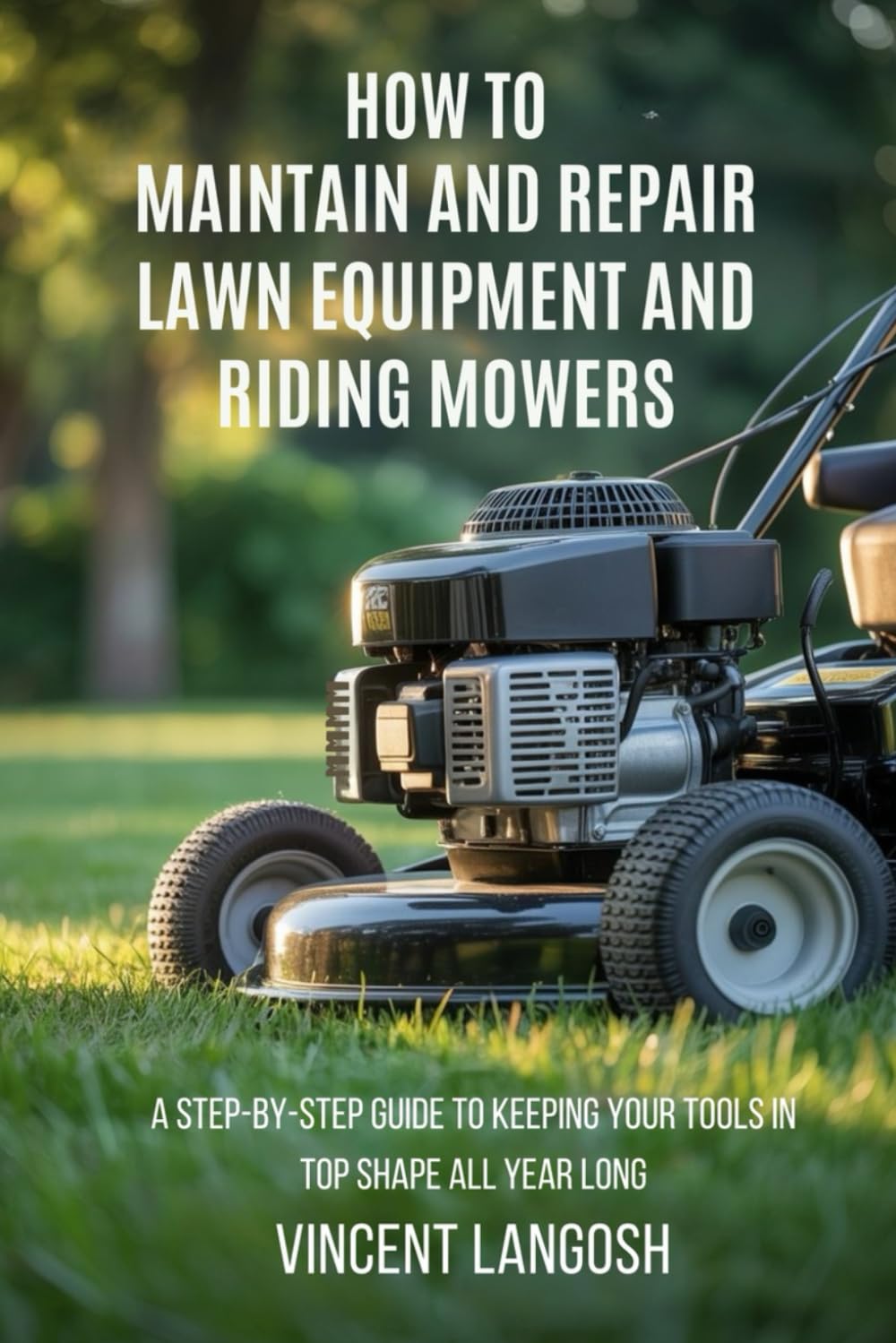
This book is a practical resource for anyone who owns a lawn mower or riding mower and wants to take control of its maintenance and repair. It is not a power tool itself, but it covers the most common lawn power tools you will find in a workshop or garage. Whether you are a homeowner tired of paying for simple service calls or a contractor who needs to keep a fleet running, this guide gives you the knowledge to handle essential upkeep.
The content is organized for real-world use. It starts with the core components of lawn equipment, then moves through routine tasks like oil changes, air filter cleaning, and blade sharpening. Later chapters cover troubleshooting common starting issues, carburetor cleaning, and belt replacement on riding mowers. The instructions are written in plain English and assume no prior mechanical experience. That makes it especially useful for DIYers who want to avoid costly shop repairs.
One standout feature is the emphasis on preventive maintenance. The book includes a maintenance log and a sample schedule so you can plan seasonal care. That alone can prevent most unexpected breakdowns. The author also provides tips on storing equipment properly, which is often overlooked but critical for long life. The focus is squarely on saving money and reducing downtime, which is the core value for any equipment owner.
Build quality of the book itself is typical for an independently published paperback: sturdy enough for the workshop, but not laminated or waterproof. The dimensions (6 x 9 inches) make it easy to prop open next to a mower deck. At 134 pages, it covers the essentials without being overwhelming. However, it does not cover advanced engine teardowns or electronic diagnostics, so seasoned mechanics might find it basic.
Overall, this guide is a smart buy for any homeowner or light commercial user who owns a walk-behind mower or riding mower. It will pay for itself the first time you avoid a shop visit. For professionals with a large fleet, consider pairing it with manufacturer manuals for deeper repair procedures. But for everyday maintenance and common fixes, this book delivers exactly what it promises.
Publisher: Independently published
Publication date: September 19, 2025
Language: English
Print length: 134 pages
ISBN-13: 979-8266237223
Item Weight: 9.1 ounces
Dimensions: 6 x 0.31 x 9 inches
Best Sellers Rank: #8,874,755 in Books; #550 in Lawn Gardening; #1,558 in Outdoor & Recreational Area Gardening; #2,620 in Landscape

Pros
- Comprehensive coverage of multiple equipment types in a single, well-organized volume.
- Easy-to-follow language and visuals make complex repairs accessible to beginners.
- Practical advice on winter storage, blade sharpening, and carburetor cleaning saves money over time.
Cons
- Focuses on general principles rather than brand-specific wiring diagrams or part numbers.
- Some advanced repairs (e.g., transmission work on zero-turn mowers) are not covered in depth.
- Print length of 150 pages may feel brief for users wanting exhaustive technical detail.
This book is a practical reference guide for anyone who owns a lawn mower, riding tractor, string trimmer, or leaf blower and wants to handle basic maintenance and repairs themselves. It's not a power tool in the traditional sense, but it's an essential resource for the DIY mechanic or homeowner who prefers to fix things rather than call a repair shop.
The author breaks down common problems like hard starting, poor cutting, vibration, and engine surging into easy-to-follow troubleshooting steps. Clear flowcharts and labeled diagrams help you quickly identify the likely culprit, whether it's a dirty carburetor, a worn spark plug, or a dull blade. Routine maintenance tasks such as oil changes, air filter cleaning, and winter storage prep are explained with practical tips that extend equipment life.
Real-world performance of this guide is strong for its intended audience. Beginners will appreciate the plain language and safety reminders, while more experienced DIYers can skip to specific sections for quick refreshers. The book covers both push mowers and riding mowers, plus handheld equipment, so it's a versatile addition to any workshop library. Build quality of the paperback is standard, with decent binding and clear print that holds up to shop use.
A realistic drawback is that the guide stays at a general level. If you're troubleshooting a specific model from a niche brand, you won't find wiring diagrams or part numbers. Also, the 150-page length means some advanced topics like hydraulic system repairs or electronic ignition troubleshooting are only briefly mentioned. However, for the vast majority of common lawn equipment issues, this book gives you the confidence and know-how to tackle the job yourself.
Overall, if you're a homeowner who wants to save money on small-engine repairs or a DIYer looking to expand your mechanical skills, this guide is a worthwhile investment. Keep it in your workshop or garage, and you'll likely recoup the cost after just one successful repair. It's a practical, no-nonsense resource that delivers exactly what the title promises.
Publisher: Independently published (May 4, 2024)
Language: English
Print length: 150 pages
ISBN-13: 979-8324833114
Item weight: 6.4 ounces
Dimensions: 5.5 x 0.34 x 8.5 inches
Part of series: The Fixers Handbook

Start by identifying the specific failure mode: no start, hard start, rough idle, or power loss. Each symptom points to different systems within the engine and drivetrain. A methodical check of fuel, air, and ignition components resolves most common issues. Keep a list of parts checked to avoid repeating steps during the repair process.
| Symptom | Likely Cause | First Check |
|---|---|---|
| No Start | Stale fuel, dead battery | Fuel smell, battery voltage |
| Hard Start | Clogged filter, weak spark | Air filter, spark plug gap |
| Rough Idle | Dirty carburetor, vacuum leak | Carb float level, hose cracks |
| Power Loss | Clogged exhaust, worn belt | Exhaust screen, belt tension |
Use this reference to narrow down your investigation before removing major components. Many small engine repairs are simple if you match the symptom to the correct system first. Check the fuel age before assuming engine damage, as stale gasoline is the most frequent culprit in stored mowers. Verify the battery charge if the mower is electric-start equipped.
- Disconnect the spark plug wire to prevent accidental engine start.
- Check fuel freshness and smell for stale or contaminated gasoline.
- Inspect the air filter for dirt, oil, or physical damage.
- Verify battery voltage is above 12.4 volts for electric start models.
- Look for visible fuel leaks around the carburetor and tank.
- Check the spark plug for fouling, wear, or incorrect gap.
Fuel System and Carburetor Inspection
Gasoline degrades within 30 to 60 days, forming gums that clog carburetor jets. If the mower has been stored without stabilizer, the carburetor is the first place to look. Remove the air filter to access the carburetor bowl and inspect the float valve. A stuck float or clogged main jet prevents the correct fuel-air mixture from reaching the cylinder.
Clean the carburetor using a dedicated solvent, not household cleaners that can damage rubber seals. Disassemble the unit carefully, noting the order of gaskets and springs for reassembly. Check the fuel filter, which is often located in the line between the tank and carburetor. A clogged filter restricts flow, causing the engine to stall under load or fail to start. Replacing this inexpensive part often resolves fuel delivery issues immediately.
Air Intake and Spark Plug Maintenance
A dirty air filter restricts airflow, causing the engine to run rich and foul the spark plug. Remove the filter and inspect it for heavy dirt or oil saturation. Wash foam filters with mild soap and water, then let them dry completely before reinstalling. Paper filters should be replaced if they are dark or clogged, as cleaning them is rarely effective for long-term performance.
The spark plug ignites the fuel mixture, so its condition is critical for reliable starting. Remove the plug and check the electrode for black soot, white deposits, or physical damage. Measure the gap with a feeler gauge and adjust it to the manufacturer’s specification, usually found in the owner’s manual. A fouled plug should be replaced rather than cleaned, as internal deposits can affect combustion efficiency. Ensure the plug wire is secure and free from cracks or exposed copper.
Battery, Ignition, and Electrical Checks
For electric-start mowers, a weak battery is a common cause of no-start conditions. Use a multimeter to check the voltage at the battery terminals. A healthy 12-volt battery should read above 12.4 volts when fully charged. If the reading is lower, charge the battery or replace it if it no longer holds a charge. Corroded terminals can also impede power flow, so clean them with a wire brush and apply a protective coating.
Check the ignition switch and safety interlocks, which prevent the engine from starting unless the brake is engaged and the seat is occupied. A faulty interlock switch can mimic a dead battery or ignition problem. Test the continuity of the switch with a multimeter to verify it is functioning correctly. If the electrical system checks out, the issue may lie in the ignition coil or starter motor, which require more advanced diagnostic tools to test properly.
Drive Belt and Transmission Inspection
Worn drive belts cause slipping, squealing, or loss of forward motion. Inspect the belt for cracks, fraying, or glazing on the surface. Check the tension by pressing on the belt; it should have slight give but not be loose. A damaged belt should be replaced immediately to prevent it from breaking and damaging the pulleys. Ensure the new belt matches the exact length and width specifications for your model.
Inspect the pulleys and tensioner arm for wear or misalignment. A bent tensioner arm can cause uneven belt wear and premature failure. Lubricate the transmission if your model uses a chain drive, checking the oil level and condition. For hydrostatic transmissions, check the fluid level and look for leaks around the pump and motor. Low fluid levels can cause slipping or loss of drive, so top off with the recommended fluid type if necessary.
- Replace drive belts if you see cracks, fraying, or glazing.
- Check belt tension for slight give without excessive slack.
- Inspect pulleys for wear, damage, or misalignment.
- Verify transmission fluid level and condition for hydrostatic models.
- Ensure the tensioner arm moves freely without binding.
Preventive Maintenance and Storage Tips
Regular oil changes extend engine life and prevent sludge buildup. Check the oil level before each use and top off as needed. Change the oil every 50 to 100 hours of operation, or at least once per season. Use the oil weight specified in the owner’s manual, as using the wrong viscosity can cause poor lubrication. A clean air filter and fresh fuel also contribute to long-term engine health and performance.
Proper storage prevents many common issues during the off-season. Run the engine until the tank is empty or add a fuel stabilizer to prevent gum formation. Charge the battery and disconnect it if storing for more than a month. Cover the mower to protect it from dust, moisture, and debris. Storing the mower in a dry, cool place reduces the risk of rust and electrical corrosion. For more on maintaining equipment for steep terrain, see our guide on mower options for slopes.
Most riding mower repairs are manageable with basic tools and a clear diagnostic approach. Start with the simplest fixes, such as fuel and air filter checks, before moving to complex components. Keep a record of maintenance tasks and parts replaced to track the equipment’s history. If the problem persists after these steps, consult the owner’s manual or seek professional assistance for specialized diagnostics.




Write Your Review
No reviews yet. Be the first to share your experience!