


Starting a Sabre riding lawn mower typically requires engaging the parking brake, setting the transmission to neutral, and pressing the starter button while holding the brake. If the engine cranks but does not start, the issue often involves stale fuel, a clogged filter, or a safety interlock that is not properly engaged. Understanding these basic steps prevents damage to the engine and ensures safe operation before you begin mowing.
Many owners struggle with cold starts or intermittent cranking, which can be frustrating when you are ready to cut the grass.
- The procedure varies slightly by model year, but the core safety checks remain consistent across most gas-powered riding mowers.
- By verifying the fuel level, checking the battery charge, and ensuring all safety switches are active, you can troubleshoot most startup issues without professional help.
- This guide walks through the specific steps and common pitfalls associated with Sabre riding lawn mower ignition.

Pros
- Clear, jargon-free explanations make legal and business setup accessible for beginners.
- Actionable checklists and templates help you move from idea to operation quickly.
- Real-world focus on getting first clients and managing cash flow from the start.
Cons
- Primarily a business guide, not a technical how-to for lawn care itself.
- Some sections may feel basic for experienced contractors looking to scale an existing business.
This isn't a power tool, but it's one of the most essential tools for anyone serious about starting a lawn care business. Jon Nelsen's guide is a no-fluff, step-by-step manual that covers the business side of mowing, trimming, and landscaping. It's written for the guy who wants to turn a weekend side hustle into a legit, profitable operation without drowning in legal jargon or marketing hype.
The book is best suited for aspiring entrepreneurs, DIYers looking to go pro, or contractors in related fields (like handyman or pressure washing) who want to add lawn care services. It walks you through local demand analysis, business formation, insurance requirements, and equipment selection. The pricing and packaging section is especially useful, helping you avoid the common trap of undercharging. You'll also find practical marketing tips that work in real neighborhoods, not just theory.
Build quality here is solid content. The author keeps it concise at 106 pages, so there's no filler. You get checklists, sample forms, and scheduling software recommendations. The route planning hacks alone can save you hours of drive time each week. That's real-world practicality. On the downside, this guide focuses almost entirely on the business and client acquisition side. If you need a deep dive into mowing techniques, weed control, or equipment maintenance, you'll need a separate resource. Also, some advice might feel basic if you've already run a service business before.
For the price, this is a high-value investment for anyone starting from scratch. It gives you a clear roadmap to go from zero to booked solid in one season. If you're tired of wondering how to get clients or what to charge, this guide answers those questions directly. It's a practical, no-nonsense blueprint that belongs in the glovebox of any lawn care startup.
Publisher: Independently published (May 19, 2025)
Language: English
Print length: 106 pages
ISBN-13: 979-8284541623
Item Weight: 5 ounces
Dimensions: 5.5 x 0.24 x 8.5 inches
Book 1 of 10: Start and Grow Your Lawn Care Business series
Ideal for: Aspiring lawn care entrepreneurs with zero business experience. DIY homeowners planning to turn pro. Contractors in related fields (handyman, landscaping) adding lawn care services. High school or college students starting a summer business. Veterans or career changers entering the service industry.

Pros
- Actionable advice that saves time and money on equipment purchases.
- Covers both new and used gear inspection tips.
- Easy to read with no technical jargon.
- Includes a full equipment checklist for lawn care success.
Cons
- No real user reviews yet due to recent publication.
- Focuses only on lawn care, not general landscaping or construction.
- Relatively short at 146 pages; some topics may be introductory.
Lawn Care Equipment Essentials is a no-fluff guide written for entrepreneurs who want to buy the right tools for their lawn care business without wasting money. It's not a physical piece of equipment, but it's one of the most valuable resources you can add to your workshop library if you're starting out or looking to upgrade your gear. The author, Jon Nelsen, focuses on helping you make informed decisions about mowers, trailers, trimmers, and blowers, with an emphasis on cost-effectiveness and long-term value.
This book is best suited for first-time lawn care business owners, solo operators, and even experienced contractors who want to optimize their equipment lineup. It walks you through the differences between gas and electric equipment, push vs. stand-on mowers, and open vs. enclosed trailers. The language is straightforward, with no jargon, making it accessible for anyone regardless of their mechanical background.
In real-world terms, the guide delivers where it matters: it helps you avoid common buying mistakes. For example, it explains how to inspect used equipment, which brands offer the best reliability for specific budgets, and how to set up your trailer to protect your investment. The ROI tracking section is particularly useful for small business owners who need to see if a tool is actually paying for itself over time.
Build quality of the book itself is standard for a paperback: 146 pages, clear formatting, and well-organized chapters. It's lightweight and portable, so you can keep it in your truck or shop for quick reference. One realistic limitation is that the book is relatively short-some topics are covered at a high level rather than in deep technical detail. Also, with zero reviews so far (as of this writing), there's no community feedback to gauge, but the content appears solid based on the description.
If you're serious about building a profitable lawn care business and want to make every equipment dollar count, this guide is a smart investment. It won't replace hands-on experience, but it will save you from costly trial and error. Recommended for anyone who wants to buy smarter and work better with tools that actually support their business.
ASIN: B0F9DWPQV3
Publisher: Independently published
Publication date: May 20, 2025
Language: English
Print length: 146 pages
ISBN-13: 979-8284630242
Item Weight: 6.2 ounces
Dimensions: 5.5 x 0.33 x 8.5 inches
Book 2 of 10: Start and Grow Your Lawn Care Business
This book is ideal for solo lawn care operators who want to pick the right gear from day one without blowing their budget. It's also great for small crew owners looking to scale up and need to decide between gas and electric equipment or whether to buy used or new. DIYers transitioning from residential mowing to commercial work will find the step-by-step equipment checklist a huge time saver. Use it as a reference whenever you're about to make a major tool purchase, especially for mowers or trailers.

Pros
- Authentic, firsthand advice from a successful owner-operator
- Concise and well-organized, no fluff or filler
- Covers both the practical and emotional sides of starting a business
Cons
- Printed length is only 100 pages, so some topics might be high-level
- Primarily focuses on the early growth phase, less on scaling beyond $100K
- Digital or audio version may be preferred for those who dislike reading physical books
Zero To $100K! is a book, not a power tool, but it might be the most valuable piece of equipment a new lawn care business owner ever buys. Brian Fullerton, who built a thriving lawn care company from practically nothing, shares his hard-won lessons in a straightforward, engaging style. This is not a dry business textbook; it is a parallel path story that takes you through the good days and the bad days of building a real company.
The book is best suited for aspiring lawn care entrepreneurs and existing small business owners who feel stuck. Whether you are still planning your first mower purchase or have been running routes for a couple of years, Fullerton's advice on pricing, client retention, equipment maintenance, and mindset will hit home. He does not sugarcoat the struggles: you will read about broken trucks, difficult customers, and the emotional toll of building a business from zero.
In terms of real-world performance, this guide excels at giving you concrete steps. Fullerton covers how to choose your first mower, how to estimate jobs, and how to market without spending a fortune on ads. His recommendations are grounded in what actually worked for him, not generic theory. Readers consistently mention how they finished the book in a few hours and immediately applied changes to their operations.
Build quality is solid: the paperback is well laid out with clear chapters and a logical progression. It is lightweight and easy to toss in a toolbox or glove compartment. Durability is fine for a book, though it will show wear if you carry it around a jobsite. The real value is in the content, not the physical object.
One realistic drawback is length. At only 100 pages, some topics like advanced growth strategies or managing a large crew are covered briefly. Additionally, if you are already running a multi-truck operation, the first half of the book might feel too basic. But for its target audience of new and struggling owners, it hits the mark perfectly.
Overall, if you are serious about starting or growing a lawn care business, this book is a smart investment. Pair it with Fullerton's free YouTube content for even deeper guidance. It is like having a seasoned mentor in your pocket, minus the hourly fee.
Publisher: Brian Fullerton (February 20, 2023)
Print length: 100 pages
ISBN-13: 979-8987573501
Language: English
Dimensions: 6 x 0.23 x 9 inches
Item Weight: 5.1 ounces

Pros
- Excellent for beginners with little to no mechanical experience; clear, easy-to-follow instructions.
- Covers a broad range of outdoor power equipment, making it a versatile reference for any homeowner.
- High-quality photos and diagrams help visualize each repair step, reducing guesswork.
- Practical troubleshooting section helps you identify problems quickly and find the right solution.
Cons
- Some advanced repairs may require additional specialized knowledge or tools not covered in depth.
- The book is focused on gas-powered engines, so it does not cover electric or battery-powered equipment.
- A few reviewers noted the content is basic for experienced mechanics, but it's ideal for beginners.
If you own a lawn mower, snowblower, chain saw, or any other gas-powered outdoor equipment, you know the frustration when it won't start or runs poorly. The Small Engines and Outdoor Power Equipment, Updated 2nd Edition is a practical, hands-on guide designed to take the mystery out of small engine repair. Written for the absolute beginner, this book breaks down maintenance and repairs with clear photos and step-by-step instructions. It covers everything from seasonal tune-ups to more involved tasks like carburetor overhaul and fuel pump replacement.
This guide is best suited for homeowners, DIYers, and weekend warriors who want to keep their equipment running without the expense and delay of professional repair shops. It's not for professional mechanics looking for advanced theory, but for anyone who wants to save money and learn practical skills. The book covers a wide range of equipment including lawn mowers, snowblowers, chain saws, power washers, generators, leaf blowers, rototillers, wood splitters, lawn edgers, and weed whips. That's a lot of value for one book.
Real-world performance is where this book shines. The troubleshooting section helps you quickly identify problems like hard starting, poor running, or no start. Then it points you to the specific repair section. The instructions are clear and easy to follow, with plenty of photos showing exactly what to do. Many users report successfully fixing their equipment after just a few minutes of reading. The book emphasizes easy but important maintenance that can extend the life of your tools for years. It's not just about fixing broken stuff; it's about preventing problems in the first place.
Build quality of the book itself is solid. It's a paperback with 144 pages, good for tossing in a toolbox or workshop shelf. The dimensions are a handy 8.8 x 0.55 x 11.2 inches, so it's not too large or small. The paper quality is decent, and the photos are printed clearly. One realistic drawback is that the book focuses entirely on gas engines, so if you have electric or battery-powered tools, you won't find help here. Also, while it covers many repairs, some advanced tasks like piston ring replacement or valve grinding are not included. But for the vast majority of common issues, this guide has you covered.
Overall, this is a highly recommended resource for anyone who owns gas-powered outdoor equipment. It's affordable, easy to understand, and packed with practical advice. If you're tired of hauling your mower to the shop or spending money on simple repairs, this book will pay for itself many times over. It's a smart investment for any homeowner who wants to be more self-sufficient and keep their equipment running reliably season after season.

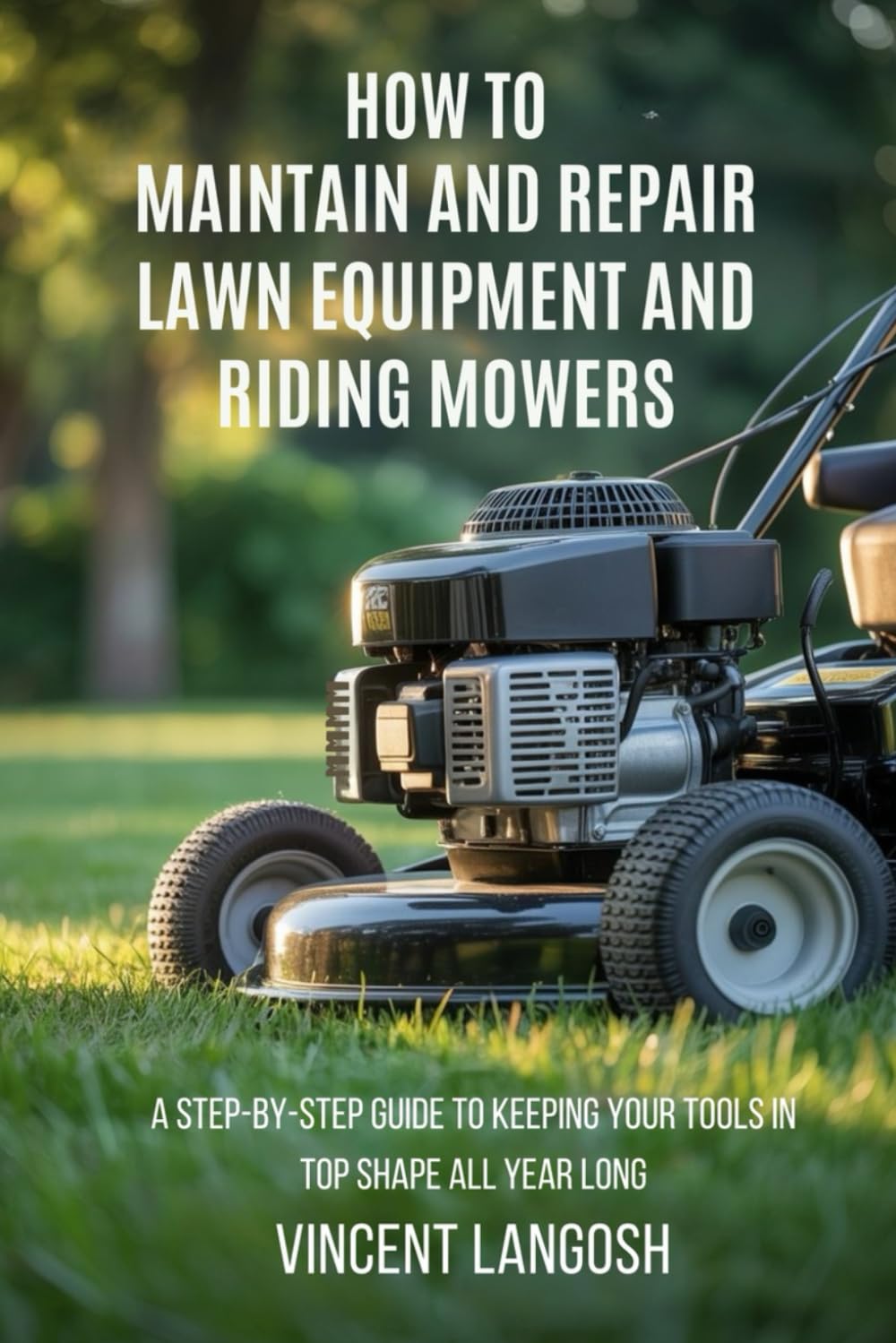
Pros
- Comprehensive coverage of both push mowers and riding mowers in one book
- Easy-to-follow steps even if you have never done maintenance before
- Cost-effective way to keep your equipment in top shape without frequent shop visits
Cons
- Does not include interactive videos or online extras, only text and illustrations
- Limited to 134 pages, so advanced engine rebuilds may not be covered in depth
- Published independently, so editing and layout may not match major publisher standards
This book is a practical resource for anyone who owns a lawn mower or riding mower and wants to take control of its maintenance and repair. It is not a power tool itself, but it covers the most common lawn power tools you will find in a workshop or garage. Whether you are a homeowner tired of paying for simple service calls or a contractor who needs to keep a fleet running, this guide gives you the knowledge to handle essential upkeep.
The content is organized for real-world use. It starts with the core components of lawn equipment, then moves through routine tasks like oil changes, air filter cleaning, and blade sharpening. Later chapters cover troubleshooting common starting issues, carburetor cleaning, and belt replacement on riding mowers. The instructions are written in plain English and assume no prior mechanical experience. That makes it especially useful for DIYers who want to avoid costly shop repairs.
One standout feature is the emphasis on preventive maintenance. The book includes a maintenance log and a sample schedule so you can plan seasonal care. That alone can prevent most unexpected breakdowns. The author also provides tips on storing equipment properly, which is often overlooked but critical for long life. The focus is squarely on saving money and reducing downtime, which is the core value for any equipment owner.
Build quality of the book itself is typical for an independently published paperback: sturdy enough for the workshop, but not laminated or waterproof. The dimensions (6 x 9 inches) make it easy to prop open next to a mower deck. At 134 pages, it covers the essentials without being overwhelming. However, it does not cover advanced engine teardowns or electronic diagnostics, so seasoned mechanics might find it basic.
Overall, this guide is a smart buy for any homeowner or light commercial user who owns a walk-behind mower or riding mower. It will pay for itself the first time you avoid a shop visit. For professionals with a large fleet, consider pairing it with manufacturer manuals for deeper repair procedures. But for everyday maintenance and common fixes, this book delivers exactly what it promises.
Publisher: Independently published
Publication date: September 19, 2025
Language: English
Print length: 134 pages
ISBN-13: 979-8266237223
Item Weight: 9.1 ounces
Dimensions: 6 x 0.31 x 9 inches
Best Sellers Rank: #8,874,755 in Books; #550 in Lawn Gardening; #1,558 in Outdoor & Recreational Area Gardening; #2,620 in Landscape

Pros
- Comprehensive coverage of multiple equipment types in a single, well-organized volume.
- Easy-to-follow language and visuals make complex repairs accessible to beginners.
- Practical advice on winter storage, blade sharpening, and carburetor cleaning saves money over time.
Cons
- Focuses on general principles rather than brand-specific wiring diagrams or part numbers.
- Some advanced repairs (e.g., transmission work on zero-turn mowers) are not covered in depth.
- Print length of 150 pages may feel brief for users wanting exhaustive technical detail.
This book is a practical reference guide for anyone who owns a lawn mower, riding tractor, string trimmer, or leaf blower and wants to handle basic maintenance and repairs themselves. It's not a power tool in the traditional sense, but it's an essential resource for the DIY mechanic or homeowner who prefers to fix things rather than call a repair shop.
The author breaks down common problems like hard starting, poor cutting, vibration, and engine surging into easy-to-follow troubleshooting steps. Clear flowcharts and labeled diagrams help you quickly identify the likely culprit, whether it's a dirty carburetor, a worn spark plug, or a dull blade. Routine maintenance tasks such as oil changes, air filter cleaning, and winter storage prep are explained with practical tips that extend equipment life.
Real-world performance of this guide is strong for its intended audience. Beginners will appreciate the plain language and safety reminders, while more experienced DIYers can skip to specific sections for quick refreshers. The book covers both push mowers and riding mowers, plus handheld equipment, so it's a versatile addition to any workshop library. Build quality of the paperback is standard, with decent binding and clear print that holds up to shop use.
A realistic drawback is that the guide stays at a general level. If you're troubleshooting a specific model from a niche brand, you won't find wiring diagrams or part numbers. Also, the 150-page length means some advanced topics like hydraulic system repairs or electronic ignition troubleshooting are only briefly mentioned. However, for the vast majority of common lawn equipment issues, this book gives you the confidence and know-how to tackle the job yourself.
Overall, if you're a homeowner who wants to save money on small-engine repairs or a DIYer looking to expand your mechanical skills, this guide is a worthwhile investment. Keep it in your workshop or garage, and you'll likely recoup the cost after just one successful repair. It's a practical, no-nonsense resource that delivers exactly what the title promises.
Publisher: Independently published (May 4, 2024)
Language: English
Print length: 150 pages
ISBN-13: 979-8324833114
Item weight: 6.4 ounces
Dimensions: 5.5 x 0.34 x 8.5 inches
Part of series: The Fixers Handbook

Pros
- Charming and wholesome story that appeals to young children
- Large 8 x 10 inch pages with clear text and likely vibrant illustrations
- Broad reading age range makes it a long-lasting addition to a child's library
Cons
- Limited to a niche audience interested in farm life or lawn mower themes
- Paperback format may not withstand heavy use by very young children
- Currently no customer reviews to gauge real-world reception
Lucky the Lawn Mower is a children's picture book, not a power tool or piece of workshop equipment. It belongs to the Children's Farm Life Books category and tells the story of a lawn mower named Lucky who lives on a farm. While other farm vehicles work in the fields, Lucky has the special job of keeping the farmhouse lawn perfectly manicured. The book follows his adventures and the friends he makes along the way.
This book is best suited for parents, grandparents, and educators looking for a gentle, engaging story for children from babies up to age 12. The wide reading age range makes it a versatile choice for family reading time or classroom story sessions. The 40-page length is typical for a picture book, offering a complete narrative without being too long for young attention spans.
In terms of real-world performance, this is a reading experience rather than a tool performance metric. The story is designed to entertain and teach lessons about friendship and facing challenges. The large 8 x 10 inch dimensions and lightweight paperback format (4.5 ounces) make it easy for small hands to hold and for parents to read aloud. The publication date is September 26, 2025, so it is a new release.
Build quality is standard for a paperback children's book. The cover and pages should hold up to normal use, though very young children may require supervision to prevent tearing. The book is published by Christian Faith Publishing, which suggests a faith-friendly perspective, though the description does not explicitly mention religious content.
A realistic drawback is the lack of customer reviews at this time, making it hard to gauge how well the story resonates with children. Additionally, the niche theme of a lawn mower on a farm may not appeal to all kids, especially those not interested in farm life or vehicles. The paperback format may also be less durable than a board book for toddlers.
Overall, Lucky the Lawn Mower is a charming addition to a child's library, especially for families who enjoy farm-themed stories or want to introduce young readers to the value of friendship and hard work. It is not a power tool, so it won't help with your workshop projects, but it could be a great gift for the little ones in your life who love stories about vehicles and animals.

The starting sequence for a Sabre riding mower is designed to prevent accidental movement and engine damage. Before attempting to start the engine, you must ensure the mower is on a flat, stable surface. This prevents the mower from rolling if the parking brake fails or if the transmission is not in neutral. The operator must also be seated in the driver’s seat, as most modern mowers have seat sensors that disable the starter if the seat is empty.
| Pre-Start Check | Required Status | Why It Matters |
|---|---|---|
| Parking Brake | Engaged | Prevents rolling and enables starter |
| Transmission | Neutral | Allows engine to start without moving |
| Operator Seat | Occupied | Activates safety interlock |
| Fuel Cap | Tightened | Prevents fuel leak and vapor lock |
Once the safety checks are complete, the first action is to engage the parking brake. Most Sabre models require the brake to be firmly engaged for the starter circuit to close. Next, ensure the transmission lever is in the neutral position. If the mower is a hydrostatic model, the lever should be centered. For gear-drive models, the gear shifter must be in the neutral slot. Failing to set the transmission to neutral can prevent the starter from engaging or cause the mower to lurch forward when the engine fires.
- Verify the fuel tank contains fresh gasoline with the correct octane.
- Check the engine oil level and top off if it is low.
- Inspect the air filter for excessive dirt or debris.
- Ensure the battery terminals are clean and tight.
Ignition Sequence and Starter Operation
With the brake engaged and the transmission in neutral, turn the ignition key to the ON position. Wait a moment for the fuel pump to prime if the model is equipped with an electric fuel pump. You should hear a brief humming sound as the fuel system pressurizes. If you do not hear the pump, check the fuel filter and the fuel lines for blockages. The engine will not start if the fuel system is not primed correctly.
Press and hold the starter button or turn the key to the START position. The engine should crank and start within a few seconds. If the engine cranks slowly, the battery may be weak or the starter motor may be worn.
If the engine does not crank at all, check the battery voltage and the connection to the starter solenoid. Do not crank the engine for more than ten seconds at a time, as this can overheat the starter motor. Allow the starter to cool for at least thirty seconds between attempts.
Common Startup Failures and Solutions
Stale fuel is the most common reason a gas-powered riding mower fails to start after sitting for several months. Gasoline degrades over time, forming gums and varnishes that clog the carburetor jets and fuel lines. If the mower has not been used in over 30 days, drain the old fuel and refill with fresh gasoline. Adding a fuel stabilizer to the tank before storage can prevent this issue in the future. Always use unleaded gasoline with an octane rating of 87 or higher, as specified in the owner’s manual.
A dirty air filter can also cause hard starting by restricting airflow to the engine. Remove the air filter and inspect it for dirt, grass clippings, or oil residue. If the filter is dirty, clean it with compressed air or replace it if it is damaged. A clogged air filter forces the engine to run rich, which can cause fouled spark plugs and poor combustion. Regular air filter maintenance is one of the simplest ways to ensure reliable starting performance.
Safety Interlocks and Electrical Checks
Modern riding mowers are equipped with multiple safety interlocks that prevent the engine from starting unless specific conditions are met. The most common interlock is the seat sensor, which disables the starter if the operator is not seated.
If the mower does not start despite the brake being engaged, check that the seat sensor is not loose or damaged. Another common interlock is the brake switch, which must be engaged for the starter to activate. A faulty brake switch can prevent the starter from engaging even if the brake is physically applied.
If the starter motor does not engage, check the battery voltage with a multimeter. A healthy 12-volt battery should read at least 12.4 volts when the engine is off. If the voltage is below 12.0 volts, the battery may be discharged and need recharging. Also inspect the battery terminals for corrosion, which can increase resistance and prevent the starter from receiving enough power.
Clean the terminals with a wire brush and apply a dielectric grease to prevent future corrosion. For more detailed information on engine maintenance, see our lawn mower for slopes guide which covers terrain-specific maintenance tips.
Fuel System Maintenance for Reliable Starts
The fuel system is critical for reliable starting, and neglecting it can lead to costly repairs. The fuel filter should be inspected and replaced according to the manufacturer’s recommended interval, typically every 100 hours of operation or annually. A clogged fuel filter restricts fuel flow to the carburetor, causing the engine to stall or fail to start. The fuel lines should also be inspected for cracks, leaks, or kinks that can restrict fuel flow. Replacing the fuel lines is a simple task that can prevent fuel leaks and engine damage.
The carburetor is another common source of starting problems, especially in mowers that have been stored for a long time. If the fuel system is clear but the engine still will not start, the carburetor may be clogged with varnish from stale fuel.
Cleaning the carburetor involves disassembling it, soaking the parts in a carburetor cleaner, and reassembling it with new gaskets. This is a more advanced repair that may require specific tools and knowledge. If you are not comfortable performing this repair, consider taking the mower to a professional service center.
Spark Plug and Ignition System Checks
A fouled or worn spark plug can prevent the engine from starting or cause it to run poorly. Remove the spark plug and inspect the electrode for carbon buildup, oil residue, or physical damage. If the plug is fouled, clean it with a wire brush or replace it with a new one. The gap between the electrodes should be set to the specification listed in the owner’s manual, typically between 0.025 and 0.035 inches. A correct gap ensures a strong spark that ignites the fuel-air mixture efficiently.
The ignition coil and spark plug wire should also be inspected for damage or wear. A cracked or frayed spark plug wire can cause a weak spark or no spark at all. Check the ignition coil for signs of corrosion or damage, and test its resistance with a multimeter if necessary. If the ignition system is functioning correctly, the engine should start easily and run smoothly. For more information on small engine repair, refer to good mower blade setup resources that often include engine maintenance tips.
Preventive Maintenance Schedule
Regular maintenance is the best way to prevent starting problems and extend the life of your Sabre riding mower. Change the engine oil and oil filter according to the manufacturer’s recommended interval, typically every 50 hours of operation or annually. Use the type of oil specified in the owner’s manual, such as SAE 10W-30 or SAE 5W-30. Check the air filter and clean or replace it as needed, especially if you mow in dusty conditions. A clean air filter ensures proper airflow and engine performance.
Before storing the mower for the winter, add a fuel stabilizer to the tank and run the engine for a few minutes to circulate the treated fuel through the carburetor. This prevents varnish buildup in the fuel system and makes starting easier in the spring. Disconnect the battery or remove the negative terminal to prevent discharge during storage. Store the mower in a dry, well-ventilated area to prevent rust and corrosion. Following these preventive maintenance steps will help ensure your mower starts reliably every time you need it.
By following the correct starting procedure and performing regular maintenance, you can avoid most common startup issues with your Sabre riding lawn mower. Always prioritize safety by engaging the brake and setting the transmission to neutral before starting the engine. If the mower continues to have starting problems after checking the fuel, battery, and spark plug, consult the owner’s manual or contact a professional technician for further assistance.


Write Your Review
No reviews yet. Be the first to share your experience!