


Keeping up with a growing lawn is easier when the mower’s power source, cutting width, and drive system suit the property. The phrase what is best self propelled push lawn mower points to a useful distinction: a self-propelled mower moves itself forward, while a push mower depends on the operator to move it. The products listed here include both types, so checking that difference is a sensible first step.
Other practical choices include gas or battery power, how the cutting height is adjusted, and whether clippings can be mulched, bagged, or discharged to the side. A wider cutting path may reduce the number of passes, but the cutting width alone does not establish whether the full mower will fit through a gate or into a storage space. For broader context, see our John Deere push mower guide and three-wheel mower overview.

Pros
- Auto choke and recoil start make ignition easy even for first time gas mower users.
- 6 cutting heights offer fine tuning for different grass types and conditions.
- Foldable handle saves storage space, a big plus for small sheds or garages.
- Steel deck is durable enough for regular residential use without rusting quickly.
Cons
- No bagging option included, only mulch and side discharge which may leave clippings on the lawn.
- Without self-propulsion, pushing 59 pounds on hilly terrain can be tiring.
- Gas engine requires regular maintenance like oil changes and fuel management, adding to upkeep chores.
The PowerSmart DV8621C is a straightforward gas push lawn mower built for homeowners who want a reliable cutting tool without extra complexity. It features a 144cc 4-cycle OHV engine that fires up easily thanks to an auto choke and recoil starter. The 21-inch steel deck provides a good balance between cutting width and maneuverability, making it suitable for yards up to about half an acre.
This mower is best suited for DIY homeowners or weekend warriors who prefer a simple, no frills machine. The 2-in-1 cutting system lets you choose between mulching clippings for natural fertilization or side discharging for quick cleanup. The single lever height adjustment offers six positions from 1.5 to 3.9 inches, so you can fine tune the cut for different grass lengths and seasons.
In real world use, the engine delivers enough torque to slice through typical cool season grasses without bogging down. The deck leaves a clean cut, though thick or wet grass may require slower passes. The 10-inch rear wheels handle lumpy terrain reasonably well, but the lack of self-propulsion means you have to push the 59 pound mower yourself. On flat ground this is fine, but hills can become a workout.
Build quality is solid for the price point. The steel deck feels sturdy, and the folding handle reduces storage footprint. Assembly is minimal, with only the handle and grass catcher (if you buy one separately) needing attachment. However, note that a bagger is not included in this model. If you prefer bagging to keep your lawn pristine, you will need to purchase a compatible bag kit.
Overall, the PowerSmart DV8621C offers excellent value for anyone needing a dependable gas mower for a modest sized yard. It is easy to start, simple to adjust, and stores compactly. Just be mindful that it lacks self-propulsion and bagging, so it works best for flat lawns or customers who don't mind mulching. For the price, it is a smart choice for budget conscious DIYers.
Engine: 144cc 4-cycle OHV, recoil start with auto choke
Cutting Width: 21 inches
Cutting Options: Mulch or side discharge (2-in-1)
Height Adjustment: 6 positions, 1.5 to 3.9 inches
Wheels: 10 inch rear, 7 inch front
Deck Material: Steel
Weight: 59.4 pounds
Dimensions: 56.5 x 22 x 42.5 inches
Color: Red

Pros
- Lightweight and easy to push, ideal for small yards and users who prefer a non-self-propelled mower.
- Reliable 144cc gas engine provides ample power for thick grass without the hassle of batteries or cords.
- Side-discharge design effectively handles clippings and reduces cleanup time.
- 3-position height adjustment offers flexibility for different grass lengths and seasonal conditions.
Cons
- No mulching or bagging option included; only side discharge is available, which may require additional raking.
- 18-inch cutting width is narrow, making it less efficient for larger lawns compared to wider models.
- Assembly may require basic tools and some time, though instructions are generally clear.
The SENIX Gas Lawn Mower is a compact, lightweight push mower designed for homeowners with small yards, first-time buyers, or anyone looking for a straightforward gas-powered cutting solution. With an 18-inch steel blade and a 144cc 4-cycle engine, it delivers reliable performance for routine grass maintenance around suburban homes, apartments with small lawns, or even rural properties with modest cutting needs.
This mower is best suited for budget-conscious shoppers and those who prioritize ease of use over advanced features. The 37.5-pound weight makes it one of the lighter gas mowers available, so pushing it across a flat lawn or maneuvering around flower beds and garden hoses feels manageable. The ergonomic handle and 7-inch rear wheels help with turning in tight corners, and the 3-position height adjustment (1.2 to 3.15 inches) allows you to adapt to different grass conditions without needing tools.
In terms of cutting performance, the 144cc engine provides enough power for typical grass growth in small to medium yards. The side-discharge system uses a vortex tunnel design to spread clippings evenly, which can reduce the need for raking after mowing. However, note that this model does not include a mulching plug or grass bag, so you will rely solely on side discharge. If you prefer a clean, bagged finish or want to mulch clippings for lawn health, you may need to purchase additional accessories or consider a different model.
Build quality is practical for the price point. The deck is made of durable materials, and the lightweight construction helps with storage in a garage or shed. The mower's compact dimensions (23.5 x 21 x 11.78 inches) make it a good fit for smaller storage spaces. Maintenance is straightforward: check oil before each use, keep the blade sharp, and clean the underside after mowing to prevent grass buildup. The engine is a standard 4-cycle, so it runs on regular gasoline and requires oil changes periodically.
Realistic limitations include the 18-inch cutting width, which means more passes on larger lawns compared to 21-inch or wider models. Additionally, the lack of self-propulsion means you'll need to push it yourself, which could be tiring on hilly terrain or larger properties. The side-discharge-only design may leave clippings on the lawn, which some users find messy, but it does help return nutrients to the soil if you mow frequently.
Overall, the SENIX Gas Lawn Mower is a solid choice for homeowners who want an affordable, lightweight gas mower for small yards, apartment patios, or as a backup mower. It's especially good for first-time buyers or those who want a simple, no-fuss machine that starts easily and cuts reliably. If you have a larger lawn, need mulching or bagging, or prefer self-propelled convenience, you may want to explore other options. But for basic lawn care on a budget, this mower gets the job done.

Pros
- Reliable 170cc OHV engine with auto choke for easy starts, even after the mower has sat for a few weeks.
- Steel deck adds durability and impact resistance compared to lighter polymer decks, especially if you occasionally hit a rock or root.
- Self-propelled rear-wheel drive gives confident traction on gentle slopes and uneven ground without requiring you to push hard.
- 3-in-1 mowing options (mulch, bag, side discharge) make it a versatile tool for spring grass, summer clippings, and fall leaves.
Cons
- At 59 pounds, the mower feels solid but may be heavy for some users to lift over curbs or load into a truck, despite the self-propelled drive.
- The 21-inch cutting width is standard for residential mowers but not ideal for very large rural lawns where a wider deck would save more time.
- Gas engine operation requires regular maintenance like oil changes and spark plug checks, which may be less appealing to eco-conscious or low-maintenance buyers.
The PowerSmart 21-Inch Self Propelled Gas Lawn Mower is a classic walk-behind gas mower designed for residential yard work. It pairs a 170cc OHV 4-stroke engine with rear-wheel self-propelled drive and a durable steel deck, offering a practical middle ground between a basic push mower and a premium lawn tractor. For homeowners with a quarter-acre lot, suburban lawns, or slightly sloped properties, this type of mower delivers the power and traction you need without the expense or storage footprint of a riding mower.
This mower is best suited for homeowners who want dependable cutting performance with less physical effort. The self-propelled rear-wheel drive is especially helpful on gentle slopes and uneven terrain, so you can guide the mower rather than muscle it. First-time mower buyers will appreciate the auto choke system, which simplifies starting compared to older gas mowers that require manual priming and choking. Budget-conscious shoppers get a solid set of features at a reasonable price point, while those with mobility concerns may find the self-propelled drive reduces strain during a full yard mowing session.
In real-world lawn care, the 21-inch steel deck handles standard residential grass well. The 3-in-1 capability means you can mulch clippings to feed the lawn, side discharge thick grass to avoid clumping, or attach a rear bag (sold separately, depending on package) for a clean finish before a backyard barbecue or holiday gathering. The 6-position height adjustment from 1.5 to 3.9 inches gives you enough range to keep cool-season grasses longer in summer or cut warm-season lawns shorter in spring. The 170cc engine provides enough torque to power through damp grass after a spring rain, although very wet or overgrown grass will still require slower passes to avoid stalling or clogging.
Build quality is centered around the steel deck, which offers better durability and impact resistance than many polymer decks in this price range. The foldable handle is a practical feature for storing the mower upright in a garage or shed, and the 59-pound weight is manageable for most users when rolling, though lifting it into a vehicle or over a curb takes some effort. The rear-wheel drive system gives good traction on moderate slopes, and the 21-inch cutting width is a good balance between maneuverability around landscaping and efficiency for open lawn areas. Users with very tight spaces or complex garden layouts may find a smaller 20-inch model easier to turn, but this mower remains reasonably agile for its deck size.
Maintenance is typical for a gas mower. You will need to check the oil before the first start, change it periodically, keep the air filter clean, and inspect the spark plug each season. The engine is designed for simple access to these components, and blade replacement is a standard job that most DIY homeowners can handle with basic tools. Cleaning the underside of the deck after each use helps prevent grass buildup and rust, and the steel deck should hold up well if you keep it dry between mowings. The self-propelled drive reduces the physical effort of mowing, but the gas engine does produce noise and emissions, so early Saturday morning sessions may not be the quietest option for close neighbors.
Realistic limitations include the need for regular gas engine upkeep, the 59-pound weight when lifting, and the fact that this mower is not designed for commercial landscaping crews or extremely large rural acreage. For a typical suburban home, a 21-inch self-propelled gas mower like this is a reliable workhorse that can handle weekly cutting, fall leaf mulching, and the occasional overgrown patch after vacation. If you are a homeowner looking for an affordable, dependable walk-behind mower with useful features like self-propelled drive and 3-in-1 versatility, the PowerSmart model is worth considering. Just be prepared to perform basic maintenance and store it properly to get the longest service life out of the steel deck and engine.
This mower gives you three ways to handle grass clippings. For mulching, the cut grass is finely shredded and returned to the lawn, which helps retain moisture and recycle nutrients. Many homeowners find mulching the best option during regular weekly mowing in summer when grass growth is steady and clippings are short. The 170cc OHV engine provides enough power to keep the blade spinning at high speed, which is essential for a clean mulch cut.
When grass is thick or slightly damp, side discharge is often the better choice because it moves clippings out of the deck quickly and reduces the chance of clumping. This is useful for the first mow of spring or after a week of heavy growth. For a pristine finish before a gathering, the rear bag (if included, otherwise sold separately) collects clippings neatly and makes disposal easy. The bagging system works best when the grass is dry and you mow at a moderate pace.
Switching between modes is straightforward with the included plugs and chute. You should always remove the side discharge chute when mulching to ensure proper airflow inside the deck. For fall leaf cleanup, mulching leaves into the lawn can be a real time saver, provided the leaves are not too thick. Overall, the 3-in-1 flexibility makes this mower a practical partner for year-round lawn maintenance.
The steel deck is the cornerstone of this mower's build. Steel is heavier than plastic or aluminum, but it offers excellent impact resistance and long-term durability. If you accidentally hit a rock, a tree root, or a hidden garden stake, the steel deck is more likely to bend or dent rather than crack. Over time, a steel deck also makes it easier to remove grass buildup because you can scrape it without worrying about damaging the housing.
The 59-pound weight reflects the solid construction. The wheels are designed for residential use, and the rear-wheel drive system adds traction for slopes. The foldable handle is made of sturdy tubes and locks into place during operation, which is important for safety and control. The painted finish on the deck helps resist rust, but you should still avoid leaving the mower out in the rain and keep the underside clean. With reasonable care, this mower can provide many seasons of dependable service for the home lawn.
Keeping this gas mower running well is mostly about routine checks. Before each season, inspect the oil level and top off with the recommended 4-stroke oil. Change the oil after the first 5 hours of use, then once a year or every 25 hours of operation. The air filter should be cleaned every few mowings and replaced if it looks worn. The spark plug should be removed and inspected annually, with replacement if the electrode is worn or fouled.
The blade will eventually need sharpening or replacement, especially if you hit branches or rocks. Always disconnect the spark plug wire before working under the deck. Use a socket wrench to remove the blade bolt, sharpen or replace the blade, and reattach it securely. To clean the deck, tip the mower with the spark plug side up (or use a stick to scrape off grass from above) and remove wet clippings after each use. For winter storage, drain the fuel or add a fuel stabilizer, clean the deck, and fold the handle for compact storage in a dry place.

Pros
- Powerful gas engine handles thick, wet, and tall grass without bogging down.
- Self-propelled drive reduces effort on slopes and long stretches, great for larger lawns.
- 22-inch cutting width strikes a good balance between speed and maneuverability.
- Versatile 3-in-1 system covers mulching, bagging, and side discharge for year-round lawn care.
- Single-lever height adjustment is quick and tool-free, convenient for adjusting on the fly.
Cons
- Weighs 79 pounds, which may be heavy for some users to push manually if the self-propelled system fails or on flat ground.
- Gas engine requires regular maintenance like oil changes and fuel stabilization, less convenient than cordless electric models.
- Grass bag capacity not specified; may need frequent emptying on large lawns with heavy growth.
The SENIX 201cc 22-inch self-propelled gas lawn mower is designed for homeowners who need reliable cutting power for medium to large lawns. Powered by a 201cc 4-cycle OHV engine, this mower delivers consistent performance to tackle thick grass, uneven terrain, and seasonal overgrowth. Its 22-inch steel cutting deck is wider than many entry-level mowers, helping you cover more ground in fewer passes and finish mowing faster.
This mower is best suited for suburban and rural property owners with sloped or uneven lawns. The rear-wheel-drive self-propelled system, paired with large 11-inch rear wheels, provides excellent traction on hills and helps you maintain control on bumpy ground. The variable speed control lets you match your walking pace, which is especially helpful for elderly users or those with larger yards. First-time mower buyers will appreciate the straightforward single-lever height adjustment, offering six positions from 1.25 to 4 inches for precise cutting across different grass types and seasons.
In terms of lawn care performance, the 3-in-1 cutting system gives you flexibility: bag clippings for a clean finish during peak growth, mulch to nourish the lawn, or side discharge for tall grass after a vacation. The sharp steel blade and powerful engine handle mulching well, returning fine clippings that break down quickly. Bagging efficiency is solid for a gas mower, though the bag capacity may require frequent emptying on large lawns. The side discharge chute works effectively for thick, wet grass without clogging.
Build quality is practical for the price point. The steel deck feels durable and resistant to impacts from rocks and roots, though it may rust over time if not cleaned and stored properly. The large rear wheels roll smoothly over uneven ground, and the handle is comfortable with a rubberized grip. Assembly is straightforward with clear instructions and included tools, typically taking 30-45 minutes. Storage is easy thanks to a foldable handle that reduces the mower's footprint in a garage or shed.
Maintenance is manageable: you'll need to check and change oil, replace the air filter periodically, and sharpen or replace the blade. The gas engine requires fuel stabilization if storing over winter, which is a minor hassle compared to cordless electric models. However, for users who prefer the range and power of gas, this mower offers good value. The 79-pound weight is noticeable but manageable with the self-propelled drive engaged.
Overall, the SENIX 201cc self-propelled mower is a solid choice for budget-conscious homeowners who need reliable performance on medium to large lawns with slopes. It may not be the lightest or most feature-rich option, but its powerful engine, versatile cutting modes, and user-friendly adjustments make it a practical workhorse for routine weekly mowing and seasonal yard cleanup.
Pros
- Quick and easy startup with pre-filled oil
- Versatile 3-in-1 mowing options adapt to seasonal needs
- Adjustable cutting heights give you control over lawn appearance
- Sturdy wheels handle rough ground well
Cons
- At 54 pounds, it's a bit heavy for some users to push on slopes
- Only a 2-year warranty is shorter than some competitors offer
- Engine noise is typical for gas mowers, may not suit quiet neighborhoods
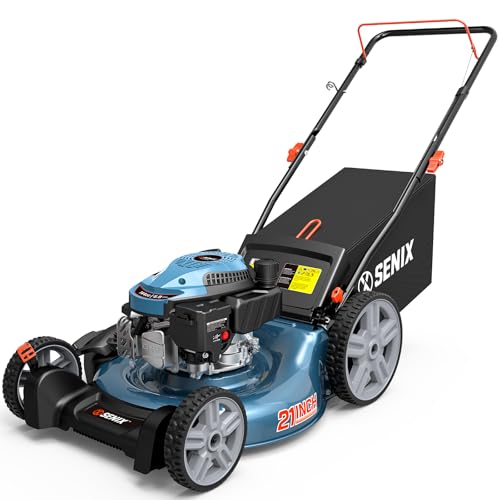
The SENIX 21" Gas Lawn Mower is a straightforward push mower designed for homeowners who want reliable performance without the hassle of electric cords or battery charging. Powered by a 144cc 4-cycle OHV engine that comes pre-filled with oil, this mower starts in seconds and delivers 3.4 HP and 5.8 ft-lb of torque. That's enough muscle to cut through thick, damp grass without bogging down. The engine runs efficiently at about 27 ounces of fuel per hour, so you can cover a good-sized lawn on a single tank.
This mower is best suited for DIY homeowners with medium to large yards who prefer gas power for its unlimited runtime and consistent cutting ability. The 3-in-1 deck lets you switch between rear bagging, side discharge, and mulching modes quickly, so you can adapt to different grass conditions and seasons. The 1.7-bushel grass catcher holds plenty of clippings, reducing how often you need to stop and empty it. The dual-lever height adjustment offers six positions from 1.25 to 3.75 inches, giving you precise control over your lawn's appearance.
Build quality is solid for the price point. The steel deck feels durable, and the 8-inch front and 11-inch rear wheels provide good maneuverability on uneven ground. The vortex tunnel design under the deck helps reduce grass buildup, which means less scraping and clogging during use. The ergonomic handle is comfortable for extended mowing sessions, though at 54 pounds, this mower is on the heavier side for a push model. You'll feel it on slopes or if you need to lift it into a truck bed.
One realistic drawback is the noise level. Like any gas mower, it's louder than electric models, so ear protection is recommended. The 2-year warranty is decent but shorter than some premium brands offer. Also, there are zero reviews yet, so long-term reliability is unproven. However, SENIX has a reasonable reputation in the power tool space, and the engine is a common, serviceable design.
Overall, the SENIX 21" Gas Lawn Mower is a good value for homeowners who want a dependable, no-fuss gas mower with versatile cutting options. It's not the lightest or quietest, but it delivers the power and adjustability needed for regular lawn maintenance. If you have a medium to large yard and prefer gas over electric, this mower is worth considering.
Engine: 144cc 4-cycle OHV, pre-filled with oil
Power: 3.4 HP, 5.8 ft-lb torque
Deck Width: 21 inches
Cutting Height: 6 positions, 1.25 to 3.75 inches
Grass Catcher Capacity: 1.7 bushels
Mowing Modes: Rear bag, side discharge, mulch
Wheels: 8-inch front, 11-inch rear
Weight: 54.2 pounds
Dimensions: 32.8 x 22.7 x 14.8 inches
Color: Blue
Warranty: 2-year limited
This mower is ideal for homeowners with medium to large lawns (up to about half an acre) who want a gas-powered machine for its unlimited runtime and strong cutting ability. It handles thick grass, uneven terrain, and varied mowing conditions thanks to the 3-in-1 deck. The height adjustment makes it suitable for different grass types and seasonal needs. Not the best choice for small yards where an electric mower would be lighter and quieter, or for users with limited strength due to its 54-pound weight.
The mower comes ready to mow out of the box. Includes: 21-inch push mower, pre-filled engine oil, mulch plug, side discharge chute, and a 1.7-bushel grass catcher bag. No additional assembly required beyond attaching the handle and catcher.

Pros
- Lightweight and easy to push, even on uneven terrain.
- No gas, oil, or spark plugs to deal with; just press a button and go.
- Battery swaps quickly if you have extra 40V batteries from other Greenworks tools.
- Quiet enough for early morning or evening mowing in tight neighborhoods.
Cons
- 16-inch cutting deck is narrow for larger lawns; expect more passes on anything over half an acre.
- Plastic deck may not hold up as well as steel over many seasons of rough use.
- Runtime of 35 minutes might require a second battery to finish a full half-acre lawn in one go.
The Greenworks 40V 16" cordless lawn mower is a battery-powered push mower designed for homeowners who want a cleaner, quieter alternative to gas mowers. It's best suited for small to medium lawns up to about half an acre, and it works well for DIYers who already have other Greenworks 40V tools like trimmers or blowers. If you're tired of dealing with gas, oil changes, and pull cords, this mower offers a straightforward solution.
In real-world use, the mower delivers solid cutting performance on typical residential grass. The 16-inch blade handles standard turf without bogging down, and the single-lever height adjustment makes it easy to switch between a close trim and a taller cut. The 4.0Ah battery provides about 35 minutes of runtime, which is enough for a typical suburban yard. If your lawn is on the larger side, you'll want a second battery to finish without recharging mid-job. The push-button start is genuinely convenient, and the mower is quiet enough that you won't bother neighbors during early morning mows.
Build quality is decent for the price point. The plastic deck keeps weight down to 37.5 pounds, which makes it easy to push and maneuver on slopes. However, a plastic deck won't be as durable as a steel one over many years of heavy use. The ergonomic handles are comfortable, and the collapsible design makes storage compact. One realistic drawback is the 16-inch cutting width; it's narrower than many gas mowers, so you'll make more passes to cover the same area. Also, the included 4.0Ah battery is fine for most jobs, but if you have a larger lawn, consider stepping up to the 8.0Ah battery for longer runtime.
Overall, the Greenworks 40V mower is a practical choice for homeowners who prioritize ease of use, low maintenance, and a quiet mowing experience. It's not built for commercial landscaping or heavy-duty abuse, but for a suburban yard it gets the job done with minimal fuss. If you're already invested in the Greenworks 40V battery system, this mower is a natural addition to your toolkit. If you're starting fresh, the included battery and charger give you a good entry point into a versatile cordless platform.
Brand: Greenworks
Model: 25322
Power Source: 40V Lithium-Ion Battery
Cutting Width: 16 inches
Cutting Height: 1.25 to 3.75 inches (5 positions)
Deck Material: Plastic
Weight: 37.5 pounds
Battery Included: 4.0Ah
Charger Included: Yes
Runtime: 35 minutes per charge
Charge Time: 2 hours
Bag Capacity: Rear bag (included)
Warranty: 3 years tool, 3 years battery

Pros
- Quick and tool-free assembly - most users have it ready in under five minutes
- Provides a great low-impact workout while mowing, ideal for small yards
- Cuts evenly and cleanly on level ground, especially when grass is kept at moderate height
- Requires minimal maintenance beyond blade cleaning and occasional lubrication
Cons
- Struggles with tall, thick, or wet grass - may need multiple passes or a pre-trim with a string trimmer
- Not effective on slopes or uneven terrain; wheels can lose traction and blades may bind on hills
- Plastic deck and wheels feel less rugged than metal alternatives, though adequate for typical residential use
The LawnMaster LMRM1801 is a manual push reel mower designed for homeowners who want a quiet, eco-friendly way to maintain a small, flat lawn. Unlike gas or electric mowers, this 18-inch model uses no fuel, batteries, or cords - just your own pushing power. It features five hardened steel blades that spin against a stationary bed knife, creating a scissor-like cut that slices grass cleanly rather than tearing it. This results in a healthier lawn with less browning at the tips.
Who is this mower for? It's best suited for DIY homeowners with small to medium-sized, level yards - think city lots, suburban front lawns, or weekend properties. It's also a solid choice for eco-conscious users who want to reduce emissions and noise. Contractors or landscapers with larger or sloped properties should look elsewhere, as this mower really shines only on flat, well-maintained grass. The 9-position height adjustment (1.1 to 2.5 inches) lets you customize the cut for different grass types and seasons.
In real-world use, the LMRM1801 delivers a clean, even cut when the grass is dry and not too tall. Reviewers note that it handles crabgrass and weeds without issue, but thick, wet, or overgrown grass can bog it down - you may need to go over the area twice or use a string trimmer first. The 18-inch cutting width is efficient for small lawns, and the 10-inch front wheels provide decent maneuverability around obstacles. The included 35-liter collection bag works well for catching clippings, or you can let them fall as mulch.
Build quality is decent for the price. The deck is plastic to keep weight down (33 pounds), and the blades are hardened steel. Assembly is tool-free and takes just a few minutes. Maintenance involves wiping the blades dry after each use and applying a light oil (like WD-40) to prevent rust. The manual also recommends greasing the gears periodically. Some users mention that the wheels are a hard plastic rather than rubber, which can be less grippy on damp grass, but overall traction is fine on dry turf.
Drawbacks? As noted, this mower is not for hills, thick grass, or large yards. It can also leave uncut strips near edges because the blades sit a few inches inside the wheels - you'll need a trimmer for borders. And while it's a good workout, it's not as effortless as a self-propelled gas mower. That said, for the right user - someone with a small, flat lawn who values quiet, clean cutting and zero emissions - the LawnMaster LMRM1801 is an excellent, affordable choice. It's easy to store, simple to maintain, and delivers a healthier lawn with every push.
Brand: LawnMaster
Model: LMRM1801
Cutting Width: 18 inches
Number of Blades: 5 hardened steel
Cutting Height Range: 1.1 - 2.5 inches (9 positions)
Power Source: Manual (push)
Deck Material: Plastic
Wheel Size: 10 inches (front)
Collection Bag Capacity: 35 liters
Weight: 33 pounds
Product Dimensions: 24.6 x 10.62 x 18.11 inches
Assembly Required: No (tool-free handle snap-on)
Best for: Homeowners with small, flat lawns (up to about 1/4 acre) who want a quiet, eco-friendly, and low-maintenance mowing solution. Ideal for those who enjoy a light workout while doing yard work.
Not recommended for: Large yards, steep slopes, thick or wet grass, or users who need a self-propelled mower. If your lawn is overgrown or has many obstacles, consider a gas or electric mower instead.
Maintenance tips: Clean blades after each use to prevent rust. Apply WD-40 or similar light oil to blades and gears. Store in a dry place. Check blade alignment if the mower becomes hard to push or stops cutting evenly.
What's included: Mower body with wheels, handle assembly, collection bag, and user manual. No tools needed for setup.


Pros
- Engine starts reliably without choke or primer, saving time and frustration.
- Adjustable cutting height with single lever is fast and intuitive.
- Solid build with a steel deck and large wheels feels durable for regular use.
- Good value compared to similar gas mowers from big brands.
Cons
- Heavy at nearly 74 pounds – pushing it uphill or over soft ground is a workout.
- Not designed for slopes over 15 degrees, so hilly lawns need another solution.
- Hand push only, no self-propelled option – may tire out users with larger yards.
If you are a homeowner looking for a dependable gas push mower that balances power, ease of use, and affordability, the BILT HARD 21 Inch Gas Lawn Mower deserves a close look. This is a straight-up manual push mower (no self-propelled drive) powered by a 201cc 4-stroke OHV engine. It is best suited for owners of flat or gently sloping lawns up to about a quarter acre, where you don't mind a bit of extra weight in exchange for robust cutting performance.
In real-world use, the engine starts up quickly thanks to the no choke, no primer system – pull the cord and it usually fires on the first or second pull. The 21-inch steel deck offers a good balance between maneuverability and cutting width. You can switch between mulching (for returning nutrients to the soil), rear bagging (for a clean lawn), or side discharge (for tall grass) quickly. The 8-position cutting height lever is easy to reach and adjusts all four wheels simultaneously, letting you change from a 1.2-inch close cut to a 3.75-inch tall cut without bending down.
Build quality is solid for the price point. The 9.5-inch rear and 8-inch front wheels with double ball bearings roll smoothly over moderate bumps, and the foam wrapped handle grip is comfortable even after an hour of mowing. However, the mower weighs around 74 pounds, so pushing it on any incline or through very thick, wet grass can become tiring. It also cannot handle slopes steeper than 15 degrees – the engine may starve for oil or lose traction. That limitation is clearly stated.
Drawbacks are mostly tied to its weight and manual push nature. If your lawn has several inclines, or if you have a large yard over half an acre, a self-propelled model would be a better investment. Also, some users have reported that the bagger attachment can fill up quickly in dense grass, requiring frequent stops. But for the typical suburban lawn, the BILT HARD gas mower offers strong performance without breaking the bank.
In summary, this mower is a smart buy for DIY homeowners who want a straightforward gas mower that starts reliably, cuts well, and offers flexible discharge options. It does a great job on flat lawns and provides excellent value. If you can handle a bit of pushing and avoid steep hills, the BILT HARD 21 Inch Gas Lawn Mower will keep your yard looking sharp season after season.
Engine: 201cc 4-cycle OHV gas, 9.0 ft-lb torque
Deck Width: 21 inches
Mowing Options: Mulch, rear bag, side discharge
Cutting Height: 1.2 inch to 3.75 inch, 8 positions, single lever adjustment
Wheels: 9.5 inch rear, 8 inch front, double ball bearings
Start Method: Recoil, no choke, no primer
Weight: 73.8 pounds
Dimensions: 62.5 x 26.3 x 41 inches
Color: Blue
Model: TMA-0561
This push mower is ideal for homeowners with flat or gently sloping lawns up to about a quarter acre. It works well for regular weekly cutting, mulching clippings to feed the lawn, or bagging for a clean finish. It is also a good choice for rental properties or small lots where a self-propelled machine is not necessary. Avoid using it on slopes over 15 degrees or in very tall, thick grass that may clog the deck.
What to look for in a self-propelled push mower
There is no single best mower for every yard. For a buyer specifically seeking self-propelled movement, begin by confirming that the product description identifies a self-propelled drive system, then compare its cutting setup and power source with the work the mower needs to do. The supplied products include both self-propelled and conventional push models, so category labels and feature descriptions matter more than a broad search phrase.
Self-propelled drive versus ordinary push operation
A self-propelled mower supplies forward drive through its wheels, while a standard push mower requires the operator to provide the forward movement. That distinction may be meaningful on a larger lawn or where pushing effort is a priority, but self-propelled does not mean the mower steers or operates without attention. The supplied product descriptions identify rear-wheel drive on the SENIX 201cc self-propelled mower and the PowerSmart 21-Inch Self Propelled Gas Lawn Mower.
The PowerSmart model lists a 170cc OHV four-stroke engine, a steel deck, and rear-wheel drive. Its product information also lists mulching, side discharge, and rear bagging, plus six cutting-height positions from 1.5 to 3.9 inches. These are specifications to compare, not proof of a particular mowing speed, traction result, or ease of handling on every property.
The SENIX 201cc model is listed as a variable-speed, self-propelled gas mower with rear-wheel drive, 11-inch rear wheels, and a 22-inch cutting deck. Its three-in-one system supports bagging, mulching, and side discharge, and the listed single-lever height adjustment has six positions from 1.25 to 4 inches. The description positions it for medium to large lawns, but that manufacturer positioning is not a guaranteed acreage figure.
Do not assume that the other products in the list share these drive features. The PowerSmart 21-Inch Gas Push Lawn Mower with 144cc is identified as a push mower, and the MZK and Greenworks cordless models are also described as push mowers. A product can have a wide deck or multiple clipping options without being self-propelled.
Cutting width, height, and access around the yard
Cutting width describes the mower’s cutting path, not its full outside dimensions. A 22-inch deck can cover a wider strip than a 16-inch deck on each pass, but that measurement alone does not establish whether the mower will pass through a narrow gate, maneuver around landscaping, or fit in a particular storage area. Check the mower’s overall dimensions separately when access and storage are tight; those dimensions are not supplied for most of these models.
The list includes cutting widths from 16 to 22 inches. Greenworks and MZK each list a 16-inch cutting width, while the SENIX 18-inch push mower lists an 18-inch blade and the 21-inch gas models list a 21-inch cutting width. The self-propelled SENIX model has the widest listed cutting deck among these examples at 22 inches, but the right width depends on the property layout as well as the number of passes a buyer hopes to make.
Height range and number of positions are separate details. For example, the PowerSmart 144cc push mower lists six positions from 1.5 to 3.9 inches, while the BILT HARD 201cc push mower lists ten positions from 1.2 to 3.75 inches. A larger number of settings does not by itself prove a better cut; the useful comparison is whether the documented range and adjustment method suit the lawn’s mowing preferences.
Adjustment mechanisms also vary. Some product descriptions specify a single-lever adjustment, while the PowerSmart self-propelled mower and SENIX 21-inch gas mower list dual-lever adjustment. Buyers who expect to change cutting height often may want to compare the stated mechanism as well as the range. The product information does not establish how easy each mechanism is to operate in practice.
Gas and cordless power involve different ownership routines
Gas models in the supplied list use four-cycle engines with stated displacements including 144cc, 170cc, and 201cc. Engine displacement identifies an engine specification; it does not independently prove cutting performance, starting reliability, or fuel consumption. Gas buyers should compare the listed engine and starting details, then follow the manufacturer’s instructions for setup, operation, and maintenance.
The product descriptions identify recoil starting and auto choke on the PowerSmart 144cc push mower and the PowerSmart self-propelled mower. BILT HARD describes its 201cc push models as having a no-choke, no-primer starting design. Those are product-listed starting features, not a guarantee that every start will be effortless or that one design will suit every owner.
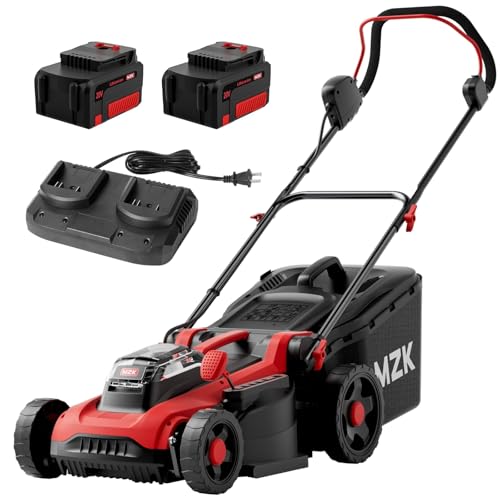
Cordless models avoid a gasoline engine but depend on their battery configuration and charging routine. The MZK 40V mower includes two 20V, 4.0Ah lithium batteries and a dual-port charger, and its description states up to 45 minutes of runtime on a full charge. That is a listed maximum, not a measured promise for every lawn; grass conditions, terrain, and operation can affect runtime, as the product information notes.
The Greenworks 40V 16-inch mower listing includes a 4.0Ah battery and charger and describes up to 35 minutes of continuous runtime. It also lists compatibility with more than 75 Greenworks 40V tools. Treat that as the listed platform relationship rather than assuming batteries or chargers from another brand, voltage class, or product line will work. Battery voltage alone does not establish capacity or runtime.
Battery inclusion is important when comparing packages. The MZK listing specifies two batteries and a charger, and the Greenworks listing specifies a battery and charger. The gas mower descriptions do not establish that batteries or chargers are applicable, and accessory contents should not be inferred from a mower’s supported feature. Check the exact package listing before ordering if a particular bag, chute, battery, or charger is essential.
Choose clipping management for the way you mow
Mulching, bagging, and side discharge describe different clipping-management options. A mower listed as supporting a mode gives the buyer that option, but the feature description does not establish measured clipping quality, collection efficiency, or discharge distance. Consider how clippings are normally handled on the property and check whether the required components are included in the specific package.
The PowerSmart self-propelled mower lists all three modes: mulching, side discharge, and rear bagging. The SENIX 201cc self-propelled model likewise lists a three-in-one cutting system. The SENIX 21-inch gas push mower includes a 1.7-bushel grass catcher, mulch plug, and side-discharge chute according to its product information, which makes its package contents more explicit than a listing that only names compatible modes.
Other products have narrower listed configurations. The PowerSmart 144cc gas push mower lists mulching and side discharge, while the SENIX 18-inch gas push mower lists side discharge. The Greenworks mower lists mulching and rear bagging, and the MZK mower lists mulching or rear bagging with a removable 40-liter grass bag. Check these differences against the way clippings are managed at home rather than assuming every mower offers the same setup.
A bag’s presence and stated capacity are useful ownership details because collected clippings need to be emptied and handled. The SENIX 21-inch model lists a 1.7-bushel catcher, and the MZK description lists a 40-liter bag. Those capacities use different units and should not be treated as directly comparable without a reliable conversion and complete package context. The available data does not specify bag capacity for every mower.
Handling, terrain, and storage claims need context
Wheel size and drive configuration can help describe a mower, but they do not prove how it will handle a particular slope or uneven patch. The self-propelled SENIX lists 11-inch rear wheels and rear-wheel drive, while the PowerSmart self-propelled model also identifies rear-wheel drive. Buyers with varied terrain should review the manufacturer’s operating guidance and avoid inferring slope capability from wheel size alone.
The PowerSmart 144cc push mower lists 10-inch rear wheels and 7-inch front wheels, and the SENIX 21-inch push mower lists 8-inch front and 11-inch rear wheels. Such details may help distinguish wheel configurations, but the supplied data does not provide comparative traction or measured maneuverability results. Yard obstacles, access width, and storage constraints should be assessed separately from these wheel measurements.
Storage features can matter just as much as cutting width for a walk-behind mower. The PowerSmart 144cc gas mower describes a foldable handle for storage, and the PowerSmart self-propelled mower also lists a foldable handle. Neither description provides folded dimensions, so buyers should verify the actual storage footprint with the manufacturer or seller rather than assume the folded mower will fit a specific shelf, shed, or vehicle.
The Greenworks description calls its 16-inch cordless mower lightweight and gives a listed weight of 35 pounds in the product information. That specification may be relevant to a buyer comparing storage and handling needs, but weight alone cannot establish how easy a mower will feel to maneuver. The other supplied mower descriptions do not consistently provide weight, so avoid treating missing information as evidence that a model is heavier or lighter.
Sorting the listed models by buyer priority
For a buyer whose defining requirement is self-propelled movement, the clearest matches in the product information are the PowerSmart 21-Inch Self Propelled Gas Lawn Mower and the SENIX 201cc 22-inch variable-speed self-propelled gas mower. Both list rear-wheel drive, while the SENIX also identifies variable speed and a 22-inch deck. The supplied specifications do not establish that either model is the right choice for a particular lawn without knowing the property’s access, terrain, and mowing routine.
Buyers who prioritize cordless operation can consider the MZK and Greenworks models, but both are described as push mowers rather than self-propelled models. MZK lists a brushless motor, two batteries, a charger, and up to 45 minutes of runtime; Greenworks lists its 40V platform, an included battery and charger, and up to 35 minutes. These are different product configurations and listing claims, not comparable independent runtime measurements.
Gas push options may suit buyers who do not want to plan mowing around a battery charge, but gas operation involves an engine and its manufacturer-directed care. The supplied models vary in engine displacement, cutting width, height range, and clipping modes. Displacement alone should not determine a purchase, and the product data does not provide enough comparable evidence to rank engine performance across brands.
A reel mower is a different category again. The LawnMaster LMRM1801 is a manual push reel mower with an 18-inch cutting width, five blades, nine height positions from 1.1 to 2.5 inches, and an included collection bag. It has no gas engine or battery system, but it is not a self-propelled powered mower. Buyers should choose it only if its manual reel design and listed cutting-height range meet their needs.
The BILT HARD 21-inch gas push models list 201cc engines and three-in-one clipping options, with different height-adjustment details: one lists eight positions and the other ten. Neither supplied description identifies these models as self-propelled. This is a useful reminder to verify the drive system directly instead of interpreting a larger engine or broader feature list as evidence of self-propulsion.
Make the final choice from verified specifications
Before selecting a mower, confirm the exact model name and whether its drive is self-propelled or push-only. Then compare cutting width, height range, power source, and clipping options with the property’s real constraints. If access through a gate or storage in a specific location is essential, obtain overall dimensions because deck width does not answer either fit question.
Next, check what the package includes. A mower may support bagging or mulching without the listing clearly confirming every needed accessory, and a battery platform does not mean a battery is included. The MZK and Greenworks descriptions explicitly list battery and charger contents, while the SENIX 21-inch gas model specifies its catcher, mulch plug, and discharge chute. Package details can differ by model or retailer offer.
Maintenance also differs by power source and model. Gas mowers have engines, while cordless models rely on batteries and chargers; the supplied information does not provide a complete maintenance schedule for each. Follow the relevant manufacturer documentation for setup, maintenance, storage, and safe handling. For component context, our mower blade setup guide covers a related cutting-system topic, but it does not establish blade compatibility with any mower listed here.
Ratings and review feedback should be read with care alongside specifications. The Greenworks listing has substantial user feedback compared with several listings that show no review count, but user ratings do not verify technical claims or establish how a mower will perform on an individual property. Compare the stated features first, then consult current product details and warranty information before purchase, since those terms can vary and are not fully established for every model here.
For the specific question of what is best, prioritize confirmed self-propelled drive if reducing the need to push is central, then narrow the choice by cutting width, height adjustment, power source, and clipping workflow. The two clearly identified self-propelled gas options offer different listed deck widths and engine specifications, while the cordless products in this selection are push models. Verify package contents, dimensions, and current manufacturer guidance before deciding.





Write Your Review
No reviews yet. Be the first to share your experience!