


Maintaining outdoor power equipment requires using the correct fluids to keep engines cool and rotating assemblies protected. When working in the garage, you might spot an extra jug of cutting lubricant on the shelf and wonder, can i use chainsaw oil in a lawn mower to top off a low reservoir? Putting chainsaw fluids into a four-cycle lawn mower is an easy mistake to consider when you need a quick fix before cutting grass. However, chainsaws and lawn mowers rely on fundamentally different lubrication systems that demand specialized chemical formulations.
Most chainsaws run either high-tack bar lubricants for external cutting chains or two-cycle oils designed to burn during combustion in two-stroke chainsaw engines. In contrast, standard lawn mowers utilize four-stroke crankcase systems that circulate detergent-rich motor oil continuously across internal bearings, cylinder walls, and valves. Pouring specialized chainsaw cutting fluid into a lawn mower engine can lead to severe operational issues, catastrophic overheating, or mechanical failure. Understanding the mechanical chemistry of small engine lubricants will save your mower from costly damage and keep your yard equipment running smoothly.

Pros
- Specifically formulated for air-cooled engines that run hotter than car engines.
- No need to mix or add extra additives; just pour and go.
- Reliable protection for both new and older mowers.
- 20-ounce size perfect for single changes on most walk-behind mowers.
- Lawn-Boy brand is widely recognized and trusted for lawn equipment.
Cons
- Only 20 ounces - may not be enough for larger engines that require more than 20 oz capacity.
- 10W-30 viscosity is not ideal for very cold climates; check your manual for recommended weight.
- Not suitable for 2-cycle engines - designed exclusively for 4-cycle applications.
The Lawn-Boy 89885 20-Ounce Premium Lawn Mower 4-Cycle Engine Oil is a purpose-built lubricant for air-cooled engines found in walk-behind mowers, riders, and other outdoor power equipment. Unlike standard automotive oils, this 10W-30 blend is formulated to withstand the sustained high temperatures that these small engines generate during use, making it a solid choice for homeowners and DIYers who want to keep their equipment running reliably.
In real-world use, this oil delivers exactly what you'd expect from a reputable brand. It circulates quickly on cold starts, reduces friction, and helps dissipate heat from critical parts like the cylinder and crankcase. The additive package cleans carbon deposits and varnish, which can build up over time, and the seal-conditioning agents help maintain compression. The result is smoother operation, less smoke, and longer intervals between overhauls.
Build quality is consistent with Lawn-Boy's reputation. The oil is bottled in a clear 20-ounce container with a convenient pour spout, making it easy to top off or perform a full change. No extra additives are needed, so you can simply drain the old oil, pour in the new, and rest assured your engine is protected. However, keep in mind that 20 ounces may not be enough for larger engines (some riders hold over 40 oz), and 10W-30 is not the best choice for very cold climates where a 5W-30 might be recommended by the manufacturer.
Overall, the Lawn-Boy 89885 is a dependable, no-fuss option for anyone who maintains a 4-cycle mower or similar small engine. It performs especially well in hot weather and heavy cutting conditions, offering peace of mind that your equipment isn't overheating or wearing prematurely. For the DIYer or homeowner looking for a dedicated small-engine oil that matches the specific needs of their mower, this is a smart buy.
Viscosity: 10W-30
Brand: Lawn-Boy
Liquid Volume: 20 Fluid Ounces
Package Information: Bottle
Vehicle Service Type: Lawn Mower

Pros
- Effective wear protection for extended engine life.
- Works in both push mowers and riding mowers.
- Prevents rust during storage with anti-corrosion additives.
Cons
- Only available in 1 quart size, so you may need multiple bottles for larger mowers.
- Not suitable for two-stroke engines.
- No pour spout included, so careful pouring is needed.
Lucas Oil 11315 SAE 30 Lawn Mower Motor Oil is a dedicated four-stroke engine oil designed for push and riding mowers. It is not a power tool in the traditional sense but an essential maintenance product for the gas engines that power many lawn tractors, walk-behind mowers, and other outdoor power equipment. For anyone who takes their lawn care seriously, using a quality oil like this is one of the simplest ways to keep equipment running reliably year after year.
This oil is best suited for homeowners and DIY landscapers who own push mowers or riding mowers with four-stroke engines. It delivers proven protection against engine wear and overheating, which are two of the biggest enemies of small engines during the mowing season. The formulation also includes rust preventatives that help protect internal components during storage, a major plus if you live in a region with long winters. Users report that engines start easier and run smoother after switching to this Lucas Oil product.
The SAE 30 viscosity is a common recommendation for lawn mower engines, providing the right thickness for lubrication in warm weather. While the quart size is convenient for a single oil change on most push mowers, you may need a few bottles for larger riding mowers with bigger crankcase capacities. The bottle lacks a pour spout, so be careful to avoid spills when adding oil to your mower. This is a minor inconvenience that can be solved with a funnel.
Lucas Oil is a well-known brand in the lubricants world, and this oil lives up to its reputation for quality. For anyone looking for a dependable, off-the-shelf oil that does exactly what it promises, this is a strong choice. It will help extend the life of your mower and keep it performing well all season long.
Size: 1 Quart (1 Pack)
Dimensions: 4.35 x 2.42 x 9 inches
Product Group: Lawn & Patio
Binding: Automotive
Pros
- Specifically designed for lawn mower engines, offering targeted protection against wear and heat
- Helps prevent rust and corrosion during off-season storage, a real plus for seasonal gear
- Promotes easier starting and smoother running, which means less hassle on mowing day
Cons
- Only available as a 1-quart bottle, which may not be enough for larger riding mowers that require a full oil change
- Not suitable for 2-stroke engines, so make sure your equipment is a 4-stroke before buying
- Premium price compared to generic oils, but the added protection may justify the cost for serious DIYers
The Lucas Oil 11313 SAE 10W-30 Lawn Mower Motor Oil is a four-stroke engine oil designed to keep push and riding mowers running reliably through the season. It's not a power tool itself, but it's an essential consumable for anyone who maintains small engines in their workshop or shed. If you own a lawn mower, tiller, or generator with a 4-stroke engine, this oil can help reduce wear and extend equipment life.
This oil is best suited for DIY homeowners and small engine enthusiasts who want a dedicated product rather than using leftover car oil. Lucas Oil specifically targets the challenges of mower operation: heat buildup from dense grass, frequent stop-start cycles, and long storage periods. The formulation includes additives that minimize engine wear and prevent overheating, which is a common issue when mowing in summer heat.
In real-world use, users can expect easier starting and a noticeably smoother idle after an oil change. The anti-rust properties are a standout advantage for those who store their mower for months at a time. Instead of fighting corroded internal components in spring, you'll get quick, clean starts. The oil also helps the engine maintain consistent operating temperature, reducing the risk of vapor lock or premature breakdown.
Build quality is what you'd expect from Lucas Oil: a reputable brand known for lubricants and additives. The 1-quart bottle is practical for small engines, though owners of larger riding mowers may need two bottles for a full change. The oil is not designed for 2-stroke engines, so be sure to confirm your equipment's requirements before use.
One realistic drawback is the price. It costs more than generic 10W-30, but the targeted protection and storage benefits can be worth the extra expense for those who value equipment longevity. If you're a weekend mower who just wants quick, reliable operation and engine protection, this Lucas Oil product is a solid investment. It's not flashy, but it does the job well.
Size: 1 Pack (1 Quart)
Type: SAE 10W-30
Application: Four-stroke small engines (push mowers, riding mowers, tillers, generators)
Dimensions: 4.35 x 2.42 x 9 inches
Product Group: Lawn and Patio
Binding: Automotive
This oil is ideal for routine oil changes on push mowers and small riding mowers used on residential properties. It's also suitable for other 4-stroke small engines like pressure washers, log splitters, and portable generators. If you store your equipment in an unheated shed or garage for the winter, the anti-rust protection is especially valuable. For best results, follow your owner's manual viscosity recommendation and change at the start of each season.
Pros
- Reduces engine wear and extends equipment life significantly.
- Protects against overheating in high heat conditions.
- Prevents rust during storage, ensuring easy spring startup.
- Compatible with most push and riding mowers with four-stroke engines.
Cons
- Only sold in single quart containers; may be less economical than gallon jugs.
- Not suitable for two-stroke engines or mixed-fuel equipment.
- Premium price compared to generic alternatives.
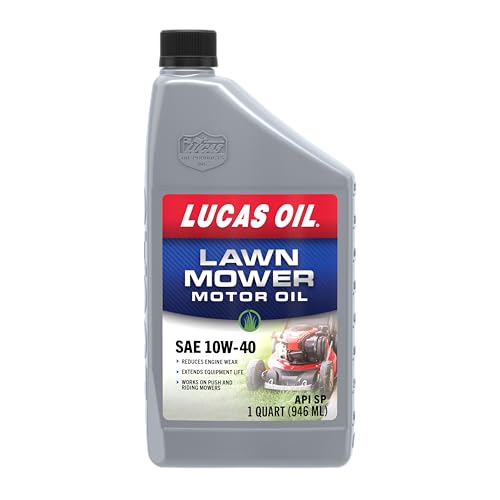
Lucas Oil 11314 SAE 10W-40 Lawn Mower Motor Oil is a dedicated four-stroke engine oil designed for push mowers and riding mowers. It's formulated to handle the high heat and heavy loads that small engines face during regular lawn care. If you own a walk-behind mower or a garden tractor with a 4-stroke engine, this oil is engineered to keep it running reliably season after season.
This product is best suited for homeowners and DIY enthusiasts who perform their own maintenance. Lucas Oil focuses on reducing engine wear, which is critical for mowers that sit idle for months and then get worked hard in summer. The 10W-40 viscosity provides excellent protection across a wide temperature range, helping the engine start easier and run smoother. Users will appreciate the anti-overheating properties, especially when cutting thick grass or using a bagger attachment.
Build quality is solid with Lucas Oil's reputation for additives that minimize sludge and varnish buildup. The quart bottle is easy to pour and store, though some might wish for a larger container for multiple oil changes. A key drawback is price per quart; it costs more than generic oils, but the enhanced protection against rust during storage and reduced wear may justify the premium for those who want to extend their mower's life.
Overall, Lucas Oil 10W-40 is a reliable choice if you're maintaining a single mower and value long-term engine health. It delivers on its promises of easier starting, smoother operation, and rust prevention. For the DIY user who wants one less thing to worry about during mowing season, this oil is a solid investment in your equipment.
Size: 1 Quart (1 Pack)
Dimensions: 4.35 x 2.42 x 9 inches
Product Group: Lawn and Patio
Binding: Automotive
Viscosity: SAE 10W-40
Engine Type: Four-Stroke

Pros
- Proven anti-wear protection for extended engine life, backed by 5+ years of positive reviews from small engine users.
- All-weather formula delivers reliable starts in both hot summer mowing and cold winter snow blowing conditions.
- Affordable price point compared to premium full synthetics, while still offering synthetic blend benefits.
Cons
- Synthetic blend, not full synthetic - users seeking maximum protection in extreme conditions may prefer a full synthetic oil.
- 32 oz bottle may not be enough for larger engines (e.g., riding mowers) that require a full quart or more per change.
STP Premium Synthetic Blend 10W-30 Small Engine Oil is a four-cycle oil formulated specifically for the kind of power equipment you rely on around the workshop, on the jobsite, or in your yard. Whether you are maintaining a lawnmower, generator, tractor, snow blower, or pressure washer, this 32 ounce bottle delivers a synthetic blend designed to handle the demands of small engines that often run under heavy loads or sit idle for months at a time.
This oil is best suited for DIYers, homeowners, and light commercial users who need a dependable, affordable lubricant for their outdoor power equipment. The 10W-30 viscosity makes it a versatile choice for a wide range of temperatures, so you can use it year round. Anti-wear technology helps protect critical engine components, while detergents keep carbon deposits in check. The corrosion inhibitor is a nice touch for anyone who stores equipment seasonally - it helps prevent rust and pitting inside the engine during long periods of disuse.
In real-world use, this oil performs exactly as you would expect. It promotes easier starts, even after a cold winter, and maintains good lubrication under continuous high-speed operation in a generator or mower. The viscosity index improver helps reduce oil consumption, so you do not have to top off as frequently between changes. Build quality is consistent with STP's reputation - the oil meets industry standards and comes in a durable, easy-pour container.
There are a few realistic drawbacks. Some users expecting a full synthetic will be disappointed that this is a synthetic blend. For extreme conditions, such as commercial landscaping or high-hour generator use, a full synthetic might offer better protection. Also, the 32 ounce bottle is only enough for one oil change in many 4-cycle engines; if you have multiple engines or a larger unit like a riding mower, you may need two bottles. But for the price and performance, this is a solid, no-fuss oil that gets the job done.
Overall, if you maintain a single lawnmower or a small fleet of outdoor power equipment and want reliable protection without breaking the bank, STP Premium Synthetic Blend 10W-30 is a smart choice. It balances performance and value, and thousands of satisfied users back that up. Just make sure to check your owner's manual for the correct viscosity and change interval, and you will keep your small engines running smooth season after season.
Understanding Lubricant Chemistry and Small Engine Compatibility
Under no circumstances should you put chainsaw bar oil into a lawn mower crankcase, nor should you substitute chainsaw two-stroke pre-mix oil for four-stroke motor oil. Chainsaw lubricants are engineered for entirely different thermal environments, mechanical duties, and disposal pathways than lawn mower engine oils. Using the wrong fluid compromises critical internal clearances, induces severe carbon buildup, and risks locking the piston. To understand why these fluids cannot be interchanged, one must examine how small engine components interact with their designated lubricants under operating temperatures.
Distinguishing Between Bar Oil, Two-Cycle Mix, and Four-Cycle Engine Oil
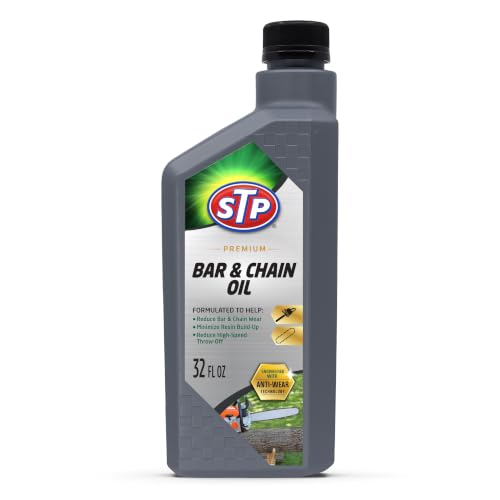
Outdoor power equipment utilizes three primary lubricant categories, each serving an exclusive mechanical function. Chainsaw bar and chain oil, such as STP Premium Chainsaw Bar Oil, is an external lubricant formulated with special tackifier additives to cling to high-speed guide bars and cutting chains. Two-stroke chainsaw oil is an ashless or low-ash fluid designed to dissolve directly into gasoline, lubricate moving crankshaft bearings as vapor, and burn off cleanly in the combustion chamber. Four-stroke lawn mower oil, represented by formulas like Lawn-Boy 89885 20-Ounce Premium Lawn Mower 4-Cycle or Lucas Oil 11315 SAE 30 Lawn Mower Motor Oil, remains sealed in the crankcase to cool, clean, and lubricate moving parts continuously.
The fundamental operational difference lies in the life cycle of the lubricant during tool operation. Chainsaw bar oil is a total-loss lubricant that pumps across the guide bar rails and flings off into wood chips and sawdust. Engine oil in a four-cycle lawn mower circulates repeatedly through the crankcase for fifty operating hours or more, enduring intense cylinder heat and combustion byproducts. Because four-stroke motor oil never exits the engine during normal operation, it requires high concentrations of detergents and dispersants to keep internal components free of sludge. Bar oils and two-stroke oils lack these robust detergent packages because they are never formulated to circulate in a sealed, high-heat reservoir.
Mechanical Consequences of Putting Chainsaw Bar Oil in a Lawn Mower
Pouring chainsaw bar oil into a lawn mower crankcase introduces an aggressive chemical compound known as a tackifier into sensitive engine passages. Manufacturers add tackifiers to products like STP Premium Chainsaw Bar Oil specifically so the liquid resists centrifugal throw-off at chainsaw chain speeds exceeding forty miles per hour. Inside a hot lawn mower crankcase, this sticky polymer causes the oil to adhere excessively to cylinder walls and valve stems instead of flowing freely. The tacky fluid resists normal splashing from the dipper or oil pump, creating severe oil starvation at critical friction points like the connecting rod journal.
Furthermore, chainsaw bar oil lacks the detergent and anti-foaming chemistries mandatory for internal combustion crankcases. When a lawn mower operates, the rotating crankshaft splashes vigorously through the oil reservoir, whipping non-detergent bar oil into a thick, bubbly foam. This aerated froth cannot maintain hydrodynamic boundary lubrication, allowing metal-to-metal contact between the piston skirt and the aluminum cylinder wall. At the same time, the zinc dialkyldithiophosphate (ZDDP) and base oils in bar oil will rapidly bake into heavy, sticky varnish on the piston rings. Sticking rings lead to immediate loss of compression, intense exhaust smoke, and catastrophic cylinder wall scoring.
Why Chainsaw Two-Stroke Pre-Mix Oil Fails in Four-Cycle Engines
Equipment owners occasionally confuse chainsaw two-stroke pre-mix oil with four-cycle motor oil because both containers carry engine lubrication labels. Two-stroke engine oil is engineered to dissolve instantly in unleaded gasoline at ratios between 40:1 and 50:1, providing momentary boundary protection before combusting. When poured straight into a four-cycle lawn mower crankcase, this lightweight oil lacks the shear stability and film strength required to support continuous hydrodynamic loads. The mechanical pressure generated between the connecting rod journal and the crankshaft quickly squeezes the thin fluid out of the bearing clearance, inducing rapid galling.
The chemical additives in two-stroke oil are also fundamentally mismatched with four-cycle operational demands. Two-cycle formulas rely on ashless or low-ash detergents that vaporize during combustion to avoid fouling the spark plug or exhaust port. In a four-stroke crankcase, these volatile additives break down rapidly under sustained crankcase temperatures, providing almost no protection against acidic combustion blow-by gases. Products formulated specifically for lawn mowers, such as STP Premium Small Engine 4 Cycle Oil Formula, feature advanced antioxidants and corrosion inhibitors to neutralize acids during operation and seasonal storage. Without those stabilizing inhibitors, two-stroke oil will oxidize rapidly, thin out, and leave your mower vulnerable to severe corrosion.
Accidental Contamination: What to Do If Chainsaw Oil Enters Your Mower
If you accidentally poured chainsaw bar oil or two-stroke oil into your lawn mower crankcase, do not pull the recoil cord or engage the electric starter. Leaving the engine unstarted keeps the incorrect fluid confined to the bottom of the oil sump, preventing it from circulating through internal oil galleries and bearing journals. Place an oil drain pan beneath the mower, remove the drain plug or tilt the mower toward the oil fill tube according to manufacturer instructions, and allow the fluid to drain completely. Disconnect the spark plug boot beforehand as an essential safety precaution to eliminate any risk of accidental ignition while servicing the mower.
Once the contaminated fluid drains, perform an oil flush using a conventional four-cycle engine oil like Lucas Oil 11313 SAE 10W-30 Lawn Mower Motor Oil or Lawn-Boy 89885 20-Ounce Premium Lawn Mower 4-Cycle. Fill the crankcase to the proper fill level, reconnect the spark plug boot, and start the engine, allowing it to idle smoothly without blade engagement for approximately three to five minutes. This short idle cycle circulates the fresh detergent-rich oil through internal galleys, dissolving residual tackifiers or thin two-stroke residues. Shut off the engine, let it cool slightly, and drain the flushing oil while it remains warm to carry out any loosened contaminants.
If the mower was mistakenly run under cutting load with chainsaw bar oil in the crankcase, you must inspect the engine carefully for thermal damage. High operating temperatures combined with foaming bar oil often cause rapid overheating, which manifests as dense blue or white exhaust smoke and an acrid burning odor. Pull the spark plug and examine the electrode for heavy, sticky black carbon fouling or oil wetness. If the engine stalled abruptly or demonstrated sudden power loss while cutting, let it cool down entirely and check for mechanical resistance by turning the blade by hand with the spark plug wire disconnected.
Selecting the Correct Oil Viscosity and Rating for Lawn Mower Engines
Small air-cooled four-stroke engines in push mowers and lawn tractors operate under harsher thermal conditions than water-cooled automotive engines. Because lawn mower engines rely entirely on ambient airflow passing over cylinder cooling fins, internal oil temperatures can easily exceed 250 degrees Fahrenheit during summer heat. To handle these demanding operating environments, manufacturers formulate dedicated small engine oils with robust thermal breakdown inhibitors and specialized viscosity profiles. Monograde oils such as Lucas Oil 11315 SAE 30 Lawn Mower Motor Oil have historically served as the benchmark for warm-weather mowing because they resist thermal thinning under steady high-load operation.
Multi-grade synthetic blends have become increasingly popular for modern small engines, providing reliable lubrication across broader ambient temperature fluctuations. Formulations such as Lucas Oil 11313 SAE 10W-30 Lawn Mower Motor Oil and STP Premium Small Engine 4 Cycle Oil Formula incorporate viscosity index improvers that facilitate easier recoil starting in cool spring weather while maintaining film strength in peak summer heat. For commercial landscaping equipment, heavy-duty zero-turn mowers, or large riding tractors, a heavier multi-grade option like Lucas Oil 11314 SAE 10W-40 Lawn Mower Motor Oil offers enhanced high-temperature boundary protection under continuous cutting hours. Always check your engine operator manual to confirm whether the manufacturer recommends standard SAE 30 or multi-viscosity 10W-30 for your climate.
Beyond viscosity, verifying the American Petroleum Institute (API) service classification on the oil container guarantees essential chemical protection. Quality small-engine formulas include specialized detergent packages to sweep away carbon deposits, anti-foaming agents to stabilize oil under rapid crankshaft agitation, and corrosion inhibitors for seasonal storage protection. STP Premium Small Engine 4 Cycle Oil Formula, for instance, blends active detergents that control combustion carbon while adding corrosion inhibitors that shield internal bearings against moisture condensation during winter hibernation. Regular motor oils designed for passenger cars often reduce anti-wear additives like zinc and phosphorus to protect catalytic converters, which makes dedicated small-engine oil formulations preferable for air-cooled mower blocks.
Can You Use Lawn Mower Motor Oil in a Chainsaw?
While putting chainsaw oil into a lawn mower crankcase leads to disaster, equipment operators often ask whether the reverse substitution is acceptable during an emergency. In a pinch, clean four-cycle lawn mower motor oil, such as SAE 30 or 10W-30, can serve as a temporary substitute for chainsaw bar and chain oil in the cutting bar reservoir. Motor oil provides acceptable friction reduction between the guide bar rails and saw chain drive links, allowing you to complete a brief cutting job. However, because standard motor oil lacks the tackifiers found in STP Premium Chainsaw Bar Oil, it flings off the chain rapidly at high rotational speeds.
Conversely, you must never pour four-cycle lawn mower motor oil into the fuel tank of a two-stroke gasoline chainsaw. Four-stroke motor oil contains metallic detergent additives and heavy base stocks that do not burn cleanly when mixed with gasoline. Pouring standard motor oil into your chainsaw fuel mix results in heavy spark plug fouling, rapid exhaust port carbon blockage, and severe piston ring sticking. Over time, heavy carbon deposits in the combustion chamber can lead to hot spots, pre-ignition, and complete engine seizure. When fueling a two-stroke saw, always use a dedicated two-cycle engine oil mixed precisely at the manufacturer-specified fuel-to-oil ratio.
Storage, Fluid Organization, and Equipment Maintenance Routines
Preventing accidental fluid cross-contamination begins with proper workshop organization and unambiguous container labeling in your storage shed or garage. Keeping chainsaw bar oil, two-stroke mix oil, and four-cycle engine oil on separate shelves helps prevent grabbing the wrong jug during a rushed yard maintenance session. Clearly marking your mixed-fuel cans with brightly colored tags or dedicated fuel stickers ensures that straight gasoline never enters a two-stroke chainsaw, and two-stroke premix is not mistaken for pure gas. If you prefer to bypass engine oil checks and fuel mixing entirely, transitioning to modern cordless lawn mower options provides an electric alternative that eliminates crankcase oil upkeep.
Routine maintenance schedules also include monitoring fluid degradation caused by seasonal storage and atmospheric moisture. Four-cycle lawn mower oils should typically be drained and replaced once every fifty operating hours or at the start of each spring cutting season, whichever comes first. During winter downtime, temperature changes cause moisture to condense inside the crankcase, which mixes with combustion blow-by acids and degrades the oil’s protective qualities. Using small-engine formulas like Lucas Oil 11315 or STP Premium 4 Cycle Small Engine Oil provides built-in rust and corrosion protection during prolonged seasonal layups. Inspecting your dipstick before every mowing session ensures the fluid level remains between the hash marks and confirms that the oil is clean, clear, and ready for work.
Key Guidelines for Small Engine Lubricant Safety
Selecting the correct lubricant for outdoor power equipment is a straightforward practice once you respect the distinct engineering boundaries of each machine. Always preserve chainsaw bar oil strictly for the external guide bar and cutting chain, where its high-tack formulation can minimize metal-to-metal wear against wood fibers. Reserve high-grade four-cycle small engine oils like Lucas Oil SAE 30, Lucas Oil 10W-30, or STP Synthetic Blend for the sealed crankcases of push mowers and lawn tractors. Avoid relying on emergency substitutions whenever possible, because dedicated lubricants are inexpensive compared to the substantial cost of rebuilding or replacing a seized small engine. Adhering to manufacturer guidelines protects your investment and ensures dependable performance every time you step out into the yard.





Write Your Review
No reviews yet. Be the first to share your experience!