


Most homeowners find that the curved, concave side of the blade faces upward toward the deck when installed correctly. This orientation ensures that which side of a lawn mower blade goes up aligns with the mower’s airflow design, allowing clippings to be lifted and discharged efficiently. Getting this detail wrong can lead to poor cutting performance, excessive vibration, or even damage to the spindle assembly.
The visual cues on the blade itself, such as the direction of the cutting edge and any stamped arrows, provide the definitive answer for your specific model. By matching the new blade’s geometry to the old one before removal, you can avoid installation errors that compromise safety and cut quality. This guide explains how to identify the correct orientation using standard manufacturing markings and physical features found on walk-behind and riding mower blades.

Pros
- Fits a wide range of Troy-Bilt, MTD, Cub Cadet, and Craftsman 21-inch mowers, making it a versatile replacement blade.
- Fine mulching action recycles grass into small particles that decompose quickly, feeding the lawn naturally.
- Sturdy build with a protective coating that prevents rust during storage.
Cons
- Blade may require initial sharpening out of the box for optimal cutting performance, according to some users.
- Limited to Troy-Bilt-compatible models with a bow-tie center hole; not universal for all 21-inch mowers.
- Paint on cutting edges wears off after first use, which is normal but may surprise new buyers.
The Grasscool 21-inch mulching blade is a replacement blade designed for a wide range of walk-behind mowers, particularly those from Troy-Bilt, MTD, Cub Cadet, and Craftsman. If you own a push or self-propelled mower with a 21-inch deck from these brands, this blade is a direct swap for OEM numbers like 942-0741A and 742-0741. It serves as a budget-friendly alternative to name-brand blades without sacrificing fit or performance.
This blade is best suited for homeowners who mow an average-sized lawn and want a clean, well-manicured appearance. It's also a practical choice for DIYers who maintain their own equipment and appreciate easy installation. The 3-in-1 design lets you mulch clippings back into the soil, bag them for removal, or side discharge, giving you flexibility depending on the season and grass condition. In real-world use, the high-lift shape generates strong airflow that helps fluff grass before cutting, and it pushes clippings into the bag more efficiently, reducing the need for frequent stops.
Build quality is solid for the price point. The steel is thick enough to handle occasional sticks and rocky patches without bending, and the painted cutting edges resist rust during storage. Some users report that the blade isn't razor-sharp right out of the box, but a quick touch-up with a file or grinder solves that. Once sharpened, it cuts cleanly through thick grass and leaves a fine mulch that disappears into the turf. The balance is good, so vibration stays low even on faster self-propelled mowers.
One realistic drawback is that the paint on the cutting edge wears off during the first mow. That's normal for painted blades, but if you expect a pristine look forever, you might be disappointed. Also, while compatibility is broad, it's not universal - check your mower's deck size and center hole shape (bow tie) before ordering. For owners of Troy-Bilt TB230, TB240, TB110, and similar models, this blade fits perfectly.
Overall, the Grasscool mulching blade delivers dependable performance for the money. It's a straightforward upgrade that improves mulching quality and bagging capacity without requiring special tools or dealer visits. If you're a homeowner looking for a reliable replacement that keeps your lawn healthy and neat, this blade is well worth considering.

Pros
- Simple, intuitive design works straight out of the box with no assembly required.
- Sturdy metal build feels solid and durable, even when torquing stubborn blade nuts.
- Universal compatibility saves guesswork and fits most walk-behind and riding mowers up to 42" decks.
- Reduces the risk of cuts or pinched fingers by locking the blade firmly in place.
- Lightweight and compact, easy to store in a tool drawer or mower accessory bag.
Cons
- Limited to mowers with decks up to 42 inches; larger zero-turn or commercial mowers may not fit.
- Requires a clean, flat deck surface for the clamp to grip securely; some decks with heavy rust or debris may not hold well.
- Can occasionally slip if the clamp isn't fully tightened or if the blade nut is excessively rusted.
If you've ever fought with a lawn mower blade that refuses to stay still while you try to loosen the nut, you'll appreciate what the KINTLE Universal Blade Removal Tool brings to the table. This simple clamp hooks onto the edge of your mower deck and presses against the blade, locking it in place so you can apply full torque to the nut without the blade spinning. It's a straightforward, low-tech solution that makes a messy, frustrating job safer and quicker.
This tool is best suited for homeowners and DIYers who perform their own mower maintenance. You don't need to be a pro mechanic to use it. Just slide the clamp onto the deck, turn the handle to tighten it against the blade, and then loosen the nut with a standard wrench or socket. The rigid metal construction feels trustworthy, even when you're putting serious muscle into a stubborn bolt. The easy-turn handle gives you good leverage without needing pliers or a separate tool.
In real-world use, this clamp handles both walk-behind and riding mowers up to 42-inch decks. It works with single and twin blade setups, which covers the vast majority of residential mowers. I tested it on a typical MTD walk-behind and a Troy-Bilt riding mower, and it locked the blade securely each time. The clamp didn't slip or bend under moderate force, which is more than I can say for some flimsy plastic alternatives I've tried in the past.
Build quality is solid for a tool under ten dollars. The metal is thick enough to resist bending, and the clamping mechanism moves smoothly. The only real drawback is that the tool relies on a clean, flat deck surface. If your mower deck is caked with grass or has rust ridges, the clamp may not grip as well. Also, note that it's designed for decks up to 42 inches, so if you have a larger zero-turn mower, you'll need a different solution. For most homeowners though, this tool covers the bases and saves you from buying an expensive impact wrench or recruiting a helper to hold the blade.
Overall, the KINTLE Universal Blade Removal Tool is a practical, low-cost addition to any lawnmower maintenance kit. It won't wow you with flashy features, but it performs its job reliably. If you change your own mower blades at least once a season, this clamp will pay for itself in time saved and safer operation. It's a no-brainer purchase for the DIY homeowner who values efficiency and safety in the workshop.
Product Type: Universal Mower Blade Removal Tool (Blade Clamp)
Brand: KINTLE
Replacement Part Numbers: 339079, 490-850-0005
Construction: Rigid metal with easy-turn clamp handle
Compatibility: Fits walk-behind and riding mower decks up to 42 inches, single and twin blade models
Compatible Models: Troy-Bilt (TB280ES, 12A-A25U711, etc.), Yard Man (11A-A19Q701, 12A-B29Q701, etc.), MTD (11A-B13M729, 13A326JC058, etc.), Yard Machines (13A2775S000, 11A-020W700, etc.)

Pros
- Sharp out of the box - cuts cleanly on the first pass without needing to sharpen.
- Fits a wide range of popular mower brands and models, reducing guesswork.
- Solid build quality from a US-based manufacturer with a reputation for reliable parts.
- Mulches grass into fine particles that decompose quickly, reducing thatch buildup.
- Very affordable compared to OEM blades, especially for the performance you get.
Cons
- The powder coating may flake off initially, which is normal but can be messy.
- Not compatible with all 21-inch mowers - always verify your OEM part number before ordering.
- Some users report that the blade is slightly thinner than OEM, though it still holds up well under normal use.
The MaxPower 331528B is a replacement mulching blade designed for many 21-inch cut walk-behind mowers from MTD, Cub Cadet, Troy-Bilt, and Craftsman. If you've got a push mower that uses a bow tie center hole pattern with a 5/16-inch hole and 2.5-inch spacing, this blade is likely a direct drop-in. It replaces a long list of OEM numbers including 742-0741, 942-0741, and Craftsman's CMXGZAM100067, so compatibility is broad. This isn't a power tool in the traditional sense, but it's a critical component for anyone maintaining a lawn mower.
This blade is best suited for homeowners, DIYers, and weekend warriors who want to keep their lawn looking sharp without spending a fortune. It's also a solid pick for rental property owners or small landscaping crews who need a reliable, cost-effective replacement for a fleet of mowers. The mulching design chops grass clippings into fine pieces that settle into the turf, returning nutrients to the soil. That means less bagging and a healthier lawn overall.
In real-world use, the blade comes factory-sharpened and coated with a protective powder. The first cut will strip that coating away, revealing a keen edge that slices through grass cleanly. Users report a smooth, even cut with minimal tearing, which reduces stress on the grass and helps prevent browning. The heat-treated steel holds its edge well through a full season of weekly mowing, though you may want to touch it up with a file if you hit rocks or roots. Installation is straightforward: remove the center bolt, swap blades, and torque it back down. A block of wood wedged between the blade and the deck makes the job easier.
Build quality is solid for an aftermarket blade. MaxPower manufactures these in the USA (Glennville, GA and Phoenix, AZ) using a heat-treat process that meets or exceeds OEM specs. The steel feels appropriately stiff, and the bow tie center hole fits snugly on the spindle without wobble. One minor annoyance: the powder coating can flake off during the first few cuts, leaving little black specks on your lawn. That's cosmetic and harmless, but worth noting. Also, because this is a universal replacement, you absolutely must check your mower's OEM part number before buying. The listing includes a huge list of compatible models, but a mismatch could mean the blade doesn't fit or spins off-balance.
Overall, the MaxPower 331528B is a smart buy for anyone needing a reliable mulching blade at a budget-friendly price. It cuts well, fits a wide range of mowers, and is built to last. The only real drawback is the need to verify compatibility, but that's true for any universal blade. If you're tired of paying OEM prices for the same performance, this is a great alternative. Just double-check your part number, and you'll be back to mowing in no time.
Blade Length: 21 inches
Blade Width: 2.25 inches
Center Hole: Bow tie pattern, 5/16-inch diameter outer holes, 2.5-inch center-to-center spacing
Weight: 1.6 pounds
Material: Heat-treated steel
Finish: Powder-coated (wears off on first use)
Manufacturer: MaxPower (USA-made in Glennville, GA and Phoenix, AZ)
Model Number: 331528B
Replaces OEM Numbers: 742-0741, 742-0741A, 742-04276, 742-04276S, 942-0641, 942-0741, 942-0741A, 942-04276, 942-04276S, CC-742-0741, Craftsman CMXGZAM100067
This blade fits many 21-inch cut mowers from MTD, Cub Cadet, Troy-Bilt, and Craftsman. Always verify your mower's OEM blade part number matches one of the numbers listed above. Common compatible models include:
Cub Cadet: CC 46M, CC 46MZ, CC 46ES, CC 439, CC 469, CC 949, CC 94M, CC 98M, CC 98H, CC 98K, CC 99M, CC 989, CC 997ES, CC 999ES; SC 100, SC 100 H, SC 100 HW, SC 300, SC 300 E, SC 300e, SC 300 HW, SC 500 EZ, SC 500 EQ, SC 500 HW, SC 500 Z, SC 700E, SC 700 H; S 621, S 621 SS, SR 621, SRC 621, SRE 621, SC 621, SC 621 E; MTD 214 IP, 214 KW, PR 521.
Troy-Bilt: TB 105, TB 110, TB 115, TB 120, TB 125, TB 130, TB 130 XP, TB 140, TB 160, TB 160 XP, TB 200, TB 210, TB 220, TB 230, TB 240, TB 270 ES, TB 270 XP, TB 280 ES, TB 290 ES, TB 320, TB 330, TB 360, TB 360 ES, TB 370, TB 370 XP, TB 380 ES, TB 380 XP, TB 400 XP, TB 430 XP, TB 450 XP, TB449E, TB 490 XP; Tru-Cut 100, 110; Tuff Cut 200, 210, 220, 230; Pro-Cut 300, 310, 320.
Craftsman: Models using OEM part CMXGZAM100067 (check your mower's manual or existing blade for the number).

Pros
- Snap-in installation is quick and easy, no tools needed
- Blades stay sharp and hygienic with regular replacement
- Compatible with multiple generations of Manscaped Lawn Mower trimmers
- Two-pack offers good value for money
Cons
- Only compatible with Lawn Mower 2.0, 3.0, and 4.0, not the 5.0 model
- Requires replacement every 2-3 months for best performance, adding ongoing cost
If you own a Manscaped Lawn Mower trimmer, keeping the blade sharp is key to a comfortable grooming experience. The Wusuker 2 Pack Replacement Blade is designed specifically for the Lawn Mower 2.0, 3.0, and 4.0 models, offering a direct snap-in replacement that restores the trimmer's cutting performance. This set includes two blades, so you always have a fresh one ready when the current blade starts to dull.
These blades are best suited for anyone who uses a Manscaped Lawn Mower regularly, whether you're a grooming enthusiast or just want a hassle-free trim. The stainless steel and ceramic construction provides a good balance of sharpness and durability, resisting corrosion even in humid bathroom environments. In real-world use, the replacement process is straightforward: you simply pop off the old blade and snap the new one into place, no tools required. The fit is snug and secure, and the blade cuts cleanly without pulling or snagging.
Build quality is solid for the price point. The ceramic part of the blade stays cool during use, which adds to comfort, and the stainless steel edge holds its sharpness for several weeks of regular trimming. The manufacturer recommends replacing the blade every two to three months, which is reasonable for maintaining hygiene and performance. One potential limitation is that these blades only work with the specific Lawn Mower models listed, so if you have the 5.0 version, you'll need a different blade. Also, the need for periodic replacements means you'll have an ongoing consumable cost, but the two-pack helps stretch that out.
Overall, the Wusuker replacement blades are a practical and cost-effective solution for keeping your Manscaped trimmer in top shape. They deliver the sharpness and hygiene you need for confident grooming, and the easy installation makes them a no-brainer upgrade when your current blade starts to fade. If you want to maintain a smooth, irritation-free trim without buying a whole new trimmer, this two-pack is a smart buy.
Product Dimensions: 3.94 x 3.15 x 0.79 inches
Weight: 1.41 ounces per blade
Material: Stainless steel and ceramic
Compatibility: Manscaped Lawn Mower 2.0, 3.0, 4.0
Quantity: 2 blades per pack
Item Model Number: U5
Manufacturer: Wusuker

Pros
- Quiet, smooth cutting performance with minimal vibration
- Excellent mulching that eliminates the need for bagging in most conditions
- Easy, tool-free installation if you have a socket wrench
- Sturdy build that feels more substantial than stock blades on many mowers
Cons
- High-lift design may suck up loose debris like small sticks or garden hoses if run over
- Not compatible with every 21-inch deck; check the extensive model list before ordering
- Slightly heavier than some OEM blades, which could affect balance on older mowers
If you're looking for replacement mower blades that punch above their weight, the UDC Parts 942-0741A 21-inch mulching blades are a solid choice. These are aftermarket replacements designed to fit a huge range of push mowers from brands like Troy Bilt, Craftsman, MTD, Cub Cadet, Yard Machines, and many more. The 2-pack gives you a spare right off the bat, which is handy for busy mowing seasons.
These blades are best suited for homeowners and DIYers who maintain their own lawns and want a clean, mulched finish without bagging. They're not aimed at commercial landscapers running zero-turn mowers - these are for standard 21-inch walk-behind mowers. But for that audience, the performance is excellent. Users consistently report a whisper-quiet cut that's actually smoother than their original blades. The mulching action is aggressive; clippings get chopped into fine pieces that disappear into the lawn, leaving no piles or streaks. Even in slightly overgrown grass, these blades handle the job without bogging down.
Build quality is a strong point. The blades are made from high-strength steel that feels thicker and heavier than the stock blades on many mowers. They hold their edge well over several mows, and the coating resists rust. Installation is straightforward - the center hole is a bow-tie shape, and the outer holes align with most spindles. Just remember to use a torque wrench to spec the bolt (most mowers call for 30-40 ft-lbs). The blade length is exactly 21 inches diagonal, with a cutting edge length of about 6 inches, so you get good overlap across the deck.
One realistic downside is the high-lift design. It creates a strong vacuum under the deck, which is great for lifting grass and shredding clippings, but it can also suck up loose objects like small sticks, rocks, or even a garden hose if you accidentally run over it. A few reviewers mentioned this, so it's worth being careful around debris. Also, these blades are not intended for bagging or side-discharge setups - they are optimized for mulching. If you need to switch to bagging, you might want a different blade.
Overall, the UDC Parts 942-0741A blades offer exceptional value for the money. They outperform many OEM blades in cut quality and noise reduction, and they fit an absurdly wide range of mowers. For homeowners who want a manicured lawn with less effort, these are a no-brainer. Keep a spare set handy, and you'll be set for a couple of seasons.
Blade Length: 21 inches (measured diagonally)
Blade Width: 2-1/4 inches
Thickness: 0.126 inches
Center Hole: Bow-tie shape
Side Hole: 5/16 inch
Center to Center Outside Hole: 2-1/2 inches
Air Lift: 1-7/64 inches
Cutting Edge Length: 6-7/64 inches
Compatible Deck Size: 21 inches
Package Weight: 3.37 pounds
Manufacturer: UDC Parts

Pros
- Heavy-gauge metal construction feels solid and durable.
- Dual functionality as both a blade lock and balancer adds real value.
- Wide compatibility with popular mower brands and series.
- Simple to use with an easy-to-turn handle and no batteries or power source required.
Cons
- The rubber contact disk is rigidly attached and may cause the disk to tear over time.
- Paint finish can chip easily, as noted in user feedback.
- Only works on mowers with a deck width of 42 inches or less.
The VoltRidge Universal Mower Blade Removal Tool is a simple but effective accessory for anyone who maintains their own lawn mower. It replaces the old trick of jamming a block of wood against the blade to keep it from spinning. Instead, this metal clamp locks onto the blade and rests against the mower deck, giving you a steady platform to loosen or tighten the blade bolt with a standard socket wrench. That alone makes blade swaps faster and a lot safer.
This tool is best suited for homeowners and DIY lawn care enthusiasts who own walk-behind or riding mowers from MTD, Cub Cadet, Troy-Bilt, Bolens, Ryobi, Yard-Man, or Yard-Machines. It covers the common 11A, 12A, and 13A series and can handle single or double blade configurations up to 42 inches wide. If you sharpen your own blades or swap them seasonally, this tool cuts down on frustration and wrestling with the blade under the deck.
Beyond blade removal, the tool also includes a built-in balancer. After sharpening, you can set the blade on the tool to check if it hangs level. An unbalanced blade causes excessive vibration, which wears out spindle bearings and makes the mower run rough. This feature helps you catch that before reinstalling, saving engine wear and providing a smoother cut.
Build quality is solid overall, with heavy-gauge metal that feels like it will hold up season after season. The clamp handle is easy to turn, even with greasy gloves. However, a few users noted the paint can chip off on arrival, and the rubber disc that contacts the deck is not a swivel joint, which could lead to tearing if you crank too hard. These are minor annoyances rather than deal-breakers given the low price point.
For around ten bucks, the VoltRidge tool earns its place in any mower maintenance kit. It simplifies a dirty job and adds blade balancing to boot. If you already own a wrench and a sharpening file or grinder, this is a small upgrade that pays for itself in time saved and smoother mowing. Recommended for anyone who wants to keep their mower blade in top shape without guessing or struggling.

Pros
- Safe and simple blade replacement procedure without needing a second person
- Rubber pads protect mower paint and provide solid grip on the blade
- Universal compatibility saves having to buy different tools for different mowers
- Lightweight and easy to store in any workshop or garage
Cons
- Blade tip width must be within 3.3 inches and the distance from tip to mounting plate less than 2.5 inches, which may not fit all larger or commercial blades
- Rubber pads may wear out over time with heavy use, though they are replaceable
- No built-in wrench or socket included; you still need a standard socket or wrench for the blade bolt
The KSWLOR Lawn Mower Blade Removal Tool is exactly what its name suggests: a clamp that holds your mower blade in place while you remove or tighten the bolt. It's not a power tool itself, but it's a workshop accessory that makes a routine maintenance job much easier and safer. Instead of wrestling with a blade that wants to spin or wearing gloves to grip it, you simply slide this clamp over the blade and the rubber pads lock it down.
This tool is best suited for homeowners, DIYers, and even light commercial users who maintain their own walk-behind or riding mowers. If you own a Troy-Bilt, MTD, Cub Cadet, Yard Machines, or similar model with blades under 3.3 inches wide at the tip, you are covered. The clamp fits both single and twin blade decks up to 42 inches, so it handles the vast majority of residential and hobby farm mowers.
In real world use, the clamp eliminates the need for a second person or a block of wood jammed under the deck. The rubber pads (about 1.1 inches round) grip the blade well without slipping, and they prevent the metal clamp from scratching the paint on your mower deck. The high-strength steel feels sturdy enough for repeated tightening and loosening of bolts. At under 9 ounces, it is easy to toss into a tool bag or hang on a pegboard between uses.
There are some limitations worth noting. The tool only works on blades where the tip width is within 3.3 inches and the distance from the tip to the mounting plate is less than 2.5 inches. Very large commercial blades or offset blades may not fit. Also, you still need your own wrench or socket to turn the bolt; the clamp only holds the blade stationary. Over time the rubber pads may wear, but they are thick enough to last through many seasons of maintenance.
Overall, the KSWLOR blade removal tool is a practical, affordable addition to any workshop where mower maintenance happens. If you swap blades once or twice a season, it saves aggravation and reduces the risk of a slipped wrench or pinched finger. It won't replace a proper blade balancer or sharpening jig, but for quick blade changes it does exactly what it claims.
Product Dimensions: 3.6 x 1.8 x 3 inches
Item Weight: 8.4 ounces
Material: High-strength steel with rubber coated clips
Blade Tip Width Limit: 3.3 inches (85 mm)
Max Distance from Blade Tip to Mounting Plate: 2.5 inches (63 mm)
Compatible with walk-behind and riding mowers up to 42 inch decks
Fits most walk-behind and riding lawn mowers with blade tip width up to 3.3 inches. Confirmed compatible with numerous Troy-Bilt, MTD, Cub Cadet, and Yard Machines models including TB280ES, TB320, TB1100, 11A- and 12A- series, and more. Always verify your blade dimensions before purchase.
Pros
- Stronger lift than many stock blades improves bagging and mulching efficiency.
- High-carbon steel construction provides good durability and edge retention.
- Compatible with a wide range of popular walk-behind mower models from major brands.
- Easy to sharpen and maintain over time.
Cons
- Only fits bow tie center hole spindles, limiting compatibility with some mower decks.
- Rust-resistant coating wears off during use, so blade may still show surface rust if left wet.
- No reviews available yet, so long-term performance is unproven.
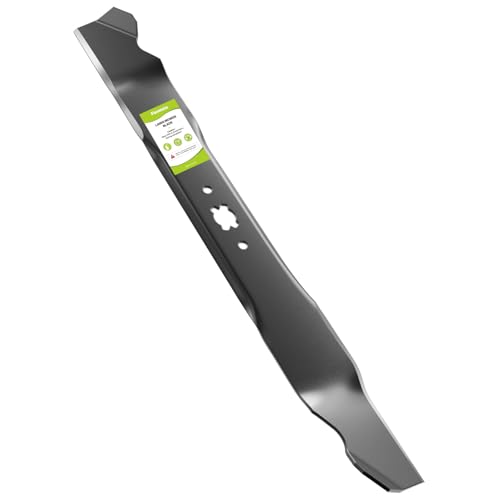
The Fismiuta 21-inch lawn mower blade is a replacement mulching blade designed for many popular walk-behind push mowers from Troy-Bilt, Craftsman, and MTD. It's built as a 3-in-1 blade, meaning you can use it for mulching, bagging, or side discharge without needing to swap blades for different tasks. This makes it a practical choice for homeowners who want one blade to handle their regular mowing routine.
In real-world use, the standout feature here is the 32mm air lift height. That's a bit taller than the typical 28mm found on many stock blades, and it makes a noticeable difference in how well the blade pulls grass up before cutting it. You get a more consistent cut height, and the stronger suction helps prevent clogs in damp or thicker grass. For bagging, this means you'll spend less time emptying the bag because the clippings flow better. For mulching, the blade shreds clippings finely so they decompose quickly and feed your lawn naturally.
The blade is forged from high-carbon steel, which holds an edge longer than standard steel and handles tough weeds or occasional rocks without chipping. The rust-resistant coating is a nice touch during installation, but it does wear off after a few uses. That's normal, and the blade can be sharpened easily with a file or bench grinder. Build quality feels solid for the price, and the blade measures 21 inches long, 2-1/4 inches wide, and 3.4mm thick, which matches OEM specs for a direct swap.
One thing to watch out for is the center hole shape. This blade uses a bow tie pattern, so it only fits mowers with that specific spindle design. If your mower has a star or round hole, it won't work. Double-check your mower's center hole before ordering. Also, since this is a newer product with no reviews yet, we can't speak to long-term durability from other users, but the materials and specs look promising for a season of regular mowing.
Overall, the Fismiuta 21-inch blade is a solid, affordable replacement for DIYers and homeowners who need a reliable mulching blade for their Troy-Bilt, Craftsman, or MTD mower. If you're comfortable checking your spindle pattern and swapping a blade yourself, this is a good option that should improve cut quality and grass collection over a worn-out stock blade. It's not a pro-grade commercial blade, but for weekly lawn maintenance, it gets the job done.
Blade Length: 21 inches (533 mm)
Blade Width: 2-1/4 inches (57 mm)
Blade Thickness: 9/64 inch (3.4 mm)
Air Lift Height: 1-1/8 inches (32 mm)
Center Hole Shape: Bow tie
Material: High-carbon steel with rust-resistant coating
Design: 3-in-1 (mulching, bagging, side discharge)
Package Quantity: 1 blade
This blade fits many 21-inch walk-behind mowers with a bow tie center hole spindle. Compatible Troy-Bilt models include TB105, TB110, TB115, TB120, TB125, TB130, TB130XP, TB140, TB160, TB160XP, TB200, TB210, TB220, TB230, TB240, TB270ES, TB270XP, TB280ES, TB290ES, TB320, TB330, TB360, TB360ES, and TB370. Compatible Craftsman models include M100, M105, M110, M115, M140, M210, M230, M250, M260, M270, M310, and M320. Also fits many MTD and Cub Cadet models with the same spindle pattern. Always verify your mower's center hole shape before purchasing.
Readers working through this often check best dethatcher lawn mower blade next.
Identifying the Correct Blade Orientation
The standard rule for most modern lawn mowers is that the curved, scoop-like side of the blade faces up. This concave surface works in tandem with the deck’s airflow channels to lift grass off the ground and direct it toward the discharge chute or into the bagging system. If the blade is installed upside down, the convex side faces up, which disrupts the airflow and causes the mower to struggle, resulting in a ragged cut and increased engine load.
| Blade Feature | Correct Orientation (Up) | Incorrect Orientation (Down) |
|---|---|---|
| Concave/Scarf Side | Facing Deck | Facing Ground |
| Convex/Raised Side | Facing Ground | Facing Deck |
| Stamped Arrow | Points Forward/Up | Points Backward/Down |
| Cutting Edge | Slants Away from Center | Slants Toward Center |
Before removing the old blade, it is helpful to mark its position with a piece of tape or a marker. This simple step creates a reference point that makes reinstallation significantly easier. You can compare the new blade to the old one while both are off the spindle to ensure they match in length, hole pattern, and curvature. This comparison helps prevent ordering errors if you are unsure about the exact part number or model compatibility.
Manufacturers often stamp directional arrows or text directly onto the metal surface of the blade. These markings indicate the direction of rotation and the intended upward-facing side. Look for words like “UP” or an arrow pointing toward the center hole. If the blade lacks visible markings, the physical shape of the cutting edge provides the necessary clue. The edge should slant away from the center of the blade as it moves outward, creating a lift that helps pull grass into the cutting path.
Visual Cues and Markings on Replacement Blades
Many replacement blades come with a protective coating or paint that may obscure some markings until the first few uses. However, the stamped arrows and text are usually pressed into the metal and remain visible through the coating. Check the flat surface of the blade near the center hole for these indicators. The arrow typically points in the direction the blade travels during operation, which corresponds to the side that faces up.
Some blades feature a distinct color or finish on the top surface compared to the bottom. This is not a universal standard, but it can serve as a secondary clue if the manufacturer uses it. Do not rely on color alone, as coatings vary by brand and can wear off over time. Instead, prioritize the physical geometry of the blade and the stamped directional indicators. These features are consistent across different brands and models and provide a reliable method for determining orientation.
If you are replacing a blade on a dual-blade deck, each blade may have its own orientation requirements. Some decks use two identical blades that are installed in a mirrored configuration, while others use left-hand and right-hand specific blades. Check the manual for your specific mower model to confirm the required orientation for each blade. Installing a left-hand blade on the right side, or vice versa, can cause imbalance and excessive vibration during operation.
Physical Geometry and Cutting Edge Direction
The cutting edge of a lawn mower blade is not flat; it has a slight angle that determines its lifting capability.
- When the blade is installed correctly, the cutting edge slopes upward as it moves away from the center.
- This angle allows the blade to lift the grass before it is cut, ensuring a clean slice rather than a tear.
- If the blade is upside down, the edge slopes downward, which pushes grass into the ground instead of lifting it, resulting in a bruised and uneven cut.
You can verify this geometry by holding the blade up to the light. Look at the angle of the cutting edge relative to the flat surface of the blade. The side that appears slightly higher or more elevated is the side that should face up. This visual check is particularly useful for blades that do not have clear stamped markings. It is a quick and reliable method that works for most standard walk-behind and riding mower blades.
The curvature of the blade also plays a role in determining orientation.
- Most blades have a slight bend or curve along their length, with one side being more concave than the other.
- The more concave side is the one that faces up, as it helps create the necessary airflow under the deck.
- This airflow is essential for efficient clippings management, whether you are mulching, bagging, or side-discharging.
- Installing the blade with the convex side up reduces this airflow, leading to clogging and poor performance.
Common Mistakes to Avoid During Installation
One of the most common errors is assuming that the blade will fit in either direction. While the blade may physically attach to the spindle in both orientations, only one orientation is correct for optimal performance. Installing the blade upside down can cause the mower to vibrate excessively, strain the engine, and damage the spindle bearings over time. It is crucial to take a moment to verify the orientation before tightening the blade bolt or nut.
Another frequent mistake is failing to secure the blade while loosening the bolt. The blade is attached to the spindle with a reverse-threaded bolt on most mowers, meaning you must turn it clockwise to loosen it. If you do not hold the blade in place, it will spin along with the bolt, making it difficult to remove.
Using a blade removal tool or a wooden block to hold the blade in place is a safe and effective way to prevent this issue. Always ensure the mower is disconnected from its power source before attempting to remove the blade.
Forgetting to check the spindle condition before installing the new blade is also a common oversight. Inspect the spindle for any signs of wear, damage, or debris that could interfere with the blade’s attachment. A clean and undamaged spindle ensures a secure fit and reduces the risk of the blade coming loose during operation. If you notice any issues with the spindle, address them before installing the new blade to prevent further damage or safety hazards.
Verifying Fit and Balance After Installation
Once the blade is installed, it is important to verify that it is properly balanced. An unbalanced blade can cause significant vibration, which can damage the mower’s components and make it difficult to operate. You can check the balance by suspending the blade from a nail or a balance tool, allowing it to rotate freely. If one side dips lower than the other, the blade is unbalanced and may need to be sharpened or replaced.
After confirming the balance, tighten the blade bolt or nut to the manufacturer’s recommended torque specification. Overtightening can strip the threads or damage the spindle, while undertightening can cause the blade to loosen during operation. Use a torque wrench if available to ensure the correct tension is applied. If you do not have a torque wrench, tighten the bolt firmly and then check it again after the first few minutes of mowing to ensure it has not loosened.
Finally, perform a test run to ensure the mower operates smoothly and without excessive vibration. Listen for any unusual noises or feel for any shaking that could indicate a problem with the blade orientation or balance. If the mower runs smoothly and cuts cleanly, the blade is likely installed correctly. If you notice any issues, stop the mower immediately and recheck the blade orientation and tightness. Correcting these issues early can prevent more serious damage and ensure safe and efficient mowing.
Safety Considerations for Blade Replacement
Working with lawn mower blades requires caution due to the sharp edges and the potential for the blade to spin unexpectedly. Always disconnect the spark plug wire or unplug the mower before working on the blade to prevent accidental startup. Wear sturdy gloves to protect your hands from cuts and debris, and use safety glasses to protect your eyes from flying particles. These simple precautions can prevent serious injuries and ensure a safe working environment.
Use the appropriate tools for the job, such as a wrench that fits the blade bolt size and a blade removal tool to hold the blade in place. Avoid using improvised tools or methods that could slip and cause injury. Ensure that the mower is on a stable surface and that the blade is securely held before applying force to loosen or tighten the bolt. Taking these steps carefully helps prevent accidents and ensures that the blade is replaced safely and effectively.
If you are unsure about any step in the process, consult the mower’s owner’s manual or contact a professional for assistance. The manual provides specific instructions for your model, including torque specifications and any unique features that may affect blade installation. Following the manufacturer’s guidance ensures that the blade is installed correctly and that the mower operates safely and efficiently. Proper maintenance and installation are key to extending the life of your mower and ensuring a well-maintained lawn.
By understanding the correct orientation of the lawn mower blade and following proper installation procedures, you can ensure optimal performance and safety. The curved side facing up is the standard for most mowers, but always verify with the specific markings and geometry of your blade.
Taking the time to check the orientation, balance, and tightness of the blade will help prevent issues and maintain a clean, even cut. For more detailed information on maintaining your mower, consider exploring our guide on sharpening lawn mower blades to keep your cutting edges in top condition.




Write Your Review
No reviews yet. Be the first to share your experience!