


Most lawn mower blades are secured with standard right-hand threads, meaning you tighten them clockwise. However, are mower blades left hand thread? The answer is yes, but only in specific contexts. Some manufacturers use left-hand (reverse) threads on the blade nut or bolt to prevent the blade from loosening due to the rotational forces generated during mowing. If you are replacing a blade or bolt, identifying the thread direction is critical to ensure the part stays secure and safe during operation.
Confusing thread direction can lead to a blade coming loose, which is a serious safety hazard. Before purchasing a replacement, check the existing hardware or the owner’s manual. The products listed below include various left-hand thread options for different mower models. Understanding the difference between standard and reverse threads helps you avoid common installation errors. For related maintenance tasks, see our guide on loosening stuck mower blade bolts.




Understanding Left-Hand Threads on Mower Blades
Left-hand threads, often called reverse threads, tighten in the counter-clockwise direction and loosen in the clockwise direction. This is the opposite of standard right-hand threads found on most bolts and nuts. The primary reason for using left-hand threads on mower blade hardware is mechanical safety.
As the mower blade spins, it creates a rotational force that can pull a standard right-hand threaded nut loose over time. By using a left-hand thread, the rotational force of the blade actually helps keep the nut tightened, adding a layer of security against vibration and wear.
| Thread Type | Tightening Direction | Loosening Direction | Common Application |
|---|---|---|---|
| Right-Hand (Standard) | Clockwise | Counter-Clockwise | Most bolts, nuts, and fasteners |
| Left-Hand (Reverse) | Counter-Clockwise | Clockwise | Mower blade nuts, specific bolts |
It is important to note that the blade itself does not have threads. The term “left-hand thread” refers to the mounting hardware, specifically the nut or bolt that secures the blade to the spindle. Some mowers use a left-hand threaded bolt, while others use a standard bolt with a left-hand threaded nut.
Knowing which component has the reverse thread is essential for proper installation. If you are unsure, inspect the existing hardware. The threads will slope upward to the left for left-hand threads and upward to the right for standard threads. This visual check is a reliable way to confirm the thread direction before purchasing a replacement.
Not all mowers use left-hand threads. Many modern walk-behind and riding mowers use standard right-hand threads with a locking washer or a specific nut design to prevent loosening. However, older models, certain finish mowers, and some commercial equipment frequently use left-hand threads. The products listed below include specific examples of left-hand thread hardware.
For instance, the Replacement Sovema Finish Mower Blade Mounting Bolts are explicitly labeled as left-hand thread. Similarly, the ACTIVLIFE for Blade Bolt 3/8″ X 1-1/4″ Left Hand is designed for specific Husqvarna and AYP models that require this configuration. Always verify the manufacturer’s specifications for your specific mower model.
Identifying Thread Direction on Your Mower
Before ordering a replacement, you must confirm whether your mower uses left-hand or right-hand threads. The most reliable method is to remove the existing blade and inspect the spindle or the nut. If the hardware is still on the mower, you can often determine the thread direction by looking at the slope of the threads.
For a left-hand thread, the threads will appear to slant from the bottom right to the top left. For a standard right-hand thread, they slant from the bottom left to the top right. This visual cue is a quick way to identify the thread type without removing the part.
If the hardware is removed, you can test the thread direction by attempting to tighten it by hand. If the nut or bolt tightens when turned counter-clockwise, it is a left-hand thread. If it tightens when turned clockwise, it is a standard right-hand thread.
This simple test eliminates guesswork and ensures you purchase the correct part. It is crucial to perform this check because installing the wrong thread type can result in the blade coming loose during operation. A loose blade can cause significant damage to the mower deck and pose a serious safety risk to the operator and bystanders.
Another way to identify the thread direction is to consult the owner’s manual or the manufacturer’s website. The manual will specify the hardware requirements for your mower model, including the thread type and dimensions. If you do not have the manual, you can often find this information online by searching for your mower’s model number.
Some mowers have the thread type stamped on the spindle or the blade, but this is not universal. When in doubt, bring the existing hardware to a hardware store or an authorized dealer for identification. They can match the thread pitch and direction to ensure a correct fit.
Common Mower Models That Use Left-Hand Threads
While many mowers use standard threads, certain brands and models are known for using left-hand threads on their blade hardware. This is particularly common in finish mowers, which are designed for precise cutting and often have specific hardware requirements. The Replacement Sovema Finish Mower Blade Mounting Bolts are a clear example, as they are designed for Sovema finish mowers and are explicitly labeled as left-hand thread. These bolts are part number 900.102.254, which can be used to verify compatibility with specific Sovema models.
Other brands that may use left-hand threads include Husqvarna, AYP, and Sears, depending on the specific model and year. The ACTIVLIFE for Blade Bolt 3/8″ X 1-1/4″ Left Hand is compatible with Husqvarna 532165484 C and AYP Sears 165484. This indicates that these specific models require a left-hand threaded bolt.
It is important to note that even within the same brand, different models or years may use different thread types. Therefore, always verify the thread direction for your specific mower model rather than assuming it based on the brand. This ensures that you purchase the correct hardware and avoid potential safety issues.
Some universal blade nuts are designed to fit both left-hand and right-hand threads, but this is rare and should be verified carefully. The 10pcs 10pcs Left Hand Thread Flanged Lawn Mower is described as a universal thread lawn mower blade fastener, but it is specifically labeled as left-hand thread.
This means it is intended for use with left-hand threaded spindles. If your mower uses a standard right-hand thread, this nut will not fit. Always check the product description and specifications to confirm the thread direction. Using the wrong thread type can lead to improper installation and potential safety hazards.
Safety Considerations for Blade Hardware
Using the correct thread direction is not just a matter of fit; it is a critical safety issue. A blade that is not securely fastened can come loose during operation, causing damage to the mower and posing a serious risk of injury.
The rotational force of the blade can quickly loosen a standard right-hand threaded nut if it is not properly secured. Left-hand threads help mitigate this risk by using the rotational force to keep the nut tightened. However, even with left-hand threads, it is important to ensure the hardware is properly tightened and in good condition.
Before installing a new blade, inspect the spindle and hardware for wear or damage to ensure safe operation.
- A worn or damaged spindle can compromise the secure fit of the blade, even with the correct thread type.
- If the spindle is worn, it may need to be replaced to maintain the integrity of the assembly.
- Additionally, ensure that the blade is balanced, as an unbalanced blade can cause excessive vibration.
- Excessive vibration from an unbalanced blade can loosen the hardware over time, creating potential safety hazards.
- Regular maintenance, including checking the tightness of the blade nut or bolt, is essential for safe operation.
- If you are unsure about the condition of the hardware or the spindle, consult a professional for inspection and replacement.
When installing the blade, follow the manufacturer’s instructions for torque specifications. Over-tightening can damage the threads, while under-tightening can lead to the blade coming loose. Use a torque wrench if available to ensure the hardware is tightened to the correct specification.
If the manufacturer does not provide a specific torque value, tighten the hardware securely by hand and then use a wrench to ensure it is snug. Do not use excessive force, as this can strip the threads. After installation, run the mower briefly to check for any unusual vibrations or noises. If you notice any issues, stop the mower immediately and re-check the hardware.
Choosing the Right Replacement Hardware
When selecting replacement hardware, it is important to match the thread direction, pitch, and dimensions to your mower’s requirements.
- The products listed below include various options for left-hand thread hardware for your mower.
- The Be In Your Mind 2Pcs Left Hand Thread Blade Bolt is compatible with Castel Garden, Champion, Lawnking, Sovereign, and Twincut models.
- This bolt is 3/8″ 24UNF and 38mm in length, which are specific dimensions that must match your mower’s spindle.
- If your mower uses a different thread size or length, this bolt will not fit.
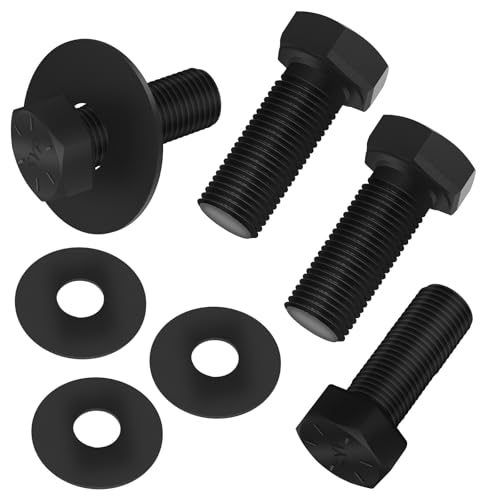
The 4 Pcs 502310 LH Thread Blade Bolt Compatible is another option, designed for King Kutter Country Line mowers. This set includes four left-hand thread blade bolts and four Belleville concave spring washers. The bolts are 1/2″ diameter x 1-1/2″ long, and the washers are 1.50″ in diameter.
These dimensions are specific to the King Kutter models listed in the product description. If your mower is not one of the listed models, you should verify compatibility before purchasing. The inclusion of spring washers helps to maintain tension on the bolt, preventing it from loosening over time due to vibration.
The M10 x 1.25 Left Hand Thread Blade Nut for String is designed for string trimmers and brush cutters, not lawn mowers. This nut fits a nominal 10 mm threaded shaft with a 1.25 mm pitch and left-hand direction. It is important to distinguish between hardware for lawn mowers and hardware for string trimmers, as the dimensions and applications are different.
If you are replacing a blade nut for a string trimmer, this product may be suitable. However, if you are replacing a blade nut for a lawn mower, you need to ensure the dimensions match your mower’s spindle. Always check the product description and specifications to confirm compatibility.
Maintenance and Storage Tips
Proper maintenance and storage of mower blade hardware can extend its lifespan and ensure safe operation. After each use, clean the hardware to remove any grass clippings or dirt that may be trapped in the threads. This prevents corrosion and ensures that the hardware remains in good condition.
Store the hardware in a dry place to prevent rust. If the hardware is not in use for an extended period, consider applying a light coat of oil to prevent corrosion. Regular inspection of the hardware for signs of wear or damage is also important. Replace any worn or damaged hardware immediately to ensure safe operation.
When storing the mower for the off-season, remove the blade and hardware if possible. This prevents the hardware from corroding in place and makes it easier to inspect for wear. If you leave the blade installed, ensure the hardware is properly tightened and protected from the elements.
Use a cover to protect the mower from rain and moisture. Regular maintenance and proper storage can help prevent common issues with mower blade hardware, such as corrosion and wear. This ensures that the hardware is in good condition when you are ready to use the mower again.
For additional tips on maintaining your mower blade, see our guide on sharpening lawn mower blades. A sharp blade not only provides a cleaner cut but also reduces the strain on the mower’s engine and hardware. Regular sharpening and maintenance can help extend the life of your mower and ensure safe operation. By following these maintenance tips, you can keep your mower blade hardware in good condition and avoid common issues with thread direction and fit.
In summary, most mower blades do not use left-hand threads, but the hardware that secures them may. It is crucial to identify the thread direction before purchasing a replacement to ensure a secure and safe fit. Use the visual and physical tests described above to confirm the thread direction, and always verify compatibility with your specific mower model. By following these guidelines, you can avoid common installation errors and ensure safe operation of your mower.





Write Your Review
No reviews yet. Be the first to share your experience!