


Uneven cutting lines and excessive deck vibration often signal that your mower blades are out of alignment or unbalanced. Before blaming the engine, check the blade height and balance, as these issues directly impact cut quality and machine longevity. Many homeowners overlook this simple maintenance step, leading to torn grass tips and uneven turf density. A proper Lawn Mower Blade Leveling Tool helps you verify that each blade sits at the correct height and rotates without wobble. This ensures consistent airflow under the deck, which is critical for bagging efficiency and mulching performance. By addressing these mechanical nuances, you protect your spindle bearings and extend the life of your cutting deck.
Choosing the right tool depends on whether you need to measure deck height or balance individual blades after sharpening. Deck leveling gauges are essential for adjusting the cutting plane across the entire deck, ensuring all blades cut at the same height. On the other hand, blade balancers are small, portable tools used to detect imbalances in single blades. Both types of tools are inexpensive but play a vital role in maintaining a healthy lawn. We analyzed the specifications of several popular options, including those from thick grass mower guides and general maintenance resources. The products listed below range from universal balancers to OEM-specific leveling gauges, catering to different mower types and user needs.

Pros
- Simple to use, no complex setup or training required.
- Scale markings are clear and easy to read on the job.
- Lightweight and portable, easy to carry between mowers or job sites.
- Affordable price point for a dedicated leveling tool.
Cons
- Plastic construction may not be as durable as metal alternatives over many years of heavy use.
- Scale range limited to 1 1/2 to 5 inches, which may not suit every mower deck or aftermarket blade setup.
- Manual measurement still relies on your eye for true level; best used as a quick reference, not a precision instrument.
The Xhziy Mower Deck Leveling Gauge is a straightforward measuring tool designed to help you set blade height accurately on lawn mowers. It's a pocket-sized plastic gauge that reads from 1 1/2 to 5 inches, giving you a quick visual reference for leveling your deck. No batteries, no electronics, just a simple mechanical tool that gets the job done.
This gauge is best suited for DIY homeowners and lawn maintenance techs who want a faster way to check blade height without dragging out a tape measure or level. If you zero-turn mows every week or you're a contractor who maintains a fleet of mowers, this tool saves time and reduces guesswork. The ergonomic handle makes it easy to use even with greasy fingers or work gloves.
In real-world use, the gauge works as advertised. Place it on the mower deck, line up the scale with the blade tip, and read the height. The markings are clear and easy to interpret. It's robust enough for occasional drops on the lawn or shop floor, though the plastic body won't survive a direct hit from a truck or heavy equipment.
Build quality is decent for the price. The plastic feels solid, and the blue color helps prevent losing it in the grass. At just 2.24 ounces and measuring 12x5x2 inches, it's truly portable. You can stash it in a tool pouch or leave it in the mower's storage compartment. The main drawback is the limited range and the fact it requires manual reading, so you still need some basic understanding of deck leveling. Also, if you have non-standard blades or a deck with unusual geometry, the gauge might not fit perfectly.
Overall, for under ten bucks, the Xhziy Mower Deck Leveling Gauge is a handy addition to any lawn care setup. It won't replace a professional dial indicator or laser level, but for everyday tuning and quick checks, it's a practical, no-fuss tool. I'd recommend it to any homeowner who wants a level cut without the hassle, or to lawn service crews who need a quick reference gauge for multiple mowers.

Pros
- Measures straight off the blade cutting edge for true deck calibration
- Drop-in functional replacement for OEM John Deere and MTD tools
- Simple sliding scale requires no batteries or complex setup
- Saves time compared to clumsy tape measure checks under the deck
Cons
- Molded plastic construction requires careful handling to prevent snapping the arm
- Requires a flat concrete surface and properly inflated tires for accurate readings
The DVPARTS Deck Leveling Gauge is a dedicated measurement tool engineered to set the proper cut height and deck rake on lawn tractors, zero-turn mowers, and commercial walk-behinds. Geared toward DIY homeowners, small engine technicians, and landscape operators, it serves as a direct alternative to OEM tools like John Deere AM130907 and MTD 490-900-0041. When an uneven cut or stepped turf pattern appears, this gauge helps pinpoint exactly which deck hanger needs adjustment.
Measuring from the edge of a stamped steel deck often leads to errors because mower shells flex, bend, and collect grass buildup. This gauge solves that problem by referencing the mower blade tip directly against the garage floor across a 1-1/2-inch to 5-inch range. Simply park the machine on level concrete, turn the blade so the tip points sideways, slide the gauge under, and raise the indicator arm until it contacts the cutting edge. Repeating this process on both sides and checking front-to-rear rake gives you clear numbers to level the deck accurately.
The unit features high-contrast markings that remain legible even under dark mower decks. Its slim body slides past discharge shields and anti-scalp wheels without trouble, keeping your fingers safe from sharp blades. Storage is painless thanks to its compact, lightweight profile, making it easy to hang on a pegboard or tuck into a mobile service cart.
Because the body is made of molded plastic, you should avoid dropping heavy hand tools onto it or forcing the slide arm past its stop. Accurate readings also depend entirely on working over a flat surface and checking your tire pressures first. For anyone looking to maintain a clean, carpet-like lawn cut, this simple gauge provides reliable precision without hassle.
This tool is ideal for seasonal lawn mower tune-ups in spring, after hitting roots or hidden rocks, or following blade sharpening and deck removal. It works smoothly with major residential and commercial mower brands including John Deere, Cub Cadet, Troy-Bilt, and MTD.
For the best results, always disengage the spark plug or remove the ignition key before reaching under the deck. Align your blades tip-to-tip across the tractor to set side-to-side balance, then rotate one blade front-to-back to establish a standard 1/8-inch to 1/4-inch forward rake.

Pros
- Extremely easy to use with no complicated adjustments
- Works with nearly all standard lawn mower blades
- Solid zinc alloy build feels durable and resists rust
- Low cost makes it accessible for any budget
Cons
- Only includes one balancer, no extra accessories
- May not fit unusually large or non-standard blade center holes
- Requires a flat, level surface for accurate balance reading
The Silcpall Lawn Mower Blade Balancer is a straightforward accessory designed to help you keep your mower blades perfectly balanced. It's not a power tool itself, but it's an essential companion for anyone who sharpens their own blades. This balancer is best suited for DIY homeowners, weekend warriors, and budget-conscious lawn care enthusiasts who want to get the most out of their mower without spending a lot.
In real-world use, the balancer is incredibly simple. You just place it on the center hole of your blade and see if it sits level. A balanced blade means less vibration, a cleaner cut, and less strain on your mower's engine. After sharpening, this tool quickly confirms whether you've removed too much material from one side. It's a quick check that can save you from a wobbly mower and uneven grass.
Build quality is solid for the price. The zinc alloy construction feels heavy and durable, and the rust-resistant finish means it can handle a damp garage or occasional splash without corroding. The round shape is comfortable to hold, and the center slot holds most standard blades securely. It's compact enough to toss in a toolbox or hang on a pegboard.
One realistic drawback is that it's a single-size balancer, so if you have an unusually large or oddly shaped blade with a non-standard center hole, it might not fit perfectly. Also, you need a flat surface to get an accurate reading. But for the vast majority of residential mower blades, it works great.
Overall, the Silcpall Lawn Mower Blade Balancer is a smart, low-cost investment for anyone who maintains their own mower. It's not flashy, but it does exactly what it promises: helps you keep your blades balanced for smoother, more efficient cutting. If you sharpen your own blades, this tool is worth having in your workshop.
Product Dimensions: 1.96 x 1.97 x 2.36 inches
Item Weight: 3.2 ounces
Material: Zinc Alloy
Manufacturer: Silcpall
Model Number: PHQ1
ASIN: B0FHB6TFNJ

Pros
- Sturdy metal build that won't crack or warp like plastic balancers.
- Accurately detects even small imbalances for improved cut quality.
- Works with a wide variety of blade center hole sizes thanks to the stepped cone design.
- Easy to use: place blade, watch gravity, and remove material from the heavy side.
Cons
- Some users report that the cone steps may not fit every blade perfectly, though most find a suitable step.
- Requires a bit of trial and error to center the blade precisely on the cone.
- The balancer itself has a narrow base that can tip if bumped during use.
The Oregon Precision Mower Blade Balancer (model 42-100) is a simple, no-fuss tool that belongs in every mower maintenance kit. After you sharpen your blade, tossing it back on the mower without checking balance is a gamble. Even a tiny imbalance can cause excessive vibration, rough cutting, and accelerated wear on your mower's engine and spindle bearings. This compact metal balancer solves that problem with a straightforward gravity-based design.
Best suited for homeowners who sharpen their own blades as well as professional landscapers, the balancer works with virtually any rotary mower blade. The stepped metal cone accommodates different center hole sizes, so it fits push mowers, riding mowers, and zero-turn machines from brands like Stihl, Husqvarna, Troy-Bilt, and more. The zinc die-cast body feels solid and substantial easily outlasting cheap plastic alternatives that can crack or warp over time.
Using the Oregon balancer is refreshingly simple. Place the blade flat on the cone, let it settle, and gravity will tell you if one side is heavier. If the blade dips, grind a bit more material off that side and recheck. The process takes only a minute or two but makes a real difference in how your mower runs. Users consistently report noticeably less vibration and a cleaner, more even cut after balancing.
One realistic limitation is that the cone steps might not align perfectly with every blade's center hole, though most users find a step that works. Also, the balancer has a narrow base, so you'll want to set it on a stable surface to avoid tipping. But these are minor tradeoffs for a tool that costs under ten dollars and can extend the life of your mower's engine and deck.
If you maintain your own mower blades, the Oregon Precision Blade Balancer is a smart, low-cost investment. It helps you get professional-level results at home, reduces vibration that leads to premature wear, and keeps your lawn looking its best. For the price and performance, there's little reason not to add one to your workshop gear.
Brand: Oregon
Model: 42-100
Material: Zinc die-cast metal
Weight: 0.2 pounds
Dimensions: 10 x 6 x 1 inches
Power Source: Manual
Color: Original Version
Compatibility: Fits most push mower and riding mower blades

Pros
- Compatible with major mower brands including John Deere, Cub Cadet, MTD, and Troy-Bilt
- Helps eliminate jagged cut patterns and lawn scalping on uneven or rolling ground
- Bright yellow color provides good contrast under dark mower decks
- Straightforward mechanical gauge requires zero batteries or complex calibration
Cons
- Lightweight molded body requires careful storage away from heavy shop tools
- Requires a smooth, level concrete surface to achieve the most accurate deck measurements
The Chamixx Mower Deck Leveling Gauge is a dedicated lawn tractor and riding mower maintenance tool designed to accurately measure cutting blade height. Serving as a budget-friendly aftermarket replacement for OEM parts such as John Deere AM130907, TY15272, and Stens 750-442, this gauge allows property owners to check side-to-side level and front-to-back rake. Keeping the cutting deck properly aligned is essential for achieving a balanced, carpet-like finish on front yards and suburban turf.
This tool is best suited for suburban homeowners, rural property owners, and lawn care enthusiasts who manage their turf with lawn tractors or zero-turn mowers. First-time riding mower owners will appreciate how simple it makes deck leveling, which can otherwise feel like an intimidating task. Whether you are maintaining a modest suburban yard or managing multiple acres, maintaining correct deck geometry prevents uneven grass growth and reduces clipping buildup.
Real-world lawn care performance depends heavily on an even cutting plane. An unlevel deck leaves stepped ridges in the turf, creates ragged edges along borders, and increases the risk of scalping grass on small knolls. By using this gauge to measure from the blade tip to the ground on both sides of the mower, homeowners can adjust lift linkages with precision. A balanced deck also enhances mulching performance and side discharge dispersal, ensuring clippings do not clump during heavy spring mowing.
In terms of build quality and practicality, the tool features a bright yellow finish that stands out in the dim lighting beneath mower baffles. The physical scale allows for quick visual readouts against the blade tip without needing extra hands. Because it is purely mechanical, there are no cords to untangle, electronics to protect, or batteries to replace, making it dependable for seasonal maintenance before the mowing calendar begins.
Using the gauge requires parking the mower on a hard, flat surface, such as a concrete driveway or garage floor, with the engine off and spark plug disconnected for safety. While the molded plastic construction makes the tool light and easy to reposition under the deck shell, it should be handled with care to prevent chipping or bending over time. Measuring directly from the blade tip rather than the outer deck housing ensures the most accurate cutting reference.
For any homeowner wanting professional-looking yard stripes without the expense of a dealer service call, this leveling gauge is a sensible, cost-effective addition to the workshop. It takes the guesswork out of deck adjustment, helping you maintain a neat, healthy lawn through weekly summer mowing and fall leaf cleanup.
To level your mower deck effectively, park your riding mower or zero-turn tractor on a flat concrete surface. Shut off the engine, engage the parking brake, and remove the ignition key or spark plug wire to ensure complete safety while working near the blades.
Check your tire pressure before making any adjustments, as uneven tire inflation will distort your deck height measurements. Inflate all four tires to the manufacturer-recommended pressure levels found in your owner manual.
Rotate the mower blades so they point side to side, perpendicular to the tractor frame. Slide the gauge under the deck and measure the distance from the concrete floor to the cutting tip of each blade. Adjust the deck lift links until both sides match within the manufacturer tolerance.
Rotate the blades parallel to the tractor frame to verify the front-to-back rake. Most riding mower decks require the front blade tip to sit slightly lower than the rear blade tip to ensure proper airflow and clean grass discharge during operation.

Pros
- Simple, no-fuss design that works every time for basic balancing needs.
- Metal build feels solid and should hold up to years of garage use.
- Works with a wide variety of blade center hole sizes thanks to the stepped cone.
- Costs less than a coffee and delivers real performance improvement.
Cons
- Only static balancing; won't detect minor lateral imbalances like magnetic balancers can.
- May not fit blades with non-circular or odd-shaped center holes (e.g., some mulching or gator blades).
- Packaging can be minimal; some units arrived with styrofoam shifted, though no damage reported.
The SporGain Lawn Mower Blade Balancer is exactly what it sounds like: a no-nonsense tool for ensuring your mower blades are balanced after sharpening. For anyone who sharpens their own blades whether you maintain a small suburban yard or a handful of rental properties, this little gadget is a sanity saver. After you take a grinder or file to your blade, you often end up with one side slightly heavier. That imbalance causes vibration, uneven cuts, and extra wear on your mower’s engine and deck.
This balancer solves that problem simply. You set the blade on the tapered metal cone, and the heavy side drops down. Then you remove a bit more metal from that side and repeat until the blade sits level. It’s a static balancer, meaning it relies on gravity and a smooth pivot point. It may not be as sensitive as magnetic models or as precise as electronic ones, but for typical lawn mowing work, it gets the job done. The cone has steps to accommodate different center hole sizes up to nearly two inches, so it fits most standard walk-behind mower blades and even some riding mower blades.
Build quality is impressive for the price. The base and cone are made of metal, not plastic, so they won’t crack or warp. It’s small enough to toss in a tool bag or leave in a drawer. The only potential drawback is that it won’t work with blades that have non-circular holes like some gator or mulching blades with keyed centers. Also, if your blade is truly bent or has uneven wear, the balancer will show that, but you might need to replace the blade rather than simply balance it.
In real-world use, this balancer makes a noticeable difference. Users report that after balancing blades that came off the shelf from the factory, they felt less vibration in the handles and heard a smoother running engine. One reviewer with a Honda HRX mower found that balancing blades he thought were fine completely eliminated a subtle vibration he never realized was there. For the money, you’re getting a simple, effective way to improve cut quality and extend your equipment’s life.
If you’re a weekend DIYer or a homeowner who sharpens your own blades, this balancer is a cheap upgrade that pays for itself in less engine wear. Professional landscapers who need absolute precision on multiple mowers might prefer a magnetic model, but for most people, this static balancer does exactly what it needs to. A solid buy.
Product Dimensions: 2.4 x 2.4 x 2.1 inches
Item Weight: 3.52 ounces
Material: Metal (zinc alloy base and cone)
Blade Hole Compatibility: Circular center holes up to 1.97 inches (largest step)
Base Diameter: 2.36 inches
Color: Silver
Includes: One blade balancer only
Pros
- Affordable and easy to use with clear instructions
- Precise leveling leads to a healthier, more attractive lawn
- Durable plastic design holds up to regular workshop use
- Compatible with a wide range of lawn mower brands and models
Cons
- Requires user to ensure tires are properly inflated before use for accurate leveling
- Plastic construction may not withstand heavy impact if dropped repeatedly
- Only measures blade height; does not include a leveling bubble or digital readout
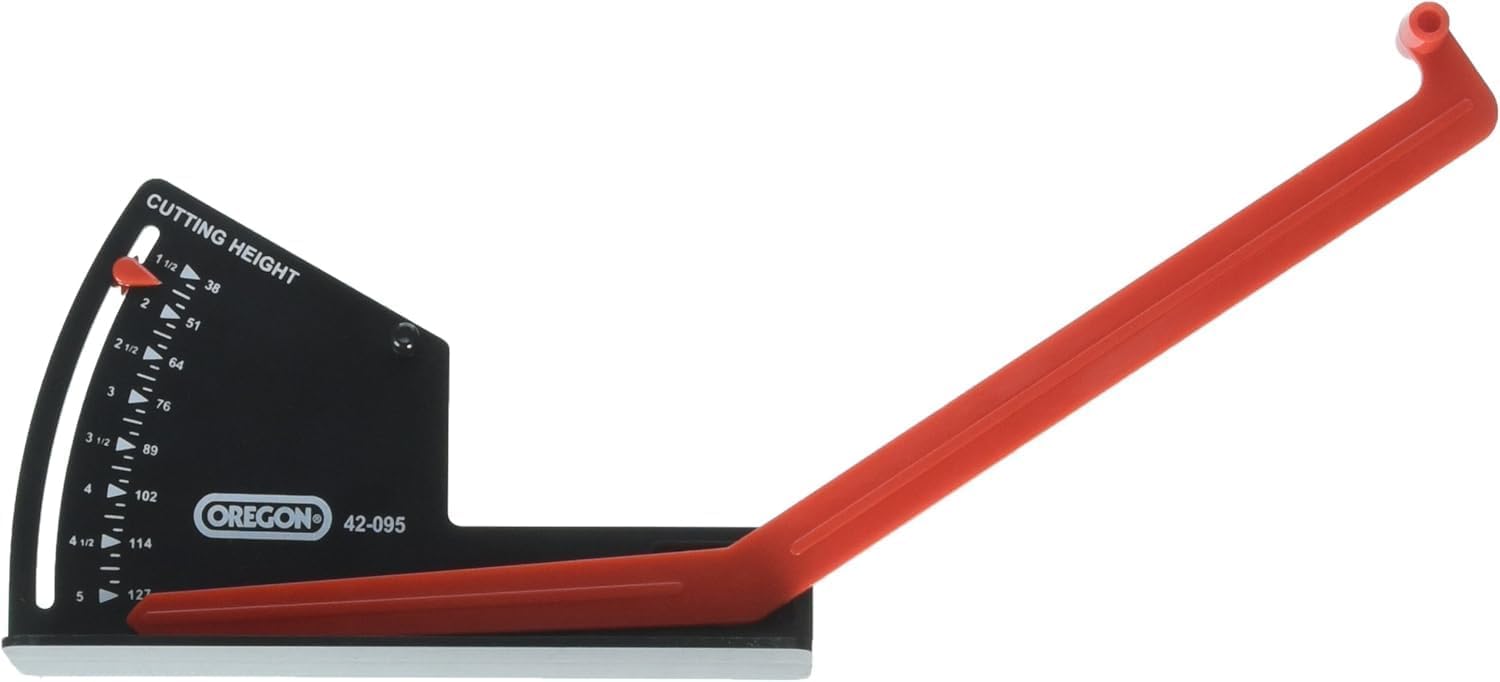
The Oregon Small Engine Deck Leveling Gauge is a straightforward maintenance tool designed to ensure your lawn mower deck sits perfectly level. An unlevel deck causes uneven cutting, scalping, and accelerated wear on blades and spindles. This gauge solves that problem by giving you a quick, accurate way to measure blade tip height from the ground.
This tool is best suited for homeowners and DIY enthusiasts who want a professional-looking lawn without the hassle of trial-and-error adjustments. It's equally useful for small engine mechanics or anyone maintaining a riding mower or push mower. The gauge works on almost any deck style, making it a versatile addition to your workshop.
In real-world use, the gauge is refreshingly simple. Park on level ground, set your mower to the desired cutting height, and place the gauge under each blade tip. The clear markings let you see instantly if both sides are equal and if the front is slightly lower than the back. Adjust the deck hangers until both sides match, and you're done. The pro tip about checking tire pressure before leveling is a practical reminder that saves time.
Build quality is solid for a plastic tool. It's lightweight and won't rust, so you can toss it in a toolbox or hang it in the garage without worry. The only real limitation is that you must have the mower on level ground and tires properly inflated for the reading to be accurate. Also, if you're used to a digital level or bubble gauge, this might feel a bit basic. But for the price, it does exactly what it promises.
Overall, the Oregon Deck Leveling Gauge is a no-nonsense purchase for anyone serious about lawn care. It pays for itself in fewer blade replacements and a noticeably better cut. If you're tired of uneven stripes or patches in your yard, grab this gauge and spend ten minutes leveling your deck. You'll see the difference on the first mow.

Pros
- Durable zinc alloy build won't crack or warp like cheap plastic cones
- Universal stepped design centers easily on most residential mower blades
- Zero assembly required: ready for immediate use out of the box
- Two-pack provides solid value for workshop and mobile maintenance setups
Cons
- Requires a completely flat, level workbench surface to give an accurate balance check
- Does not offer the micro-precision of premium wall-mounted magnetic bearing balancers
- Static friction can occasionally mask minor weight differences on very light blades
The Silcpall 2-Pack Blade Balancer is a static balancing accessory designed for anyone who sharpens their own lawn mower blades. After grinding out nicks or restoring a bevel with an angle grinder or bench grinder, one side of the blade frequently ends up heavier than the other. Bolting an unbalanced blade back onto your mower creates violent vibrations that chew through spindle bearings, loosen deck hardware, and put unnecessary strain on the engine crankshaft. This tool offers a simple check to make sure both cutting wings carry equal weight.
Unlike the fragile plastic balancers that warp or break when dropped on a concrete garage floor, this model is cast from solid zinc alloy. The metal construction gives it sufficient heft to stay put and naturally resists rust in humid shop environments. Its stepped concentric design fits snugly into standard round and irregular blade center holes. You simply set the balancer on a flat surface, place the center hole over the appropriate step, and observe whether the blade rests level or dips to one side. If a wing drops, you simply grind a bit more metal from that side until it sits flat.
In terms of practical workshop use, this tool is ideal for seasonal maintenance on push mowers, zero-turn units, and lawn tractors. However, because it relies strictly on gravity, your working surface must be truly level. Testing on an unlevel workbench can easily lead to false readings. It also lacks the low-friction sealed bearings found on professional shop-grade wall-mounted balancers, meaning minute balance differences might not always register on very light blades.
For homeowners and DIY groundskeepers who want a quick, dependable way to verify their blade sharpening jobs without spending commercial shop money, the Silcpall balancer gets the job done cleanly. The metal construction ensures it will last for seasons of regular use, and having two in the pack means you can keep one by your grinder and stash the other in your field toolbox.
This tool is ideal for post-sharpening checks on standard residential push mower blades, commercial walk-behind decks, and riding mower high-lift blades. It works equally well after using an angle grinder, bench grinder, or hand file.
It also serves well in mobile landscaping trailers and small engine repair carts where space is limited and wall mounting a large magnetic balancer is not practical.

Pros
- Thicker arm provides more accurate measurements than flimsy gauges
- Stabilizer extension makes one-person leveling easy
- Flat base ensures consistent readings every time
- Universal compatibility with popular mower brands
Cons
- Only manual - no digital readout for those who prefer electronic leveling
- May not fit decks with unusual spindle designs or limited access
- Plastic construction might not hold up under heavy shop abuse
The HD Switch Deck Leveling Gauge is a specialized tool for anyone who maintains a zero turn or garden tractor lawn mower. While not a power tool itself, it is an essential workshop accessory for achieving a professional, even cut. This gauge replaces flimsy plastic versions with a thicker, more rigid design and adds a clever stabilizer extension that prevents the gauge from tipping over while you adjust the deck.
This tool is best suited for DIY homeowners who mow their own lawns, as well as professional landscapers and mechanics who service multiple mowers. If you have ever fought with a deck leveling gauge that flexes or falls over, you will appreciate the HD Switch's thicker arm and weighted base stability. Simply place a hammer or any heavy object on the extension to hold it in place, then adjust your deck height without needing a helper.
In real-world use, the gauge provides accurate, repeatable measurements because the arm does not bend under pressure. The flat base sits flush on the mower deck, so you get the same reading every time. This translates to a perfectly level blade, which means no scalping, no uneven stripes, and a healthier lawn. The manual operation is straightforward - no batteries, no calibration.
Build quality is good for a plastic tool: the arm is noticeably thicker than cheap alternatives, and the base is solid. At 2 ounces, it is lightweight and portable. However, it is still plastic, so it could crack if dropped on concrete or stepped on. The biggest limitation is that it only works manually; some users might prefer a digital gauge for exact measurements, but for most mowing tasks, this is more than adequate.
Overall, the HD Switch Deck Leveling Gauge is a smart investment for anyone who wants a better lawn without spending hours on adjustments. It is affordable, easy to use, and works with almost every major mower brand. If you value precision and hate frustration, this gauge belongs in your workshop.
Operation Mode: Manual
Material: Copper and plastic (arm and base)
Compatible Devices: John Deere, Toro, Exmark, Scag, Hustler, Bad Boy, Husqvarna, Craftsman, Dixon, Troy-Bilt, and most zero turn lawn mowers
Dimensions: 11.38 x 4.69 x 2.48 inches
Weight: 2.08 ounces
Unit Count: 1 gauge

Pros
- Thicker arm provides sturdier measurements compared to cheaper gauges
- Stabilizer extension adds stability and allows hands-free adjustments
- Flat base ensures consistent and accurate readings on different deck surfaces
- Compatible with several popular mower deck models for broad usability
- Affordable upgrade that improves the deck leveling process significantly
Cons
- May not fit all mower deck types or non-standard bolt patterns
- Requires a separate weight (like a hammer) on the extension for hands-free use
- Only useful for deck leveling, not a multi-purpose tool
The HD Switch deck leveling gauge is a purpose-built tool for anyone who maintains a lawn mower and wants to dial in cutting height with confidence. This is not a power tool, but it is an essential accessory for workshop and garage use when servicing mower decks. It is best suited for DIY homeowners, weekend mechanics, and small engine enthusiasts who prefer to handle their own mower maintenance rather than paying a shop.
In real-world use, the thicker measurement arm is a standout feature. Unlike thinner gauges that flex and give inconsistent readings, this arm stays rigid, so you get the same measurement each time you check. The stabilizer extension is another smart touch. You can set a hammer or similar object on it to hold the gauge upright, which leaves both hands free to turn adjustment bolts. This makes the process faster and less frustrating, especially if you have ever fought with a gauge that keeps tipping over.
Build quality is solid for the price. The base is flat and feels durable, and the whole gauge is lightweight enough to toss in a toolbox without adding bulk. It works as an OEM upgrade for John Deere, MTD, Cub Cadet, and Stens models, so it should cover a wide range of popular riding mowers and zero-turns. The only real limitation is that it is a single-purpose tool. If you only level your deck once a season, this might not be a priority, but for frequent users it pays for itself in saved time.
One potential drawback is that it may not fit every deck design, especially older or non-standard models. Also, you do need a separate weight for the stabilizer extension to work hands-free. That said, most people will have a hammer or wrench nearby. Overall, the HD Switch gauge is a well-engineered upgrade that makes a tedious job easier. If you value accuracy and efficiency in your mower maintenance, this is a worthwhile addition to your workshop.
Package Dimensions: 12.05 x 5.31 x 2.28 inches
Item Weight: 2.08 ounces
Manufacturer: HD Switch
ASIN: B097S5J72Z
Best Sellers Rank: #13 in Lawn Mower Deck Parts
This gauge is ideal for leveling the deck on riding mowers, zero-turn mowers, and garden tractors from John Deere, MTD, Cub Cadet, and similar brands. It works best when used in a garage or workshop with a flat surface and a helper weight (like a hammer) placed on the stabilizer extension. Perfect for seasonal tune-ups, blade replacement, or after deck repairs to ensure an even cut.
For more on a connected point, our page on craftsman 22 lawn mower blade goes into it separately.
Frequently Asked Questions
What is the difference between a deck gauge and a blade balancer?
A deck gauge measures the height of the cutting deck relative to the ground, while a blade balancer checks the weight distribution of a single blade. Deck gauges ensure all blades are at the same cutting height. Balancers detect wobbles that cause vibration and engine strain during operation.
Do I need a specific gauge for my mower brand?
Not always, but OEM-specific gauges often fit better. Universal balancers work with most round-hole blades. However, deck leveling gauges like the DVPARTS or HD Switch models are designed for specific John Deere or MTD deck geometries to ensure precise alignment.
How often should I check my blade balance?
Check balance every time you sharpen your blades, typically once or twice per season. Unbalanced blades cause severe vibration that can damage spindle bearings. Regular checks with a simple balancer tool prevent costly repairs and ensure a smooth, even cut.
Can a leveling tool fix uneven cutting lines?
Yes, if the issue is caused by uneven deck height. If one side of the deck is lower than the other, the blades cut at different depths. Using a gauge to level the deck ensures all blades engage the grass uniformly, eliminating striping and missed spots.
Are metal balancers better than plastic ones?
Metal balancers, such as zinc alloy models, are more durable and resistant to corrosion. They last longer in damp garage environments. Plastic tools are lighter but may crack or wear out faster with frequent use, making metal a better long-term investment.
For more on a connected point, our page on craftsman m230 lawn mower blade goes into it separately.




Write Your Review
No reviews yet. Be the first to share your experience!