


Most gas-powered Craftsman lawn mower engines are manufactured by Briggs & Stratton, a major supplier in the small engine industry. While Craftsman is a retail brand owned by SDI, the actual internal combustion engines found in their push and self-propelled models are typically sourced from this specialized partner. For electric models, the power comes from brushless or universal motors designed specifically for lawn care applications, rather than traditional gas engines. Understanding this distinction helps buyers identify correct replacement parts and understand maintenance requirements accurately.
This distinction matters because the engine manufacturer determines the specific maintenance schedule, oil type, and part numbering system used. If you are servicing a gas model, knowing that Briggs & Stratton likely built the engine allows you to find compatible filters and spark plugs more easily.
Electric models do not have these internal combustion components, so their maintenance focuses on battery health and blade sharpness. For those interested in the broader context of maintenance, our guide on lawn mower blade costs can help you budget for necessary replacements alongside engine care.

Pros
- Long runtime with two included 5Ah batteries for extended mowing sessions.
- Compact vertical storage frees up valuable floor space in small workshops or garages.
- Lightweight design reduces fatigue during use and makes transport simple.
- Brushless motor runs quietly and efficiently with less maintenance required.
- Dual-lever height adjustment offers quick and consistent cutting height changes.
Cons
- Not self-propelled, so pushing on slopes or thick grass may require more effort.
- Plastic deck may not withstand heavy impacts as well as a steel deck.
- 20-inch cutting width is narrower than many gas mowers, extending mowing time on larger lawns.
The CRAFTSMAN V20 20-inch cordless lawn mower is a battery-powered push mower designed for homeowners who want a quiet, low-maintenance alternative to gas models. It uses a brushless motor for efficient power delivery and includes two 5Ah batteries plus two chargers, giving you up to 50 minutes of runtime. This mower is best suited for small to medium-sized yards with flat terrain, where its lightweight design and easy storage are real advantages.
In real-world use, the brushless motor provides consistent cutting performance on grass up to about 4 inches tall. The dual-lever height adjustment lets you set the cut from 1.5 to 3.5 inches, and the low-profile deck (10 inches at the lowest setting) allows you to trim under bushes and fences. The included grass bag captures clippings well, though the bag is on the smaller side and may need frequent emptying on thicker lawns. The two batteries let you swap and keep going, but charging each takes about an hour.
Build quality is typical for CRAFTSMAN's cordless lineup: a lightweight plastic deck keeps the mower at just 47.88 pounds, making it easy to lift and store vertically. The vertical storage feature is a standout, taking up 78% less floor space than a standard mower. The handles feel sturdy, and the controls are straightforward. However, the plastic deck means it's not as rugged as a steel deck, so avoid hitting rocks or roots repeatedly.
One realistic limitation is the lack of self-propulsion. On slopes or thick grass, you'll need to push manually, which can be tiring. Also, the 20-inch cutting width is narrower than many gas mowers, so larger lawns will take more passes. Battery runtime decreases in thick or wet grass, so plan your mowing accordingly.
Overall, the CRAFTSMAN V20 cordless mower is a solid choice for homeowners with small to medium yards who prioritize quiet operation, easy storage, and battery convenience. It's not a heavy-duty contractor tool, but for routine lawn care, it delivers reliable performance without the hassle of gas and oil changes. If you already own other CRAFTSMAN V20 tools, the shared battery platform adds even more value.
Motor: Brushless
Deck Width: 20 inches
Height Adjustment: Dual-lever, 1.5 to 3.5 inches
Batteries: 2 x 5Ah V20 lithium-ion
Chargers: 2 included
Runtime: Up to 50 minutes per charge (with both batteries)
Weight: 47.88 pounds
Storage: Vertical, saves 78% space
Color: Black and Red
Two CRAFTSMAN V20 5Ah batteries
Two battery chargers
Grass collection bag
Owner's manual

Pros
- Reliable 170cc OHV engine with auto choke for easy starts, even after the mower has sat for a few weeks.
- Steel deck adds durability and impact resistance compared to lighter polymer decks, especially if you occasionally hit a rock or root.
- Self-propelled rear-wheel drive gives confident traction on gentle slopes and uneven ground without requiring you to push hard.
- 3-in-1 mowing options (mulch, bag, side discharge) make it a versatile tool for spring grass, summer clippings, and fall leaves.
Cons
- At 59 pounds, the mower feels solid but may be heavy for some users to lift over curbs or load into a truck, despite the self-propelled drive.
- The 21-inch cutting width is standard for residential mowers but not ideal for very large rural lawns where a wider deck would save more time.
- Gas engine operation requires regular maintenance like oil changes and spark plug checks, which may be less appealing to eco-conscious or low-maintenance buyers.
The PowerSmart 21-Inch Self Propelled Gas Lawn Mower is a classic walk-behind gas mower designed for residential yard work. It pairs a 170cc OHV 4-stroke engine with rear-wheel self-propelled drive and a durable steel deck, offering a practical middle ground between a basic push mower and a premium lawn tractor. For homeowners with a quarter-acre lot, suburban lawns, or slightly sloped properties, this type of mower delivers the power and traction you need without the expense or storage footprint of a riding mower.
This mower is best suited for homeowners who want dependable cutting performance with less physical effort. The self-propelled rear-wheel drive is especially helpful on gentle slopes and uneven terrain, so you can guide the mower rather than muscle it. First-time mower buyers will appreciate the auto choke system, which simplifies starting compared to older gas mowers that require manual priming and choking. Budget-conscious shoppers get a solid set of features at a reasonable price point, while those with mobility concerns may find the self-propelled drive reduces strain during a full yard mowing session.
In real-world lawn care, the 21-inch steel deck handles standard residential grass well. The 3-in-1 capability means you can mulch clippings to feed the lawn, side discharge thick grass to avoid clumping, or attach a rear bag (sold separately, depending on package) for a clean finish before a backyard barbecue or holiday gathering. The 6-position height adjustment from 1.5 to 3.9 inches gives you enough range to keep cool-season grasses longer in summer or cut warm-season lawns shorter in spring. The 170cc engine provides enough torque to power through damp grass after a spring rain, although very wet or overgrown grass will still require slower passes to avoid stalling or clogging.
Build quality is centered around the steel deck, which offers better durability and impact resistance than many polymer decks in this price range. The foldable handle is a practical feature for storing the mower upright in a garage or shed, and the 59-pound weight is manageable for most users when rolling, though lifting it into a vehicle or over a curb takes some effort. The rear-wheel drive system gives good traction on moderate slopes, and the 21-inch cutting width is a good balance between maneuverability around landscaping and efficiency for open lawn areas. Users with very tight spaces or complex garden layouts may find a smaller 20-inch model easier to turn, but this mower remains reasonably agile for its deck size.
Maintenance is typical for a gas mower. You will need to check the oil before the first start, change it periodically, keep the air filter clean, and inspect the spark plug each season. The engine is designed for simple access to these components, and blade replacement is a standard job that most DIY homeowners can handle with basic tools. Cleaning the underside of the deck after each use helps prevent grass buildup and rust, and the steel deck should hold up well if you keep it dry between mowings. The self-propelled drive reduces the physical effort of mowing, but the gas engine does produce noise and emissions, so early Saturday morning sessions may not be the quietest option for close neighbors.
Realistic limitations include the need for regular gas engine upkeep, the 59-pound weight when lifting, and the fact that this mower is not designed for commercial landscaping crews or extremely large rural acreage. For a typical suburban home, a 21-inch self-propelled gas mower like this is a reliable workhorse that can handle weekly cutting, fall leaf mulching, and the occasional overgrown patch after vacation. If you are a homeowner looking for an affordable, dependable walk-behind mower with useful features like self-propelled drive and 3-in-1 versatility, the PowerSmart model is worth considering. Just be prepared to perform basic maintenance and store it properly to get the longest service life out of the steel deck and engine.
This mower gives you three ways to handle grass clippings. For mulching, the cut grass is finely shredded and returned to the lawn, which helps retain moisture and recycle nutrients. Many homeowners find mulching the best option during regular weekly mowing in summer when grass growth is steady and clippings are short. The 170cc OHV engine provides enough power to keep the blade spinning at high speed, which is essential for a clean mulch cut.
When grass is thick or slightly damp, side discharge is often the better choice because it moves clippings out of the deck quickly and reduces the chance of clumping. This is useful for the first mow of spring or after a week of heavy growth. For a pristine finish before a gathering, the rear bag (if included, otherwise sold separately) collects clippings neatly and makes disposal easy. The bagging system works best when the grass is dry and you mow at a moderate pace.
Switching between modes is straightforward with the included plugs and chute. You should always remove the side discharge chute when mulching to ensure proper airflow inside the deck. For fall leaf cleanup, mulching leaves into the lawn can be a real time saver, provided the leaves are not too thick. Overall, the 3-in-1 flexibility makes this mower a practical partner for year-round lawn maintenance.
The steel deck is the cornerstone of this mower's build. Steel is heavier than plastic or aluminum, but it offers excellent impact resistance and long-term durability. If you accidentally hit a rock, a tree root, or a hidden garden stake, the steel deck is more likely to bend or dent rather than crack. Over time, a steel deck also makes it easier to remove grass buildup because you can scrape it without worrying about damaging the housing.
The 59-pound weight reflects the solid construction. The wheels are designed for residential use, and the rear-wheel drive system adds traction for slopes. The foldable handle is made of sturdy tubes and locks into place during operation, which is important for safety and control. The painted finish on the deck helps resist rust, but you should still avoid leaving the mower out in the rain and keep the underside clean. With reasonable care, this mower can provide many seasons of dependable service for the home lawn.
Keeping this gas mower running well is mostly about routine checks. Before each season, inspect the oil level and top off with the recommended 4-stroke oil. Change the oil after the first 5 hours of use, then once a year or every 25 hours of operation. The air filter should be cleaned every few mowings and replaced if it looks worn. The spark plug should be removed and inspected annually, with replacement if the electrode is worn or fouled.
The blade will eventually need sharpening or replacement, especially if you hit branches or rocks. Always disconnect the spark plug wire before working under the deck. Use a socket wrench to remove the blade bolt, sharpen or replace the blade, and reattach it securely. To clean the deck, tip the mower with the spark plug side up (or use a stick to scrape off grass from above) and remove wet clippings after each use. For winter storage, drain the fuel or add a fuel stabilizer, clean the deck, and fold the handle for compact storage in a dry place.

Pros
- Auto choke simplifies startup, especially for beginners or users who don't want to fiddle with manual controls
- Steel deck feels sturdier than plastic competitors and can handle occasional bumps or debris
- Height adjustment is quick and tool free from the rear, letting you adapt to different grass lengths on the fly
- Mulching performance effectively chops clippings fine, returning nutrients to the lawn without clumping
Cons
- Side discharge chute can be a bit finicky to attach and remove, and may clog in thick, wet grass
- Engine vibrates noticeably at higher RPMs compared to more expensive brands, but still operates fine for its class
- Pull cord can be stiff initially, requiring a few strong tugs to break in the engine
The PowerSmart 21 inch gas lawn mower is a straightforward push mower designed for homeowners who need a reliable cutting tool for smaller lawns. It's best suited for DIY homeowners with flat, fenced yards of about a quarter acre or less. This isn't a self propelled model, so you'll be doing the pushing, but on level ground the large wheels and manageable 59 pound weight make it reasonably easy to maneuver around flower beds and trees.
Performance wise, the 144cc OHV engine delivers enough torque to power through typical grass without bogging down. The auto choke is a standout feature that eliminates the classic pull start frustration. Pull the cord and it starts on the first or second try, even after sitting for weeks. The 21 inch cutting width is a standard sweet spot for this size lawn, letting you make decent passes without too much back and forth. The six position height adjustment lever at the rear is easy to reach and click into place, giving you solid control over cut length from 1.5 to 3.9 inches. Mulching chops clippings fine enough to feed the lawn, and the side discharge works well when grass is longer than average.
Build quality centers on an all steel 15 gauge deck that feels substantial for the price point. It's not a fabricated deck like on commercial mowers, but it's far more durable than the plastic decks found on similar budget push mowers. The folding handle collapses for compact storage, which is a real plus if you're short on shed space. Assembly out of the box is minimal; just unfold the handle and add oil and fuel. The manual does recommend 10W 30 oil, and the fuel tank holds only 0.21 gallons, enough for a full yard on a single tank if you're efficient.
That said, there are a few realistic drawbacks. The side discharge chute can feel flimsy during attachment and removal, and it may clog if you're cutting wet or overly thick grass. The engine does produce a fair amount of vibration compared to higher end models, but it's not a deal breaker for occasional weekly mowing. The pull cord required some muscle for the first few starts before loosening up. Additionally, the manual operation means you'll be doing all the pushing, so hills or steep slopes will be a workout.
Overall, the PowerSmart 21 inch gas lawn mower offers solid value for the budget conscious homeowner who doesn't want to overspend on a premium self propelled model. It's a practical choice for flat lawns, easy starting, and reliable cutting performance. If your yard is under a quarter acre and you're comfortable with a push mower, this will handle the job without breaking the bank. For larger or sloped properties, you'll want to look at a self propelled version or a model with a bigger engine.
Engine: 144cc OHV 4 stroke, auto choke
Power Type: Gasoline, pull cord start
Cutting Width: 21 inches
Deck Material: 15 gauge steel
Cutting Height: 6 positions, 1.5 to 3.9 inches
Cutting Options: Mulch, side discharge
Wheel Size: Front 7 inch, Rear 10 inch
Fuel Tank Capacity: 0.21 gallons
Recommended Oil: SAE 10W 30
Dimensions (open): 56 D x 22 W x 42 H inches
Folded Size: 33 H x 22 W x 17 D inches
Weight: 59.4 pounds
Recommended Lawn Size: Up to 1/4 acre
Terrain: Flat
Before buying a push gas mower, consider your lawn size and terrain. The PowerSmart 21 inch is best for flat, smaller yards. If you have hills or a larger lawn, a self propelled model will save you effort. Check your grass type to see if the 1.5 to 3.9 inch height range covers your needs. Also, remember you'll need to buy SAE 10W 30 oil and gasoline separately. The folding storage is a big plus if space is tight.
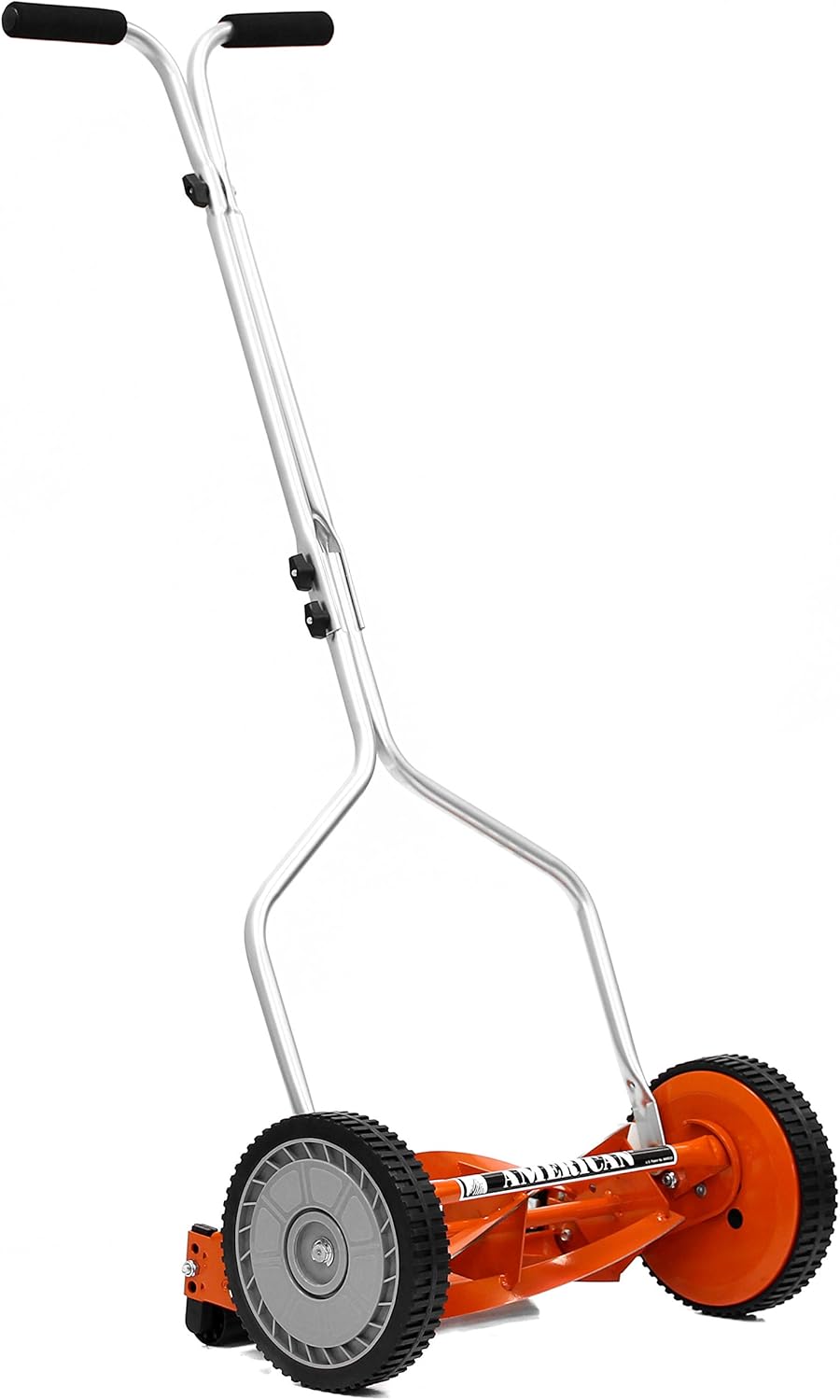
Pros
- Quiet and emission-free, great for early morning or late evening mowing without disturbing neighbors
- Very easy to assemble and requires almost no ongoing maintenance
- Cuts grass cleanly without shredding, leading to a healthier lawn appearance
- Lightweight and easy to store, takes up minimal garage or shed space
Cons
- Not suitable for tall or wet grass; requires frequent mowing when grass is dry and under 4 inches
- Limited cutting width of 14 inches means more passes on larger lawns, best for small to medium yards
- No power assist, so uneven or hilly terrain can make pushing more difficult
The American Lawn Mower Company 1204-14 is a classic push reel mower that brings back the simplicity of manual lawn care. Unlike gas or electric mowers, this tool relies entirely on your own muscle power to spin the reel and cut grass. It's a straightforward, no-nonsense machine designed for homeowners who prioritize quiet operation, zero emissions, and low maintenance over speed and brute force.
This mower is best suited for small, flat lawns with cool-season grasses like bluegrass, fescue, and rye. It's ideal for DIY homeowners who enjoy a bit of exercise while taking care of their yard. If you have a quarter acre or less and don't mind mowing more frequently during the growing season, this reel mower can deliver a clean, precise cut that actually promotes a healthier lawn by slicing rather than shredding the grass blades.
In real-world use, the 1204-14 performs best when you stay on top of your mowing schedule. It handles grass up to 4 inches tall, but for the best results, you should mow when the grass is dry and no more than about 3 inches high. The adjustable cutting height ranges from 0.5 to 1.75 inches, giving you good control over lawn appearance. The 8.5-inch polymer wheels roll smoothly on flat ground, but the mower can struggle on uneven or bumpy terrain. You'll need to make multiple passes if the grass is on the taller side, and wet grass will clog the reel and leave an uneven cut.
Build quality is decent for the price point. The frame is made of steel, and the reel blades are heat-treated alloy steel that stay sharp for years with minimal care. Assembly is straightforward and can be done in about 15 minutes with basic tools. The cushioned T-handle is comfortable for most users, though taller individuals might find it a bit low. At just 19 pounds, the mower is easy to lift and store, and it takes up very little space in a garage or shed.
One realistic drawback is that this mower won't replace a gas or electric model for larger or more demanding lawns. If you have a half-acre or more, or if your yard has hills, you'll likely find the manual effort tiring and time-consuming. Also, the 14-inch cutting width means more passes compared to a 21-inch power mower. But for its intended use - small, flat lawns - the American Lawn Mower 1204-14 is a reliable, eco-friendly, and cost-effective choice that gets the job done without noise, fumes, or ongoing fuel costs.

Pros
- Powerful 13-amp motor easily cuts tall grass without stalling
- Lightweight at just 20.8 pounds makes it easy to push and maneuver
- Folds flat for vertical storage frees up valuable garage or shed space
Cons
- Corded design limits range to extension cord length; not ideal for large lawns
- Plastic deck may not hold up as long as steel decks under heavy use
- No self-propelled option, so you need to push manually on slopes
The Craftsman CMEMW213 is a straightforward corded electric lawn mower built for homeowners who want reliable cutting without the hassle of gas or batteries. With a 20-inch cutting width and a 13-amp motor, this mower offers enough power to handle typical suburban lawns and those patches of thick grass that often trip up weaker electric models.
Who is it for? This mower is best suited for DIY homeowners with small to medium lawns (under half an acre) who don't mind managing an extension cord. It's not a contractor-grade machine for large commercial properties, but for weekend lawn care it hits a sweet spot of performance and value. The 3-in-1 capability (mulch, bag, side discharge) gives you flexibility depending on the season and grass conditions.
Real-world performance is solid. The 13-amp motor provides consistent torque, and the winged blade improves air lift to stand grass up for a cleaner cut. On test cuts with overgrown fescue, the mower didn't bog down or leave ragged edges. The 20-inch plastic deck is lightweight enough to pivot around flower beds and trees. Assembly takes about 15 minutes with basic tools. One downside is the cord management; you'll need a heavy-duty extension cord rated for outdoor use, and you may need to plan your mowing pattern to avoid running over the cord.
Build quality feels decent for the price point. The plastic deck is reinforced and won't rust, but it's not as impact-resistant as a steel deck if you hit rocks or roots repeatedly. The folding handle is a nice touch for storage, and the vertical storage capability is a real space saver in tight garages. At 20.8 pounds, it's one of the lighter mowers in its class, so pushing it uphill or around corners is easy.
The main limitation is the cord itself. If you have a lawn larger than a quarter acre, the extension cord length and the risk of cutting the cord become frustrating. Also, there is no self-propel feature, so if you have a sloped lawn, you'll be working a bit harder. For level lots under 5,000 square feet, this mower is a great pick. The Craftsman 4-year warranty and 90-day return policy add confidence.
Final recommendation: If you have a modest lawn and want a simple, lightweight, and affordable electric mower that cuts well, the Craftsman CMEMW213 is a solid choice. Just be sure you have a long enough outdoor extension cord and don't mind pushing it yourself. It's a practical tool for the budget-conscious homeowner who wants reliable results without the maintence of gas.

Pros
- Quiet and emission-free, perfect for small residential lawns.
- Simple, durable construction with heat-treated alloy steel blades.
- Lightweight and easy to maneuver with cushioned handle grips.
- Tool-less assembly saves time and hassle.
Cons
- Not suitable for tall, overgrown, or uneven lawns requires regular mowing.
- Grass catcher may not collect all clippings, especially on longer grass.
- Cutting width is narrow (14 inches), so it's slower on larger lawns.
The Craftsman 304-14CR is a manual push reel mower designed for homeowners who want a simple, eco-friendly way to maintain a small, well-kept lawn. Unlike gas or electric mowers, this 14-inch, 5-blade reel mower runs entirely on your pushing power, producing zero emissions and virtually no noise. It's a throwback design that works best on flat, regularly mowed grass, making it a practical choice for those with modest yards who value low maintenance and a quiet mowing experience.
In real-world use, the scissor-like cutting action of the heat-treated alloy steel blades gives a clean cut that doesn't bruise the grass, promoting deeper root growth and a healthier lawn overall. The adjustable cutting height (1/2 to 1-3/4 inches) lets you dial in the perfect length for your grass type. However, the mower struggles with tall or wet grass, and it's best to mow frequently, taking no more than one-third of the blade height each time. For lawns over 4 inches, you'll need multiple passes or a different tool entirely.
Build quality is solid for a reel mower the steel blades are durable, and the composite wheels roll smoothly. The lightweight 18-pound frame and cushioned T-handle make it easy to push and maneuver, though the 14-inch cutting width means you'll cover less ground per pass compared to a typical gas mower. Assembly is tool-less, which is a nice touch you can set it up in minutes without hunting for a wrench.
One realistic drawback is the grass catcher it works, but because reel mowers don't generate much airflow, not all clippings end up in the bag. You may need to rake or go over areas again. Also, this mower is not for neglected lawns if you have weeds, divots, or overgrowth, you'll want to rehabilitate the lawn first or consider a powered mower.
Overall, the Craftsman 304-14CR is a solid choice for homeowners with small, flat, well-maintained lawns who prioritize quiet, emission-free operation and low maintenance. It's not a replacement for a gas or electric mower on larger or rougher properties, but for its intended use, it delivers a clean, healthy cut with minimal fuss. If you're looking to reduce your carbon footprint and enjoy a peaceful mowing routine, this reel mower is worth considering.
Brand: Craftsman
Model: 304-14CR
Cutting Width: 14 inches
Number of Blades: 5
Blade Material: Heat-treated alloy steel
Cutting Height: 1/2 inch to 1-3/4 inches (adjustable)
Power Source: Manual (push)
Weight: 18 pounds
Front Wheel Size: 8.5 inches
Rear Roller Bar: Yes
Grass Catcher: Included
Handle Type: T-style with cushioned grips
Assembly Required: Yes (tool-less)
Color: Red
This Craftsman reel mower is best for small, flat lawns under 1/4 acre that are regularly maintained. It's an excellent choice for eco-conscious homeowners who want to avoid gas fumes, noise, and electrical cords. Use it for quick touch-ups between deeper cuts, or as your primary mower if you mow frequently. It's also great for those who enjoy a quiet, meditative mowing experience and don't mind a bit of physical activity. Not recommended for large, hilly, or overgrown properties.

Pros
- Eco-friendly and quiet – no fumes or noise pollution.
- Simple maintenance – no engine, fuel, or electrical components to worry about.
- Good value for money for small lawns.
- Adjustable cutting height via easy lever – versatile for different grass lengths.
- Sturdy build with heat-treated steel blades.
Cons
- Requires significant physical effort, especially on uneven terrain or thicker grass.
- Not suitable for tall grass or overgrown lawns – multiple passes needed.
- Grass catcher may not capture all clippings due to low cutting force.
The Craftsman 1816-16CR is a manual push reel lawn mower designed for homeowners who prioritize eco-friendliness and quiet operation. Unlike gas or electric mowers, this 16-inch, 5-blade mower runs entirely on human power, producing zero emissions and virtually no noise. It’s best suited for small to medium-sized lawns that are well-maintained and mowed frequently.
In real-world use, the mower cuts best when grass is kept under 4 inches. The scissor action of the reel blades cleanly snips grass without shredding, which helps maintain lawn health. The adjustable cutting height ranges from 1 to 3 inches, handled by an easy-to-reach lever. Users report that multiple passes may be needed for thicker or slightly overgrown areas, and the grass catcher works but may not collect every clipping due to the low cutting force.
Build quality is solid. The heat-treated alloy steel blades are durable and hold an edge well. The mower weighs 23 pounds, which is manageable for most users, though some find it heavy for extended use on larger lawns. The composite wheels and padded grip help with comfort, and assembly is straightforward with basic tools. However, a few users mention that wheel screws can loosen over time and require periodic tightening.
The main drawback is physical effort: this is a workout, especially on slopes or if grass is allowed to grow too tall. It also struggles with wet grass, which can cause uneven cuts. But for daily mowing of a tidy lawn, it’s efficient and rewarding. The quiet operation is a standout benefit for early-morning sessions or noise-sensitive neighborhoods.
Overall, the Craftsman 1816-16CR is a great choice for anyone looking to reduce their carbon footprint and noise pollution while maintaining a small lawn. It’s not for the faint of heart or those with large, unkempt yards, but for the right user it offers a satisfying, low-maintenance mowing experience at an affordable price.
Brand: CRAFTSMAN
Model: 1816-16CR
Type: Manual Push Reel Lawn Mower
Cutting Width: 16 inches
Number of Blades: 5
Blade Material: Heat-treated alloy steel
Cutting Height Range: 1 to 3 inches (adjustable)
Wheel Size: 10 inches front, 6 inches rear
Weight: 23 pounds
Grass Catcher: Included
Assembly: Required
Color: Red
The Craftsman reel mower is best for small, level lawns under a quarter acre where grass is mowed regularly (every 3-5 days). It excels in quiet neighborhoods, early morning use, or for users who want a workout while mowing. Not suitable for thick, overgrown, or uneven turf. Ideal for homeowners who value zero emissions and low maintenance.
The answer depends entirely on the power source of the specific mower model. Craftsman does not manufacture engines in-house for its walk-behind lineup. Instead, it acts as a private label, partnering with established engine manufacturers to power its gas models and using specialized electric motor designs for its battery and corded options. This business model allows Craftsman to offer competitive pricing while leveraging the reliability and support infrastructure of dedicated engine producers.
| Mower Type | Typical Engine Source | Key Maintenance Focus |
|---|---|---|
| Gas (OHV) | Briggs & Stratton | Oil, spark plugs, filters |
| Corded Electric | Universal/Brushless Motor | Blade, cord condition |
| Battery Electric | Brushless DC Motor | Battery health, motor vents |
| Reel Mower | None (Manual) | Blade sharpness, reel tension |
Gas-powered models represent the most common query for engine origin. These units typically feature overhead valve (OHV) engines, which are known for better fuel efficiency and lower emissions compared to older side-valve designs. The partnership with Briggs & Stratton means that the engine block, carburetor, and ignition system follow their specific design standards. This consistency helps users who are familiar with small engine maintenance, as the service intervals and part types are widely available and standardized across many brands that use the same supplier.
For electric models, the concept of an “engine” shifts to electric motors, such as the high-efficiency brushless motor used in the CRAFTSMAN V20 series.
- Unlike gas engines, these electric motors do not require oil changes, air filters, or spark plugs for operation.
- The motor is sealed and designed to last the life of the battery platform, simplifying the overall maintenance profile.
- “Engine” failure in an electric mower usually refers to motor burnout or controller issues, rather than mechanical wear in a combustion chamber.
- Maintenance focuses on keeping the intake vents clear and ensuring the battery is stored correctly during off-seasons.
Identifying the Engine on Gas Models
To confirm the engine manufacturer on a specific gas mower, check the data plate located on the engine body. This plate will list the model number, serial number, and the manufacturer’s logo. For Craftsman gas mowers, you will frequently see the Briggs & Stratton logo alongside specific model numbers that correspond to their engine series. This information is crucial when ordering replacement parts, as using a part from a different engine manufacturer can lead to fitment issues or performance problems.
Some older Craftsman models may have used different engine suppliers before the current partnership structure was finalized. If you are working with a vintage or discontinued model, the engine brand might differ. In these cases, the serial number is the most reliable identifier. Cross-referencing the serial number with the manufacturer’s support database ensures you get the exact replacement components. This step is particularly important for carburetors and ignition coils, which are not universally interchangeable between different engine brands.
Electric Motor Technology in Craftsman Mowers
Modern Craftsman electric mowers utilize brushless DC (BLDC) motors, which are more efficient and durable than older brushed motors. These motors use electronic commutation rather than physical brushes, reducing friction and heat generation. This design allows for longer runtime on a single battery charge and extends the overall lifespan of the motor. The CRAFTSMAN V20 20 in Lawn Mower, for instance, highlights this technology as a key feature, offering up to 50 minutes of runtime under specified conditions.
The lack of moving mechanical parts like pistons and crankshafts means that electric motors do not suffer from the same wear patterns as gas engines. There is no need for break-in periods or regular oil changes. However, these motors are sensitive to overheating, which can occur if the cooling vents are blocked by grass clippings or debris. Regular cleaning of the deck and motor housing is essential to maintain optimal performance. This maintenance task is quick but critical for preventing premature motor failure.
Why the Manufacturer Matters for Maintenance
Knowing the engine source simplifies the maintenance process significantly. Briggs & Stratton engines have a vast ecosystem of aftermarket parts and service information available. This means that if a part goes out of stock from the primary retailer, you can often find compatible alternatives from other small engine suppliers. The widespread availability of these parts ensures that you are not locked into a single supply chain for routine maintenance.
For electric models, the “manufacturer” is effectively the mower brand itself, as the motor is often custom-designed or integrated into the battery platform. This can make finding specific replacement parts slightly more complex if the model is discontinued. However, the simplicity of the motor design means that major failures are less common. Most issues can be resolved by replacing the battery or the controller board, rather than overhauling a complex internal combustion engine.
Here are the key points to consider when identifying and maintaining the power source of your mower:
- Check the engine data plate for the manufacturer logo and model number.
- Gas models typically use Briggs & Stratton OHV engines for reliability.
- Electric models use brushless motors that require no oil or filters.
- Reel mowers have no engine, requiring only blade and reel maintenance.
- Always use the correct oil weight and spark plug gap for gas engines.
- Keep electric motor vents clear to prevent overheating and failure.
Part Compatibility and Replacement Strategies
When replacing engine components, it is vital to match the exact model and serial number. Even within the same brand, different years of production may use slightly different parts. For example, a carburetor from a 2018 model may not fit a 2021 model, even if they appear identical. Using the wrong part can lead to poor performance, fuel leaks, or damage to other engine components. Always verify compatibility before purchasing replacement parts.
For electric mowers, the focus shifts to battery and motor compatibility. Batteries are often platform-specific, meaning a battery from one Craftsman model may not fit or function correctly in another. The voltage and capacity must match the motor’s requirements. Using a battery with the wrong specifications can damage the motor or the battery itself. Stick to the manufacturer-recommended batteries and chargers to ensure safe and efficient operation.
If you are unsure about which parts are compatible, consult the user manual or the manufacturer’s support website. These resources provide detailed part diagrams and lists. They can help you identify the exact components needed for your specific mower model. This step saves time and money by preventing the purchase of incorrect parts. It also ensures that your mower continues to perform at its best.
Common Misconceptions About Engine Origins
A common misconception is that Craftsman manufactures its own engines. In reality, they are a brand that sources engines from specialized manufacturers. This is similar to how many other retail brands operate in the power equipment industry. Understanding this helps set realistic expectations for part availability and support. It also explains why some parts may be available from third-party suppliers rather than directly from Craftsman.
Another misconception is that electric motors are “maintenance-free.” While they require less maintenance than gas engines, they are not entirely exempt from care. Cooling vents must be kept clean, and the motor housing must be free of debris. Neglecting these simple tasks can lead to overheating and reduced motor life. Proper care ensures that the motor continues to perform efficiently for years.
Finally, some users assume that all gas mowers use the same type of engine. In reality, there are significant differences between OHV and side-valve engines, as well as between different displacement sizes. These differences affect performance, fuel efficiency, and maintenance requirements. Choosing the right engine type for your lawn size and terrain is crucial for optimal performance. For those looking to maintain their equipment, understanding the direction of blade bolt threads is another small detail that prevents damage during routine maintenance.
Impact on Long-Term Ownership
The choice of engine manufacturer has a direct impact on the long-term cost of ownership. Gas mowers with Briggs & Stratton engines tend to have lower maintenance costs due to the widespread availability of parts. Electric mowers, on the other hand, have lower routine maintenance costs but may incur higher costs if the battery or motor fails. Battery replacement can be a significant expense, so it is important to consider this when evaluating the total cost of ownership.
Resale value can also be influenced by the engine source. Mowers with well-known, reliable engines often hold their value better than those with lesser-known brands. This is particularly true for gas models, where the engine is a major component of the mower’s overall value. When selling your mower, highlighting the engine brand and condition can help attract buyers and justify a higher price.
Ultimately, knowing who makes your Craftsman lawn mower engine empowers you to make informed decisions about maintenance, part replacement, and long-term care. Whether you are dealing with a gas or electric model, understanding the power source allows you to keep your mower in top condition. This knowledge ensures that you get the most out of your investment and enjoy a well-maintained lawn for years to come.



Write Your Review
No reviews yet. Be the first to share your experience!