


Starting a gas lawn mower often fails due to stale fuel, a clogged air filter, or incorrect choke settings.
- A Craftsman gas mower requires fresh gasoline, the engine switch in the “On” position, and the throttle set to “Fast”.
- The process is straightforward once you verify these three basics, but ignoring them leads to repeated failed starts.
- Ignoring the three basics leads to repeated failed starts or engine damage when attempting to pull the starter cord.
Many homeowners struggle with the recoil starter, especially if the engine is cold or the fuel has degraded. Understanding the role of the choke and the importance of a clean air filter can save time and frustration. This guide covers the specific steps for Craftsman models, including safety checks and troubleshooting common starting issues. You will also find practical advice on using electric start adapters if your model supports them, ensuring a smoother experience every season. For those dealing with older units, knowing how to check the spark plug gap is essential for reliable ignition.


Pros
- Reliable 144cc engine starts easily even after storage
- Lightweight and easy to push across small lawns
- Versatile 3-in-1 cutting options for mulching, bagging, or side discharge
- Affordable price point for a gas-powered mower
- Foldable handle saves storage space in compact garages
Cons
- 18-inch cutting width may be small for lawns larger than 1/4 acre
- No self-propelled feature – requires manual pushing on slopes or thick grass
- Grass bag capacity is not specified but likely smaller than larger mowers, requiring more frequent emptying
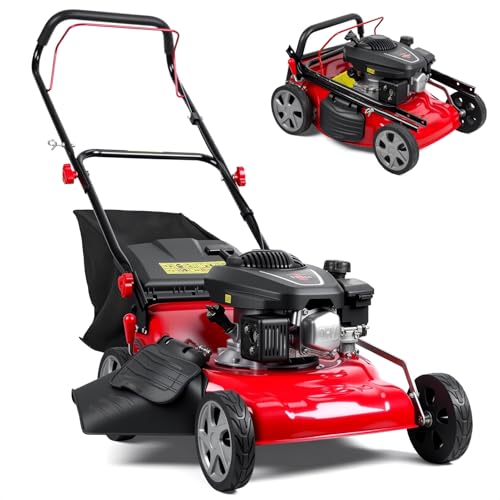
The PowerSmart EasyCut 18-Inch Gas Lawn Mower is a straightforward push mower designed for homeowners who need reliable performance on small to medium-sized lawns. With its 144cc 4-stroke OHV engine and 18-inch steel deck, this mower targets budget-conscious shoppers, first-time buyers, and those with compact yards up to a quarter acre. It's a practical tool for weekly mowing, mulching fall leaves, or keeping the grass tidy before a backyard barbecue.
When it comes to cutting performance, the 3-in-1 system gives you flexibility: mulch clippings for lawn health, bag them for a clean finish, or side discharge when grass is thick. The 6-position height adjustment lets you dial in the cut from 1 to 3 inches, so you can avoid scalping on uneven ground or leave grass longer during hot summer months. Many users find the 18-inch width nimble enough to navigate around flower beds and garden hoses, though it may take more passes on a larger lawn. The rear bag collects clippings reasonably well, and emptying it is quick – a plus when you're trying to finish before dinner.
Build quality is a highlight for the price. The steel deck is powder-coated to resist rust and impact, and the lightweight 55-pound frame makes it easy to push and maneuver. The handle folds without tools, allowing you to store the mower vertically in a shed or garage corner – a real advantage for apartment dwellers or anyone with limited space. Assembly is tool-free, and you can have it ready to mow in under 10 minutes. The rubberized grip handle is comfortable for most users, though taller folks might wish for a bit more height adjustability.
The engine is a key selling point: the 144cc OHV powerplant starts reliably in 1-2 pulls thanks to the auto choke and recoil starter. It sips gas, so you won't be refueling often during a typical mowing session. Maintenance is straightforward – access to the oil dipstick and air filter is easy, and blade replacement is simple with basic tools. Noise levels are typical for a gas mower, so early morning mowing might disturb neighbors, but the engine is not excessively loud.
Realistically, this mower has limitations. The 18-inch width means more laps on a 1/3-acre lot, and there's no self-propelled drive, so you'll need to push it yourself – fine for flat ground but tiring on slopes. The grass bag capacity is not specified, but based on its size, expect to empty it frequently during peak growth. Some users may prefer a larger cutting deck or a self-propelled model for convenience. However, for its price, the PowerSmart EasyCut offers excellent value.
Overall, the PowerSmart EasyCut is a smart buy for homeowners with small lawns, renters with tiny yards, or anyone looking for an affordable gas mower that's easy to store and maintain. It handles the basics of lawn care reliably, and its lightweight design makes it a good choice for elderly users who don't want to wrestle with a heavy machine. If your yard is under a quarter acre and you prioritize simplicity and budget, this mower is worth considering.
The PowerSmart EasyCut offers a 3-in-1 cutting system that lets you switch between mulching, bagging, and side discharge. The 18-inch steel blade is sharp enough to handle typical grass growth, and the 6-position height adjustment (1 to 3 inches) gives you control over the final cut. For mulching, the mower recirculates clippings finely, returning nutrients to the soil – ideal for eco-conscious homeowners. Bagging is efficient for a clean look, though the bag may fill quickly on thick, damp grass. Side discharge works well for tall growth, reducing clogs and saving time. The cutting width is best for small to medium lawns; larger areas will require more passes.
Many users report that the mower cuts evenly on flat terrain, but scalping can occur on uneven ground if the height is set too low. The lightweight design helps you maneuver around obstacles, but it also means the mower may bounce on bumpy lawns. Overall, the cutting performance is solid for the price point, with reliable grass handling for routine weekly maintenance.
The heart of the PowerSmart EasyCut is a 144cc 4-stroke OHV engine. This overhead valve design provides good torque for a push mower of this size, making it capable of cutting through thick grass without bogging down. The recoil starter with auto choke ensures easy starting, often in 1-2 pulls even after the mower has been sitting for a few days. The engine runs on regular unleaded gasoline and is relatively fuel-efficient, so you can mow a small lawn several times on a single tank.
Maintenance is straightforward: the oil dipstick is easy to access for checking levels, and the air filter can be cleaned or replaced without major disassembly. The engine is not overly loud compared to other gas mowers, but it's still louder than electric models. For suburban lawns, the noise is acceptable for daytime mowing. Overall, the engine delivers dependable power for the mower's intended use – small to medium yards where ease of use and reliability matter more than raw horsepower.
Pros
- Lightweight and easy to maneuver around flower beds and garden hoses.
- Foldable handle for compact storage in a garage or shed.
- 3-in-1 cutting options offer versatile lawn care for mulching, bagging, or side discharge.
- Self-propelled drive reduces user effort on slopes and uneven ground.
Cons
- Limited cutting height adjustment options may not suit all grass types or desired lawn heights.
- Gas engine requires regular maintenance (oil changes, spark plug checks) compared to electric models.
- Brand is relatively new, so long-term durability is unproven based on available user reviews.
The Smalibal 131cc Gas Self-Propelled Lawn Mower is a budget-friendly walk-behind mower designed for homeowners with small to medium yards. It combines the power of a gas engine with the convenience of self-propulsion, making it a solid choice for first-time mower buyers, budget-conscious shoppers, or anyone looking for an affordable upgrade from a basic push mower. With a foldable handle and lightweight build, this mower also suits those with limited storage space, such as apartment dwellers or suburban residents with small sheds.
In terms of cutting performance, the 131cc engine provides enough torque to handle overgrown grass, thick weeds, and even light brush. The high-strength steel blades work well for mulching leaves or bagging clippings, and the 3-in-1 system lets you switch between mulching, rear bagging, and side discharge without tools. The 50-liter grass bag has a wide opening that makes emptying quick, though you may need to empty it more often in tall or damp grass. According to the product description, the mower can collect a large amount of grass before needing a trip to the compost pile, which is practical for weekly lawn maintenance.
Build quality focuses on lightweight materials and convenience. The mower features a folded design that reduces its footprint for storage, and the self-propelled rear-wheel drive gives good traction on gentle slopes or uneven terrain. The big wheels help with maneuverability around flower beds and garden hoses, and the overall weight is manageable for most users. However, the deck material is not specified in the specs, so we can't confirm if it's steel or polymer. Given the low price point, it's likely a steel deck with a basic paint finish - adequate for regular use but possibly prone to rust if not stored properly.
Ease of use is a highlight. The self-propelled system reduces the effort needed on slopes, and the push-button start simplifies the starting process (though it may still require a pull cord as a backup). Assembly is reportedly straightforward, with clear instructions included. Maintenance follows typical gas mower routines: checking oil levels, cleaning or replacing the air filter, and sharpening the blade each season. The foldable handle also allows for vertical storage, a nice touch for cramped spaces.
Realistically, this mower has limitations. The cutting height adjustment range isn't detailed in the specs, so you may have fewer options for fine-tuning your lawn height. Gas engines are louder and emit fumes, so it's less eco-friendly than electric alternatives and may not be ideal for early-morning mowing in quiet neighborhoods. The brand is relatively new, so long-term reliability is unknown - though the price makes it a low-risk entry point for gas mower ownership.
Overall, the Smalibal 131cc Gas Self-Propelled Lawn Mower offers good value for budget-minded homeowners with small to medium yards, especially if you want self-propelled assistance on slopes. It's a practical choice for routine lawn care, mulching fall leaves, or clearing overgrown patches. If you prioritize quiet operation or eco-friendliness, consider an electric mower instead, but for affordable gas power with convenient storage and versatile cutting options, this mower is worth a look.

Pros
- Saves your arm from repetitive pulling on hard-starting equipment
- Universal hex fit works with most popular small engine brands (Troy Bilt, Stihl, B&S, etc.)
- Low-cost solution compared to replacing a carburetor or starter assembly
- Small and portable – easy to carry in a pocket or pouch
Cons
- Requires a drill with decent torque (at least 18V cordless or plug-in) to overcome compression
- Plastic components may wear faster under heavy daily use by commercial landscapers
- Not compatible with engines that use a square or proprietary starter socket
If you have ever spent ten minutes pulling the starter cord on a stubborn trimmer or snow blower only to flood the engine, the runfider Jump Starter Tool Adapter is a clever fix. This small accessory turns your handheld drill into a powered starter by engaging the engine's flywheel nut. Instead of relying on your arm, you let the drill's torque do the work. It is designed for anyone who regularly deals with hard-to-start small engines but does not want to invest in a dedicated jump starter pack.
The adapter works with any equipment that has a positive hexagonal starter socket. That covers a wide range of trimmers, lawn mowers, snow blowers, and chainsaws from brands like Troy Bilt, Stihl, and Briggs & Stratton. In real-world use, you simply insert the adapter into the machine's socket, chuck the other end into your drill, and slowly increase the drill's speed. The internal ratchet lets the adapter spin the engine without locking onto it, so you can pull it off easily once the engine fires up. It works best with a variable-speed drill; a trigger lock on high speed can overshoot and damage the adapter or the engine.
Build quality is adequate for the price. The body uses a mix of high-hardness alloy steel at the engagement end and plastic for the drill chuck interface. It will hold up well for occasional home use, but commercial landscapers using it multiple times daily may want a beefier all-steel version. The compact size (5 x 3 x 1 inches) means you can stash it in a tool bag or even a coat pocket without adding bulk.
One real limitation is that you need a drill with enough torque. Low-voltage screwdrivers or weak cordless drills may stall on a high-compression engine. A standard 18V or 20V drill with at least 300 inch-pounds of torque handles most small engines fine. Also, this adapter only works on hex sockets; if your equipment uses a square socket or a specialized keyed starter, you will need a different tool. The plastic components also feel a bit thin around the drill connection, so be careful not to overtighten the chuck.
Overall, the runfider Jump Starter Tool Adapter is a smart, budget-friendly tool for DIY homeowners and weekend warriors who want to avoid the frustration of manual starting. It is not a heavy-duty industrial solution, but for occasional use on lawn equipment, snow blowers, and trimmers, it saves time and muscle strain. The one-year warranty adds peace of mind for the price. If you already own a decent drill, this little adapter is a no-brainer addition to your workshop.

Pros
- Starts reliably on the first pull thanks to auto choke
- Strong enough to handle overgrown grass and weeds without bogging down
- Easy height adjustment with a single lever that works on all four wheels simultaneously
- Lightweight enough for most users to maneuver and store
Cons
- Plastic motor cover and dipstick housing can crack under vibration, leading to oil leaks
- Height adjustment lever may slip during use, requiring a zip tie to hold position
- Not designed for slopes over 15 degrees or hilly terrain
The BILT HARD 20 inch gas lawn mower is a budget friendly push mower aimed at homeowners maintaining small to medium sized flat yards. Powered by a 144cc 4-cycle OHV engine with an auto choke system, it eliminates the hassle of priming and choking, so you just pull the cord and it fires up. The 20 inch cutting deck is a practical size for navigating gates and storage areas while still covering decent ground.
This mower is best suited for people with a quarter to half acre lot that doesn't have steep hills. The 8 position height adjustment lets you go from a short 0.7 inch trim to a taller 3.2 inch cut, which is useful for different grass types or seasonal conditions. In real world use, the engine handled thick grass and weeds without stalling, and the side discharge kept clippings spreading evenly. The foam wrapped grip and ball bearing wheels make pushing comfortable on flat turf, though the mower is not self propelled so you'll need to supply the legwork.
Build quality is a mixed bag. The metal cutting deck feels solid, but several components like the motor cover, dipstick housing, and wheel retainers are plastic. Some users reported excessive vibration that caused those parts to crack or fall off within hours of use. The height adjustment lever also has a tendency to slip, though a simple zip tie fix works. That said, many owners have put multiple seasons on their mower without issues, so your mileage may vary depending on how rough the terrain is.
Ergonomics are decent for a budget mower. The handle is adjustable and the grip stays comfortable even after an hour of mowing. At 51 pounds, it's not overly heavy to lift or push. Storage is straightforward thanks to the compact footprint. Just be mindful that you shouldn't tilt the mower on its side to avoid oil entering the combustion chamber, as noted in the manual.
Drawbacks are worth considering before buying. The plastic parts are a real durability concern, and the mower isn't meant for slopes. If you have a perfectly flat lawn and want a mower that starts easily and cuts well without breaking the bank, the BILT HARD delivers. But if you need something that will survive rough use or tricky terrain, look at a more rugged model with a metal frame and better vibration dampening. For the price, it's a solid value for light duty homeowners.
Engine: 144cc 4-Cycle OHV, 3.8 HP
Cutting Width: 20 inches
Cutting Heights: 8 positions, 0.7 to 3.2 inches
Wheels: 7 inch rear, 6 inch front with ball bearings
Weight: 51 pounds
Dimensions: 57.4 x 21.6 x 38.5 inches
Deck Material: Metal
Discharge: Side
Start Type: Auto choke, recoil pull
Fuel Type: Gasoline (unleaded)

Pros
- Converts any cordless drill into a jump starter for small engines, saving the cost of a dedicated starter tool
- Eliminates the frustration of pulling a stuck cord, especially on cold mornings or after long storage
- Compact and lightweight design makes it easy to carry on the job or store in the garage
Cons
- Only compatible with engines that have a manual pull start and a flywheel with a central hole or slot (check your model first)
- Requires a drill with sufficient torque and speed to spin the engine quickly, not ideal for high-compression or large engines
- Plastic components may wear over time with heavy daily use in commercial landscaping settings
The AOLKKSI Electric Engine Drill Bit Adapter is a clever little accessory that turns a standard cordless drill into a jump starter for small engines. It's designed specifically to replace the manual pull-start mechanism on many Craftsman and Troy Bilt string trimmers, but it also works with edgers, leaf blowers, and cultivators that use a similar starting method. For DIYers and light-duty landscapers, this means no more wrestling with a stubborn recoil starter.
In real-world use, this adapter shines when you need to get a trimmer running quickly. Simply insert the adapter into your drill's chuck, locate the hole or slot on the engine flywheel, and let the drill spin the engine. It typically takes just a few seconds to fire up, even after the trimmer has sat unused for months. The adapter is made from CRV steel and plastic, so it holds up well under normal backyard or light commercial use. It's compact enough to toss into a gear bag or glove box, so you always have it handy.
Build quality is decent for the price. The steel shaft feels solid, and the plastic collar provides a secure grip in the drill chuck. However, the plastic bushing that centers the adapter on the flywheel may wear down over time if used several times a day with a heavy drill. For homeowners trimming their yard once a week, this won't be an issue. For pros running multiple trimmers daily, it's worth checking periodically for wear. Also, make sure your drill can spin at a high enough RPM - a standard 20V brushless drill works great.
The biggest limitation is compatibility. Not all pull-start trimmers have a flywheel hole that matches this adapter. You'll want to measure or verify with the part numbers (49MASCBP966 / 49MESCBP966). Also, if your engine has a compression release or is very large (like a commercial backpack blower), you might need more torque than a typical drill provides. But for the common homeowner-grade trimmers, this adapter is a real time-saver.
Overall, the AOLKKSI Electric Engine Drill Bit Adapter is a practical upgrade for anyone tired of pulling cords. It's inexpensive, easy to use, and can save your arm from unnecessary strain. For DIYers with a collection of small gas tools, it's a no-brainer addition to the toolbox. Just check compatibility first, and you'll wonder why you didn't get one sooner.

Pros
- Fits a wide range of mower models from Husqvarna, Craftsman, and Poulan
- Lightweight and easy to install with basic hand tools
- Durable plastic construction resists dry rot and cracking
- Affordable price point compared to OEM parts
Cons
- Some users report the gas cap can fail or separate after a few uses, so consider reusing your old cap
- Not an exact OEM replica, so fitment may be slightly different on some models
- Plastic material may not hold up as long as the original in extreme conditions
If you own a Husqvarna, Craftsman, or Poulan riding mower and your fuel tank has finally given up the ghost, the FancyTark 532184900 replacement tank is a practical and wallet-friendly fix. This is a direct-fit plastic gas tank designed to replace cracked, rotted, or leaking originals on a huge range of models, from the Craftsman LT1000 to the Husqvarna YTH1842. It's not a performance upgrade, it's a straightforward repair part that gets your mower back in action without breaking the bank.
This tank is best suited for homeowners and DIYers who maintain their own lawn equipment. If you're comfortable with basic wrenching, you can swap this in under 30 minutes. The tank fits perfectly on many popular models, and the installation is as simple as removing two bolts, disconnecting the old fuel line, and hooking up the new one. No special tools or modifications needed. That ease of use is a big win for anyone who just wants their mower running again.
Build quality is decent for the price. The plastic feels sturdy and resists deformation, which is a common issue with older tanks. However, the most consistent criticism from users is the gas cap. Several reviewers report the cap breaking or separating after a few uses, which can lead to fuel leaks and strong gas odors. The good news is that many found the original cap from their old tank fits this replacement just fine. So if your old cap is still in good shape, hang onto it and use that instead.
On the jobsite or in the workshop, this tank does exactly what it's supposed to do. It holds fuel, it doesn't leak (with a good cap), and it bolts right up. The lightweight plastic makes handling easy, and the universal fit across multiple brands means you don't have to hunt down a specific OEM part. Just double-check your model number against the compatibility list to be sure.
Overall, the FancyTark 532184900 is a solid choice for a budget-friendly fuel tank replacement. The cap issue is a real drawback, but it's easily solved by reusing your original cap. If you need a quick, affordable fix for a common problem, this tank is worth buying. Just plan on using your old cap and you'll be back to mowing in no time.
Fuel Type: Gasoline
Material: Plastic
Item Weight: 0.37 kg (13 oz)
Package Dimensions: 12.95 x 7.32 x 6.57 inches
Replaces OEM Part Numbers: 184900, 109202X, 105738X, 532184900, 532109202
Compatible Brands: Husqvarna, Craftsman, Poulan, Roper
This tank fits a wide range of Husqvarna models including LT 1538 B, C, D, LT 18542, LTH 1742, YTH 1842, and many Y-series models. It also works with Craftsman DYT4000, LT1000, LTX-1000, T1000, and LT2000. For Poulan, it fits PP1238, PP1238A, PO14542B, and others. Always verify your mower's model number before ordering.

Pros
- Clear, jargon-free explanations suitable for novices and experienced tool owners alike
- Comprehensive scope spanning both 2-cycle and 4-cycle small yard equipment engines
- Generous physical book format allows easy reading beside tools on the workbench
- Systematic diagnostic checklists eliminate costly trial-and-error parts swapping
Cons
- Paperback cover requires mindful handling to avoid grease and oil stains in the shop
- Does not include manufacturer-specific torque charts for every proprietary engine variant
- Focuses on carbureted equipment rather than newer electronic fuel injected small engines
Small Engine Repair Mastery serves as an indispensable workshop reference designed to take the intimidation out of small outdoor power equipment maintenance. Whether you are dealing with a gummed-up push mower in the spring, a portable generator that refuses to start right before a storm, or a chainsaw stalling under load, this guide provides the foundational knowledge required to troubleshoot issues methodically. It is tailored specifically for homeowners, rural property owners, landscapers, and DIY mechanics who prefer turning their own wrenches over waiting weeks for a repair shop turnaround.
The manual approaches small engine mechanics through a logical process of elimination centered on fuel, spark, and compression. It walks readers through carburetor teardowns, float bowl adjustments, jet unclogging, and diaphragm replacements, which account for the vast majority of small engine failures after extended storage. The step-by-step breakdowns for testing ignition coils, evaluating spark plug health, and checking valve clearances give equipment owners clear parameters to determine why a motor cranks without firing.
From a workshop usability standpoint, the 8.5 by 11 inch dimensions are well suited for workbench reference. You can keep it open near your socket set and carb cleaner while disassembling components. The layout uses legible typography that is easy to scan from a standing position. Because it is a paperback, keeping greasy gloves off the pages or slipping the current working section into an acrylic stand helps preserve the paper against shop grime and chemical splashes.
Keep in mind that this book provides universal diagnostic and service principles rather than exhaustive factory service sheets. While it covers standard clearances and rebuild techniques common to Briggs & Stratton, Honda, Kohler, and generic small displacement clones, you will still want to cross-reference specific model documentation for critical head bolt torque sequences or unique governor spring mounting holes on obscure commercial equipment.
For anyone managing a shed full of gas-powered tools, this manual pays for itself after the very first successful repair. It offers clear, accessible mechanical instruction that gives hands-on operators the skill and confidence to keep their gear running at peak performance year after year.
This manual provides broad, practical troubleshooting coverage for standard residential and light commercial equipment categories:
Lawn Mowers and Tractors: Walk-behind mowers, zero-turn units, and lawn tractors powered by single and twin-cylinder four-stroke engines. Covers blade clutch engagement, carb surging, oil leaks, and governor adjustments.
Portable Generators: Inverter and open-frame emergency generators. Focuses on stale fuel recovery, auto-choke mechanisms, idle control solenoids, and spark arrestor maintenance.
Chainsaws and Trimmers: High-revving two-stroke engines requiring specific fuel-to-oil ratios. Covers diaphragm carburetors, impulse lines, muffler screens, clutch drums, and chain oiler pumps.
Pressure Washers: Horizontal and vertical shaft engines mated to high-pressure water pumps. Focuses on unloader valve interactions, thermal relief, and throttle link setups.
To get the most value out of this repair guide, having a basic set of dedicated small engine tools on your workbench is recommended:
Essential Hand Tools: Metric and SAE socket sets, precision screwdrivers, needle-nose pliers, spark plug sockets (5/8 inch and 13/16 inch), and feeler gauges for setting valve lash and plug gaps.
Diagnostic Gear: An inline spark tester to safely verify ignition health, an inexpensive compression gauge, and a digital multimeter for checking low-voltage wiring and kill switches.
Cleaning Supplies: Aerosol carburetor cleaner, ultrasonic cleaning bath for heavily varnished brass jets, ultra-fine copper cleaning wires, and clean shop towels to keep open crankcases free from contamination.
Before pulling the starter cord, ensure the mower is on a flat, stable surface. This prevents the unit from rolling unexpectedly during the start sequence. Verify that the fuel tank contains fresh gasoline, as old fuel is the most common cause of starting failures in small engines. The engine control switch must be in the “On” position, and the throttle should be set to “Fast” to provide enough fuel for ignition.
| Check Item | Required Setting/State | Why It Matters |
|---|---|---|
| Fuel Tank | Fresh gasoline (less than 30 days old) | Stale fuel clogs the carburetor |
| Engine Switch | On | Allows electrical ignition |
| Throttle | Fast | Provides sufficient fuel flow |
| Choke | On for cold start, Off for warm | Richens fuel mixture for ignition |
| Air Filter | Clean and dry | Ensures proper air intake |
Begin by checking the air filter. A dirty filter restricts airflow, causing the engine to run rich and fail to start. Remove the filter and tap it gently to dislodge loose debris. If it is heavily soiled, wash it with mild soap and water, then let it dry completely before reinstalling. This simple step often resolves starting issues that seem more complex.
Next, inspect the spark plug. Remove it using a socket wrench and check the electrode for carbon buildup or damage. A healthy spark plug should have a clean, bright electrode. If it is fouled, clean it with a wire brush or replace it with a new one. The gap between the electrodes should match the manufacturer’s specification, typically around 0.025 to 0.030 inches for most Craftsman models. A correct gap ensures a strong spark for reliable ignition.
Once these checks are complete, prepare to start the engine by holding the starter handle firmly and pulling the cord quickly and smoothly.
- Do not let the cord snap back, as this can damage the starter mechanism during the starting process.
- If the engine does not start after two or three pulls, wait a few seconds before trying again to avoid issues.
- This pause allows the fuel to settle and prevents flooding the engine, ensuring a smoother ignition attempt.
- For cold starts, keep the choke engaged until the engine fires, then move it to the “Off” position.
If your mower has an electric start option, you can use a drill adapter to assist with starting. These tools are particularly useful for older engines or when the recoil starter is difficult to pull. Insert the adapter into the starter socket and connect it to a power drill. Turn the drill on to spin the engine, which can be easier than manual pulling. This method is safe and effective when used correctly, following the adapter’s instructions.
After the engine starts, let it idle for a minute to warm up. Adjust the choke to the “Off” position if it is still engaged. The engine should run smoothly at idle. If it stalls or runs roughly, check the fuel mixture and air filter again. A properly tuned engine runs quietly and consistently, indicating that all components are working together. This warm-up period is crucial for lubricating the engine parts and preventing wear.
Common Starting Issues and Solutions
Stale fuel is the leading cause of starting problems in gas mowers. Gasoline degrades over time, forming varnish that clogs the carburetor jets. If your mower has been sitting for more than 30 days, drain the old fuel and refill with fresh gasoline. Adding a fuel stabilizer to the tank can prevent this issue in the future. Always use fuel that is less than 30 days old for reliable starting.
A clogged carburetor is another frequent issue. Over time, fuel residues build up inside the carburetor, blocking the fuel passages. This prevents the correct fuel-air mixture from reaching the engine. Cleaning the carburetor requires disassembling it and using a carburetor cleaner. If you are not comfortable with this task, consider having a professional service it. A clean carburetor ensures smooth fuel flow and easy starting.
Worn or damaged spark plugs can also cause starting difficulties. A spark plug that is too worn or fouled with carbon cannot create a strong enough spark to ignite the fuel. Replace the spark plug if it shows signs of wear or if it is more than a season old. Using the correct spark plug type and gap is essential for optimal engine performance. A new spark plug often resolves starting issues immediately.
Incorrect choke settings can prevent the engine from starting. The choke enriches the fuel mixture, which is necessary for cold starts. If the choke is left on for a warm start, the engine will run too rich and stall. Conversely, if the choke is off for a cold start, the engine may not have enough fuel to ignite. Always adjust the choke based on the engine temperature for reliable starting.
Safety Precautions for Starting Your Mower
Always wear appropriate safety gear when starting a gas mower. This includes sturdy shoes, long pants, and eye protection. The recoil starter can kick back, so hold the handle firmly and keep your body clear of the blade area. Never start the mower with the blade engaged or the safety interlock bypassed. Follow the manufacturer’s safety guidelines to prevent injury.
Ensure the area is clear of obstacles, people, and pets before starting the engine. A sudden start can cause the mower to move unexpectedly. Keep your hands and feet away from the blade and moving parts. If you are using an electric start adapter, make sure the drill is securely held and the adapter is properly connected. This reduces the risk of accidents during the starting process.
Do not start the mower in an enclosed space, as exhaust fumes can be dangerous. Always start the engine in a well-ventilated area. If you smell gasoline, stop immediately and investigate the source of the leak. A fuel leak can lead to fire or explosion. Address any leaks before attempting to start the engine again. Safety should always be the top priority when operating a gas mower.
Maintenance Tips for Reliable Starting
Regular maintenance is key to keeping your gas mower running smoothly. Change the oil as recommended by the manufacturer, typically every 50 hours of use. Fresh oil lubricates the engine parts and prevents wear. Use the correct oil type and grade for your mower. A well-lubricated engine starts easier and lasts longer.
Clean the air filter every 25 hours of use. A dirty filter restricts airflow and causes the engine to run rich. Tap the filter to remove loose debris or wash it with mild soap and water. Let it dry completely before reinstalling. A clean air filter ensures proper air intake and efficient combustion. This simple task can significantly improve starting performance.
Inspect the spark plug every season. Remove it and check for carbon buildup or damage. Clean or replace it as needed. A healthy spark plug ensures a strong spark for reliable ignition. Keep a spare spark plug on hand for quick replacements. This proactive approach prevents starting issues and extends the life of your engine.
Store your mower properly during the off-season. Drain the fuel tank or add a fuel stabilizer to prevent fuel degradation. Clean the deck and remove any grass clippings. Store the mower in a dry, cool place. Proper storage prevents rust and keeps the engine in good condition for the next season. This ensures easy starting when you need it most.
By following these steps and maintenance tips, you can ensure your Craftsman gas lawn mower starts reliably every time. Addressing common issues like stale fuel, clogged filters, and worn spark plugs prevents most starting problems. Always prioritize safety and follow the manufacturer’s guidelines for best results. With proper care, your mower will provide years of reliable service for your lawn care needs.
If you are dealing with a specific model issue, our lawn mower blade bolt guide can help with related maintenance tasks. Understanding the basics of engine care makes the starting process much smoother and less frustrating for any homeowner.
For those interested in upgrading their equipment, check out our electric mower options for a quieter, maintenance-free alternative. These modern options offer different starting mechanisms that may suit your needs better. Choosing the right tool for the job ensures a positive lawn care experience.
Remember, a well-maintained gas mower is a reliable one. Take the time to perform these checks and maintenance tasks, and you will enjoy a hassle-free mowing season. The effort you put into care now saves you from starting headaches later. Your lawn will thank you for the consistent care and attention.
Start your Craftsman gas lawn mower with confidence by following these practical steps. From checking the fuel to adjusting the choke, each action plays a role in a successful start. Stay safe, stay prepared, and enjoy a smooth mowing experience. Your lawn is ready for a fresh cut, and your mower is ready to deliver it.



Write Your Review
No reviews yet. Be the first to share your experience!