


Most non-starting Honda lawn mowers are caused by stale fuel, a fouled spark plug, or a restricted air filter rather than complex engine failure. These common issues can often be resolved at home using basic tools and the correct how to fix a honda lawn mower that wont start diagnostic sequence. Understanding the specific symptoms, such as whether the engine cranks but does not fire or the pull cord is stuck, helps narrow down the repair quickly.
Starting with a visual inspection of the fuel system and spark plug is the safest first step before disassembling any components. Many homeowners find that simply replacing the fuel with fresh gasoline or cleaning the carburetor bowl solves the problem. For those needing specific parts, the mower maintenance guide provides useful context on general upkeep that prevents these issues. Addressing the root cause ensures the mower runs reliably and extends the life of the engine.

Pros
- Genuine Honda parts guarantee exact fit and durability
- Complete kit eliminates guesswork when servicing your mower
- Blade set sharpens cutting performance for a manicured lawn look
- Easy to install with basic tools; no special skills required
Cons
- Only fits the specific HRR216 serial range; verify compatibility before buying
- Does not include fuel filter or additional maintenance items like a new air filter pre-cleaner
This Honda HRR216 Series Tune-Up Kit is a practical maintenance package for anyone who owns a compatible Honda walk-behind mower. Rather than hunting down individual parts, you get an air filter, spark plug, a quart of 10W30 oil, and a matched set of upper and lower blades. It is designed for serial numbers MZCG-6000001 through MZCG-7999999, so double check your mower's ID tag before ordering.
For homeowners who cut their own grass, this kit delivers noticeable improvements in engine response and cut quality. The new air filter helps the engine breathe cleaner, while the NGK spark plug ensures consistent ignition. After installing, you will likely hear a smoother idle and feel stronger power when the blade engages. The included oil is the correct weight for Honda small engines, and changing it during the tune-up adds to long-term reliability.
Build quality is what you would expect from Honda OEM parts. The blades are stamped steel with factory edges, and the air filter fits snugly in the housing. Installation takes about 30 minutes with basic wrenches and a socket set. The kit does not require any special skills, making it a solid choice for DIYers who want to avoid dealer service costs.
One realistic drawback is the limited serial range. If your mower falls outside MZCG-6000001 to MZCG-7999999, you will need a different kit. Also, the bundle does not include a fuel filter or extra foam pre-cleaner, which some owners like to replace at the same time. But as a core tune-up package, it covers the essentials.
Overall, this is a smart buy for any Honda HRR216 owner who wants to keep their mower running at its best. It is a time saver, a money saver, and a reliable way to bring back that like-new performance for the cutting season.

Pros
- Easy to install with basic hand tools, saving time and money on labor.
- Sturdy construction feels robust and durable, with no flimsy plastic components.
- Compatible with multiple popular Honda lawn mower models, increasing its usefulness.
- Affordable price point makes it a budget friendly fix for a common failure point.
Cons
- As a third party part, fitment may not be as perfect as the original Honda component, though it generally works well.
- Some users might prefer an OEM part for peace of mind regarding long term reliability.
- No detailed installation manual included beyond basic instructions, which could be a challenge for absolute beginners.
If your Honda lawn mower's pull start has given up the ghost, the wfsulee recoil starter is a practical replacement that gets you back to cutting grass without breaking the bank. Designed to fit several HRR216 series models, including the HRR2169PKA and HRR216K9VKAA, this part steps in when the original starter rope snaps or the recoil mechanism wears out. It's a straightforward fix for DIYers and homeowners who prefer to tackle small engine repairs themselves rather than hauling the mower to a shop.
Installation is about as simple as it gets for a pull start replacement. You just remove the old assembly, bolt this one in place, and reattach the starter rope. No special tools required, just a basic socket set and maybe a screwdriver. The whole job can take under thirty minutes even if you are not mechanically inclined. The materials feel solid for a third party part, with a metal recoil housing and a rope that doesn't fray easily. The red color matches the typical Honda aesthetic, though that is more cosmetic than functional.
In real world use, this starter handles the repeated pulls of a busy mowing season without complaint. The recoil spring returns smoothly, and the engagement with the engine flywheel is positive. It is not an OEM Honda part, but the build quality is good enough for regular home use. If you are a contractor running a fleet of mowers, you might want the extra reliability of a genuine part. But for the average homeowner, this wfsulee unit offers an excellent balance of price and performance.
One potential limitation is that as a universal fitment for multiple models, the bolt holes or rope length might be slightly off for some specific variants. Most users report it works fine, but there is always a slim chance you need to tweak the alignment. Also, the package includes just the starter assembly with no extra hardware or detailed guide. That said, the online compatibility list is accurate, and installation videos from similar models fill in any gaps. Overall, if your Honda mower pull start is shot, this is a sensible, cost effective replacement that gets the job done.
Pros
- Exact OEM fit for compatible Honda mowers - no guesswork.
- Easy to install with standard hand tools in minutes.
- Restores full adjustability to mower handle for comfortable operation.
- Genuine Honda part ensures long-term durability and reliability.
Cons
- Limited compatibility - only fits specific Honda mower models; must verify by model, type, and serial number.
- Does not include any additional hardware beyond the adjuster kit itself.
- Plastic construction may not withstand heavy abuse like metal alternatives, though it meets OEM specs.
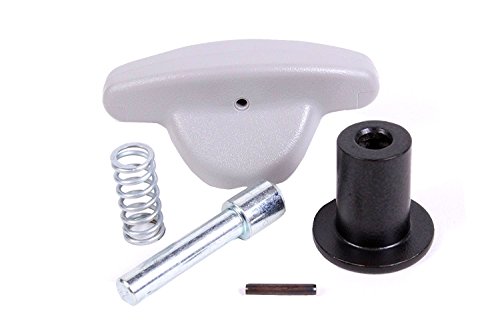
The Honda 06530-VL0-315ZA Adjuster Kit is a genuine OEM replacement part designed for specific Honda lawn mower models. This small but critical component allows you to adjust your mower's handle height, making it easier to maneuver and store. While it's not a power tool in the traditional sense, it's an essential maintenance item for anyone who owns a compatible Honda walk-behind mower.
This kit is best suited for homeowners and DIY enthusiasts who prefer to repair their own equipment rather than replace it. If your mower's handle adjuster has broken or become loose, this OEM part restores full functionality without the hassle of aftermarket modifications. The installation is straightforward - you only need basic hand tools and about 10 minutes of your time.
In real-world use, the adjuster kit performs exactly as the original part did, providing smooth and secure handle height adjustments. The gray plastic feels robust and matches the original material quality. It's lightweight and won't affect your mower's balance or handling. The only catch is compatibility: you must verify your mower's model, type, and serial number before purchasing, as this part does not fit all Honda mowers.
Build quality is typical of genuine Honda parts - reliable and durable for normal residential use. However, if you frequently fold or adjust your handle, the plastic may eventually wear, though that's true of any OEM part. For most users, this adjuster kit will last several seasons.
Overall, if you own a compatible Honda mower and need to fix a broken handle adjuster, this OEM kit is the right choice. It's affordable, easy to install, and restores your mower's usability. For DIYers who value keeping their equipment in top shape, this is a smart buy.
Color: Gray
Size: 06530VL0315ZA_HONDA
Dimensions: 5 x 2.99 x 1.42 inches
Weight: 0.0625 Pounds
Product Group: Lawn & Patio
Binding: Tools & Home Improvement
Diagnosing and Fixing a Non-Starting Honda Lawn Mower
A Honda lawn mower that refuses to start usually presents one of three distinct behaviors: the engine does not turn over at all, the engine cranks but does not fire, or the engine fires briefly and stalls. Identifying which of these applies is the critical first step in the repair process. Each behavior points to a different system within the mower, such as the fuel delivery, ignition, or air intake. Misdiagnosing the symptom often leads to unnecessary parts replacement or damage to the engine.
| Symptom | Likely System | Primary Check |
|---|---|---|
| Engine does not turn over | Recoil Starter / Battery | Pull cord tension, battery voltage |
| Engine cranks, no fire | Fuel / Ignition | Spark plug condition, fuel flow |
| Engine fires and stalls | Carburetor / Air Filter | Carb bowl, air filter cleanliness |
Before performing any checks, ensure the mower is on a flat, stable surface and the spark plug wire is disconnected from the plug. This safety measure prevents accidental engine start while you are working on the components. Always allow the engine to cool down if it has been running recently. Safety is paramount when handling fuel and sharp blade edges.
Check the following items before proceeding to deeper repairs:
- Fuel tank level and fuel age
- Choke position and throttle setting
- Spark plug wire connection
- Air filter cleanliness and condition
- Recoil starter cord movement
Fuel System and Carburetor Checks
Stale fuel is the most common cause of a non-starting gasoline engine. Gasoline degrades within 30 to 60 days, forming gums and varnishes that clog the carburetor jets and passages. If the fuel in the tank is older than one month, drain it and replace it with fresh, stabilized gasoline. Many Honda mowers have a small fuel bowl at the bottom of the carburetor that can be drained using a small screw.
A clogged carburetor is a frequent issue in mowers that sit unused for long periods. The tiny jets in the carburetor can become blocked by debris or varnish. Cleaning the carburetor involves disassembling it, soaking the components in a dedicated cleaner, and blowing out the passages with compressed air. This process requires patience and the right tools. If you are not comfortable with this level of disassembly, a professional service may be necessary.
The fuel filter is another potential blockage point. A clogged fuel filter restricts the flow of gasoline to the carburetor, preventing the engine from starting. Inspect the fuel filter and replace it if it appears dark or clogged. A clean fuel line is also essential for proper fuel delivery. Check for any kinks or cracks in the fuel line that could prevent fuel from reaching the engine.
Ignition System and Spark Plug Inspection
A fouled or damaged spark plug is a leading cause of no-start conditions. Remove the spark plug and inspect the electrode and insulator. If the plug is covered in black soot, it indicates a rich fuel mixture or a shorted plug. If the electrode is eroded or the insulator is cracked, the plug needs replacement. Honda mowers typically use specific spark plug models, so verify the correct type before purchasing a replacement.
Test the spark plug by reconnecting the wire and grounding the plug body against the engine block. Pull the starter cord while observing the gap. A strong, bright blue spark indicates a healthy ignition system. A weak or absent spark suggests a problem with the plug, the wire, or the ignition coil. If there is no spark, check the connections at the plug and the coil. Ensure the wire is seated firmly in both terminals.
The spark plug wire can also degrade over time. A cracked or frayed wire can cause a loss of spark. Inspect the wire for any visible damage. If the wire is compromised, replace it with a new one. The ignition coil is a more complex component to test and should be checked by a professional if the plug and wire are in good condition but there is still no spark. This component generates the high voltage needed for the spark plug to fire.
Air Intake and Choke Mechanism
A dirty or clogged air filter restricts the airflow into the engine, causing a rich mixture that is difficult to start. Remove the air filter and inspect it. If it is a foam filter, wash it with mild soap and water, then dry it completely before reinstalling. If it is a paper filter, tap it gently to remove debris or replace it if it is damaged. A clean air filter ensures the engine gets the right air-fuel ratio for starting.
The choke mechanism helps enrich the fuel mixture for cold starts. Ensure the choke is in the correct position for the engine temperature. If the choke is stuck in the on position, the engine may flood. If it is stuck in the off position, a cold engine may not start. Check the choke linkage for any obstructions or damage. The throttle setting should also be in the run position, not the stop position.
Check the following items related to the air and choke systems:
- Air filter type and condition
- Choke linkage movement and position
- Throttle setting for starting
- Intake manifold for obstructions
- Carburetor float level
Recoil Starter and Mechanical Obstructions
If the engine does not turn over at all, the recoil starter assembly may be the issue. A broken or frayed starter cord can prevent the engine from cranking. Inspect the recoil starter for any visible damage. If the cord is broken, it may need replacement. This is a more involved repair that requires disassembling the starter housing. Ensure the flywheel is not locked or obstructed by debris.
Check for any mechanical obstructions that could prevent the engine from turning. A stuck blade can stop the engine from cranking. Ensure the blade is free to rotate. Check the deck for any grass clippings or debris that could jam the mechanism. A locked engine can also be caused by a seized piston, which is a serious internal engine failure. This condition requires professional repair or engine replacement.
The recoil starter spring can also break or lose tension over time. If the cord retracts too easily or does not retract at all, the spring may be faulty. Replacing the recoil starter assembly is a common repair for this issue. The assembly includes the cord, spring, and housing. Ensure the new assembly is compatible with your specific Honda mower model. Refer to the owner’s manual for the correct part number.
Maintenance and Prevention Strategies
Regular maintenance is the best way to prevent non-starting issues. Change the engine oil as recommended in the owner’s manual. Use the correct oil viscosity for your climate. Replace the air filter and spark plug at regular intervals. Use fresh, stabilized fuel if the mower will be stored for more than a few weeks. Adding a fuel stabilizer helps prevent varnish buildup in the carburetor.
Store the mower in a dry, cool place to prevent rust and corrosion. Clean the deck and engine area after each use to remove grass clippings and dirt. Inspect the fuel system and ignition components periodically. Keeping the mower clean and well-maintained reduces the likelihood of starting problems. For more information on blade care, see our blade removal guide for similar maintenance tasks.
Adhering to the manufacturer’s maintenance schedule is crucial for long-term reliability. Honda mowers are designed to be durable, but they require proper care. Neglecting basic maintenance tasks can lead to costly repairs. A proactive approach to maintenance saves time and money in the long run. Ensure all components are in good working order before the start of the mowing season.
By following these diagnostic steps and maintenance tips, you can effectively address most non-starting issues with your Honda lawn mower. Start with the simple checks and work your way up to more complex repairs. If you are unsure about any step, consult a professional technician. Proper care ensures your mower remains a reliable tool for your lawn care needs.


Write Your Review
No reviews yet. Be the first to share your experience!