


Your Honda lawn mower engine relies on a properly gapped and clean spark plug to ignite the fuel mixture. If the engine is hard to start, runs roughly, or stalls under load, the ignition system is often the first place to check. Understanding how to change spark plug on honda lawn mower is a fundamental maintenance skill that can save you a service call. Most Honda walk-behind mowers use either a BPR5ES or BPR6ES plug, depending on the engine series.
The process involves disconnecting the spark plug wire, removing the old plug, checking the gap, and installing a new one with the correct torque. Many homeowners prefer to handle this task themselves because it requires minimal tools and takes under ten minutes. You need to identify the correct plug number from your owner’s manual or the decal on the engine.
Using the wrong heat range can lead to fouling or pre-ignition. This guide outlines the specific steps and safety checks for Honda models, ensuring you avoid common mistakes like over-tightening the thread. For related maintenance, see our mower blade bolt thread guide.

Pros
- Exact OEM fit guarantees no guesswork or adaptation needed
- Highly reliable starting and smooth engine performance
- Affordable price for genuine manufacturer part
- Long lifespan under normal use conditions
Cons
- Compatibility limited to specific Honda GCV engine models only
- May require gap verification before installation on some units
- Not a performance upgrade; purely a stock replacement plug
The Honda 98079-56846 (BPR6ES) spark plug is a genuine OEM replacement designed specifically for Honda GCV160 and GCV190 general purpose engines. These engines power a wide range of outdoor equipment, from push mowers and tillers to pressure washers and generators. If you own any Honda-powered gear in this engine family, this plug is the exact component the manufacturer intended.
This spark plug is best suited for homeowners who want to keep their equipment running reliably without costly trips to the repair shop. Replacing a worn or fouled plug solves common problems like hard starting, rough idling, and intermittent misfires. Experienced DIY users will appreciate the straightforward install: just remove the old plug, gap the new one if needed (typically pre-gapped), and tighten with a socket. No special tools are required.
In real-world use, this plug delivers instant ignition and consistent combustion. Users report that it cures long-standing starting issues and smooths out engine operation almost immediately. The OEM construction includes a nickel-alloy center electrode that resists carbon buildup and thermal degradation, so it holds up well across multiple seasons of regular mowing or tilling. The threaded shell and gasket seal tightly to prevent compression leaks, which helps maintain full engine power.
Build quality is typical of Honda parts: precise manufacturing, clean threads, and a solid crimp on the terminal. The plug itself is lightweight and compact, making it easy to store in a toolbox or glove compartment as a spare. While it does not offer any performance gain over a standard plug, that is exactly the point - it maintains the factory spec for reliable operation in everyday conditions.
One realistic limitation is that this plug only fits the specific engine models listed. If you have a different Honda engine (e.g., GXV, GC, or GX series), you will need to check cross-reference numbers. Additionally, some units may require a small gap adjustment before installation, as transit can occasionally shift the gap. Overall, for anyone maintaining a Honda GCV-powered mower or tiller, this genuine spark plug is a straightforward, inexpensive fix that restores performance and extends equipment life. It is a smart stock-up item for the workshop bench.
Brand: Honda
Model: 98079-56846 (BPR6ES)
Thread Size: 14mm (standard for small engines)
Reach: 19mm (3/4 inch)
Heat Range: 6 (medium)
Electrode Material: Nickel alloy
Gap: 0.028-0.031 inches (pre-set, verify before install)
Compatible Engines: Honda GCV160, GCV160A, GCV160A0, GCV160E, GCV160LE, GCV160LA, GCV160LA0, GCV190
Weight: 2 ounces
OEM Part Number: 98079-56846


Pros
- OEM quality ensures reliable engine operation and extends engine life.
- Copper core delivers strong spark even in cold weather or high humidity conditions.
- Easy to install with a standard spark plug socket, no special skills required.
- Wide compatibility across Honda small engine lineup, from mowers to pressure washers.
Cons
- Not suitable for engines that specifically require iridium or platinum plugs (check owner's manual).
- Copper core wears faster than precious metal plugs, so replacement intervals may be shorter.
- Only fits specific thread size and reach, so always verify engine requirements before buying.
If you own a Honda powered lawn mower, generator, or pressure washer, the Genuine Honda OEM BPR5ES Spark Plug (98079-55846) is the exact part that keeps your engine running smoothly. This copper core spark plug is designed to deliver consistent ignition, easy starts, and reliable operation for small engines used in workshops and garages worldwide.
This plug is best suited for homeowners and DIYers who maintain their own outdoor power equipment, as well as mechanics and small engine repair shops looking for a direct factory replacement. Because it is an OEM part, you eliminate the guesswork of cross-referencing aftermarket plugs, ensuring proper heat range and thread reach every time.
In real world use, the copper core provides reliable spark across a range of temperatures and humidity levels. Users will notice quick startups and smooth idling, which is especially important for equipment that sits for weeks between uses. The 14mm x 1.25mm threads are standard for many Honda small engines, making installation straightforward with a socket and ratchet.
Build quality is exactly what you expect from Honda. The plug is manufactured in Japan with tight tolerances, ensuring the gap is correct out of the box and the electrode materials are consistent. At just an ounce, it's light and easy to handle, and the retail packaging makes it simple to store in your toolbox or parts drawer.
The main drawback is that copper plugs don't last as long as iridium or platinum versions. If your engine calls for a longer life plug, this isn't the right choice. Also, because it is engine specific, you must confirm that your equipment uses the BPR5ES heat range and thread length. For routine seasonal maintenance on Honda powered gear, this OEM spark plug is a smart, no compromise option that prioritizes reliability over hype.


Pros
- Exact OEM fit for many Honda GX engines eliminates compatibility worries
- Good value with two plugs versus buying singles separately
- Installs easily with basic socket and gap tool; no modifications needed
Cons
- Only fits Honda engines listed, not universal for all small engines
- Copper core requires periodic replacement more often than iridium or platinum plugs
- Package includes two plugs; some users may need only one for a single-engine machine
The KINDZA genuine spark plug 98079-55846 is an OEM replacement for Honda small engines, designed to match the factory NGK BPR5ES specification. If you own a Honda-powered lawn mower, generator, pressure washer, or other equipment with a GX120, GX140, GX160, GX200, GX240, GX270, GX340, or GX390 engine, this plug is a direct swap. It’s a simple maintenance item that can bring back reliable starting and steady operation, especially if your current plug is fouled or worn.
This plug is best suited for DIY homeowners and small engine mechanics who work on Honda equipment. It’s not a performance upgrade, but it does exactly what a stock spark plug should do: provide a consistent spark for efficient combustion. In real-world use, you can expect smoother idling and quicker starts compared to a tired old plug. The copper core design is standard for this engine class and offers dependable service life if you stick to regular replacement intervals.
Build quality is straightforward – a steel shell, ceramic insulator, and copper center electrode. The plug comes pre-gapped, but it’s always wise to double-check with a feeler gauge before installation. The pack of two is a nice bonus for anyone maintaining multiple Honda engines or as a backup for the inevitable annual change. Installation takes about five minutes with a socket and ratchet, making it an easy weekend job.
One realistic limitation is that these plugs aren’t made from long-life materials like iridium, so you’ll need to replace them every season or every 100 hours of use, depending on your equipment. Also, the pack of two may be overkill if you only own one engine – you’ll have a spare, which isn’t a bad thing. But if you need a single plug, you’re still getting a fair deal.
Overall, the KINDZA 98079-55846 is a smart buy for anyone keeping Honda small engines in peak condition. It’s a no-fuss, factory-spec part that does its job without surprises. Pair it with a fresh air filter and oil change for a complete tune-up that keeps your mower or generator running strong through the season.

Pros
- Genuine OEM part guarantees compatibility with Honda engines and many other small engines.
- High build quality and materials provide reliable performance over many hours of use.
- Improves engine start-up consistency and reduces rough idling.
- Simple replacement process requires no special skills or tools.
Cons
- Price is higher than many aftermarket or generic alternatives.
- Not a universal fit; you must verify it matches your specific engine model (BPR6ES type).
- Does not provide a performance boost it is a standard replacement part for maintaining factory specs.
The Honda 98079-56846 spark plug is an OEM replacement part designed specifically for walk-behind mowers and other small engines that require a BPR6ES plug. While it is not a power tool itself, it is an essential maintenance component for the engines that power mowers, generators, pressure washers, and other workshop equipment. This plug is built to Honda's exact specifications and manufactured in Japan, ensuring consistent fit and function.
In real-world use, this spark plug delivers reliable ignition that helps engines start quickly and run smoothly. Homeowners and contractors who maintain their own small engine equipment will notice a difference in idle stability and throttle response compared to worn plugs. The consistent spark also contributes to better fuel efficiency and lower emissions, which is especially important for frequent use on larger properties or jobsites.
Build quality is a standout here. The shell is nickel-plated to resist corrosion, and the center electrode is made from a durable nickel alloy that withstands high heat and electrical erosion. Honda's rigorous quality control means each plug meets tight tolerance for gap and thread depth, reducing the risk of misfires or installation issues. This level of reliability matters when you are working under a deadline and need your equipment to perform.
Installation is straightforward with a standard plug socket and torque wrench (hand-tighten plus a quarter turn). The main drawback is the price, which is higher than many aftermarket plugs like NGK or Champion. However, for those who value OEM peace of mind and want to avoid compatibility guesswork, the cost is justified. It is also worth noting that this plug is not a performance upgrade it simply restores your engine to proper operating condition.
Overall, the Honda OEM BPR6ES spark plug is a smart investment for DIYers, landscapers, and anyone who relies on small engines for daily work. If you want a direct fit replacement that maintains your equipment's efficiency and longevity, this plug delivers exactly what it promises no more, no less.
Pros
- Genuine Honda OEM quality ensures compatibility and durability
- Two-pack offers good value for maintaining multiple engines
- Equivalent to NGK BPR6ES, a widely available and trusted spark plug
Cons
- Only fits specific Honda engine models, not universal
- Some users may prefer single plugs for lower upfront cost
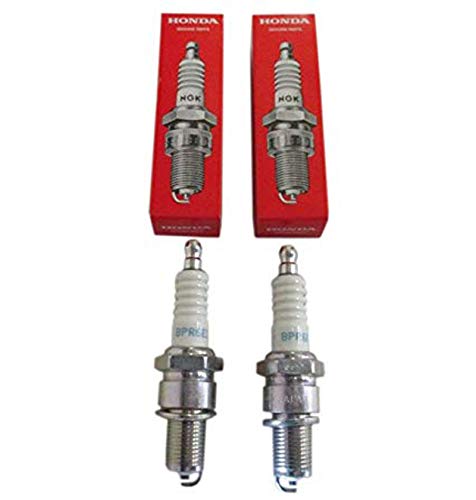
If you own any Honda small engine equipment like a GX160 pressure washer, GX390 generator, or GCV160 lawn mower, you know how critical a good spark plug is for reliable operation. This 2-pack of genuine Honda spark plugs (part 98079-56846) is the exact OEM replacement, also known as the NGK BPR6ES. It is designed to deliver consistent ignition, smooth idling, and easy starts in a range of popular Honda engines used by contractors, landscapers, and DIYers.
In real-world use, a fresh spark plug can make a noticeable difference. If your engine is hard to start, misfires under load, or runs rough, swapping in one of these plugs is often the first fix. The copper core electrode provides good conductivity and heat range for general duty. For a contractor running a generator on a jobsite or a homeowner with a push mower, this plug helps maintain peak performance and fuel efficiency.
Build quality is exactly what you expect from Honda OEM parts. The plug is made in Japan, the threading is precise, and the gap is pre-set but always worth checking with a feeler gauge. Installation is straightforward with a standard spark plug socket and wrench. The 2-pack is a smart buy because it gives you a spare for another engine or a quick replacement later. No need to hunt for the right part when you need it most.
One realistic limitation is that this plug only fits specific Honda engine models, so it is not a universal option. Always double-check your engine model number before ordering. Also, if you prefer iridium or platinum plugs for longer life, this copper plug may require more frequent replacement, typically every 100-200 hours of use. For most small engines, that is a reasonable interval.
Overall, this genuine Honda spark plug 2-pack is a solid choice for anyone maintaining Honda-powered equipment. It offers OEM reliability, easy installation, and good value. Whether you are a pro landscaper or a weekend warrior, having a spare on hand is a practical move. Pair it with a fresh air filter and oil change for a complete tune-up.

Pros
- Affordable replacement compared to OEM Honda ignition coils – saves money on lawn mower maintenance
- Includes two spark plugs, which adds convenience and value for a simple DIY tune-up
- Easy to install with basic tools – even first-time mower repairers can swap it out in under 30 minutes
- Compatible with a wide range of Honda engines and equipment, making it a versatile spare part to have on hand
Cons
- No reviews yet, so long-term reliability is unconfirmed – early adopters should check fitment carefully
- Only includes two spark plugs; some users may prefer a different spark plug gap or brand for optimal performance
- May not fit every Honda engine variant – double-check compatibility with your specific model before purchasing
If your Honda lawn mower is struggling to start or misfiring during that Saturday morning cut, the Wyevee GCV160 Ignition Coil with Spark Plug set might be just the fix you need. This replacement ignition module is designed to work with Honda GCV160, GCV135, GC160, GC190, and GSV190 engines – the same powerplants found in many popular Honda lawn mowers, generators, and water pumps. It's a practical, budget-friendly alternative to ordering a pricey OEM part from the dealership.
This kit is especially suited for homeowners who are handy with basic tools and want to avoid the cost of a service call. Whether you're maintaining a small suburban lawn, managing a rural property, or just keeping your garden equipment in shape, replacing a failing ignition coil is a straightforward DIY task. The coil comes with two spark plugs, which is a nice bonus – you can install one and keep the other as a spare for future tune-ups. According to the product specifications, installation is plug-and-play: simply remove the old coil, connect the new one, and adjust the air gap if needed. Most users can complete the swap in under 30 minutes with nothing more than a socket wrench and a screwdriver.
In terms of performance, this ignition coil is designed to deliver consistent spark timing, reducing misfires and helping the engine start smoothly every time. For a lawn mower that's been sitting all winter, a fresh coil and spark plug can make a world of difference in how quickly it fires up. The module is built with durable materials meant to withstand the vibration and heat of a running engine, as well as exposure to moisture and corrosion from grass clippings and yard debris. That said, since there are no customer reviews yet, I'd recommend checking the fitment carefully against your specific engine model – the product description lists many compatible models, but it's always smart to confirm.
One realistic limitation is that this is a replacement part, not a complete overhaul. If your mower has other issues – like a clogged carburetor, stale gas, or a bad spark plug wire – the coil alone won't solve everything. The included spark plugs are a helpful addition, but they may not be the exact gap or brand you prefer for your engine. Still, for the price, this kit offers excellent value for a homeowner looking to breathe new life into an older Honda mower without spending a lot.
For storage and maintenance, the coil itself requires no routine care – just install it and forget it. The spark plugs should be checked and replaced annually as part of normal lawn mower upkeep. If you're storing your mower for the winter, it's a good idea to keep a spare spark plug on hand, and this kit already gives you one. Overall, the Wyevee GCV160 Ignition Coil is a solid choice for budget-conscious homeowners, DIY enthusiasts, and anyone who wants to keep their Honda-powered equipment running reliably through many seasons of grass cutting, leaf mulching, and yard cleanup.
Step-by-Step Guide to Replacing a Honda Spark Plug
Replacing the spark plug on a Honda mower is a straightforward procedure, but precision matters. The engine must be cold to prevent burns and to allow the plug to be removed easily. You need to identify the correct plug type before starting, as Honda uses specific heat ranges for their GX and GCV engine series.
The two most common types are the BPR5ES and the BPR6ES. Your owner’s manual or the engine data plate will list the exact part number, such as 98079-55846 or 98079-56846. Using the wrong plug can cause engine damage or poor performance.
| Engine Series | Spark Plug Type | OEM Part Number | Gap Setting |
|---|---|---|---|
| GX120, GX160, GX200 | BPR5ES | 98079-55846 | 0.035 – 0.040 inches |
| GCV160, GCV190 | BPR6ES | 98079-56846 | 0.035 – 0.040 inches |
| HRN216 Series | BPR5ES | 98079-55846 | 0.035 – 0.040 inches |
Before you begin, gather your tools and ensure the engine is off with the key removed.
- You will need a spark plug socket, typically 5/8 inch or 13/16 inch, a ratchet, and a gap gauge.
- A clean workspace is also helpful for this task to keep parts organized and visible.
- Disconnect the spark plug wire by pinching the boot and pulling it straight off the plug.
- Do not pull on the wire itself, as this can damage the insulation on the cable.
- If the boot is stuck, use a small amount of dielectric grease to help slide it off next time.
Locate the spark plug on the top of the engine. On most Honda mowers, it is positioned near the intake manifold. Clean the area around the plug with a shop rag to remove grass clippings and dirt. This prevents debris from falling into the cylinder when the plug is removed.
Use the spark plug socket to turn the plug counterclockwise. If the plug is tight, apply firm, steady pressure. Do not use a hammer on the socket, as this can strip the threads. Once the plug is loose, unscrew it by hand to avoid cross-threading.
Inspect the old plug for signs of wear. A healthy plug should have a light brown or gray center electrode. If the electrode is eroded, the gap is too wide, or there is heavy carbon buildup, replacement is necessary. Check the ceramic insulator for cracks.
A cracked insulator can leak fuel into the engine oil, leading to serious damage. Compare the old plug to the new one to ensure they match in size and thread pitch. The new plug should have the same heat range as the old one, unless your manual specifies a change.
Check the gap on the new spark plug using a gap gauge. The standard gap for Honda lawn mower plugs is usually between 0.035 and 0.040 inches. If the gap is off, bend the ground electrode gently to adjust it. Do not bend the center electrode, as this can damage the firing tip.
A consistent gap ensures a strong spark and reliable ignition. Once the gap is correct, hand-thread the new plug into the cylinder. Turn it clockwise until it seats. This step is crucial to prevent cross-threading, which can damage the engine head.
Tighten the spark plug with the socket and ratchet. The correct torque is typically 15 to 20 foot-pounds for most Honda small engines. Over-tightening can crack the ceramic insulator or strip the threads in the engine. Under-tightening can cause the plug to leak or vibrate loose.
Use a torque wrench if you have one for accuracy. If you do not, tighten the plug an additional half-turn to a full turn after hand-seating it. This is a common rule of thumb for small engine plugs. Reconnect the spark plug wire by pushing the boot firmly onto the plug terminal.
Identifying the Correct Plug for Your Model
Honda mowers are built with specific engine series that require particular spark plugs. The GX series engines, such as the GX120 and GX160, commonly use the BPR5ES plug. The GCV series, found in many newer walk-behind mowers, often uses the BPR6ES.
The difference is in the heat range, which affects how quickly the plug dissipates heat. A plug that is too hot can cause pre-ignition, while one that is too cold can foul up in cold weather. Always verify the part number on the engine decal or in the owner’s manual.
Some Honda mowers, like the HRN216 series, use the BPR5ES plug. The HRX217 series may use a different configuration depending on the year. The OEM part numbers are 98079-55846 for the BPR5ES and 98079-56846 for the BPR6ES. These numbers are critical for ordering the correct replacement. Third-party brands may offer equivalent plugs, but checking the heat range and gap is essential.
The ignition coil also plays a role in the system, so if the plug is replaced and the problem persists, the coil may be the issue. For more on ignition components, see our lawn mower maintenance guide.
When buying a replacement, look for the specific OEM number. This ensures you get the correct heat range and thread size. Some packs include two plugs, which is a good idea to have a spare on hand. The plugs are relatively inexpensive, so replacing them annually or as needed is a cost-effective maintenance practice. Do not assume that any small engine plug will fit. The thread pitch and reach must match the engine head. A mismatched plug can damage the engine or fail to seat properly.
Common Mistakes to Avoid During Replacement
One of the most common errors is failing to clean the area around the plug before removal. Grass clippings and dirt can fall into the cylinder, causing engine damage. Another mistake is over-tightening the new plug. This can crack the ceramic insulator or strip the threads in the engine. Always hand-thread the plug first to ensure it is not cross-threaded. If the plug does not turn easily by hand, stop and back it out to check for debris.
Ignoring the gap setting is another frequent error. The gap must be within the manufacturer’s specification to ensure proper ignition. A gap that is too wide can cause misfires, while one that is too narrow can weaken the spark. Use a gap gauge to measure and adjust the ground electrode if necessary. Do not bend the center electrode, as this can damage the firing tip and reduce the plug’s lifespan. Finally, failing to disconnect the spark plug wire before removal can lead to accidental starting or electrical shock.
- Clean the area around the plug to prevent debris entry
- Hand-thread the new plug to avoid cross-threading
- Check the gap setting with a gauge before installation
- Do not over-tighten the plug to prevent thread damage
- Disconnect the spark plug wire before starting the job
- Verify the correct plug type for your engine series
Safety Precautions and Tool Requirements
Safety is paramount when working on any power equipment. Ensure the engine is completely off and the key is removed before starting. Allow the engine to cool down if it has been running recently. Wear safety glasses to protect your eyes from debris. Use a clean, dry workspace to prevent dirt from entering the cylinder. Keep your hands dry to maintain a good grip on the tools. If the plug is stuck, do not force it. Use a penetrating oil if necessary, but avoid getting it on the electrical components.
The primary tool needed is a spark plug socket of the correct size. Most Honda mowers use a 5/8 inch or 13/16 inch socket. A ratchet or wrench is required to remove and install the plug. A gap gauge is essential for checking the electrode spacing.
A torque wrench is recommended for precise tightening, but a standard ratchet can be used if you are careful. A shop rag and a clean cloth are useful for wiping the area around the plug. Having these tools on hand ensures a smooth and safe replacement process.
When to Replace the Spark Plug
Spark plugs are wear items that need regular replacement. Honda recommends replacing the spark plug every 100 hours of operation or annually, whichever comes first. If you use your mower frequently, such as for a lawn business, you may need to replace them more often. Signs that a plug needs replacement include hard starting, rough idling, or reduced fuel efficiency. Fouled plugs can also cause the engine to stall under load. Regular inspection helps prevent these issues and keeps the engine running smoothly.
During seasonal storage, it is a good idea to inspect the spark plug. If you are storing the mower for the winter, replacing the plug can help prevent corrosion. A fresh plug ensures easy starting in the spring. If the plug shows signs of heavy carbon buildup or erosion, replace it before storage. This is a low-cost maintenance task that can save you from starting problems later. Keeping a spare plug in your tool box is a smart move for any homeowner.
Verifying the Installation and Final Checks
After installing the new plug, reconnect the spark plug wire securely. Ensure the boot is fully seated on the terminal. Start the engine and let it idle for a few minutes. Listen for any unusual noises or misfires. The engine should run smoothly and steadily. If the engine is still hard to start, check the fuel system and air filter. A clean air filter is essential for proper combustion. If the problem persists, the ignition coil or fuel pump may be the issue.
Perform a final check of the torque. If you have a torque wrench, verify that the plug is tightened to the correct specification. If not, ensure it is snug but not over-tightened. Check the gap one more time if you are unsure. A proper installation ensures reliable ignition and long engine life. Take a moment to clean up any debris from the engine area. Store your tools and dispose of the old plug properly. This simple maintenance task keeps your Honda mower running at its best.
Replacing the spark plug on your Honda lawn mower is a manageable task that any homeowner can perform with the right tools and knowledge. By following the steps outlined in this guide, you can ensure a proper fit and reliable engine performance.
Always use the correct plug type for your engine series and verify the gap setting before installation. Regular maintenance of the ignition system is key to extending the life of your mower and avoiding costly repairs. If you encounter persistent issues, consult your owner’s manual or a qualified technician for further assistance.




Write Your Review
No reviews yet. Be the first to share your experience!