


Checking the oil level on a gas-powered lawn mower is a straightforward task that prevents engine damage and ensures reliable starting. The direct answer is to use the dipstick, which is typically located on the side of the engine, to verify the fluid level between the minimum and maximum marks.
This simple maintenance step is crucial for any how to check oil on toro lawn mower owner, as low oil levels can lead to rapid engine wear or complete failure. Regular checks take less than five minutes and are recommended before mowing sessions, especially in hot weather.
Many homeowners overlook this routine until the engine sounds rough or fails to start, but proactive maintenance is far less costly than repairs. The process involves ensuring the mower is on level ground, allowing the engine to cool, and reading the dipstick accurately. Understanding the correct oil type and viscosity is also part of the picture, as different seasons may require different weights.
By following the manufacturer’s guidance, you protect your investment and keep the cutting performance consistent. For related maintenance tasks, see our guide on lawn mower blade bolt removal.

Pros
- Specifically formulated for air-cooled engines that run hotter than car engines.
- No need to mix or add extra additives; just pour and go.
- Reliable protection for both new and older mowers.
- 20-ounce size perfect for single changes on most walk-behind mowers.
- Lawn-Boy brand is widely recognized and trusted for lawn equipment.
Cons
- Only 20 ounces - may not be enough for larger engines that require more than 20 oz capacity.
- 10W-30 viscosity is not ideal for very cold climates; check your manual for recommended weight.
- Not suitable for 2-cycle engines - designed exclusively for 4-cycle applications.
The Lawn-Boy 89885 20-Ounce Premium Lawn Mower 4-Cycle Engine Oil is a purpose-built lubricant for air-cooled engines found in walk-behind mowers, riders, and other outdoor power equipment. Unlike standard automotive oils, this 10W-30 blend is formulated to withstand the sustained high temperatures that these small engines generate during use, making it a solid choice for homeowners and DIYers who want to keep their equipment running reliably.
In real-world use, this oil delivers exactly what you'd expect from a reputable brand. It circulates quickly on cold starts, reduces friction, and helps dissipate heat from critical parts like the cylinder and crankcase. The additive package cleans carbon deposits and varnish, which can build up over time, and the seal-conditioning agents help maintain compression. The result is smoother operation, less smoke, and longer intervals between overhauls.
Build quality is consistent with Lawn-Boy's reputation. The oil is bottled in a clear 20-ounce container with a convenient pour spout, making it easy to top off or perform a full change. No extra additives are needed, so you can simply drain the old oil, pour in the new, and rest assured your engine is protected. However, keep in mind that 20 ounces may not be enough for larger engines (some riders hold over 40 oz), and 10W-30 is not the best choice for very cold climates where a 5W-30 might be recommended by the manufacturer.
Overall, the Lawn-Boy 89885 is a dependable, no-fuss option for anyone who maintains a 4-cycle mower or similar small engine. It performs especially well in hot weather and heavy cutting conditions, offering peace of mind that your equipment isn't overheating or wearing prematurely. For the DIYer or homeowner looking for a dedicated small-engine oil that matches the specific needs of their mower, this is a smart buy.
Viscosity: 10W-30
Brand: Lawn-Boy
Liquid Volume: 20 Fluid Ounces
Package Information: Bottle
Vehicle Service Type: Lawn Mower

Pros
- Full synthetic formulation provides excellent high-temperature stability and wear protection.
- Compatible with most 4-cycle lawn mowers and small engines, not just Toro models.
- Positive customer feedback with consistent 5-star ratings highlighting ease of use and performance.
Cons
- Price has increased over time, making it slightly more expensive than some generic alternatives.
- Some users may prefer a larger container for multiple machines or frequent changes.
If you own a Toro lawn mower or any small 4-cycle engine, you know that using the right oil is key to longevity. The Toro Full Synthetic SAE 10W-30 4-Cycle Engine Oil is formulated to meet the demands of modern air-cooled engines that run hot and hard. This 32-ounce bottle gives you enough for a couple of oil changes on most push mowers or one fill on a larger walk-behind.
This oil is best suited for homeowners and DIYers who maintain their own lawn equipment. It's not just for Toro machines either, it works great in many brands of mowers, trimmers, and small generators that specify 10W-30. The full synthetic base handles high temperatures without breaking down, which is a big plus when you're mowing in the summer heat or tackling thick grass.
In real-world use, this oil flows well at startup even in cooler weather, and it keeps the engine running smooth under load. You'll notice less valve noise and a cleaner oil color after hours of use, signs that it's doing its job. Build quality is typical Toro, reliable and consistent. The bottle is easy to pour with a convenient spout, though it's not a no-mess design, so a funnel is still a good idea.
One realistic drawback is the price. It's a premium product, and some budget oils will work fine for basic mowing. But if you want the best protection for your engine, especially if you use your mower commercially or in dusty conditions, this synthetic oil is worth the extra cost. It also helps reduce sludge and deposit buildup, which can extend the time between overhauls.
Overall, the Toro Full Synthetic 10W-30 is a solid choice for anyone serious about small engine maintenance. It's a straightforward upgrade that pays off in reliability and peace of mind. If you're doing an oil change anyway, this is a product that will keep your mower starting and running strong season after season.
Viscosity: SAE 10W-30
Volume: 32 fluid ounces (bottle)
Type: Full synthetic 4-cycle engine oil
Brand: Toro
Model: 138-6053
Vehicle Service Type: Lawn mower and small engines
UPC: 021038982069

Pros
- Specifically designed for lawn mower engines, offering targeted protection against wear and heat
- Helps prevent rust and corrosion during off-season storage, a real plus for seasonal gear
- Promotes easier starting and smoother running, which means less hassle on mowing day
Cons
- Only available as a 1-quart bottle, which may not be enough for larger riding mowers that require a full oil change
- Not suitable for 2-stroke engines, so make sure your equipment is a 4-stroke before buying
- Premium price compared to generic oils, but the added protection may justify the cost for serious DIYers
The Lucas Oil 11313 SAE 10W-30 Lawn Mower Motor Oil is a four-stroke engine oil designed to keep push and riding mowers running reliably through the season. It's not a power tool itself, but it's an essential consumable for anyone who maintains small engines in their workshop or shed. If you own a lawn mower, tiller, or generator with a 4-stroke engine, this oil can help reduce wear and extend equipment life.
This oil is best suited for DIY homeowners and small engine enthusiasts who want a dedicated product rather than using leftover car oil. Lucas Oil specifically targets the challenges of mower operation: heat buildup from dense grass, frequent stop-start cycles, and long storage periods. The formulation includes additives that minimize engine wear and prevent overheating, which is a common issue when mowing in summer heat.
In real-world use, users can expect easier starting and a noticeably smoother idle after an oil change. The anti-rust properties are a standout advantage for those who store their mower for months at a time. Instead of fighting corroded internal components in spring, you'll get quick, clean starts. The oil also helps the engine maintain consistent operating temperature, reducing the risk of vapor lock or premature breakdown.
Build quality is what you'd expect from Lucas Oil: a reputable brand known for lubricants and additives. The 1-quart bottle is practical for small engines, though owners of larger riding mowers may need two bottles for a full change. The oil is not designed for 2-stroke engines, so be sure to confirm your equipment's requirements before use.
One realistic drawback is the price. It costs more than generic 10W-30, but the targeted protection and storage benefits can be worth the extra expense for those who value equipment longevity. If you're a weekend mower who just wants quick, reliable operation and engine protection, this Lucas Oil product is a solid investment. It's not flashy, but it does the job well.
Size: 1 Pack (1 Quart)
Type: SAE 10W-30
Application: Four-stroke small engines (push mowers, riding mowers, tillers, generators)
Dimensions: 4.35 x 2.42 x 9 inches
Product Group: Lawn and Patio
Binding: Automotive
This oil is ideal for routine oil changes on push mowers and small riding mowers used on residential properties. It's also suitable for other 4-stroke small engines like pressure washers, log splitters, and portable generators. If you store your equipment in an unheated shed or garage for the winter, the anti-rust protection is especially valuable. For best results, follow your owner's manual viscosity recommendation and change at the start of each season.



Pros
- Easy to install with just a wrench and a few minutes of work
- Stainless steel build feels durable and should hold up to repeated use
- Compatible with a wide range of lawn mower engines and brands
Cons
- Not universal; you must verify compatibility with your specific model
- Plastic tube may crack if exposed to extreme cold or impact
The Plrtliren Oil Drain Valve 751-10517A is a simple but effective upgrade for anyone tired of wrestling with a greasy drain plug every time they change their lawn mower oil. Designed as a direct replacement for several OEM part numbers including MTD 751-10517A and Cub Cadet 951-10517A, this valve lets you drain oil cleanly through a included tube instead of fumbling with a wrench and hoping you don't spill. It's not a power tool, but it's the kind of workshop accessory that makes routine maintenance much less frustrating.
This valve is best suited for DIY homeowners and small engine enthusiasts who maintain their own mowers, tractors, or zero-turn machines. If you've been using a pan and a rag, this upgrade will save you time and mess. The valve body is made from stainless steel, which resists the corrosion and grime that often attacks standard steel plugs. The included tube is flexible enough to route into a bottle or catch basin, so you can drain oil without tipping the mower or risking a spill on the garage floor.
In real-world use, installation is straightforward. You remove the existing drain plug, apply a bit of thread sealant if needed (not included), and hand-tighten the valve. The valve uses a simple quarter-turn mechanism to open and close. It does not leak when closed, and the tube stays attached even during draining. The only potential downside is that the plastic tube might become brittle over time if left exposed to sun or cold, but replacements are cheap and easy to find.
Build quality is decent for the price. The stainless steel feels solid, and the threads are clean. It's not a heavy-duty industrial part, but for a lawn mower that sees seasonal use, it should last for years. Just double-check that your mower's drain plug location has enough clearance for the valve body and tube. Some tight spots may require a different solution.
Overall, the Plrtliren Oil Drain Valve is a practical buy for anyone who values clean, quick oil changes. It's not flashy, but it does exactly what it promises. If you own a compatible MTD, Cub Cadet, Craftsman, Husqvarna, or Kohler-powered mower, this little valve will make your next oil change a lot less messy. At its price point, it's a no-brainer for DIY maintenance.
Pros
- Reduces engine wear and extends equipment life significantly.
- Protects against overheating in high heat conditions.
- Prevents rust during storage, ensuring easy spring startup.
- Compatible with most push and riding mowers with four-stroke engines.
Cons
- Only sold in single quart containers; may be less economical than gallon jugs.
- Not suitable for two-stroke engines or mixed-fuel equipment.
- Premium price compared to generic alternatives.
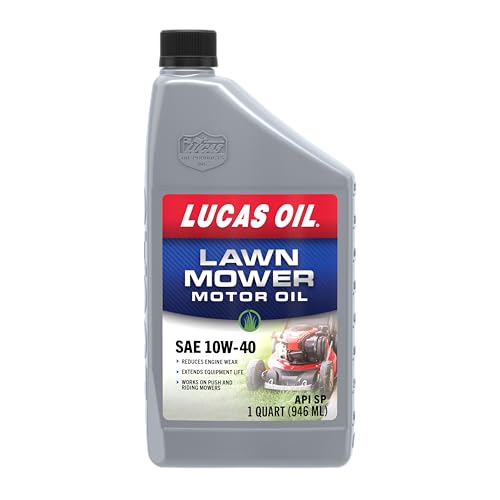
Lucas Oil 11314 SAE 10W-40 Lawn Mower Motor Oil is a dedicated four-stroke engine oil designed for push mowers and riding mowers. It's formulated to handle the high heat and heavy loads that small engines face during regular lawn care. If you own a walk-behind mower or a garden tractor with a 4-stroke engine, this oil is engineered to keep it running reliably season after season.
This product is best suited for homeowners and DIY enthusiasts who perform their own maintenance. Lucas Oil focuses on reducing engine wear, which is critical for mowers that sit idle for months and then get worked hard in summer. The 10W-40 viscosity provides excellent protection across a wide temperature range, helping the engine start easier and run smoother. Users will appreciate the anti-overheating properties, especially when cutting thick grass or using a bagger attachment.
Build quality is solid with Lucas Oil's reputation for additives that minimize sludge and varnish buildup. The quart bottle is easy to pour and store, though some might wish for a larger container for multiple oil changes. A key drawback is price per quart; it costs more than generic oils, but the enhanced protection against rust during storage and reduced wear may justify the premium for those who want to extend their mower's life.
Overall, Lucas Oil 10W-40 is a reliable choice if you're maintaining a single mower and value long-term engine health. It delivers on its promises of easier starting, smoother operation, and rust prevention. For the DIY user who wants one less thing to worry about during mowing season, this oil is a solid investment in your equipment.
Size: 1 Quart (1 Pack)
Dimensions: 4.35 x 2.42 x 9 inches
Product Group: Lawn and Patio
Binding: Automotive
Viscosity: SAE 10W-40
Engine Type: Four-Stroke
The process of checking engine oil is critical for maintaining the health of a four-cycle engine. Unlike two-cycle engines, which require a fuel-oil mix, four-cycle engines use pure gasoline and separate oil for lubrication. This separation means the oil level must be monitored independently to ensure the engine components are protected. A low oil level triggers a safety shut-off in many modern engines, preventing them from starting or running. Understanding the specific location of the dipstick on your model is the first step in this procedure.
| Step | Action | Key Detail |
|---|---|---|
| 1 | Position Mower | Place on level, hard surface |
| 2 | Cool Engine | Allow 5-10 minutes after use |
| 3 | Locate Dipstick | Usually on engine side |
| 4 | Remove and Wipe | Use clean cloth or paper towel |
| 5 | Reinsert and Check | Do not screw in tightly |
| 6 | Read Level | Between min and max marks |
Before touching the dipstick, ensure the mower is parked on a flat, stable surface. Sloping ground causes the oil to pool on one side, giving a false reading that can mislead you into adding too much or too little oil. If the engine has been running, wait for it to cool down slightly.
Hot oil expands and flows differently, which can make the level appear higher than it actually is. This cooling period also prevents burns when handling the dipstick and surrounding engine components. The goal is an accurate reading that reflects the true operating level.
- Ensure the mower is on a level surface for accurate reading.
- Allow the engine to cool to prevent burns and expansion errors.
- Locate the dipstick, often marked with a yellow or black loop.
- Remove the dipstick and wipe it clean with a dry cloth.
- Reinsert the dipstick fully but do not thread it into the tube.
- Pull the dipstick out and observe the oil level against the marks.
- Check for oil color and consistency to gauge condition.
- Add oil only if the level is below the minimum mark.
Locating the Dipstick and Oil Fill Port
On most Toro walk-behind and riding mowers, the oil dipstick is located on the side of the engine, near the top. It is often a long metal tube with a distinct loop or handle at the top for easy removal. The oil fill port is usually the same tube, meaning you remove the dipstick to both check and add oil.
Some models have a separate cap for filling, but the dipstick remains the primary tool for checking the level. If you cannot find it, consult the owner’s manual, as the position can vary slightly between engine brands like Briggs & Stratton or Kohler. Identifying the correct tube is essential to avoid confusing it with the spark plug wire or other engine components.
The dipstick tube may be slightly recessed or covered by a small plastic guard on some models. You might need to turn the dipstick handle a quarter turn to remove it if it is threaded. If it slides out easily, it is a non-threaded type. Always handle the dipstick by the top handle to avoid bending it. A bent dipstick can give inaccurate readings and may be difficult to reinsert properly. Keeping the area around the dipstick clean prevents dirt from falling into the oil tube during the check.
Reading the Dipstick Accurately
Once the dipstick is removed and wiped clean, reinsert it into the tube. Do not screw it in tightly if it is a threaded type, as this can create a vacuum or seal that affects the reading. Simply push it in until it seats naturally. Pull it out and look at the oil film on the end.
The dipstick has two marks, usually labeled ‘MIN’ and ‘MAX’ or indicated by dots or lines. The oil level should be between these two marks. If the oil is below the minimum line, the engine is running low and needs oil added immediately.
If the oil level is above the maximum line, you have overfilled the engine. This can cause oil to blow past the seals and into the combustion chamber, leading to blue smoke and fouled spark plugs. It can also increase crankcase pressure.
To correct an overfill, you may need to drain a small amount of oil from the drain plug or use a suction pump. Do not ignore a high oil level, as it is just as detrimental to engine health as a low level. The goal is to keep the level in the middle range for optimal lubrication and cooling.
Assessing Oil Condition and Color
While checking the level, take a moment to inspect the oil’s color and consistency. Fresh oil is typically amber or light brown and clear. As it ages and picks up contaminants, it darkens to a deep brown or black. This darkening is normal and indicates the oil is doing its job of trapping dirt and metal particles.
However, if the oil looks milky or white, it may indicate coolant contamination, which is a serious issue requiring professional attention. If the oil smells like fuel, it may indicate incomplete combustion or a leak into the oil system.
Check for any grit or particles in the oil. If the oil feels gritty between your fingers, it may contain metal shavings from internal wear. This is a sign of engine trouble and should be addressed promptly. The oil should flow smoothly, not appear thick or sludgy. Sludge formation can clog oil passages and reduce lubrication efficiency.
Regular oil changes are the best way to prevent these issues. If you notice any unusual color, smell, or texture, consider changing the oil sooner than the scheduled interval. For more on maintaining engine components, see our guide on removing mower blades.
Adding Oil and Choosing the Right Viscosity
If the oil level is low, add oil slowly through the dipstick tube. Use a funnel to avoid spills. Check the level frequently as you add, stopping once the oil reaches the middle of the min and max range. Do not overfill. The type of oil you use should match the manufacturer’s recommendation for your specific model and climate.
Common viscosities include SAE 30 for warm weather and SAE 10W-30 for multi-temperature use. Full synthetic oils like SAE 5W-30 or 10W-30 offer better protection in extreme temperatures and can extend oil change intervals.
Using the wrong oil viscosity can affect engine performance and longevity. In cold weather, a thicker oil may not flow quickly enough to lubricate components at startup, causing wear. In hot weather, a thinner oil may break down faster, losing its protective properties. Always refer to the owner’s manual for the specific oil grade recommended for your Toro mower. Mixing different types of oil is generally not recommended, as it can affect the performance of additives. Stick to one type of oil for consistency and optimal engine protection.
Common Mistakes to Avoid
One common mistake is checking the oil while the engine is still running or hot. This gives an inaccurate reading and poses a burn risk. Always wait for the engine to cool and stop completely. Another error is not wiping the dipstick clean before reinserting it.
Old oil on the dipstick can obscure the level, leading to confusion. Ensure the dipstick is dry before reading. Also, avoid ignoring the oil level during seasonal storage. Check the oil before storing the mower for the winter to ensure it is at the correct level and free of moisture.
- Do not check oil on a sloped surface.
- Never run the engine while checking the oil level.
- Wipe the dipstick clean before every reading.
- Do not overfill the engine with oil.
- Use the correct oil viscosity for your climate.
- Check the oil before storing the mower for the season.
- Inspect the oil for unusual colors or particles.
Maintenance Frequency and Best Practices
It is recommended to check the oil level before every use, especially during the first season of ownership or if the mower has been sitting for a while. A quick check takes only a few minutes and can prevent costly repairs. If you mow frequently, consider checking the oil weekly.
For those who mow less often, a monthly check is sufficient. Always change the oil at the intervals specified in the owner’s manual, typically every 50 hours of use or once a season, whichever comes first. Regular oil changes remove contaminants and maintain lubrication efficiency.
Keep a record of oil changes and checks to maintain a consistent maintenance schedule. This helps you track when the next change is due and identify any patterns in oil consumption. If you notice you are adding oil more frequently than expected, have the engine inspected for leaks or excessive consumption.
Proper maintenance extends the life of your mower and ensures reliable performance. By following these steps, you protect your investment and enjoy a well-maintained lawn care tool. For additional tips on blade maintenance, see our guide on steel mower blades.
Checking the oil on your Toro lawn mower is a simple task that pays off in long-term engine health. By following the steps outlined here, you ensure accurate readings and proper maintenance. Remember to use the correct oil viscosity and check the level regularly. This proactive approach prevents breakdowns and keeps your mower running smoothly. Take a few minutes to perform this check before your next mowing session, and you will contribute to the longevity and reliability of your equipment.






Write Your Review
No reviews yet. Be the first to share your experience!