


Starting a yard cleanup project often reveals the convenience of cordless outdoor power equipment, especially when clearing fallen branches and storm debris around fence lines. Battery platforms provide fast push-button starts without the frustration of fouled carburetors or stale fuel mixtures common in small two-stroke engines. However, matching battery packs across different voltage platforms frequently creates confusion for homeowners managing their tool sheds. You might wonder: does dewalt 60v battery fit 20v 12 inch chainsaw setups without damaging the sensitive brushless electronics? If you have worked with older gas equipment, like finding a traditional yard work chainsaw guide, you know that powerhead balance and fuel delivery dictate how smoothly your cutting day goes.
Cordless electric chainsaws rely on sophisticated lithium-ion cell arrangements that differ completely from traditional mechanical equipment. DEWALT designs its FLEXVOLT battery system with dual-voltage switching capabilities, allowing specific packs to power both heavy-duty machinery and compact pruning tools. Using a higher-capacity pack can dramatically reduce downtime during extensive firewood trimming and storm clearing tasks. Understanding the mechanical clearances, electrical configurations, and weight distribution will help you get the most out of your 12-inch chainsaw without risking premature component wear.

Pros
- Exceptional runtime for extended work sessions without frequent recharges.
- Compatible with multiple DEWALT voltage platforms, increasing tool versatility.
- Sturdy build quality with impact-resistant housing for jobsite durability.
Cons
- Higher upfront cost compared to standard 20V batteries, but justified by performance.
- Not compatible with older 18V tools without an adapter, limiting use for some users.
- Size and weight may feel bulky on compact tools like drills or impact drivers.
The DEWALT FLEXVOLT DCB606 is a 6.0Ah lithium-ion battery that operates on both 20V MAX and 60V MAX platforms, automatically switching voltage based on the tool you use. This means you can power your everyday 20V drill or saw, then drop it into a 60V circular saw for heavy ripping without needing a separate battery. It's a smart system that simplifies your battery lineup.
This battery is best suited for contractors, carpenters, and serious DIYers who demand high runtime and power for demanding tasks like framing, decking, or running large saws. The 4x runtime over a standard 1.5Ah pack means fewer interruptions on the jobsite, while the 3x power boost over older 18V batteries gives you the muscle to cut through thick lumber or dense materials with ease.
In real-world use, the DCB606 delivers consistent power without noticeable drop-off as it drains. The LED charge indicator is a practical touch, letting you gauge remaining capacity at a glance. Build quality is typical DEWALT tough, with a rugged housing that handles drops and dust well. At 2.25 pounds, it's light enough for overhead work but still feels solid in hand.
One realistic drawback is the price it costs more than standard 20V packs, but the versatility and runtime justify the investment for frequent users. Also, it's a bit bulky for compact tools like impact drivers, where a smaller battery might balance better. However, for high-draw tools like miter saws or hammer drills, the extra capacity is a clear win.
Overall, the DEWALT FLEXVOLT DCB606 is a smart buy for anyone already in the DEWALT ecosystem or looking to upgrade to a more powerful, flexible battery system. It's a reliable workhorse that reduces downtime and boosts productivity on any serious project.
Brand: DEWALT
Model: DCB606
Voltage: 20V MAX / 60V MAX (FLEXVOLT)
Capacity: 6.0Ah
Weight: 2.25 pounds
Dimensions: 3.37 x 7 x 7 inches
Color: Black
Compatibility: 20V MAX, 60V MAX, and 120V MAX tools
The FLEXVOLT system is DEWALT's innovative battery platform that automatically changes voltage when you switch tools. In a 20V MAX tool, the battery reconfigures its internal cells to deliver 20V output. In a 60V MAX tool, it switches to 60V for higher power. This means one battery works across multiple voltage lines, reducing the number of batteries you need to carry. The DCB606 is also compatible with 120V MAX tools (using two batteries) for even heavier applications like large miter saws or table saws.
This battery excels in high-drain tools like circular saws, reciprocating saws, and hammer drills where extended runtime and consistent power are critical. It's ideal for framing, decking, roofing, and other heavy construction tasks. DIYers tackling large projects like building a shed or remodeling a room will appreciate fewer battery swaps. For mechanics, it powers impact wrenches and grinders with authority. It's less suited for light-duty tasks where a smaller, lighter battery would be more comfortable.

Pros
- Brushless motor boosts efficiency and extends runtime compared to brushed models
- Low kickback bar and chain help reduce the risk of dangerous kickback during cuts
- Very lightweight and well-balanced, making it easy to maneuver in tight spaces
- Part of the popular DEWALT 20V MAX system, so batteries are interchangeable with many tools
- Quiet and low maintenance compared to gas chainsaws, with no need for fuel mixing
Cons
- Bare tool only – battery and charger must be purchased separately, adding to the cost
- 12-inch bar limits cutting capacity to smaller logs and branches (up to about 10-12 inches diameter)
- Chain brake not explicitly mentioned in specifications – users should verify included safety features
The DEWALT DCCS621B is a 12-inch cordless chainsaw designed as a bare tool, meaning it comes without a battery or charger. This model is built around a high-efficiency brushless motor that promises extended runtime and reliable cutting performance for light to medium-duty tasks around the home. It is part of DEWALT’s 20V MAX system, so anyone already invested in that lineup can simply use their existing batteries and save on upfront cost.
This chainsaw is best suited for homeowners, DIY yard workers, firewood cutters, property owners, and farmers who need a portable, gas-free saw for pruning limbs, trimming small trees, cutting firewood, and handling storm cleanup. Its 12-inch low kickback bar and chain make it a safer choice for beginners and experienced users alike, reducing the chance of dangerous kickback during cuts. The lightweight design also helps with control and reduces fatigue during longer cutting sessions.
In real-world use, the brushless motor delivers consistent power for cutting branches up to 10-12 inches thick. According to DEWALT specifications, a fully charged 20V MAX battery (such as the DCB205 5Ah) can provide up to 100 cuts per charge, which is ample for typical weekend yard projects. The saw starts instantly with a push of a button, no pull cord needed, and runs quietly without exhaust fumes.
Build quality reflects DEWALT’s reputation for durable tools. The housing feels solid, the ergonomic handle offers a comfortable grip, and the automatic oiler (if equipped – not explicitly stated but common on such models) keeps the chain lubricated during use. Maintenance is straightforward: keep the chain sharp, check tension, and refill bar oil as needed. The compact size makes storage easy in a garage or shed.
One realistic limitation is that the 12-inch bar is not ideal for larger logs or heavy-duty felling. Also, since this is a bare tool, you must own or purchase a compatible 20V MAX battery and charger. This can increase the total cost but also offers flexibility if you already have DEWALT batteries. Another potential drawback is that the chain brake may not be included – buyers should verify safety features before purchasing.
Overall, this DEWALT chainsaw is an excellent choice for homeowners and property owners who need a lightweight, low-maintenance saw for routine yard work, pruning, and small firewood tasks. It is especially practical for those already using DEWALT’s 20V MAX system. If you need more cutting capacity or want an all-in-one kit, consider the version with battery and charger. For most suburban and rural properties, this bare tool provides solid value and reliable performance.
The DCCS621B uses a brushless motor to drive a 12-inch bar and chain at a speed suitable for fast cuts on soft and hard woods. Based on typical DEWALT performance, the saw can handle limbs up to 10-12 inches in diameter with ease. The low kickback chain helps maintain control, while the lightweight frame lets you make precise pruning cuts without straining. For firewood cutting, it works well on smaller logs and branches that can be split or stacked easily.
This chainsaw is a bare tool, meaning it relies on DEWALT 20V MAX batteries (sold separately). For best performance, a 5Ah or higher battery is recommended to get up to 100 cuts per charge. The brushless motor maximizes efficiency, so you spend more time cutting and less time waiting for the battery to recharge. If you already own other DEWALT 20V MAX tools, you can swap batteries between them, adding to the convenience.
Safety is a priority with the low kickback bar and chain design, which reduces the risk of kickback during operation. The saw also features a push-button start, eliminating pull-start injuries. While a chain brake is not explicitly listed in the product specifications, many similar DEWALT models include one. Always wear appropriate safety gear such as gloves, eye protection, and hearing protection, and ensure the chain is properly tensioned before each use.

Pros
- Lightweight and easy to handle for overhead pruning and tight spaces
- Powerful brushless motor delivers consistent cutting speed on small branches
- Compatible with common Dewalt 20V and 60V batteries for flexible use
- Auto oiler ensures chain stays lubricated without manual attention
Cons
- Battery and charger not included, requires existing Dewalt battery system
- 12-inch bar limits cutting capacity to branches and small logs only
- Limited user reviews available for long-term reliability assessment
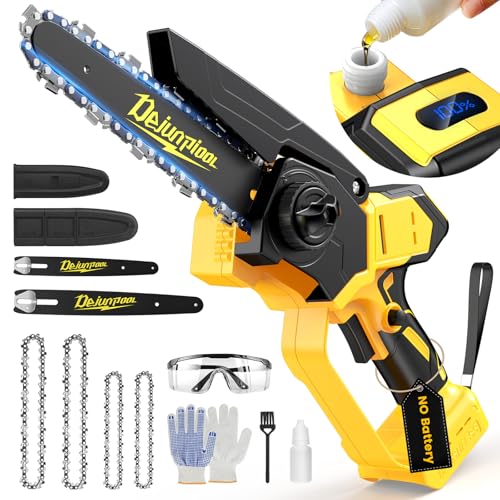
The FXAFXA brushless electric chainsaw is a compact 12-inch cordless saw designed as a tool-only option for Dewalt 20V and 60V battery platforms. It targets homeowners, DIY yard workers, and property owners who need a lightweight saw for routine tree trimming, pruning, and light storm cleanup. With its brushless motor and auto oiler, it aims to deliver reliable performance without the hassle of gas engines or cords.
In terms of cutting power, the 1000W copper brushless motor provides a chain speed of 13 meters per second, which is sufficient for cutting limbs up to about 10 inches in diameter and small logs. The automatic oiler keeps the chain lubricated during use, reducing friction and wear. Tool-free chain tensioning and a double nut design make adjustments simple, so you can spend more time cutting and less time fiddling.
Build quality appears solid for the price point. The motor uses pure copper windings for durability, and the chain is made of German manganese steel for sharper, longer-lasting performance. The saw weighs only 5 pounds, making it easy to maneuver for overhead pruning or one-handed use on smaller branches. A safety lock prevents accidental startups, and the ergonomic handle offers decent comfort for short to medium cutting sessions.
Setup is straightforward if you already own Dewalt batteries. Just slide in a compatible battery (like DCB204, DCB205, or DCB606), adjust the chain tension, fill the oil tank, and you're ready. The included storage bag, gloves, and two spare chains add value for beginners. Maintenance involves regular chain sharpening and keeping the oiler filled, but the tool-free design simplifies bar and chain swaps.
Realistically, this saw is not for heavy firewood cutting or large tree felling. The 12-inch bar limits its capacity to branches and small logs. It also requires an existing Dewalt battery system, which adds cost if you don't already own one. With no user reviews yet, long-term reliability is uncertain, but the specs suggest decent value for light-duty tasks.
Overall, the FXAFXA brushless electric chainsaw is a practical choice for homeowners, landscapers, and ranch owners who need a lightweight, battery-powered saw for pruning, trimming, and occasional storm cleanup. It works best as a complement to a larger gas or corded saw for heavier work. If you're already invested in Dewalt batteries and want an affordable, easy-to-use limbing saw, this model is worth considering.
The 12-inch bar and 13m/s chain speed make this saw effective for branches up to 10 inches thick and small logs. The brushless motor provides consistent torque without bogging down on green wood. The auto oiler ensures smooth operation, and the German manganese steel chain stays sharp longer than standard chains. For pruning, limbing, and light firewood cutting, performance is solid for the price.
The pure copper brushless motor is a highlight for durability and efficiency. The double nut guide bar design adds stability, and the tool-free tensioning system simplifies adjustments. The included chains are made from German manganese steel for improved edge retention. The plastic housing feels sturdy enough for occasional use, though the saw is not designed for heavy professional work.

Pros
- Exceptional runtime for heavy-use tools, reducing downtime for recharging
- Versatile dual-voltage design works with both 20V and 60V DEWALT tools
- Sturdy build quality that holds up to real-world jobsite abuse
Cons
- Heavier than standard 20V compact batteries, which may affect balance on some tools
- Higher upfront cost compared to lower-capacity batteries, though the runtime justifies the investment for pros
The DEWALT DCB609 is a 9Ah FlexVolt battery pack designed to power both 20V MAX and 60V MAX tools. It's part of DEWALT's innovative FlexVolt system, which automatically detects the tool's voltage requirements and adjusts output accordingly. This means one battery can serve double duty, whether you're running a compact drill or a high-torque circular saw.
This battery is best suited for contractors, electricians, carpenters, and serious DIYers who need reliable, long-lasting power on the job. The 9Ah capacity on 20V tools provides extended runtime for tasks like driving screws all day or cutting plywood without swapping batteries. On 60V tools, it delivers the high current needed for demanding applications like miter saws and grinders, though runtime is reduced to about 3Ah at that voltage.
In real-world use, the DCB609 performs admirably. It powers through tough cuts in hardwood and dense materials without bogging down. The battery's weight (2.8 pounds) is noticeable on smaller tools, but the trade-off is that you spend less time recharging. The built-in LED fuel gauge is a handy feature, letting you see remaining charge at a glance so you can plan your workflow. Build quality is typical DEWALT: tough, impact-resistant housing that can survive drops and exposure to dust on active jobsites.
One realistic limitation is the battery's size and weight. On compact tools like impact drivers or small drills, it can make the tool feel top-heavy and less maneuverable. Also, the price is higher than standard 20V batteries, but considering the dual-voltage capability and runtime, it's a solid investment for pros who use both voltage platforms. The battery is compatible with all DEWALT 20V MAX and 60V MAX chargers, so you don't need to buy new charging equipment.
Overall, the DEWALT DCB609 is a smart choice for anyone already invested in the DEWALT ecosystem. It offers the flexibility to power two voltage lines with one battery, excellent runtime for heavy tasks, and the durability expected from a top-tier brand. If you're a contractor or a dedicated DIYer who values productivity and hates stopping to recharge, this battery is worth the extra cost.
Brand: DEWALT
Model: DCB609
Voltage: 20V MAX / 60V MAX (FlexVolt)
Capacity: 9Ah (20V) / 3Ah (60V)
Weight: 2.8 pounds
Dimensions: 6 x 3 x 5.5 inches
Color: Multi
Battery Type: Lithium-ion
The DCB609 uses DEWALT's FlexVolt technology, which is a game-changer for cordless tool users. FlexVolt batteries automatically switch voltage when you attach them to a 20V MAX or 60V MAX tool. This means you can use the same battery across a wide range of tools, from compact drills to heavy-duty saws. The 9Ah capacity on 20V tools provides all-day runtime for most tasks, while the 3Ah on 60V tools gives you enough power for demanding cuts without weighing you down. It's fully compatible with all DEWALT 20V MAX and 60V MAX chargers, so upgrading is seamless.
This battery shines in high-drain applications where runtime matters. Use it with a DEWALT 60V MAX circular saw for framing or decking, where you need consistent power through thick lumber. It's also great with 20V MAX hammer drills for masonry work, or with grinders for metal cutting. For electricians and carpenters, the extended runtime means fewer interruptions on large jobs. DIYers tackling big projects like building a shed or remodeling a room will appreciate not having to swap batteries constantly.
Understanding Battery Compatibility and Performance for 12-Inch Cordless Chainsaws
A DEWALT 60V FLEXVOLT battery physically fits and safely powers a DEWALT 20V MAX 12-inch cordless chainsaw. The dual-voltage architecture built into packs like the DEWALT FLEXVOLT 20V/60V MAX Lithium Ion Battery automatically shifts configuration when connected to a 20V tool. This backward compatibility lets woodcutters utilize high-capacity packs without damaging internal motor electronics. The arrangement provides substantially longer cutting sessions for branch pruning, trail clearing, and light firewood processing.
How DEWALT FLEXVOLT Dual-Voltage Architecture Operates
The primary reason a 60V battery safely powers a 20V chainsaw lies in the internal wiring configuration. Standard power tool batteries maintain a fixed cell layout that delivers a single operating voltage. DEWALT engineered the FLEXVOLT platform with mechanical and electrical pathways that change based on how the pack connects to the tool. When inserted into a 60V tool, the battery connects its three banks of lithium-ion cells in series to provide higher voltage. When slid onto a 20V powerhead, the battery shifts those same cell banks into a parallel arrangement.
Operating in parallel configuration maintains a nominal 18 volts, peaking at 20 volts maximum. A pack such as the DEWALT DCB609 delivers 9.0 amp-hours of capacity when wired in parallel for 20V tools. This parallel layout triples the operational capacity compared to when the pack runs in 60V mode at 3.0 amp-hours. The saw receives the exact voltage it was engineered to handle, preventing electrical overloads or blown control modules. Woodcutters can transition packs between heavy-duty ground tools and compact pruning saws without fear of damaging equipment.
Physical Clearances and Housing Fitment on 12-Inch Saws
Physical fitment is just as critical as electrical compatibility when mounting larger battery packs. The DEWALT 20V MAX 12 in. Cordless Chainsaw features an open battery foot design that accommodates various pack depths. Smaller 20V compact batteries slide smoothly into the receiver, but the larger footprint of high-capacity packs requires adequate physical clearance. The terminal rails on both the tool and the battery match standard slide-on dimensions established across the product family. The locking latch clicks firmly into place to ensure consistent electrical contact during aggressive cutting motions.
Third-party powerheads designed for this platform also take advantage of this physical geometry. For example, the Brushless Electric Chainsaw 12″ Cordless Tool Only explicitly lists compatibility with DEWALT 20V and 60V battery models. The open cradle layout on these compact chainsaws avoids the enclosed battery compartments found on certain lawn mowers or leaf blowers. An open cradle prevents oversized cell housings from interfering with structural tool plastic or handle supports. Operators should always inspect the battery latch to confirm complete engagement before pulling the safety lock and operating trigger.
Motor Safety, Voltage Regulation, and Thermal Management
Brushless motors rely on electronic controllers to regulate electrical current rather than mechanical carbon brushes. These electronic controllers are sensitive to incoming voltage spikes and sustained heat buildup. Because the FLEXVOLT battery delivers 20V in its parallel configuration, the motor controller experiences standard operational voltage parameters. The primary engineering concern during sustained cutting is not excessive voltage, but rather heat accumulation during prolonged use. High-capacity batteries allow users to cut through dense timber continuously without stopping for frequent recharges.
Continuous bucking in dense hardwood can create sustained current draws that raise internal motor temperatures. Compact 12-inch saws are primarily designed for intermittent limbing, branch pruning, and small timber cuts rather than felling large trees. Without periodic pauses, the brushless motor and battery pack terminals can accumulate heat that triggers onboard thermal cutoff switches. Allowing the tool to rest briefly between deep cuts protects the copper windings and preserves motor lifespan. Checking for warm air exhausting from the powerhead vents provides a clear warning when internal temperatures begin to rise.
Runtime Differences and Cutting Throughput Under Load
Switching from a standard compact battery to a high-capacity dual-voltage pack dramatically alters cutting stamina. A standard 2.0Ah or 3.0Ah battery pack often depletes after several dozen pruning cuts through green softwood. In contrast, running a 6.0Ah pack like the DCB606 or a 9.0Ah pack provides four to six times the total energy storage. The manufacturer notes that the high-efficiency brushless motor on the 12-inch chainsaw can achieve up to 100 cuts per charge under specific working conditions. That extended endurance allows rural homeowners to complete storm cleanup without packing multiple spare batteries into the field.
Cutting throughput depends directly on timber hardness, moisture content, and chain sharpness. Pruning soft pine or cedar branches demands far less energy from the battery pack than bucking seasoned oak or hickory logs. When cutting through dense hardwoods, the chain encounters greater mechanical resistance, which draws higher amperage from the power cells. Even with an expanded amp-hour reserve, aggressive woodcutting will deplete battery charge faster than light branch limbing. Keeping the cutting teeth properly filed ensures the motor converts electrical energy into rapid wood chip removal rather than wasted heat.
Powerhead Balance, Tool Weight, and Handling Ergonomics
While large dual-voltage batteries deliver outstanding endurance, they introduce a distinct weight penalty to the powerhead. A standard 12-inch cordless saw is prized for its lightweight handling, often weighing around five to nine pounds without a battery. Attaching a bulky 6.0Ah or 9.0Ah battery pack shifts the center of gravity rearward toward the operator grip. This rear-biased weight distribution can cause the nose of the guide bar to tilt upward during horizontal cuts. Operators must adjust their grip and stance to maintain balanced downward pressure along the cutting surface.
Hand and wrist fatigue become noticeable during prolonged limbing tasks or overhead reaching. Pruning thick orchard branches requires agility and rapid repositioning, which is easier with a lighter, lower-capacity power pack. However, when working on stable ground to buck fallen logs, the additional weight provides stability and helps keep the bumper spikes anchored against the wood. Woodcutters should evaluate the balance between cutting runtime and physical comfort based on the job at hand. Swapping between smaller packs for elevated trimming and larger packs for ground-level firewood processing often delivers the best balance.
Guide Bar Sizing and Chain Specifications
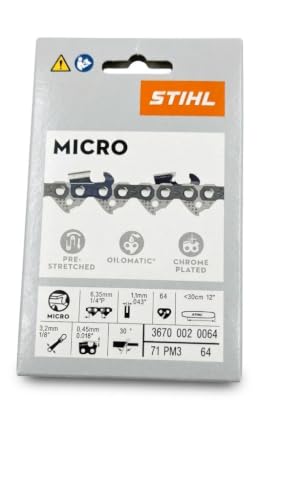
Maintaining cutting efficiency requires matching the powerhead with the correct guide bar and saw chain components. A 12-inch guide bar typically utilizes a 3/8-inch low-profile pitch and a .043-inch or .050-inch drive link gauge. Low-profile narrow kerf chains are engineered specifically for battery-powered saws because they remove less wood fiber per rotation. Removing less timber reduces drag against the guide bar, allowing the brushless motor to maintain high chain speeds without bogging down. Installing an oversized chain or mounting a bar beyond manufacturer recommendations will overload the motor and drain battery reserves rapidly.
When replacing cutting assemblies, operators must ensure the replacement chain matches the exact drive link count and bar tail mount pattern. When researching legacy equipment or sourcing chainsaw replacement parts, mechanical compatibility remains the primary factor in safe and smooth cutting. The drive links must seat fully into the bar rail groove without excessive lateral play or tight friction spots. Drive sprocket teeth also wear down over time, which can cause poor chain engagement and premature rail damage. Inspecting drive teeth during chain swaps ensures the power generated by your high-capacity battery transfers directly into cutting force.
Chain Tensioning Systems and Bar Retaining Hardware
Keeping the saw chain properly adjusted on a 12-inch cordless tool prevents thrown chains and uneven guide bar wear. Chainsaw designs generally use either tool-free quick-adjust dials or traditional dual captive bar nuts with a scrench tensioning screw. The tool-free tensioning mechanism found on many compact saws allows fast adjustments directly in the field without searching for hand tools. An operator simply loosens the side locking knob, rotates the tensioning wheel until the drive links seat snugly, and retightens the side cover. Maintaining proper tension prevents the chain from sagging along the bottom rail during heavy cuts.
Over-tightening the saw chain is a frequent mistake that places unnecessary stress on the electric motor bearings. A chain adjusted too tightly increases rotational friction, causing the guide bar to heat up and draining battery energy unnecessarily. A correctly tensioned chain should pull smoothly around the guide bar by gloved hand when the chain brake is released. The drive link tangs should remain seated in the guide groove when gently pulling the chain downward at mid-bar. Always disengage the battery pack before performing any physical tension checks or adjustments to prevent accidental motor startup.
Guide Bar Lubrication and Oil Delivery Requirements
Continuous chain lubrication is essential to prevent severe friction, rail burring, and premature chain dulling on cordless powerheads. Most modern 12-inch electric saws incorporate an automatic oiling system driven by an internal pump to lubricate the bar rails. The oil reservoir should be filled with dedicated bar and chain oil containing tackifier additives that keep the fluid clinging to the high-speed chain. Utilizing motor oil or hydraulic fluid as a substitute is ill-advised because these lubricants fling off the bar nose without protecting the drive links. Checking the oil reservoir level every time the battery is swapped ensures the cutting assembly never runs dry.
Ambient outdoor temperature dictates which viscosity grade of bar oil works best for uninterrupted lubrication. In cold winter conditions, standard summer-weight bar oil thickens, restricting flow through the tiny oil discharge port on the powerhead. Switching to a winter-grade bar oil or a lighter formula ensures consistent lubrication in freezing temperatures. Operators can verify oiler operation by pointing the guide bar tip toward a piece of scrap wood and running the motor for several seconds. A fine spray of oil appearing across the wood surface confirms that lubrication is flowing freely through the guide rails.
Essential Safety Systems and Personal Protective Equipment
Cordless chainsaws operate quietly between cuts, but their instant rotational torque presents significant cutting hazards. Modern 12-inch saws incorporate low-kickback guide bars and safety bumper chain links to reduce rotational kickback forces. The front hand guard acts as a protective shield and often activates an inertia or manual chain brake to stop chain rotation instantly. Accidental throttle engagement is prevented by a secondary safety lock switch that must be depressed before pulling the main trigger. These safety mechanisms must remain intact and functional; never attempt to bypass or modify safety interlocks on any power tool.
Safe operation requires the use of appropriate personal protective equipment whenever cutting limbs or firewood. Operators should wear cut-retardant chainsaw chaps or protective forestry pants to shield lower limbs from accidental chain contact. Heavy-duty leather or cut-resistant gloves provide grip stability while absorbing minor tool vibration during extended trimming sessions. Impact-resistant safety glasses and hearing protection are essential, even though electric motors run much quieter than two-stroke gasoline engines. Sturdy steel-toe boots with high ankle support ensure secure footing on uneven forest floors, wet grass, and sloped terrain.
Practical Verification and Battery Maintenance for Longevity
Getting reliable service from high-capacity dual-voltage battery packs requires basic preventative maintenance and sensible storage habits. Lithium-ion batteries should never be stored in direct sunlight, uninsulated sheds, or freezing vehicles for extended periods. Extreme heat degrades internal cell chemistry, permanently reducing available runtime, while severe cold restricts power discharge rates. The LED state-of-charge display located on the battery housing provides quick verification of remaining power before heading into the yard. If a battery feels noticeably hot after heavy bucking, let it cool to room temperature before placing it on the charging dock.
Inspecting electrical contact pins on both the battery and the chainsaw foot prevents intermittent electrical cutouts during cutting. Sawdust mixed with bar oil can migrate into terminal slots, creating electrical resistance or causing the battery to stick during removal. Blowing debris out of the battery cavity with compressed air keeps the electrical contacts clean and ensures secure locking engagement. Storing battery packs with an intermediate charge level during the off-season preserves overall cell health and prevents deep discharge damage. Simple care routines ensure your dual-voltage batteries deliver reliable power across all your cordless cutting equipment for seasons to come.





Write Your Review
No reviews yet. Be the first to share your experience!