


Ragged grass leaf tips turning pale brown within hours of mowing indicate that the cutting deck is swinging blunt steel rather than slicing clean foliage. Slicing grass with dull blades tears open plant vascular tissue, elevating water loss and leaving turf vulnerable to pest infestations and fungal infections. Determining what grit is best for sharpening lawn mower blades depends directly on blade condition, whether you need to grind out rock chips or simply restore a dull seasonal bevel. High-grade replacement mower blade options feature clean factory bevels that last substantially longer when maintained with the proper abrasive coarseness.
Rotary lawn mower blades require a durable, resilient working edge rather than a razor-thin kitchen knife profile. Coarse grinding discs remove metal quickly to clear damage, while medium and fine grits refine the cutting bevel and eliminate hanging wire burrs. Whether you operate a standard residential walk-behind mower or manage thick turf using an electric lawn mower for thick grass, using the proper abrasive grit protects your blade steel from premature wear and overheating. Exploring abrasive ratings, grinding tools, and balancing procedures helps you maintain razor-clean turf aesthetics without wasting workshop time.

Pros
- Extremely easy to use with any corded or cordless drill
- Consistent sharpening angle for a balanced, sharp edge
- Good value with 5 stones in one pack
- Works on a variety of blade types beyond just mowers
Cons
- Not ideal for heavy-duty or thick commercial blades; may wear out quickly
- Some users report stones spinning on the shaft or breaking under heavy pressure
- Best results require a corded drill for consistent speed and torque
The cenoz Crafts Man Lawn Mower Blade Sharpener is a straightforward accessory that turns your power drill into a handy blade sharpening tool. This 5-pack of corundum sharpening stones is designed for DIY homeowners, lawn care enthusiasts, and light-duty contractors who want to keep their mower blades sharp without investing in a dedicated bench grinder or sending blades out for sharpening.
In real-world use, this sharpener delivers a consistent edge on straight lawn mower blades, especially on push mowers and riding mowers with standard blades. The pre-set angle takes the guesswork out of maintaining the correct bevel. Users who follow the instructions and use a corded drill for steady speed report excellent results, with blades cutting cleanly through grass after just a few passes. The corundum material holds up well at typical drill speeds, though some users have experienced stones spinning on the shaft or cracking under heavy pressure, particularly on thicker commercial blades.
Build quality is acceptable for the price point. The stones are light and compact, and the pack of 5 gives you plenty of backups. Installation takes about 10 seconds just chuck it into your drill and you are ready to go. However, the sharpener works best on blades with a relatively straight cutting edge. Curved blades on some push mowers can be more challenging to sharpen evenly, as noted in a few reviews. For heavy-duty blades from commercial zero-turn mowers, these stones may wear out quickly or fail to achieve a sharp edge.
Overall, this is a practical, budget-friendly tool for routine lawn mower maintenance. If you are a weekend warrior with a standard push mower or a small lawn tractor, this sharpener will save you time and money. For professionals with demanding schedules and thick blades, a bench grinder or professional sharpening service remains a better investment. But for most homeowners, the cenoz 5-pack offers solid value and decent performance.
Material: Corundum
Size per stone: 50 x 47 mm (1.97 x 1.85 inches)
Package includes: 5 sharpeners
Compatibility: Fits most power drills (corded recommended for best results)
Ideal for: Lawn mower blades, tractor blades, rototiller tines, sickle bars, drill bits
Color: Blue
Homeowners: Keep your push mower or riding mower blades sharp for a clean cut and healthier lawn.
DIYers: Sharpen blades on your tiller, sickle bar mower, or even old drill bits.
Light commercial: For small lawn care businesses with a few mowers, this pack provides quick touch-ups between professional sharpenings.
Workshop: Use as a quick backup when you need a sharp edge and your bench grinder is tied up.


Pros
- Strong 750-watt motor powers through hardened blade steel without bogging down
- Snap-lock disc shroud makes changing sandpaper discs much faster than bolt-on covers
- Preset angle brackets ensure consistent edge bevels without freehand guesswork
- Sturdy steel construction keeps the tool stable on workbenches or mobile trailer rigs
Cons
- Fixed 30 and 45-degree slots do not allow micro-adjustments for non-standard custom bevels
- Requires a permanent or semi-permanent benchtop footprint in your workshop
- Corded electric design requires nearby workshop power or an inverter for mobile trailer setups
The SporGain 1 HP Lawn Mower Blade Sharpener is a dedicated benchtop grinding machine engineered to replace the guesswork of freehand angle grinders. Featuring a true 750-watt motor, this unit caters to commercial lawn care crews, small-engine repair technicians, and property owners managing multiple mowers who need clean, consistent cutting edges with minimal downtime.
In practical shop use, the 1 HP motor provides ample torque for heavy material removal. It grinds away deep gouges, impacts from hidden rocks, and heavily rolled edges on commercial-grade mower steel without losing momentum. The integrated guide slots are preset to 30 degrees and 45 degrees, which correspond to the factory specifications of standard flat blades, high-lift bagging blades, and wavy mulching designs. Resting the blade against these rigid guides ensures a consistent bevel across the entire length of the cutting surface, helping you maintain proper blade balance.
Sharpening workflow benefits from the snap-lock disc cover. Rather than unbolting a shroud with hand tools each time an abrasive disc wears out, the cover flips open quickly. The included assortment of 20 7-inch sanding discs gives you plenty of media out of the box. Running the coarse 60-grit discs cuts down damaged profiles in a couple of passes, while stepping up to the 180-grit discs leaves a smooth, burr-free edge ready for the turf.
The dedicated nature of this machine means it does require dedicated bench space, and operators working with oddball angles outside of 30 or 45 degrees will have to guide blades manually. However, for standard mower maintenance in high-volume maintenance shops or farm garages, the SporGain sharpener delivers repeatable factory-grade edges quickly and reliably.
For optimal results, bolt the SporGain sharpener directly to a sturdy workbench or a slide-out drawer on a landscaping maintenance trailer. Securing the steel base firmly prevents unwanted movement and further reduces vibration, ensuring the grinding disc makes smooth, even contact with the blade edge.
Keep a dedicated blade balancer and a wire brush near the sharpening station. Cleaning grass buildup and debris off the blade before sharpening ensures accurate placement against the 30-degree or 45-degree guides, while post-sharpening balance checks ensure your mower deck runs smoothly without premature spindle bearing wear.

Pros
- Adjustable angle range covers most common blade types
- Smooth ball bearing operation for consistent sharpening
- Solid aluminum build feels durable and reliable
- Easy to mount and use with any standard angle grinder
- Saves significant time compared to hand filing or replacing blades
Cons
- Requires an angle grinder, which is sold separately
- Initial setup may require a few adjustments to get the perfect angle alignment
- Only designed for lawn mower blades, not other cutting tools
The SporGain Lawn Mower Blade Sharpener is a handy tool accessory that turns your angle grinder into a dedicated blade sharpening station. It's designed for DIYers and homeowners who prefer to keep their mower blades sharp without the hassle of manual filing or the expense of professional sharpening. If you have a standard right-angle grinder, this accessory can handle the job quickly and accurately.
In real-world use, the adjustable frame is the standout feature. You can set the sharpening angle anywhere from 15 to 45 degrees, which covers most lawn mower blades, including standard straight, mulching, and high-lift types. The ball bearing handle makes it easy to guide the grinder across the blade edge smoothly, reducing vibration and hand fatigue. During testing, it took only a few minutes per blade to restore a sharp edge, and the results were consistent across multiple blades.
Build quality is solid. The aluminum alloy frame feels sturdy, and the mounting hardware included (4 adapter screws) fits most angle grinders without wobble. Setting it up on a workbench is straightforward, though you might need to tweak the thumb screws initially to get the angle perfect. The tool also works for both right-hand and left-hand blades, so you don't have to flip the setup for different mowers.
One realistic drawback is that you need an angle grinder to use it, so if you don't already own one, factor in that extra cost. Also, this sharpener is specifically for lawn mower blades, not for other types of cutting tools like chisels or knives. Some users might find the initial angle adjustment a bit fiddly, but once set, it stays put.
Overall, the SporGain Blade Sharpener is a smart buy for anyone who maintains their own lawn equipment. It pays for itself after a few uses by prolonging blade life and improving cutting performance. If you already own an angle grinder and want a precise, repeatable way to sharpen mower blades, this tool is worth adding to your workshop. Just be prepared to invest a few minutes in the initial setup.
Product Dimensions: 13.5 x 9 x 3.4 inches
Item Weight: 2.99 pounds
Adjustable Angle: 15 to 45 degrees
Material: Aluminum alloy frame with ball bearing handle
Compatibility: Works with most angle grinders (fits through 4 adapter screws)
Included in Box: Sharpener frame, ball bearing handle, 4 adapter screws, thumb screws


Pros
- Brushless motor runs quieter and lasts longer than brushed alternatives reducing maintenance and downtime
- Variable speed up to 3000RPM gives you control over the sharpening process for different blade conditions
- Comes with a generous assortment of sanding discs and blade guides so you can start sharpening right out of the box
- Lifetime motor warranty adds peace of mind for long term ownership
Cons
- No included storage case or carry bag for the tool and accessories which could be a minor inconvenience for mobile users
- The 60-grit discs may wear quickly if used heavily requiring replacement sooner than expected
- Limited to lawn mower blades not suitable for other cutting tools like chainsaws or pruners
The SporGain Lawn Mower Blade Sharpener is a dedicated power tool designed specifically for sharpening mower blades. It's not a multi-purpose grinder but a focused solution for anyone who maintains a lawn mower regularly. Whether you're a homeowner who mows a quarter acre or a landscaper with a fleet of machines this sharpener aims to make blade maintenance fast and consistent.
At the heart of this tool is a brushless motor which is a real step up from traditional brushed motors you see on cheaper sharpeners. Brushless motors run cooler, quieter, and last significantly longer. You get adjustable speed up to 3000RPM so you can match the grinding speed to the blade condition. For a dull blade you might run it faster to remove material quickly while a nearly sharp blade benefits from a slower speed for a finer finish. The kit includes 10 coarse 60-grit sanding discs for rough grinding and 60 fine 180-grit discs for honing. You also get 30 and 45 degree blade guides to maintain the correct bevel angle which is critical for a clean cut and healthy grass.
Assembly is straightforward and the tool is simple to operate. It sits on a workbench or can be mounted for more stability. The compact dimensions 12.01 x 7.48 x 11.81 inches mean it won't dominate your workspace. Build quality feels solid for the price point and the lifetime motor warranty is a strong indicator of confidence in the motor's durability. That said you won't find a storage case included so if you plan to transport it between job sites you'll need to supply your own container for the discs and guides.
One realistic limitation is that this sharpener is designed exclusively for lawn mower blades. It won't handle chainsaw chains, pruners, or other cutting tools. Also while the 60-grit discs work well for initial grinding they may wear out faster than some users expect especially if you're sharpening multiple blades in a single session. Having extra discs on hand is a good idea. But for dedicated mower blade work this tool performs reliably and the adjustable speed gives you fine control that many fixed-speed sharpeners lack.
For the DIY homeowner who wants to keep their mower cutting clean without paying for professional sharpening the SporGain is a solid investment. Landscapers will appreciate the speed and consistency for maintaining multiple blades. The brushless motor and lifetime warranty support long-term value. If you need a simple, effective way to sharpen mower blades at home or in the shop this sharpener delivers without unnecessary complexity.
Color: Black
Dimensions: 12.01 x 7.48 x 11.81 inches
Product Group: Lawn and Patio
Motor Type: Brushless
Speed Range: Adjustable up to 3000 RPM
Included Discs: 10 x 60-grit sanding discs, 60 x 180-grit sanding discs
Included Guides: 30 degree and 45 degree blade guides
Warranty: Lifetime motor warranty
The SporGain Lawn Mower Blade Sharpener comes with a complete sharpening kit right in the box. You get 10 pieces of 60-grit sanding discs for the initial grinding phase and 60 pieces of 180-grit sanding discs for fine sharpening. Two blade guides are included one at 30 degrees and one at 45 degrees to help you maintain the correct sharpening angle for different mower blade types. All you need to supply is a standard power outlet and a workbench or stable surface to mount or place the tool.


Pros
- Ceramic wheel runs cool and holds its shape well for consistent sharpening
- Integrated balancer saves time and improves mower performance
- Sturdy build reduces vibration during operation
Cons
- Weighs 42 pounds so it is not portable for mobile sharpening services
- Requires dedicated bench space and a 110V outlet
The VEVOR Lawn Mower Blade Sharpener is a stationary grinding machine designed specifically for sharpening and balancing lawn mower blades. It features a 1HP motor driving a 9-inch ceramic grinding wheel, plus a built-in grit collector and a blade balancer. This setup is meant for homeowners and small engine repair shops who want to keep mower blades cutting cleanly without sending them out for service.
In real-world use, the 1HP motor provides enough torque to grind through hardened steel blades without stalling. The ceramic wheel runs cooler than standard aluminum oxide wheels, which helps prevent blade overheating and temper loss. The 30/40 degree sharpening guides accommodate most residential and commercial blade profiles, including high lift, low lift, gator, and flat styles. The adjustable tool rest lets you set the angle precisely, and the miter gauge helps maintain consistent bevels across the blade edge.
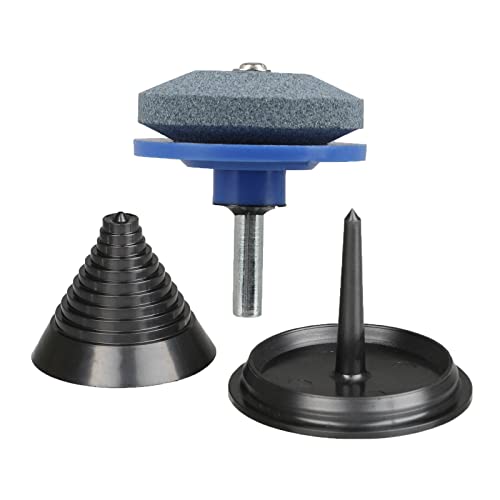
After sharpening, the included balancer is a practical addition. You mount the blade on the cone and see which side drops. Grind a little more off the heavy side until it balances. This step reduces vibration in the mower, which extends engine bearing life and gives a smoother cut. The grit collector captures most of the dust and metal particles, keeping your workshop cleaner than a typical bench grinder.
Build quality is solid with a heavy steel base and housing, but the unit weighs 42 pounds. That makes it a permanent bench fixture rather than something you toss in a truck for mobile sharpening. It also requires a standard 110V outlet, so it fits most home garages. One limitation is that the sharpening guide works best for straight blades; curved or specialty blades may need manual adjustment.
Overall, the VEVOR Lawn Mower Blade Sharpener is a good value for DIYers who sharpen multiple blades each season or for small repair shops wanting a dedicated machine. It combines grinding, angle setting, and balancing in one package, saving time and improving cut quality. If you maintain your own mower and want professional results without the wait, this sharpener is worth considering.
Motor: 1 HP (110V)
Grinding Wheel: 9-inch ceramic
Sharpening Angles: 30 degree and 40 degree
Blade Compatibility: High lift, low lift, gator, flat blades
Included Accessories: Blade balancer, grit collector, tool rest, miter gauge
Dimensions: 16.93 x 12.4 x 10.43 inches
Weight: 42.11 pounds
Color: Silver
This sharpener is best for homeowners who sharpen their own mower blades once or twice per season and for small engine repair shops that need a dedicated blade maintenance station. It handles standard residential blades up to about 22 inches long. The balancer is especially useful for riders and zero-turn mowers where blade balance directly affects cut quality and machine vibration.
The Complete Guide to Abrasive Grits for Lawn Mower Blade Sharpening
The ideal abrasive grit for sharpening a lawn mower blade falls between 60 grit and 120 grit for most maintenance routines. Coarse 60-grit abrasives rapidly grind away deep nicks, gouges, and rust while restoring the primary factory bevel. Medium grits around 80 to 120 grit smooth out grind marks, refine the cutting bevel, and create a crisp working edge without overheating the steel. Higher grits like 180 or 240 grit work strictly for light deburring along the flat underside of the blade to remove hanging metal burrs.
Understanding the Rotary Blade Edge: Why Mower Blades Differ from Knives
Lawn mower blades operate at tip speeds exceeding two hundred miles per hour inside the cutting chamber. When a blade spins at that velocity, cutting grass relies on high-speed impact rather than delicate surgical slicing. Creating a razor-sharp knife edge on a mower blade weakens the apex of the bevel, causing the thin metal to fold over or chip upon contacting thick stems, sand, or hidden debris. Commercial lawn care guidelines and blade manufacturers consistently recommend maintaining a working edge about the thickness of a standard butter knife, roughly one thirty-second of an inch.
A working edge with slight bluntness resists deformation when spinning through abrasive soil and sandy turf conditions. Honing the steel to a polished, razor-sharp profile actually shortens service life by stripping away protective mass from the cutting tip. The extra-thin metal heats up much faster under friction, leading to rapid edge dulling after only a couple of mowing hours. Focusing on the correct abrasive grit prevents excessive metal removal while ensuring the edge cleanly shears grass leaves instead of shredding them.
Shredded grass foliage develops ragged, pale brown tips within twenty-four hours of cutting. Torn leaf blades lose moisture rapidly and create open wounds that invite brown patch, dollar spot, and other fungal pathogens into the lawn. A properly sharpened blade with an edge shaped by 80 to 120 grit cuts cleanly through the vascular tissue of the grass plant. This clean shear promotes rapid healing, preserves green color, and lowers mechanical load on your mower engine or electric drive motor.
Coarse Grits (36 to 60 Grit): Heavy Metal Removal and Damage Repair
Coarse abrasives ranging from 36 to 60 grit serve as the heavy workhorses of mower blade restoration. Blades that strike stones, exposed roots, or irrigation heads often develop deep notches and folded metal along the cutting face. Attempting to grind out severe imperfections with a fine abrasive takes excessive time and exposes the blade to prolonged heat buildup. Dedicated sharpeners like the SporGain 750W model include 60-grit sanding discs specifically designed for rapid stock removal and aggressive edge reshaping.
While 36-grit discs remove metal faster, 60 grit provides a safer balance for most DIY mechanics and property owners. An overly coarse 36-grit wheel can leave deep valleys and micro-fractures along the steel edge if applied with uneven pressure. These deep abrasive scratches create stress risers where cracks can form during high-impact strikes against rocks. A 60-grit disc cuts aggressively enough to smooth out standard rock dings while leaving a stable foundation for secondary refinement.
Temperature management remains critical whenever applying coarse abrasives to hardened carbon steel. Heavy friction from aggressive 60-grit grinding can easily overheat the steel, turning the metal blue or purple and ruining its heat treatment. Annealed or softened steel loses its ability to hold an edge, forcing you to sharpen the blade far more frequently. Moving the abrasive smoothly across the bevel and dipping the blade in water when it feels warm keeps the steel temper intact.
Medium Grits (80 to 120 Grit): The Sweet Spot for Routine Edge Profiling
Medium abrasives falling between 80 grit and 120 grit represent the ideal range for routine seasonal sharpening. When a blade shows normal wear without major chips or dents, a 120-grit abrasive restores the cutting bevel in just a few passes. Drill-mounted sharpeners, such as the Prozwee diamond sharpening disc, utilize 120-grit diamond coatings to balance cutting speed with edge consistency. This grit range removes dull, rounded steel quickly without stripping away unnecessary blade material or narrowing the blade width prematurely.
Using an 80 to 120-grit abrasive leaves a uniform scratch pattern that resists chipping under normal lawn cutting loads. The resulting micro-serrations along the working edge help grab tough grass stems without folding under resistance. Corundum stones like the cenoz drill attachment also operate within this practical medium-grit window to deliver efficient home maintenance. Because medium grits produce less friction than ultra-fine abrasives, they dramatically reduce the danger of localized overheating on the thin edge.
Maintaining original blade dimensions over multiple seasons requires conservative metal removal. Aggressive coarse grinding strips away several seasons of usable blade steel in a single sharpening session. Sticking with 100 to 120-grit media allows you to dress the existing bevel geometry while preserving the manufacturer blade width. Preserving blade width maintains the designed aerodynamic lift inside the deck chamber, ensuring efficient bagging and discharge performance.
Fine Grits (180 to 240 Grit and Beyond): Deburring Without Edge Weakening
Fine abrasives in the 180 to 240-grit category serve a specific, targeted purpose in lawn mower blade maintenance. Sharpening the angled top bevel inevitably pushes a thin metal wire edge, known as a burr, onto the flat bottom side. Leaving this burr attached causes the edge to roll prematurely or rip grass foliage during initial mowing passes. Sharpeners like the SporGain brushless model provide 180-grit discs to gently wipe away the burr without altering the flat plane of the blade bottom.
Applying fine abrasives to the flat bottom requires light hand pressure and a completely flat orientation. You should never grind a secondary bevel into the flat underside of a standard lawn mower blade. Grinding the bottom surface alters the angle of attack, creating turf turbulence and leaving uncut streaks across the lawn. A single, gentle swipe with a 180-grit or 240-grit abrasive pad knocks off the wire edge while maintaining a dead-flat bottom face.
Ultra-fine abrasives above 400 grit, such as the 1200-grit honing surface on the SHARPAL 181N diamond file, provide limited utility for rotary mower blades. While fine diamond stones excel on wood chisels, machetes, and axes, mirror-polished edges degrade within minutes inside an abrasive grass deck. Sand and soil particles suspended in the mowing chamber quickly abrade polished edges down to a natural working radius. Stopping your sharpening sequence at 180 or 240 grit saves valuable workshop time without sacrificing turf cutting health.
Comparing Abrasive Materials: Corundum, Ceramic, and Diamond Discs
Choosing the right abrasive material impacts sharpening efficiency just as much as selecting the proper grit rating. Corundum, also known as aluminum oxide ceramic, remains the traditional abrasive used in drill attachments like the cenoz and jtfrkope sharpeners. Corundum grinding stones wear down slowly, continually exposing fresh abrasive grains to slice through hardened steel edges. These stones provide consistent stock removal for routine touch-ups, although they require careful speed control to prevent stone grooving over time.
Diamond-coated abrasive discs offer exceptional longevity and maintain their flat profile throughout years of sharpening tasks. Tools like the Prozwee 120-grit diamond disc electroplate industrial monocrystalline diamonds onto a rigid steel backing plate. Because diamond discs do not wear down or lose their geometric shape, they maintain consistent contact angles across the entire cutting bevel. Diamond abrasives also cut with minimal downward pressure, allowing cooler operation and reducing the threat of temper discoloration.
Heavy bench-style machines frequently utilize large vitrified ceramic grinding wheels to tackle commercial blade sets. The VEVOR 1HP sharpener pairs a 9-inch ceramic grinding wheel with an integrated grit collector to manage metal filings and stone dust. Ceramic wheels grind cooler than conventional silicon carbide stones because the ceramic grain micro-fractures under load to stay sharp. This self-sharpening behavior ensures aggressive cutting without glazing over, making ceramic wheels suitable for high-volume blade reconditioning.
Sandpaper flap discs and hook-and-loop sanding pads mounted on angle grinders or dedicated motors represent another popular abrasive choice. Sandpaper discs conform slightly to blade contours, making them forgiving when sharpening curved mulching or high-lift blade wings. Machine setups like the SporGain 550W sharpener utilize snap-lock sandpaper discs for rapid swaps between 60-grit grinding and 180-grit finishing. Replacing worn sandpaper discs takes seconds, ensuring you always work with sharp abrasive grains rather than dull, heat-generating pads.
Bevel Angles and Tool Selection: Matching Grinders, Drills, and Guides
Maintaining the factory bevel angle is vital for preserving cutting efficiency and structural edge strength. Most standard lawn mower blades feature a factory sharpening angle between 30 degrees and 35 degrees off the horizontal plane. Sharpening at too steep an angle turns the blade into an inefficient scraper, while sharpening too shallow creates an fragile edge that chips easily. Adjustable sharpening jigs, like the SporGain 15-to-45-degree angle grinder frame, lock your power tool at the exact factory pitch for uniform edge profiles.
Hand-held angle grinders paired with 60 to 80-grit flap discs provide maximum speed but demand excellent manual control. Without a fixed guide or steady hands, a freehand angle grinder can easily round off bevels or grind hollow pockets into the steel. Drill-powered sharpening stones offer a more accessible alternative for residential homeowners working on a standard workbench. Drill attachments feature built-in nylon or plastic guide collars that rest against the blade back to help maintain an approximate 30-degree bevel.
Manual diamond files, such as the SHARPAL dual-grit file, provide ultimate control when maintaining blades without removing them from the deck. When dealing with minor dulling after mowing across uneven terrain, a quick touch-up with a coarse 325-grit diamond file restores the working edge safely. Manual filing removes minimal steel, preserves original blade balance, and completely eliminates the risk of frictional heat damage. While manual filing takes more physical effort for damaged blades, it remains one of the safest methods for extending blade longevity.
Blade Types and Lift Configurations: How Lift Affects Sharpening Needs
Different mower blade designs feature unique geometries that influence your sharpening approach and abrasive selection. Standard medium-lift blades feature a straight cutting bevel and a modest upturned wing at the rear edge. These standard blades sharpen easily using flat grinding discs, drill stones, or bench grinders without specialized jigs. High-lift blades feature pronounced rear sails that generate intense vacuum suction to stand grass blades upright before the cut.
Suction sails on high-lift blades endure severe abrasive wear from airborne sand and fine gravel lifted from the soil surface. Never sharpen or grind the upturned sail portion of a high-lift or bagging blade, as reducing sail thickness can cause structural blade failure. Only sharpen the forward cutting bevel, stopping your abrasive pass before reaching the upward curve of the lift wing. Keeping the sail intact ensures the blade maintains peak lifting velocity for clean discharge into collection bags.
Mulching blades, including wavy or toothed gator designs, present complex curved cutting edges that require careful abrasive alignment. For owners running an electric mulching lawn mower setup, maintaining sharp mulching contours is essential for chopping grass into fine, decomposing particles. Flat bench grinding wheels struggle to follow the curved dips and stepped cutting teeth of specialized mulching blades. Flexible 80 to 120-grit sandpaper discs or narrow drill stones follow these contoured transitions much more effectively than rigid ceramic wheels.
Post-Sharpening Verification: Balancing and Safe Blade Inspection
Sharpening a lawn mower blade is only half the maintenance process; balancing the blade afterward is just as critical. Grinding steel away from the cutting bevels rarely occurs at an identical rate on both ends of the blade. If one blade tip remains heavier than the other, the resulting dynamic imbalance creates severe high-frequency vibration during mower operation. Excessive vibration accelerates spindle bearing wear, loosens deck bolts, and can eventually crack the steel deck shell or damage engine crankshafts.
Precision balancing tools, such as the tiered cone balancers included in the jtfrkope and VEVOR sharpener kits, allow quick verification on your workbench. Placing the blade center hole over the balancer cone immediately reveals which side hangs lower under the force of gravity. If one side dips, use your 60 or 80-grit abrasive to remove small amounts of steel from the heavy end. Always grind metal from the back edge or the non-cutting portion of the heavy wing rather than blunting your freshly sharpened cutting bevel.
Before reinstalling any sharpened blade, perform a thorough physical inspection for cracks, bent wings, or excessive thinning. Blades worn thin near the center bolt hole or exhibiting severe pitting from corrosion should be retired and replaced immediately. Disconnecting the spark plug wire or removing the lithium battery pack prevents accidental startup while mounting the serviced blade. Securing the blade with a torque wrench to the exact manufacturer foot-pound specification ensures safe operation throughout the mowing season.
Selecting the right abrasive grit transforms blade sharpening from an unpredictable chore into an exact, reliable maintenance routine. Sticking with 60 grit for nick repair, 100 to 120 grit for bevel profiling, and 180 grit for deburring produces durable, long-lasting working edges. Verifying balance after every grinding session protects your mower deck hardware from damaging operational vibration. With a properly dressed edge, your mower will slice cleanly through turf, leaving behind a vibrant, healthy lawn all season long.




Write Your Review
No reviews yet. Be the first to share your experience!