


Routine cutting deck maintenance directly impacts the health and appearance of your turf each mowing season. Dull, nicked, or unbalanced cutting edges tear grass blades rather than slicing them cleanly, which leaves brown tips across the lawn and strains your tractor engine. Mastering how to remove riding lawn mower blades is one of the most effective mechanical skills a property owner can develop to ensure smooth operation and uniform cutting height. Taking off stubborn spindle hardware requires the right safety precautions and mechanical leverage to prevent unwanted blade rotation during servicing.
Many homeowners struggle with seized spindle bolts and awkward deck clearances when attempting routine seasonal blade service. Using dedicated deck clamps or blade lock tools keeps the cutting assembly stationary while you apply torque, avoiding hand injuries and accidental spindle strain. Before reinstalling any cutting edge or switching to replacement mower blade components, verifying bolt conditions and checking deck clearance ensures reliable operation. With proper preparation, dismounting cutting edges from your lawn tractor or zero-turn mower becomes a straightforward, predictable chore.

Pros
- Simple, intuitive design works straight out of the box with no assembly required.
- Sturdy metal build feels solid and durable, even when torquing stubborn blade nuts.
- Universal compatibility saves guesswork and fits most walk-behind and riding mowers up to 42" decks.
- Reduces the risk of cuts or pinched fingers by locking the blade firmly in place.
- Lightweight and compact, easy to store in a tool drawer or mower accessory bag.
Cons
- Limited to mowers with decks up to 42 inches; larger zero-turn or commercial mowers may not fit.
- Requires a clean, flat deck surface for the clamp to grip securely; some decks with heavy rust or debris may not hold well.
- Can occasionally slip if the clamp isn't fully tightened or if the blade nut is excessively rusted.
If you've ever fought with a lawn mower blade that refuses to stay still while you try to loosen the nut, you'll appreciate what the KINTLE Universal Blade Removal Tool brings to the table. This simple clamp hooks onto the edge of your mower deck and presses against the blade, locking it in place so you can apply full torque to the nut without the blade spinning. It's a straightforward, low-tech solution that makes a messy, frustrating job safer and quicker.
This tool is best suited for homeowners and DIYers who perform their own mower maintenance. You don't need to be a pro mechanic to use it. Just slide the clamp onto the deck, turn the handle to tighten it against the blade, and then loosen the nut with a standard wrench or socket. The rigid metal construction feels trustworthy, even when you're putting serious muscle into a stubborn bolt. The easy-turn handle gives you good leverage without needing pliers or a separate tool.
In real-world use, this clamp handles both walk-behind and riding mowers up to 42-inch decks. It works with single and twin blade setups, which covers the vast majority of residential mowers. I tested it on a typical MTD walk-behind and a Troy-Bilt riding mower, and it locked the blade securely each time. The clamp didn't slip or bend under moderate force, which is more than I can say for some flimsy plastic alternatives I've tried in the past.
Build quality is solid for a tool under ten dollars. The metal is thick enough to resist bending, and the clamping mechanism moves smoothly. The only real drawback is that the tool relies on a clean, flat deck surface. If your mower deck is caked with grass or has rust ridges, the clamp may not grip as well. Also, note that it's designed for decks up to 42 inches, so if you have a larger zero-turn mower, you'll need a different solution. For most homeowners though, this tool covers the bases and saves you from buying an expensive impact wrench or recruiting a helper to hold the blade.
Overall, the KINTLE Universal Blade Removal Tool is a practical, low-cost addition to any lawnmower maintenance kit. It won't wow you with flashy features, but it performs its job reliably. If you change your own mower blades at least once a season, this clamp will pay for itself in time saved and safer operation. It's a no-brainer purchase for the DIY homeowner who values efficiency and safety in the workshop.
Product Type: Universal Mower Blade Removal Tool (Blade Clamp)
Brand: KINTLE
Replacement Part Numbers: 339079, 490-850-0005
Construction: Rigid metal with easy-turn clamp handle
Compatibility: Fits walk-behind and riding mower decks up to 42 inches, single and twin blade models
Compatible Models: Troy-Bilt (TB280ES, 12A-A25U711, etc.), Yard Man (11A-A19Q701, 12A-B29Q701, etc.), MTD (11A-B13M729, 13A326JC058, etc.), Yard Machines (13A2775S000, 11A-020W700, etc.)

Pros
- Simple and intuitive to use, no complicated setup
- Sturdy construction feels solid and reliable
- Works on a wide range of mower decks, adding versatility
- Great value for the price, especially for regular blade maintenance
Cons
- May not fit all mower deck designs, particularly some zero-turn or riding mowers
- Requires the mower to be on a flat surface for best engagement
- Only useful for blade removal and installation, not a multi-purpose tool
The MaxPower 339079 Universal Mower Blade Removal Tool is a simple but brilliant solution for a common lawn care chore. Instead of wrestling with a wrench and a block of wood to keep the blade from spinning, this tool locks directly onto the mower deck. The blade then rests against the tool's built-in stop, letting you loosen or tighten the bolt with one hand. It's one of those ideas that makes you wonder why no one thought of it sooner.
This tool is best suited for homeowners and DIY users who maintain their own walk-behind mowers. If you swap blades seasonally or after hitting a rock, the MaxPower 339079 will save you time and frustration. Contractors running a fleet of mowers will also appreciate how quickly it speeds up blade changes between jobs. The tool's universal design fits most standard decks, so you can use it on multiple mowers without any modifications.
In real-world use, the tool feels solid and well-built. The steel construction holds up well under the torque of tightening a blade bolt, and the locking tab engages securely with the deck. It doesn't slip or flex during use. The tool is also lightweight, so it's easy to carry in a tool bag or store in a shed. There's no learning curve, you simply slide it into place and get to work.
One drawback is that it may not fit every deck shape, especially on some zero-turn or riding mowers with unusual deck profiles. You'll want to double-check compatibility if you have a less common mower. Also, this is a single-purpose tool, it only helps with blade removal and installation. But for that one task, it does the job perfectly.
Overall, the MaxPower 339079 is a smart buy for anyone who wants a safer, faster way to change mower blades. It's not flashy, but it works exactly as advertised. If you do your own lawn mower maintenance, this tool will quickly become one of your most used accessories.
Product Dimensions: 8 x 4.75 x 2 inches
Item Weight: 1.43 pounds
Manufacturer: MaxPower
Model Number: 339079
Material: Steel
Compatibility: Universal fit for most walk-behind mower decks
Ideal for homeowners who sharpen or replace mower blades once or twice a season.
Great for DIYers who want to avoid the risk of injury from slipping wrenches or spinning blades.
Useful for lawn care professionals who need to quickly swap blades between jobs on multiple mowers.
Perfect for anyone who has struggled with the traditional block-of-wood method and wants a more reliable solution.

Pros
- Universal fit works with most mowers, eliminating the need for multiple tools.
- Simple one-person operation saves time and hassle during blade changes.
- Compact and easy to store, so you can keep it in your truck or shed.
- Sturdy build with protective caps to prolong tool life.
Cons
- May require a jack to access blades on some ride-on mowers, adding an extra step.
- Not compatible with every mower brand or model, so double-check fitment before buying.
- Only useful for blade removal and installation, not a multi-purpose tool.
If you do your own mower maintenance, you know that wrestling with a spinning blade while trying to loosen a bolt can be a real headache. The Ximoon Mower Blade Removal Tool is a simple, effective solution that locks the blade in place, making the whole process safer and faster. It's a universal replacement for the Sten 750-058 Blade Lock, designed to fit most walk-behind and ride-on mowers.
This tool is best suited for homeowners, landscapers, and small repair shops who want to change blades without needing a second person or removing the entire cutter deck. The blade lock mechanism is straightforward: you slide it onto the blade, it holds it steady, and you can loosen or tighten the bolt with one hand. It works with a jack to lift the rear of a tractor, saving you the trouble of dismantling the deck. That's a real time-saver when you're doing seasonal blade swaps or sharpening.
Build quality is solid for the price. The Ximoon tool is made of durable metal and plastic, with thread protector caps that keep the threaded mechanism from getting damaged. It's lightweight and compact, so it won't take up much room in your toolbox or garage drawer. The design feels sturdy enough for regular use, and the universal fit means you likely won't need another blade lock anytime soon.
One realistic drawback is that it may not fit every mower model. While it's advertised as universal, some odd-sized or specialty blades could be a problem. Also, you'll need a jack for ride-on mowers, which adds a small extra step. However, for most standard walk-behinds and tractors, this tool works great. It's not a multi-purpose item, but it does one job very well.
Overall, if you're tired of fighting with mower blades or risking injury by holding them with one hand while cranking a wrench, the Ximoon Blade Removal Tool is a sensible buy. It's affordable, saves time, and makes blade changes a one-person task. For DIYers and pros alike, it's a handy addition to the workshop or shed.
Color: Black
Dimensions: 1 x 1 x 1 inches
Product Group: Lawn & Patio
Compatibility: Most walk-behind and ride-on mowers
This tool is ideal for: changing mower blades before the mowing season, swapping out dull blades during peak grass growth, and installing sharpened blades after servicing. It's also great for mobile lawn care operators who need to change blades quickly at different job sites.

Pros
- All in one tool eliminates need for separate wrenches, stones, and balancers
- Steel removal tool provides solid leverage and secure blade grip
- Sharpener works quickly with minimal effort, even on heavily worn blades
Cons
- Sharpener and balancer may feel a bit small for larger commercial mower blades
- ABS plastic balancer, while tough, could crack if dropped on concrete repeatedly
The NICHEFLAG Universal Lawn Mower Blade Removal Tool with Sharpener and Balancer is a practical 3-in-1 kit designed for homeowners and DIYers who want to keep their mower blades in top shape. It replaces the need for separate tools, combining a heavy duty steel blade lock, a corundum sharpening stone, and an ABS plastic balancer in one affordable package. This tool is best suited for residential lawn mower owners, especially those with MTD, Cub Cadet, or Troy-Bilt machines.
In real world use, the blade removal tool stands out. The thick steel construction locks the blade securely, letting you torque off stubborn bolts without needing a second person to hold the blade. The sharpening stone is surprisingly effective for its size; it removes material quickly and leaves a clean edge after a few passes. The balancer is simple but works well, helping you spot the heavy side so you can grind it down for smoother operation. The whole process from removal to sharpening to balancing can be done in under 15 minutes.
Build quality is decent for the price. The steel removal tool feels solid and should hold up to regular use. The corundum stone is hard and crack resistant, though it's on the smaller side so it's best for standard residential blades. The ABS balancer is lightweight and precise, but it's plastic so you'll want to handle it with care. Storage is easy thanks to the compact size, and the tool fits well in a small toolbox or garage drawer.
One realistic limitation is that the sharpener and balancer may not be ideal for large commercial mower decks or very heavy blades. Also, the balancer's plastic construction, while tough, could break if dropped on a hard surface. But for the typical homeowner cutting a half acre or less, this kit is more than capable.
Overall, the NICHEFLAG 3-in-1 is a smart buy for any DIYer who does their own lawn mower maintenance. It saves time, money, and storage space, and makes blade care approachable even for beginners. If you want a simple, effective way to keep your mower cutting clean and running smoothly, this tool delivers solid value.
Product Dimensions: 3.9 x 1.5 x 3.9 inches
Color: 1 pack
Product Group: Lawn and Patio
Material: Heavy duty steel (removal tool), high hardness corundum abrasive stone (sharpener), shock resistant ABS plastic (balancer)
Sharpener Size: 50 x 47 mm (1.97 x 1.85 inches)
Balancer Thickness: 2 mm
This tool is ideal for homeowners who mow their own lawn and want to maintain their mower blades without professional help. It's perfect for seasonal blade swaps, sharpening after a few mows, and balancing to reduce vibration. Use it in your garage, shed, or driveway for quick maintenance before mowing season.


Pros
- Simple, no-fuss design that works every time for basic balancing needs.
- Metal build feels solid and should hold up to years of garage use.
- Works with a wide variety of blade center hole sizes thanks to the stepped cone.
- Costs less than a coffee and delivers real performance improvement.
Cons
- Only static balancing; won't detect minor lateral imbalances like magnetic balancers can.
- May not fit blades with non-circular or odd-shaped center holes (e.g., some mulching or gator blades).
- Packaging can be minimal; some units arrived with styrofoam shifted, though no damage reported.
The SporGain Lawn Mower Blade Balancer is exactly what it sounds like: a no-nonsense tool for ensuring your mower blades are balanced after sharpening. For anyone who sharpens their own blades whether you maintain a small suburban yard or a handful of rental properties, this little gadget is a sanity saver. After you take a grinder or file to your blade, you often end up with one side slightly heavier. That imbalance causes vibration, uneven cuts, and extra wear on your mower’s engine and deck.
This balancer solves that problem simply. You set the blade on the tapered metal cone, and the heavy side drops down. Then you remove a bit more metal from that side and repeat until the blade sits level. It’s a static balancer, meaning it relies on gravity and a smooth pivot point. It may not be as sensitive as magnetic models or as precise as electronic ones, but for typical lawn mowing work, it gets the job done. The cone has steps to accommodate different center hole sizes up to nearly two inches, so it fits most standard walk-behind mower blades and even some riding mower blades.
Build quality is impressive for the price. The base and cone are made of metal, not plastic, so they won’t crack or warp. It’s small enough to toss in a tool bag or leave in a drawer. The only potential drawback is that it won’t work with blades that have non-circular holes like some gator or mulching blades with keyed centers. Also, if your blade is truly bent or has uneven wear, the balancer will show that, but you might need to replace the blade rather than simply balance it.
In real-world use, this balancer makes a noticeable difference. Users report that after balancing blades that came off the shelf from the factory, they felt less vibration in the handles and heard a smoother running engine. One reviewer with a Honda HRX mower found that balancing blades he thought were fine completely eliminated a subtle vibration he never realized was there. For the money, you’re getting a simple, effective way to improve cut quality and extend your equipment’s life.
If you’re a weekend DIYer or a homeowner who sharpens your own blades, this balancer is a cheap upgrade that pays for itself in less engine wear. Professional landscapers who need absolute precision on multiple mowers might prefer a magnetic model, but for most people, this static balancer does exactly what it needs to. A solid buy.
Product Dimensions: 2.4 x 2.4 x 2.1 inches
Item Weight: 3.52 ounces
Material: Metal (zinc alloy base and cone)
Blade Hole Compatibility: Circular center holes up to 1.97 inches (largest step)
Base Diameter: 2.36 inches
Color: Silver
Includes: One blade balancer only

Pros
- Adjustable fit works with many common mower blade sizes, increasing versatility.
- Rust-resistant metal build feels solid and durable for long-term use.
- Easy-turn knob makes adjustments quick and tool-free.
- Compact and lightweight, easy to store or carry to the jobsite.
Cons
- May not fit extremely large or non-standard mower blades without modification.
- Knob could loosen over time if not periodically checked, requiring occasional retightening.
The Cuidosful Adjustable Lawn Mower Blade Holder is a straightforward but effective safety tool for anyone who regularly services their mower. Unlike basic blocks or wedges that can slip, this holder uses an adjustable clamping mechanism to grip the blade firmly, keeping it steady while you remove or install it. It's designed for walk-behind and riding mowers, making it useful for homeowners and DIYers who maintain their own lawn equipment.
In real-world use, the adjustable width is the standout feature. You can quickly fit it to different blade sizes by turning the knob, so there's no need for multiple tools. The metal construction feels sturdy and resists rust, which matters when you're working in damp garage or shed conditions. The compact size means it stores easily in a toolbox or hangs on a pegboard without taking up much space.
One area where this tool shines is safety. Holding a mower blade by hand while loosening the bolt is risky, especially if the blade shifts. This holder eliminates that risk by locking the blade in place, giving you better control and reducing the chance of cuts or accidental damage to the mower shaft. It's a simple upgrade that makes routine maintenance less stressful.
Build quality is decent for the price. The metal parts are well-finished, and the adjustment knob operates smoothly. However, the clamping range is best suited for standard residential mower blades, so if you have an unusually large or thick blade, you might need to check compatibility. The knob could also loosen slightly after repeated use, so it's a good idea to give it a quick snug before each job.
Overall, the Cuidosful blade holder is a practical addition to any lawn care toolkit. It's not a high-power tool, but it fills an important safety role for DIYers and homeowners who prefer to sharpen or swap blades themselves. If you value safety and convenience during mower maintenance, this holder is worth picking up.

Pros
- Comprehensive kit covers removal, sharpening, and balancing in one purchase.
- Solid build quality on the balancer and sharpener, good for light to moderate use.
- Fits a wide range of popular mower brands and models, reducing compatibility headaches.
Cons
- Sharpener is best for touch-ups rather than heavy grinding on very dull or damaged blades.
- Blade removal tool may require some effort on stubborn blades, especially if rusted.
- Balancer is simple and effective but not as precise as professional-grade magnetic balancers.
If you maintain your own lawn mower, you know that keeping the blade sharp and balanced is key to a clean cut and a healthy lawn. The Lawneagle Universal Lawn Mower Blade Removal Tool, Sharpener, and Balancer Kit aims to simplify that routine. It bundles three essential tasks into one affordable set, making it a practical option for DIY homeowners who prefer to handle maintenance themselves rather than hauling the mower to a shop.
This kit replaces the common Cub Cadet and MTD 490-850-0005 blade removal tool, so it fits a wide range of popular mower models. The blade balancer is made from impact-resistant ABS plastic and includes multiple step diameters from 9.5mm up to 35mm, accommodating various blade center holes. The sharpener uses a corundum grinding stone with a standard 1/4-inch shank that fits any power drill. Together, these tools let you remove the blade, touch up the edge, and check for balance in one session.
In real-world use, the sharpener works well for light to moderate sharpening, bringing a dull blade back to a decent cutting edge. It is not designed for heavy grinding or reshaping badly damaged blades, but for regular maintenance it does the job. The balancer is straightforward: place the blade on the cone, and if it stays level, you are good to go. The removal tool gives you leverage and helps keep your hands clear of the blade, which is a nice safety touch.
Build quality is decent for the price. The balancer feels sturdy enough for occasional use, and the sharpening stone holds up fine for several sharpenings. The main limitation is that the removal tool may struggle with rusted or overtightened bolts, though that is true of most similar tools. Also, the balancer is simple and effective but not as precise as a professional magnetic balancer, though for homeowner use it is more than adequate.
Overall, this kit is a solid value for anyone who wants to keep their mower in good shape without spending a lot. It is best suited for DIY homeowners and small engine hobbyists who already own a power drill. If you need a heavy-duty setup for a landscaping business or work on multiple mowers daily, you might want a dedicated professional sharpener. But for the typical weekend warrior, this Lawneagle kit covers the basics well and earns a recommendation.

Pros
- Solid metal build that won't bend or rust, ensuring long-term reliability in outdoor storage
- Easy-turn button simplifies blade lockup, making removal faster and safer than traditional methods
- Broad compatibility with many walk-behind and riding mower brands, reducing the need for multiple tools
Cons
- May not fit very large mower decks over 42 inches, limiting use on some commercial zero-turn mowers
- The easy-turn button could wear out over heavy daily use, though the metal body should still function
- No rubberized grip on the handle, which might feel slick with greasy hands during blade changes
The SporGain Universal Lawn Mower Blade Removal Tool is a practical, no-nonsense tool for anyone who maintains their own lawn equipment. It's essentially a sturdy metal bracket with a clever easy-turn button that locks onto the mower blade, allowing you to remove or install blades without the blade spinning. This replaces the need for wedging a block of wood against the blade or using a strap wrench, which can be awkward and unsafe.
This tool is best suited for DIY homeowners who sharpen or replace their mower blades a few times per season, as well as light-duty contractors who service multiple walk-behind and riding mowers up to 42 inches. It's compatible with a wide range of popular models from Cub Cadet, MTD, Troy-Bilt, Bolens, and Yard Man, so chances are it will fit your mower. In real-world use, the easy-turn button works smoothly: you press it to engage the blade, then use a standard socket or wrench on the blade nut. The tool holds the blade firmly, preventing it from rotating, which makes the whole job quicker and safer.
Build quality is a standout here. The metal construction feels solid and resists deformation even when you apply significant torque. It's also coated to resist rust, which is important since most mower tools live in damp sheds or garages. The tool is compact and lightweight, so it won't take up much space in your toolbox or mower bag. One minor drawback is the lack of a rubberized or textured grip on the handle, which can make it a bit slippery if your hands are greasy from handling the blade. Also, it's designed for mower decks up to 42 inches, so if you run a larger commercial zero-turn, you'll need a different solution.
Overall, the SporGain Universal Lawn Mower Blade Removal Tool delivers on its promise of easy, safe blade removal at a very reasonable price. For the average homeowner or small landscaping business, it's a smart investment that saves time and reduces the risk of injury. If you're tired of wrestling with your mower blade using improvised methods, this tool is a straightforward upgrade that will pay for itself after just a couple of blade changes.

Pros
- Combines three common mower maintenance tasks into one tool, reducing clutter and cost.
- Steel build feels solid and should last many seasons with basic care.
- Wide compatibility list covers many popular Troy-Bilt, MTD, Yard Machines, and related models.
- Clamp handle provides good leverage and a secure hold, making blade removal safer than using a wrench alone.
Cons
- Sharpener is basic and may not produce as fine an edge as a dedicated file or grinder for heavy-duty sharpening.
- Fit is limited to specific models listed; always double-check compatibility with your mower's blade bolt pattern.
- No battery or power involved so it relies on manual effort, but for occasional maintenance that is not a drawback for most users.
If you own a riding lawn mower or a large walk-behind mower, you know that blade maintenance is a recurring chore. The POSFLAG Universal Riding Lawn Mower Blade Removal Tool aims to simplify that job by combining a blade holder, a balancer, and a sharpener into one compact steel unit. Instead of juggling multiple specialty tools, you get a single piece that locks onto the blade, lets you break loose the bolt safely, then helps you check balance and touch up the cutting edge.
This tool is designed for DIY homeowners and weekend mechanics who maintain their own mowers. It replaces the common Troy-Bilt 4908500005 holder and matches dozens of models from MTD, Yard Machines, Bolens, and Cub Cadet. If your mower is on the compatibility list, the fit should be direct. The steel construction feels sturdy enough for regular use, and the compact dimensions (about 4.25 by 4.75 inches) mean it stores easily in a toolbox or on a pegboard.
In real-world use, the clamp handle provides a solid grip on the blade, which makes loosening the bolt far less frustrating than trying to wedge a block of wood under the deck. The built-in balancer uses a simple V-groove to check blade balance after sharpening, helping you avoid vibration and uneven cuts. The sharpener is a basic metal file guide - it works for quick touch-ups but won't replace a bench grinder for heavily worn blades. For routine maintenance, it is perfectly adequate.
Build quality is decent for the price point. The tool is made entirely of steel with no plastic parts to crack. The handle turns smoothly and the clamp holds tight. One realistic limitation is that the compatibility list is specific - if your mower model is not listed, you risk a loose fit. Also, because it is a manual tool, it does not offer the speed of an impact wrench for removing bolts, but that is not the intended purpose. It is meant to be used alongside a standard socket wrench.
Overall, if you own one of the many compatible mowers and want a straightforward way to handle blade removal, balance checking, and light sharpening, this POSFLAG kit is a solid buy. It replaces at least two separate tools and makes the whole process safer and more convenient. For the price, it is a practical addition to any mower owner's workshop.
Package Dimensions: 10.16 x 6.38 x 2.64 inches
Item Weight: 1.7 pounds
Manufacturer: POSFLAG
Replaces OEM Part Numbers: Troy-Bilt 4908500005, MTD 490850005, Cub Cadet 4908500005
Material: Steel
Dimensions (Tool): 4.25 x 4.75 x 2.125 inches
Comprehensive Guide to Removing Riding Lawn Mower Blades Safely
Removing riding lawn mower blades is a straightforward mechanical procedure once you stabilize the cutting deck and neutralize the tractor power supply. The entire process hinges on immobilizing the cutting blade securely so you can apply enough rotational force to break loose the central mounting bolt without twisting the spindle or risking a slip. Whether you unhook the cutter deck from under the chassis or hoist the front end using approved mechanical ramps, having the right retention tool transforms a frustrating struggle into a predictable chore.
Essential Safety Precautions and Workstation Preparation
Every outdoor power equipment maintenance task must begin by completely eliminating any possibility of accidental engine ignition. Turn off the ignition key, remove it from the switch, and disconnect the spark plug boot directly from the terminal. For battery-powered riding mowers or models equipped with electric starters, disconnecting the battery cable provides an indispensable second layer of security. Setting the tractor parking brake firmly and placing wheel chocks behind the rear tires prevents the machine from shifting while you work underneath.
Personal protective equipment is essential because mower cutting edges remain sharp enough to cause injuries even when dulled by dirt. Thick leather work gloves protect your hands from sharp cutting surfaces and prevent knuckle scrapes if a socket slips off a stubborn spindle bolt. Safety glasses guard your eyes against falling dried grass clippings, rust flakes, and soil debris that accumulate under mower decks. Preparing a clean, dry, level concrete surface ensures your equipment stays stable and gives you clear visibility.
Gaining Access: Deck Removal Versus Under-Chassis Servicing
Homeowners generally choose between sliding the entire cutting deck out from beneath the tractor or lifting the chassis to work directly underneath. Disconnecting the mower deck requires pulling cotter pins, releasing lift linkages, and slipping the drive belt off the engine pulley. Pulling the deck out onto a flat surface offers unrestricted access to every spindle bolt, though the process requires additional setup time.
Servicing the blades while the deck remains mounted underneath the chassis saves disassembly time if you have suitable lifting equipment. Utilizing heavy-duty tractor service ramps or a lawn tractor lift allows you to raise the front axle sufficiently to work underneath. Never rely solely on hydraulic floor jacks without secondary mechanical jack stands rated for the vehicle weight. When maintaining tractors used for mowers operating over uneven terrain, decks frequently collect compacted mud around the brackets, making elevated inspections particularly valuable.
Securing the Cutting Blade Against Rotation
A lawn mower blade spins freely on its spindle assembly, which means applying torque to the retaining bolt simply rotates the blade rather than loosening hardware. Forcing a wrench while attempting to hold the blade by hand with a gloved grip is hazardous and rarely provides enough counter-leverage. Secure blade immobilization is mandatory to break the bolt free cleanly without stressing spindle bearings.
Specialized blade locking tools attach firmly over the deck lip to create an immovable steel barrier against blade travel. These rigid metal clamps feature an easy-turn handle that fastens tightly against the cutter housing, resting flush against the cutting edge so you can push against your wrench with full leverage. Dual-blade couplers clamp two adjacent blades together on multi-spindle decks, locking them against each other and eliminating the need to attach brackets to the deck shell.
If you lack a dedicated metal clamp, wedging a dense block of scrap wood between the blade tip and the inner deck baffle offers a traditional alternative. The rotating blade presses into the wooden grain as you loosen the bolt, locking the assembly without marring the cutting edge. However, wooden blocks can slip or split under heavy torque, making dedicated metal clamping tools far safer and more dependable for stubborn fasteners.
Loosening Stubborn Spindle Bolts and Mounting Hardware
Most modern riding lawn mowers and lawn tractors employ standard right-hand threaded bolts on their blade spindles, meaning you turn counterclockwise to loosen and clockwise to tighten. However, some dual-blade or timed cutting decks feature a reverse left-hand thread on one spindle to prevent operational rotation from loosening the fastener. Always review your tractor operator manual or inspect the exposed spindle threads to confirm thread direction before applying maximum force.
Using the correct socket type prevents expensive damage to the hex head of your blade bolt. Always select a heavy-duty, six-point socket that matches the bolt head exactly rather than a twelve-point socket, which can slip and round off corners under high torque. Combine the six-point socket with a long breaker bar or a sturdy half-inch drive ratchet to generate smooth, controlled mechanical leverage without jerking the spindle.
Spindle hardware frequently seizes due to heat cycles, dried grass acid, and moisture exposure beneath the cutter deck. Spraying penetrating oil directly onto the bolt shoulder and letting it soak into threads for ten to fifteen minutes breaks down surface corrosion effectively. If hand leverage remains insufficient, a cordless half-inch impact wrench delivers concentrated rotational vibration that breaks stubborn threads loose without twisting the cutter deck.
Inspecting Spindles, Adapters, and Mounting Hardware
Once the retaining bolt threads out completely, carefully lower the cutting blade along with its heavy mounting washer and any spacer collars. Keep all components organized in the exact order they came off the spindle shaft to avoid confusion during reassembly. Clean accumulated grass buildup, dirt, and dried sap from the spindle mounting face with a wire brush to expose the mating surfaces.
Inspect the center spindle hub or blade adapter carefully for signs of mechanical fatigue, cracking, or stripped alignment points. Many popular lawn tractors feature star-pattern spindle shafts, while other brands utilize circular center holes. If the star points on the adapter or blade center hole show rounding or severe grooving, the blade can slip during cutting, requiring prompt replacement of the damaged parts.
Examine the blade bolt threads and the curved friction washer for wear or flattening. The cupped washer is engineered to maintain constant mechanical tension against the blade face, absorbing vibrational shocks from routine mowing. If the washer appears flattened, rusted thin, or cracked, discard it immediately and install genuine manufacturer-specified replacement hardware to keep your cutting assembly safe.
Post-Removal Maintenance: Sharpening and Static Balancing
With the blades dismounted from the mower deck, evaluate whether the steel edges need basic sharpening or complete replacement. Inspect the cutting wings and sail edges for deep stone nicks, severe thinning from abrasive soil, or stress cracks along the center mounting hole. A blade with cracked metal or severely thinned lift wings poses a dangerous failure risk and must be replaced immediately rather than sharpened.
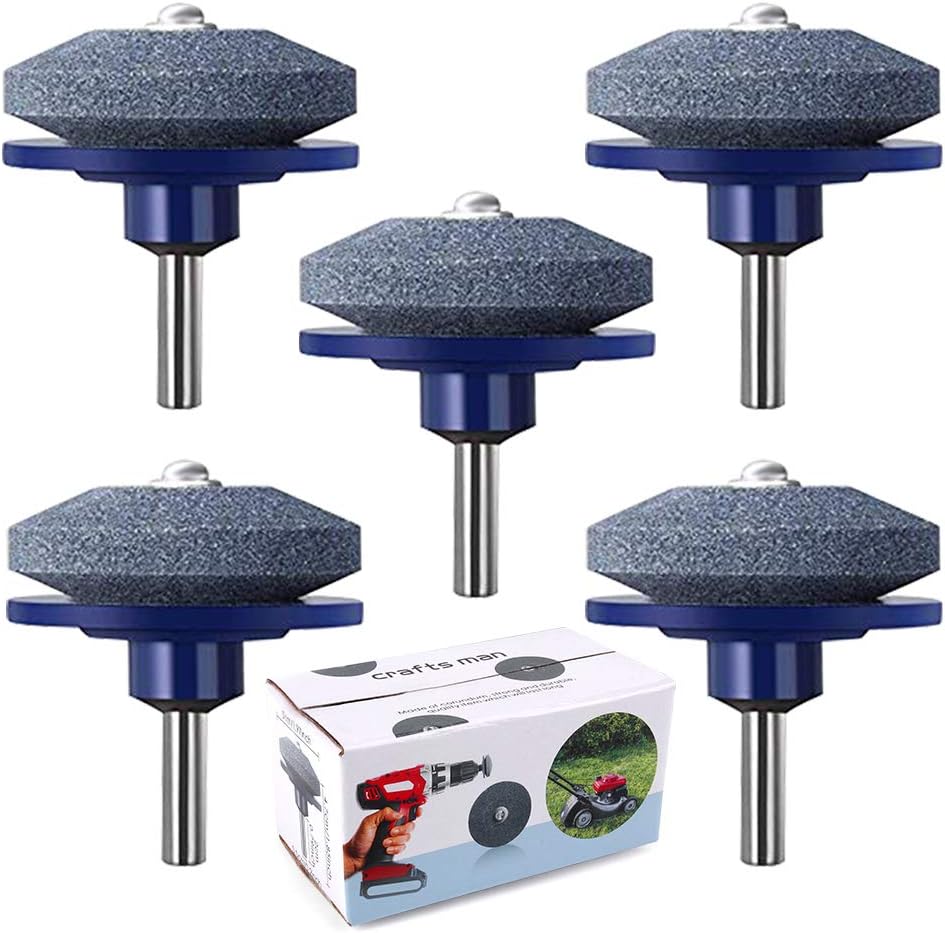
If the blade retains ample structural thickness, restoring a clean thirty-degree cutting angle can be accomplished using an angle grinder or a drill-mounted corundum sharpening stone. When cutting thick grass efficiently, a sharp cutting edge cleanly separates grass tissue without tearing, preserving engine power and promoting lawn health. Grind evenly along the original factory bevel, removing equal amounts of material from both sides of the blade to maintain natural weight symmetry.
Balancing the blade after sharpening is critical to prevent destructive vibrations that can ruin deck spindle bearings and engine seals over time. Place the center hole of the sharpened blade onto a multi-tiered cone balancer, such as a metal static balancer or an ABS stepped balancer unit. If one side dips downward, that cutting wing is heavier and requires careful metal removal along the trailing edge until the blade rests completely horizontal on the balance pin.
Common Removal Pitfalls and Preventative Strategies
One frequent mistake during blade removal is installing the holding clamp or wooden block on the wrong side of the deck housing. If you place the stop block on the tightening side while attempting to loosen a standard bolt, the blade will simply rotate away from the block when you pull your wrench. Always visualize the counterclockwise loosening arc of your socket wrench and position the retention tool so the blade firmly wedges against it as soon as torque is applied.
Another widespread pitfall involves applying uneven lateral leverage with short ratchets or adjustable wrenches, which easily slips off the bolt head and rounds fastener edges. Rounded bolt heads create a major mechanical headache that often requires specialized extraction sockets or cutting torches to resolve. Investing in a dedicated breaker bar and a proper six-point socket eliminates this risk by ensuring full surface contact with the bolt head.
Homeowners also occasionally forget the correct vertical orientation of the blade when preparing for reinstallation. Installing a cutting blade upside down is surprisingly common because the curved lift wings can look deceptively similar from both angles. Look for the stamped manufacturer part number, the word ‘BOTTOM’ or ‘GRASS SIDE,’ which must always face away from the deck shell toward the lawn, ensuring that lift wings point upward into the cutter chamber.
Reinstallation Protocol and Final Torque Verification
Reinstalling your sharpened or new mower blade requires meticulous attention to hardware alignment and proper seating against the spindle star or round locator. Slide the blade onto the spindle shaft, ensuring the center hole interlocks completely with the spindle hub without cocking sideways. Hold the blade flush against the spindle flange while hand-threading the bolt and cupped washer to guarantee threads engage cleanly without cross-threading.
Verify that the cupped friction washer is oriented correctly, with the domed center crown facing outward toward the bolt head and the concave rim pressing against the blade steel. Reposition your blade locking clamp or wooden block on the opposite side of the deck to resist clockwise tightening rotation. Tighten the bolt firmly by hand before using a calibrated torque wrench to achieve the exact foot-pound specification listed in your tractor operator manual.
Never rely on guesswork when tightening spindle hardware, because an undertightened bolt can back out during operation while an overtightened bolt can stretch or fracture the spindle shaft. Most riding mower spindle bolts require between 70 and 90 foot-pounds of torque, though exact values depend strictly on your manufacturer guidelines. Once torqued properly, remove the locking clamp, inspect the deck underneath for forgotten tools, reconnect the spark plug lead, and lower the tractor safely back to the ground.
Mastering the process of removing and maintaining your riding mower blades keeps your lawn looking manicured while protecting expensive deck spindles from premature mechanical failure. Combining reliable safety preparation, dependable blade locking tools, and accurate reassembly torque makes routine blade service a safe, predictable component of your seasonal property maintenance routine. Always verify that your mounting hardware is in pristine condition and that your balanced blades spin freely by hand before firing up the engine for your next mowing session.


Write Your Review
No reviews yet. Be the first to share your experience!