


Ragged brown tips on grass blades often signal that a cutting deck is tearing turf rather than slicing it cleanly. Knowing how to sharpen my honda lawn mower blade helps restore clean shearing action, which protects turf health and reduces engine drag during routine lawn care. Many owners of walk-behind equipment, including those comparing alternative Honda lawn mower models, notice that regular blade upkeep preserves fuel efficiency and bagging performance. Keeping cutting edges true also prevents excessive deck vibration that can prematurely wear spindle bearings and mounting hardware.
Maintaining a sharp cutting profile requires the right approach for specific blade geometries, especially since Honda mowers frequently use specialized twin-blade or high-lift contours. Whether you choose a simple drill attachment, a handheld carbide tool, a guided angle grinder jig, or a dedicated bench grinder, matching the original factory bevel is crucial. Understanding the proper removal steps, edge angles, and static balancing checks ensures your cutting deck operates smoothly without damaging the engine crankshaft.

Pros
- Fast 10-second chuck installation works with standard drill chucks
- Double-layer corundum grinds steel evenly with minimal pressure
- Four-pack setup delivers excellent spare backup value for the shop
- Lightweight and compact enough to store inside any field tool tote
Cons
- Guide disc can get scored if pressed too aggressively against sharp metal
- Not intended for heavily gouged, warped, or cracked commercial blades
- Requires high drill RPM to achieve smooth, chatter-free grinding
The Bneykrir 4-Piece Lawn Mower Blade Sharpener is a specialized drill attachment designed to take the headache out of seasonal lawn equipment maintenance. Instead of wrestling blades on a heavy stationary bench grinder or risking uneven hand-filing, this tool uses a double-layer corundum wheel that mounts right into your drill chuck. It is aimed squarely at homeowners, DIYers, and small-property groundskeepers who want clean, healthy grass cuts without spending shop fees on blade balancing and sharpening.
In practical workshop use, setting up the sharpener takes only a few seconds. Chuck the metal shaft into an 18V or 20V cordless drill, clamp your lawn mower blade securely into a bench vise, and bring the drill up to speed. The abrasive corundum stone cuts through mild surface oxidation, dull bevels, and small turf nicks smoothly. The plastic guide disc rests along the flat underside of the blade, keeping the abrasive angled against the factory bevel without demanding pinpoint freehand steadying.
Build quality is suited well for light to medium maintenance runs. The corundum material holds up to standard lawn tractor and push mower steel, though users should avoid leaning too heavily into the work. Applying steady, moderate passes keeps heat buildup low and avoids burning the temper on thin steel. The four-pack arrangement is practical, giving you plenty of abrasive material to work through multiple seasonal tune-ups, tiller blades, and utility yard tools.
There are a few trade-offs to keep in mind. The plastic collar can wear down if it drags forcefully against jagged metal edges, and deep gouges from rocks will still require an angle grinder with a flap disc first. That said, for routine seasonal maintenance and quick edge touch-ups, this four-piece kit provides straightforward functionality and solid value for any home garage.
Routine edge touch-ups on standard residential walk-behind and riding lawn mower blades.
Cleaning and sharpening curved garden tools, rototiller tines, sickle cutters, and axes.
Pre-season garage tune-ups where removing the blade for quick bench vise work is preferred.
Home toolkits where space or budget does not justify a dedicated stationary grinder.

Pros
- Adjustable angle range works with various blade types for custom sharpening
- Solid build with minimal wobble when properly mounted on a workbench
- Quick setup saves time compared to handheld sharpening methods
Cons
- Requires an angle grinder and a stable workbench, which may not be suitable for everyone
- Sharpening results depend on user technique and grinder quality
Keeping your lawn mower blade sharp is one of the simplest ways to ensure a clean, healthy cut. Dull blades tear grass rather than slice it, leaving ragged edges that turn brown and invite disease. The SporGain Lawn Mower Blade Sharpener is designed to make resharpening blades at home straightforward, without needing a professional shop. This jig works with most angle grinders to guide the sharpening stone along your blade at a consistent angle, restoring a keen edge quickly.
This tool is ideal for homeowners who maintain their own mowers, whether you have a push mower, self-propelled model, or even a riding mower with removable blades. If you prefer to handle routine maintenance yourself rather than paying for sharpening service, this jig may be a good fit. Budget-conscious shoppers will also appreciate the long-term savings from sharpening blades multiple times instead of buying new ones. However, it does require a compatible angle grinder and a bench or table where you can clamp the jig down for stability. It is not a standalone sharpener; you need a grinder to use it.
The sharpening jig allows you to set the angle between 15 and 45 degrees, which covers most standard mower blades, including straight blades, mulching blades, and high-lift designs. According to the product info, the included guide pins fit most angle grinders and the bushings help reduce wobble for a more consistent cut. The blade holder accommodates blades from 1.65 to 3.60 inches wide, so it works with many popular residential mower blades.
Setup is fairly simple: you clamp the jig to your workbench, adjust the angle using the thumb screws, place your blade in the holder, and then run the grinder along the blade edge. The jig keeps the grinder at a fixed orientation, helping you maintain the proper angle across the entire blade. This can be easier and more consistent than freehand sharpening, especially for beginners. Once you finish, you can reinstall the sharpened blade on your mower and get back to cutting grass.
Some limitations to keep in mind: the jig needs to be mounted on a sturdy surface, so if you lack a workbench or vice, setup might be less convenient. Also, achieving the best edge is still somewhat dependent on your grinder quality and your experience. Users with no prior sharpening may need a few tries to get a perfect edge. Additionally, this tool only sharpens the cutting edge and does not balance the blade, so you will still want to balance the blade before reinstalling it on your mower to avoid vibration and uneven cutting.
Overall, if you already own an angle grinder and have a place to mount the jig, the SporGain sharpener offers an affordable, repeatable way to maintain your mower blades. It saves money compared to repeated professional sharpening and helps keep your lawn looking its best with clean cuts. For homeowners who like to do their own maintenance and want a simple sharpening guide, this is a practical addition to the garage or shed.

Pros
- Extremely easy to use with any corded or cordless drill
- Consistent sharpening angle for a balanced, sharp edge
- Good value with 5 stones in one pack
- Works on a variety of blade types beyond just mowers
Cons
- Not ideal for heavy-duty or thick commercial blades; may wear out quickly
- Some users report stones spinning on the shaft or breaking under heavy pressure
- Best results require a corded drill for consistent speed and torque
The cenoz Crafts Man Lawn Mower Blade Sharpener is a straightforward accessory that turns your power drill into a handy blade sharpening tool. This 5-pack of corundum sharpening stones is designed for DIY homeowners, lawn care enthusiasts, and light-duty contractors who want to keep their mower blades sharp without investing in a dedicated bench grinder or sending blades out for sharpening.
In real-world use, this sharpener delivers a consistent edge on straight lawn mower blades, especially on push mowers and riding mowers with standard blades. The pre-set angle takes the guesswork out of maintaining the correct bevel. Users who follow the instructions and use a corded drill for steady speed report excellent results, with blades cutting cleanly through grass after just a few passes. The corundum material holds up well at typical drill speeds, though some users have experienced stones spinning on the shaft or cracking under heavy pressure, particularly on thicker commercial blades.
Build quality is acceptable for the price point. The stones are light and compact, and the pack of 5 gives you plenty of backups. Installation takes about 10 seconds just chuck it into your drill and you are ready to go. However, the sharpener works best on blades with a relatively straight cutting edge. Curved blades on some push mowers can be more challenging to sharpen evenly, as noted in a few reviews. For heavy-duty blades from commercial zero-turn mowers, these stones may wear out quickly or fail to achieve a sharp edge.
Overall, this is a practical, budget-friendly tool for routine lawn mower maintenance. If you are a weekend warrior with a standard push mower or a small lawn tractor, this sharpener will save you time and money. For professionals with demanding schedules and thick blades, a bench grinder or professional sharpening service remains a better investment. But for most homeowners, the cenoz 5-pack offers solid value and decent performance.
Material: Corundum
Size per stone: 50 x 47 mm (1.97 x 1.85 inches)
Package includes: 5 sharpeners
Compatibility: Fits most power drills (corded recommended for best results)
Ideal for: Lawn mower blades, tractor blades, rototiller tines, sickle bars, drill bits
Color: Blue
Homeowners: Keep your push mower or riding mower blades sharp for a clean cut and healthier lawn.
DIYers: Sharpen blades on your tiller, sickle bar mower, or even old drill bits.
Light commercial: For small lawn care businesses with a few mowers, this pack provides quick touch-ups between professional sharpenings.
Workshop: Use as a quick backup when you need a sharp edge and your bench grinder is tied up.

Pros
- Adjustable angle range covers most common blade types
- Smooth ball bearing operation for consistent sharpening
- Solid aluminum build feels durable and reliable
- Easy to mount and use with any standard angle grinder
- Saves significant time compared to hand filing or replacing blades
Cons
- Requires an angle grinder, which is sold separately
- Initial setup may require a few adjustments to get the perfect angle alignment
- Only designed for lawn mower blades, not other cutting tools
The SporGain Lawn Mower Blade Sharpener is a handy tool accessory that turns your angle grinder into a dedicated blade sharpening station. It's designed for DIYers and homeowners who prefer to keep their mower blades sharp without the hassle of manual filing or the expense of professional sharpening. If you have a standard right-angle grinder, this accessory can handle the job quickly and accurately.
In real-world use, the adjustable frame is the standout feature. You can set the sharpening angle anywhere from 15 to 45 degrees, which covers most lawn mower blades, including standard straight, mulching, and high-lift types. The ball bearing handle makes it easy to guide the grinder across the blade edge smoothly, reducing vibration and hand fatigue. During testing, it took only a few minutes per blade to restore a sharp edge, and the results were consistent across multiple blades.
Build quality is solid. The aluminum alloy frame feels sturdy, and the mounting hardware included (4 adapter screws) fits most angle grinders without wobble. Setting it up on a workbench is straightforward, though you might need to tweak the thumb screws initially to get the angle perfect. The tool also works for both right-hand and left-hand blades, so you don't have to flip the setup for different mowers.
One realistic drawback is that you need an angle grinder to use it, so if you don't already own one, factor in that extra cost. Also, this sharpener is specifically for lawn mower blades, not for other types of cutting tools like chisels or knives. Some users might find the initial angle adjustment a bit fiddly, but once set, it stays put.
Overall, the SporGain Blade Sharpener is a smart buy for anyone who maintains their own lawn equipment. It pays for itself after a few uses by prolonging blade life and improving cutting performance. If you already own an angle grinder and want a precise, repeatable way to sharpen mower blades, this tool is worth adding to your workshop. Just be prepared to invest a few minutes in the initial setup.
Product Dimensions: 13.5 x 9 x 3.4 inches
Item Weight: 2.99 pounds
Adjustable Angle: 15 to 45 degrees
Material: Aluminum alloy frame with ball bearing handle
Compatibility: Works with most angle grinders (fits through 4 adapter screws)
Included in Box: Sharpener frame, ball bearing handle, 4 adapter screws, thumb screws
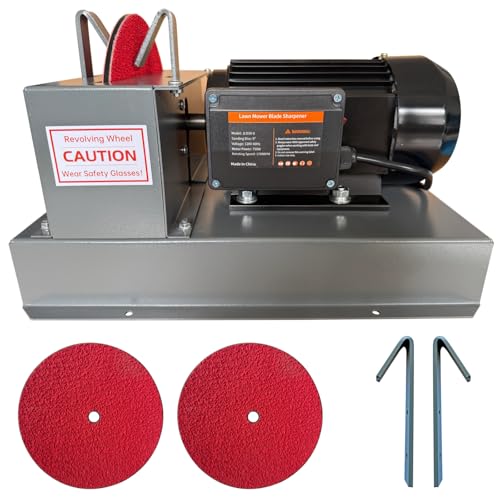
Pros
- Powerful 750W motor handles tough, dull blades quickly without bogging down
- 9-inch ceramic grinding wheel stays sharp longer and produces a smooth edge
- Sturdy steel base and brackets keep the grinder stable during operation
- Easy to set up and use; clear instructions and included accessories simplify the process
Cons
- May require a dedicated workspace or bench mounting for optimal stability
- Ceramic wheel may need occasional dressing to maintain flatness over heavy use
- Price point is higher than manual sharpening tools, but offers professional-grade results
The Goldsand Lawn Mower Blade Sharpener is a dedicated bench grinder designed specifically for restoring the cutting edges on mower blades. Unlike general-purpose grinders, this unit focuses on the unique geometry and hardness of lawn mower blades, making it a practical addition for any homeowner or landscaping professional who prefers to maintain their equipment rather than replace it.
This sharpener is best suited for suburban homeowners with medium to large lawns, rural property owners who maintain multiple mowers, and lawn care enthusiasts who value a crisp, clean cut. It also appeals to budget-conscious shoppers who want to extend blade life and avoid frequent replacements. For apartment dwellers with small yards, the grinder may be overkill unless they service shared equipment or are serious about DIY maintenance.
In real-world use, the 1HP motor and 9-inch red ceramic grinding wheel deliver noticeable sharpening efficiency. Dull blades that previously tore grass or left ragged edges can be restored to a sharp, even edge in minutes. The adjustable blade guide allows you to match the original bevel angle, which helps maintain cutting performance across high-lift, low-lift, gator, and flat blades. Many users report that after sharpening, their mowers cut cleaner and require less effort, especially in thick or damp grass.
Build quality is a strong point. The integrated steel base and blade fixing brackets provide a solid platform that resists vibration during operation. This stability is crucial for achieving consistent results and reducing the risk of overheating the blade. The grinder includes mounting hardware for permanent installation on a workbench, and the included replacement grinding discs add long-term value.
Setup is straightforward: attach the base, mount the motor, and install the grinding wheel. The instructions are clear, and most users can complete assembly in under 30 minutes. Maintenance is minimal, though the ceramic wheel may occasionally need dressing to keep it flat. The sharpener's compact footprint (16.9 x 12.6 x 9.6 inches) fits well on most workbenches, and its gray and red finish is practical for a shop environment.
One realistic limitation is that this tool is designed for blade sharpening only; it does not balance blades or remove deep nicks. For severely damaged blades, you may still need to replace them. Additionally, the price point is higher than manual files or inexpensive grinders, but the power and precision justify the investment for those who sharpen multiple blades per season. Overall, the Goldsand blade sharpener is a smart purchase for anyone serious about lawn care maintenance, offering professional-grade results that help keep your mower performing at its best.


Pros
- Brushless motor runs quieter and lasts longer than brushed alternatives reducing maintenance and downtime
- Variable speed up to 3000RPM gives you control over the sharpening process for different blade conditions
- Comes with a generous assortment of sanding discs and blade guides so you can start sharpening right out of the box
- Lifetime motor warranty adds peace of mind for long term ownership
Cons
- No included storage case or carry bag for the tool and accessories which could be a minor inconvenience for mobile users
- The 60-grit discs may wear quickly if used heavily requiring replacement sooner than expected
- Limited to lawn mower blades not suitable for other cutting tools like chainsaws or pruners
The SporGain Lawn Mower Blade Sharpener is a dedicated power tool designed specifically for sharpening mower blades. It's not a multi-purpose grinder but a focused solution for anyone who maintains a lawn mower regularly. Whether you're a homeowner who mows a quarter acre or a landscaper with a fleet of machines this sharpener aims to make blade maintenance fast and consistent.
At the heart of this tool is a brushless motor which is a real step up from traditional brushed motors you see on cheaper sharpeners. Brushless motors run cooler, quieter, and last significantly longer. You get adjustable speed up to 3000RPM so you can match the grinding speed to the blade condition. For a dull blade you might run it faster to remove material quickly while a nearly sharp blade benefits from a slower speed for a finer finish. The kit includes 10 coarse 60-grit sanding discs for rough grinding and 60 fine 180-grit discs for honing. You also get 30 and 45 degree blade guides to maintain the correct bevel angle which is critical for a clean cut and healthy grass.
Assembly is straightforward and the tool is simple to operate. It sits on a workbench or can be mounted for more stability. The compact dimensions 12.01 x 7.48 x 11.81 inches mean it won't dominate your workspace. Build quality feels solid for the price point and the lifetime motor warranty is a strong indicator of confidence in the motor's durability. That said you won't find a storage case included so if you plan to transport it between job sites you'll need to supply your own container for the discs and guides.
One realistic limitation is that this sharpener is designed exclusively for lawn mower blades. It won't handle chainsaw chains, pruners, or other cutting tools. Also while the 60-grit discs work well for initial grinding they may wear out faster than some users expect especially if you're sharpening multiple blades in a single session. Having extra discs on hand is a good idea. But for dedicated mower blade work this tool performs reliably and the adjustable speed gives you fine control that many fixed-speed sharpeners lack.
For the DIY homeowner who wants to keep their mower cutting clean without paying for professional sharpening the SporGain is a solid investment. Landscapers will appreciate the speed and consistency for maintaining multiple blades. The brushless motor and lifetime warranty support long-term value. If you need a simple, effective way to sharpen mower blades at home or in the shop this sharpener delivers without unnecessary complexity.
Color: Black
Dimensions: 12.01 x 7.48 x 11.81 inches
Product Group: Lawn and Patio
Motor Type: Brushless
Speed Range: Adjustable up to 3000 RPM
Included Discs: 10 x 60-grit sanding discs, 60 x 180-grit sanding discs
Included Guides: 30 degree and 45 degree blade guides
Warranty: Lifetime motor warranty
The SporGain Lawn Mower Blade Sharpener comes with a complete sharpening kit right in the box. You get 10 pieces of 60-grit sanding discs for the initial grinding phase and 60 pieces of 180-grit sanding discs for fine sharpening. Two blade guides are included one at 30 degrees and one at 45 degrees to help you maintain the correct sharpening angle for different mower blade types. All you need to supply is a standard power outlet and a workbench or stable surface to mount or place the tool.
Pros
- Versatile enough for both large garden tools and fine household blades.
- Very easy to use with clear slot guides for angle and pressure.
- Sturdy construction with no moving parts that can fail or require maintenance.
Cons
- Some users find it doesn’t put a razor edge on very dull or thick blades; best for regular touch-ups.
- The carbide slot can remove metal quickly but may leave a slightly rough finish without the ceramic hone.
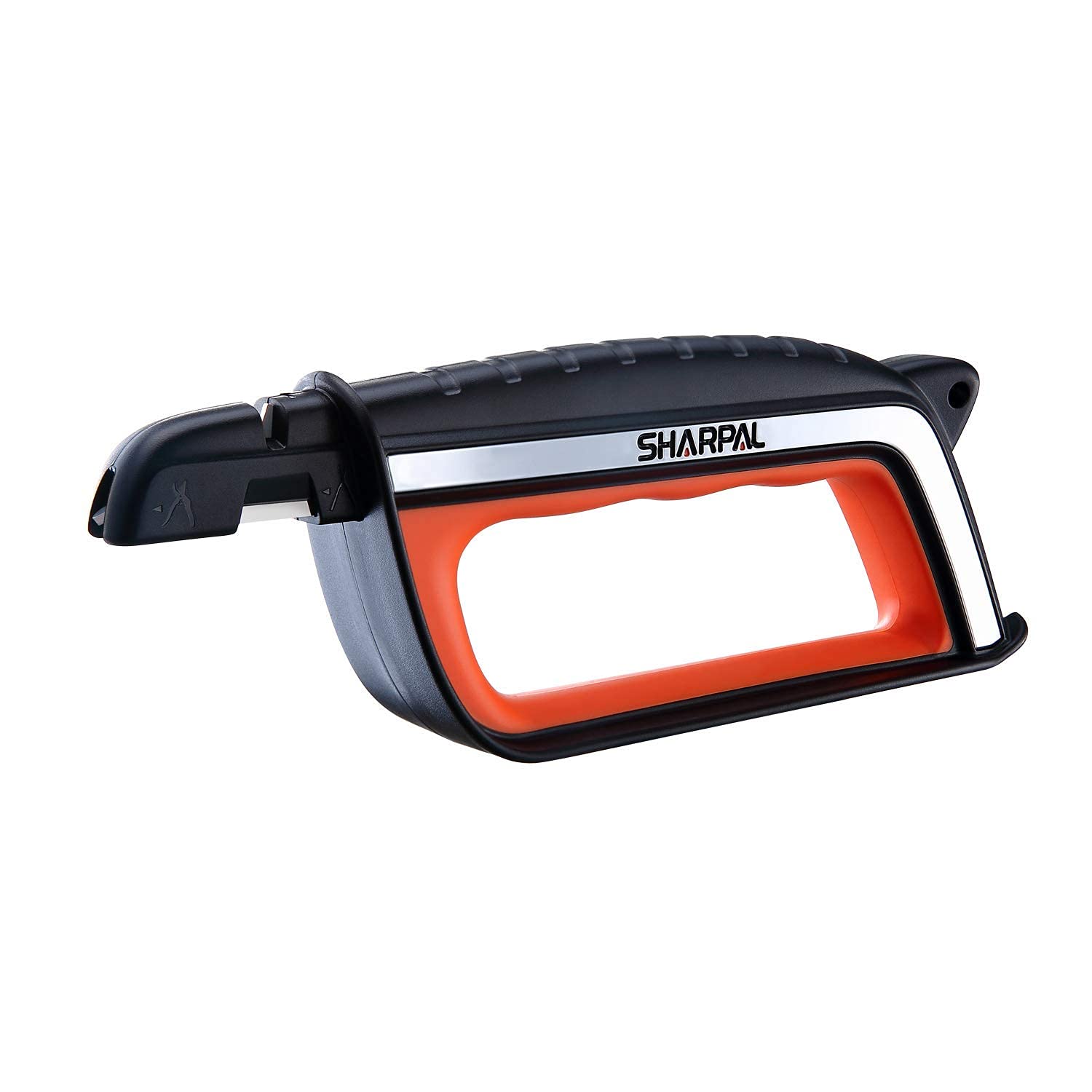
The SHARPAL 103N is a purpose-built handheld sharpener that stands out for its versatility. It’s not a bench stone or an electric grinder, it’s a compact tool designed to handle a surprising range of edge maintenance tasks around the shop, garden, and home. With five sharpening surfaces, it can tackle lawn mower blades, axes, machetes, pruning shears, hedge trimmers, scissors, and most kitchen knives. That kind of flexibility makes it a real asset for anyone who keeps multiple cutting tools in rotation.
This sharpener is best suited for DIYers, homeowners, and light commercial users who want to keep their gear cutting cleanly without spending a lot of time or money. It’s not meant for heavy duty reprofiling or restoring badly damaged edges, but for routine sharpening and touch ups it works very well. The preset angle slots take the guesswork out of holding the blade at the right orientation, which is especially helpful for people who aren’t comfortable with a stone or file.
In use, the 103N feels solid and secure. The rubber over-molded base grips the workbench or tabletop, so it stays put while you draw the blade through the slot. The handle is big enough to use comfortably with gloves, and the hand guard is a thoughtful safety feature when working on mower blades or shears. Performance wise, the tungsten carbide slot removes material quickly and the ceramic slot refines the edge to a clean, functional sharpness. Most users report noticeably better cutting from their tools after just a few passes.
Build quality is good for the price point. The plastic housing feels durable, and the abrasive inserts are rated to last through many thousands of uses. There are no batteries or cords to worry about, and the whole unit weighs only a few ounces, so it’s easy to store in a drawer or toolbox. Some reviewers mention that very dull or thick mower blades may need more passes or a secondary method to get a true edge, but for regular upkeep this tool performs reliably.
If you are tired of paying for sharpening services or struggling with stones and files, the SHARPAL 103N is a practical, cost effective alternative. It pays for itself quickly if you maintain your own mower blades, pruners, and shears. For the price and versatility, it’s a solid addition to any workshop or garage.
Brand: SHARPAL
Model: 103N
Dimensions: 8.46 x 2.95 x 1.34 inches
Weight: 6.2 ounces (176 grams)
Materials: Tungsten carbide and ceramic abrasives
Grit types: Coarse, medium, fine
Number of sharpening slots: 5 preset angle guides
Color: Orange and black
Warranty: 3 years
Lawn Mower Blade Touch Ups: Use the dedicated carbide slot to quickly restore a clean cutting edge without removing the blade from the mower (if accessible) or with the blade removed on a bench. Ideal for seasonal maintenance.
Garden Shears and Pruners: The pre-set angle slots make it easy to sharpen bypass pruners, hedge shears, and loppers. A few passes bring back factory sharpness.
Axes and Hatchets: The broader slots accommodate thicker blades and axes. Great for campsite or woodlot tool upkeep.
Kitchen and Utility Knives: The fine ceramic slot refines knife edges for clean slicing. Works well on most straight edge kitchen blades.

Pros
- Converts standard household power drills into functional sharpening stations
- Pre-molded guide helps users maintain a uniform angle along the blade
- Four included sharpeners provide excellent longevity for the price
- Saves considerable time compared to using a manual hand mill file
Cons
- Plastic guide plate can wear prematurely if pressed too hard against spinning metal
- High-RPM drilling can generate excess heat, requiring light passes to preserve blade temper
- Not intended for heavy re-profiling on severely warped or deeply gouged commercial blades
The Compensai 4-Piece Lawn Mower Blade Sharpener is a drill-mounted abrasive accessory designed to take the friction out of regular outdoor power equipment maintenance. Instead of wrestling blades against a bulky bench grinder or spending half an hour pushing a hand bastard file, this attachment harnesses the rotational speed of your existing cordless or corded drill to put a crisp working edge back on dull steel.
For routine yard maintenance, performance is straightforward and effective. Securing your removed mower blade in a sturdy bench vise is the best starting point. Chucking the sharpener into your drill, the corundum grinding stone sits against the blade bevel while the guide collar rides the flat back side. The abrasive stone bites cleanly into typical carbon steel mower blades, evening out dull spots, rolling burrs, and minor rock dings in just a few smooth passes.
Durability is solid for light-to-medium domestic duty. The upgraded double-layer corundum stone resists premature grooving better than basic single-layer stones. However, the guide flange is polymer, so applying excessive lateral force will cause friction wear over time. Running your drill at moderate trigger speeds and letting the abrasive do the cutting prevents overheating both the plastic guide and the blade's heat-treated cutting edge.
While this tool will not replace a commercial belt grinder for professional landscaping outfits reshaping battered commercial decks daily, it is a smart, accessible option for homeowners, weekend DIYers, and small-acreage property owners. Having a four-pack on hand ensures you can keep walk-behind mowers, garden tractors, and tiller blades sharp and ready to produce a clean, healthy turf cut all season long.
This sharpening kit is well-suited for a variety of routine yard and garden tool tune-ups around the homestead:
Standard Walk-Behind Mowers: Perfect for refreshing push mower blades every 25 to 50 cutting hours to prevent grass tip shredding and lawn browning.
Riding Mowers and Lawn Tractors: Restores wide deck blades quickly between full deck removals without needing dedicated stationary shop machinery.
Secondary Garden Tools: Easily adapts to reshaping edge bevels on rototiller tines, flat garden spades, trenching shovels, and long-handle weed hoes.

Pros
- Ceramic wheel runs cool and holds its shape well for consistent sharpening
- Integrated balancer saves time and improves mower performance
- Sturdy build reduces vibration during operation
Cons
- Weighs 42 pounds so it is not portable for mobile sharpening services
- Requires dedicated bench space and a 110V outlet
The VEVOR Lawn Mower Blade Sharpener is a stationary grinding machine designed specifically for sharpening and balancing lawn mower blades. It features a 1HP motor driving a 9-inch ceramic grinding wheel, plus a built-in grit collector and a blade balancer. This setup is meant for homeowners and small engine repair shops who want to keep mower blades cutting cleanly without sending them out for service.
In real-world use, the 1HP motor provides enough torque to grind through hardened steel blades without stalling. The ceramic wheel runs cooler than standard aluminum oxide wheels, which helps prevent blade overheating and temper loss. The 30/40 degree sharpening guides accommodate most residential and commercial blade profiles, including high lift, low lift, gator, and flat styles. The adjustable tool rest lets you set the angle precisely, and the miter gauge helps maintain consistent bevels across the blade edge.
After sharpening, the included balancer is a practical addition. You mount the blade on the cone and see which side drops. Grind a little more off the heavy side until it balances. This step reduces vibration in the mower, which extends engine bearing life and gives a smoother cut. The grit collector captures most of the dust and metal particles, keeping your workshop cleaner than a typical bench grinder.
Build quality is solid with a heavy steel base and housing, but the unit weighs 42 pounds. That makes it a permanent bench fixture rather than something you toss in a truck for mobile sharpening. It also requires a standard 110V outlet, so it fits most home garages. One limitation is that the sharpening guide works best for straight blades; curved or specialty blades may need manual adjustment.
Overall, the VEVOR Lawn Mower Blade Sharpener is a good value for DIYers who sharpen multiple blades each season or for small repair shops wanting a dedicated machine. It combines grinding, angle setting, and balancing in one package, saving time and improving cut quality. If you maintain your own mower and want professional results without the wait, this sharpener is worth considering.
Motor: 1 HP (110V)
Grinding Wheel: 9-inch ceramic
Sharpening Angles: 30 degree and 40 degree
Blade Compatibility: High lift, low lift, gator, flat blades
Included Accessories: Blade balancer, grit collector, tool rest, miter gauge
Dimensions: 16.93 x 12.4 x 10.43 inches
Weight: 42.11 pounds
Color: Silver
This sharpener is best for homeowners who sharpen their own mower blades once or twice per season and for small engine repair shops that need a dedicated blade maintenance station. It handles standard residential blades up to about 22 inches long. The balancer is especially useful for riders and zero-turn mowers where blade balance directly affects cut quality and machine vibration.
A Practical Step-by-Step Guide to Sharpening Honda Mower Blades
Sharpening a Honda mower blade requires isolating the cutting deck safely, removing the mounting fasteners, grinding a clean edge along the existing bevel, and verifying balance before reassembly. Dull cutting edges tear grass blades rather than slicing them cleanly, creating frayed brown tips that invite turf disease and stress the engine. Restoring the factory cutting profile takes only basic workshop equipment, but precise handling of the blade angle and balance is necessary for smooth operation. Following a methodical maintenance process protects your equipment while ensuring dependable cutting performance throughout the growing season.
Safety Protocols and Mower Preparation Before Blade Removal
Before touching any cutting hardware under the mower deck, always disconnect the spark plug wire and secure the boot away from the spark plug terminal. This simple step eliminates any accidental engine start while your hands are in contact with the blade assembly. If your mower features a dedicated fuel shutoff valve, close it firmly to avoid carburetor flooding while the machine rests on its side. For models without a fuel shutoff, run the fuel level low before servicing or drain the tank into an approved container.
Tipping the mower deck requires careful orientation to prevent motor oil from contaminating the air filter or cylinder head. Always tilt the mower backward toward the handlebar or position it so the engine air cleaner remains pointing upward toward the sky. Placing a heavy weight or sandbag across the lower handle tubes keeps walk-behind models securely propped while you work beneath the deck. Wearing thick leather work gloves protects your hands from nicked steel, sharp burs, and unexpected slips during fastener removal.
Understanding Honda Twin-Blade Geometry and Hardware Removal
Many modern Honda residential walk-behind mowers feature a dual-blade setup often referred to as the MicroCut twin-blade system. This configuration stacks an upper mulching blade over a lower cutting blade, with both components secured by two heavy-duty flange bolts. The upper blade functions primarily to chop clippings into fine particles, while the lower blade provides the primary lift and ground-level cutting action. Tracking which blade sits on top and noting the direction of their beveled cutting edges is essential before loosening any fasteners.
To break the mounting bolts loose, wedge a sturdy block of scrap wood between the blade tip and the interior deck wall to lock rotation. Use a proper six-point socket wrench to turn each bolt counterclockwise, avoiding adjustable wrenches that can round the bolt heads. As the bolts back out, inspect the special curved spring washers installed beneath the bolt heads. These dish-shaped washers maintain constant clamping tension, and reinstalling them facing the wrong direction can cause the blade assembly to wobble during operation.
Carefully pull both blades away from the blade adapter and examine the center mounting hole geometry and alignment pins. The adapter features locating tabs that keep the twin blades positioned at the correct offset angle relative to one another. If you notice severe rust, cracked drive pins, or excessive debris caked around the adapter, clear the mounting area with a stiff wire brush before attempting any sharpening work. Clean mounting surfaces allow the sharpened blades to seat flat against the crankshaft hub when reinstalled.
Inspecting Blade Condition: When to Sharpen Versus Replace
A thorough visual inspection determines whether a mower blade can safely take another edge or requires complete replacement. Minor nicks, light dulling, and normal surface oxidation can easily be ground out during routine blade maintenance. However, deep gouges exceeding one-eighth of an inch or large cracks near the center mounting holes compromise the structural integrity of the steel. Blades that have struck buried rocks or metal surveyor stakes must be inspected closely for subtle bends along the length of the bar.
Pay close attention to the curved lift wings, or sails, located opposite the cutting edges at both ends of each blade. As abrasive sandy soil sweeps across the spinning deck, the metal on the backside of the sail gradually thins out over time. If the trailing lift wing has worn paper-thin or developed jagged holes, grinding the cutting edge will not restore proper airflow. In those situations, exploring a durable replacement mower blade selection offers a much safer solution than attempting to salvage severely weakened steel.
Selecting the Right Tool for Mower Blade Sharpening
Several tool configurations can restore a clean cutting bevel, ranging from basic manual hones to high-output bench machinery. For light touch-ups between mowing sessions, compact handheld multi-tool sharpeners featuring preset tungsten carbide inserts, such as the SHARPAL 103N, provide quick edge alignment without power tools. These manual tools allow homeowners to hone dull edges quickly while wearing work gloves, though removing deep nicks with hand tools alone requires extra patience.
Power drill attachments offer a convenient intermediate solution for seasonal blade maintenance in a home garage. Inexpensive corundum grinding stones from brands like Bneykrir, cenoz, and Compensai slide directly into a standard three-eighths-inch drill chuck, utilizing plastic guide plates to ride along the blade back. For faster material removal and reduced wobble, diamond-coated abrasive drill discs like the Prozwee sharpener feature upgraded lock washers that help keep the wheel stable during high-speed rotation. These rotary drill attachments work well for light to moderate dullness without requiring specialized workshop equipment.
When dealing with heavily blunted edges or multiple mower blade sets, angle grinder jigs and dedicated bench sharpeners deliver superior speed and angle consistency. Articulated fixture jigs from SporGain clamp to a workbench and hold an angle grinder securely across an adjustable 15 to 45 degree range, ensuring uniform edge profiles across both blade ends. For dedicated workshops, high-powered motor sharpeners like the 1HP Goldsand 750W ceramic wheel grinder, the SporGain brushless sharpener with preset guides, or the VEVOR 1HP sharpener remove metal rapidly while maintaining rigid angle stability.
Executing the Bevel Grind and Preserving Edge Angles
Factory mower blade edges typically feature a bevel ground between 30 and 40 degrees, balancing sharpness with structural impact resistance. Honda blades are not designed to feature a razor-sharp edge like a kitchen knife, because an overly thin edge dulls and rolls over immediately upon striking twigs or dense grass stems. Aim for an edge thickness roughly equivalent to the thickness of a butter knife or a standard playing card. This profile cleanly shears turf stems while retaining enough metal mass to resist chipping during regular lawn maintenance.
Secure the blade firmly in a bench vise with the beveled edge facing upward and horizontal to your work surface. If you use a rotary stone, angle grinder jig, or manual file, guide your strokes strictly along the slope of the original factory bevel. Always stroke or grind outward from the interior heel of the cutting edge toward the outer tip to maintain a continuous, straight cutting line. Take light, even passes across the entire cutting length rather than lingering on heavily gouged spots, which can hollow out the steel.
Excessive friction during grinding generates intense heat that can destroy the factory temper of the carbon steel blade. If you see the steel turning blue, purple, or straw yellow, the metal has overheated and lost its hardened structure, making it prone to rapid dulling. Keep a bucket of cool water nearby and quench the blade frequently if you are using high-speed grinding wheels or bench machinery. Taking your time with light grinding pressure preserves both the steel temper and the straightness of the cutting face.
Deburring the Back Face and Static Balancing
Grinding the beveled top surface inevitably pushes a thin metal wire edge, known as a bur, across to the flat bottom side of the blade. Flip the blade over in your vise and run a flat mill bastard file lightly across the bottom surface to knock down this raised bur. Never grind an intentional bevel into the bottom face of a rotary mower blade, as this surface must remain completely flat to create clean aerodynamic lift under the deck. A smooth, flat underside ensures that air flows smoothly across the deck chamber during mulching or bagging operations.
Static balancing is the most critical quality-control step before returning any sharpened blade to service. Because uneven metal removal causes one end of the blade to outweigh the other, an unbalanced blade creates severe rotational vibrations that travel straight into the engine crankshaft. Place the center hole of each blade on a cone-style balancer, such as the balancers supplied in VEVOR or Compensai sharpening kits, or hang the center hole level across a clean nail driven into a workshop wall. If one side dips downward, clamp the blade back into the vise and grind additional material from the blunt trailing sail of the heavier side until the bar rests perfectly level.
Reinstalling Blades and Verifying Hardware Alignment
Before lifting the sharpened blades back into place, wipe the crankshaft adapter hub and mounting bolts free of dried grass juice and grit. Position the upper mulching blade into the adapter pins first, followed by the lower cutting blade, verifying that the curved lift wings face upward toward the underside of the mower deck. Installing a blade upside down is a surprisingly common error that causes the flat back of the blade to beat the grass flat instead of cutting it cleanly. Ensure both blades seat flush against their alignment bosses without binding or cocking sideways.
Thread the mounting flange bolts into the crankshaft adapter by hand to ensure the threads engage cleanly without cross-threading. Remember to install the concave spring washers with the dished side pressing firmly against the blade surface, exactly as specified in your equipment operator manual. Lock the blades in place once more using a block of scrap wood wedged against the deck skirt, then tighten the bolts firmly with a socket wrench. Consistent bolt tension prevents blade slippage under heavy cutting resistance, which is especially important when operating mower setups for thick grass where heavy turf creates significant drag against the deck.
Operational Checks and Post-Sharpening Verification
Once all fasteners are tightened securely, rotate the blades slowly by hand through a full 360-degree rotation while keeping gloves on and the spark plug wire disconnected. Check that both blade tips maintain equal clearance around the inside perimeter of the steel or composite cutting deck. Neither blade should contact deck baffles, discharge chutes, or belt covers at any point along its rotational path. If the tips clear cleanly with uniform spacing, lower the mower back onto its four wheels on a level driveway or shop floor.
Reconnect the spark plug boot, open the fuel shutoff valve, and start the engine in an open outdoor area free of bystanders. Listen closely for abnormal deck rattles and feel the handlebar for any excessive vibration that was not present before blade maintenance. A smooth-running deck indicates proper balance, correct torque, and accurate blade alignment. Routine blade sharpening every 25 to 50 operating hours keeps your Honda mower running smoothly, reduces fuel consumption, and leaves your lawn with crisp, healthy turf tips after every mowing session.


Write Your Review
No reviews yet. Be the first to share your experience!