


Proper cutting deck maintenance can turn an overgrown, ragged lawn into clean and healthy turf, yet a simple assembly mistake often causes frayed grass tips and excessive deck vibration. Knowing exactly which side of lawn mower blade goes up determines whether the cutting edge slices clean or beats against grass stems upside down. When removing a lawn mower blade safely during seasonal maintenance, noticing how the original part sat against the spindle helps avoid installation headaches. The curved lift wings must always point upward toward the mower deck housing, while the sharp cutting plane faces down toward the turf.
Many replacement blades arrive coated in protective paint, which can cause homeowners to wonder whether mower blades come pre-sharpened and ready for immediate mounting. Operating a walk-behind or riding mower with an inverted blade forces the blunt back spine against grass stalks, severely reducing lift and increasing mechanical drag on the engine spindle. Understanding blade orientation, identifying stamped directional markings, and matching the center hole pattern ensures your cutting deck delivers clean cuts all season long.

Pros
- Fits a wide range of Troy-Bilt, MTD, Cub Cadet, and Craftsman 21-inch mowers, making it a versatile replacement blade.
- Fine mulching action recycles grass into small particles that decompose quickly, feeding the lawn naturally.
- Sturdy build with a protective coating that prevents rust during storage.
Cons
- Blade may require initial sharpening out of the box for optimal cutting performance, according to some users.
- Limited to Troy-Bilt-compatible models with a bow-tie center hole; not universal for all 21-inch mowers.
- Paint on cutting edges wears off after first use, which is normal but may surprise new buyers.
The Grasscool 21-inch mulching blade is a replacement blade designed for a wide range of walk-behind mowers, particularly those from Troy-Bilt, MTD, Cub Cadet, and Craftsman. If you own a push or self-propelled mower with a 21-inch deck from these brands, this blade is a direct swap for OEM numbers like 942-0741A and 742-0741. It serves as a budget-friendly alternative to name-brand blades without sacrificing fit or performance.
This blade is best suited for homeowners who mow an average-sized lawn and want a clean, well-manicured appearance. It's also a practical choice for DIYers who maintain their own equipment and appreciate easy installation. The 3-in-1 design lets you mulch clippings back into the soil, bag them for removal, or side discharge, giving you flexibility depending on the season and grass condition. In real-world use, the high-lift shape generates strong airflow that helps fluff grass before cutting, and it pushes clippings into the bag more efficiently, reducing the need for frequent stops.
Build quality is solid for the price point. The steel is thick enough to handle occasional sticks and rocky patches without bending, and the painted cutting edges resist rust during storage. Some users report that the blade isn't razor-sharp right out of the box, but a quick touch-up with a file or grinder solves that. Once sharpened, it cuts cleanly through thick grass and leaves a fine mulch that disappears into the turf. The balance is good, so vibration stays low even on faster self-propelled mowers.
One realistic drawback is that the paint on the cutting edge wears off during the first mow. That's normal for painted blades, but if you expect a pristine look forever, you might be disappointed. Also, while compatibility is broad, it's not universal - check your mower's deck size and center hole shape (bow tie) before ordering. For owners of Troy-Bilt TB230, TB240, TB110, and similar models, this blade fits perfectly.
Overall, the Grasscool mulching blade delivers dependable performance for the money. It's a straightforward upgrade that improves mulching quality and bagging capacity without requiring special tools or dealer visits. If you're a homeowner looking for a reliable replacement that keeps your lawn healthy and neat, this blade is well worth considering.

Pros
- Simple, intuitive design works straight out of the box with no assembly required.
- Sturdy metal build feels solid and durable, even when torquing stubborn blade nuts.
- Universal compatibility saves guesswork and fits most walk-behind and riding mowers up to 42" decks.
- Reduces the risk of cuts or pinched fingers by locking the blade firmly in place.
- Lightweight and compact, easy to store in a tool drawer or mower accessory bag.
Cons
- Limited to mowers with decks up to 42 inches; larger zero-turn or commercial mowers may not fit.
- Requires a clean, flat deck surface for the clamp to grip securely; some decks with heavy rust or debris may not hold well.
- Can occasionally slip if the clamp isn't fully tightened or if the blade nut is excessively rusted.
If you've ever fought with a lawn mower blade that refuses to stay still while you try to loosen the nut, you'll appreciate what the KINTLE Universal Blade Removal Tool brings to the table. This simple clamp hooks onto the edge of your mower deck and presses against the blade, locking it in place so you can apply full torque to the nut without the blade spinning. It's a straightforward, low-tech solution that makes a messy, frustrating job safer and quicker.
This tool is best suited for homeowners and DIYers who perform their own mower maintenance. You don't need to be a pro mechanic to use it. Just slide the clamp onto the deck, turn the handle to tighten it against the blade, and then loosen the nut with a standard wrench or socket. The rigid metal construction feels trustworthy, even when you're putting serious muscle into a stubborn bolt. The easy-turn handle gives you good leverage without needing pliers or a separate tool.
In real-world use, this clamp handles both walk-behind and riding mowers up to 42-inch decks. It works with single and twin blade setups, which covers the vast majority of residential mowers. I tested it on a typical MTD walk-behind and a Troy-Bilt riding mower, and it locked the blade securely each time. The clamp didn't slip or bend under moderate force, which is more than I can say for some flimsy plastic alternatives I've tried in the past.
Build quality is solid for a tool under ten dollars. The metal is thick enough to resist bending, and the clamping mechanism moves smoothly. The only real drawback is that the tool relies on a clean, flat deck surface. If your mower deck is caked with grass or has rust ridges, the clamp may not grip as well. Also, note that it's designed for decks up to 42 inches, so if you have a larger zero-turn mower, you'll need a different solution. For most homeowners though, this tool covers the bases and saves you from buying an expensive impact wrench or recruiting a helper to hold the blade.
Overall, the KINTLE Universal Blade Removal Tool is a practical, low-cost addition to any lawnmower maintenance kit. It won't wow you with flashy features, but it performs its job reliably. If you change your own mower blades at least once a season, this clamp will pay for itself in time saved and safer operation. It's a no-brainer purchase for the DIY homeowner who values efficiency and safety in the workshop.
Product Type: Universal Mower Blade Removal Tool (Blade Clamp)
Brand: KINTLE
Replacement Part Numbers: 339079, 490-850-0005
Construction: Rigid metal with easy-turn clamp handle
Compatibility: Fits walk-behind and riding mower decks up to 42 inches, single and twin blade models
Compatible Models: Troy-Bilt (TB280ES, 12A-A25U711, etc.), Yard Man (11A-A19Q701, 12A-B29Q701, etc.), MTD (11A-B13M729, 13A326JC058, etc.), Yard Machines (13A2775S000, 11A-020W700, etc.)

Pros
- Snap-in installation is quick and easy, no tools needed
- Blades stay sharp and hygienic with regular replacement
- Compatible with multiple generations of Manscaped Lawn Mower trimmers
- Two-pack offers good value for money
Cons
- Only compatible with Lawn Mower 2.0, 3.0, and 4.0, not the 5.0 model
- Requires replacement every 2-3 months for best performance, adding ongoing cost
If you own a Manscaped Lawn Mower trimmer, keeping the blade sharp is key to a comfortable grooming experience. The Wusuker 2 Pack Replacement Blade is designed specifically for the Lawn Mower 2.0, 3.0, and 4.0 models, offering a direct snap-in replacement that restores the trimmer's cutting performance. This set includes two blades, so you always have a fresh one ready when the current blade starts to dull.
These blades are best suited for anyone who uses a Manscaped Lawn Mower regularly, whether you're a grooming enthusiast or just want a hassle-free trim. The stainless steel and ceramic construction provides a good balance of sharpness and durability, resisting corrosion even in humid bathroom environments. In real-world use, the replacement process is straightforward: you simply pop off the old blade and snap the new one into place, no tools required. The fit is snug and secure, and the blade cuts cleanly without pulling or snagging.
Build quality is solid for the price point. The ceramic part of the blade stays cool during use, which adds to comfort, and the stainless steel edge holds its sharpness for several weeks of regular trimming. The manufacturer recommends replacing the blade every two to three months, which is reasonable for maintaining hygiene and performance. One potential limitation is that these blades only work with the specific Lawn Mower models listed, so if you have the 5.0 version, you'll need a different blade. Also, the need for periodic replacements means you'll have an ongoing consumable cost, but the two-pack helps stretch that out.
Overall, the Wusuker replacement blades are a practical and cost-effective solution for keeping your Manscaped trimmer in top shape. They deliver the sharpness and hygiene you need for confident grooming, and the easy installation makes them a no-brainer upgrade when your current blade starts to fade. If you want to maintain a smooth, irritation-free trim without buying a whole new trimmer, this two-pack is a smart buy.
Product Dimensions: 3.94 x 3.15 x 0.79 inches
Weight: 1.41 ounces per blade
Material: Stainless steel and ceramic
Compatibility: Manscaped Lawn Mower 2.0, 3.0, 4.0
Quantity: 2 blades per pack
Item Model Number: U5
Manufacturer: Wusuker

Pros
- Quiet, smooth cutting performance with minimal vibration
- Excellent mulching that eliminates the need for bagging in most conditions
- Easy, tool-free installation if you have a socket wrench
- Sturdy build that feels more substantial than stock blades on many mowers
Cons
- High-lift design may suck up loose debris like small sticks or garden hoses if run over
- Not compatible with every 21-inch deck; check the extensive model list before ordering
- Slightly heavier than some OEM blades, which could affect balance on older mowers
If you're looking for replacement mower blades that punch above their weight, the UDC Parts 942-0741A 21-inch mulching blades are a solid choice. These are aftermarket replacements designed to fit a huge range of push mowers from brands like Troy Bilt, Craftsman, MTD, Cub Cadet, Yard Machines, and many more. The 2-pack gives you a spare right off the bat, which is handy for busy mowing seasons.
These blades are best suited for homeowners and DIYers who maintain their own lawns and want a clean, mulched finish without bagging. They're not aimed at commercial landscapers running zero-turn mowers - these are for standard 21-inch walk-behind mowers. But for that audience, the performance is excellent. Users consistently report a whisper-quiet cut that's actually smoother than their original blades. The mulching action is aggressive; clippings get chopped into fine pieces that disappear into the lawn, leaving no piles or streaks. Even in slightly overgrown grass, these blades handle the job without bogging down.
Build quality is a strong point. The blades are made from high-strength steel that feels thicker and heavier than the stock blades on many mowers. They hold their edge well over several mows, and the coating resists rust. Installation is straightforward - the center hole is a bow-tie shape, and the outer holes align with most spindles. Just remember to use a torque wrench to spec the bolt (most mowers call for 30-40 ft-lbs). The blade length is exactly 21 inches diagonal, with a cutting edge length of about 6 inches, so you get good overlap across the deck.
One realistic downside is the high-lift design. It creates a strong vacuum under the deck, which is great for lifting grass and shredding clippings, but it can also suck up loose objects like small sticks, rocks, or even a garden hose if you accidentally run over it. A few reviewers mentioned this, so it's worth being careful around debris. Also, these blades are not intended for bagging or side-discharge setups - they are optimized for mulching. If you need to switch to bagging, you might want a different blade.
Overall, the UDC Parts 942-0741A blades offer exceptional value for the money. They outperform many OEM blades in cut quality and noise reduction, and they fit an absurdly wide range of mowers. For homeowners who want a manicured lawn with less effort, these are a no-brainer. Keep a spare set handy, and you'll be set for a couple of seasons.
Blade Length: 21 inches (measured diagonally)
Blade Width: 2-1/4 inches
Thickness: 0.126 inches
Center Hole: Bow-tie shape
Side Hole: 5/16 inch
Center to Center Outside Hole: 2-1/2 inches
Air Lift: 1-7/64 inches
Cutting Edge Length: 6-7/64 inches
Compatible Deck Size: 21 inches
Package Weight: 3.37 pounds
Manufacturer: UDC Parts

Pros
- Heavy-gauge metal construction feels solid and durable.
- Dual functionality as both a blade lock and balancer adds real value.
- Wide compatibility with popular mower brands and series.
- Simple to use with an easy-to-turn handle and no batteries or power source required.
Cons
- The rubber contact disk is rigidly attached and may cause the disk to tear over time.
- Paint finish can chip easily, as noted in user feedback.
- Only works on mowers with a deck width of 42 inches or less.
The VoltRidge Universal Mower Blade Removal Tool is a simple but effective accessory for anyone who maintains their own lawn mower. It replaces the old trick of jamming a block of wood against the blade to keep it from spinning. Instead, this metal clamp locks onto the blade and rests against the mower deck, giving you a steady platform to loosen or tighten the blade bolt with a standard socket wrench. That alone makes blade swaps faster and a lot safer.
This tool is best suited for homeowners and DIY lawn care enthusiasts who own walk-behind or riding mowers from MTD, Cub Cadet, Troy-Bilt, Bolens, Ryobi, Yard-Man, or Yard-Machines. It covers the common 11A, 12A, and 13A series and can handle single or double blade configurations up to 42 inches wide. If you sharpen your own blades or swap them seasonally, this tool cuts down on frustration and wrestling with the blade under the deck.
Beyond blade removal, the tool also includes a built-in balancer. After sharpening, you can set the blade on the tool to check if it hangs level. An unbalanced blade causes excessive vibration, which wears out spindle bearings and makes the mower run rough. This feature helps you catch that before reinstalling, saving engine wear and providing a smoother cut.
Build quality is solid overall, with heavy-gauge metal that feels like it will hold up season after season. The clamp handle is easy to turn, even with greasy gloves. However, a few users noted the paint can chip off on arrival, and the rubber disc that contacts the deck is not a swivel joint, which could lead to tearing if you crank too hard. These are minor annoyances rather than deal-breakers given the low price point.
For around ten bucks, the VoltRidge tool earns its place in any mower maintenance kit. It simplifies a dirty job and adds blade balancing to boot. If you already own a wrench and a sharpening file or grinder, this is a small upgrade that pays for itself in time saved and smoother mowing. Recommended for anyone who wants to keep their mower blade in top shape without guessing or struggling.

Pros
- Affordable replacement blade that works on many 21 inch deck models.
- Durable alloy steel stands up to regular use and resists corrosion.
- Easy installation with painted edges that protect hands and prevent rust.
- Effective mulching performance that helps maintain a healthy lawn.
Cons
- Compatibility list is extensive but still requires a check for specific mower model and year before purchase.
- Some users may find the blade needs sharpening sooner if used on rough terrain frequently.
- No included hardware like washers or bolts for installation.
The Hipa 942-0741A is a replacement mulching blade designed for 21 inch cutting decks on walk-behind mowers, self-propelled mowers, and even some riding lawn tractors. It's a straightforward accessory that targets the heart of lawn care: cutting and managing grass clippings. If you own a compatible Troy Bilt, Craftsman, MTD, or similar model from the mid-1990s onward, this blade could be a smart, budget-friendly swap.
This blade excels for the typical homeowner who mows weekly and wants a cleaner yard without constant bag emptying. The 3-in-1 design means you can switch between mulching, bagging, and side discharge just by changing the mower's plug or discharge chute (depending on your mower's setup). The high-lift wing helps throw clippings into the bag more efficiently, which really cuts down on extra passes. In real-world use, the alloy steel holds up well against rocks and sticks, though any blade will dull eventually with heavy use.
Build quality is solid for the price point. The blade is made from alloy structural steel with added chromium and molybdenum, which improves hardness and corrosion resistance. The paint coating on the edges is a nice touch to reduce rust during storage and to keep your fingers safe while handling the blade. Just keep in mind that the paint will wear off quickly as you mow. At 21 inches long and 1.74 pounds, it's lightweight enough to swap without much effort, but you'll still want to use thick gloves and check for cracks before each use.
One realistic limitation is the compatibility: while the list of supported models is huge, you still need to confirm your specific mower's deck size and blade mount pattern (bow tie center hole). Not every 21 inch deck uses the same blade profile, so double check your old blade's shape and dimensions. Also, the blade does not come with mounting hardware, so reuse your existing bolts and washers or buy new ones separately.
Overall, the Hipa 942-0741A is a reliable, affordable choice for maintaining a healthy lawn without emptying the budget. It's best suited for DIY homeowners who want a straightforward replacement that works across multiple mower brands. For the price, it delivers good durability and effective mulching performance that keeps your grass looking neat and your lawn fed naturally.
Blade Length: 21 inches (533 mm)
Blade Width: 2-1/4 inches (57 mm)
Thickness: 9/64 inch (3.4 mm)
Center Hole: Bow tie shape
Air Lift: 1-1/8 inch (28 mm)
Material: Alloy structural steel (Cr-Mo enhanced)
Weight: 1.74 pounds
Deck Size Compatibility: 21 inch cut
Brand Compatibility: Troy Bilt, Craftsman, MTD, Yard Machines, Murray, Cub Cadet, Snapper, and more (1995+ models)
Pros
- Stronger lift than many stock blades improves bagging and mulching efficiency.
- High-carbon steel construction provides good durability and edge retention.
- Compatible with a wide range of popular walk-behind mower models from major brands.
- Easy to sharpen and maintain over time.
Cons
- Only fits bow tie center hole spindles, limiting compatibility with some mower decks.
- Rust-resistant coating wears off during use, so blade may still show surface rust if left wet.
- No reviews available yet, so long-term performance is unproven.
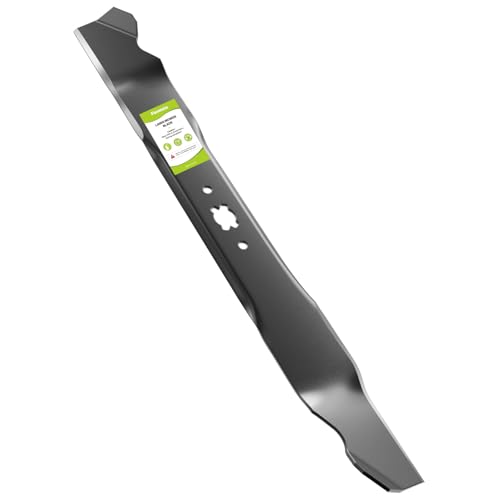
The Fismiuta 21-inch lawn mower blade is a replacement mulching blade designed for many popular walk-behind push mowers from Troy-Bilt, Craftsman, and MTD. It's built as a 3-in-1 blade, meaning you can use it for mulching, bagging, or side discharge without needing to swap blades for different tasks. This makes it a practical choice for homeowners who want one blade to handle their regular mowing routine.
In real-world use, the standout feature here is the 32mm air lift height. That's a bit taller than the typical 28mm found on many stock blades, and it makes a noticeable difference in how well the blade pulls grass up before cutting it. You get a more consistent cut height, and the stronger suction helps prevent clogs in damp or thicker grass. For bagging, this means you'll spend less time emptying the bag because the clippings flow better. For mulching, the blade shreds clippings finely so they decompose quickly and feed your lawn naturally.
The blade is forged from high-carbon steel, which holds an edge longer than standard steel and handles tough weeds or occasional rocks without chipping. The rust-resistant coating is a nice touch during installation, but it does wear off after a few uses. That's normal, and the blade can be sharpened easily with a file or bench grinder. Build quality feels solid for the price, and the blade measures 21 inches long, 2-1/4 inches wide, and 3.4mm thick, which matches OEM specs for a direct swap.
One thing to watch out for is the center hole shape. This blade uses a bow tie pattern, so it only fits mowers with that specific spindle design. If your mower has a star or round hole, it won't work. Double-check your mower's center hole before ordering. Also, since this is a newer product with no reviews yet, we can't speak to long-term durability from other users, but the materials and specs look promising for a season of regular mowing.
Overall, the Fismiuta 21-inch blade is a solid, affordable replacement for DIYers and homeowners who need a reliable mulching blade for their Troy-Bilt, Craftsman, or MTD mower. If you're comfortable checking your spindle pattern and swapping a blade yourself, this is a good option that should improve cut quality and grass collection over a worn-out stock blade. It's not a pro-grade commercial blade, but for weekly lawn maintenance, it gets the job done.
Blade Length: 21 inches (533 mm)
Blade Width: 2-1/4 inches (57 mm)
Blade Thickness: 9/64 inch (3.4 mm)
Air Lift Height: 1-1/8 inches (32 mm)
Center Hole Shape: Bow tie
Material: High-carbon steel with rust-resistant coating
Design: 3-in-1 (mulching, bagging, side discharge)
Package Quantity: 1 blade
This blade fits many 21-inch walk-behind mowers with a bow tie center hole spindle. Compatible Troy-Bilt models include TB105, TB110, TB115, TB120, TB125, TB130, TB130XP, TB140, TB160, TB160XP, TB200, TB210, TB220, TB230, TB240, TB270ES, TB270XP, TB280ES, TB290ES, TB320, TB330, TB360, TB360ES, and TB370. Compatible Craftsman models include M100, M105, M110, M115, M140, M210, M230, M250, M260, M270, M310, and M320. Also fits many MTD and Cub Cadet models with the same spindle pattern. Always verify your mower's center hole shape before purchasing.
Determining Which Side of a Lawn Mower Blade Goes Up
The upward-facing side of a lawn mower blade is always the side with the curved aerodynamic fins, commonly known as sails or lift wings. These raised metal tabs curve upward toward the roof of the mower deck, creating suction that pulls grass stalks upright before cutting. In contrast, the flat cutting plane and sharpened leading bevel face downward toward the lawn surface. Installing a blade upside down causes immediate cut quality issues, damages the turf, and strains the engine drive system.
The Fundamental Rule: Lift Wings Face Up and Cutting Edges Face Down
Examining a rotary mower blade from its profile edge reveals two distinct vertical elevations along its steel body. The front cutting section features a sharpened edge with an angled bevel designed to slice through turf cleanly. Behind that sharpened section sits a pronounced upward-sloping metal curve referred to as the sail or wind wing. When determining which side of lawn mower blade goes up, this raised lip must always point toward the underside of the deck rather than down at the soil.
The beveled cutting edge provides another clear visual reference for proper positioning during assembly. The beveled slope should face upward toward the deck housing, allowing the smooth bottom surface of the blade to glide horizontally over the grass. If the beveled ramp faces toward the lawn, the blade has been mounted in reverse. In this upside-down position, the blunt bottom corner strikes the grass first, tearing rather than cutting each stalk.
First-time installers sometimes find blade geometry confusing because the overall steel bar looks mostly straight from across the room. Symmetrical mounting holes in the middle can make the blade appear reversible to the untrained eye. However, the cutting bevels are ground on opposite sides of each end to accommodate the engine spindle rotation direction. Paying close attention to the direction of each wing ensures both ends work in harmony with the rotating spindle.
Interpreting Factory Stamped Markings and Labeling Clues
Many lawn mower blade manufacturers engrave or stamp directional wording directly onto the steel surface during stamping. Look closely along the center region of the blade for words such as “BOTTOM”, “GRASS SIDE”, or “THIS SIDE FACES TURF”. These clear labels designate the surface that must face toward the lawn surface during installation. If you see text indicating “DECK SIDE” or “THIS SIDE UP”, that surface must press firmly against the spindle adapter plate.
In addition to directional phrases, manufacturers frequently stamp part numbers and brand logos onto the blade body. On many original equipment and aftermarket blades, stamped part numbers appear on the bottom surface so technicians can read them from underneath the mower deck. For example, OEM replacement numbers like 942-0741A or 742-0741 are commonly stamped into the flat center span. Verifying these stamped codes can confirm both proper blade orientation and correct replacement fitment.
Thick protective finishes can occasionally hide stamped text on brand-new replacement blades. Brands such as Grasscool and Hipa apply durable paint coatings to protect bare cutting edges from surface rust during shipping and warehouse storage. If heavy paint or caked grass clippings obscure stamped lettering, do not guess the orientation based on partial words. Rely instead on the physical shape of the lift wings, which consistently point toward the deck interior across all rotary models.
How Aerodynamic Lift and Deck Airflow Influence Orientation
Rotary lawn mowers do not cut grass through mechanical slicing alone; they depend heavily on continuous aerodynamic suction beneath the deck. As the blade spins at thousands of revolutions per minute, the upturned lift wings push air upward and outward, generating a low-pressure vacuum. This suction pulls limp or bent blades of grass upright, presenting them squarely to the sharpened cutting edges. Once cut, the generated airflow propels clippings through the discharge chute or into an attached collection bag.
When a blade is accidentally bolted on upside down, the aerodynamic effect reverses completely. The downward-facing wings force air toward the ground instead of drawing it upward into the deck chamber. This downward downdraft pushes grass blades flat against the soil, causing the dull back of the blade to pass right over them without cutting. The inverted airflow also prevents clippings from discharging cleanly, resulting in severe clumping beneath the deck shell.
Different blade models feature specific wing heights tailored to particular cutting tasks and mower deck designs. The Fismiuta 21-inch lawn mower blade, for instance, utilizes an upgraded 32-millimeter air lift height compared to standard 28-millimeter profiles to boost grass collection suction. High-lift configurations like this require strict directional adherence because their larger wings generate substantial airflow dynamics. Installing high-lift designs upside down exaggerates turbulence and can even blast dust and debris downward into the lawn.
Center Hole Geometry and Spindle Hub Alignment
The center hole shape of a lawn mower blade must mate precisely with the mower spindle shaft to ensure safe power transmission. Popular 21-inch walk-behind push mowers and riding models from Troy-Bilt, MTD, Yard Machines, and Craftsman frequently utilize a bow-tie center hole pattern. Other equipment manufacturers use 5-point star, 6-point star, or standard circular mounting holes. A precise match between the blade hole and spindle hub prevents rotational slippage under heavy grass cutting loads.
Many homeowners assume that shaped center holes like bow-tie or star patterns prevent inverted blade installation automatically. In reality, most bow-tie patterns and symmetrical spindle adapters will still accept an upside-down blade without obvious resistance. The metal cutout slips over the spindle hub, giving the deceptive impression that the blade is mounted properly. Never rely on center hole alignment alone as proof of correct vertical orientation.
Inspect the contact area between the blade center and the spindle adapter plate before tightening the mounting bolt. The flat center mounting section of the blade must rest flush against the spindle adapter without any rocking, tilting, or uneven gaps. If the blade rocks back and forth when seated, the center hole may be misaligned or the blade may be inverted against a contoured spindle flange. Correct seating protects the spindle assembly from premature bearing wear and catastrophic failure during operation.
Recognizing the Warning Signs of an Upside-Down Blade
An inverted lawn mower blade gives several clear warning signs during and immediately after mowing. The most noticeable symptom is an uneven, ragged appearance across the lawn surface where grass looks battered rather than cleanly sheared. Within forty-eight hours, the torn leaf tips turn bleached white or brown as moisture escapes from the jagged wounds. This tearing weakens the turf, making the lawn far more susceptible to lawn diseases, pests, and sun scorch.
Bagging and discharging issues also signal incorrect blade orientation under the cutting deck. If your mower suddenly stops filling the rear bag efficiently or leaves heavy piles of damp clippings directly beneath the deck, airflow is compromised. An upside-down blade cannot generate the upward velocity required to push shredded grass into the chute. You will likely notice wet clippings packing tightly against the inner deck walls, creating thick clumps that bog down the engine.
Mechanical operating sensations can also alert you to an upside-down installation. An inverted blade experiences abnormal aerodynamic drag and irregular impact resistance as its blunt back edge hammers against dense turf. This irregular resistance causes excessive vibration throughout the deck that you can feel through the mower handlebars. If a mower feels noticeably louder, shakes harder, or struggles through standard grass heights right after blade service, verify orientation immediately.
Safe Removal and Reinstallation Step-by-Step Sequence
Safety must always come first when inspecting or installing cutting blades beneath a lawn mower deck. Before tipping the mower, disconnect the spark plug wire and tuck the rubber boot securely away from the plug terminal. On battery-powered electric mowers, remove the safety key and disconnect the lithium-ion battery pack completely. Tip gas-powered mowers with the air cleaner and carburetor pointing upward toward the sky to avoid flooding the air filter with engine oil.
Loosening a tight blade bolt requires immobilizing the blade so it cannot rotate while you turn the socket wrench. While some people wedge scrap wood between the blade and deck shell, universal clamping tools offer far greater stability. The KINTLE 490-850-0005 blade removal tool and the VoltRidge universal blade clamp attach directly to the mower deck rim, locking the blade in place safely. Clamping the blade protects your hands from slipping against sharp edges and prevents accidental spindle rotation.
Use a properly sized wrench or breaker bar to loosen the center spindle bolt by turning it counterclockwise in standard threading setups. As the bolt releases, carefully slide off the mounting bolt, washer assembly, and old blade while noting their order. Inspecting the metal body helps you identify wear, cracks, or bending that could compromise lawn safety. Understanding the types of steel used in mower blades clarifies why quality alloy or carbon steel maintains integrity despite repeated ground strikes.
When reinstalling the blade with its curved lift wings pointing upward toward the deck, position the concave Belleville spring washer correctly. The cupped, dome-like side of the washer should press against the blade center, applying steady spring tension against the fastener head. Thread the spindle bolt by hand first to prevent damaging threads on the engine crankshaft or spindle shaft. Tighten the bolt firmly to the torque level specified in your mower operator manual to guarantee safe operation.
Mulching Blades Versus Standard Discharge Blades
Mulching blades feature more complex profiles than traditional flat discharge or bagging blades, which can complicate visual orientation. Products like the UDC Parts 942-0741A 21-inch mulching blade and the Hipa 942-0741A blade incorporate curved, stepped cutting edges designed to chop grass repeatedly. These blades often have secondary cutting planes and multiple airflow fins along their length. Despite these extra contours, the fundamental rule remains the same: the primary curved lift wings must point toward the deck interior.
A multi-purpose 3-in-1 mulching blade functions by holding grass clippings suspended in the air chamber for several cutting cycles before dispersing them into the soil. If this complex geometry is installed backwards, the stepped contours disrupt airflow rather than refining it. Finely shredded mulch turns into coarse, ragged clumps that smother rather than feed your turf. Identifying the highest raised ridge on each end confirms which surface belongs facing the deck ceiling.
Online replacement searches can sometimes lead shoppers to unrelated consumer products, such as wusuker replacement blades for personal electric trimmers. While both items share cutting functions in completely different categories, rotary mower blades require heavy-gauge steel capable of high-speed centrifugal impact. Evaluating deck dimensions, OEM cross-references, and typical replacement mower blade expenses helps homeowners select the right outdoor power equipment parts. Focusing on designated walk-behind or riding mower blades guarantees you receive components built for deck durability.
Post-Installation Verification and Blade Balancing
Before completing any blade installation or seasonal replacement, testing the static balance of your blade is strongly recommended. An unbalanced blade spins with an uneven center of gravity, transmitting high-frequency vibrations that wear out spindle bearings and engine seals. Placing the blade center hole onto a cone balancer indicates whether one cutting wing is heavier than the other. If one side dips, light sharpening or filing along the back of the heavy wing restores balance without dulling the cutting bevel.
Once the blade is balanced and torqued with its wings pointing upward, perform a quick manual tracking check. Rotate the blade by hand under the deck and measure the vertical distance from one blade tip to the bottom of the deck skirt. Spin the opposite tip to the exact same position and verify that it matches within one-eighth of an inch. Significant differences in tip height point to a bent blade or damaged spindle adapter that requires replacement before mowing.
Taking a few extra moments to double-check blade orientation, washer placement, and spindle engagement pays significant dividends across the mowing season. A properly mounted blade delivers crisp cuts, maximizes bagging and mulching airflow, and protects your mower engine from unnecessary mechanical strain. Reconnect your spark plug or battery pack with confidence, knowing your cutting deck is set up for optimal lawn health.



Write Your Review
No reviews yet. Be the first to share your experience!