


Harsh deck vibration and ragged turf tips often trace back to a rotary blade that lost equal weight distribution during routine maintenance. Learning how to balance a lawn mower blade at home helps preserve your cutting deck, protects sensitive spindle bearings, and ensures smooth grass discharge across the yard. Even minor weight variations between opposing cutting wings can induce high-frequency oscillations that loosen deck mounting hardware over time. Choosing to pair routine blade filing with precise weight verification prevents costly mechanical repairs while keeping cutting edges ready for heavy seasonal turf maintenance.
Homeowners often inspect cutting bevels closely but overlook the center of gravity before reinstalling their cutting assembly. Whether you run commercial zero-turn equipment or install replacement mower blades on a residential walk-behind deck, checking blade equilibrium remains an essential maintenance practice. Using dedicated static step cones or magnetic wall-mounted balancing tools provides clear feedback on which blade wing holds excess steel. Integrating this simple verification step into your seasonal yard upkeep eliminates erratic blade wobble and restores balanced cutting performance across every pass.

Pros
- Extremely affordable and widely compatible with most residential mower blades.
- Simple to use: just chuck it in a drill and run along the blade edge.
- Including both sharpener and balancer means you get a complete blade maintenance solution.
- Lightweight and portable, perfect for small workshops and home garages.
Cons
- Requires a drill to operate, so you need one on hand.
- Manual balancing takes a bit of patience to get right compared to electronic balancers.
- Not ideal for heavy commercial use or high-volume shops where speed is critical.
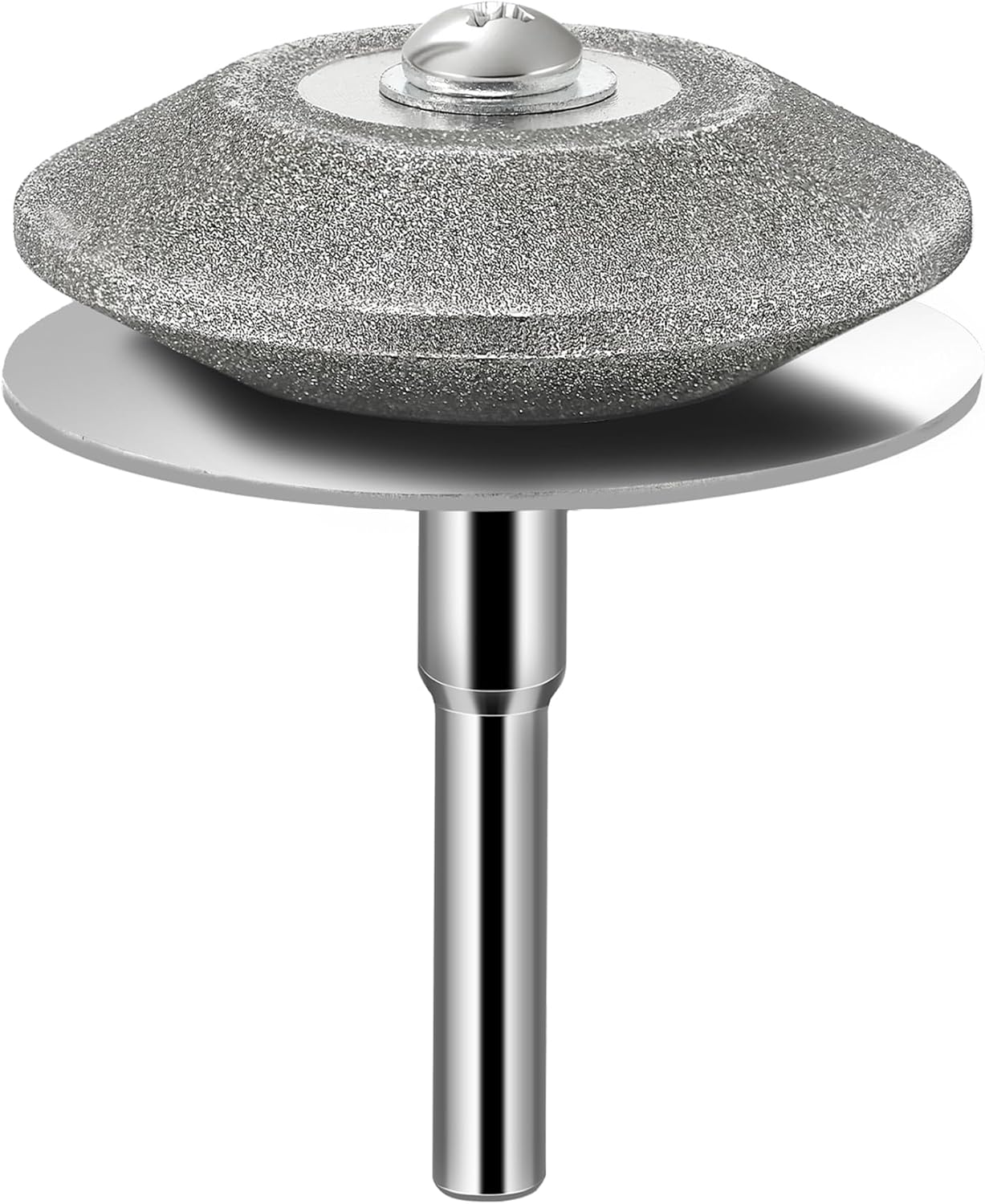
The Arnold BSK-1 is a straightforward sharpening and balancing kit designed for lawn mower blades. It turns your regular electric drill into a reliable sharpening tool, making it easy to maintain a clean cutting edge without investing in a dedicated grinder. The kit includes a cone-shaped sharpening stone and a simple static balancer, both built to handle blades from walk-behind mowers, lawn tractors, and zero-turn machines.
This kit is best suited for homeowners and DIYers who prefer to handle their own mower maintenance rather than taking blades to a shop. It's also useful for small engine mechanics who need an affordable backup method. But if you're a professional landscaper sharpening dozens of blades a week, you'll likely want a faster, more automated system.
In real-world use, the sharpener works quickly. Chuck it into a drill, run the stone along the blade's edge at a shallow angle, and you'll see burrs form within seconds. The vibration-free claim holds up -- the stone spins smoothly, which helps avoid gouging the blade. The balancer is straightforward: hang the blade on the cone and see which side drops. Rotate a few times to confirm. It's not fancy, but it effectively reveals if the blade is heavy on one side.
Build quality is typical for a budget tool. The sharpening stone is abrasive and should last through several sharpenings. The balancer is made of plastic and a metal cone. It's lightweight (just over two ounces) and stores easily in a drawer. For the price, durability is acceptable for occasional weekend usage. You won't hesitate to toss it in a toolbox or tool bag.
The main drawback is that you need a drill, and the process is manual. Balancing requires patience -- you'll have to grind off material from the heavy side and recheck. It's not as precise as a professional blade balancer, but it's more than enough to get a decently balanced blade. Overall, the Arnold BSK-1 is a smart buy for anyone who wants to keep their mower cutting cleanly on a budget. It's a practical addition to any workshop, especially if you already own a drill.
Color: Black
Dimensions: 3 x 7 x 10 inches
Weight: 0.24 pounds
Product Group: Outdoors
Binding: Lawn & Patio

Pros
- Magnetic hold is strong and secure, eliminating fumbling during blade mounting
- Ball bearing spins freely for accurate balancing, as confirmed by multiple reviewers
- Works with a wide variety of blade center hole shapes, including non-round holes
- Durable build quality at a fraction of the cost of premium brands like Oregon
Cons
- The steel rod is slightly smaller in diameter than some competitor models, which may affect fitment with very large center holes
- A few users reported that the instructions could be clearer, especially regarding the embedded magnets
- The bearing can feel a bit rough if not handled carefully; tapping the wall improves accuracy
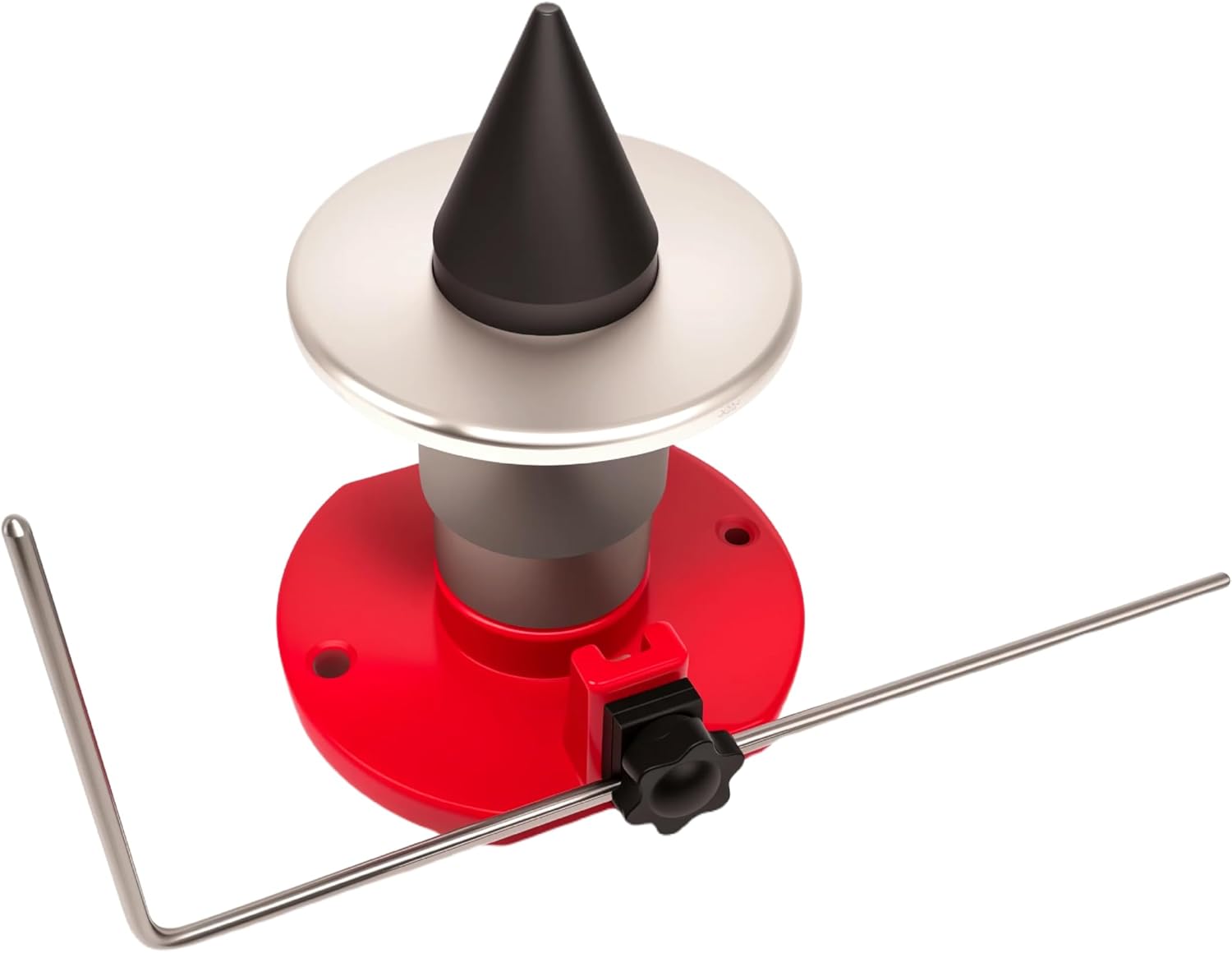
If you sharpen your own lawn mower blades, you know that balancing them is just as important as getting the edge right. An unbalanced blade shakes the mower, wears out the spindle bearings, and leaves a ragged cut. The DPHXF Magnetic Wall Mount Blade Balancer is a simple but effective tool that makes this job far more reliable than balancing on a nail or a cone.
This balancer is ideal for homeowners and DIYers who maintain a few mowers, as well as small landscaping crews. It hangs on your wall, always ready to use. The strong magnet holds the blade firmly in place, and the ball bearing spindle allows the blade to rotate with almost no friction. That smooth rotation is key: you can clearly see which side is heavy and grind it down until the blade sits perfectly horizontal.
Build quality is solid. The housing is heavy-duty steel with a red powder coat that resists corrosion. The improved version addressed earlier complaints about bearing slop, and reviews confirm that this one spins freely and repeats well. It fits blades with center holes up to 1.5 inches, including the star-shaped or S-shaped holes found on many residential decks. This versatility means you can use it on different mowers without buying adapters.
One potential drawback: the steel rod that centers the blade is a bit smaller than what you might find on the expensive Oregon model. For most home-size blades, this isn't an issue, but if you have a very large or heavy commercial blade, it might not seat as snugly. Also, the magnets are embedded beneath the plastic housing, so don't expect to see them like in some older designs. A light tap on the wall can help settle the blade for a more accurate reading.
Overall, the DPHXF Magnetic Wall Mount Blade Balancer delivers impressive precision for the price. It saves you time and protects your mower from vibration damage. If you sharpen your own blades and want a reliable, easy-to-use balancing tool that stays put on the wall, this is a smart buy. Just make sure you have enough clearance on either side so the blades can spin a full 360 degrees without hitting anything.
Product Dimensions: 7 x 4.5 x 6.5 inches
Item Weight: 2.38 pounds
Manufacturer: DPHXF
ASIN: B0F2F46C7H
Item Model Number: 42-047
Compatible Blade Center Holes: Up to 1-1/2 inches
Mounting: Wall-mount with included hardware

Pros
- Sturdy metal build that won't crack or warp like plastic balancers.
- Accurately detects even small imbalances for improved cut quality.
- Works with a wide variety of blade center hole sizes thanks to the stepped cone design.
- Easy to use: place blade, watch gravity, and remove material from the heavy side.
Cons
- Some users report that the cone steps may not fit every blade perfectly, though most find a suitable step.
- Requires a bit of trial and error to center the blade precisely on the cone.
- The balancer itself has a narrow base that can tip if bumped during use.
The Oregon Precision Mower Blade Balancer (model 42-100) is a simple, no-fuss tool that belongs in every mower maintenance kit. After you sharpen your blade, tossing it back on the mower without checking balance is a gamble. Even a tiny imbalance can cause excessive vibration, rough cutting, and accelerated wear on your mower's engine and spindle bearings. This compact metal balancer solves that problem with a straightforward gravity-based design.
Best suited for homeowners who sharpen their own blades as well as professional landscapers, the balancer works with virtually any rotary mower blade. The stepped metal cone accommodates different center hole sizes, so it fits push mowers, riding mowers, and zero-turn machines from brands like Stihl, Husqvarna, Troy-Bilt, and more. The zinc die-cast body feels solid and substantial easily outlasting cheap plastic alternatives that can crack or warp over time.
Using the Oregon balancer is refreshingly simple. Place the blade flat on the cone, let it settle, and gravity will tell you if one side is heavier. If the blade dips, grind a bit more material off that side and recheck. The process takes only a minute or two but makes a real difference in how your mower runs. Users consistently report noticeably less vibration and a cleaner, more even cut after balancing.
One realistic limitation is that the cone steps might not align perfectly with every blade's center hole, though most users find a step that works. Also, the balancer has a narrow base, so you'll want to set it on a stable surface to avoid tipping. But these are minor tradeoffs for a tool that costs under ten dollars and can extend the life of your mower's engine and deck.
If you maintain your own mower blades, the Oregon Precision Blade Balancer is a smart, low-cost investment. It helps you get professional-level results at home, reduces vibration that leads to premature wear, and keeps your lawn looking its best. For the price and performance, there's little reason not to add one to your workshop gear.
Brand: Oregon
Model: 42-100
Material: Zinc die-cast metal
Weight: 0.2 pounds
Dimensions: 10 x 6 x 1 inches
Power Source: Manual
Color: Original Version
Compatibility: Fits most push mower and riding mower blades
Pros
- Adjustable angle guide ensures consistent, repeatable sharpening
- Magnetic balancer detects both imbalance and bent blades
- Solid build quality and well-packaged for long-term use
- Compatible with most standard mower blades and grinders
Cons
- Sharpener mount can feel a bit loose when inserting a grinder; may need shimming or careful clamping
- Angle markings may not be perfectly accurate; verify with a protractor for best results
- Requires a separate angle grinder and flap disc (not included) to operate
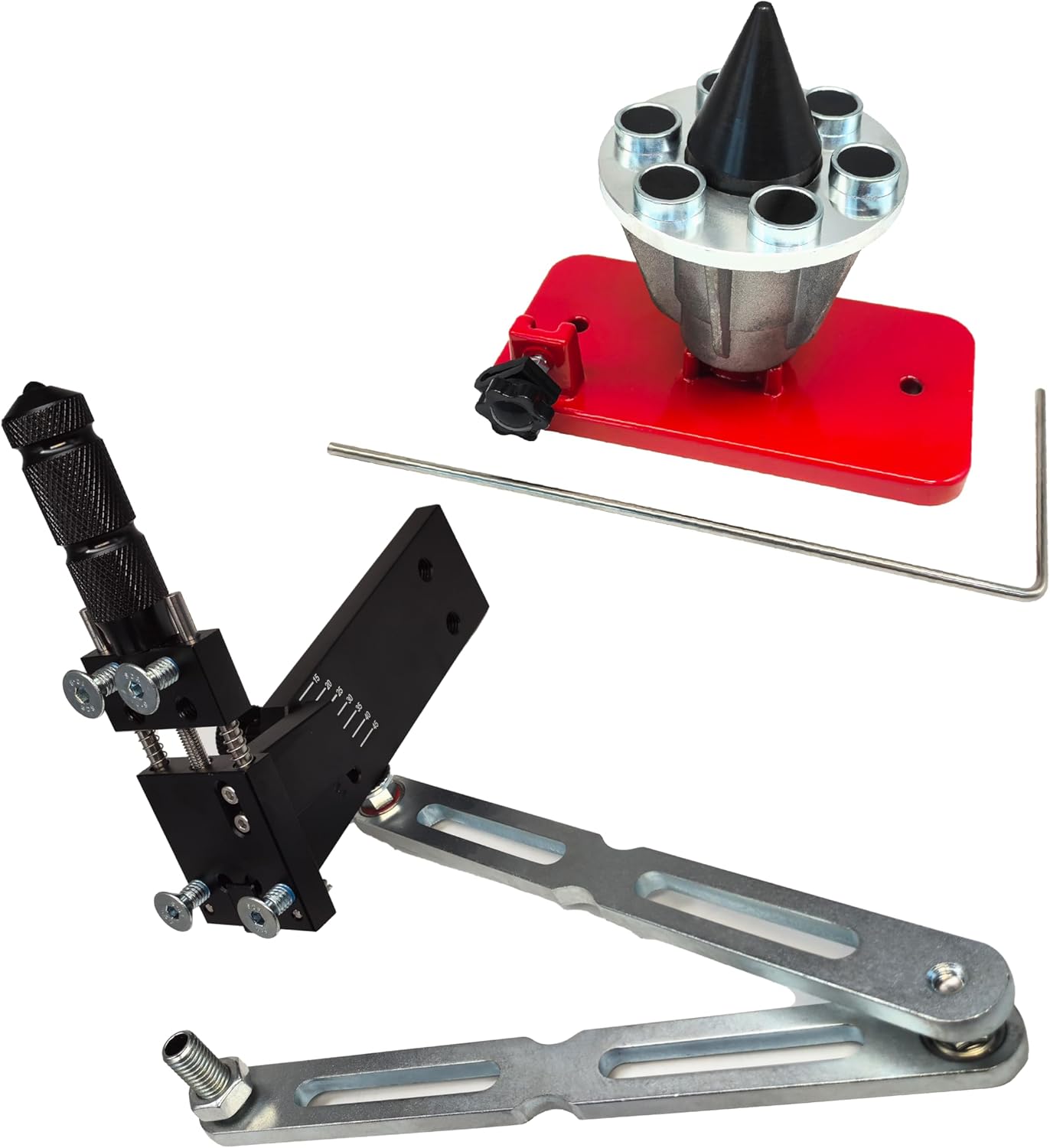
The LAMBIS Lawn Mower Blade Sharpener and Balancer Kit is a practical two-in-one solution for anyone tired of hand-filing blades or paying for professional sharpening. This set includes a 7-angle adjustable sharpening guide and a magnetic wall mount balancer, both built to help you maintain a razor edge and balanced rotation on most standard mower blades.
This kit is best suited for DIY homeowners, lawn care enthusiasts, and small-scale contractors who want to extend blade life and improve cut quality. The sharpener accepts most angle grinders with a 4.5-inch wheel, and the adjustable guide lets you dial in angles from 15 to 45 degrees. Real-world performance is impressive; users report that with a 40- or 60-grit flap disc, even heavily worn blades can be restored in several passes. The balancer uses a strong magnet to hold the blade while you check for level, and it can also reveal bent blades that need replacement.
Build quality is solid for the price, with a well-packaged design that feels durable. The sharpener mounts easily in a vise or on a workbench, though some users note the grinder cradle can feel slightly loose. A quick shim or careful clamping solves this. The balancer is simple and effective, sticking to any ferrous surface or mounting on a wall. One realistic limitation is that the angle markings may not be perfectly accurate, so verifying with a protractor is recommended for precision work.
Overall, this kit offers excellent value for homeowners and DIYers who already own an angle grinder. It saves time, reduces vibration, and helps your mower cut cleaner. If you sharpen multiple blades per season or maintain a large mower fleet, this setup is a smart investment that pays for itself quickly.
Product Dimensions: 11.7 x 11.3 x 3.7 inches
Item Weight: 7.04 pounds
Manufacturer: LAMBIS
Model Number: LAMBIS02
Compatible With: Most walk-behind and riding mower blades
Angle Range: 15° to 45° (7 adjustable positions)
Replaces: 5005A, 42-047, 339075B

Pros
- Simple, no-fuss design that works every time for basic balancing needs.
- Metal build feels solid and should hold up to years of garage use.
- Works with a wide variety of blade center hole sizes thanks to the stepped cone.
- Costs less than a coffee and delivers real performance improvement.
Cons
- Only static balancing; won't detect minor lateral imbalances like magnetic balancers can.
- May not fit blades with non-circular or odd-shaped center holes (e.g., some mulching or gator blades).
- Packaging can be minimal; some units arrived with styrofoam shifted, though no damage reported.
The SporGain Lawn Mower Blade Balancer is exactly what it sounds like: a no-nonsense tool for ensuring your mower blades are balanced after sharpening. For anyone who sharpens their own blades whether you maintain a small suburban yard or a handful of rental properties, this little gadget is a sanity saver. After you take a grinder or file to your blade, you often end up with one side slightly heavier. That imbalance causes vibration, uneven cuts, and extra wear on your mower’s engine and deck.
This balancer solves that problem simply. You set the blade on the tapered metal cone, and the heavy side drops down. Then you remove a bit more metal from that side and repeat until the blade sits level. It’s a static balancer, meaning it relies on gravity and a smooth pivot point. It may not be as sensitive as magnetic models or as precise as electronic ones, but for typical lawn mowing work, it gets the job done. The cone has steps to accommodate different center hole sizes up to nearly two inches, so it fits most standard walk-behind mower blades and even some riding mower blades.
Build quality is impressive for the price. The base and cone are made of metal, not plastic, so they won’t crack or warp. It’s small enough to toss in a tool bag or leave in a drawer. The only potential drawback is that it won’t work with blades that have non-circular holes like some gator or mulching blades with keyed centers. Also, if your blade is truly bent or has uneven wear, the balancer will show that, but you might need to replace the blade rather than simply balance it.
In real-world use, this balancer makes a noticeable difference. Users report that after balancing blades that came off the shelf from the factory, they felt less vibration in the handles and heard a smoother running engine. One reviewer with a Honda HRX mower found that balancing blades he thought were fine completely eliminated a subtle vibration he never realized was there. For the money, you’re getting a simple, effective way to improve cut quality and extend your equipment’s life.
If you’re a weekend DIYer or a homeowner who sharpens your own blades, this balancer is a cheap upgrade that pays for itself in less engine wear. Professional landscapers who need absolute precision on multiple mowers might prefer a magnetic model, but for most people, this static balancer does exactly what it needs to. A solid buy.
Product Dimensions: 2.4 x 2.4 x 2.1 inches
Item Weight: 3.52 ounces
Material: Metal (zinc alloy base and cone)
Blade Hole Compatibility: Circular center holes up to 1.97 inches (largest step)
Base Diameter: 2.36 inches
Color: Silver
Includes: One blade balancer only

Pros
- Durable all-metal zinc build will not gouge or warp over time like cheap plastic cones
- Stepped conical profile fits most residential and commercial rotary blade center holes
- Helps prevent expensive spindle bearing replacements and engine crankshaft damage
- Simple gravity-based checking provides clear feedback within seconds
Cons
- Requires an absolute level, flat surface to ensure precise gravity readings
- Lacks magnetic mounting brackets found on premium commercial wall-mounted balancers
- Balancing action can be sensitive to workshop air currents or vibration on the bench
The Zwelocy 42-100 Precision Mower Blade Balancer is a mechanical static balancing tool made for push mowers, zero-turns, and lawn tractors. Anyone running a dedicated lawn care service or maintaining their own turf knows that sharp blades are only half the battle. This tool is built for homeowners, DIY mechanics, and landscapers who sharpen their own gear and need a foolproof way to verify blade symmetry before bolting everything back under the deck.
Sharpening a mower blade with an angle grinder, flap disc, or dedicated bench grinder inevitably removes an uneven amount of steel from one side. Placing the center hole of your blade over this tapered metal cone allows gravity to expose the heavier end right away. If one wing tilts down, you simply grind a bit more metal from the non-cutting sail until the blade balances completely flat. This quick check takes seconds and eliminates trial-and-error balancing tricks like resting blades on a nail in the wall.
Unlike the brittle plastic cones often bundled with budget sharpening kits, this unit uses a cast zinc metal build. It will not crack when tossed into a toolbox, and sharp blade center holes will not cut grooves into the taper over time. The solid construction keeps the centering profile true, ensuring repeatable accuracy across seasons of tune-ups. Its compact size also makes it easy to keep right by your sharpening vise without cluttering your workspace.
Keep in mind that static cone balancers depend entirely on where you place them. You must set the balancer on a level bench or flat board to get a true reading. While it will not offer the magnetic bearing suspension of high-end commercial shop units, it delivers dependable accuracy at a fraction of the footprint. If you maintain mower blades and want to save your deck spindles, belts, and engine from vibration damage, this balancer is a dependable workshop essential.
To achieve the best results with the Zwelocy 42-100, set it on an entirely flat, level surface away from running fans or drafty shop doors. Check the surface with a small spirit level before mounting the blade.
Always clean grass buildup, dried sap, and surface rust off the blade before sharpening and balancing. Dirty blades throw off weight distribution and give false readings on the cone.
When trimming excess weight from the heavy side, remove material only from the back edge or lift sail. Never grind away metal from the cutting bevel itself, as that alters the cutting geometry and weakens the edge.

Pros
- Metal build feels solid and durable for long-term use
- Accurate static balancing method works reliably with most standard blades
- Universal cone design accommodates various center hole shapes and sizes
- Easy to use with no setup required - just place and balance
- Affordable two-pack offers great value for DIY homeowners
Cons
- Best results require a perfectly level surface - not ideal for uneven jobsite use
- May not balance non-circular or unusually shaped center holes as effectively
- Cone steps are relatively small - large blades may be top-heavy
The TonGass 2-Pack Metal Precision Blade Balancers are a simple but essential tool for anyone who sharpens their own lawn mower blades. These static balancers let you check and correct blade balance after grinding, which reduces vibration, improves cut quality, and protects your mower's engine from unnecessary wear.
Best suited for DIY homeowners and lawn care enthusiasts who sharpen blades at home. If you already use a bench grinder or file to sharpen, this balancer should be a staple in your workshop. It's also handy for small engine repair shops that want a quick, reliable balancing check without expensive electronic gear.
In real-world use, the balancer performs exactly as expected. Just set it on a level surface - like a workbench or concrete floor - place the blade's center hole over the cone, and let it settle. A balanced blade stays horizontal; an unbalanced one dips to the heavy side. The metal construction feels sturdy enough for daily use, and the compact size means it stows easily in a drawer or toolbox. The two-pack is nice because you can keep one at the sharpening station and one in your mower shed, or share with a neighbor.
Build quality is solid for the price - all metal with a clean finish, no plastic parts to break. The cone has stepped diameters to fit different hole sizes, and the base is wide enough for stability. One limitation: you absolutely need a level surface for accurate results. If your workbench is uneven, the balancer won't read true. Also, while the cone fits most standard blades, very large or oddly shaped center holes might not seat properly.
Overall, if you sharpen lawn mower blades at home, the TonGass blade balancers are a worthwhile addition. They take the guesswork out of balancing, help your mower run smoother, and cost less than a typical gas fill-up. For DIY homeowners who want to extend the life of their equipment and get a cleaner cut, this two-pack is an easy recommendation.
Package Dimensions: 3.43 x 2.8 x 2.48 inches
Item Weight: 6.4 ounces (both balancers combined)
Manufacturer: TonGass
Model: bladebalancermetal
Material: Metal base and stepped cone
Cone largest step: 1 3/8 inches
Base diameter: 2.36 inches
Compatibility: Most lawn mower blades with circular or standard center holes

Pros
- Strong magnetic hold keeps blades in place during balancing.
- Free-spinning ball bearing provides consistent and repeatable results.
- Built-in bent rod gauge helps identify warped blades before installation.
- Wall mount design saves bench space and keeps the tool accessible.
Cons
- Mounting screws are not included, so you will need to supply your own.
- Some units may have a slightly unbalanced spindle, which can affect accuracy and require careful setup.
- Instructions are minimal and not very clear, though the tool is straightforward to use if you have some experience.
The LDMINDA Magnetic Wall Mount Blade Balancer is a practical tool for anyone who sharpens their own lawn mower blades. It is designed for DIY homeowners and hobbyists who want to reduce mower vibration and achieve a cleaner, more even cut without investing in expensive shop equipment. This balancer replaces popular models like the 42-047 and 339075B, and it delivers solid performance for the price.
In real-world use, the six magnets hold the blade firmly in place, so you can spin it freely to check balance. The ball bearing spindle rotates smoothly, giving you a clear visual of which side is heavier. The included bent rod gauge is a nice touch, letting you quickly tell if the blade is warped before you even balance it. This feature alone can save you from reinstalling a blade that will cause vibration and uneven cutting. The wall mount design is a space-saver, and once mounted on a level surface, the balancer works consistently.
Build quality is mostly metal, with a solid feel that should hold up to regular use in a garage or shed. The knob and cone are plastic, but they are not load-bearing parts. Some users have reported that the spindle itself can be slightly out of balance, which may lead to variable results. This is a known issue with budget balancers, and while it does not affect every unit, it is something to be aware of. If you get a good one, it works just as well as the expensive name-brand versions.
On the downside, the balancer does not come with mounting screws, and the printed instructions are minimal. For someone experienced with blade balancing, this is not a problem, but beginners may need to look up a quick video or guide. The lack of calibration from the factory means you should test the spindle before use. If it spins unevenly, you may need to return it for a replacement.
Overall, the LDMINDA Magnetic Wall Mount Blade Balancer is a solid choice for the budget-conscious DIYer. It offers most of the functionality of pricier balancers at a lower price point. If you are already sharpening your own blades and want to improve cut quality and reduce mower vibration, this tool is worth picking up. Just be prepared to supply your own hardware and verify the spindle balance before relying on it for critical jobs.

Pros
- Precise angle adjustment from 15 to 45 degrees covers most blade requirements.
- Durable metal build with ball bearings ensures long-lasting stability and accuracy.
- Integrated balancer promotes even blade weight distribution, reducing vibration and extending engine life.
- Easy to set up and use with most grinders, thanks to included guide pins.
Cons
- Requires a compatible angle grinder; not a standalone sharpener.
- Initial learning curve to dial in exact angle and balance for different blade types.
- Best suited for lawn mower blades only, not for other workshop tools.
The SporGain Lawn Mower Blade Sharpener and Balancer Kit is a practical workshop accessory for anyone who takes lawn care seriously. This two-in-one set includes a sharpening jig and a balancer tool, designed to keep your mower blades in top shape. It's best suited for DIY homeowners, lawn care enthusiasts, and small-scale contractors who maintain their own equipment and want a reliable, efficient way to sharpen and balance blades without frequent trips to a shop.
In real-world use, the sharpener's adjustable 15 to 45 degree angle lets you match the factory bevel on most blades, resulting in a clean, precise edge. The metal jig with ball bearings holds the blade securely while you run a grinder across it, and the enlarged handle gives you a firm grip. After sharpening, the zinc alloy balancer helps you check for even weight distribution, which cuts down on vibration and engine wear. This process is straightforward and makes a noticeable difference in how smoothly the mower runs.
Build quality is solid for the price. The frame is made from thick metal and high-density aluminum alloy, with bushings that keep wobble to a minimum. The included four guide pins fit most common angle grinders, so you can usually get started without hunting for adapters. The tool-free setup is a nice touch, letting you switch between sharpening and balancing quickly. However, keep in mind that this kit is specialized for lawn mower blades. If you sharpen other workshop tools, you'll need a different setup.
One realistic drawback is that the sharpener requires some practice to get the angle just right, especially if you're new to blade maintenance. Also, you need a grinder that's compatible with the guide pins, though most standard models work. The balancer is simple to use but relies on a level surface for accurate readings. These are minor issues for the value this kit provides.
Overall, the SporGain Lawn Mower Blade Sharpener and Balancer Kit is a smart buy for DIYers and homeowners who want to extend the life of their mower blades and improve cutting performance. It saves you money on professional sharpening and gives you the satisfaction of well-maintained equipment. If you maintain your own lawn gear and have an angle grinder, this kit is a worthwhile addition to your workshop.
Color: Dark
Dimensions: 13.5 x 9 x 3.4 inches
Product Group: Lawn & Patio
Material: High-density aluminum alloy sharpener, zinc alloy balancer, thick metal frame with ball bearings
Adjustment Range: 15-45 degrees
Included Guide Pins: 4 different sizes for compatibility with most angle grinders
Tool-Free Operation: Yes
The Complete Guide to Balancing Lawn Mower Blades at Home
Learning how to balance a lawn mower blade at home is a foundational maintenance skill that protects outdoor power equipment from premature structural fatigue. When a rotary mower blade spins at three thousand revolutions per minute, uneven weight distribution generates punishing kinetic forces across the cutter housing. Achieving balanced blade geometry ensures that grass tips are sheared cleanly rather than frayed, promoting healthier turf recovery after every mowing session. The balancing process requires only a clean working surface, basic metalworking tools, and an accurate balancing device to verify horizontal equilibrium.
Mechanical Consequences of an Unbalanced Rotary Blade
Rotational imbalance creates harmonic vibration that travels directly up the spindle assembly and into the mower chassis. Over time, these persistent oscillations can degrade spindle ball bearings, crack stamped steel mowing decks, and loosen engine mounting hardware. When tackling dense turf with an electric mower for thick grass, extra rotational drag combined with uneven weight strains electric motors and drains battery power rapidly. Gas-powered walk-behind mowers face similar hazards, as crankshaft seals begin to leak under prolonged vibrational stress.
Beyond internal mechanical strain, an off-balance blade degrades the visual quality of your lawn. The heavier wing dips lower than the light wing during rotation, creating an uneven cutting plane that leaves stepped patterns across the turf. In severe cases, the dragging wing scalps high spots in the yard while the lighter wing fails to cleanly sever taller grass stalks. Maintaining neutral horizontal balance eliminates this inconsistent cutting height and ensures smooth, uniform airflow beneath the mower deck.
Safety Preparation and Blade Removal Protocol
Personal safety requires disconnecting the equipment power source completely before attempting any blade maintenance. On gas-powered mowers, remove the spark plug boot and tuck the wire away to prevent accidental engine ignition while rotating the blade by hand. For cordless electric mowers, disconnect and remove the battery pack, while corded units must be unplugged from the electrical outlet. Always wear heavy leather work gloves when handling cutting equipment, as sharp edges and burred steel can cause severe lacerations.
Removing the blade requires immobilizing the cutting assembly to prevent the spindle from spinning while you loosen the retaining hardware. Clamping a wooden block against the deck interior provides a secure stop that protects the blade edge from impact damage. Use a proper six-point socket wrench on the center bolt, turning counterclockwise for standard threads while observing any reverse-threaded markings. Once the bolt, washer, and blade adapter are free, inspect all mounting hardware for thread wear before setting the bare blade on your workbench.
Cleaning and Pre-Balancing Blade Inspection
Thorough cleaning must precede any balancing check because accumulated debris falsifies weight readings. Dried grass clippings, hardened mud, and sticky plant sap create localized weight pockets along the blade underside. Use a stiff wire brush or a putty knife to scrape the entire steel surface down to bare metal, focusing particularly on the raised lift wings. Balancing an uncleaned blade causes you to grind away structural metal to compensate for temporary dirt, ruining blade symmetry once the debris breaks loose during mowing.
After scraping the metal clean, examine the blade body for structural flaws that warrant complete replacement rather than rebalancing. Look closely for hairline stress fractures radiating from the center mounting hole or deep notches gouged by rocks. If the steel exhibits excessive erosion along the rear lift sail or shows severe metal fatigue, retire the blade immediately. Operating a compromised blade risks catastrophic failure if centrifugal force causes a fractured wing to detach beneath the mowing deck.
Comparing Home Balancing Methods and Tools
Homeowners often attempt to check blade balance using a horizontal nail driven into a garage wall stud. While placing the center hole over a smooth nail is an accessible DIY method, it introduces substantial friction that masks minor weight differences. Thick nail shanks contact wide surface areas inside the center hole, preventing the blade from tipping freely under subtle imbalances. Modern blades with complex center patterns or oversized openings can also slip off-center on a straight nail, producing unreliable tilt readings.
Dedicated balancing instruments provide the low-friction pivot necessary for accurate weight assessment. Stepped cone devices support the center hole on an elevated point, allowing gravity to tilt the heavy side downward without surface binding. Magnetic wall-mount balancers take precision further by using sealed ball-bearing spindles and powerful magnets to suspend the blade horizontally. Investing in an accurate balancing accessory ensures that fractional weight discrepancies are detected before the blade goes back onto the mower spindle.
Using Static Stepped Cone Balancers
Static cone balancers represent a straightforward and economical solution for residential blade maintenance. Tools such as the Oregon 42-100 precision mower blade balancer utilize a zinc die-cast stepped cone positioned over a heavy circular metal base. The stepped profile accommodates a wide variety of circular center-hole diameters, centering the blade automatically as it rests on the corresponding tier. To use a static balancer, place the base on a stable workbench verified level with a bubble level.
Position the cleaned blade over the cone so the center hole settles squarely on the appropriate step without tilting against adjacent tiers. Release your hands gently and observe whether the blade remains level or tips toward one end. Products like the SporGain metal blade balancer and the TonGass precision balancer feature sturdy bases measuring over two inches wide to maintain steady positioning during evaluation. If one wing drops toward the work surface while the opposite wing rises, the dipping side contains excess metal.
Operating Magnetic Wall-Mounted Precision Balancers
Magnetic wall-mounted blade balancers offer heightened sensitivity by eliminating table friction entirely. Units such as the DPHXF balancer and the LDMINDA magnetic wall mount balancer replicate the popular 42-047 and 339075B commercial designs. These tools bolt securely to a vertical wall stud or shop post, featuring a freely rotating spindle mounted on precision ball bearings. A series of strong magnets firmly grips the center section of the blade steel, holding it securely against the balancing face.
When mounting a blade on a magnetic unit, the assembly holds center holes up to one and a half inches in diameter. Once suspended, a properly balanced blade settles into a horizontal resting position parallel to the floor. If one wing swings downward like a pendulum, gravitational pull highlights the heavier side with exceptional clarity. The low rolling resistance of the sealed bearings detects minute weight variations that static tabletop cones might overlook.
Step-by-Step Metal Removal Techniques
Correcting an unbalanced blade requires removing excess steel from the heavy wing without compromising cutting geometry. Never grind material off the cutting bevel to fix a balance issue, as this alters the cutting angle and shortens edge life unevenly. Instead, remove steel from the trailing edge or the rear face of the lift wing on the heavy side. Using an angle grinder, bench grinder, or metal hand file, make light passes across the back of the wing while maintaining factory contours.
Grind cautiously and pause frequently to recheck the blade on your balancing fixture. Removing metal in small increments prevents overcorrection, which forces you to grind the opposing wing and thins the blade unnecessarily. Cool the steel periodically in a bucket of water if grinding creates noticeable heat, as excessive friction temperatures can ruin the factory temper of the metal. Once the blade rests level on your balancer without tipping in either direction, metal removal is complete.
Distinguishing Between an Unbalanced Blade and a Bent Blade
A blade can exhibit severe balance symptoms while suffering from structural bending rather than simple weight disparity. When a mower blade impacts a buried pipe or thick tree root while operating a lawn mower for uneven terrain, the impact often twists one wing along the horizontal plane. Placing a bent blade on a balancer may show level equilibrium even though the cutting edges travel along entirely different tracking heights.
To verify blade straightness, place the blade flat on a known level surface such as a cast-iron table saw top or granite slab. Both cutting edges and trailing wings should maintain identical clearance measurements from the reference plane. Alternatively, measure blade tip height against the mower deck lip at a fixed reference point, then rotate the blade 180 degrees to measure the opposite tip. If the two tips differ in height by more than one-eighth of an inch, replace the blade immediately.
Center-Hole Geometries and Balancer Compatibility
Center-hole shapes vary considerably across residential and commercial lawn mower brands, impacting how blades interface with balancing equipment. Standard circular center holes fit cleanly onto static stepped cones and magnetic center pilots without difficulty. However, many modern mowers feature specialized mounting configurations, including star-shaped patterns with five, six, or seven points, as well as proprietary rectangular designs. Stepped cones can center some multi-point star openings if the outer points align symmetrically against a cone step, but loose fitment introduces balancing errors.
For blades with proprietary or asymmetrical center cutouts, magnetic wall balancers provide superior versatility because magnets grip the flat blade surface rather than relying exclusively on a circular cone bore. Always ensure that the center hole remains free of burrs or deformed metal before placing the blade on any fixture. Never drill out, grind, or modify the center hole of a mower blade to fit a balancer or spindle adapter. Altering factory mounting holes weakens the structural core of the blade and creates dangerous mounting play.
Integrating Sharpening Jigs with Balancing Workflows
Sharpening and balancing represent two halves of the same blade maintenance cycle. Combination kits such as the Arnold BSK-1 kit pair a rotary drill sharpener with a static cone balancer for quick residential tune-ups. Advanced sharpening systems, including the LAMBIS adjustable sharpener and SporGain angle-guided assemblies, allow users to preset sharpening angles between 15 and 45 degrees. Maintaining a consistent bevel angle across both cutting wings ensures that metal is removed uniformly during sharpening, minimizing the corrective grinding needed during balancing.
When using an angle grinder with an adjustable guide jig, take an equal number of smooth, deliberate passes across both cutting edges. Follow manufacturer sharpening recommendations by maintaining the original factory bevel profile and leaving a small blunt edge rather than a razor-thin wire edge that dulls quickly. Once both cutting edges are sharp and free of gouges, immediately transfer the blade to your balancing fixture. Verifying equilibrium right after sharpening ensures that cutting bevels remain precise and your equipment stays protected from harmful vibration.
Safe Reinstallation and Final Operational Checks
Reinstalling a balanced mower blade demands strict adherence to manufacturer instructions and proper component orientation. Ensure the curved lift wings face upward toward the underside of the mower deck, as mounting a blade upside down causes severe grass tearing and eliminates vacuum lift. Clean the spindle face, blade adapter, and mounting washer thoroughly to remove grass residue that could cock the blade at an angle. Thread the retaining bolt by hand to prevent cross-threading before applying final torque with a wrench.
Consult your mower operator manual for the specified bolt torque value, which typically requires substantial tightening to prevent loosening under rotational shock loads. Use your wooden stop block to lock the blade firmly in place while tightening the center hardware. After reattaching the spark plug wire or reinstalling the battery pack, start the mower in an open area and observe machine behavior. A properly balanced blade produces smooth, steady operation with noticeably reduced handle vibration and crisp, even grass discharge across your lawn.







Write Your Review
No reviews yet. Be the first to share your experience!